

What do you think?

Gustav Klimt: Complete Paintings
During his lifetime, Gustav Klimt was a controversial star whose works made passions run high. He stood for Modernism but he also embodied tradition. His pictures polarized and divided the art-loving world. The press and general public alike were split over the question: For or against Klimt?
This monograph explores Klimt’s oeuvre with particular emphasis upon such contemporary voices. With a complete catalogue of his paintings, including new photographs of the Stoclet Frieze commissioned exclusively for this book, it examines the reactions to Klimt’s work throughout his career. Subjects range from Klimt’s portrayal of women to his adoption of landscape painting. The theory that Klimt was a man of few words who rarely put pen to paper is also dispelled with the inclusion of 179 letters, cards, writings, and other documents from the artist.
Contributing authors: Evelyn Benesch, Marian Bisanz-Prakken, Rainald Franz, Anette Freytag, Christoph Grunenberg, Hansjörg Krug, Susanna Partsch, Angelina Pötschner, and Michaela Reichel
The Editor and Author:
Tobias G. Natter is an internationally acknowledged expert on art in “Vienna around 1900.” For many years he worked at the Austrian Belvedere Gallery in Vienna, latterly as head curator. He also worked as guest curator at the Tate Liverpool, the Neue Galerie New York, the Hamburger Kunsthalle, the Schirn in Frankfurt am Main, and the Jewish Museum in Vienna. From 2006 to 2011, he directed the Vorarlberg Museum in Bregenz, and from 2011 to 2013 was director of the Leopold Museum in Vienna. In 2014 he founded Natter Fine Arts, which specializes in assessing works of art and developing exhibition concepts. He is the author of TASCHEN’s Gustav Klimt: The Complete Paintings; Art for All: The Colour Woodcut in Vienna around 1900; and Egon Schiele: The Complete Paintings, 1909–1918.
Details:
Gustav Klimt: The Complete Paintings
Tobias G. Natter
Hardcover with fold-outs, 29 x 39.5 cm, 676 pages
ISBN 978-3-8365-2795-8
Edition: English
SUZY MENKES:
“Surely TASCHEN’s Klimt: The Complete Paintings. Each unfolding page — with its strokeable surface of intense paintwork and its meld of Byzantine imagery and Venetian mosaics — brings to life the exotic eroticism of an exceptional artist.”
This monograph explores Klimt’s oeuvre with particular emphasis upon such contemporary voices. With a complete catalogue of his paintings, including new photographs of the Stoclet Frieze commissioned exclusively for this book, it examines the reactions to Klimt’s work throughout his career. Subjects range from Klimt’s portrayal of women to his adoption of landscape painting. The theory that Klimt was a man of few words who rarely put pen to paper is also dispelled with the inclusion of 179 letters, cards, writings, and other documents from the artist.
Contributing authors: Evelyn Benesch, Marian Bisanz-Prakken, Rainald Franz, Anette Freytag, Christoph Grunenberg, Hansjörg Krug, Susanna Partsch, Angelina Pötschner, and Michaela Reichel
The Editor and Author:
Tobias G. Natter is an internationally acknowledged expert on art in “Vienna around 1900.” For many years he worked at the Austrian Belvedere Gallery in Vienna, latterly as head curator. He also worked as guest curator at the Tate Liverpool, the Neue Galerie New York, the Hamburger Kunsthalle, the Schirn in Frankfurt am Main, and the Jewish Museum in Vienna. From 2006 to 2011, he directed the Vorarlberg Museum in Bregenz, and from 2011 to 2013 was director of the Leopold Museum in Vienna. In 2014 he founded Natter Fine Arts, which specializes in assessing works of art and developing exhibition concepts. He is the author of TASCHEN’s Gustav Klimt: The Complete Paintings; Art for All: The Colour Woodcut in Vienna around 1900; and Egon Schiele: The Complete Paintings, 1909–1918.
Details:
Gustav Klimt: The Complete Paintings
Tobias G. Natter
Hardcover with fold-outs, 29 x 39.5 cm, 676 pages
ISBN 978-3-8365-2795-8
Edition: English
SUZY MENKES:
“Surely TASCHEN’s Klimt: The Complete Paintings. Each unfolding page — with its strokeable surface of intense paintwork and its meld of Byzantine imagery and Venetian mosaics — brings to life the exotic eroticism of an exceptional artist.”
659 pages, Over-Sized 12"W x 16"H Hardcover
First published November 30, 2012
Ratings & Reviews
Friends & Following
Create a free account to discover what your friends think of this book!
Community Reviews
Displaying 1 - 30 of 34 reviews

September 18, 2021
I first saw this beautiful book at the gift shop of Vienna's Kunsthistorisches Museum when my wife and I visited there in 2019. I lusted after the book, but I had already shot my wad on book spending, mostly when we visited the "booktown" of Hay-on-Wye, Wales. Keep in mind that I had just consumed possibly the largest amount of art treasures (consumed with my gaze, that is) that I had ever seen. And I have visited a fair amount of art museums in my day. So, for me and this book to look out across the room and catch each other's eye was nothing short of love at first sight. Of course, one sets themselves up for failure when they romanticize a relationship that has not yet happened, and we did hit a couple of rough spots in our little 663 page fling. But all in all, I'm wrapped up in the afterglow. We loved and we loved with great gusto. Granted, it was all one sided - me indulging in the beauty of my lover. Love is sometimes like this.
As with any great book, I learned a great deal. I had never actually read a bio of Klimt (sorry, Wikipedia - I'm seeing someone else), and his life had a fair amount of twists and turns, from his young talent being recognized and rewarded, to the deaths of this brother and father (which greatly affected him), to the many, many love affairs he had (he sired 14 children - yes, you read that right). Klimt was a very, very interesting person.
This is not to mention his skill as an artist. His early work was intimately tied with some background in architecture and his greatest commissions were for artwork in state buildings or upper-class residences. Many of the "paintings" you've seen are actually murals. The cover of the book itself is a prime example of this. I was very excited to read the section about the secession building in Vienna, which my wife and I visited. He didn't do all of the art on the building, but he had a very, very strong influence on it, being the official leader of the secession movement. It is, to be candid, one of the most beautiful buildings I've seen in my life.
Taschen, the book's publisher, spares no expense in showcasing the fabulous art. For instance, pages 119-122 are a four-page full-color fold-out spread of the Beethoven Frieze. This is only one of four such fold-out spreads, if I am counting correctly. I didn't realize these fold-outs were a part of the book when I first purchased it (the book is bought wrapped tight in plastic). The book is littered with beauty. It's almost overwhelming. Such is Taschen!
I sort of knew that Klimt did portraiture, but I was unaware that he drew so many beautiful portraits. Klimt was a master at capturing personality. The Portrait of Rose von Rostborn-Friedmann is a good example. There is an adventurous spirit there (she was an alpinist who was one of the first women to scale two notable peaks), with a strong, sensual attractiveness that equals her pioneering elan.
As I alluded to earlier, I didn't agree with the editors all of the time. At first, I didn't buy the argument that Klimt was influenced by the Fauves after his golden period. The colors were all wrong: not fauvist at all. Later, though, I could see some Fauvist influence in the backgrounds of his later portraits. It wasn't as obvious as the authors portrayed it, but it's there, I'm willing to concede. Also, It's in landscapes, Tobias Natter (the editor) claims, that Klimt is most like the Symbolists. While I see that in some of his landscapes, I think it's in his mosaic works that I see the resemblance in a more profound, concrete way. Yes, the early landscapes are ethereal and hazy, like some of the Symbolists, and even his portraits show influence from Fernand Khnopff and Jan Toorop, but the outright iconography in his golden, bejewelled works speaks more to the mythic and symbolic to me than either his landscapes or portraits.
If you think Klimt's paintings are good, take a look at his drawings. The editor calls them "a parallel universe, existing alongside his painterly ouvre". So very true. Klimt's paintings and drawings are two sides of the same coin, each distinctive and each valuable. As with coins (I've collected a few medieval silver coins), one recognizes that both are beautiful and equally valuable, but any given viewer tends to prefer one over the other. It's obvious how Klimt's paintings have endured, but his much less-well-known drawings show a deft hand that might be overshadowed by the renown of the paintings. One thing I appreciated about the book's presentation of the drawings is that the editors chose to view Klimt's drawings not just through the lens of subject matter, but through the lens of mood and emotion. While they aren't always convincing in their categorization of this drawing or that, the mere attempt is bold and causes the reader to look at Klimt's drawings in a different, more interesting light.
Klimt's obituary provides great insight into the artist's influences, providing, with hindsight, a great window into his creative world:
What initially struck the viewer as being Klimt was not him, but something with which he was connected. Japan, China, Byzantium and the ancient and modern Orient. Italian and modern English Pre-Raphaelitism. French decorative and magical painting of the Moreau kind, Low Countries mysticism from the region of Khnopff, with colonial goods and gods in between. But if he took something from everything, it was because he was nothing less than an eclectic. He simply used this as nourishment and transformed it into Gustav Klimt.
The end of Klimt is, however, not quite the end of this review. I love works that push me into other stories, and this book is no exception. Here, the never-finished portrait of Ria Munk, who committed suicide after her scandalous affair with Hanns Heinz Ewers has stolen my attention. I will take many things from this book, but this portrait and the story before it, around it's unfinished creation, and it's aftermath (pushing well into the World War 2 era - Ewers was a noted Nazi supporter who was later considered "deviant" by the regime) is the sort of thing that epic myths are made of.
I think I'll be feeling the influence of this book for a long, long time.
Gustav Klimt is dead: Long live Klimt!
As with any great book, I learned a great deal. I had never actually read a bio of Klimt (sorry, Wikipedia - I'm seeing someone else), and his life had a fair amount of twists and turns, from his young talent being recognized and rewarded, to the deaths of this brother and father (which greatly affected him), to the many, many love affairs he had (he sired 14 children - yes, you read that right). Klimt was a very, very interesting person.
This is not to mention his skill as an artist. His early work was intimately tied with some background in architecture and his greatest commissions were for artwork in state buildings or upper-class residences. Many of the "paintings" you've seen are actually murals. The cover of the book itself is a prime example of this. I was very excited to read the section about the secession building in Vienna, which my wife and I visited. He didn't do all of the art on the building, but he had a very, very strong influence on it, being the official leader of the secession movement. It is, to be candid, one of the most beautiful buildings I've seen in my life.
Taschen, the book's publisher, spares no expense in showcasing the fabulous art. For instance, pages 119-122 are a four-page full-color fold-out spread of the Beethoven Frieze. This is only one of four such fold-out spreads, if I am counting correctly. I didn't realize these fold-outs were a part of the book when I first purchased it (the book is bought wrapped tight in plastic). The book is littered with beauty. It's almost overwhelming. Such is Taschen!
I sort of knew that Klimt did portraiture, but I was unaware that he drew so many beautiful portraits. Klimt was a master at capturing personality. The Portrait of Rose von Rostborn-Friedmann is a good example. There is an adventurous spirit there (she was an alpinist who was one of the first women to scale two notable peaks), with a strong, sensual attractiveness that equals her pioneering elan.
As I alluded to earlier, I didn't agree with the editors all of the time. At first, I didn't buy the argument that Klimt was influenced by the Fauves after his golden period. The colors were all wrong: not fauvist at all. Later, though, I could see some Fauvist influence in the backgrounds of his later portraits. It wasn't as obvious as the authors portrayed it, but it's there, I'm willing to concede. Also, It's in landscapes, Tobias Natter (the editor) claims, that Klimt is most like the Symbolists. While I see that in some of his landscapes, I think it's in his mosaic works that I see the resemblance in a more profound, concrete way. Yes, the early landscapes are ethereal and hazy, like some of the Symbolists, and even his portraits show influence from Fernand Khnopff and Jan Toorop, but the outright iconography in his golden, bejewelled works speaks more to the mythic and symbolic to me than either his landscapes or portraits.
If you think Klimt's paintings are good, take a look at his drawings. The editor calls them "a parallel universe, existing alongside his painterly ouvre". So very true. Klimt's paintings and drawings are two sides of the same coin, each distinctive and each valuable. As with coins (I've collected a few medieval silver coins), one recognizes that both are beautiful and equally valuable, but any given viewer tends to prefer one over the other. It's obvious how Klimt's paintings have endured, but his much less-well-known drawings show a deft hand that might be overshadowed by the renown of the paintings. One thing I appreciated about the book's presentation of the drawings is that the editors chose to view Klimt's drawings not just through the lens of subject matter, but through the lens of mood and emotion. While they aren't always convincing in their categorization of this drawing or that, the mere attempt is bold and causes the reader to look at Klimt's drawings in a different, more interesting light.
Klimt's obituary provides great insight into the artist's influences, providing, with hindsight, a great window into his creative world:
What initially struck the viewer as being Klimt was not him, but something with which he was connected. Japan, China, Byzantium and the ancient and modern Orient. Italian and modern English Pre-Raphaelitism. French decorative and magical painting of the Moreau kind, Low Countries mysticism from the region of Khnopff, with colonial goods and gods in between. But if he took something from everything, it was because he was nothing less than an eclectic. He simply used this as nourishment and transformed it into Gustav Klimt.
The end of Klimt is, however, not quite the end of this review. I love works that push me into other stories, and this book is no exception. Here, the never-finished portrait of Ria Munk, who committed suicide after her scandalous affair with Hanns Heinz Ewers has stolen my attention. I will take many things from this book, but this portrait and the story before it, around it's unfinished creation, and it's aftermath (pushing well into the World War 2 era - Ewers was a noted Nazi supporter who was later considered "deviant" by the regime) is the sort of thing that epic myths are made of.
I think I'll be feeling the influence of this book for a long, long time.
Gustav Klimt is dead: Long live Klimt!

July 9, 2023
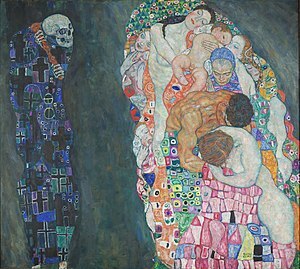
Разкошни репродукции, включително мозаечният фриз на Стоклет в оригинал, а не от скицата във Виена.

November 19, 2018
As with the other Taschen books, this is a good quality art book with the complete paintings of Gustave Klimt, and also an analysis and chronology of the artist's life and work.
The book is 8 inches long (20.32 cm) and 6 inches wide (15.24 cm), and 2 inches (5.08cm) thick, but all the photos are clearly visible and the quality of the print and paper is superior.
These Taschen books are small treasures and not that expensive. So far I own about seven of them.
The book is 8 inches long (20.32 cm) and 6 inches wide (15.24 cm), and 2 inches (5.08cm) thick, but all the photos are clearly visible and the quality of the print and paper is superior.
These Taschen books are small treasures and not that expensive. So far I own about seven of them.

June 10, 2026
A beautiful book commemorating the complete paintings of Gustav Klimt. This artist, perhaps mostly famously known for The Kiss, had a quite long career that covered movements in art from neo-classical to impressionism to the expressionism/cubism/fauvism of the turn of the 20th century. Klimt's oeuvre is wide-ranging; this was a pleasant surprise for me, especially his landscapes. These pictures are quite beautiful in a different way from his infamous 'golden' period.
My favorite chapter is Chapter III on the Stoclet frieze, a years-long commission for a private family house in Brussels. Klimt's work was part of a 'total art', working in step with the architect to create a beautiful, flowing, concordant environment, where every tiny detail added to the sumptuousness of the final piece. The frieze features enameled details, which were photographed exquisitely for this book. You can almost reach out and touch the pieces through the pages. Magnificent!
Unfortunately, these pages are arranged in such a way that one has to constantly flip 20+ pages back and forth between text and photos said text is about, which I found to be extremely annoying, especially as said text is littered with illustrations or photographs of completely unrelated items. I don't want to work this hard when I'm reading an academic text.
Nonetheless, this is a beautiful representation of Klimt's complete works, and it was a very happy find for me, randomly browsing the local library shelves.
My favorite chapter is Chapter III on the Stoclet frieze, a years-long commission for a private family house in Brussels. Klimt's work was part of a 'total art', working in step with the architect to create a beautiful, flowing, concordant environment, where every tiny detail added to the sumptuousness of the final piece. The frieze features enameled details, which were photographed exquisitely for this book. You can almost reach out and touch the pieces through the pages. Magnificent!
Unfortunately, these pages are arranged in such a way that one has to constantly flip 20+ pages back and forth between text and photos said text is about, which I found to be extremely annoying, especially as said text is littered with illustrations or photographs of completely unrelated items. I don't want to work this hard when I'm reading an academic text.
Nonetheless, this is a beautiful representation of Klimt's complete works, and it was a very happy find for me, randomly browsing the local library shelves.

November 15, 2015
my most prized book

February 8, 2016
Worth every single penny.
(It was a lot of pennies.)
(It was a lot of pennies.)

December 17, 2017
Wondermooi boek met vrijwel alle schilderijen van Klimt. Op de zeer gedetailleerde fragmenten van het Beethoven Frieze in Wenen en het Stoclet Frieze in Brussel raak je gewoon niet uitgekeken. Het wordt trouwens de hoogste tijd dat die Stocletvilla toegankelijk wordt gesteld voor het publiek!

November 2, 2022
I think the best way to know an artist is by experiencing their work. By that measure, this book is delicious.
And then there's the blurbs...
I can do without the hemming and hawwing of art historians, though some of the excerpts in here were useful as they provided context and technical detail. All the symbolic musings were near-useless on the face of it. Worse yet, they were written in clunky, monstrous sentences I don't care to remember.
And then there's the blurbs...
I can do without the hemming and hawwing of art historians, though some of the excerpts in here were useful as they provided context and technical detail. All the symbolic musings were near-useless on the face of it. Worse yet, they were written in clunky, monstrous sentences I don't care to remember.

February 24, 2022
Taschen is renowned for their amazing art books, and this one is beautiful.
With artist commentary, we are exposed to the complete works of the incomparable Gustav Klimt.
Granted, this is not a biography, but Natter gives us enough to gain a bit of insight to the man behind the brush. However, if Natter had included a full accompanying biography, this 664-page tome would require another thousand pages.
A beautiful and compelling work that makes for both an excellent reference as well as a conversation piece.
With artist commentary, we are exposed to the complete works of the incomparable Gustav Klimt.
Granted, this is not a biography, but Natter gives us enough to gain a bit of insight to the man behind the brush. However, if Natter had included a full accompanying biography, this 664-page tome would require another thousand pages.
A beautiful and compelling work that makes for both an excellent reference as well as a conversation piece.

October 2, 2019
Sei saggi, ciascuno incentrato su un'aspetto particolare della carriera klimtiana (gli esordi, la Secessione viennese, Palazzo Stoclet, il ritratto femminile, la rappresentazione del paesaggio, i disegni), che ricostruiscono la vita e il percorso artistico di Klimt. Un'opera di grande interesse che in modo innovativo permette di addentrarsi nella conoscenza di questo artista, simbolo dell'Art noveau.
Doverosa la nota di elogio alla cura minuziosa che la Taschen ha profuso in questa pubblicazione, essa stessa opera d'arte: dalla carta utilizzata alle impeccabili riproduzione delle immagini.
Una pubblicazione che rende pieno riconoscimento all'opera di Klimt.
Doverosa la nota di elogio alla cura minuziosa che la Taschen ha profuso in questa pubblicazione, essa stessa opera d'arte: dalla carta utilizzata alle impeccabili riproduzione delle immagini.
Una pubblicazione che rende pieno riconoscimento all'opera di Klimt.
June 4, 2026
iPhone 11 hết pin nhanh: Nguyên nhân và cách khắc phục hiệu quả nhất
iPhone 11 từng được đánh giá cao về thời lượng pin nhờ viên pin dung lượng lớn và khả năng tối ưu của iOS. Tuy nhiên, sau một thời gian sử dụng, nhiều người gặp tình trạng iPhone 11 hết pin nhanh, máy tụt pin dù không dùng nhiều hoặc phải sạc nhiều lần trong ngày. Điều này không chỉ gây bất tiện mà còn ảnh hưởng đến hiệu suất và trải nghiệm sử dụng hàng ngày.
Bài viết dưới đây sẽ phân tích các nguyên nhân phổ biến khiến iPhone 11 tụt pin nhanh và hướng dẫn những cách khắc phục hiệu quả. Khi nào cần thay Pin? Tìm địa chỉ thay Pin iPhone 11 Uy tín ở đâu giúp kéo dài thời gian sử dụng pin một cách rõ rệt.
Nguyên nhân khiến iPhone 11 hết pin nhanh
Dưới đây là những nguyên nhân chủ yếu nhất khiến iPhone 11 hết Pin nhanh:
Pin đã chai sau thời gian dài sử dụng
Đây là nguyên nhân phổ biến nhất. Sau khoảng 500 chu kỳ sạc, dung lượng pin tối đa của iPhone sẽ giảm dần. Khi Battery Health xuống dưới 80%, pin không còn giữ được năng lượng như ban đầu nên máy tụt pin nhanh hơn.
Bạn có thể kiểm tra bằng cách vào Cài đặt > Pin > Tình trạng pin & Sạc. Nếu mục Dung lượng tối đa thấp, đây là dấu hiệu pin đã xuống cấp.
Ứng dụng chạy nền và đồng bộ liên tục
Nhiều ứng dụng như Facebook, TikTok, Instagram, Gmail hoặc các dịch vụ đám mây thường hoạt động nền để cập nhật dữ liệu. Điều này khiến CPU và kết nối mạng hoạt động liên tục, làm pin hao nhanh ngay cả khi bạn không mở ứng dụng.
[image error]
Ứng dụng chạy nền và đồng bộ liên tục
Các tác vụ dưới đây đều có thể tiêu tốn đáng kể năng lượng:
1. Đồng bộ ảnh lên iCloud.
2. Cập nhật email tự động.
3. Thông báo đẩy (Push Notification).
4. Dịch vụ định vị (Location Services).
Cài đặt hiển thị và kết nối tiêu tốn nhiều pin
Màn hình là một trong những thành phần tiêu thụ điện năng nhiều nhất trên iPhone 11. Nếu bạn thường để độ sáng cao, bật True Tone, Background App Refresh hoặc sử dụng 4G/5G liên tục ở khu vực sóng yếu, pin sẽ giảm nhanh hơn bình thường.
Ngoài ra, các yếu tố như nhiệt độ cao, sạc không chính hãng hoặc lỗi phần mềm iOS cũng có thể khiến máy tiêu hao năng lượng bất thường.
Cách khắc phục iPhone 11 hết pin nhanh hiệu quả nhất
Để khắc phục tình trạng này, bạn có thể sử dụng các biện pháp dưới đây:
Tối ưu cài đặt để giảm hao pin
Bạn có thể cải thiện thời lượng pin bằng các thao tác sau:
1. Giảm độ sáng màn hình
Vào Cài đặt > Màn hình & Độ sáng, giảm độ sáng xuống mức vừa đủ hoặc bật Độ sáng tự động.
2. Tắt làm mới ứng dụng nền
Vào Cài đặt > Cài đặt chung > Làm mới ứng dụng trong nền, chỉ giữ lại các ứng dụng thực sự cần thiết.
3. Hạn chế dịch vụ định vị
Vào Cài đặt > Quyền riêng tư & Bảo mật > Dịch vụ định vị, chọn Khi dùng ứng dụng thay vì Luôn luôn.
[image error]
Tối ưu cài đặt để giảm hao pin
4. Bật chế độ nguồn điện thấp
Khi pin yếu hoặc cần kéo dài thời gian sử dụng, bật Low Power Mode tại Cài đặt > Pin.
5. Tắt kết nối không cần thiết
Wi‑Fi, Bluetooth, AirDrop và 4G/5G nên tắt khi không sử dụng để giảm tiêu thụ năng lượng.
6. Cập nhật phần mềm và kiểm tra ứng dụng gây hao pin
Apple thường phát hành các bản cập nhật iOS để tối ưu hiệu năng và sửa lỗi tiêu thụ pin. Hãy kiểm tra tại Cài đặt > Cài đặt chung > Cập nhật phần mềm và nâng cấp lên phiên bản ổn định mới nhất.
Đồng thời, vào Cài đặt > Pin để xem ứng dụng nào đang tiêu tốn nhiều năng lượng nhất. Nếu một ứng dụng chiếm tỷ lệ pin bất thường, hãy cập nhật, gỡ cài đặt hoặc hạn chế sử dụng.
[image error]
Cập nhật phần mềm và kiểm tra ứng dụng gây hao pin
Nếu sau khi tối ưu mà máy vẫn tụt pin nhanh, bạn nên:
1. Khởi động lại thiết bị.
2. Đặt lại cài đặt (không xóa dữ liệu) tại Cài đặt > Cài đặt chung > Chuyển hoặc đặt lại iPhone > Đặt lại.
3. Kiểm tra tình trạng pin tại trung tâm bảo hành hoặc cửa hàng uy tín.
Khi nào nên thay pin iPhone 11?
Bạn nên cân nhắc thay pin iPhone 11 khi xuất hiện các dấu hiệu sau:
1. Dung lượng pin tối đa dưới 80%.
2. Máy sập nguồn đột ngột dù còn pin.
3. Pin phồng, nóng bất thường.
4. Phải sạc nhiều lần trong ngày dù nhu cầu sử dụng không cao.
Thay pin chính hãng hoặc pin chất lượng cao từ đơn vị uy tín sẽ giúp iPhone 11 lấy lại thời lượng sử dụng gần như ban đầu, đồng thời đảm bảo an toàn trong quá trình sử dụng.
Kết luận
Tình trạng iPhone 11 hết pin nhanh thường xuất phát từ pin bị chai, ứng dụng chạy nền, cài đặt tiêu tốn năng lượng hoặc lỗi phần mềm. Để khắc phục hiệu quả, hãy tối ưu các thiết lập hệ thống, cập nhật iOS, kiểm tra ứng dụng gây hao pin và thay pin khi cần thiết. Thực hiện đúng các bước trên sẽ giúp kéo dài thời lượng pin, cải thiện hiệu năng và mang lại trải nghiệm sử dụng ổn định hơn cho iPhone 11.
iPhone 11 từng được đánh giá cao về thời lượng pin nhờ viên pin dung lượng lớn và khả năng tối ưu của iOS. Tuy nhiên, sau một thời gian sử dụng, nhiều người gặp tình trạng iPhone 11 hết pin nhanh, máy tụt pin dù không dùng nhiều hoặc phải sạc nhiều lần trong ngày. Điều này không chỉ gây bất tiện mà còn ảnh hưởng đến hiệu suất và trải nghiệm sử dụng hàng ngày.
Bài viết dưới đây sẽ phân tích các nguyên nhân phổ biến khiến iPhone 11 tụt pin nhanh và hướng dẫn những cách khắc phục hiệu quả. Khi nào cần thay Pin? Tìm địa chỉ thay Pin iPhone 11 Uy tín ở đâu giúp kéo dài thời gian sử dụng pin một cách rõ rệt.
Nguyên nhân khiến iPhone 11 hết pin nhanh
Dưới đây là những nguyên nhân chủ yếu nhất khiến iPhone 11 hết Pin nhanh:
Pin đã chai sau thời gian dài sử dụng
Đây là nguyên nhân phổ biến nhất. Sau khoảng 500 chu kỳ sạc, dung lượng pin tối đa của iPhone sẽ giảm dần. Khi Battery Health xuống dưới 80%, pin không còn giữ được năng lượng như ban đầu nên máy tụt pin nhanh hơn.
Bạn có thể kiểm tra bằng cách vào Cài đặt > Pin > Tình trạng pin & Sạc. Nếu mục Dung lượng tối đa thấp, đây là dấu hiệu pin đã xuống cấp.
Ứng dụng chạy nền và đồng bộ liên tục
Nhiều ứng dụng như Facebook, TikTok, Instagram, Gmail hoặc các dịch vụ đám mây thường hoạt động nền để cập nhật dữ liệu. Điều này khiến CPU và kết nối mạng hoạt động liên tục, làm pin hao nhanh ngay cả khi bạn không mở ứng dụng.
[image error]
Ứng dụng chạy nền và đồng bộ liên tục
Các tác vụ dưới đây đều có thể tiêu tốn đáng kể năng lượng:
1. Đồng bộ ảnh lên iCloud.
2. Cập nhật email tự động.
3. Thông báo đẩy (Push Notification).
4. Dịch vụ định vị (Location Services).
Cài đặt hiển thị và kết nối tiêu tốn nhiều pin
Màn hình là một trong những thành phần tiêu thụ điện năng nhiều nhất trên iPhone 11. Nếu bạn thường để độ sáng cao, bật True Tone, Background App Refresh hoặc sử dụng 4G/5G liên tục ở khu vực sóng yếu, pin sẽ giảm nhanh hơn bình thường.
Ngoài ra, các yếu tố như nhiệt độ cao, sạc không chính hãng hoặc lỗi phần mềm iOS cũng có thể khiến máy tiêu hao năng lượng bất thường.
Cách khắc phục iPhone 11 hết pin nhanh hiệu quả nhất
Để khắc phục tình trạng này, bạn có thể sử dụng các biện pháp dưới đây:
Tối ưu cài đặt để giảm hao pin
Bạn có thể cải thiện thời lượng pin bằng các thao tác sau:
1. Giảm độ sáng màn hình
Vào Cài đặt > Màn hình & Độ sáng, giảm độ sáng xuống mức vừa đủ hoặc bật Độ sáng tự động.
2. Tắt làm mới ứng dụng nền
Vào Cài đặt > Cài đặt chung > Làm mới ứng dụng trong nền, chỉ giữ lại các ứng dụng thực sự cần thiết.
3. Hạn chế dịch vụ định vị
Vào Cài đặt > Quyền riêng tư & Bảo mật > Dịch vụ định vị, chọn Khi dùng ứng dụng thay vì Luôn luôn.
[image error]
Tối ưu cài đặt để giảm hao pin
4. Bật chế độ nguồn điện thấp
Khi pin yếu hoặc cần kéo dài thời gian sử dụng, bật Low Power Mode tại Cài đặt > Pin.
5. Tắt kết nối không cần thiết
Wi‑Fi, Bluetooth, AirDrop và 4G/5G nên tắt khi không sử dụng để giảm tiêu thụ năng lượng.
6. Cập nhật phần mềm và kiểm tra ứng dụng gây hao pin
Apple thường phát hành các bản cập nhật iOS để tối ưu hiệu năng và sửa lỗi tiêu thụ pin. Hãy kiểm tra tại Cài đặt > Cài đặt chung > Cập nhật phần mềm và nâng cấp lên phiên bản ổn định mới nhất.
Đồng thời, vào Cài đặt > Pin để xem ứng dụng nào đang tiêu tốn nhiều năng lượng nhất. Nếu một ứng dụng chiếm tỷ lệ pin bất thường, hãy cập nhật, gỡ cài đặt hoặc hạn chế sử dụng.
[image error]
Cập nhật phần mềm và kiểm tra ứng dụng gây hao pin
Nếu sau khi tối ưu mà máy vẫn tụt pin nhanh, bạn nên:
1. Khởi động lại thiết bị.
2. Đặt lại cài đặt (không xóa dữ liệu) tại Cài đặt > Cài đặt chung > Chuyển hoặc đặt lại iPhone > Đặt lại.
3. Kiểm tra tình trạng pin tại trung tâm bảo hành hoặc cửa hàng uy tín.
Khi nào nên thay pin iPhone 11?
Bạn nên cân nhắc thay pin iPhone 11 khi xuất hiện các dấu hiệu sau:
1. Dung lượng pin tối đa dưới 80%.
2. Máy sập nguồn đột ngột dù còn pin.
3. Pin phồng, nóng bất thường.
4. Phải sạc nhiều lần trong ngày dù nhu cầu sử dụng không cao.
Thay pin chính hãng hoặc pin chất lượng cao từ đơn vị uy tín sẽ giúp iPhone 11 lấy lại thời lượng sử dụng gần như ban đầu, đồng thời đảm bảo an toàn trong quá trình sử dụng.
Kết luận
Tình trạng iPhone 11 hết pin nhanh thường xuất phát từ pin bị chai, ứng dụng chạy nền, cài đặt tiêu tốn năng lượng hoặc lỗi phần mềm. Để khắc phục hiệu quả, hãy tối ưu các thiết lập hệ thống, cập nhật iOS, kiểm tra ứng dụng gây hao pin và thay pin khi cần thiết. Thực hiện đúng các bước trên sẽ giúp kéo dài thời lượng pin, cải thiện hiệu năng và mang lại trải nghiệm sử dụng ổn định hơn cho iPhone 11.
May 28, 2020
Klimt is probably my favorite painter, but this book was hard to read. 2 stars for the text concept and editing. Page 50 talks about a painting that's on page 300, or page 250 talks about painting that's on page 120. So the entire time you just flip through the book and the worst part - lots of pages don't have numbers so you need to find the closest number and count yourself. Completely ruined the experience. It was a huge spoiler and you can't avoid leaving a bunch of fingerprints all over. Also, for that money I expected large print so you can see the pictures better, but with the small size format at least they could've made the page endings gold. And the text itself was pretty boring, nothing new, most of the stuff you can look up on Google. I found myself skipping paragraphs and pages and just enjoyed looking through the pictures.

January 20, 2023
Impulsively bought this book but was worth the 150 euros!
I must be honest and tell you I did not read all of the paragraphs, but obviously went through all of the images multiple times and sometimes used them as a reference in my own paintings.
The paper is really good quality and the details are superb. The colours pop in your face like they should.
PS: XXL is really what it is. You cannot comfortably read it without a large book stand because of its weight and size.
I must be honest and tell you I did not read all of the paragraphs, but obviously went through all of the images multiple times and sometimes used them as a reference in my own paintings.
The paper is really good quality and the details are superb. The colours pop in your face like they should.
PS: XXL is really what it is. You cannot comfortably read it without a large book stand because of its weight and size.

July 3, 2025
DNF
I read, almost half of this book, and it was really interesting and fun as an art nerd myself, but at some point my brain was not retaining the information correctly so i decided to put it aside, and, have not picked it up since (its been over a year) so, i just accept that im not finishing this, but im still really glad i have it on physical, because Klimt artwork is simply amazing and this book is incredibly pretty.
I read, almost half of this book, and it was really interesting and fun as an art nerd myself, but at some point my brain was not retaining the information correctly so i decided to put it aside, and, have not picked it up since (its been over a year) so, i just accept that im not finishing this, but im still really glad i have it on physical, because Klimt artwork is simply amazing and this book is incredibly pretty.

August 13, 2024
“Klimt achieved a unique blend of dark symbolism, human allegory, expressive realism and Jugendstil ornamentation, which resulted in a substantial body of highly moving and intensely ornate paintings, at the centre of which stood the female figure.”
Awesome monography!! Top quality ilustrations and all Klimt’s paintings along with art historical commentary.
Awesome monography!! Top quality ilustrations and all Klimt’s paintings along with art historical commentary.

April 18, 2019
Akhirnya memiliki buku ini terasa luar biasa. Buku ini sangat indah. Salah satu buku terindah yang pernah aku miliki. Saat membuka sampulnya dan melihat isinya, sangatlah luar biasa. Salah satu buku seni terindah dan terelegan yang pernah aku miliki.

July 25, 2020
I picked up this book up at the library and it was superb. I had to buy a copy. Although it is small, it is stunning. Has a lot of Kilmt landscapes, not his know work but still remarkable at under £10, a bargain.

May 25, 2021
A crazy genius, who is easy to overlook, but was constantly striving to find a way to explore and fabricate Art, and had notable successes in a world that was just about to be riven by war, and a society that would largely evaporate.

December 20, 2024
awesome to learn new things about some of your favorite paintings and they life of the artist
really great articles accompanying huge print pages of each work
can’t recommend enough checking the size of the book you request from the library before you try to pick this on up on a bike commute :)
really great articles accompanying huge print pages of each work
can’t recommend enough checking the size of the book you request from the library before you try to pick this on up on a bike commute :)

February 28, 2018
Now I have my very own Klimt museum at home.

February 16, 2020
You don’t really read a tome like this, but it is well worth poring over Tina and time again. Intelligently arranged and the print quality is exceptional.

March 31, 2020
Essential reading for the subject matter
August 3, 2022
Didn't knew he painted something for the Castle in Peleș

April 25, 2024
Habla mucho de la historia de las pinturas pero no ahonda en su vida o significado de las obras.
May 23, 2025
Klimt’s work is truly remarkable. After having the privilege to go see his artworks in person, reading this brought a deeper appreciation of his work.
June 17, 2022
The most stunning high resolution images of Klimt’s work in print that I’ve seen yet. A treasure and a must have. Wonderful chronology of his life and work, not an intensive biography but a great over view that highlights the trajectory of his oeuvre.

February 17, 2025
Gorgeous 😍 Klimt is one of my favorite artists because he went through so many periods of styles and techniques - truly a master
June 20, 2025
I once got myself into a super weird long-distance kinda thing with a guy who was going to a law school in the states at the time. We met on a meme page in the comment section believe it or not, and started talking after we found each other interesting (and hot, obviously).
We talked about everything. Music, philosophy, art, poetry, you know, the usual seduction stuff. He was the editor of the Journal of Law and Religion that semester. At first it was just fun, but then after a while, one day he realized he actually caught feelings, and then immediately blocked me. Smart guy, I respect that. We were both single at the time though, just didn’t see it going anywhere since neither of us believed in long-distance relationships, no shared future.
Right before blocking me, he shared some paintings by Klimt to express what he was feeling, as well as Love Is A Lonely Song by Paul Anka:
Love is a lonely song
on a rainy day
You and I not together
Said good-bye too forever
Said good-bye, said good-bye
Love is an empty room
Since you went away
You and I couldn't make it
Said good-bye couldn't take it
Take good-bye, take good-bye
Far away, far away, far away from you
Yesterday, oh yesterday
Far away from you
Baby I can't go on without you
Everyday I think about you
I cried for a while. A few weeks later I revenge downloaded a bunch of dating apps to talk to more interesting people to replace the void that he left. I ended up never meeting anybody in person from any dating apps, only got excellent music/book/art recs from interesting people. And they all became a part of me.
I guess I can say I’m promiscuous in an artistic way but never in a sexual way. I just don’t think people deserve me, lol
I bought this book during my recovery time from that guy. It’s like preserving a piece of him with me in some sort of physical, tangible form, even though we’ve never even met in person.
——————————————————
I just stalked this guy’s instagram
He got married earlier this year
And I scrolled down to 2020
He still has that Klimt painting that he shared right before he blocked me, which captioned “ominous and blooming like us”
We talked about everything. Music, philosophy, art, poetry, you know, the usual seduction stuff. He was the editor of the Journal of Law and Religion that semester. At first it was just fun, but then after a while, one day he realized he actually caught feelings, and then immediately blocked me. Smart guy, I respect that. We were both single at the time though, just didn’t see it going anywhere since neither of us believed in long-distance relationships, no shared future.
Right before blocking me, he shared some paintings by Klimt to express what he was feeling, as well as Love Is A Lonely Song by Paul Anka:
Love is a lonely song
on a rainy day
You and I not together
Said good-bye too forever
Said good-bye, said good-bye
Love is an empty room
Since you went away
You and I couldn't make it
Said good-bye couldn't take it
Take good-bye, take good-bye
Far away, far away, far away from you
Yesterday, oh yesterday
Far away from you
Baby I can't go on without you
Everyday I think about you
I cried for a while. A few weeks later I revenge downloaded a bunch of dating apps to talk to more interesting people to replace the void that he left. I ended up never meeting anybody in person from any dating apps, only got excellent music/book/art recs from interesting people. And they all became a part of me.
I guess I can say I’m promiscuous in an artistic way but never in a sexual way. I just don’t think people deserve me, lol
I bought this book during my recovery time from that guy. It’s like preserving a piece of him with me in some sort of physical, tangible form, even though we’ve never even met in person.
——————————————————
I just stalked this guy’s instagram
He got married earlier this year
And I scrolled down to 2020
He still has that Klimt painting that he shared right before he blocked me, which captioned “ominous and blooming like us”

December 28, 2013
It is my belief that if books on artistic subjects must be sullied with prosaic interludes that these words at least be of passing beauty, so as not to negatively impact the beauty or visual interest of the art. Unfortunately, this book is a prime exampel of how overly academic - and by academic I mean dry and lifeless -writing can ruin an art book. I therefore skipped reading anything but the introduction and first paragraphs (enough to prove the unappealing narrative style of the commentators), and focused instead on immersing myself in the glorious mosaics, frescoes, and sketches of Gustav Klimt. Thankfully te inclusion of all of Klimt's body of work was done to perfection, and made up for my earlier disappointments.

May 22, 2015
I broke down and bought this monster of a book because I love Klimt and I wanted to get more familiarized with this work. This is an excellent (and heavy) rendition and it is SO EXPENSIVE. But it is well worth your money and love to see these beautiful paintings up close and personal. You get to read letters he wrote, a biography, some people say they don't particularly like the commentators and their opinions or how they treat some of his work. But I didn't buy this book for the written words so I haven't read the inscriptions inside. But it is a beautiful art book and breathtakingly beautiful. If you have the money, it will well worth the dent in your wallet.
Displaying 1 - 30 of 34 reviews