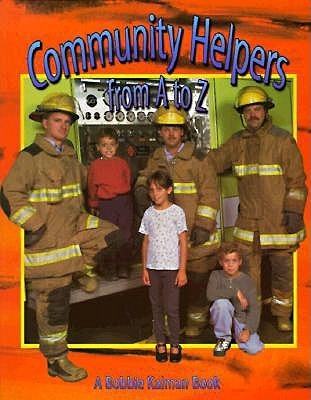
Let's meet people who make our communities a more pleasant place to live. Colorful photos show workers performing their tasks which helps put their roles into a context children will recognize. Young readers are introduced - agricultural workers - firefighters - recycling workers - veterinarians, and more!
Bobbie Kalman is a Hungarian-born children's author and publisher known for educational nonfiction books widely used in schools and libraries. After fleeing Hungary with her family during the 1956 Revolution, she later settled in North America. With backgrounds in English, psychology, and education, she wrote more than 800 books, including “Refugee Child” and several popular curriculum-based series.
Our teachers usually do a community helpers unit every year, so this will be nice addition to our library. I like that it is an A to Z book and on each page there is a simpler text along with added information to extend learning to older students.
I am using this non-fiction text in my unit plan on communities. It's an effective introduction, illustrating the goods and services citizens provide through jobs. The role community helpers play in making a community prosperous is an enduring understanding of my unit.
This Non-fiction book lists community helpers from A to Z. I like the fact that the book takes the time to go into specific terms that are related to each job.
For instance, "A is for agricultural workers. Agricultural workers work on farms & help grow fruits & vegetables or raise livestock. Where you live, agricultural workers help your community... Others, called migrant workers, travel from place to place to help farmers in different areas.
This is the list of the community helpers in ABC order: -------------------- I could use this book to teach literacy to my class by teaching students the terms that relate to each community helper. Most students have no idea what a "migrant" is or does, so that could be a great opportunity to explain that term means.
This book is perfect for early learners so they can get used to both the alphabet and leaders of the community. If they see these workers in a nonthreatening context such as a book, they can know they play an important role in case of an emergency.