Thomas Merton is a brilliant writer and thinker. I loved his sociological essays the most, including “Learning to Live,” “Love and Solitude,” “The Street is for Celebration,” “Symbolism: Communication or Communion?” and “Cargo Cults of the South Pacific.” This last one put me on to a lot of fantastic music and got me considering how in destroying a myth you do not believe in, you conversely participate in confirming its existence and symbolic power. The third section of the book which focuses on Christian Humanism didn’t pull me as much as the first eponymous section or the second one, “Seven Words.” I had a hard time reading so much about Christ…and trying to make myself care when I don’t really believe. That said, I admire Merton, the most radical 20th century Christian monk I am aware of, not only for acknowledging and integrating world religion into his own interpretation of divinity, but also in how he actively embraces leftism. He dares to address taboo subject matter with a frankness that I imagine would make him controversial in Christian spheres (eg. the legacy of Christian-bent colonialism, human sexuality and the pitfalls of suppressing it in the name of religion). I find Merton appealing in how unconventional, existential, and socially-engaged he is.
Learning to Live:
The purpose of education is to show a person how to define himself authentically and spontaneously in relation to his world—not to improve a prefabricated definition of the world, still less an arbitrary definition of the individual himself. The world is made up of the people who are fully alive in it. 3
The function of the university is, then, first of all to help the student to discover himself: to recognize himself, and to identify who it is that chooses. This description will be recognized at once as unconventional and, in fact, monastic. To put it in even more outrageous terms, the function of the university is to help men and women save their souls and, in so doing, to save their society: from what? From the hell of meaninglessness, of obsession, of complex artifice, of systematic lying, of criminal evasions and neglects, of self-destructive futilities. 4
Spiritual nakedness…[sic] is where freedom really begins: the freedom that cannot be guaranteed by the death of somebody else. The point where you become free not to kill, not to exploit, not to destroy, not to compete, because you are no longer afraid of death or the devil or poverty or failure. 5
Both monastery and university came into being in a civilization open to the sacred, that is to say, in a civilization which paid a great deal of attention to what it considered to be its own primordial roots in a mythical and archetypal holy ground, a spiritual creation. 7
Life does not have to be regarded as a game in which scores are kept and somebody wins. If you are too intent on winning, you will never enjoy playing. If you are too obsessed with success, you will forget to life. If you have learned only how to be a success, your life has probably been wasted. If a university concentrates on producing successful people, it is lamentably failing in its obligation to society and to the students themselves. 12
Love and Solitude:
There is One Solitude in which all persons are at once together and alone. But the price of a mathematical, quantitative concept of man (for instance in a positivistic and sociological approach) is that in reducing each individual to his own number it reduces him to nothing: and in making the mass of men simply a total of individual units, it makes of it an enormous statistical void—in which numbers simply proliferate without aim, without value, without meaning, without love. 17
Creative Silence:
There is a silent self within us whose presence is disturbing precisely because it is so silent: it can’t be spoken. It has to remain silent. To articulate it; to verbalize it, is to tamper with it, and in some ways to destroy it. 40
The Street is for Celebration:
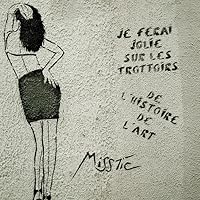
We like to be together. We like to dance together. We like to make pretty and amusing things. We like to laugh at what we have made. We like to put bright colors on the walls—more bright colors on ourselves. We like our pictures, they are crazy. Celebration is crazy: the craziness of not submitting even though ‘they,’ ‘the others,’ the ones who make life impossible, seem to have all the power. Celebration is the beginning of confidence, therefore of power…We can be the artisans of a joy they never imagined…They with their gold have turned our lives to rubble. But we with love will set our lives on fire and turn the rubble back into gold. This time the gold will have real worth. It will not be just crap that came out of the earth. It will be the infinite value of human identity flaming up in a heart that is confident in loving. That is the beginning of power. That is the beginning of the transformation. One day, you’ll see! 53
Symbolism: Communication or Communion?:
One cannot apprehend a symbol unless one is able to awaken, in one’s own being, the spiritual resonances which respond to the symbol not only as sign but as “sacrament” and “presence.” 54
Christian Humanism:
Narcissism remains a problem of enormous magnitude, especially in our highly developed modern technological culture, which abounds in its own hidden forms of magic thinking, superstition, ritualism. Our sophisticated modern culture has its taboos, its obsessions, and all that goes into the formation of the neuroses, individual and collective, which so often take the place of formal religion in the minds of men. 146
Rebirth and the New Man in Christianity:
Man in modern technological society has begun to be callous and disillusioned. He has learned to suspect what claims to be new, to doubt all the latest and everything he’s drawn instinctively to the new and yet he sees in it nothing but the same old sham. The specious glitter of newness, the pretended creativity of a society in which youthfulness is commercialized and the young are old before they are twenty, fills some hearts with utter despair. There seems to be no way to find any real change. 196