Populated by a bumbling, murderous citizenry of corrupt cops, innocents, ravenous addicts, lovesick geniuses, and cynical adventurers, Ivyland operates in the shadow of a giant pharmaceutical corporation that thrives on people's weaknesses...and may have an even more sinister agenda. It's our world, only a bit more extreme, and lovingly, precisely depicted with the adept skills native to a master of dark humor.
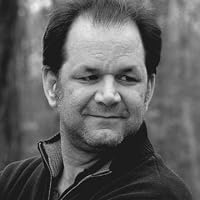
Miles Klee was born in Brooklyn and grew up in South Orange, New Jersey. He is the author of the novel IVYLAND (OR Books 2012) and the story collection TRUE FALSE (OR Books 2015). He lives in Los Angeles.
Klee graduated from Williams College, where he studied with Jim Shepard, Andrea Barrett and Paul Park. His essays, articles, satire and short stories have appeared in Vanity Fair, Lapham's Quarterly, Guernica, Unstuck, McSweeney’s Internet Tendency, 3:AM, The Awl, The Village Voice, The New York Observer, Salon, Electric Literature, Terraform, Hobart, and MEL Magazine.
Remember when that young novelist wrote that convoluted dystopian novel about the near future, where the infrastucture is falling apart, people get high on whatever they can get their hands on, every aspect of life has a name brand corporate sponsor, there's some sort of French-speaking terrorism going on, some of the central figures are the descendants of the family that kicked off this dystopia with a signature invention, and the book itself leapfrogs among points of views and characters, drawing a lot of connections in a roman 'a clef landscape based on a real suburban geography, but defying all linear structure? Remember when that book stirred all those ingredients together into a whole that entirely sucked you in, awed you with the genius of its author, and then left you somewhat puzzled because the loose ends didn't get tied up -- the book mostly just ended? Remember how you decided that you forgave everything in light of the virtuosity that came before? Remember when that book blew your mind and took away your life for the six or so weeks it took to read it?
Yes, of course you remember, but that book wasn't Ivyland, it was Infinite Jest, and the author was an alive David Foster Wallace, and the year was 1996 or 1997 or so (and Miles Klee was finishing 5th grade).
Ivyland has basically the exact same cocktail of ingredients and the same narrative blueprint, and while, to paraphrase the immortal words of Lloyd Bentsen, "I knew David Foster Wallace, and you, Miles Klee, are no David Foster Wallace", it's undeniable that the kid has talent, and might conceivably one day be one of the people -- DFW, Philip Dick, etc. -- that he's striving so mightily to be. In the meantime, one too many extended interior descriptions of what it's like to be really high on various somethings and a plot that screams for an index (impossible to keep straight the assorted cast of screwed up Jersey 20 something guys - there's at least 10 of them - and the convluted time lines (17 years ago, 2 years ago, last summer, etc) are just maddening (NB, I am not an easily confused reader)) and for an ending. But promise, yes, promise, even if the Jest is not yet Infinite.
Fitting we open with an Aldous Huxley quote. Klee's prose isn't simply vibrant, it vibrates and flickers and throbs like things do on a hit or three of good acid. He turns unexpected words in uncommon sequence, and its all a little hard to follow at first, but you slip into the rhythm eventually and suddenly you can't read fast enough.
I wouldn't call the book 'hilarious,' like the back cover exclaims. It's too heartbreaking, in it's perverse way, for a word like that. The flip violence, the iconoclastic sensibility, all irreverent and bat shit nuts, yeah, but Ivyland's banal evil and its lost residents texture everything murkier than a word like 'hilarious' can intimate.
The details are insane - a pet ferret christened Dr., casual cosmetic surgery, mobs of caterpillars blanketing New Jersey in silk and guts. But there's love in the lunacy, a sweetness refracted in this pitch-black comedy. And that sweetness doesn't take the edge off, no, it tenders, evokes, sharpening the edge of satire, drawing blood.
A very intriguing debut with a very well-defined sense of place.
Some engaging vignettes, but for my tastes I think it sacrifices too much narrative for the sake of clever wordplay and experimental storytelling (which, granted, Klee does very well).
Feels more like a collection of interrelated short stories than a novel, but there's a place for that, too.
When I read Ivyland, I was contemplating writing a near-future dystopian novel featuring a populace numbed by anesthesia. After reading it, I dropped the project, knowing I could not do it better than this.
EDIT 3/22/13: When reading this book try to not read it in the lens of "futuristic" and "dystopia." I don't feel like this book is too far away. I mean that in the sense that circumstances are different but the characters are people we know. In this age. In some ways, Miles takes the inner soul of today and sprawls it onto a geographic exterior. I think we tend to think that life is dark and abysmal and that's not necessarily a Millenial Generation type thing. It extends deeper in the bast then we give credit.
I bought this book out of sheer enjoyment and respect for Klee's work on the internet. Whether it be The Awl, Hate the Future or a vast number of his other online publications I was in for whatever novel he would produce.
It's a compilation of loosely related vignettes in a sort of dystopian future/alternate near-present centering around a number of characters that live in Ivyland, New Jersey. The prevailing attitudes are those of desperation and apathy. Most of the characters hate their lives to a certain extent but have resigned from it improving. The world is crumbling, bridges are denaturing, cops just don't care anymore and getting high off of Hallorax gas is the best way to cope.
A disease is lurking in the shadows of every character's life called H12. The way to prevent is to get a small surgical procedure by age 5 in order to prevent it from infecting you. If one contracts H12 they end up like the character Grady or worse. Memory, sanity and cognitive functions deteriorate and the best you can hope for is to live in a sort of halfway house.
Each one of the character's has deep flaws. DH and Lev are out trying to make quick money by giving the poor back alley VV procedures, Cal is emotionally distant and callous in his last few hours of life in orbit around the moon, his brother Aidan is infuriated by his own best friend Henri who's become suddenly secretive and by the flock of worshippers at the foot of his "miracle tree," along with a plethora of minor characters including radio DJ's, a bus driver and a band of corrupt cops. It's a world spiraling out of control with no one really trying to save it. Dark, funny and at times lyrical, I should hope this book is only the first of many in Miles Klee's career.
A series of vignettes that take place in a dismal near-future, Ivyland frames the story of two brothers coming of age in a post-apocalyptic New Jersey roamed by drug addicts, misanthropic public service workers, and victims of a mysterious plague, H12. The older brother, Cal, embarks on a doomed space mission, chronicled in a series of journal entries, while back on Earth, his younger brother, Aidan, contends with a cult that has gathered in his best friend’s front yard after lightning strikes a tree, rendering a likeness of the Virgin Mary.
Science fiction typically takes place in the future, often with fantastic and/or terrifying predictions and imagery: 50-foot bugs from Jupiter that seek to enslave mankind, intergalactic space travel, artificial intelligence that revolts—there isn’t any of that in this book. But that’s not a complaint. Good science fiction not only predicts the future, but often uses it as an effective critique of some facet of contemporary society. The author is more concerned with the negative implications of private public partnerships, global warming and its unforeseen side effects, and unchecked big pharma, all of which are just as disconcerting, if not more so. The only technological advances that seem to have been achieved in Ivyland stem from for profit health care: a mysterious procedure called the Van Vetchen and a series of new addictive drugs. Meanwhile, bridges and infrastructure collapse due to neglect from an indifferent government rather than giant robots or space monsters, and astronauts perish not because of a disgruntled computer or a malicious alien encounter, but bureaucratic incompetence. These things aren't particularly fantastic or futuristic, but very likely and believable, and that makes them all the more frightening.
I haven't finished this book yet (and I will, so that at least my wasted time will have contributed towards my challenge stats), but I already hate it so much. Pretentious privileged bullshit, no redeeming qualities whatsoever. If it gets better by the end I'll consider increasing my rating to two stars, but no more.
I picked this up since it was on the list for the Tournament of Books, although I had seen it mentioned in Publishers Weekly. This is a first novel by the author, and I wasn't familiar with his shorter fiction, although I've read almost everything by two of the four authors he lists as his influences - Michel Houellebecq and Nicholson Baker. Based on this book, I'm surprised not to see J.G. Ballard or Philip K. Dick on that list, because I could easily see this novel being influenced by either of their work as well.
Of course, I have read extensively in the dystopian, post-apocalyptic fiction worlds. Not much of this one is explained, other than it taking place in New Jersey, but that isn't really a complaint. The reader is dumped into a world of chaos and disorder, and while details are mentioned in passing through various storytelling techniques (going back and forth in time, the story coming from different characters, some who only appear once), you are never really given enough information to fill in the gaps. The world is clearly dominated by Big Pharmaceutical, except not in the stark, sterile way in worlds like in Sleepless by Charlie Huston. In fact, there is rarely a feeling that anyone is actually in control in Ivyland. The cops are taking people home in fleets of ice cream trucks, the infrastructure is falling apart, and everyone seems to have access to drugs that may or may not be what they claim to be.
Half of the people in Ivyland are hardly coherent, either from a virus, or flawed chemical treatment before/after a virus, or because they are addicts. I'm still puzzled over most of them, and pleased by others (a very memorable professor is probably my favorite). The experience of reading this novel is also interesting. The first 100 pages tend toward information dump with a lot of characters and time periods, but fast-paced and interesting. The last 100 pages grow terribly sad as the story goes in directions I didn't expect. At least, if I've read it correctly. The entire thing left me unsettled as a reader. I look forward to what Klee does in the future.
[I wrote this brief review three years ago, but left it unfinished and buried with some other reviews in an archived folder. I’m posting it now to fulfill a promise I made to write more reviews and, for better or for worse, to make more of them public.]
I had mixed feelings about this book, and thought about putting it down a few times. I’m glad I stuck around until the end, because I would have missed a passage near the end that kind of knocked me over:
“To the west, gobs of smoke bubbling up near the lot where Viking Putt sat. When he was young, and industry booming, Ivyland’s outskirts gave off plumes of such unexplained smog at regular intervals, and he was given to asking adults whether it was a fire raging a few miles off. “It’s nothing,” was the automatic reply, no mystery dispelled. Of course it was not nothing, you’d have to be living inside-out not to see it was something, and this non-answer one day confirmed an ultimate childhood dread: that no one, not even grown-ups, knew what made black wraiths ascend only to break against clouds of concrete” (236)
This, to me, so perfectly captured a feeling I often had as a child, riding in the backseat of my parents’ station wagon toward North Jersey or Philadelphia and trying to comprehend these giant and ominous industrial cathedrals looming over the highways. For me, the insight offered by this passage alone made the reading experience worthwhile . . .
It seems that every year the Tournament of Books features one off-beat, somewhat experimental novel by an under known author. Ivyland takes that spot this year.
A sort of post apocalyptic, disjointed, phantasmagorical romp by way of multiple voices, it left me confused and reeling.
At least it is set in New Jersey, where I grew up, so I am familiar in a hazy way with Trenton and the Pine Barrens and the Jersey shore. The characters are mainly teens from broken families but everyone suffers from a Big Pharma created scourge, either economically, emotionally, mentally, or because of a gruesome physical disability. Everyone is also on multiple drugs plus heavy alcohol intake.
So the story is a nightmare, owing much to Kafka, Bob Dylan and television...I could go on but I would only be showing off or feeling more confused. Underlying all the weirdness is a deep, pulsing sadness, festering like a wound not healing properly. By the time I reached the end I felt quite hopeless about the future of anyone or anything.
Did I like Ivyland? Not really. But somehow I kind of respected whatever Miles Klee was trying to do. I would read his next book just to see where he goes from here.
A near-future dystopia in which bars serve drinks and pills manufactured by the company Endless. Endless also provides the anesthetic gas needed for the Van Vetchen procedure, a quick neck surgery that protects you from H12 (a flu?). Only a small percentage of people are allergic to the gas, and forever damaged. The poor cannot afford the procedure. And apparently some people get H12 anyway. And others say no one dies of H12, it's all just a scam.
And there are caterpillars everywhere. And the cops are criminals. And bridges are failing as the metal degrades.
Or something. The story is told from the perspectives of a variety of people, and leaps backward and forward in time and place. 2 years ago, last summer, last winter, 13 years ago, "now". Ivyland, NJ; Florida' lunar orbit.
I wish I had kept a list of names, times, and places. I don't know that anything really happens--I couldn't keep track of the order of when things happen, and it seems like this is just Aiden and Henri and Cal and Hecuba and Phoebe's lives over time. Just regular people living in-the-future regular lives. I think.
I'd call this a really good first novel, but I can't muster the enthusiasm that other reviewers do. As a kind of mad-cap parody of modern world that's over medicated, globally warmed, and straight dysfunctional, the book has charm. But much of the prose felt juvenile: more of a (largely successful) attempt by the author to show off his obvious talent than a serious reflection on modern life. It's fevered pitch feels like it grabs at the zeitgiest of authors like Franzen or DF Wallace but is thematically under-developed in comparison, and the hope-from-despair trope echos Sam Lipstye and Chuck Palahniuk but can't quite nail their nihilistic charm. Still, this is a good book, and if one is a fan of those other authors, then it is probably worth reading, and I look forward to seeing how Klee develops as a writer.
Ivyland is the modern-day, independent Brave New World, 1984, etc. with a tasteful blend of misanthropy and hope. Most striking to me was Klee's lyrical, clever prose and his gradual assembly of a story from such unlikely and seemingly disparate pieces. Highly recommended.
So having just read Lost for Words, I feel like Ivyland could be one of the experimental novels that win awards simply because of the schtick. Set in a not so far off futuristic land filled with big pharma greed and lots of addicts, it has the potential to be entertaining and have some poignant commentary on our oh so fucked up corporate world.
Instead, the threads were hard to follow (I am all for jumping around, but with so many characters and so many time points...2 years ago, 17 years ago...now...next week...and none of it really holding together it was just annoying, not illuminating), and the change in format (first person, third person, radio play) unnecessary. It really, really, really just came across as an attempt at Art (with a big A) grabbing for Attention (also big A)....and is in fact exactly what St. Aubyn is making fun of with Lost for Words.
Another reviewer pointed out the similarities with Infinite Jest (which are true), but this is much less well done and more simplistic. There is actually less commentary about anything outside of addiction and corporate greed and the world building isn't so fabulous as much as it is just Jersey...not quite as good as NY, but limping along behind.
I think the worse thing, though was just how boring it was to read through. I found myself falling asleep a lot and struggling to force myself through. This is not a book that captivates, instead it is a book that didn't really need to be written, but was.
The second half of the book can't sustain the first's sheer rush of interest, even though it does a damn good job of still being smart and dark and a-little-too-close-to-home. If you are a twentysomething - an intelligent one - you will find something intriguing about this book. I'm not saying you'll like it - and I'm not saying that non-twentysomethings won't like it - but you will associate with it, in the way we all (whether we wanted to or not) associated with Garden State.
It's dark and evocative and scary and sad and funny and mostly... it feels like real life, tomorrow. Is it a perfect novel? No. But it is a damn good one and I hope it makes it out of the first round in the Tournament of Books or at least gains a wider readership because of its inclusion. Because this is a book that has, unjustly, languished in obscurity. But maybe that's because it's a little too true, at its core. It touches something elemental, something universal, that we're all feeling... and that isn't necessarily a pleasant sensation all the time.
A difficult but beautiful read that kept defying my expectations. Ostensibly a dystopian sci-fi novel about a pharmaceutical company’s takeover of a small town in New Jersey, “Ivyland” focuses instead on the connections between family and friends. Events threaten to slide into what should be fantastical territory—neighbors inexplicably become homicidal; an image of the Virgin Mary appears in a tree hit by lightning; America’s last astronauts struggle with mission failure—but Klee generally keeps his narrative rooted in the mundane emotions experienced by the participants, emotions that are just like our own. What makes “Ivyland” so beautiful is Klee’s fractured writing style, which takes some getting used to.
omg. this book! it is SO weird and so freaky and so terrific! really, man. you won't believe it. This is one very inventive author. I can't wait to see what his next book is. He's another TheAwl.com connection -- it's a good group of authors, man. Perhaps our generation's Algonquin round table?
I'm lousy at descriptions, but it is set in the near future when things have gone all out of whack... sort of what could happen to the US if we don't get rid of Citizens United and the corporations' complete impunity. Now I've made it sound 1984-ish and it is anything but that.
I grew increasingly irritated by the new characters introduced well in to the last quarter of the book. It was hard for me to tell who would be mentioned once in passing and who were the key players. I almost gave up until a chapter in the last quarter, introducing yet more new characters, including a guy named Wombat and a 9 year old kid/monster leashed in the basement. It was such a great story and it helped me embrace the book by viewing each chapter as a short story. Then I could relax, stop trying to keep track of names and dates, and just enjoy Klee's storytelling. Good stuff!
The further I got in this, the less I liked it. I guess I shouldn't have expected the stories to come together in a coherent way but I did and was disappointed.
Dystopian futurism typically isn't my preferred hang-out. But is that what this is, really? In any event, setting is incidental when what's happening between and within the characters matters and the turns of phrase keep you engaged. And I do like coming of age narratives. Maybe this is a story about limited options? I think of the prominent DEAD END sign in Spike Lee's Summer of Sam (a favorite film), or Eugene hanging himself at the start of season 6 of the Sopranos. Make no mistake, this is despair, but also, ya know, funny. Many novels feature people who can do oh so many things, which makes it easy for the writer and reader. The real grime of living is when you have no way out, and I like seeing that on the page, well-executed. A drug haze descends on the pages, and I like the clever way the book makes a theme an aesthetic sensibility at the same time--I think the best literature does this, in one way or another.
Awful writing and grueling to try and finish this disastrous flop of a book. I've really never been so bored by any book! I love to read but this was a challenge. Clearly someone was doing a favor for this clueless writer because there was not one lick of talent seen in his writings. Sorry such a harsh review but I'm still grumpy at the loss of time I will never get back to read a good book now.