

What do you think?
Giordano Bruno #3
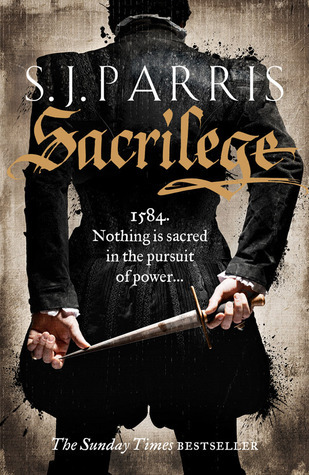
Sacrilege
Perfect for fans of C.J. Sansom and The Name of the Rose, the third historical thriller featuring Giordano Bruno, heretic, philosopher and spy. London, 1584. Giordano Bruno travels to Canterbury for love. But finds only murder … Giordano Bruno is being followed by the woman he once loved – Sophia Underhill, accused of murder and on the run. With the leave of the Queen’s spymaster, he sets out to clear Sophia’s name. But when more brutal killings occur a far deadlier plot emerges. A city rife with treachery. A relic steeped in blood. His hunt for the real killer leads to the shadows of the Cathedral – England’s holiest shrine – and the heart of a sinister and powerful conspiracy … Heretic, maverick, Giordano Bruno is always on his guard. Never more so than when working for Queen Elizabeth and her spymaster – for this man of letters is now an agent of intrigue and danger …
481 pages, Paperback
First published January 1, 2012
About the author
S.J. Parris
30 books1,022 followersPseudonym for author Stephanie Merritt
S.J. Parris began reviewing books for national newspapers while she was reading English literature at Queens' College, Cambridge. After graduating, she went on to become Deputy Literary Editor of The Observer in 1999. She continues to work as a feature writer and critic for the Guardian and the Observer and from 2007-2008 she curated and produced the Talks and Debates program on issues in contemporary arts and politics at London's Soho Theatre. She has appeared as a panelist on various Radio Four shows and on BBC2's Newsnight Review, and is a regular chair and presenter at the Hay Festival and the National Theatre. She has been a judge for the Costa Biography Award, the Orange New Writing Award and the Perrier Comedy Award. She lives in the south of England with her son.
S.J. Parris began reviewing books for national newspapers while she was reading English literature at Queens' College, Cambridge. After graduating, she went on to become Deputy Literary Editor of The Observer in 1999. She continues to work as a feature writer and critic for the Guardian and the Observer and from 2007-2008 she curated and produced the Talks and Debates program on issues in contemporary arts and politics at London's Soho Theatre. She has appeared as a panelist on various Radio Four shows and on BBC2's Newsnight Review, and is a regular chair and presenter at the Hay Festival and the National Theatre. She has been a judge for the Costa Biography Award, the Orange New Writing Award and the Perrier Comedy Award. She lives in the south of England with her son.
Ratings & Reviews
Friends & Following
Create a free account to discover what your friends think of this book!
Community Reviews
Displaying 1 - 30 of 451 reviews

December 8, 2015
3.5 stars
In this third book in the 'Giordano Bruno' series, Bruno tries to track down a killer in Canterbury while he exposes Catholic plots against Queen Elizabeth. The novel can be read as a standalone.
*****
It's 1584 and antagonism rages between Protestant England and Catholic countries of Europe. Many people, even in England, would like nothing better than to depose (or kill) Queen Elizabeth and install a Catholic monarch on the English throne. Thus the Queen's adviser, Sir Francis Walshingham, has an extensive network of spies working to sniff out Catholic sympathizers. One of the spies is the Italian ex-monk Giordano Bruno, currently living in the French Embassy in London.

As the story begins, Bruno is hurrying through London when he's surreptitiously approached by Sophia Underhill, an old (sort of) flame he still loves.

Sophia has come from Canterbury to seek Bruno's help. Sophia tells Bruno that she was forced to marry Sir Edward Kingsley, an abusive older man who made her life a misery.

Sir Edward was recently bludgeoned to death in Canterbury Cathedral and Sophia is accused of the crime. Fearing she'd be hung Sophia escaped to find Bruno, who she thinks can expose the real murderer. She's sure the killer is Sir Edward's son Nicholas - a lout interested only in women and gambling.
Bruno asks his employers' permission to go to Canterbury, which is a suspected haven for Catholic sympathizers. Catholic Archbishop Thomas Becket was murdered in Canterbury Cathedral in 1170, after which he was declared a saint. Many people believe saints' bones can perform miracles, but Sir Thomas's bones have presumably been lost or destroyed.

Bruno goes to Canterbury where he has two tasks: find the real killer of Sir Edward and search for Catholic plots against Queen Elizabeth. Sophia, disguised as a boy, accompanies him. In Canterbury Bruno stays with his elderly friend Dr. Harry Robinson, a Protestant official and spy for Sir Francis Walsingham while Sophia stays with protective Huguenot friends.
As Bruno pursues his investigations he learns that something sinister seems to be going on in Canterbury and that several young boys are missing or murdered. Bruno's inquiries incur hostility from various people, including his host's manservant, the local physician, and the church treasurer. Then, when a local shopkeeper is killed, Bruno himself is accused of murder. This is followed by more murders, and it seems clear that one or more Canterbury residents are covering their tracks about something.

I'm not a history buff and don't read a lot of historical fiction but the depiction of Canterbury's streets, houses, people, and ambiance feels authentic. So does old England's rather hasty (and probably unfair) dispensation of 'justice' at the time. Seems you could be accused of murder (a crime for which you were not allowed a lawyer), tried, and hung all in the space of a week or two!

The book's plot is engaging and the characters are sufficiently well-rounded and believable. There's even a courtroom scene, where Bruno (and others) are tried for their crimes. The book has some twists that surprised me and an almost satisfying ending. Could be some unfinished business is addressed in subsequent books in the series.
Over all I'd say this is a good historical mystery that fans of the genre would enjoy.
You can follow my reviews at https://reviewsbybarbsaffer.blogspot....

December 25, 2020
This one was better than book #2. It's more adventure and new juxtapositions than primarily book or copy study for Bruno's philosophy jibes.
But truthfully, I probably will not be going on to #4 for quite some time. Possibly years. Too much else on my list that is not verbose and over-descriptive. These, for me, I don't care for the style of the writing. Every minutia of the Elizabethan world in London and Cambridge is circled. Not just straight described in one time manner either. The context for every angle is circular and doesn't get to the bull's eye for core until 200 pages later. It's just too "explaining" for me too. Lots of telling and telling about the same obsessions (his "needed" book) or duplicities of others over and over. Sophia was no surprise.
Also I am finding that the older Bruno gets, the less I like him. He has reached a guarded place of frozen sensibilities in myriad protections. And the pace is just too slow and with too much crass brutality to enjoy the reads. It actually has surprised me because I usually crave historical fiction with depth.
Regardless, this was a good plot and the ending was informative for "next". But I can't seem to pause my repeated cringe from the long thought patterns which are modern and not really of this era at all. Not for their length, subject matter nor for their practical applications.
But truthfully, I probably will not be going on to #4 for quite some time. Possibly years. Too much else on my list that is not verbose and over-descriptive. These, for me, I don't care for the style of the writing. Every minutia of the Elizabethan world in London and Cambridge is circled. Not just straight described in one time manner either. The context for every angle is circular and doesn't get to the bull's eye for core until 200 pages later. It's just too "explaining" for me too. Lots of telling and telling about the same obsessions (his "needed" book) or duplicities of others over and over. Sophia was no surprise.
Also I am finding that the older Bruno gets, the less I like him. He has reached a guarded place of frozen sensibilities in myriad protections. And the pace is just too slow and with too much crass brutality to enjoy the reads. It actually has surprised me because I usually crave historical fiction with depth.
Regardless, this was a good plot and the ending was informative for "next". But I can't seem to pause my repeated cringe from the long thought patterns which are modern and not really of this era at all. Not for their length, subject matter nor for their practical applications.

July 4, 2020
S.J. Parris continues with her Elizabethan mystery series, presenting a third stellar novel featuring Giordano Bruno. Dealing less with the politics and religious division of the time, this piece is no less captivating or emotionally trying for our protagonist. After a trying few months, Giordano Bruno enjoys some quieter times in London, still working for the French Ambassador and secretly connected to the English Crown through Sir Francis Walsingham. With the dawn of 1584 comes talk of a plague, which keeps people at a distance and leery of those they do not know. There is also talk that powerful forces on the European mainland may soon strike in yet another war whose undertones are understandably religious. When Bruno runs into a familiar face, Sophia Underhill, things are more worrisome than an encounter with a past love should likely be. Sophia is in disguise—a man, no less—and has made her way to find Bruno so that he might help her. While living as Kate Kingsley, Sophia has been charged with her husband’s death and is likely to face execution in Canterbury. Bruno, his emotions all over the place, agrees to help and makes his way to the religious centre of England, seeking to discover what is going on and how to help Sophia. When he arrives, Bruno begins poking around, laying the groundwork for what he hopes is a quick solution to a legal problem. However, things go wrong and he comes upon a body in an apothecary shop, only to be charged with murder himself by an over-zealous constable. Bruno dodges the law as best he can and learns more about the community, which still holds onto old stories and the ghost of (in)famous Bishop Thomas Beckett. Bruno soon learns that there is a group of men who revere Beckett and seek to make trouble for Queen Elizabeth, but the larger issue is a set of cultish acts that are taking place in secret. Might the murder of Sir Edward Kingsley be tied to others that have taken place? Could the discovery of Beckett’s tomb tell a convincing story? And what of the mysterious book that Bruno has been seeking for years? All this and more comes to light in this telling tale that pulls series fans into the centre of late 16th century England and the historical goings-on of the time. Recommended to those who love a mystery steeped in history, as well as the reader who—like me—have become enamoured with this series over the last while.
While I have found that the series took some time to get moving, dedication pays off for those who use a degree of patience. Parris continues with her clear and detailed style of writing that presents the reader with a learning experience on every page. Giordano Bruno returns as protagonist, able for the most part to focus his attention on the mystery, rather than defending a faith that he fled and having his excommunication serve as a millstone throughout the narrative. While still seen as a foreigner and suffering some xenophobia, Parris tackles this effectively and uses the sentiments of the times to explain how vilification came before understanding. The attentive reader will also see a softer and more emotional side to Bruno, something that has been missing—or at least only hinted at before now—and much needed to build depth in this series. Still level-headed and always looking for clues that will help explain the situation, Bruno relies on his intellect and wit, rather than pure luck and blind faith to help those in need. Bruno’s quasi-duplicitous nature as a spy is less apparent here, though there is some talk of politics throughout, as Europeans powers seek to solidify their control and eye England as a means to crush Protestant sentiment. Parris uses these historical events to set more important groundwork for the developing series, devising wonderful characters—both historically accurate and those of her own creation—who fill the narrative with their own points of view and keep the mystery going strong. The story proves to be well-paced and developed, tossing off the minute detail that I found bogged down the first two novels. Rich with history and some mention of long-held political clashes, Parris takes the reader out to Canterbury, which seems both bucolic on one hand and full of the rich history of Thomas Beckett’s murder on the other. With chapters of a decent length and a plot that evolves throughout, Parris is able to create a plausible story and injects needed educational moments without turning things into a piece that is burdensome. I am excited to keep reading and see where Bruno will go, as well as how some of the emotional revelations in this book develop into something intriguing as the series gains more momentum.
Kudos, Madam Parris, for another winner. While I was leery to begin, my patience has surely paid off greatly. Keep the stories coming!
Love/hate the review? An ever-growing collection of others appears at:
http://pecheyponderings.wordpress.com/
A Book for All Seasons, a different sort of Book Challenge: https://www.goodreads.com/group/show/...
While I have found that the series took some time to get moving, dedication pays off for those who use a degree of patience. Parris continues with her clear and detailed style of writing that presents the reader with a learning experience on every page. Giordano Bruno returns as protagonist, able for the most part to focus his attention on the mystery, rather than defending a faith that he fled and having his excommunication serve as a millstone throughout the narrative. While still seen as a foreigner and suffering some xenophobia, Parris tackles this effectively and uses the sentiments of the times to explain how vilification came before understanding. The attentive reader will also see a softer and more emotional side to Bruno, something that has been missing—or at least only hinted at before now—and much needed to build depth in this series. Still level-headed and always looking for clues that will help explain the situation, Bruno relies on his intellect and wit, rather than pure luck and blind faith to help those in need. Bruno’s quasi-duplicitous nature as a spy is less apparent here, though there is some talk of politics throughout, as Europeans powers seek to solidify their control and eye England as a means to crush Protestant sentiment. Parris uses these historical events to set more important groundwork for the developing series, devising wonderful characters—both historically accurate and those of her own creation—who fill the narrative with their own points of view and keep the mystery going strong. The story proves to be well-paced and developed, tossing off the minute detail that I found bogged down the first two novels. Rich with history and some mention of long-held political clashes, Parris takes the reader out to Canterbury, which seems both bucolic on one hand and full of the rich history of Thomas Beckett’s murder on the other. With chapters of a decent length and a plot that evolves throughout, Parris is able to create a plausible story and injects needed educational moments without turning things into a piece that is burdensome. I am excited to keep reading and see where Bruno will go, as well as how some of the emotional revelations in this book develop into something intriguing as the series gains more momentum.
Kudos, Madam Parris, for another winner. While I was leery to begin, my patience has surely paid off greatly. Keep the stories coming!
Love/hate the review? An ever-growing collection of others appears at:
http://pecheyponderings.wordpress.com/
A Book for All Seasons, a different sort of Book Challenge: https://www.goodreads.com/group/show/...

June 11, 2025
This might be my favorite entry in this excellent series so far! The suspense was killing me and I had to get to the end to reveal the truth of the matter.
Narration by Laurence Kennedy was excellent - I loved his nuanced tones, and especially how he voiced the main character Giordano Bruno.
Narration by Laurence Kennedy was excellent - I loved his nuanced tones, and especially how he voiced the main character Giordano Bruno.
September 21, 2012
This book has so many flaws that it’s hard to know where to start. The major flaw is the author doesn’t seem to know what topic to use as the major conflict, and the book wanders hither and yon without a clear focus. One possible theme is Bruno’s love interest; another is the imminent possibility of an invasion of England; another is a fictional cult of Thomas a Becket which plans to restore Catholicism to England; another is the possibility of a plot to assassinate Elizabeth and elevate Mary to the throne. There was rich material to work with and a lot of conflicts and tensions around which to build a plot. Because there is no main theme, there is no strong plot line. Bruno wanders around as much as the thematic line, stumbling into clues rather than demonstrating anything which resembles investigative skills. The real Bruno was intellectually brilliant; the fictional Bruno is a love sick puppy. He solves the mystery through dumb luck and a knack of being where the author needed him to be when she needed him to be there rather than any adroit use of deductive reasoning. The book is not good historical fiction because it doesn’t make sufficient use of the excellent material available, and it is not a good detective novel because Bruno shows no investigative or deductive skills. The book is saved from a one star rating because in the brief passages in which Parris is focused, she demonstrates good story-telling skills.

March 28, 2012
Where I got the book: LibraryThing Early Reviewer program.
This is apparently the third book in a series, so once again I have the interesting experience of being dropped into an already established situation and trying to catch up. It wasn't too hard; Parris deftly sketches in the portrait of Bruno, the ex-monk, ex-spy, ex-fugitive, philosopher, diplomat and writer. In this book he's under the spell of the beautiful Sophia, who begs him to go to Canterbury to solve the mystery of her late husband's murder and clear her own name; she accompanies him in disguise. Bruno receives a second mission from his political masters: to root out signs of Catholic resistance centered around the cult of Saint Thomas Becket. For this story is set during the reign of Elizabeth I, when the dissolution of the monasteries is a comparatively recent memory.
I enjoyed this mystery/suspense novel very much; there was no lack of incident, the plot was clever without the common fault of the author getting so wound up in her own cleverness that the reader ends up losing the thread, and the story didn't suffer from that other bugbear of mystery novels, the cast of thousands. The plot seemed tightly and thoroughly worked out, and brought the two threads of Bruno's enquiry together with finesse. There's also a love story that evidently stems from the earlier novels and will continue into subsequent ones, a second thread to bind the series of novels together.
I can't quote from the book because it was an ARC, in fact a bound manuscript (a surprise, considering I received the book about two weeks before its release) but I found the writing to be clear, elegant and tight, and the recreation of the historical setting very plausible. There were one or two places where a phrase grated on my ear as slightly too modern, but that may have been corrected before publication so I won't dwell on them.
I would definitely find it worthwhile reading the other two books in the series. I didn't entirely warm up to the main characters (hence the cautious four stars) but I think this series may stand up very well in its genre.
This is apparently the third book in a series, so once again I have the interesting experience of being dropped into an already established situation and trying to catch up. It wasn't too hard; Parris deftly sketches in the portrait of Bruno, the ex-monk, ex-spy, ex-fugitive, philosopher, diplomat and writer. In this book he's under the spell of the beautiful Sophia, who begs him to go to Canterbury to solve the mystery of her late husband's murder and clear her own name; she accompanies him in disguise. Bruno receives a second mission from his political masters: to root out signs of Catholic resistance centered around the cult of Saint Thomas Becket. For this story is set during the reign of Elizabeth I, when the dissolution of the monasteries is a comparatively recent memory.
I enjoyed this mystery/suspense novel very much; there was no lack of incident, the plot was clever without the common fault of the author getting so wound up in her own cleverness that the reader ends up losing the thread, and the story didn't suffer from that other bugbear of mystery novels, the cast of thousands. The plot seemed tightly and thoroughly worked out, and brought the two threads of Bruno's enquiry together with finesse. There's also a love story that evidently stems from the earlier novels and will continue into subsequent ones, a second thread to bind the series of novels together.
I can't quote from the book because it was an ARC, in fact a bound manuscript (a surprise, considering I received the book about two weeks before its release) but I found the writing to be clear, elegant and tight, and the recreation of the historical setting very plausible. There were one or two places where a phrase grated on my ear as slightly too modern, but that may have been corrected before publication so I won't dwell on them.
I would definitely find it worthwhile reading the other two books in the series. I didn't entirely warm up to the main characters (hence the cautious four stars) but I think this series may stand up very well in its genre.

June 22, 2014
I realize I've been reading a lot of historic fiction last year. Here's the first one in 2015. I enjoy the Bruno Giordano series of S.J. Parris, but with this one, the storyline had highs and lows. Not consistently strong and the love interest part annoyed me really. I started reading Lamentation by C.J. Sansom next to this book, and I really thought that story was much stronger, and kept my interest more than this. However, I loved the ending scenes of this book, which made up a lot, the turbulent trial in Canterbury and the encounter with the queen. I loved the scenery and background of Canterbury and Bruno's relationship with Walsingham and Sidney, who always comes to the rescue. 3 to 3.5 start. There, that's the start of 2015!

October 16, 2021
This third in the Bruno series sees our exiled former monk trying to solve a murder for a beautiful woman - there’s a pop up from his past here. It’s hard to review without giving too much away, and if you’re this far through the series of six books, you’re committed, so it’d have to be pretty bad writing to give it up.
These books, however are a consistently interesting and descriptive snapshot of life in Elizabethan times, from the day to day, and examination of the hierarchy of society, in a time where everyone knew their place, and the constant fear of one’s life, either from crime, or saying the wrong thing (to predict the death of a monarch is a capital offence).
However: I’ve just bought the final three in the series, so off I go, back into the mucky and murky times of 16th century England.
These books, however are a consistently interesting and descriptive snapshot of life in Elizabethan times, from the day to day, and examination of the hierarchy of society, in a time where everyone knew their place, and the constant fear of one’s life, either from crime, or saying the wrong thing (to predict the death of a monarch is a capital offence).
However: I’ve just bought the final three in the series, so off I go, back into the mucky and murky times of 16th century England.

July 29, 2012
The Tudor dynasty of late medieval England is popular with novelists across the range: from the ‘literary’ end of the market - Hilary Mantel’s Wolf Hall; to popular romance: Phillipa Gregory’s The Other Boleyn Girl; to children’s novels: Julia Jarman’s The Time Travelling Cat and the Tudor Treasure. The Tudor period was marked by conflict, religious turmoil and brutal and bloody regimes. It therefore offers great scope for writers of crime fiction, as the success of S J Sansom and Rory Clements demonstrates.
S J Parris is another crime writer exploring this period. Sacrilege is the third book in her Giordano Bruno series, set in the England of Elizabeth Tudor. Bruno is an Italian refugee from the continental inquisition, an apostate monk who has come to England to live in its more enlightened (for the period) climate. He is a spy for Sir Frances Walsingham, Principal Secretary to Elizabeth I. Parris has thus placed her protagonist at the centre of the political and religious intrigues of Elizabethan times.
Parris, in her previous novels, confronts real historical events: the Babington plot, and the attempts by the Howard family to put the Catholic Mary Stuart, Queen of Scotland on the English throne. Sacrilege is based on more personal events for Bruno: Sophia Underhill, a woman who appears in the first Bruno novel, Heresy, returns to his life. Sophia is now a widow in flight from the charge that she murdered her brutal husband.
Bruno travels to Canterbury, the scene of the murder and also the site of the murder of Thomas Becket, a Catholic martyr from the time of the Plantagenet dynasty, to try and solve the murder and save Sophia from trial, the inevitable verdict of guilt, and execution by burning. Disguised as a man, Sophia travels with him, and Bruno has to hide her with sympathisers in Canterbury where she is in grave danger of being recognised.
So far, so good. However, the book contains some significant weaknesses. The plot is over-complicated, with conspiracy, child murder and treachery all coming together in a complex strand that is not completely unravelled, and relies on the coincidental juxtaposition of crimes that allows Bruno to reveal a conspiracy at the same time as solving the murder he has come to Canterbury to investigate. Sophia travels with Bruno, but vanishes from the plot, apart from occasional references to the importance of secrecy, until she is needed again for plot development. This results in a slowing down of the action that makes the novel sag in places.
Writers of historical fiction have the problem of recreating the ‘voice’ of the time, while making their characters’ words accessible to modern readers. Putting modern English in their mouths is acceptable – after all, this is what they were speaking: the contemporary language of their period. There are some dissonances here. Parris uses the slightly formal tone many writers adopt to represent earlier forms of English, but this is inconsistent, and is sometimes coupled uncomfortably with 21st century idiom in a way that pulls the reader out of the Tudor world she is trying to recreate. Phrases such as ‘not your ordinary churchman,’ ‘you lot,’ and ‘you look rough,’ sit uncomfortably with ‘filthy Spanish dog,’ and ‘whoreson.’ This kind of juxtaposition is more reminiscent of Black Adder, or even Carry On, Henry than of historical fiction.
This intrusion of the 21st century continues in the way the characters are presented. The main protagonists are too much modern figures. Sophia, without any background to make this believable, is a feminist before her time. She does not ring true as a character, and it is hard for the reader to empathise with Bruno’s passion for her, even though we are asked to accept that he puts his own life and the lives of others at risk for her.
A repeated sub-plot throughout the series is a lost book ascribed to Hermes Trismegistus (which is not very lost as it has a habit of popping up in unexpected places and then being mislaid again by Bruno). So far, this sub-plot has not developed beyond this point and Parris should move it on or bring it to an end.
Sacrilege is, at the very least, readable, with dark Tudor set-pieces (plague, secret crypts, dark, narrow streets), but Parris, who has clearly done her research, might benefit from placing her characters more in the day to day world of Elizabethan England, rather than concentrating on over-complex plots that do not entirely convince.
S J Parris is another crime writer exploring this period. Sacrilege is the third book in her Giordano Bruno series, set in the England of Elizabeth Tudor. Bruno is an Italian refugee from the continental inquisition, an apostate monk who has come to England to live in its more enlightened (for the period) climate. He is a spy for Sir Frances Walsingham, Principal Secretary to Elizabeth I. Parris has thus placed her protagonist at the centre of the political and religious intrigues of Elizabethan times.
Parris, in her previous novels, confronts real historical events: the Babington plot, and the attempts by the Howard family to put the Catholic Mary Stuart, Queen of Scotland on the English throne. Sacrilege is based on more personal events for Bruno: Sophia Underhill, a woman who appears in the first Bruno novel, Heresy, returns to his life. Sophia is now a widow in flight from the charge that she murdered her brutal husband.
Bruno travels to Canterbury, the scene of the murder and also the site of the murder of Thomas Becket, a Catholic martyr from the time of the Plantagenet dynasty, to try and solve the murder and save Sophia from trial, the inevitable verdict of guilt, and execution by burning. Disguised as a man, Sophia travels with him, and Bruno has to hide her with sympathisers in Canterbury where she is in grave danger of being recognised.
So far, so good. However, the book contains some significant weaknesses. The plot is over-complicated, with conspiracy, child murder and treachery all coming together in a complex strand that is not completely unravelled, and relies on the coincidental juxtaposition of crimes that allows Bruno to reveal a conspiracy at the same time as solving the murder he has come to Canterbury to investigate. Sophia travels with Bruno, but vanishes from the plot, apart from occasional references to the importance of secrecy, until she is needed again for plot development. This results in a slowing down of the action that makes the novel sag in places.
Writers of historical fiction have the problem of recreating the ‘voice’ of the time, while making their characters’ words accessible to modern readers. Putting modern English in their mouths is acceptable – after all, this is what they were speaking: the contemporary language of their period. There are some dissonances here. Parris uses the slightly formal tone many writers adopt to represent earlier forms of English, but this is inconsistent, and is sometimes coupled uncomfortably with 21st century idiom in a way that pulls the reader out of the Tudor world she is trying to recreate. Phrases such as ‘not your ordinary churchman,’ ‘you lot,’ and ‘you look rough,’ sit uncomfortably with ‘filthy Spanish dog,’ and ‘whoreson.’ This kind of juxtaposition is more reminiscent of Black Adder, or even Carry On, Henry than of historical fiction.
This intrusion of the 21st century continues in the way the characters are presented. The main protagonists are too much modern figures. Sophia, without any background to make this believable, is a feminist before her time. She does not ring true as a character, and it is hard for the reader to empathise with Bruno’s passion for her, even though we are asked to accept that he puts his own life and the lives of others at risk for her.
A repeated sub-plot throughout the series is a lost book ascribed to Hermes Trismegistus (which is not very lost as it has a habit of popping up in unexpected places and then being mislaid again by Bruno). So far, this sub-plot has not developed beyond this point and Parris should move it on or bring it to an end.
Sacrilege is, at the very least, readable, with dark Tudor set-pieces (plague, secret crypts, dark, narrow streets), but Parris, who has clearly done her research, might benefit from placing her characters more in the day to day world of Elizabethan England, rather than concentrating on over-complex plots that do not entirely convince.

March 27, 2013
I love Sacrilege! If you try it, you'll like it too! Sacrilege is fun for the whole family.
Okay, I'm done now. But seriously folks, it is an excellent read. S.J. Parris is the pen name for Stephanie Merritt, a British journalist and author of two previous novels in the series, Heresy and Prophecy.
I had the opportunity to talk with her when she was visiting Toronto recently, and she spoke about writing when your child is on vacation (tricky), researching the Elizabethan era (fascinating), and how it feels to have your book published (amazing). She was gracious and warm, and happily answered the questions of eager book nerds like myself.
The protagonist of the series, Giordano Bruno is based on a real person, who some historians suspect may have been a spy, at a time when modern spycraft was being invented. Merritt said that in some ways it was easier, writing with a framework that already existed, in terms of first he was here, then he went here, etc. But it also meant that if there was a character that you particularly liked, and that character died, you couldn't have him showing up later, no matter how much you liked him.
This book, ladies and gentlemen, is how historical fiction should be written, with a deft blend of an interesting time and place and a page turning story. This author isn't as well known as she should be, and I think we should all make sure the word (sorry) gets out there.
Bibliophiliacs
Okay, I'm done now. But seriously folks, it is an excellent read. S.J. Parris is the pen name for Stephanie Merritt, a British journalist and author of two previous novels in the series, Heresy and Prophecy.
I had the opportunity to talk with her when she was visiting Toronto recently, and she spoke about writing when your child is on vacation (tricky), researching the Elizabethan era (fascinating), and how it feels to have your book published (amazing). She was gracious and warm, and happily answered the questions of eager book nerds like myself.
The protagonist of the series, Giordano Bruno is based on a real person, who some historians suspect may have been a spy, at a time when modern spycraft was being invented. Merritt said that in some ways it was easier, writing with a framework that already existed, in terms of first he was here, then he went here, etc. But it also meant that if there was a character that you particularly liked, and that character died, you couldn't have him showing up later, no matter how much you liked him.
This book, ladies and gentlemen, is how historical fiction should be written, with a deft blend of an interesting time and place and a page turning story. This author isn't as well known as she should be, and I think we should all make sure the word (sorry) gets out there.
Bibliophiliacs

March 29, 2012
I was asked to read this by the publisher who knew that I hadn't read the first two books in the series, Heresy and Prophecy, as it can be read as a standalone. I loved this book SO much, though, that I'm going to get my hands on a copy of the first two books as soon as possible so I can devour them the way I devoured Sacrilege! I LOVED it! I do enjoy historical fiction, but this went beyond your regular historical fiction - it had one heck of a mystery in it, too!
For my full review, please see my blog: http://injuliesopinion.blogspot.com/2...
For my full review, please see my blog: http://injuliesopinion.blogspot.com/2...

July 29, 2020
4.5 This one was really good. The setting, the intrigue, how you could see the time and place... :) This one was hard to find but well worth it.

June 28, 2013
SPOILER ALERT!
The appeal of this novel for me is the Canterbury setting in the late 16th century; the descriptions of the cobbled lanes and overhanging casements transport the modern-day city back to its medieval self without too much effort of the imagination!
The strands of the plot are a little repetitive in the first third of the book; Giordano Bruno's role of saviour to Sophia is underlined in metaphorical bold font again and again....and the twist is, of course, that he is ultimately double-crossed by the 'love of his life' (so far!).
The turning-point for me, when the story becomes quite riveting, is when Bruno sneaks into Canon Langworth's (=the bad guy's) home in the cathedral precincts. Indeed, he sneaks into Langworth's inner sanctum: a secret room and a secret fireplace! - just like an Elizabethan James Bond.
Sacrilege indeed!
The plot also weaves in the murder and myth of Thomas Becket and the persecution of the Huguenots - if you know Canterbury, then this makes the old weavers' properties, whose large horizontal windows are still to be seen, all the more real.
However, although I enjoyed this particular novel, I will not be reading any more of Bruno's exploits, as it is the place and not the person that is attractive to me.
The appeal of this novel for me is the Canterbury setting in the late 16th century; the descriptions of the cobbled lanes and overhanging casements transport the modern-day city back to its medieval self without too much effort of the imagination!
The strands of the plot are a little repetitive in the first third of the book; Giordano Bruno's role of saviour to Sophia is underlined in metaphorical bold font again and again....and the twist is, of course, that he is ultimately double-crossed by the 'love of his life' (so far!).
The turning-point for me, when the story becomes quite riveting, is when Bruno sneaks into Canon Langworth's (=the bad guy's) home in the cathedral precincts. Indeed, he sneaks into Langworth's inner sanctum: a secret room and a secret fireplace! - just like an Elizabethan James Bond.
Sacrilege indeed!
The plot also weaves in the murder and myth of Thomas Becket and the persecution of the Huguenots - if you know Canterbury, then this makes the old weavers' properties, whose large horizontal windows are still to be seen, all the more real.
However, although I enjoyed this particular novel, I will not be reading any more of Bruno's exploits, as it is the place and not the person that is attractive to me.

April 2, 2019
Pred pár rokmi som čítala prvú knihu zo série o Giordanovi Brunovi a hoci už si ju presne nepamätám, viem, že sa mi veľmi páčila a odvtedy som hľadala pokračovania. Objavila som ich až teraz, síce až 3. knihu v poradí, ale čitateľský zážitok mi to nepokazilo, práve naopak. Giordano má v sebe kus šarmu Matthewa Shardlackeho aj dôvtip vykladačky smrti Adélie, takže ak ste fanúšikom historických krimi od Sansoma či Franklin, odporúčam aj S.J. Parris. Príbeh bol napínavý, zamotaný a na koniec vyriešený k spokojnosti čitateľa. Mám už nachystaný 4. diel, no stále dúfam, že niekde objavím aj 2. a 5.

July 1, 2025
3.5 ⭐️

April 16, 2012
The third book in the historical fiction/mystery/thriller series featuring Giordano Bruno by S.J. Parris. Each book is a stand alone story, but there are a few significant references to the events to the events in the previous two books. In particular, one of the major characters in this story is a returning character from the first book. Further, the first book really introduces Bruno, presenting some key elements to his background. So, it does help to have read them all. Its been a while since I read them, so it was a bit frustrating at first trying to recall the specific background with that character.
The setting for these books is Elizabethan (late 16th century) England. One of the challenges with historical fiction is placing characters into well known events and locations to really evoke that history, while having them enough removed from it to feel like fictionalized events make sense. Bruno is an actual historical figure, but I wasn't aware of him before reading the books. His real biography places him firmly in some of the key disputes of the time, particularly the effects of the Reformation, and the rise of Philosophy and Science, especially Astronomy, and the relationship of these pursuits to the Church. So, he seems a good, interesting choice as a main character, as opposed to say Galileo, where it would make more sense just to have a real biography, or on the other hand, a total made up person, who would not seem to really have the same place in society.
In this story, Bruno is confronted by a suspicious encounter with a girl he met in Oxford. She solicits his help to solve a murder in Canterbury, a murder where she is the prime suspect. The key piece of evidence is a woman's bloody glove (I won't reveal whether the glove fit). As Bruno delves into the mystery, he must confront his own feelings for the girl. As he investigates, of course the plot soon becomes far more complex that it first appears. Bruno must maneuver through questions of social class and issues of superstition, both of the supernatural and foreigners, as he uncovers the secrets buried in Canterbury.
I found the story to be quite enthralling. It moved at a fast pace and kept me turning the pages. I recall the first two getting a little bit bogged down at times, but this one flowed well throughout. I think the author does a great job evoking the feel for Elizabethan England (not that I can claim to be an expert on it). One thing I liked about this one versus the last one is that its a more personal story, whereas the second one was heavily involved in politics and the royal court, which kept a nagging doubt in my mind if Bruno really would have been that involved. One complaint I have with all three is that it seems like really good timing bails Bruno out just a bit too much. That does seem to be pretty standard in the thriller genre though (Dan Brown comes to mind), so it didn't bother me too much, although I think it could have been done a bit more realistically. I found the ending very satisfying, with a touch of bittersweet, in a way that made good sense.
Overall, I found this an enjoyable read. Anyone interested in historical fiction should take a look at the series. A very good book, but I don't think it's great enough to transcend the genre.
The setting for these books is Elizabethan (late 16th century) England. One of the challenges with historical fiction is placing characters into well known events and locations to really evoke that history, while having them enough removed from it to feel like fictionalized events make sense. Bruno is an actual historical figure, but I wasn't aware of him before reading the books. His real biography places him firmly in some of the key disputes of the time, particularly the effects of the Reformation, and the rise of Philosophy and Science, especially Astronomy, and the relationship of these pursuits to the Church. So, he seems a good, interesting choice as a main character, as opposed to say Galileo, where it would make more sense just to have a real biography, or on the other hand, a total made up person, who would not seem to really have the same place in society.
In this story, Bruno is confronted by a suspicious encounter with a girl he met in Oxford. She solicits his help to solve a murder in Canterbury, a murder where she is the prime suspect. The key piece of evidence is a woman's bloody glove (I won't reveal whether the glove fit). As Bruno delves into the mystery, he must confront his own feelings for the girl. As he investigates, of course the plot soon becomes far more complex that it first appears. Bruno must maneuver through questions of social class and issues of superstition, both of the supernatural and foreigners, as he uncovers the secrets buried in Canterbury.
I found the story to be quite enthralling. It moved at a fast pace and kept me turning the pages. I recall the first two getting a little bit bogged down at times, but this one flowed well throughout. I think the author does a great job evoking the feel for Elizabethan England (not that I can claim to be an expert on it). One thing I liked about this one versus the last one is that its a more personal story, whereas the second one was heavily involved in politics and the royal court, which kept a nagging doubt in my mind if Bruno really would have been that involved. One complaint I have with all three is that it seems like really good timing bails Bruno out just a bit too much. That does seem to be pretty standard in the thriller genre though (Dan Brown comes to mind), so it didn't bother me too much, although I think it could have been done a bit more realistically. I found the ending very satisfying, with a touch of bittersweet, in a way that made good sense.
Overall, I found this an enjoyable read. Anyone interested in historical fiction should take a look at the series. A very good book, but I don't think it's great enough to transcend the genre.

October 9, 2014
This is the third in the series about Giordano Bruno by Tessa Harris that I've accessed electronically from the library. She has written more, and I will read the print version of these books because I like her well-researched, suspenseful stories set in England in the sixteenth century. Giordano Bruno is a former monk who escaped the inquisition in his native Italy because of his radical writings. He now serves as a spy for the court of Queen Elizabeth. In this story, Bruno is surprised to learn that a young woman he was infatuated with, Sophia Underhill, is following him. We met Sophia in the first book of the series. She is seeking Bruno to help her because she has been accused of murdering her husband. They travel to Canterbury in the attempt to absolve Sophia, but find a more dangerous plot that once again puts Bruno at risk. Another excellent book for those why enjoy historical mysteries.

February 13, 2012
S. J. Parris has managed once again to create a historical mystery that is just as compelling and captivating as Heresy and Prophecy. In Sacrilege, we once again see Giordano Bruno, a renegade monk in the year 1584. He has a way of putting himself in harms way due to both his philosophy,and his radical books and is therefore not surprised to find himself being followed. He believes that surely it is someone meant to kill or harm him, but it turns out to be Sophia Underhill. She has come all the way from Canterbury to seek his help to clear her name from a murder that she didn't commit. But Bruno soons finds that there is more that Canterbury has for mysteries than just who murdered Sir Edward Kingsley and it is up to him to unravel them.

January 5, 2019
Much as I love this series I found this a bit of a let down. Bruno heads to Canterbury when a lady friend is accused of murder and gets involved in a deeper plot, of Catholic origin, against the Queen. It meanders in many directions, has a high body count and sees the brilliant Bruno become a rather simpering fool in the face of a young, manipulative lady. Decent book but no where close to the quality of the first two in the series.

October 4, 2020
I love this series and am a bit mystified by all of the poor reviews. These are murder mystery novels set in a specific, Elizabethan period, not history books. As such, they are compulsive reads with a wonderful protagonist in Giordano Bruno, with plot devices which include nice period detail and interaction with real historical individuals which humanises then into 3 dimensions.
I read this in one day, which for a novel of this size is really it’s own review.
I read this in one day, which for a novel of this size is really it’s own review.
September 4, 2024
This book started well but slightly lost its way. The freshness of the first two books in the series was sadly missing here: it all felt a bit tired. Once again Bruno takes ridiculous risks for the sake of a woman, once again he is blinded by his prejudices. Once again he is rescued in the nick of time by his aristocratic connections. A little repetitive which disappointed. However it is well written, the action barrels along, the deaths and peril mount up. Perhaps I’m being unduly picky.
May 9, 2023
Good story. Author avoided a "pattern" I thought I saw developing in the first two books. Didn't like the ending of the sub-plot involving Sophia but I suppose it is a realistic development.

July 22, 2024
They just get better and better...looking forward to the next instalment.

July 19, 2023
Sacrilege by S J Parris is the third book to feature Giordano Bruno. Bruno is reunited with Sophia, the woman he loved and lost in book one. She has been expelled from her family and forced into marriage with an older, abusive husband who is murdered. Sophia is accused of the murder and as a fugitive she asks Bruno for help, smitten as he is he agrees. Upon arriving in Canterbury Bruno is involved in a plot to support a Catholic invasion of England through the cult of St Thomas. The plot is busy and, because it does not rely on documented events, benefits from its portrayal of the common people of Elizabethan England.
Both the writing and the story are engaging and compelling. The story feels authentic and there is a great atmosphere surrounding events. There is a true sense of peril in Bruno’s exploits.
An entertaining read and I can’t wait to read the further exploits of Giordano Bruno.
Both the writing and the story are engaging and compelling. The story feels authentic and there is a great atmosphere surrounding events. There is a true sense of peril in Bruno’s exploits.
An entertaining read and I can’t wait to read the further exploits of Giordano Bruno.

April 26, 2022
I wish that series like these could just go on forever. An absolutely outstanding story yet again.
This time Bruno heads to Canterbury, an old flame has asked for his help in proving her innocent of murder. He quickly gets caught up in a religious plot, where young boys have be sacrificed to experiments and several men murdered.
But who is involved with what and who is connected to who?
He puts his life on the line again and even risks being made to stand trial for a plethora of charges.
Filled with mystery, intrigue and a huge amount of history. 5*
This time Bruno heads to Canterbury, an old flame has asked for his help in proving her innocent of murder. He quickly gets caught up in a religious plot, where young boys have be sacrificed to experiments and several men murdered.
But who is involved with what and who is connected to who?
He puts his life on the line again and even risks being made to stand trial for a plethora of charges.
Filled with mystery, intrigue and a huge amount of history. 5*

November 24, 2018
I loved this book! Maybe it’s just the fact that I’m on a real reading kick at the moment and I love Tudor period historical fiction but whatever it was it all came together for me in this. I did not guess the ending until the end and I was on tenterhooks wanting to find out. There was even a romantic sex scene that was, dare I say it? Actually quite hot which I find rare in historical fiction generally. I have already bought the next book in the series so I will definitely read more. I do recommend people read the first two before this one though as it will make way more sense.

May 28, 2024
Bruno thought he’d seen the last of his love, Sophia Underhill. But when she contacts him desperate for help, she’s been accused of murder, Bruno risks everything to save her. He heads to Canterbury, but is about to set foot in a viper’s nest and to save Sophia, he firsts has to save himself.
A rip roaring Giordano Bruno story, full of intrigue and action.
A rip roaring Giordano Bruno story, full of intrigue and action.

October 2, 2021
Audiobooks: 5*

January 12, 2023
Bruno is on his way to Canterbury to make contact with Walsingham’s local man, but also on a task of his own; Sophia from book 1 is in trouble again. And he still cares for her.
Bruno, my love, are you sure about this?
Regardless, he gets himself into an extraordinary amount of trouble in an alarmingly short amount of days.
So far this year, my library saved me A$77.39
Bruno, my love, are you sure about this?
Regardless, he gets himself into an extraordinary amount of trouble in an alarmingly short amount of days.
So far this year, my library saved me A$77.39

January 27, 2025
Needs more Walsingham.
Displaying 1 - 30 of 451 reviews