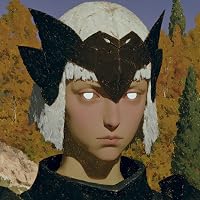
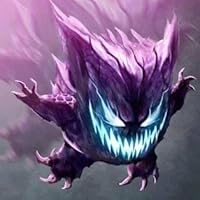
Nobody knew where it had come from, or what it wanted. Not even Jaive, the sorceress, could fathom the mystery of the fabled beast. But Tanaquil, Jaive's completely unmagical daughter, understood it at once. She knew why the unicorn was there: It had come for her. It needed her. Tanaquil was amazed because she was the girl with no talent for magic. She could only fiddle with broken bits of machinery and make them work again. What could she do for a unicorn?
Tanith Lee was a British writer of science fiction, horror, and fantasy. She was the author of 77 novels, 14 collections, and almost 300 short stories. She also wrote four radio plays broadcast by the BBC and two scripts for the UK, science fiction, cult television series "Blake's 7." Before becoming a full time writer, Lee worked as a file clerk, an assistant librarian, a shop assistant, and a waitress.
Her first short story, "Eustace," was published in 1968, and her first novel (for children) The Dragon Hoard was published in 1971.
Her career took off in 1975 with the acceptance by Daw Books USA of her adult fantasy epic The Birthgrave for publication as a mass-market paperback, and Lee has since maintained a prolific output in popular genre writing.
Lee twice won the World Fantasy Award: once in 1983 for best short fiction for “The Gorgon” and again in 1984 for best short fiction for “Elle Est Trois (La Mort).” She has been a Guest of Honour at numerous science fiction and fantasy conventions including the Boskone XVIII in Boston, USA in 1981, the 1984 World Fantasy Convention in Ottawa, Canada, and Orbital 2008 the British National Science Fiction convention (Eastercon) held in London, England in March 2008. In 2009 she was awarded the prestigious title of Grand Master of Horror.
Lee was the daughter of two ballroom dancers, Bernard and Hylda Lee. Despite a persistent rumour, she was not the daughter of the actor Bernard Lee who played "M" in the James Bond series of films of the 1960s.
Tanith Lee married author and artist John Kaiine in 1992.
Tanith Lee creó en 'El unicornio negro' una historia más infantil/juvenil de lo que era habitual en ella, pero su universo y estilo literario permaneció intacto. Siempre es una maravilla leer a esta autora, por su ingenio, la exuberancia de su lenguaje, su rico universo lleno de mitología clásica pero que retuerce para transformarlo en algo novedoso...
Adoré especialmente la parte inicial de este libro; ese castillo en medio del desierto con la hija de la bruja, el gruñón, los guardianes y ese misterioso esqueleto de unicornio... el relato está empapado de una atmósfera totalmente única que hace que mientras lo estás leyendo realmente sientas que viajas a otro universo, a ese mundo de los cuentos de hadas... pero uno más divertido, sutil y agudo. La historia va cambiando y creciendo, es un coming of age en el que viajamos con nuestra protagonista a encontrar su destino, y ese viaje siempre consigue sorprender aún caminando por los senderos habituales de los cuentos clásicos.
No es su mejor novela, eso está claro, pero simplemente adoro a esta autora, no puedo decir más.
Black Unicorn is a sly book. A teen girl rebelling against her career-focused mom, till she runs off after a unicorn. How very YA. And yet... the book keeps bumping up against what it means to be broken, to be lost, to be a part of something that has no place in the world. This is the kind of book that gives YA a good name.
Not to forget that the Peeve is the best comic sidekick since Gurgi.
My all time favorite book. An intelligent YA novel by Tanith Lee that never talks down to its audience. A creative take on this mythical beast, Lee's unicorn is hardly the gentle creature the reader expects. Tanaquil, the heroine, is a spirited and likable young girl, probably the most lovable of all Lee's characters. This fantasy novel takes place in a jewel of a fictional world and is ultimately about family relationships, learning that one's world and one's family may be far from perfect, but they are worthy of love. Tanaquil's relationships with her mother and sister are stunningly complex. A coming of age adventure story for young female readers, this book is a modern classic. Unfortunately, it's sequels don't live up to it's brilliance.
"It wasn't our fault we weren't given the best, but this, and all the things that are wrong. But can't we improve it? Make it better? I don't know how, the odds are all against us. And yet—just to think of it, just to try—that's a start."
So What's It About?
Tanaquil (a great heroine with a name that sounds like a cough medicine) spends her days dying of boredom in her mother's desert fortress. Her mother is a beautiful and accomplished sorceress but she has no time for her magically-bereft daughter, and it is up to Tanaquil to fill her days by repairing mechanical items. One day an obnoxious little creature called a peeve uncovers the skeleton of a unicorn in the desert, and Tanaquil reassembles it. Miraculously, her work brings it back to life, and the unicorn's escape into the desert spurs Tanaquil to chase after it, embarking on a quest to experience the world for the first time ever.
What I Thought
Black Unicorn maintains a graceful balance between its wry sense of humor and its mythic quality, between its emphasis on human connection and the realm of the entirely otherworldy. It's a strange, charming, disarming little book that never strays far away from the central theme of coping with the messiness and imperfection of the world.
The story is at its most impactful when the awe-inspiring depiction of the unicorn. It's not the kind of creature that would immediately come to mind at the mention of a unicorn: there are no rainbows or sparkles, and it has no proud spirit that is just waiting to be tamed by the right girl. The unicorn is truly an otherworldly, alien being that is astoundingly powerful and terrifying:
"It was no longer only a beast of bone. It had grown flesh and form. It was black as night, black as every night of the world together, and it shone as the night shines with a comet. On this burning blackness, the mane and the flaunting tail of it were like an acid, golden-silver fire off the sea, and it was bearded in this sea-fire-acid, and spikes of it were on the slender fetlocks. Its eyes were red as metal in a forge. It was not simply beauty and strength, it was terror."
The moment when I realized why the unicorn needed Tanaquil was an extremely powerful one; I nearly cried at the thought of this incredibly wondrous creature being trapped and ensnared, gradually falling to pieces alone in the desert, far away from the heavenly realm that it longed for. The entire section of the book where Tanaquil manages to help it return to its home and then wanders its land in bliss before realizing that her imperfect presence is corrupting it is so vividly realized and extraordinary.
Lee creates a richly realized desert world that is bursting with life and beauty, but in keeping with the book's theme of imperfection, there is a perpetual dark undercurrent to the vividness of the world, as when she describes the bizarre people who operate the elevators in the palace:
"...their feet never missing the treads, their eyes red, foaming at the mouth."
The same ideas are at play when the book deals with the messiness and complexity of family relationships. A significant part of Tanaquil's journey is spent reflecting upon family: first in assuming that her mother doesn't love her and will not bother to search for her, then in delightedly realizing that she has a sister that she never knew about, and finally in realizing that her mother, while certainly a complex and flawed woman, does in fact love her deeply. Her sister, Lizra, must also come to terms with her own deeply flawed father and her struggle to do her duty as princess. The fundamental lesson that Tanaquil learns, both from the unicorn and from her family, is that perfection is simply an impossibility for humans but that impossibility does not mean that we cannot still find joy and keep trying to make things better.
I'd be remiss if I didn't dedicate a distinct portion of this review to celebrating the peeve, a cranky and rambunctious little animal that has been enchanted so that it speaks (albeit with a very fragmented vocabulary) and accompanies Tanaquil on her adventure. It is a truly delightful, adorable and hilarious little pest of a creature, and Lee's sense of humor often displays itself when describing the peeve's antics:
"The herbal tea spread across the floor, and the peeve drank it, sneezing and snuffling. A piece of toast had fallen on its head, and it threw it off with an irritated "Bone, bone.""
It's notable that the female protagonist's main talent lies in her patient and painstaking mechanical leanings:
"Tanaquil worked carefully on broken dolls and clocks, music boxes, and even sometimes some of the soldiers' crossbows, or bits of the cannon, which were never used except by accident and often went wrong
In addition to that, she is an intrepid young woman who quickly learns to advocate for herself and navigate the complexities of the world outside her mother's fortress. A great deal of her navigation involves dealing with the sexist prohibitions and expectations of the men she encounters on her journey; they assume that she is helpless and subservient, and that she should not be allowed to work in repairs because she is a girl. She always outwits them or manipulates their expectations to serve her own purposes.
In addition, her incredible friendship and (later on) her sisterhood with Lizra are hugely important to her development throughout the story:
"For the first time, Tanaquil had met someone who fully accepted her ideas, credited her experience, did not try to placate or compress her spirit."
Lizra and Tanaquil see each other for the complicated and imperfect, multifaceted young women that they both are, and the story would be much the lesser without the blossoming of the trusting, unequivocally loving relationship between these two girls:
"She was several beings at once as she stood there. A girl who was sorry, a girl who was a sister, a woman who would rule, a child who wanted to be a child. She was sly and arrogant, sad and wistful, proud and immovable, selfish. Lonely. Like me. Just like me."
This is my first book by Tanith Lee, I'm pretty sure, which surprised me. I've always known the name, always known that people thought I'd be interested, and I'm sure I have actually bought some Tanith Lee books before, but I'm pretty sure that this is the first I've read. I was interested, but not really absorbed -- Tanaquil is okay, but the relationship with her mother, even the stranding in the desert, felt fairly average. There's not much explanation of the world -- which in some ways, I prefer: at least Tanith Lee didn't give me a massive spiel about the world, cramming it too full with information. It's a slim book, reads fast, but it wasn't tipping above 'okay' for me.
What changed my mind and earned it four stars was the ending -- not so much anything Tanaquil did, or the major events of the plot, but the fact that in the perfect world, Tanaquil and the peeve corrupt everything. And not just that on its own, but the way that Tanaquil reacts: the betrayed feeling, the anger. Some writers might have made her grateful just to have witnessed it or whatever, but Lee imagines what it would be like to be denied that, and I like the way Tanaquil deals with it.
Plot-wise, it wasn't that special, and I'm not sure I want to read the other books in the series. But those scenes, those moments, did speak to me.
“The unicorn was no longer terrible. It was only... perfect.”
I can't help but feel that Black Unicorn falls into a group of average books -there's nothing terribly wrong with it, but there was also not much that stood out.
Tanaquil is both likeable and relatable - we're introduced to her life confined in her mother's fortress in the middle of a desert. It's easy to see why Tanaquil wants to break free from her dull life which makes it easy to root for her. Still, she never quite grabbed me as a character. Her pet, which is referred to as the peeve, on the other hand, was very entertaining - I'd like one of those for myself! I was never quite sure how to picture it, though - it seemed like a cross between cat and dog and I ended up picturing it as some kind of raccoon-like animal.
I definitely enjoyed the writing - for such a short book, Tanith Lee created a very vivid world with fantastical sights. And while I enjoyed the world-building, it took a turn for the worse toward the end of the novel. Although the existence of a perfect world had been mentioned from the early chapters, I never expected that it would actually turn out to be heaven. I don't mind religious elements in a story, it just felt very out of place here. Throughout the novel, it struck me as a self-contained imaginary world, wholly unrelated to ours.
I liked that the story dealt with the relationship between characters - Tanaquil's difficult relationship with her mother and a budding friendship with a princess who also happens to have a rather distant relationship with her father. Nonetheless, while interesting, none of them were explored well enough.
It also had a nice ending in the sense that it promised a new adventure. Not necessarily one where you must read the next book - no, it's more about the feeling that you know Tanaquil is headed for something new. Although nothing but the peeve really gripped me, I will still look at the sequels to see where they take Tanaquil and the peeve next!
I think I discovered this book in early high school, shortly after it had been written, and I think it changed my life . . . ?
It certainly made it funnier, and more exciting! I love everything about this book from her mother's portrait waking her up like a motivational alarm clock to the unicorn itself to the peeve! THE PEEVE. Arguably the best part of this book is that there are basically talking groundhogs moiling around her mother's fortress, and it's one of them that leads her to the bones of the black unicorn- "Bone! Found a BONE." My older brother read this and he and I used to say that to each other all the time and laugh like idiots!
Had high hopes for this outing from Tanith Lee being a big fan of some of her other work. I was ultimately disappointed by this; light YA fare here with some interesting ideas but failed to really capture my imagination. I liked the ideas of a secondary world, mysterious unicorn and an ordinary girl from a magical lineage who discovers that she has an extraordinary gift. Some good ideas that failed to be really compelling, everything is just light, flat and lacking in depth.
This is definitely a book for a younger audience, an older more discerning reader will not find much here.
Some might question why I would rate this book Four out of Five Stars, and I will back up my reasoning for this by stating that at first read, it may not seem like it's worth such a rating. The beginning all the way through until nearly the very end is full of chaotic, annoying, even frustrating situations. There are so many things that are all over the place, and that go wrong or annoy the heck out of you in this book, or that make no sense in any logical way possible. Plus the people, with the exception of--ironically--Gork, in my opinion, are all for the most part things to just get in the way and muddle everything up even more. It can be a really annoying read because the entire mood of the book is wrought with high-tension and a very tangible line of ire. Every second you can sense an aggression in the characters or situations the story leads you through. And when there's no anger, you're still liable to grit your teeth and try to muscle your way through. Even the way the story reads adds to this, and since this is the only book I've read by Tanith Lee, I'm not sure if this is her writing style, or if she did it on purpose. However, I'm leaning towards the second one for a reason that I will explain shortly. The book for the most part, to sum it up, comes off as a very terse, very aggravating read. There's little sense in it, and the situations you read about are hard to accept, because they're either annoying or revolting or insulting enough to make any sensible person refuse to.
...and then you get to the part of the book's namesake: The Unicorn. It's not your normal fantasy book, because instead of being filled with awe-inspiring magical lands and deeds and High Magic, and blah blah blah, etc.~ You have the world of chaos I described to you above. Indeed, when you first are introduced to the unicorn in the book, it's not a fussy, pretty-pet-me pony-type like you expect, with posies in its hair and all that girly mush (no offense, gals; I like my girly things every so often too~) you expect from what you've heard of unicorns. No, instead you have this powerful, otherworldly, fearsome creature more like a monster than some frilly confection of a girl's imagination. This creature alone strikes an elaborate and shadowy feeling of magic throughout the story, casting a streak of vivid life on the obscenity of the contrived world around it. It's so alien in the scenario of this book that it immediately catches you, and refuses to let you go. You read on for pages wondering where it went, when it'll appear again, what it wants and where it's taking you.
Then you find out. You find out everything. But it doesn't prepare you for the thrilling, beautiful concept that this book throws at you. It's like a fraction's glimpse into something you never expected, and yet makes so much...sense! And just as soon as you've got it, you get thrown yet another curve. And it's almost too much to bear, but through it, the main character, Tanaquil, finds a strength that's no longer grim, no longer stumbling or bitter. She grows in a way that you almost don't notice until at the very end of the book you realize you're seeing someone else talking, and that all the smarts and sarcasm she had before have now gone through possibly the worst and most beautiful fire ever. Knowing what she had to turn her back on would wrench anyone's heart right into their throat, because it's cruel and wonderful, sad and yet has to be the way it ended. And because of that, you realize her mind and her heart have been cured by the flames of that terrible trial, and she's grown out of that stubborn, vengeful child she was at the beginning of the book.
Oh, one other character I must talk about. The Peeve. It's actually the name of a race of little animals with thick, curly fur that live in the desert and like to burrow. I always imagined them as a cross between these really fuzzy doggies, with all their snuffling and snorting, and bone-digging and such. *Laughs* There's one in this book, and it doesn't have a name throughout the entire thing, so while Tanaquil just talks to it directly, the author addresses it "the peeve" and so on. But. IT IS SOOOOOO CUTE. Seriously! I'm a big animal lover, and I've read a TON of fantasy books with different types of animals in them, old and new species alike. But this one... is just... EPIC!!! I am seriously in jaw-dropping, fangirly-squeeing, "I MUST HAVE ONE NOW!!!!!" love with the Peeves! XD They are flippin' hilarious and undeniably cute!! <333 Plus the one that's with Tanaquil can talk, since some loose magic touched it, so you get these absolutely precious lines from it throughout the rest of the rancid situations in the book that just bring a smile to your face or make you laugh. And trust me, in this book, you could REALLY use that! From every territorial to dog-like trait it has, to the image of it throwing up tons of sand as it digs furiously for whatever it's looking for now, is so priceless in this book.
In the end, the greatness of this book is in its ending, when you find out not just what the unicorn wanted Tanaquil to do, but also what happens when Tanaquil follows it into where it leads her. And I'm being very specific here. There is something amazing that happens, but to avoid spoiling the book, I don't want to say it. However, there's something that happens when Tanaquil's in that last place the unicorn leads her to, and when she turns around and looks back behind her, and sees what happened because of the fact that she crossed that threshold...the words that she says to that place, and the way it accepts her words...that's one of the most powerful scenes in the entire book. The power of what she decided, and what she said there in that place, is profound. It's part of the choice she makes, on the very last page or two of the book, when she tells the peeve what she wants to do now. What she's going to do. All the acrid, vicious, aggressiveness of her world and ours is made up for by those last parts of the book. It makes every bad and ireful thing worth it; makes the abrupt, wild, chaotic journey seem like the smallest price to have paid for what she's learned and decided to do now. And I can honestly say it's one of the best endings to a book I've ever read. It's got such hope, maybe a foolish, thin hope, but powerful and unstoppable for someone who saw just what it could be like if it was really accomplished.
*Smiles* You won't know the full meaning of it until you've read this. Trust me, all the annoyances and stupidity and disgust is worth it for the end. It's one of those books, and definitely one of those experiences. It's just so worth it. If you're a fantasy or magic lover at all, you have to give this book a shot. It's probably not the typical magical fairytale you're used to, but it's a great story for feeding the mind with rich, amazing ideas. Bringing in my own personal experience, this is one of the five or six books I read out of hundreds when I was in 7th Grade that always stuck with me. And being a huge Fantasy reader during that time, almost all of them were the same genre as this book. Yet this was one of the very few that I still remember and keep close to my heart even now, nearly ten years later. It has influenced a great deal of my own writing over the years, until it's become a permanent staple of my imagination. *Smiles warmly* And that is the highest compliment I can pay a book and its author.
I still feel it was missing something, and it left me needing more--wanting much, much more. I could never bring myself to say it was "amazing," because there was always an element missing to the characters themselves that made it hard to feel an affinity even for Tanaquil at some points. She was a wonderful character, but maybe it was the style of the book that threw me off. It was very to-the-point and didn't elaborate on the main character in a lot of places where it could have. This made it hard to relate to Tanaquil as closely as I wanted to a lot of times. If there had been more focus on Tanaquil as the main character, this would have been eased and probably made the book a lot more relate-able and even enjoyable. Instead we get a sense that Tanaquil herself is just another character, one that we happen to be following more than the others. That's the only real complaint I have for this book: that Tanaquil as the main character should have been placed into that position a little more relate-ably instead of seeming so distant from the reader. At the same time, I can understand how this would be difficult considering the mood of the story, but I feel that it should have been manageable, and would have greatly improved the book.
Nonetheless! This is a book that is worth the read, and will probably add variety to the typical fantasy books that are out there. Its ideas may come off coarsely, but the ideas themselves are so worth your reading that it well makes up for it with them. Plus, the character is smart, if a little cynical at first. It's a great book for anyone expanding their Fantasy/Magic collections, and will give you a swift, interesting lesson in mood-setting. Pick it up, in the library or on sale, but give it a shot. You may find it more interesting than you bargained for, even if the writing style may sometimes catch you off guard and set you off balance. It's earned the stars I gave it by my book!
I enjoyed this coming of age story about a young girl, daughter of a sorceress mother who mostly neglects and ignores her as she seems to have no magic. Instead Tanaquil spends her days wandering the desert around her mother's fortress and digging up fossils, or mending things that belong to her mother's servants and soldiers, though she has started to suspect that they feel sorry for her and are sometimes breaking things to give her something to do. One of the animals who live in the desert - called peeves - has been affected by the leaky magic from her mother's spells and has a rudimentary language. It starts bringing "presents" to Tanaquil and eventually brings a wonderous bone. When Tanaquil persuades it to show her where the peeve found it, this triggers a series of events which will lead them both to go out into the world on a journey of both outer and inner discovery.
Tanaquil is resourceful and plucky, with a dryly humorous point of view, and despite falling into danger at times doesn't always have to rely on others to get her out of it. In the course of the story, she matures as she learns more about her relationship with her mother and also with other family members she had never met before. Her skill with mechanisms is integral to the plot and she learns the true secret behind it. And the unicorn of the title is a dangerous, fearsome creature rather than the fluffy and twee portrayal often given to unicorns in other works. Light relief is provided by the peeve, who also becomes a loyal friend. The story has a satisfying ending, which leaves open the possibility of more adventures - and I've just seen on Goodreads that there is at least one sequel. All in all, I thoroughly enjoyed it and am awarding a 5 star rating.
I remember reading this book over and over as kid. It was one of the first fantasy books I remember reading. I love Tanaquil in this book.This is a book about coming of age, discovering yourself, and realizing you are exactly who you are suppose to be. One of my favorite books of all time!
Black Unicorn is strange. It should be just another mediocre 1990s YA novella. All the components are accounted for: a plucky teenage heroine, her animal sidekick, and her overprotective mother. The unicorn is the first hint that all is not going to be three stars. It's not our heroines sidekick, instead it's some galaxy bones she found, turned to awe-inspiring monster--a perfect creature unfathomed in an an imperfect world.
I loved how real this desert world felt. How the guilds, and kingdoms and witches function in it. I loved how capable our girl is, in a believable way. I loved the brief glimpse of the perfect world where the unicorn comes from, where apples sing on trees and every human step is a curse.
Very much worth reading if you want to transport yourself back to your primary school library, sitting hidden between the shelves, just inhaling as many fantasy books as you can before lunch ends.
I love this book so much. Along with Dragon's Bait, Black Unicorn is one of the books I would check out from the library over and over when I was in middle school. I haven't read it since then, and I'm pleased to say it holds up. It's just as magical as it was for me 20 years ago.
Tanaquil is the 15-year-old daughter of Jaive, a powerful sorceress who lives in an isolated fortress in the middle of a vast desert. Tanaquil isn't a sorceress like her mother, but she has an incredible ability to fix things. A peeve, who can talk (sort of) after being accidentally splashed with Jaive's magic, begins to bring Tanaquil mysterious bones. Following the peeve to where it found the bones, Tanaquil unearths the entire skeleton, and pieces it together. A unicorn. After a brief, magical encounter at a fortress dinner, Tanaquil dashes into the desert and wakes in the morning confused and miles from the fortress. With the peeve by her side, Tanaquil begins to trek through the desert, following the road fate laid for her.
Despite this technically being a YA book, Tanith Lee is well known for her dark "adult" fantasy and this book definitely toes the line between the genres. I highly, highly recommend it.
With elegantly placed brushstrokes Tanith Lee quickly paints a complex portrait of a realistic character and lets her Unicorn breath life into her and into the entire story. I love complex characters that are easy to identify with and Tanaquil is such a character! Frustrated by a life empty of adventure Tanaquil is quickly drawn Of into a vast and dangerous world with only her not quite tamed and quite magical animal friend, the peeve, by her side. This story quickly touches you, draws you in, carries you along, and fulfills its promise while leaving you eager for more.
This took a lot longer for me to read than its 140 pages would imply. The type is small and the writing dense (in a good way!), so I wasn't able to zip through it the way I can other, fluffier fare.
The story is packed full of great descriptions and wonderful little moments (basically everything the Peeve does is The Best). Tanaquil is a great heroine, and it was good to watch her become self-sufficient. I really enjoyed rereading this.
Танит не е просто кралицата на готическото фентъзи и поетичната фентъзийност, тя е и абсолютната майсторка на междужанровите композиции, уиърд текстовете и красивите приказки, които докосват не просто детето, душата или някоя позаспала струна в нас, но сякаш открехват вратите към измеренията на сънищата, на паралелните реалности, на отвъдните възможности. Затова няма как да не я обожавам напълно лично и искрено, и не че искам да натрапвам чувствата си на света, но просто така се получава, че Ли обективно няма лоша книга, няма повтаряща се идея, няма нищо, което да прилича на което и да е друго четено някога. И затова си я чувствам толкова моя , че чак ми става царствено, когато я чета.
Поредицата за Еднорога може да се причисли до известна степен сред заглавията предназначени за по-младите читатели, също като Дневниците на Клайди и Принцът на бял кон да речем. Сюжетът се върти около главната героиня – порастващо дете, тъжно, самотно, отегчено, и … живеещо във величествен дворец насред безкрайна пустиня, заобиколено от тайнствени хора и луди демони, и майка – леко откачена магьосница, чиято дива магия кара от кранчето в банята да текат конфети, да се мотаят разни виолетови котенца, ползвани за носни кърпички, а украшенията по стените да плюят активно по минаващите край тях. Танакуил няма собствена магия, обаче, само страст към поправяне на абсолютно всичко механично, внасящо лек стиймпънк нюанс, без да има някакъв сблъсък между световната подредба на техника и вълшебства. Има си и собствено животинче – пийви, някаква смеска между котка, лисица и сурикат, крадливо, смрадливо и говорещо простотии с речник на пиратски папагал насред буря. И откриващо кости на еднорози, които в наситения с магическия климат дворец придобиват нов живот и отвеждат читателите на едно пътешествие до далечни морски страни, където митът , злобата и човечността се сливат в почти епична амалгама носеща уникалния почерк на Ли, отличаващ се с това, че представа си нямате през цялото време накъде отиват нещата и докъде по дяволите могат да стигнат. И те стигат обичайно до поне една паралелна вселена, вътрешен свят и демонично измерение в едно.
Черният еднорог помага на героинята да прости на близките си, Златният – да си позволи да прости на другите, а Червения носи прошката към самата себе си. Защото децата често се давят в самообвинения за това, че не са постигнали мечтите си, а и желанията на тези около тях, и още – очакванията на всички останали, и това съсипва и смазва дори и най-талантливото съзнание на истински творец – създател, носител на специалната божествена искра, която може да променя реалността, времето и смисъла на практически всичко някога измислено . Или поне така е във света на Танит Ли. Еднорозите не са кротки бели кончета, които се закачат с девици, нито пък мъдри всевечни алтернативи на подлите дракони. Те са еманацията на мечтите, на стремежите и на целите, които си поставяме горещо в несъзнателните моменти , когато създаваме смисъла на живота си. И да полетиш на гърбовете им е онова , което наричаме неясно осъществяване на житейските задачи , защото дори и поглед отвъд реалността, която сами сме си поставили като неотменима, е истинска победа над самите нас, и според мен онова, за което душите ни са решили да се натикат в поредната телесна обвивка , вместо да прекарват вечността в идилията на всевъзможността. Така ме кара да мечтая Танит Ли.
This book has been on my TBR list for years, mainly because I've had a devil of a job tracking down a copy. Finally I found one at an amazing bookstore I've recently discovered here in Toronto that specializes in SF/F (Bakka-Phoenix Books for any locals who may be interested). Let me tell you, it was well worth the effort!
Black Unicorn by Tanith Lee is one of the most beautifully written books I've ever encountered. It's short (only 138 pages), but not a single word is wasted. I finished it yesterday and I am still in awe. The story has everything I love - well developed characters, tight plot that allows for both shallow and in-depth enjoyment, adventure, a sense of humour, solid world building sans info dumping, a satisfying conclusion that leaves room for more without resorting to a cliff=hanger...you get the idea. As far as I'm concerned, it's a perfect story.
But the writing! I really can't say enough about the writing. There were points when I had to go back and re-read a phrase/paragraph/sentence just to revel in the flow of the words or the images it invoked. Or both. Like this section:
"Soon wonderful shops began to open in the buildings. She saw shelves of cakes like jewels and trays of jewels like flowers and and sheaves of flowers like lances and, in an armorer's, lances like nothing but themselves."
Gorgeous! Put this book on your TBR, and keep an eye out for it! You won't regret it.
A young girl, ignored by her sorceress mother and with no distractions in the desert fortress they live in, discovers a unicorn skeleton. Employing her only talent, Tanaquil rebuilds the skeleton with added parts to make it a movable work of art. She doesn't realize that she does indeed have magical ability and the unicorn bones will transform into a living beast. Tanaquil is thrust into a fantastic journey as the unicorn leads her to the City by the Sea where she discovers who she really is.
Tanaquil is a rebellious teenager who has been forgotten by virtually everyone in the household and is left to her own devices. She proves to have powerful magic of her own which enables her to travel across miles of empty desert to visit the city of her mother's tales. There she finds the means to make a living and take care of herself. She's a 21st century girl in an archaic world.
Lee's prose, as always, is a pleasure to get lost in. Her descriptions of characters, scenery, and fantastic animals are so vivid the reader is immersed in the story. This book was a quick read and well worth the time to drink it all in.
First of a trilogy of novellas aimed at a younger audience (these were written before "YA" was a thing, and honestly might skew a bit younger than that even; towards junior high or early high school, at least in US terms).
Tanaquil lives in a palace in the desert with her somewhat neglectful sorceress mother, the palace servants and guards, and a talking peeve ("peeve" being some sort of small, furry animal -- I mentally envisioned something somewhere between a raccoon and a badger; and this one talks because it got accidentally splashed by some of Tanaquil's mother's magic).
One day the peeve brings home a bone that glows like it's made of starlight; more bones follow and come to find out, they've found the skeleton of a unicorn. Which, naturally, comes back to life when the skeleton is complete and leads Tanaquil and the peeve on a journey across the desert and to a far, coastal city with its scary ruler and his daughter Lizra, herself just about Tanaquil's age.
An altogether charming book with an engaging (if impetuous) heroine, written in Lee's typically gorgeous and evocative prose.
This is a book I read many years ago in childhood, and I wanted to revisit it as an adult. A few things to say about this one:
Great pace, descriptions, & novelty—Tanith Lee has a strength for pace which keeps you going through the novel like a steamroller. She writes simply enough you don't miss important details, yet strongly enough her sentences aren't boring. She has a knack for thrusting the unknown and the magical in your face and making you accept it. At the same time, the magic isn't cheesy, childish, or gimmicky. It's grungy, unsettling, and then... well, you'll see.
Though the book is called "Black Unicorn", the magic is mature and even refreshing. This is no "friendship is magic", Disney princess unicorn book for a twelve year old.
One major weak spot?
The author's underestimation for dialogue and character. While the main character and several side characters trudge along with all their strengths and weaknesses, the rest of them fall flat like movie standees. Don't get me wrong—they're vividly described as far as looks are concerned, and quite beautifully at that—but the depth of actual tangibility just isn't there. Several events which unfold are forced, unnatural to the characters, or utterly predictable. This is mainly seen though the lens of the vast lack of dialogue. When there is dialogue (because there usually just isn't in this book), it's only ever short four-word phrases, perhaps a full sentence, maybe two sentences, and that's all. Every once in a while, a character will actually get to speak their mind, but it's very rare. This book reads more like a dream than real life. This can be a good thing, yes, but here, I think it was the author's weak point rather than intention.
I think Lee gets away with this because her mind for the fantastic is, well, fantastic. However, I have to take a star from my rating for this. The other four stars—one for pace, one for taking the old and literally making it new (as you will see for yourself if you read this), one for describing this accurately enough I believe it, and the last for actual word craft. The sentences are well-formed and fit the tone of the story.
Would I recommend this to fantasy/sci-fi fans? Absolutely yes—particularly for the novelty and execution of ideas.
Would I recommend this to fans of fiction in general? Yeah, I think so. If you're on the fence, this might be one that gets you into the magic.
Would I recommend this to everyone else? Probably not—the lack of character substituted for huge pictures and vast beauty will might drive you batty.
First book I've ever read by Lee, and ultimately I have to say it made me curious about her other works. Black unicorn starts out in an interesting setting with a likable protagonist, a girl who's actually capable. Though the first chapters are a bit slow, the story really starts to pick up after part two. Most of the time Lee's writing flows very smoothly but she does tend to ramble on about unimportant events or descriptions. I had high hopes (started out with none) for this story as you get a sense of 'my first adventure' at the start of part two. However, I find that little over halfway through the story loses its momentum. The protagonist takes on a more passive role and as a result the plot tends to drag on a bit, adding to that pages of --while deftly conjured-- lengthy descriptions trying to set a scene. The protagonist redeems herself somewhat nearing the end of the story (it's hardly her fault the writer held her back) and we get a nice come full circle. Then Lee ruins it by writing an entire 'snorefest' chapter (describing literally everything) which could have been told in about one paragraph. The epilogue however softens the blow a bit but the ending isn't all that special.
I think that sums up Black unicorn nicely, a good read with nice ideas but nothing special. And you know what? It doesn't need to be. It's been too long since I've read an average book with it's ups and downs. Black unicorn is the kind of novel you could finish in a day, sitting by the pool, and you wouldn't have wasted your time.
First on the list is The Black Unicorn, by Tanith Lee. There’s a little girl, and she’s the daughter of a sorceress. Mother and daughter don’t understand each other, and Tanquil is frequently left to her own devices. One day she finds the skeleton of a unicorn in the desert, and Tanaquil’s life is forever changed. She is swept away from her home, where she learns her own inner strength and her place in the world.
The Black Unicorn is less dark than the other Tanith Lee books that I’ve read. It fits more squarely in the fantasy genre, whereas her other books tend to veer into horror. But this is fantasy with unicorns, clockwork, and automatons, which gives the whole thing more of a steampunk vibe than anything else.
Speaking of clockwork, one of the things I enjoyed the most is that Tanaquil is an engineer. When she’s bored and lonely, she tinkers and fixes things. And one of the central messages that I got from The Black Unicorn is that everyone’s magic is different, and that some people are traditional witchy sorceresses, and other people are tinkerers, and that our differences are something to be celebrated and embraced because the world needs all of us to be whole.
First line: The first thing Tanaquil saw almost every morning on waking was her mother's face.
4 1/2 stars rounded up.
Tanith Lee almost always writes amazing fantasy, and "Black Unicorn" is very, very good. Her writing style is lush, evocative, beautiful. Her settings are poetic. In "Black Unicorn", Tanaquil is the ignored young daughter of a sorceress, skilled as a tinker/mechanic, but seemingly without any magical ability. Her loneliness leads her to discover, with the help of a pet peeve, the bones of a unicorn in the desolate desert which surrounds the fortress in which she and her mother live. Tanaquil builds the unicorn skeleton with gears and devices, and by magical contrivance the unicorn is reborn to the delight and horror of the surrounding communities.
The story itself is beautiful - it is a coming of age story for Tanaquil, of loves lost for the sorceress and her Prince lover, of family, of Perfect Worlds and Imperfections. For fantasy, this is the real deal.
This is a very good fantasy novel with interesting characters and rich atmosphere. The story is interesting and has a very fairy tale feel to it, however, i feel like half of the main character's adventure was filler and would be better suited to be a long fairy-tale or, my preference, a longer, more in depth and meaningful epic.
The whole book i asked myself what the point was but it's not discovered until the very end. All of the struggles were wrapped up either as they went or at the end, which i feel was a disservice to the story, it was a bit jarring being yanked from one increasingly hostle event, to have it resolved in a flash and start another.
Despite those relatively minor flaws this seems like an excellent starting place. It was very easy to read, the characters are likable and the story has much potential. I look forward to the continuation of the story with more developed main characters.
I really liked this book and was excited to get it as part of a Humble Bundle, but both that version and the version for Kindle are so woefully digitized that it's pathetic. First paragraph:
"The first thing Tanaquil saw almost every morning on wakingwas her mother's face. But that was because a painting of Tanaquil's mother, the sorceress Jaive, hung opposite the bed. The paintingof Jaive had a great bush of scarlet hair in which various jewels,plants, implements and other small animals she used inher researches were caught"
Three sentences and 4 errors:
wakingwas paintingof jewels,plants (missing the space after the comma) inher
Almost every other sentence has two words without a space between them. I seriously could not read this wonderful book in this wretched typo ridden form.
ETA: Yay, the publisher fixed the problems (at least on the first page)
What an interesting writing style. At times, Tanith Lee does carry on a bit, with her detailed, incredibly dramatic, poetic descriptions of things. Still, several times I was amazed at her poetic prose. She can do amazing things with the turn of a phrase. Clever, intelligent, and highly feeling all at once.
The story itself, the adventure, was pretty entertaining and original, (especially the first half), but honestly, my favorite character was this little desert animal called a "peeve." It was sooo cute and well done that it kept me reading through the denser parts of the book!
A quite good Young Adult book, (or Big Kid book?), as an intro to fantasy novels, especially with the strong, independent young 16 year old female lead character.
I first read this either shortly before going to college or during the first year or two I was in college. This story captured me during that first read because of its depiction of Heaven. A perfect world, where sin and death cannot exist. Where humans, as they are, cannot live.
I don't know what Tanith Lee believed about religion and faith. I don't even know if she knew. But her work reflects pieces of truth, whether she intended it to or not.
Somehow, I had forgotten the peeve. He is both pest and companion to Tanaquil, and he made me laugh several times, and he reminded me a little of the Squigim from Bruce Coville's The Unicorn Chronicles.