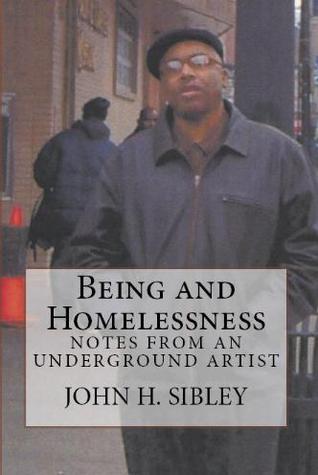
Do not read this book, unless you’re prepared to lose your place in line, to have your applecart overturned, your ideas upended. As with the harsh Chicago wind, The Hawk*, this book knocks over ideas like trashcans. Forget everything you thought about philosophy, art and “the homeless.” They turn out to be individuals, not a collective noun. Some are painters. Some, philosophers. This one is both, and a writer. Only this specific homeless painter could have written this book, a work with rising patches of genius, like the neck of a giraffe.
A penniless man fills with vast culture, more than the billionaire running the White House, who does not dine on water, on jazz, on Velasquez and on Caravaggio:
“While listening to Trane’s music and looking at the master’s paintings I was swept into another dimension, which transcended my material impoverishment. Sitting there, I thought, I could have been one of Caravaggio’s homeless models. Or Velasquez’s Moorish assistant whose painting skill rivaled the master’s”(42).
This Moorish assistant writes with more philosophy than all of D.C., starting with the idealist Berkeley, who lived three years in colonial Rhode Island near this reviewer. But Chicagoan Sibley’s homeless winter nights disillusion him with God, and lead him to Kierkegaard’s existentialism, his leap of faith from the absurd universe, from the dread and chronic depression experienced by modern mankind (68). (Or modern manunkind as e.e.cummings has it). Other philosophers come up like Schopenhauer and Korzybski.
Think you’re familiar with art? Expect to meet, up close, well painted, the unfamiliar with the famous: Basquiat, Emilio Cruz, Frederick Remington, Kerry Marshall, Maurice Wilson, Betye Saar, Pipin, Joseph Yoakum, Cortor, Ed Paschke, Charles White, Pier Manzoni, Norman Lewis, Renee Townsend, Warhol, “Doc” Towns, Venus Blue, Lucius Armstrong, Muneer, Karen Mzique, Stanley Kincaid, Gale Sheri Blackmore, Milton Roberts, Lorenzo Pace,Thomas Hart Benton, Art Green, Gladys Wilson, Judson Brown and Philip London. To name a few.
Up close, he sees at Burger King years later a brilliant friend from art school, Maurice Wilson, Yale M.F.A., Seagrams Award winner.
“‘Maurice!’ I whispered… He looked at me, squinting, his face Sudanese black with shades of sienna and umber…’Sit down, Sib…they might see you.’ I sat down, wondering what they he was talking about. ‘Who might see me?’ I asked, puzzled as I looked around, slightly paranoid from his words. ‘The FBI, CIA, NSA. I tell you Sib, the muthafuggahs tryin’ to kill me.” I said in disbelief, “Why you, Maurice? It’s your imagination man. No one is after you…Maurice, you got somewhere to sleep tonight? Let me give you my business card.’ ‘No, Sib, I can’t take it. That card may have poison on it…’ I tried to shake the gloom that clung to me as I looked at a broken-down genius. A genius possibly like Friedrich Nietzsche, …who sat in a vegetative state in an asylum for more than a decade”(58). This portrait of his fellow student Maurice follows those of their Art Institute teachers.
Sibley finds his route to homelessness c/o the American Court system paved by a couple of stereotypes: All Blacks Look Alike and the Jewish Lawyer. The latter urged a guilty plea because it would result in parole, but also because he did not know anything about his client, an Air Force Vietnam vet. Once he learned DocSib graduated the Chicago Art Institute School and painted, with a magazine article about his art, the well-intentioned lawyer regretted the guilty plea. As well he should, since the wrongful conviction in a cold 70’s December, for stealing $10 from a white woman, a felony, cost the writer his home and a career.
Some giraffe-like patches of genius. Leaving at 6PM every evening after working at a temp agency or doing street portraits, “south on State Street listening and feeling the seismic, metronomic whump, whump, whump of the Jurassic jackhammers…Everywhere I saw vehicles that looked like grazing Triceratops wallowing in mud. Giant cranes, bobcats and metallic Brontosauruses. The construction workers wore bright yellow hats and orange protective vests, grafting like soldier ants. They worked with gargantuan, metallic, robotic slaves.
“It was like gazing at a Jurassic subterranean nest. A vast pit of forgotten cultures, fossil records, landfills, and an ancient Indian burial ground…tribes like Chicago, Illiniwek, and Potowatomi, civil war soldiers, unknown murder victims, dogs, cats, and the homeless under the subterranean floor.”(69).
Additionally, Sibley builds an anthology of interesting quotations, from Orwell, “I wanted to submerge myself, to get down among the oppressed, to be one of them and on their side against the tyrants!”(Down and Out in London and Paris, 1933). To Renoir, reportedly, “A painter also has to paint with his balls”(63). To Julian Barbour, “Some people can pass a Cathedral and not notice it”(27). To Ira Katznelson’s When Affirmative Action was White, how the G.I. Bill in NY and NJ funded fewer than .003% non-white mortgages. Or, back to Orwell, “There is something horrible about being homeless at night. The coldness, death lurking around every corner, the isolation”(Ch 4 epigraph 67).
*Singer Lou Rawls calls it The Hawk (70).