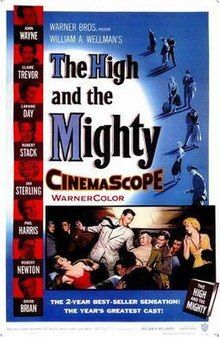
Ernest K Gann was an aviator, author, filmmaker, sailor, fisherman and conservationist.
After earning his pilot license, Gann spent his much of his free time aloft, flying for pleasure. The continuing Great Depression soon cost him his job and he was unable to find another position in the movie business. In search of work, he decided to move his family to California. Gann was able to find odd jobs at Burbank Airport, and also began to write short stories. A friend managed to get him a part-time job as a co-pilot with a local airline company and it was there that he flew his first trips as a professional aviator. In the late 1930s many airlines were hiring as many pilots as they could find; after hearing of these opportunities, Gann and his family returned to New York where he managed to get hired by American Airlines to fly the Douglas DC-2 and Douglas DC-3.
For several years Gann enjoyed flying routes in the northeast for American. In 1942, many U.S. airlines' pilots and aircraft were absorbed into the Air Transport Command of the U.S. Army Air Forces to assist in the War Effort. Gann and many of his co-workers at American volunteered to join the group. He flew DC-3s, Douglas DC-4s and Consolidated C-87 Liberator Express transports (the cargo version of the Consolidated B-24 Liberator bomber). His wartime trips took him across the North Atlantic to Europe, and then on to Africa, South America, India, and other exotic places. Some of his most harrowing experiences came while flying The Hump airlift across the Himalayas into China. In the years to come Gann's worldwide travels and various adventures would become the inspiration for many of his novels and screenplays.
At the end of World War II, the Air Transport Command released the civilian pilots and aircraft back to their airlines. Gann decided to leave American Airlines in search of new adventures. He was quickly hired as a pilot with a new company called Matson Airlines that was a venture of the Matson steamship line. He flew from the U.S. West Coast across the Pacific to Honolulu. This experience spawned ideas that were developed into one of his best-known works, 'The High and the Mighty.' Matson ultimately soon fell prey to the politically well-connected Pan American Airlines and failed. After a few more short-lived flying jobs, Gann became discouraged with aviation and he turned to writing as a full-time occupation.
Gann's major works include the novel The High and the Mighty and his aviation focused, near-autobiography Fate Is the Hunter. Notes and short stories scribbled down during long layovers on his pioneering trips across the North Atlantic became the source for his first serious fiction novel, Island in the Sky (1944), which was inspired by an actual Arctic rescue mission. It became an immediate best-seller as did Blaze of Noon (1946), a story about early air mail operations. In 1978, he published his comprehensive autobiography, entitled A Hostage to Fortune.
Although many of his 21 best-selling novels show Gann’s devotion to aviation, others, including Twilight for the Gods, and Fiddler's Green reflect his love of the sea. His experiences as a fisherman, skipper and sailor, all contributed storylines and depth to his nautical fiction. He later wrote an autobiography of his sailing life called Song of the Sirens.
Gann wrote, or adapted from his books, the stories and screenplays for several movies and television shows. For some of these productions he also served as a consultant and technical adviser during filming. Although it received positive reviews, Gann was displeased with the film version of Fate Is the Hunter, and removed his name from the credits. (He later lamented that this decision cost him a "fortune" in royalties, as the film played repeatedly on television for years afterward.) He wrote the story for the television miniseries Masada, based on 'The Antagonists.'
When I was serving in the U.S. Air Force back in the early 1970s, one of my friends there was a pilot and a big fan of Ernest K. Gann. Based on his recommendations, I read four or five of Gann's adventure novels. However, I really don't remember much about them from my readings over 50 years ago. But I recently found this old paperback copy of High and the Mighty in a box of paperbacks that I have had since the 70s. Since I had never read it and I know that it was made into a movie starring John Wayne, I decided it had waited long enough!
The novel was written in 1953 and is about a commercial flight from Honolulu to San Francisco, its passengers and crew, and the struggles to fly the plane after it loses one of its engines and the propeller damages the wing resulting in massive fuel loss. The captain of the plane, Sullivan, has a lot of flight time over the ocean but hasn't really faced any real crises. However, his co-pilot, Dan Roman, is somewhat over-the-hill at age 53, but he has done it all including surviving a crash that killed his wife and son. The crew also includes a navigator, second officer, and stewardess. And then there are the passengers, each with a story of their own including a newlywed couple, a jealous husband, a man dying of bone cancer, a Korean woman on her way to school, etc. The novel sometimes reads like a soap opera in telling the stories of the individuals involved but when the crisis of the engine fire and propeller loss occurs and the passengers are alerted to a probable ditching in the ocean ahead the pages started turning faster.
For the most part, I really enjoyed this one. It was a real nail-biter up till the very end. However, as I said, some of it read like a soap opera which I think was very common in novels of the 1950s. It is also very dated and contained some definite misogynistic and racist language but again this was the norm for the time this was written. There was also a lot of technical dialog and descriptions of the operation of an airliner. I believe Gann wrote this to somewhat educate the public on what it takes to be a pilot. Gann was a sailor and aviator and had experience as a commercial airline pilot. I think if I had read this back in 1953, I would be really hesitant to fly on a commercial flight! But I definitely want to see the 1954 movie version with John Wayne. My father was a big John Wayne fan and I remember seeing a lot of his movies when I was young but somehow missed this one. Hopefully, I can find it on some streaming service.
I had a hard time deciding whether to give this book 5 stars or no stars.
Reasons for 1 star:
Unbelievable plot -- -Very sexist -- Women are "girls", stewardess, mistresses or hysterical. -Politically incorrect ("slant-eyed", "Orientals") -Unsympathetic characters -- Don't any nice and normal people ever take airplanes? -Cardboard characters -- The grizzled old wise pilot, the young upstart pilot, the Captain of Industry, etc. -Constant smoking by everyone on plane including the captain, co-captain and flight attendant (oh, wait, I mean the "stewardess"). I feel like I've taken several years off my life span from the second-hand smoke.
Reasons for 5 stars:
-Great fun to read and I had trouble putting it down. -Very interesting to read about a different time when faxes were facsimiles and everyone smoked. -Also interesting to read about how the culture of airlines have changed. Then Captains were either "Captain" or "Skipper" and there was a very clear and strict hierarchy. The Captain was never to be challenged. Now the Captain on an American airline must be called by his/her first name, according to airline policy, and all are encouraged to raise questions. It is thought that with this culture, there are less accidents than in other countries where the system is still hierarchical . -Fascinating to observe the lack of security compared to present procedures.-Raises provocative issues such as the nature of good leadership, courage, responsibility, morality
So mathematically if I can't decide between one and 5 stars, I guess my rating should be three stars, but that didn't seem right either. On the whole I enjoyed it and am glad I read it, so I'll go with 4 stars.
Enjoy. But next time you're on an airplane, be sure to watch the crew carefully for any sign of distress -- or smoking.
John Wayne at his best. EKG write this novel to introduce the public to flying. In this example the pilot, Robert Stack, has many flying hours but little experience. HE is riding in the cockpit as a passenger. The plane encounters bad weather between Hawaii and San Francisco and vegans for panic, but JW's character talks him into what he needed to do to arrive safely. This is an excellent read for the genre and an outstanding movie.....DEHS
I searched this out after watching the 1954 movie of the same name, with John Wayne, Claire Trevor, and Robert Stack. The movie was produced as the book was published (both being written by Ernest K. Gann), based the success of Gann's earlier "Island in the Sky."
Author Gann puts his experience as a commercial pilot to good use in this story of a flight from Honolulu to San Francisco gone horribly wrong. There are 21 passengers and five crew members on board, each with their own story - a newly married couple, a paranoid jealous husband seeking violent revenge, a producer and his decorative wife - suddenly drawn together by the threat of tragedy. And that's not including the haunted pilot, the beautiful flight attendant, the cocky captain, the untested crew member, and the nervous navigator.
As the story advances, the tension is almost unbearable and the fear palpable. The character studies of the passengers pale in comparison to the detail provided about the working conditions in the cockpit, and the functionality of the plane, under the comparatively primitive circumstances of the 1950's (the key exception being the revenge-driven husband...and the luxurious meal available to all). I found the efforts made to plot a course back in the 1950 of great interest - it's truly amazing that we were able to fly over bodies of water at all given the navigational headstands involved.
The story was real enough for me that I had to put it aside while the hubs was flying back from the coast. Interesting disaster story, with definite strengths in describing the technology and technological processes.
I watched the film version of The High and the Mighty, and enjoyed it very much, so I thought I would give the book a try. It was an equally pleasurable experience. One of the marks of a good book, in my opinion, is that it keeps your interest right to the finish, even when you know how it will end. (Since I saw the movie, I knew this.) This book did that, as well as being a very interesting character study and what I would call a literary thriller; the author is a very good writer.
An outstanding look at midcentury commercial aviation, published fifty years after Kitty Hawk.
The High and the Mighty is beautifully executed, and each of its twenty characters are given their own rounded dignity, warts and all.
* * * Notes:
Here is the information you requested about the novel:
Plot: The novel follows a group of passengers and crew on a trans-Pacific flight from Honolulu to San Francisco. The flight encounters trouble when one of the plane's propellers breaks off, causing a fire and fuel loss. The captain and crew must work together to make a safe emergency landing.
Setting: The setting of the novel is the 1950s, during a time of rapid technological advancement in aviation.
The story takes place primarily on board a commercial airliner flying over the Pacific Ocean.
Characters: The novel features a diverse cast of characters, including:
* Dan Roman: A veteran pilot with a troubled past, serving as the first officer.
* Captain Sullivan: The experienced but initially insecure captain of the flight.
* Hobie Wheeler: The young and eager third pilot.
* Leonard Wilby: The dedicated and meticulous navigator.
* Spalding: The stewardess, who is calm and collected under pressure.
* Various passengers, each with their own personal stories and struggles.
Location: The story takes place on a flight from Honolulu, Hawaii to San Francisco, California. The plane flies over the Pacific Ocean and passes near several islands and ocean stations.
Themes: The novel explores several themes, including:
* The nature of fear and courage: The characters confront their fears and insecurities in the face of danger.
* The fragility of life: The near-death experience forces the characters to re-evaluate their priorities and values.
* The power of human connection: The passengers and crew find strength and support in each other during the crisis.
* The changing world of aviation: The novel reflects on the rapid technological advancements in aviation and their impact on pilots and passengers.
Style: The novel is written in a descriptive and suspenseful style, with detailed accounts of the technical aspects of flight and the emotional states of the characters. Gann uses vivid imagery and metaphors to create a sense of realism and immediacy.
Point of View: The novel is written in the third person, shifting between the perspectives of different characters throughout the story. This allows the reader to understand the thoughts and feelings of multiple individuals involved in the crisis.
* * *
Here is a brief synopsis of each chapter of the novel:
Chapter 1
* A forecaster in Honolulu discusses the weather with Captain Sullivan, the pilot of the flight.
* The forecaster is condescending and arrogant, highlighting the tension between pilots and weathermen.
Chapter 2
* Sullivan meets with his crew, including the copilot Dan Roman, navigator Leonard Wilby, and third pilot Hobie Wheeler.
* They discuss flight preparations, including fuel calculations, passenger manifests, and preflight inspections.
Chapter 3
* The passengers check in for the flight, each with their own background and story.
* Spalding, the stewardess, interacts with the passengers and observes their personalities.
Chapter 4
* The air traffic controller in Honolulu guides the flight for take-off and initial ascent.
* The controller is hungry and irritable, waiting for his relief to arrive.
Chapter 5
* The flight takes off and climbs to its cruising altitude.
* The crew settles into their routines, checking instruments and making adjustments for optimal flight performance.
Chapter 6
* The passengers settle into the flight, some enjoying the experience while others are anxious or preoccupied with personal thoughts.
* Ken Childs, a successful businessman, reflects on his past and a chance encounter with Dan Roman.
Chapter 7
* Leonard Wilby, the navigator, calculates the flight's course and position using various methods, including celestial navigation and loran.
* He contemplates his life and his relationship with his wife Susie.
Chapter 8
* The flight passes over the Coast Guard Cutter Gresham, which provides a radar fix and weather report.
* The crew of the Gresham yearn for the excitement of the flight compared to their monotonous duties.
Chapter 9
* The sun sets and the flight continues smoothly.
* Sullivan becomes aware of a growing fear within himself, a common experience for aging pilots.
Chapter 10
* The flight encounters turbulence and the crew notices an unusual vibration.
* Sullivan investigates but cannot find the cause of the vibration.
Chapter 11
* The vibration worsens and Spalding, the stewardess, reports it to the flight deck.
* Dan Roman investigates the tail of the aircraft but finds nothing unusual.
Chapter 12
* The passengers become aware of the vibration and grow concerned.
* Spalding tries to reassure them and maintain order in the cabin.
Chapter 13
* The crew discovers that the number-one engine is losing fuel rapidly.
* They realize they may have to ditch the aircraft in the ocean.
Chapter 14
* The crew contacts the Cristobal Trader, a nearby freighter, to relay messages to San Francisco.
* San Francisco Air-Sea Rescue is alerted and begins mobilizing rescue efforts.
Chapter 15
* The crew prepares for a possible ditching, instructing the passengers on emergency procedures.
* The passengers react to the news with varying degrees of fear and acceptance.
Chapter 16
* The Coast Guard dispatches a B-17 to intercept the flight and guide rescue efforts.
* Leonard Wilby struggles to maintain his composure and accurately calculate their position.
Chapter 17
* The flight descends into an overcast and encounters St. Elmo's fire.
* The crew feels isolated and uneasy in the turbulent atmosphere.
Chapter 18
* The flight makes contact with the Coast Guard B-17.
* The crew is relieved to have support and guidance.
Chapter 19
* Leonard Wilby discovers a critical error in his navigation calculations, further jeopardizing their situation.
* Sullivan decides to ditch the aircraft
Chapter 20
* Dan Roman confronts Sullivan and convinces him to attempt a landing in San Francisco despite the risks.
* They begin a desperate descent, battling low fuel and challenging terrain.
Chapter 21
* The flight successfully lands in San Francisco, narrowly avoiding disaster.
* The passengers and crew disembark, forever changed by their experience.
* * *
Here is a list of all the characters in the novel, along with the paragraph where they are introduced:
* Captain Sullivan: "The forecaster caressed his bald head and then swept his bony fingers across the course from Honolulu to San Francisco. His contemptuous gesture embraced over two thousand miles of water and sky. On the paper beneath his hands, delicate lines had been drawn connecting the areas of equal atmospheric pressure. They fell into a strangely rhythmic design, swirling together across the paper as if the Pacific winds had blown them into shape. The forecaster rubbed his long nose while he regarded the lines suspiciously."
* Dan Roman: "On the other side of the airport, beyond the sound of the easy Hawaiian music, yet exposed to the sun and the soft easterly wind, Dan Roman moved deliberately through the ritual of preflight inspection. He was a lean, rock-faced man whose erect carriage made him seem taller than he actually was. As the copilot it was his duty to make certain the plane was ready for the flight. The mechanics had fueled the plane and run the four engines; now Dan Roman had over fifty items he must personally observe. He was well aware that many of them, though insignificant when considered against the big ship as a whole, were potential murderers. They could kill Dan Roman and they could kill many other people with him. Therefore he regarded each item with suspicion, as a skilled detective might contemplate known prisoners in a morning line-up. The years had taught Dan Roman the criminal histories of the various mechanical contrivances; he knew only too well how the most innocent of them might combine with circumstance to kill. He could seldom remember the dates, or even the time of year, but it took only a moment’s reflection to recall a specific accident in which he had lost a friend or a friend of a friend—“accidents” which were mysteries only to the newspapers. Usually the murderer, and accomplices if any, had been identified, though the search for them might require months. When they were known, word of them was passed quickly through the tight society of flying."
* Leonard Wilby: "When he left the weather room, Sullivan descended a long flight of stairs. At the bottom he almost collided with Leonard Wilby, his navigator. "Sorry I was late, Skipper. I got hung up buying a present for Susie."
* Hobie Wheeler: "Hobie Wheeler, the third pilot, came into the operations office. He was a dark-skinned, wiry young man with eyes that slanted in such a way he might have passed for an Oriental. He licked thoughtfully at an ice cream cone and joined Sullivan before the bulletin board."
* Spalding: "The last of the passengers surrounded Alsop like grapes on a stem. Because they were a trifle late they were more eager than the others, as if they feared the plane might leave without them. They were hot and tense, fanning themselves periodically and trying to push a little ahead of each other. Alsop had left his counter momentarily to process a sick man named Frank Briscoe who now sat waiting patiently by the souvenir stand and would require help to board the plane. He had also sent the Bucks, Milo and Nell, on their way—the newlyweds who had come before him in a haze of endearing whispers and floated away from the counter still speaking as softly to each other as the eastern wind.
Alsop was talking to a woman named May Holst. She gave her age as fifty and her birthplace as Rockland, Ohio. Spalding thought she was a very well-preserved fifty except for her eyes, which were pouched until they were only slits in her face. But what could be seen of her eyes spoke merrily and her voice was the kind that should only be heard through a bedroom door—sensual and chuckling, knowing, and to Spalding a secret delight. "Will I be glad to get on that airplane!"
* Donald Flaherty: "A neatly dressed man with a grey bristle of mustache mopped the perspiration from the bags beneath his eyes. "Yes?"
* Mr. and Mrs. Joseph: " "Righto. The Waikiki kids!” Edwin Joseph seemed to force his way toward the counter although there was nothing to hinder him.
Alsop’s eyebrows arched slightly as he examined the man and woman who faced him with almost pathetic eagerness. They tumbled into his mental card file as two very small people almost entirely obscured by flower leis. Only their painfully sunburned faces emerged from the floral display.
“Just put us down as a float for the Rose Bowl parade,” said Edwin Joseph."
* Sally McKee: " "My name is Sally McKee." As she stepped closer Alsop noticed that her eyebrows consisted entirely of paint and the line of her face make-up matched imperfectly her strawlike hair. The total effect was of a mask, worn slightly askew. It is Halloween, Alsop thought."
* Mr. and Mrs. Pardee: " “Mr. Gustave Pardee and wife Lillian?”
“Right here!” The voice came from an enormous, sloppily dressed man. His eyes bulged and his small mouth gasped heavily for air as he rearranged the elaborate photographic equipment hanging from his shoulders and sought uncertainly for his tickets."
* Ken Childs: "A deeply tanned man with his grey hair brushed in a tight pompadour pushed his tickets toward Alsop. His face was lined and beefy, and again the odor of whisky drifted across Alsop’s papers.
“Ken Childs . . . fifty-three . . . born Philadelphia.” Every word was a brusque command."
* Dorothy Chen: "Alsop consulted his list again. He went through the motions of checking the names as if it were impossible to guess the name of the girl who had moved so quietly to the counter. He had noticed her standing almost immovable behind the others, looking strangely out of place in her black silk dress and white gloves. Alsop found her patience and dignity a matter of such rare pleasure he let her wait before him a moment longer, reluctant to disturb the tranquility of her face."
* Humphrey Agnew: " "Can I help you, sir?" Alsop asked. He was still thinking of Spalding, and his voice was indifferent. "San Francisco! I got to go to San Francisco. Your plane hasn’t left yet?" "We’re departing in five minutes . . . butour manifest doesn’t show—" "Mr. Kenneth Childs is on your flight, isn’t he?" "Why, yes. Mr. Childs—" "You must have room. I must get on that plane!" "Very well, sir. Fortunately we have space today. If you are an American citizen we have just time." "I am . . . oh, I am! . . . for sure!" He mopped frantically at rivulets of perspiration streaming down his face. His long nose drooped over his wisp of a mustache as if exertion and the heat had melted it. His eyes bulged and the whites were flecked with yellow. Only his large ears seemed to be holding his sagging cheeks from complete collapse. He looked like a sick gargoyle, Alsop thought, and without reason he found himself disliking the man. "What is your name, sir?" "Humphrey Agnew."
* May Holst: " "If it’s so funny, the least you could do is share it with a fellow passenger . . .” He turned to see the woman across the aisle leaning toward him. “I’m bored stiff,” she said. He liked her eyes. They were full of fun.
"My name is May Holst. I hope you don’t think I was prying, but the sight of a man laughing to himself is bound to arouse any woman’s curiosity." "
* Frank Briscoe: "The pain began at the base of Frank Briscoe’s skull, then daggered down his spine until it passed through his arms and flowed out of his fingertips like rivulets of molten metal. Yet he held perfectly still in his seat, gripping the chair arms with all the strength remaining in him, hoping no one would notice the heavy beads of perspiration on his forehead. His face was grey and his lips trembled as he sought desperately to ignore his agony. No one must know about Frank Briscoe, because if they did find out, then there would be the obligation of sympathy, and that emotion in itself could hasten the destruction of Frank Briscoe. Not that cancer of the bones, multiple myeloma, as the doctors called it, needed any hastening. The bones were already only fragile casings with no more resistance to a shock or an overquick twisting, than an egg shell. Frank Briscoe, who only five years ago could bend a silver dollar with his bare fingers. Oh God, please give me a minute’s peace . . . just one. Or take me now and let’s have it over with."
* Milo and Nell Buck: "The newlywed Bucks were away up forward, huddled together in silent pleasure."
* Lydia Rice: "Little Lydia Rice, her doll-like head barely level with his waist, moved in almost exact unison with her husband. They could have been dancing, Spalding thought—to the tinkle of her bracelets."
* José Locota: "Now a small dark man was standing patiently at the counter. There was a look of abject apology in his large brown eyes. He was wearing a cap and a cheap green suit, and though his shirt was freshly laundered,
* * *
This entire review has been hidden because of spoilers.
This one was made into a popular movie with John Wayne. Earnest Gann made no mistakes in his book but the movie made many including inflating all the life vests BEFORE the people got out. You simply could NOT get out of the small window emergency hatch exits with those old type WWII surplus life vests fully inflated.
Ernest K. Gann's 1953 The High and the Mighty is predicated upon a situation now made almost cliched by the 1954 film of the same name and by countless other movies and television dramas since: an impending disaster of some proud piece of high technology. Yet although jet aircraft at the time of writing indeed were beginning to move from military into civil aviation, they were only just beginning, and a big silver passenger transport with four radial piston engines set into the leading edges of its non-swept wings remained a very formidable piece of complicated high-tech machinery, and a non-stop flight from Honolulu to San Francisco entailed a greater potential for danger than it does now 70 hears hence.
Gann, of course, knew whereof he wrote. Future author of the justly famous 1961 flying memoir Fate is the Hunter, Gann by 1953 already had logged thousands of hours in the left seat of many a ship, after many requisite hours in the right. From smooth skies to near-deadly storms, from placid milk runs to treacherous long-distance flights over trackless jungle and ocean, from mechanical perfection to life-threatening breakages, Gann had seen it all. In peacetime and during the war he hauled passengers and cargo all over North and South America, across the Atlantic, and over Africa and Asia as well, and he had his share of narrow escapes. In The High and the Mighty he can draw from these experiences to give an entertaining yet believable tale.
Now, yes, we will see some characters that occasionally may seem a little cliched or stereotypical of the time: The Strong-Jawed Captain, The Old Flyer With A Tragic Past, The Breezy Kid Pilot Who Has A Lot To Learn, The Chipper Stewardess, The Titan Of Industry, The Gold-Digger, The Obnoxious Tourist Couple, The Show-Biz Big-Shot, The Dangerous Secret Paranoiac, The Humble Hispanic Man, The Quiet Asian Girl Born In An Enemy Country But Still A Friend To America, and whatnot. Nevertheless, I think they actually are drawn pretty well, and each has reveals some interesting layers of detail and humanity as the book progresses. Although Sullivan, the Captain whose first name is never revealed, "smile[s]" at the flight attendant that there are "[o]nly sixteen passengers," meaning practically "a vacation" for her (1953 Sloane hardcover, page 40), my first thought was that this was going to be too many characters for the reader to keep track of. However, to my pleasant surprise, although naturally a few are relegated to more minor roles, Gann indeed handles these characters in a way that brings out their differences and allows us to distinguish among them.
The final lines of Chapter Two, after contrasting the seeming "masculine" sky of the Atlantic, whose "moods and behavior are without subtlety," with the "feminine" sky of the Pacific, which is "passionate" and sometimes imbued with "witchery" (page 25-26), tell us that
"[t]hough the benign weather over the Pacific caused the flight through it to become known internationally as a 'gravy run,' there was one thing Sullivan and all the others bore constantly in mind.
The Pacific sky was not to be trusted." (page 26)
Dum dum dummmmmm.
The aircraft being flown by Sullivan and middle-aged copilot Dan Roman, "whose name was famous in aviation before Sullivan had ever thought of leaving the ground" (page 15), is not specified, but whatever it is, it must not be pressurized, because Sullivan asks for a clearance only to 9,000 feet and ends up receiving 7,000 from the tower due to other traffic (page 43). Despite the somewhat ominous authorial warning about the untrustworthy Pacific, and despite the forecast that conditions at the field in San Francisco "will be so-so...with a tendency to deteriorate" (page 3; ellipsis Gann's), the weather actually is decent en route...except, of course, for "headwinds about halfway across...forty miles an hour on the nose...maybe more" (pages 2-3; ellipses Gann's). Regarding that headwind, though, their fuel margin is solid, with "enough to reach the intended destination plus distance to the alternate airport, plus one hour and a half of reserve," and on top of that "[a] hundred gallons extra, known as 'gas for Mama,' which would be aboard, anyway, under sort of a tacit understanding whereby everyone knew it was there, but no one concerned with official figures admitted it was there" (page 14).
Naturally, however, about halfway through the book, after building character development as a few different subplots are revealed among the different passengers, and after a tut-tutting little lecture from Sullivan to a nervous man on how safe even transoceanic air travel is (pages 79-82), comes the moment readers have been waiting for. After "[a] quick surge of noise as if someone had just set off a dozen pneumatic drills together," "a terrible shaking," and "[s]ilverware and dishes crash[ing] in the buffet,"
"The shaking ceased as suddenly as it had come. There was a moment of awful silence. Then Sally McKee, pressing her face against the window at her side, screamed.
'The wing...! We're on fire!'" (page 152; ellipsis Gann's)
Definitely a tad disconcerting, to say the least, and apparently it's no laugh-riot in the cockpit either, even after feathering the prop and dousing the engine with CO2:
"They were hardly breathing. Their bodies were rigid, poised in fear, while they thought about one hundred octane gasoline. There would be only a few more seconds. The fire in the engine would either go out or the whole wing would explode." (page 153)
The wing doesn't explode, of course--like I say, we're only halfway through the book. Nevertheless, the situation is hairy as all hell, and Gann covers it very nicely, from the crew and their attempts to save the flight, through the passengers and their reactions, and even to would-be assisters and rescuers listening via radio hundreds of miles away. Will the winds come around enough to permit Sullivan to reach San Francisco on only three engines? Or must they ditch in mid-ocean, far from any approaching rescue, in a stormy dark night of mountainous waves?
And, come to think of it, what about the fact only a few moments prior to this, Gann finally let us know that for the first time in his career, Sullivan for a time had been feeling "an emotion that was new to him" (page 115), namely fear?
"The emotion bred caution, which was good, but it also caused little things to assume unwarranted importance, and this, he realized, could be the beginning of the end. Little by little, exaggeration of those small things bound to occur on any flight could wash against a pilot's judgment, withering it, until his thinking became unstable." (pages 115-116)
Gann is an expert not only on aeronautical machinery but also on their crews, and in the interplay of different characters working through new and unaccustomed roles--and this includes the passengers as well--he reveals some of the crucial strengths of humanity. Whether these 20 people live or die matters to the reader, of course, but almost as interesting is they way they discover themselves and their places among their fellows.
Ernest K. Gann's The High and the Mighty may take place 70 years in the past, aboard what now would be an aerial dinosaur, in a time before the social upheavals of the 1960s which now are chapters in history texts, but with its dangers still frightening and its depiction of human behavior still intriguing, the piece remains a 5-star work well worth reading.
I thought this was going to be set on an airship, due to the references in the blurb to 'air-ship', but it turned out they meant 'airliner'.
An early example of the Airport-style disaster novel in which the lives of crew and passengers are threatened by, in this case, engine trouble, navigation error and bad weather on a flight from Honolulu to San Francisco. Everyone has their own demons to wrestle and relationships to sort out as they prepare to ditch in the ocean.
I found his non-fiction aviation memoir Fate is the Hunter more of a thrill, but he's a good writer and I'll try more of his fiction.
Upon its release in 1953, this spent 57 weeks on the New York Times Best Seller list. It is the original disaster novel. On a commercial flight from Honolulu to San Francisco, the lives of 16 passengers and 5 crew members are dissected. One passenger has come onto the DC-4 with a gun, to confront the man his wife is having an affair with. And then they cross the point of no return and disaster strikes. An engine is lost, fuel is lost, the passengers panic, and the pilot has lost his nerve. Over the ocean in the middle of the night. It could have been better, but like most of the disaster novels which became movies (1954 starring John Wayne and Robert Stack), this was too much of a soap opera to be really good, but too entertaining to not finish.
It would have been a LOT better if we didn't have to sit through masses of stuff about the passengers lives. This one plotting to kill the other who he suspects of having had an affair with his wife. This one with a terminal illness. This one with marriage problems, this starting a new venture the wife hates.
Who CARES.
When it's the stuff about the pilots, staff of airline, and the actual problem and steps to save themselves it's good. Pity about the rest of the crap.
I have read many books on plane disasters and what can go wrong during flight. This book is just that. It is also well written and predates a lot of the other books in this genre and is one to pick up.
Throughly enjoyed this time capsule of a book. Besides outdated language it take you back to the beginning of commercial aviation when getting on a plane from the Hawaiian Island to the mainland was never a completely sure bet. If you like aviation this classic is worth a quick read.
The minutia of flying an airliner back in the late 1940s and what it was like was very good, and the internal monologues of passengers and crew takes this to another surprising level. These planes were crashing at almost weekly basis back in those days…
Well written and fast passed novel about human nature and individuals reactions to stress. DC-4 airliner loses propeller and barely makes it back to KSFO.
4.5 stars I loved this book and Gann's writing style. The book is very engaging and keeps you guessing as to what happens to Flight 420. I also like how the author included the procedures for starting the engines and taking off in the story. The book was written in 1953, so women are sometimes called "girls" and there is some racist language used, but other than that, it is an amazing book. I will note that it is sometimes hard to tell who is speaking and you may have to reread passages to understand what is happening.
One of Gann's classics about flying commercially nominally has the departure of a propeller and engine on a DC-4 as its plotline, set in the 1950s. But he weaves the life tales and crises of the 20 passengers and crew into the story. The possibility that they might have to ditch over the Pacifc Ocean between Hawaii and San Francisco means that the pilot and crew must open the passenger doors and push all baggage and extra equipment overboard to lighten the plane. But what doesn't go overboard is the personal "baggage" of each passenger.
They are:
* Capt. Sullivan, who dislikes flying with a "has been" as copilot -- but then chokes on the important flight decisions that would keep everyone alive * Dan Roman, the 50-something co-pilot who has lost his wife and son in a South American crash of a plane that he was piloting * Hobie Wheeler, the young raw flight engineer * Leonard Wilby, the navigator who's newly married to a woman who cheats on him every time he leaves town * Miss Spalding, the stewardess who would minister to all on board but is unattached in personal life * Donald Flaherty, a tormented nuclear scientist who is coming home from atom bomb tests in the Pacific atolls * Mr. and Mrs. Edwin Joseph, a 40-year-old couple with three children at home * Sally McKee, a former party girl going off to meet a California mountain man who has proposed marriage -- but thinks that she's 10 years younger than reality * Gustave and Lillian Pardee, a couple in a marriage-of-convenience to help promote his Broadway career * Ken Childs, an airline financier with connections to several people aboard. One of which will get him in trouble. * Dorothy Chen, a young Korean woman arriving to study in the United States for the sake of her family. * Frank Briscoe, who's dieing of bone cancer * May Holst, a 50-something single woman on the prowl * Howard and Lydia Rice, New York socialites at a crisis point in their marriage * Jose Locota, a tough fisherman who's missing two fingers from an accident on a boat, but eager to get back to wife and family. * Humphrey Agnew, a successful Hawaiian businessman with a score to settle * Milo and Nell Bucks, newlyweds who have honeymooned in Hawaii
It is a great read, if only for the tale of flying in a different time when the airline knew its passengers and their personal lives. Pilots will also like it for the background of flying older propeller-driven planes that weren't pressurized and in the days when radio ranges were used (they would disappear to be replaced by VOR stations shortly after this book was written in 1953.
But don't mistake this book for the movie by the same name. Gann would work on the screenplay, but when the storyline was altered completely, Gann asked that his name be taken off the movie credits.
The High And The Mighty is the original airline disaster novel, inspiring many imitators such as Arthur Hailey's Airport and the classic series of films that followed. Ernest K. Gann (Island In The Sky) wrote it in 1953 when both air travel and being a passanger was simpler and more exotic. While it deals with all the technical issues of aircraft, it also packs a dramatic and entertaining punch.
Dan Roman is almost washed up as a pilot following a crash that killed his family and left him wounded. He has a last chance as co-pilot on flight 420 from Honolulu to San Francisco. Sullivan is the no-nonsense pilot with spells of flying anxiety. Spalding is the (self described) dumb-bunny stewardess serving the wine and steaks, and stowing the minks. On board is a collection of only 16 passengers for the twelve hour flight at 3000ft. There are the newlyweds, a long married couple and a divorcing couple, a famous producer and his wife, a man with a fatal disease, a womanizing businessman, an aging blonde, the jaded beauty, a young Korean girl, a Mexican gentleman - and we get to know their histories and motivations for being on this particular flight. Also on board is Humphrey Agnew, a man obsessed with revenge, there to kill another passenger or himself before they land. Nearing the halfway point of no return, engine number one blows, left hanging on the end of the wing and leaking fuel. The crew must prepare everyone for a ditch landing in the ocean, or find a way to somehow land in Frisco. When the passengers realize the danger, many future plans change and they bond together in the crisis.
The second half of the novel is on the technical side, as every instrument and dial is double checked, along with the navigator looking through the cockpit's glass ceiling at the stars with octant and pencil in hand. You can tell Gann knows all the flight procedures and instrumentation, and for 1953, it's amazing how primitive they are. With the radio down as well, they rely on nearby ships to relay their coordinates and fly blind by the seat of their pants, right up to the intense last pages.
Gann wrote the screenplay for the film of The High And The Mighty starring John Wayne, Robert Stack and Claire Trevor in 1953. Nominated for 6 Oscars, it won for best score.
This is a classic disaster novel with tense situations and passengers in peril. Classy enough to not be camp yet, it's a thrilling tale of a time when air travel was not an everyday adventure. Although often imitated using boats, buildings, trains, you name it, it's an entertaining read.
Recently re-read this novel after a gap of over 30 years. It is basically the gripping story of a flight across the Pacific Ocean in a four-engined propellor driven airliner of the postwar era, when transoceanic travel was still an adventure and carried a not insignificant risk. Gann explores the effects of the problems that befall the flight on the various flight deck crew members who also have their own inner issues to deal with. The credibility and technical accuracy of the story is clearly augmented by the author's own experiences as a pilot and this remains a classic of aviation literature. As an aviation author, Gann is up there with Saint-Exupéry and Bach and this novel is thoroughly enjoyable even on a second read.
The author creates characters you care about and a few you don't, then weaves a tale that keeps you rooting for them. Great book! Even better than the movie!
An ill-fated commercial airplane flights--when airplanes were machines flown by pilots not computers--is a metaphor for the lives of each of the passengers and crew--and in all cases, including the flight, the outcomes is a happy one. Gann 's prose examines each of these characters and the flight's development in turn and expertly, as a observer of men and as a man schooled considerably in commercial flight in America in the post WWII era. As entertaining as the film if not more so.
This is proably the classic of aviation suspense novels. I'm embarassed to admit that it's taken me this long to locate a copy --- which was far more difficult than I thought it would be. Never did find out what type of four-engined aircraft was involved. Enjoyable read with a happy ending!
Never knew one of my favorite John Wayne movies was based on a book. Can't believe how close the dialogue is to the movie, most times word for word. Today If you read a book you almost don't recognize it in the movie. Guess this might be one of the first airline disaster stories.