

What do you think?

The Fever by Wallace Shawn
A traveller falls ill in a poor country and plummets into a feverish self-examination.But something's been hidden from me, too. Something - a part of myself - has been hidden from me, and I think it's the part that's there on the surface, what anyone in the world could see about me if they saw out the window of a passing train. The incredible history of my feelings and my thoughts could fill up a dozen leather-bound books. But the story of my life - my behaviour, my actions - now that's a slim little paperback, and I've never read it.The Fever was first performed by the author in an apartment neat Seventh Avenue in New York City in January 1990. It was first performed at the Royal Court Theatre, London, in 1991, and at the Ambassadors Theatre in 1997. The Fever was revived at the Royal Court Theatre in April 2009.
Hardcover
First published January 1, 1990
About the author
Wallace Shawn
37 books156 followersWallace Shawn, sometimes credited as Wally Shawn, is an American actor and playwright. Regularly seen on film and television, where he is usually cast as a comic character actor, he has pursued a parallel career as a playwright whose work is often dark, politically charged and controversial. He is widely known for his high-pitched nasal voice and slight lisp.
Ratings & Reviews
Friends & Following
Create a free account to discover what your friends think of this book!
Community Reviews
Displaying 1 - 30 of 155 reviews

September 5, 2026
For many comfortable readers, Wallace Shawn’s The Fever lands as a shocking polemic—a feverish, hysterical breakdown on a cold bathroom floor. But for anyone who has already spent time looking at the structural machinery of the world with open eyes, the monologue isn't a sudden revelation. It is a quiet, devastating validation of a truth we have long understood.
Shawn bypasses the noisy defense mechanisms of partisan debate. This is not a political manifesto, nor is it a dry ideological exercise. It is a rigorous, agonizing inventory of middle-class complicity—an interrogation of the moral contract we sign every day to maintain our comfort.
The monologue hits hardest when Shawn dissects the primary psychological shield of the privileged: the myth of meritocracy. We convince ourselves that our high-standard living conditions are simply the natural reward for our labor, neatly separating our luxury from someone else’s destitution.
“I worked hard to make that money, and it's my money, because I made it. I made the money, and so I have it, and I can spend it any way I like. This is the basis of our entire lives. Why can I stay here in this hotel? Because I paid to stay here, with my money.”
Shawn doesn't let the narrator—or the reader—hide behind this self-serving logic for long. He immediately turns the lens back onto the unseen labor under the floorboards:
“Why is the old woman sick and dying? Why doesn't she have money? Didn't she ever work? You idiot, you pathetic idiot, of course she worked. She worked sixteen hours a day in a field, in a factory. She worked, the chambermaid worked. —You say you work. But why does your work bring you so much money, while their work brings them practically nothing?”
How many hours of someone else’s quiet, unseen exhaustion paid for the peaceful atmosphere of our living rooms tonight?
When we talk about what we have “earned,” do we ever dare to calculate how much of that value was extracted from someone who works twice as hard for a fraction of the return?
Perhaps Shawn’s most ruthless insight is his total dismantling of middle-class performative empathy. We love to believe that our good intentions, our support for well-meaning social reform, our appreciation for high art, and our quiet sympathy are actively bending the world toward justice.
Shawn systematically demolishes this illusion:
“My feeling in my heart a sympathy for the poor does not change the life of the poor. My believing fervently in gradual change does not change the life of the poor. Parents who teach their children good values do not change the life of the poor. Artists who create works of art that inspire sympathy and good values do not change the life of the poor.”
He exposes our cultural institutions for what they often are: aesthetic anesthesia. We consume art that decries inequality, feel a momentary lump in our throats, and return to our comfortable beds, content that our "empathy" makes us decent people.
If our peace of mind requires believing in a "gradual change" that never actually arrives for the person cleaning our rooms, who is that belief really serving?
When we admire fine art or high culture, do we measure the silent weight of the poverty required to keep those museum doors open?
The tragic core of The Fever is not that humanity lacks the resources to fix systemic inequality. It is that those who hold the power and comfort—the top fraction of global society—will simply never surrender even a portion of their privilege to change the dynamic.
Shawn articulates this unyielding, fatalistic reality with surgical precision:
“The chambermaid's condition is not temporary. A life sentence has been passed on her: she's to clean for me and to sleep in filth. Not, she's to clean for me today, and I'm to clean for her tomorrow... No. The sentence says that she will serve, and then on the next day she will serve, and then she will, and she will, right up until her death.”
The narrator’s panic isn't an overreaction; it is the natural psychological consequence of stripping away our collective self-deceptions. Shawn forces us to sit on that cold tile floor and acknowledge the core bargain: our luxury is not an accident of fate, but a direct trade for someone else’s permanent sentence.
What would happen if we finally stopped calling our privilege a blessing, and started calling it what it actually is—a permanent exemption paid for by someone else?
Shawn bypasses the noisy defense mechanisms of partisan debate. This is not a political manifesto, nor is it a dry ideological exercise. It is a rigorous, agonizing inventory of middle-class complicity—an interrogation of the moral contract we sign every day to maintain our comfort.
The monologue hits hardest when Shawn dissects the primary psychological shield of the privileged: the myth of meritocracy. We convince ourselves that our high-standard living conditions are simply the natural reward for our labor, neatly separating our luxury from someone else’s destitution.
“I worked hard to make that money, and it's my money, because I made it. I made the money, and so I have it, and I can spend it any way I like. This is the basis of our entire lives. Why can I stay here in this hotel? Because I paid to stay here, with my money.”
Shawn doesn't let the narrator—or the reader—hide behind this self-serving logic for long. He immediately turns the lens back onto the unseen labor under the floorboards:
“Why is the old woman sick and dying? Why doesn't she have money? Didn't she ever work? You idiot, you pathetic idiot, of course she worked. She worked sixteen hours a day in a field, in a factory. She worked, the chambermaid worked. —You say you work. But why does your work bring you so much money, while their work brings them practically nothing?”
How many hours of someone else’s quiet, unseen exhaustion paid for the peaceful atmosphere of our living rooms tonight?
When we talk about what we have “earned,” do we ever dare to calculate how much of that value was extracted from someone who works twice as hard for a fraction of the return?
Perhaps Shawn’s most ruthless insight is his total dismantling of middle-class performative empathy. We love to believe that our good intentions, our support for well-meaning social reform, our appreciation for high art, and our quiet sympathy are actively bending the world toward justice.
Shawn systematically demolishes this illusion:
“My feeling in my heart a sympathy for the poor does not change the life of the poor. My believing fervently in gradual change does not change the life of the poor. Parents who teach their children good values do not change the life of the poor. Artists who create works of art that inspire sympathy and good values do not change the life of the poor.”
He exposes our cultural institutions for what they often are: aesthetic anesthesia. We consume art that decries inequality, feel a momentary lump in our throats, and return to our comfortable beds, content that our "empathy" makes us decent people.
If our peace of mind requires believing in a "gradual change" that never actually arrives for the person cleaning our rooms, who is that belief really serving?
When we admire fine art or high culture, do we measure the silent weight of the poverty required to keep those museum doors open?
The tragic core of The Fever is not that humanity lacks the resources to fix systemic inequality. It is that those who hold the power and comfort—the top fraction of global society—will simply never surrender even a portion of their privilege to change the dynamic.
Shawn articulates this unyielding, fatalistic reality with surgical precision:
“The chambermaid's condition is not temporary. A life sentence has been passed on her: she's to clean for me and to sleep in filth. Not, she's to clean for me today, and I'm to clean for her tomorrow... No. The sentence says that she will serve, and then on the next day she will serve, and then she will, and she will, right up until her death.”
The narrator’s panic isn't an overreaction; it is the natural psychological consequence of stripping away our collective self-deceptions. Shawn forces us to sit on that cold tile floor and acknowledge the core bargain: our luxury is not an accident of fate, but a direct trade for someone else’s permanent sentence.
What would happen if we finally stopped calling our privilege a blessing, and started calling it what it actually is—a permanent exemption paid for by someone else?

March 8, 2022
This had a confusing beginning and gradually became brilliantly clear. You see the inequities in the world. They are right in front of you, but you look away, or you try to do something about it. But what? The various ethical issues and the rationalizations flit across the narrators consciousness. The play is a fever dream.

July 19, 2026
«من همیشه به دوستام میگم ما باید خوشحال باشیم که زندهایم. باید قدر زندگی رو بدونیم. باید حالیمون بشه که زندگی معرکهست! نباید زندگی و دنیامون رو جوری تنظیم کنیم که انگار یه مهمونی دائمی داریم؟ نباید آدمها برقصن و همدیگه رو سفت بغل کنن؟.. چرا! ولی نمیتونیم تو همون اتاقی جشنمون رو بگیریم که توش گروهگروه آدم دارن شکنجه میشن، گروهگروه آدم دارن کشته میشن! ما باید بدونیم کجاییم و کسایی که دارن شکنجه و کشته میشن کجان؟ تو یه اتاق نه؟ نه! یعنی هیچ اتاق دیگه نیست که ما بتونیم ازش استفاده کنیم؟ چرا! ولی بازم صدای نعره زدن آدمها میاد و ما میشنویم...»
نوشتن نمایشنامهی تکپرسوناژ یا مونودرام کار هرکسی نیست! سلیقهی هرکسی هم نیست. از نوشتن تا اجرا، کار بسیار سختی خواهد بود و حتی بهترینهاش هم طرفدارهای محدودی داره.
شخصاً از یک مونودرام مایهدار استقبال میکنم، ولی این «نوشتهها» مونودرام بود؟ اصلاً نمایشنامه بود!؟
اندک دانش من از نمایشنامه این هست که هر نمایش در درجهی اول باید پردهبندی شده باشه. هر پرده به یک یا چند صحنه تقسیم بشه و نمایشنامهنویس با دستورهای صحنه، مکان، فضا و وضعیت اولیه رو برای خواننده مشخص کنه.
در نمایشنامههای مدرن برای شکستن ساختار گاهی پردهبندی حذف شده، ولی اینکه به طور کامل دستور صحنه رو هم حذف کنی باعث میشه مخاطب هیچ درکی از اتمسفر نمایش، فضای اجرا و کارکتر(ها) نداشته باشه.
در این تکگویی طولانی هیچ یک از ارکان نمایشنامه حضور نداشت. نه توصیف صحنه داریم، نه هیچ نشونهای که بفهمیم این نمایشنامه هست! برام سوال شده دقیقاً چی شد که به این کتاب گفتند نمایشنامه!؟¹ یعنی نشر بیدگل که این کتاب رو در مجموعهی «نمایشنامههای آمریکایی» چاپ کرده، چه کشف و شهودی داشته که فهمیده نمایشنامه هست؟
نمایشنامه هست یا نه به کنار، سبک و محتوای کتاب هم جای بحث داره! این سبکی که بهش میگفتند «رئالیسم کثیف»² (یا چیزی شبیه به این) متأثر از ادبیات چپگرای آمریکایی و برای نقد سرمایهداری شکل گرفت که با زبان ساده و آمیخته به فحاشی، خطابههای سیاسی سر میداند. این فحاشی گاهی کاربرد القای صمیمیت به مخاطب داشته که «هی من هم یکی مثل توئم، من هم از دل این جامعه بیرون اومدم» و گاهی برای ایجاد شوک کلامی استفاده میشد؛ یک ارجاع جنسی که ذهنت رو درگیر کنه و متوجه حرف جهتدار بعدیش نشی. یک فحش به فلانی که باهاش همعقیدهای بعد که به خودت میای میبینی یک ایدئولوژی تا کجا رفته تو آستینت! اما چون درگیر حرف قبلی بودی، فکر میکنی حالا که با قبلیش موافق بودم، با این هم موافقم!!
البته به نحوی میشه با تعداد فحشهای کنترلنشدهی این سبک کنار اومد، به شرطی که نویسنده نخواهد «مفاهیم ذاتاً پیچیده» رو به همین شیوه و با ارجاعات جنسی و دراگ و... معنا کنه!! هر مفهوم پیچیدهای اقتضائات خودش رو داره و نمیشه با تقلیل زبانی و تبدیل به فحاشی، سادهش کرد (اگر بشه، از ابتدا مفهوم پیچیدهای نبوده!)
شاید زمانی این فحاشی به نوعی تابوشکنی بود و جسورانه به نظر میرسید، اما الان!؟ این تفکر «هرچه فحاشتر، فهمیمتر و فکورتر» سالهاست که نخنما شده؛ نهایتاً یکسری نوجوان تازهبهبلوغرسیده ازش استقبال کنند! پس رنگ و لعاب فحاشی از بین رفته. همچنین محتوای اصلی کتاب با نگاه به شدت چپگرای شاون که «کاش میشد تمام مردم جهان رو ریخت تو چرخگوشت و خمیر کرد، بعد کُندههای مساوی گرفت تا برابری اقتصادی شکل بگیره!» هم فراتر از ایدهی آرمانی رفته؛ مردم نتیجهی این طرز فکر رو دیدند و طیف وسیعی از طرفدارهای خودش رو از دست داده. البته که هنوز طرفدارانی هم داره، اما صرفنظر از محتوای ایدئولوژی، تا این حد گلدرشت بودن عقیده در یک نمایشنامه آزاردهنده هست! طوری که انگار والاس شاون به جای نوشتن یک نمایشنامه و خلق کارکتر، یک بیانیهی سیاسی برای سخنرانی در یک گردهمایی حزبی نوشته.( البته نه با لحنی مناسب برای این کار) در مجموع فکر میکنم تاریخ مصرف این کتاب چه از حیث محتوا چه ساختار گذشته.
والاس شاون از بازیگرهای مورد علاقهی من بود و کاش به همین استعدادش در بازیگری بسنده میکرد!
من معمولاً به کتاب داستانی با نمایشنامه یک نمیدم مگر واقعاً آسیبزننده و گمراهکننده باشه. این کتاب ــ حداقل امروزه ــ آسیبزننده نیست و فکر میکنم همون یک پاراگرافی که در ابتدا آوردم، ارزش اضافه کردن یک ستاره رو داشته باشه! مشخصه که خوندن این کتاب رو پیشنهاد نمیکنم.
ترجمهی کتاب خوب میبود اگر اینچنین سانسور نمیشد! شاید بهتر باشه متنی که نصفش فحش هست رو اصلاً ترجمه نکنید تا چنین سکتههایی به متن وارد کنید و معادلهای بیربطی رو جایگزین کنید! خوانش آقای مانی حقیقی بسیار خوب بود.
شنبه 8 فروردین 405, MAR 28, روز بیست و نهم جنگ
1. الان که اینترنت وصل شده، یکم درمورد این اثر خوندم و فهمیدم به این اثر گفتند نمایشنامه چون خود شاون بلافاصله بعد از انتشارش روی صحنه برده و یک تنه نقش کارگردان و بازیگر و طراح صحنه رو داشته. بیشتر به این نتیجه رسیدم که شاون به همون نسبت که در نمایشنامه نویسی ضعیف عملکرده در بازیگری واقعاً استعداد داره، چون حفظ کردن و اجرای این مونولوگ بسیار طولانی کار هرکسی نیست!
2. استاد (هوش مصنوعی) فرمودند سبک شاون Dirty Realism نیست چون از پنج ویژگی اصلی که برای این سبک مطرح کرد، یکی رو نداره! (در رابطه با زندگی روزمرهی طبقه فرودست جامعه نیست!) ولی فکر میکنم همین که چهارتایی دیگه رو داره برای قرار دادنش در این دسته بندی کفایت میکنه. ضمن اینکه نخواستم متنی که در زمان جنگ و بلافاصله بعد از خوندن کتاب نوشتم رو تغییر بدم.
📌 پیوست:
کتاب رو سه چهار ماهی نگه داشتم تا دوباره از روی نسخهی انگلیسی و بدون سانسورش بخونم، چند صفحه ای هم خوندم اما هر طور فکر میکنم، ارزشش رو نداره برای چندتا فحش آبدارتر انقدر به چشمهام زحمت بدم.
این کتاب بالاترین امتیاز رو در آثار والاس شاون داره؛ با این حساب فکر میکنم بهتر باشه هیچ اثر دیگهای ازش نخونم...
نوشتن نمایشنامهی تکپرسوناژ یا مونودرام کار هرکسی نیست! سلیقهی هرکسی هم نیست. از نوشتن تا اجرا، کار بسیار سختی خواهد بود و حتی بهترینهاش هم طرفدارهای محدودی داره.
شخصاً از یک مونودرام مایهدار استقبال میکنم، ولی این «نوشتهها» مونودرام بود؟ اصلاً نمایشنامه بود!؟
اندک دانش من از نمایشنامه این هست که هر نمایش در درجهی اول باید پردهبندی شده باشه. هر پرده به یک یا چند صحنه تقسیم بشه و نمایشنامهنویس با دستورهای صحنه، مکان، فضا و وضعیت اولیه رو برای خواننده مشخص کنه.
در نمایشنامههای مدرن برای شکستن ساختار گاهی پردهبندی حذف شده، ولی اینکه به طور کامل دستور صحنه رو هم حذف کنی باعث میشه مخاطب هیچ درکی از اتمسفر نمایش، فضای اجرا و کارکتر(ها) نداشته باشه.
در این تکگویی طولانی هیچ یک از ارکان نمایشنامه حضور نداشت. نه توصیف صحنه داریم، نه هیچ نشونهای که بفهمیم این نمایشنامه هست! برام سوال شده دقیقاً چی شد که به این کتاب گفتند نمایشنامه!؟¹ یعنی نشر بیدگل که این کتاب رو در مجموعهی «نمایشنامههای آمریکایی» چاپ کرده، چه کشف و شهودی داشته که فهمیده نمایشنامه هست؟
نمایشنامه هست یا نه به کنار، سبک و محتوای کتاب هم جای بحث داره! این سبکی که بهش میگفتند «رئالیسم کثیف»² (یا چیزی شبیه به این) متأثر از ادبیات چپگرای آمریکایی و برای نقد سرمایهداری شکل گرفت که با زبان ساده و آمیخته به فحاشی، خطابههای سیاسی سر میداند. این فحاشی گاهی کاربرد القای صمیمیت به مخاطب داشته که «هی من هم یکی مثل توئم، من هم از دل این جامعه بیرون اومدم» و گاهی برای ایجاد شوک کلامی استفاده میشد؛ یک ارجاع جنسی که ذهنت رو درگیر کنه و متوجه حرف جهتدار بعدیش نشی. یک فحش به فلانی که باهاش همعقیدهای بعد که به خودت میای میبینی یک ایدئولوژی تا کجا رفته تو آستینت! اما چون درگیر حرف قبلی بودی، فکر میکنی حالا که با قبلیش موافق بودم، با این هم موافقم!!
البته به نحوی میشه با تعداد فحشهای کنترلنشدهی این سبک کنار اومد، به شرطی که نویسنده نخواهد «مفاهیم ذاتاً پیچیده» رو به همین شیوه و با ارجاعات جنسی و دراگ و... معنا کنه!! هر مفهوم پیچیدهای اقتضائات خودش رو داره و نمیشه با تقلیل زبانی و تبدیل به فحاشی، سادهش کرد (اگر بشه، از ابتدا مفهوم پیچیدهای نبوده!)
شاید زمانی این فحاشی به نوعی تابوشکنی بود و جسورانه به نظر میرسید، اما الان!؟ این تفکر «هرچه فحاشتر، فهمیمتر و فکورتر» سالهاست که نخنما شده؛ نهایتاً یکسری نوجوان تازهبهبلوغرسیده ازش استقبال کنند! پس رنگ و لعاب فحاشی از بین رفته. همچنین محتوای اصلی کتاب با نگاه به شدت چپگرای شاون که «کاش میشد تمام مردم جهان رو ریخت تو چرخگوشت و خمیر کرد، بعد کُندههای مساوی گرفت تا برابری اقتصادی شکل بگیره!» هم فراتر از ایدهی آرمانی رفته؛ مردم نتیجهی این طرز فکر رو دیدند و طیف وسیعی از طرفدارهای خودش رو از دست داده. البته که هنوز طرفدارانی هم داره، اما صرفنظر از محتوای ایدئولوژی، تا این حد گلدرشت بودن عقیده در یک نمایشنامه آزاردهنده هست! طوری که انگار والاس شاون به جای نوشتن یک نمایشنامه و خلق کارکتر، یک بیانیهی سیاسی برای سخنرانی در یک گردهمایی حزبی نوشته.( البته نه با لحنی مناسب برای این کار) در مجموع فکر میکنم تاریخ مصرف این کتاب چه از حیث محتوا چه ساختار گذشته.
والاس شاون از بازیگرهای مورد علاقهی من بود و کاش به همین استعدادش در بازیگری بسنده میکرد!
من معمولاً به کتاب داستانی با نمایشنامه یک نمیدم مگر واقعاً آسیبزننده و گمراهکننده باشه. این کتاب ــ حداقل امروزه ــ آسیبزننده نیست و فکر میکنم همون یک پاراگرافی که در ابتدا آوردم، ارزش اضافه کردن یک ستاره رو داشته باشه! مشخصه که خوندن این کتاب رو پیشنهاد نمیکنم.
ترجمهی کتاب خوب میبود اگر اینچنین سانسور نمیشد! شاید بهتر باشه متنی که نصفش فحش هست رو اصلاً ترجمه نکنید تا چنین سکتههایی به متن وارد کنید و معادلهای بیربطی رو جایگزین کنید! خوانش آقای مانی حقیقی بسیار خوب بود.
شنبه 8 فروردین 405, MAR 28, روز بیست و نهم جنگ
1. الان که اینترنت وصل شده، یکم درمورد این اثر خوندم و فهمیدم به این اثر گفتند نمایشنامه چون خود شاون بلافاصله بعد از انتشارش روی صحنه برده و یک تنه نقش کارگردان و بازیگر و طراح صحنه رو داشته. بیشتر به این نتیجه رسیدم که شاون به همون نسبت که در نمایشنامه نویسی ضعیف عملکرده در بازیگری واقعاً استعداد داره، چون حفظ کردن و اجرای این مونولوگ بسیار طولانی کار هرکسی نیست!
2. استاد (هوش مصنوعی) فرمودند سبک شاون Dirty Realism نیست چون از پنج ویژگی اصلی که برای این سبک مطرح کرد، یکی رو نداره! (در رابطه با زندگی روزمرهی طبقه فرودست جامعه نیست!) ولی فکر میکنم همین که چهارتایی دیگه رو داره برای قرار دادنش در این دسته بندی کفایت میکنه. ضمن اینکه نخواستم متنی که در زمان جنگ و بلافاصله بعد از خوندن کتاب نوشتم رو تغییر بدم.
📌 پیوست:
کتاب رو سه چهار ماهی نگه داشتم تا دوباره از روی نسخهی انگلیسی و بدون سانسورش بخونم، چند صفحه ای هم خوندم اما هر طور فکر میکنم، ارزشش رو نداره برای چندتا فحش آبدارتر انقدر به چشمهام زحمت بدم.
این کتاب بالاترین امتیاز رو در آثار والاس شاون داره؛ با این حساب فکر میکنم بهتر باشه هیچ اثر دیگهای ازش نخونم...

November 29, 2022
خیلی نمایشنامه ایدئولوژیک بود
انتقادم یعنی به ایدئولوژیک بودنش نیستا، خیلی دیگه خطابه بود. انگار داره مانیفست میخونه
میتونستم دوسش بدارم اگر...
انتقادم یعنی به ایدئولوژیک بودنش نیستا، خیلی دیگه خطابه بود. انگار داره مانیفست میخونه
میتونستم دوسش بدارم اگر...

April 2, 2022
I listened to Lily Taylor solo-performing Wallace Shawn’s play, The Fever, which is a 90-minute non-stop monologue about a woman’s travel to an economically disadvantaged country, where she apparently at one point reads Marx. It’s about ⅓ too long, it’s essentially a Marxist diatribe, an indictment of the middle and upper-middle classes, but it has drive and is provocative and interesting. Those of us who do not live in Manhattan know Shawn’s work primarily through his appearance in The Princess Bride, and through a two-man play, filmed, My Dinner With Andre, with Shawn just talking with his friend and theater director Andre Gregory.
I listened to it 1) because I like Lily Taylor as an actor and I was going on a ninety-minute walk, and 2) because I heard it was an anti-capitalist play, and that is rare in contemporary American theater, I basically was two-thirds liking it and one third annoyed by it, though I think I might have liked it better as live theater.
Marx is specifically referenced in the play because the main character reads it, and argues with it, so it’s an apology for socialism. But I thought of Brecht as I listened to it. I understand Shawn has performed this play numerous times. Brecht hated the theater as he knew it, as a form of pure entertainment, of escapism. Brecht did not want you to walk out of the theater smug and self-satisfied and on to the next act of conspicuous consumption. He wanted you to stop and think and wake up and change your life, and start acting for change in the world.
There is one way to think of Marxist/anti-capitalist theater such as Brecht and Shawn conceive it. They know their audience love the arts, and beauty, and dress for a night of entertainment, after a fine dinner. Then Brecht and Shawn vilify their audience, dump garbage on them for being so presumptuous and elitist as to think they just simply want to have a night of fun! And since Brecht and Shawn are in the arts crowd, the intelligentsia, some people think of their plays as kind of acts of self-loathing, too. Try this:
“. . . Yes, I’m an aesthete. I like beauty: Yes-- poor countries are beautiful. Poor people are beautiful. It’s a wonderful feeling to have money in a country where most people are poor, to ride in a taxi through horrible slums.”
Maybe a little too on the nose? Okay, but in the monologue our main character debates the notion of what Paolo Freire calls “maleficent generosity,” giving money to the poor to mainly feel better about yourself though nothing fundamentally changes for them. The economic system makes them rely on the pity of the rich rather than being able to develop a sense of self-efficacy. Poverty is not just an unfortunate by-product of capitalism, it is a necessary condition of capitalism:
“There's a reason why I won't give the beggar all of my money. Yes, I'm going to give her some of it—I always give away quite a surprising amount to people who have less than I do— But there's a reason why I'm the one who has the money in the first place, and that's why I'm not going to give it all away. In other words, for God's sake, I worked for that money. I worked hard. I worked. I worked. I worked hard to make that money, and it's my money, because I made it. I made the money, and so I have it, and I can spend it any way I like.”
Lily Taylor’s monologue is masterful, though too long for what it is meant to accomplish, in my opinion, a fever dream of roller coaster emotions ranging from guilt to anger to denial. She likes to sleep in hotels. . . she is not like chambermaids, but hey, she is good, she is nice. . . she cares about nice things and deserves them:
". . . a little solace, a little consolation. Because Jesus Christ—you know, you know, we wanted to be happy, we wanted our lives to be absolutely great. We were looking forward so long to some wonderful night in some wonderful hotel, some wonderful breakfast set out on a tray—we were looking forward, like panting dogs, slobbering on the rug—how we would delight the ones we loved with our kisses in bed, how we would delight our parents with our great accomplishments, how we would delight our children with toys and surprises. But it was all wrong: it was never really right: the hotel, the breakfast, what happened in bed, our parents, our children—and so yes, we need solace, we need consolation, we need nice food, we need nice things to wear, we need beautiful paintings, movies, plays, drives in the country, bottles of wine. There's never enough solace, never enough consolation."
Seem like it might make you uncomfortable? Well, that is what Shawn is about, ala Marx and Brecht. And as energetic theater, I really liked most of it. Because it is provocative and I like provocative, I like things that make me think and argue about it sometimes.
Here is Shawn reading it himself, with that voice:
https://podcast.lannan.org/2010/05/05...
https://podcast.lannan.org/2010/05/05...
I listened to it 1) because I like Lily Taylor as an actor and I was going on a ninety-minute walk, and 2) because I heard it was an anti-capitalist play, and that is rare in contemporary American theater, I basically was two-thirds liking it and one third annoyed by it, though I think I might have liked it better as live theater.
Marx is specifically referenced in the play because the main character reads it, and argues with it, so it’s an apology for socialism. But I thought of Brecht as I listened to it. I understand Shawn has performed this play numerous times. Brecht hated the theater as he knew it, as a form of pure entertainment, of escapism. Brecht did not want you to walk out of the theater smug and self-satisfied and on to the next act of conspicuous consumption. He wanted you to stop and think and wake up and change your life, and start acting for change in the world.
There is one way to think of Marxist/anti-capitalist theater such as Brecht and Shawn conceive it. They know their audience love the arts, and beauty, and dress for a night of entertainment, after a fine dinner. Then Brecht and Shawn vilify their audience, dump garbage on them for being so presumptuous and elitist as to think they just simply want to have a night of fun! And since Brecht and Shawn are in the arts crowd, the intelligentsia, some people think of their plays as kind of acts of self-loathing, too. Try this:
“. . . Yes, I’m an aesthete. I like beauty: Yes-- poor countries are beautiful. Poor people are beautiful. It’s a wonderful feeling to have money in a country where most people are poor, to ride in a taxi through horrible slums.”
Maybe a little too on the nose? Okay, but in the monologue our main character debates the notion of what Paolo Freire calls “maleficent generosity,” giving money to the poor to mainly feel better about yourself though nothing fundamentally changes for them. The economic system makes them rely on the pity of the rich rather than being able to develop a sense of self-efficacy. Poverty is not just an unfortunate by-product of capitalism, it is a necessary condition of capitalism:
“There's a reason why I won't give the beggar all of my money. Yes, I'm going to give her some of it—I always give away quite a surprising amount to people who have less than I do— But there's a reason why I'm the one who has the money in the first place, and that's why I'm not going to give it all away. In other words, for God's sake, I worked for that money. I worked hard. I worked. I worked. I worked hard to make that money, and it's my money, because I made it. I made the money, and so I have it, and I can spend it any way I like.”
Lily Taylor’s monologue is masterful, though too long for what it is meant to accomplish, in my opinion, a fever dream of roller coaster emotions ranging from guilt to anger to denial. She likes to sleep in hotels. . . she is not like chambermaids, but hey, she is good, she is nice. . . she cares about nice things and deserves them:
". . . a little solace, a little consolation. Because Jesus Christ—you know, you know, we wanted to be happy, we wanted our lives to be absolutely great. We were looking forward so long to some wonderful night in some wonderful hotel, some wonderful breakfast set out on a tray—we were looking forward, like panting dogs, slobbering on the rug—how we would delight the ones we loved with our kisses in bed, how we would delight our parents with our great accomplishments, how we would delight our children with toys and surprises. But it was all wrong: it was never really right: the hotel, the breakfast, what happened in bed, our parents, our children—and so yes, we need solace, we need consolation, we need nice food, we need nice things to wear, we need beautiful paintings, movies, plays, drives in the country, bottles of wine. There's never enough solace, never enough consolation."
Seem like it might make you uncomfortable? Well, that is what Shawn is about, ala Marx and Brecht. And as energetic theater, I really liked most of it. Because it is provocative and I like provocative, I like things that make me think and argue about it sometimes.
Here is Shawn reading it himself, with that voice:
https://podcast.lannan.org/2010/05/05...
https://podcast.lannan.org/2010/05/05...

July 15, 2008
This book confirms everything that you secretly already knew but tried not to think about or had forgotten to think about or had explained away. Also, I saw Wallace Shawn perform this a year or so ago and they had champagne before the performance and he mingled with the crowd, which of course was done strategically so that everyone would feel really bourgeois and devastated after the show. The best part was when, when everyone was leaving at the end of the show, an audience member turned to his friend and said, "Do you want to go to Starbucks?" and there was a loong pause, and then the friend said, "Yeah, sure," in this sad voice. Which made sense, because this play makes you never want to consume anything again.

October 2, 2025
واقعا نفهمیدم میخواست دقیقا چی بگه🥴

June 30, 2023
بیانیه سیاسی
اثری شعارزده و گزافه گو
روایتی پر از هذیان و سخیف
یا هرچی که میخواید اسمش رو بذارید
من این اثر رو دوست داشتم
اثری شعارزده و گزافه گو
روایتی پر از هذیان و سخیف
یا هرچی که میخواید اسمش رو بذارید
من این اثر رو دوست داشتم

August 14, 2025
تنها نکته مثبت، صدای مانی حقیقی بود


January 21, 2023
یه جورِ عجیبی بود و منم یه جورِ عجیبی دوسش دارم😄🪽💫

July 24, 2014
Wallace Shawn is cold. Wallace Shawn is hilarious. Wallace Shawn is the greatest living critic of the middle and upper classes. Wallace Shawn is unconcerned with conventional dramatic structure. Wallace Shawn rambles with intent. Wallace Shawn wants to make you feel like crap and laugh at the same time. You will do both because Wallace Shawn is a master. This isn't really a play. This is only Wallace Shawn but Wallace Shawn is all. And in a weird way when you read this, you too are Wallace Shawn.

October 16, 2024
کتاب صوتیش رو گوش دادم و چیزی بدتر از ترکیب صدای مانی حقیقی و یه مانیفست بیسروته و خیلی جاها مبتذل نمیتونست سرم بیاد امروز. مگر تا آخر شب بمبی چیزی روی سرمون بندازن که این یکی رو کمرنگ کنه.
March 16, 2022
Over-staying its Welcome
Review of the Audible Original audiobook edition (March 3, 2022) narrated by Lili Taylor, of the original theatrical play The Fever (published 1991, premiered in 1990).
This new audiobook recording of Wallace Shawn's play The Fever (1990) derives from its recent reappearance on stage when it became the post-pandemic reopening show at Audible's Minetta Lane Theater in New York City for a run of 18 performances from October 8 to 24, 2021.
My reaction to the audiobook was similar to that of the Stage Buddy review (linked below under the photograph). What is engrossing for about 60 minutes becomes a trial for 90 minutes, regardless of how appealing the actor is. It may be even more difficult with the audio where you don't have the added visual element of watching the actor's performance.
In any case, this was certainly a prescient work when it debuted in 1990 when it first talked about the concept of privilege in the developed world and the exploitation of the rest of humanity.
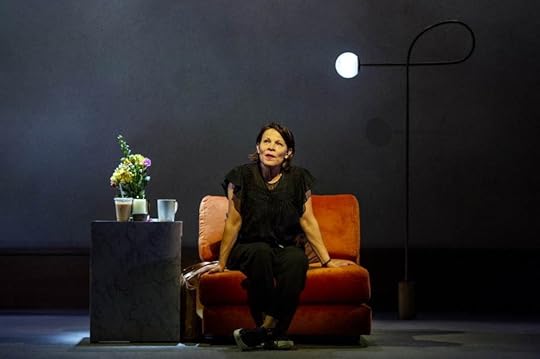
Photograph of actress Lili Taylor in the October 2021 revival of "The Fever", as performed at Audible's Minetta Lane Theater in New York City. Image sourced from Stage Buddy.
The Fever audiobook is a studio recording rather than a live theatre performance.
Trivia and Links
The Fever was adapted as the same-titled film in 2004 directed by Carlo Gabriel Nero with an expanded cast that starred Vanessa Redgrave, Joely Richardson and Angelina Jolie. A trailer can be seen on YouTube here.
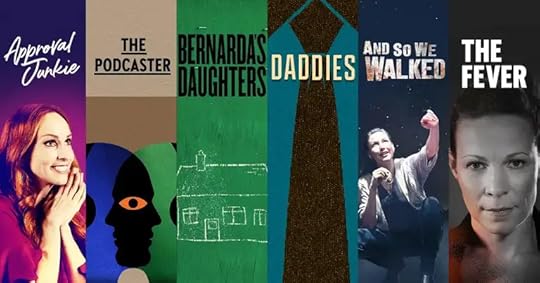
Teaser image of 6 new Audible Theater audiobook releases on March 3, 2022. Image sourced from Audible.
Review of the Audible Original audiobook edition (March 3, 2022) narrated by Lili Taylor, of the original theatrical play The Fever (published 1991, premiered in 1990).
This new audiobook recording of Wallace Shawn's play The Fever (1990) derives from its recent reappearance on stage when it became the post-pandemic reopening show at Audible's Minetta Lane Theater in New York City for a run of 18 performances from October 8 to 24, 2021.
My reaction to the audiobook was similar to that of the Stage Buddy review (linked below under the photograph). What is engrossing for about 60 minutes becomes a trial for 90 minutes, regardless of how appealing the actor is. It may be even more difficult with the audio where you don't have the added visual element of watching the actor's performance.
In any case, this was certainly a prescient work when it debuted in 1990 when it first talked about the concept of privilege in the developed world and the exploitation of the rest of humanity.
Photograph of actress Lili Taylor in the October 2021 revival of "The Fever", as performed at Audible's Minetta Lane Theater in New York City. Image sourced from Stage Buddy.
The Fever audiobook is a studio recording rather than a live theatre performance.
Trivia and Links
The Fever was adapted as the same-titled film in 2004 directed by Carlo Gabriel Nero with an expanded cast that starred Vanessa Redgrave, Joely Richardson and Angelina Jolie. A trailer can be seen on YouTube here.
Teaser image of 6 new Audible Theater audiobook releases on March 3, 2022. Image sourced from Audible.

May 15, 2018
الان هیچ چیزی تو زندگی فقرا نیست که بگی داره تغییر میکنه. هیچ تغییری تو کار نیست. تغییر تدریجی اتفاق نمی افته. قرار نیست اتفاق ییفته. صرفا یه چیزی بود که حرفشو زدیم.
احساس همدردی که تو دلم با فقرا دارم، زندگی فقرا رو تغییر نمیده. اعتقاد سفت و سخت من به تغییر تدریجی زندگی فقرا رو تغییر نمیده. پدر و مادرهایی که ارزش های خوبو به بچه هاشون یاد میدن، زندگی فقرا رو تغییر نمیدن. هنرمندایی که آثار هنری ای خلق میکنن که همدردی و ارزش های خوبو به آدم القا میکنه، زندگی فقرا رو تغییر نمیدن.شهروندهایی که هنرمندها و پدر و مادرها بهشون القا کردن ارزش های خوبو بپذیرن و حس همدردی نسبت به فقرا داشته باشن و به سیاستمدارهای روراستی رای بدن که اعتقاد سفت و سخت به تغییر تدریجی دارن، زندگی فقرا رو تغییر نمیدن، چون سیاستمدارهای روراستی که اعتقاد سفت و سخت به تغییر تدریجی دارن، زندگی فقرا رو تغییر نمیدن.....
احساس همدردی که تو دلم با فقرا دارم، زندگی فقرا رو تغییر نمیده. اعتقاد سفت و سخت من به تغییر تدریجی زندگی فقرا رو تغییر نمیده. پدر و مادرهایی که ارزش های خوبو به بچه هاشون یاد میدن، زندگی فقرا رو تغییر نمیدن. هنرمندایی که آثار هنری ای خلق میکنن که همدردی و ارزش های خوبو به آدم القا میکنه، زندگی فقرا رو تغییر نمیدن.شهروندهایی که هنرمندها و پدر و مادرها بهشون القا کردن ارزش های خوبو بپذیرن و حس همدردی نسبت به فقرا داشته باشن و به سیاستمدارهای روراستی رای بدن که اعتقاد سفت و سخت به تغییر تدریجی دارن، زندگی فقرا رو تغییر نمیدن، چون سیاستمدارهای روراستی که اعتقاد سفت و سخت به تغییر تدریجی دارن، زندگی فقرا رو تغییر نمیدن.....

May 30, 2020
This is what would have happened had Karl Marx written a novel. The novel is thoroughly persuasive, brilliantly written and cannot be completed without feeling a pang of guilt somewhere along the lines.
When I put a quotation from this book-
“There's a reason why I won't give the beggar all of my money. Yes, I'm going to give her some of it—I always give away quite a surprising amount to people who have less than I do— But there's a reason why I'm the one who has the money in the first place, and that's why I'm not going to give it all away. In other words, for God's sake, I worked for that money. I worked hard. I worked. I worked. I worked hard to make that money, and it's my money, because I made it. I made the money, and so I have it, and I can spend it any way I like.”
- as my WhatsApp status update, my friend responded this way.
I have serious contention to the given point.
Biggest is.. that you were born privileged.. or you had some sort of help or something that put you there.. otherwise everyone is born the same dumb child.. but some turn out to be wealthy and others just survive..
I did not argue with him, because such arguments usually lead to nowhere. We all are used to paying a one rupee( or dollar or pound) extra to relieve ourselves of the guilt of the capitalistic fetishism we are engaged in. And to produce the pair of jeans trousers that we have to get in a Christmas sale for next to nothing, hundreds of kids toil in hinderlands of different countries including my very own. To make it easier for things to reach my table, a dozen labour laws are flouted.
The book provides an apt response to my friend’s comment-
“There's still the preface—everything that happened before I was born. The voluptuous field that was given to me—how did I come to be given that one, and not the one that was black and barren? Yes, it happened like that because before I was born, the fields were apportioned, and some of the fields were pieced together.
Not by chance, not by fate. The fields were pieced together one by one, by thieves, by killers. Over years, over centuries, night after night, knives glittering, throats cut, again and again, until the beautiful Christmas morning we woke up, and our proud parents showed us the gorgeous, shining, blood-soaked fields which now were ours. Cultivate, they said, husband everything you pull from the earth, guard, save, then give your own children the next hillside, the next valley. From each advantage, draw up more.”
And now after reading this, it will stay with me for days, or may be weeks. And after that, I will also go back. To other books that celebrate life, to eat the coffee that my coffee machine gives me, and to the normal life as part of the normality that goes around. But I guess a part of it will stay, especially because of the title, now that we are living in this COVID-19 times.
When I put a quotation from this book-
“There's a reason why I won't give the beggar all of my money. Yes, I'm going to give her some of it—I always give away quite a surprising amount to people who have less than I do— But there's a reason why I'm the one who has the money in the first place, and that's why I'm not going to give it all away. In other words, for God's sake, I worked for that money. I worked hard. I worked. I worked. I worked hard to make that money, and it's my money, because I made it. I made the money, and so I have it, and I can spend it any way I like.”
- as my WhatsApp status update, my friend responded this way.
I have serious contention to the given point.
Biggest is.. that you were born privileged.. or you had some sort of help or something that put you there.. otherwise everyone is born the same dumb child.. but some turn out to be wealthy and others just survive..
I did not argue with him, because such arguments usually lead to nowhere. We all are used to paying a one rupee( or dollar or pound) extra to relieve ourselves of the guilt of the capitalistic fetishism we are engaged in. And to produce the pair of jeans trousers that we have to get in a Christmas sale for next to nothing, hundreds of kids toil in hinderlands of different countries including my very own. To make it easier for things to reach my table, a dozen labour laws are flouted.
The book provides an apt response to my friend’s comment-
“There's still the preface—everything that happened before I was born. The voluptuous field that was given to me—how did I come to be given that one, and not the one that was black and barren? Yes, it happened like that because before I was born, the fields were apportioned, and some of the fields were pieced together.
Not by chance, not by fate. The fields were pieced together one by one, by thieves, by killers. Over years, over centuries, night after night, knives glittering, throats cut, again and again, until the beautiful Christmas morning we woke up, and our proud parents showed us the gorgeous, shining, blood-soaked fields which now were ours. Cultivate, they said, husband everything you pull from the earth, guard, save, then give your own children the next hillside, the next valley. From each advantage, draw up more.”
And now after reading this, it will stay with me for days, or may be weeks. And after that, I will also go back. To other books that celebrate life, to eat the coffee that my coffee machine gives me, and to the normal life as part of the normality that goes around. But I guess a part of it will stay, especially because of the title, now that we are living in this COVID-19 times.

October 20, 2018
شخصیت اصلی داستان در تبی اسیر شده است که او را از تمام جنایت های بشری آگاه کرده است . شروع داستان شخصیت در بیماری و انزوا غوطه ور است . سپس میفهمیم این بیماری به نوعی میراث انسانی اوست . میراثی متشکل از تمام جنایت های طبقه مرفه که به شکل عقده هایی در شخصیت انباشته شده است . او شروع به روایت این عقده ها میکند و در طول روایت خود را در واگویه شخصیت های دیگرمتبلور مینماید . اشخاصی که شخصیت اصلی برای رهایی از بار این جنایت ها در آن ها متبلور میشود . درونمایه اصلی روایت همان جنگ های طبقاتی نظریات مارکس است و گویی شخصیت در حال بازخوانی کتاب مهم مارکس یعنی سرمایه میباشد . در طول روایت دائما شاهد این هستیم که او مارکس را نقد میکند و در نهایت میبینیم که اذعان میدارد که از این میراث رهایی ندارد و همچنان باید به سقوط خود ادامه دهد .

April 22, 2022
I'm giving this book five stars because it's the first time I've ever read (listened) to a book. Finished it. Then immediately re-listened to it. Let me explain the reason for the re-listen.
When I was browsing Audible for books, I noticed the title "The Fever" by Wallace Shawn, ready by Lili Taylor. It was a FREE Audible Original. My mind immediately conjured up the word "Inconceivable." I knew Wallace Shawn as Vizzini in The Princess Bride or Rex from Toy Story. I love Lili Taylor as an actress. I didn't read the description of the book. I just assumed it was a short story about a patient. A quick, free book by one of my favorite comedic actors? I was in.
The first time through the book, I got distracted, waiting for the sickness to arise. I finished the book and thought "that's not what I was expecting." Then I went and read the description of the book. I thought, "Oh S**t, I need to do this again". I open the book again and gave it my full attention.
There is a lot to process here. I believe it's a great conversation starter. I need to have some conversations with others about this. My mind is reeling right now.
I read that this was originally a play. I can't imagine what audience members felt when they left the theater. Perhaps some of the same feelings I'm feeling now. Guilty? Pissed? Energized?
Over the past decade of my life, I'm less black and white regarding society's issues. I don't believe that we navigate this world or our lives with an empty or full tank.
For the record...a little bit about my experiences that shape some of my responses:
I stopped voting a straight ticket decades ago.
I don't believe our beliefs and actions are driven solely by a political label. I believe we are nuanced.
I have personally felt the fear, anger, and frustration of having no money.
I have personally felt the comfort of having enough money.
I have worked with felons coming out of prison facing homelessness, poverty, social stereotypes, and addictions. I used to look at them all as dangerous criminals. Not any more.
I have worked with successful entrepreneurs who have worked and scratched their way to the top of their industry.
I have worked with those who were born into wealth and prosperity.
I realized reading this book I take more for granted than I believed.
I realized that I am part of the problem.
I realized that I could be part of the solution.
I don't think there is a black or white answer to the issues in this book. The divisions in our country at the current time speak to this. It's going to take many people willing to come to the table for a conversation who are willing to say "Teach me as you see".
From these conversations has to come meaningful action.
It's crazy to think that with all of the technological advancements we have made over the past couple of centuries, we are still struggling with how to help those who are being abused, starved, humiliated, and persecuted.
This book makes me want to become a better person. It makes me want to listen more. It makes me want to give more. It makes me want to find satisfaction in the moments of my life, not the collection of stuff in my life.
I'll end my ramblings with this. As I think back over my last reading of this book, I started plugging the question "What would Jesus Do?" into each scenario.
Wow. I wasn't expecting to be taken to this place when I started this book. I am grateful for the challenges it raises. Someone needs to continue the conversation.
When I was browsing Audible for books, I noticed the title "The Fever" by Wallace Shawn, ready by Lili Taylor. It was a FREE Audible Original. My mind immediately conjured up the word "Inconceivable." I knew Wallace Shawn as Vizzini in The Princess Bride or Rex from Toy Story. I love Lili Taylor as an actress. I didn't read the description of the book. I just assumed it was a short story about a patient. A quick, free book by one of my favorite comedic actors? I was in.
The first time through the book, I got distracted, waiting for the sickness to arise. I finished the book and thought "that's not what I was expecting." Then I went and read the description of the book. I thought, "Oh S**t, I need to do this again". I open the book again and gave it my full attention.
There is a lot to process here. I believe it's a great conversation starter. I need to have some conversations with others about this. My mind is reeling right now.
I read that this was originally a play. I can't imagine what audience members felt when they left the theater. Perhaps some of the same feelings I'm feeling now. Guilty? Pissed? Energized?
Over the past decade of my life, I'm less black and white regarding society's issues. I don't believe that we navigate this world or our lives with an empty or full tank.
For the record...a little bit about my experiences that shape some of my responses:
I stopped voting a straight ticket decades ago.
I don't believe our beliefs and actions are driven solely by a political label. I believe we are nuanced.
I have personally felt the fear, anger, and frustration of having no money.
I have personally felt the comfort of having enough money.
I have worked with felons coming out of prison facing homelessness, poverty, social stereotypes, and addictions. I used to look at them all as dangerous criminals. Not any more.
I have worked with successful entrepreneurs who have worked and scratched their way to the top of their industry.
I have worked with those who were born into wealth and prosperity.
I realized reading this book I take more for granted than I believed.
I realized that I am part of the problem.
I realized that I could be part of the solution.
I don't think there is a black or white answer to the issues in this book. The divisions in our country at the current time speak to this. It's going to take many people willing to come to the table for a conversation who are willing to say "Teach me as you see".
From these conversations has to come meaningful action.
It's crazy to think that with all of the technological advancements we have made over the past couple of centuries, we are still struggling with how to help those who are being abused, starved, humiliated, and persecuted.
This book makes me want to become a better person. It makes me want to listen more. It makes me want to give more. It makes me want to find satisfaction in the moments of my life, not the collection of stuff in my life.
I'll end my ramblings with this. As I think back over my last reading of this book, I started plugging the question "What would Jesus Do?" into each scenario.
Wow. I wasn't expecting to be taken to this place when I started this book. I am grateful for the challenges it raises. Someone needs to continue the conversation.

October 15, 2020
I don't have words to explain what this just did to me. Haunting, harrowing, devastating, in part because I personally experience The Fever everyday and felt as if the words were peering into my soul. It feels at times a grave hypocrisy to indulge beauty in a world so plagued with oppression and corruption...but this just makes it all the more crucial to build a world where things aren't like this anymore, a world where such dark inequalities do not exist, a world in which every human being is given a dignified life by essence of being alive.

March 25, 2026
Writing plays like this is the 2nd best thing cowardly small-l liberals can do (1st best - become a socialist)

December 27, 2025
Dark and thought-provoking, this is a good thing to listen to at any time of the year but especially at that special time we call Christmas, replete with commercialism and exploitation. Maybe as individuals, we can't change everything, but we can show the appetite for change. Maybe that's where it all begins. Good play.
March 2, 2026
We have to know, Where are we, and where are the ones who are being tortured and killed? Not in the same room? No—but surely—isn’t there any other room we can use? Yes, but we still could hear the people screaming. Well then—can’t we use the building across the street? Well, maybe— but wouldn’t it feel strange to walk by the window during our celebrations and look across at the building we’re in now and think about the blood and the deaths and the testicles being crushed inside it?
Read
March 2, 2026J’accuse!

December 29, 2021
Rambling monologue about capitalism/colonialism with a lot of lot of painful truths, although absolutely no solutions, just artistic self-wallowing in guilt. An afterward with some non-fiction references/organizations would have been more productive.

Read
November 18, 2025Read for my play analysis class. I actually enjoyed the last third of it.

March 20, 2026
more like 4.5. listened after the trueanon interview. would love to see it performed frankly by anyone.

May 13, 2017
Wallace Shawn is a genius, we all know he's a genius. But he also a great humanist, and we know that too. But how much of a genius and a humanist do you have to be to produce such a powerful, short, potent work that so thoroughly decries yourself and the people you're surrounded with? The Fever will make your head and your heart ache in the same ways. An emotional and intellectual sucker punch that we all need every once in a while.

June 30, 2019
مونولوگی که برای تأثیرگذاری بیشتر بهتره یکنفس خونده بشه.
دوست دارم به همهی کسایی تقدیمش کنم که احساس میکنن توی دنیا اندک عدالتی وجود داره یا دستاوردشون حاصل زحمتیه که کشیدن.
دوست دارم به همهی کسایی تقدیمش کنم که احساس میکنن توی دنیا اندک عدالتی وجود داره یا دستاوردشون حاصل زحمتیه که کشیدن.

February 11, 2025
Such a short and powerful play. To the average American however this would be absolutely INCONCEIVABLE!
Get it?
Get it?

Read
June 7, 2026Highlights:
Then I turned back to an earlier section, and I came to a phrase that I'd heard before, a strange, upsetting, sort of ugly phrase: this was the section on "commodity fetishism," "the fetishism of commodities." I wanted to understand that weird-sounding phrase, but I could tell that, to understand it, your whole life would probably have to change. (12)
The coat's price comes from its history, the history of all the people involved in making it and selling it and all the particular relationships they had. And if we buy the coat, we, too, form relationships with all those people, and yet we hide those relationships from our own awareness by pretending we live in a world where coats have no history but just fall down from heaven with prices marked inside. (12)
"I like this coat," we say, "It's not expensive," as if that were a fact about the coat and not the end of a story about all the people who made it and sold it (12)
I went home, and I resumed my regular life. But I couldn't help noticing that something awful was happening to me. At first I tried to ignore it or dismiss it, like some symptom you hope will go away by itself, but it didn't go away. What was it that was happening? I'd always said, "I'm a happy person. I love life," but now there was a sort of awful indifference or blankness that was coming from somewhere inside me and filling me up, bit by bit. (15)
Certain things cannot be questioned. The coffee has to be there on the shelf, and no thought may enter your mind if it conflicts with the assumption that you—yes, you—are a decent person. (36)
Now, a decent person cannot be a person who's gotten away with something. A decent person cannot have what it's not appropriate for them to have. And this understanding of yourself gives you the basis for a view of the world. (36)
The life I live is irredeemably corrupt. It has no justification. I keep thinking that there's this justification that I've written down somewhere, on some little piece of paper, but that it's sitting in the drawer of some desk in some room in some place I used to live. But in fact I'll never find that little piece of paper, because there isn't one, it doesn't exist. There's no piece of paper that justifies what the beggar has and what I have. Standing naked beside the beggar—there's no difference between her and me except a difference in luck. (39)
My feeling in my heart a sympathy for the poor does not change the life of the poor. My believing fervently in gradual change does not change the life of the poor. Parents who teach their children good values do not change the life of the poor. Artists who create works of art that inspire sympathy and good values do not change the life of the poor. Citizens inspired by artists and parents to adopt good values and feel sympathy for the poor and vote for sincere politicians who believe fervently in gradual change do not change the life of the poor, because sincere politicians who believe fervently in gradual change do not change the life of the poor. (40)
Displaying 1 - 30 of 155 reviews