Jump to ratings and reviews
Rate this book

Feeding Ghosts: A Graphic Memoir

Rate this book
An astonishing, deeply moving graphic memoir about three generations of Chinese women, exploring love, grief, exile, and identity.

In her evocative, genre-defying graphic memoir, Tessa Hulls tells the story of three generations of women in her family: her Chinese grandmother, Sun Yi; her mother, Rose; and herself.

Sun Yi was a Shanghai journalist caught in the political crosshairs of the 1949 Communist victory. After eight years of government harassment, she fled to Hong Kong with her daughter. Upon arrival, Sun Yi wrote a bestselling memoir about her persecution and survival, used the proceeds to put Rose in an elite boarding school—and promptly had a breakdown that left her committed to a mental institution. Rose eventually came to the United States on a scholarship and brought Sun Yi to live with her.

Tessa watched her mother care for Sun Yi, both of them struggling under the weight of Sun Yi's unexamined trauma and mental illness. Vowing to escape her mother’s smothering fear, Tessa left home and traveled to the farthest-flung corners of the globe (Antarctica). But at the age of thirty, it starts to feel less like freedom and more like running away, and she returns home to face the history that shaped her family.

Extensively researched and gorgeously rendered, Feeding Ghosts is Hulls’s homecoming, a vivid journey into the beating heart of one family, set against the dark backdrop of Chinese history. By turns fascinating and heartbreaking, inventive and poignant, Feeding Ghosts exposes the fear and trauma that haunt generations, and the love that holds them together.

400 pages, ebook

First published March 5, 2024

398 people are currently reading
12836 people want to read

About the author

Tessa Hulls

2 books127 followers
Tessa Hulls is an artist/writer/adventurer who is equally likely to disappear into a research library or the wilderness. Her essays have appeared in The Washington Post, Atlas Obscura, and Adventure Journal, and her comics have been published in The Rumpus, City Arts, and The Margins. She has been awarded grants from the Seattle Office of Arts and Culture, 4Culture, and the Robert B McMillen Foundation, and received the Washington Artist Trust Arts Innovator Award. For the last almost-decade, she has focused on creating Feeding Ghosts, a graphic memoir that traces three generations of women in her family across a backdrop of Chinese history to explore the complicated ways that mothers and daughters both damage and save one another.

Ratings & Reviews

What do you think?
Rate this book

Friends & Following

Create a free account to discover what your friends think of this book!

Community Reviews

5 stars
1,564 (59%)
4 stars
741 (28%)
3 stars
252 (9%)
2 stars
42 (1%)
1 star
17 (<1%)
Displaying 1 - 30 of 550 reviews
Profile Image for s.penkevich [hiatus-will return-miss you all].
1,573 reviews14.8k followers
May 28, 2025
** WINNER of the 2025 Pulitzer Prize for Memoir **

The past never lies quiet in the grave and ghosts of historical horrors often rise to haunt the present as do ghosts of the blood howling across wastelands of generational traumas. Tessa Hulls has long had to contend with such ghosts through the history of violent political upheaval in China, family displacement, and contentious family relations and in Feeding Ghosts, her multigenerational graphic novel memoir, she dives into history to confront them. Hulls sends us through an emotionally intense yet heartfelt and rewarding journey.
Screenshot 2025-05-10 162055
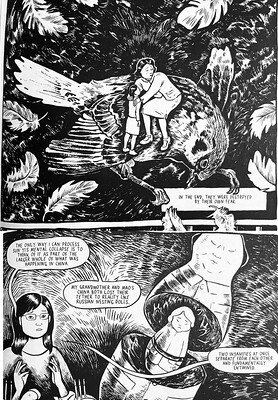
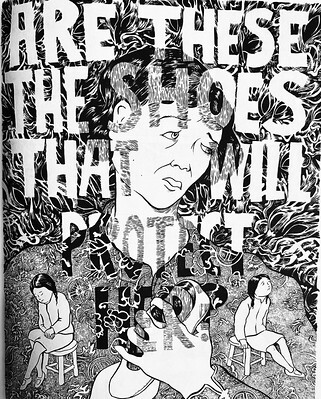
Feeding Ghosts is a bit of a dense work, though beautifully written and gorgeously illustrated in black and white imagery that moves through surreal and terrifying imagery to best capture the flow of memories, history, and emotion, one that is ‘about looking at the collision of conflicting narratives between myself and my mom and my grandma,’ as Hulls told the New York Times. And it is quite extraordinary as well as an extraordinary feat, winning the 2025 Pulitzer Prize for memoirs which is a rare moment for graphic novels. Hulls explores her relationship with her mother in the shadow of her mother’s relationship with her now deceased grandmother, a woman who fled China for Hong Kong where ‘something happened and she lost her mind.’ A decade in the making, Feeding Ghosts is how Hulls came to learn the truth of the past and make sense of the bruises still aching in the present. A marvelous and moving memoir, one sure to garner praiseworthy comparisons with Persepolis or Maus, and an absolute must read.
Untitled
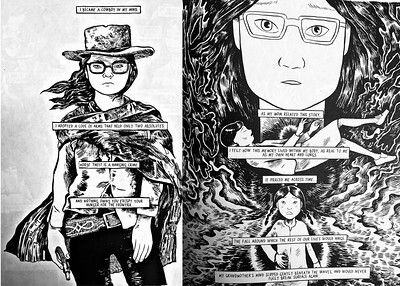
I started this book as a cowboy, holding my six-guns up at the ghosts as though they were something I could fight. But they instead taught me the limits of my brittle myth, showed me that if a cowboy cant bend, it has no choice but to break. The ghosts allowed me to admit that I wanted a path in from the isolation of the range.

This book is a masterpiece as both a memoir and a graphic novel. Hulls takes great care to tell the story in an interesting way, brought to life through her rather provocative and pitch perfect artwork, winding through the halls of history to show how the political affects the personal and how the scars of family reverberate down the line. She goes through the history of upheaval in China, such as the Cultural Revolution, and the hardships her grandmother faced while there, but also the difficulties of being an immigrant family in a new land.
Untitled
In the US, being mixed felt like trying to build the foundations of a home in the open ocean between islands,’ Hulls writes and this dissonance molded a sense of self that branched away from her mother’s cultural perspectives while noting she ‘clung to a notion of filial piety’ that made communication between them difficult. ‘I chased Wallace Stegner’s assertion that we are exhilarated by the “escape from history…”’ she writes, yet in light of her grandmother Feeding Ghosts becomes about turning back towards that history to help guide the future.
Untitled
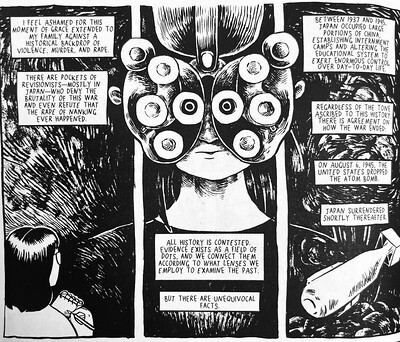
All history is contested. Evidence exists as a field of dots. And we connect them according to what lenses we employ to examine the past. But there are unequivocal facts.

Hulls approaches topics of mental health in a harrowing manner, openly examining the mental health struggles of her grandmother lit against landscapes of history and family, while also assessing how her mother’s processing of her own mother’s struggles comes out in divisive anxiety in her relationship with daughter. It makes for a painful yet productive commentary on generational trauma as well as contextualizing your own mental health in relation to your family and society.
Watching from the present, I can feel my mother’s terror at seeing her daughter court the same maze from which her own mother never emerged. But I was exploring, I went there to make a record of the ghosts to draw a map and bring it back up into a world that held life.

What makes this book even better are the ways it is just as quotable and poetically contemplative as any prose novel. It is a rather wordy graphic novel and it adds to a general business of the pages, but it also embraces this as an aesthetic to center the visual artistry as well. It lends itself to some rather bold and surrealistic imagery, strengthening the overall tone and atmosphere as an abstractly introspective narrative. The art is just so cool and eye catching.
Untitled
This is just a fantastic read. It resonates with a viscerality that can leave you raw, reflective, and feeling rewarded in kind. Hulls has such a poetic power here both in artwork and prose and the result is staggeringly accomplished.

I also love how much it champions the idea of reading in pursuit of knowledge and passing along the family narrative to foster understanding, empathy, and self-identification. ‘Sometimes I feel so angry at Sun Yi and how her damage stacked the deck against my mom,’ Hulls writes, ‘but I also see flickers of something much harder to stomach, where I use her as an easy target because I don’t know how to feel the anger toward my mom.’ It is a lesson, and one that becomes an act of love.
Untitled

The Pulitzer Prize winning graphic memoir, Feeding Ghosts is a gorgeous and harrowing achievement from Tessa Hulls. It succeeds on all fronts and really bears its soul, shining a light to banish the fear of ghosts and cast hope towards the future.

5/5

We were so scared of drowning that we couldn’t see the difference between dissolving and allowing ourselves to be held. It took writing this book to reconnect us to what we have always been.
Profile Image for Maia.
Author 32 books3,632 followers
May 20, 2024
What an accomplishment! I savored every page of Feeding Ghosts, absolutely floored by the labor and courage that went into the writing of this book. The inking is gorgeous, the history is clear, digestible, and devastating. This book threads the line between honesty and compassion in a way that I appreciate so much in any memoir, but especially one dealing with family. Hulls lays out the story of three generations of women starting with her grandmother, Sun Yi, a Shanghai journalist who faced intense persecution during the rise of Communism in China, who penned a popular and scandalous memoir and then suffered a mental breakdown. This left her only daughter, Rose, a student at an elite boarding school with no parental figures and no other family to lean on. Eventually Rose earned a scholarship to an American university and in the end moved her mother into her California home. Sun Yi haunted that home during the author's own childhood. The unexamined trauma and codependency of Sun Yi and Rose drove the author to the extreme edges of the Earth, seeking freedom from their ghosts. But in the end, she stopped running from her family history and turned, instead, to face it. Shelve this book with Maus, Fun Home, Persepolis and The Best We Could Do. Re-read it for a second time and got even more out of it on a second pass.
Profile Image for Rod Brown.
7,342 reviews281 followers
January 28, 2025
An interesting, if overlong, graphic memoir about generational trauma passed from grandmother to mother to daughter. Tessa Hulls uncovers the details of her mother and grandmother's difficult lives in China and how all that shaped the antagonistic and estranged relationship she has had with her mother while growing up in northern California.

Hulls starts her family history near the end of World War II with her grandmother, Sun Yi, being hounded by Mao Zedong's minions for being an outspoken journalist and single mother of a multiracial child. Sun Yi escapes the Cultural Revolution by fleeing with her daughter to British-controlled Hong Kong, where she starts life anew but is soon lost to disabling mental illness for the majority of her remaining life, leaving her daughter Rose to grow up with an absent father and a dependent mother. Still, Rose is able to emigrate to the United States, start a family, and bring her mother over from Hong Kong to provide at-home care that lasted for decades.

Hulls wrestles with how her mother's experiences and Chinese upbringing set expectations for their mother/daughter relationship that conflict with Hulls' assimilation into American culture, desire for independence, and search for her own identity as a multiracial person. The act of writing this book serves as a tool to attempt healing the breach that grew between them.

The execution of the book suffers a bit from repetition and an overabundance of visual and textual metaphors -- trains, boats, cowboys, ghosts, sparrows, etc., etc. -- for the author's emotions and relationships.

I found it a bit odd that Hulls' brother and father barely show up in the background. Pops gets a pass? And bro's experience growing up in the same environment is irrelevent? This seems a rather large omission in a book that otherwise goes overboard in detail.

Side note: In a nice bit of synchronicity, my wife and I read G. Neri's My Antarctica: True Adventures in the Land of Mummified Seals, Space Robots, and So Much More just a week prior and wondered for a moment what sort of person would travel to the frozen continent to be a janitor or a cook and if our daughter should consider giving it a go. And then this book has a chapter about how the author did go there to be a cook as part of her quest for independence and distance from her mother.


(Best of 2024 Project: I'm reading all the graphic novels that made it onto one or more of these lists:
Washington Post 10 Best Graphic Novels of 2024
Publishers Weekly 2024 Graphic Novel Critics Poll
NPR's Books We Love 2024: Favorite Comics and Graphic Novels

This book made the PW and NPR lists.)
Profile Image for Maxwell.
1,441 reviews12.4k followers
September 16, 2024
I’m so impressed by this book. It’s a true work of an artist giving everything they have to their craft. The attention to detail and care for every page of this graphic memoir is quite remarkable. And of course, the stories of the three women that this book charts is moving and carefully rendered.

My only complaint is that I think it got a bit dense and repetitive at times. In the first half, especially, there is a lot of history that is told through large blocks of text, which I was not expecting for a book relying heavily on imagery. And in the latter half of the story, some of the elements felt redundant by that point and some sentiments repeated.

Don’t let that deter you from picking this up. It is incredibly well-crafted and emotional. I can imagine this having a very strong impact on children of immigrants as well, and those who have suffered from a lost history in their family, or a history that keeps people apart rather than pulling them together.
Profile Image for Jessica Woodbury.
1,926 reviews3,123 followers
November 30, 2025
4.5 stars. An astonishing work of emotional depth. I was a little skeptical, it feels like almost every story these days is about trying to understand your parents, trying to explain and maybe exculpate them. And the idea of generational trauma is also one that I see bubbling up more and more. But I haven't seen any story that is as willing to dive all the way in to the pain and difficulty than FEEDING GHOSTS.

Hulls traces the story of her grandmother Sun Yi to her mother Rose and to herself. Her grandmother's story is fascinating, she was a former journalist who escaped China after the revolution and wrote a memoir of her experiences, but Hulls only ever knew her as a woman who was entirely broken, who'd had such a deep mental break that she could no longer exist in reality. At first it seems that Sun Yi's story may be enough for the whole book, but it is really just the jumping off point. Hulls has read books and done legwork and talked to her mother and just about everything else you could do to find the truth of Sun Yi's story. But that is really just the start. Once it becomes clear who Sun Yi was then Rose starts to form in startling clarity. And ultimately it is the two mother-daughter relationships that come to the center. One between Sun Yi and Rose that is tight and dependent, and one between Rose and Tessa that is distant and full of misunderstandings.

If you are the kind of person who tends to think your feelings, then you'll understand Hulls well. She is very upfront about her own tendency to pull back from the messy business of emotions and to take on what she calls her cowboy persona, a nomad who is not tied to anyone or anywhere. This lets her take on the difficult work of research, but it can only take her to the facts. And if she wants to really understand her mother and find a way for the two of them to form a real relationship, she will have to set aside the cowboy and look at the real emotions. This is perhaps the biggest arc of the book, one that happens slowly, and that we get to follow along with Hulls.

The art is distinctive and unforgettable, with backgrounds of black and a very limited color scheme. And unlike most graphic works this one took me days to read. Each chapter was so intense, I could usually only do one at a time.

But the honesty here is real and raw, this is not a touchy feely work of emotional manipulation trying to make the reader feel. This is a record of Hulls' feelings, her investigations, her efforts to understand herself and others, to record her family's story. It's unlike any other memoir I can recall.
Profile Image for Tricia.
597 reviews9 followers
February 1, 2025
Unfortunately, I'm DNF'ing this book at 46%. I have a lot of thoughts.

First, I hated the art style. It's too dark (not content wise, but actual art-wise). I dislike this style of black backgrounds, black shapes - like the writing has been etched on a black page.

Second, I thought this was going to be a story about a woman's grandmother and her history in China. But that's such a small piece of the story. In reality, the story is about a woman's dysfunctional relationship with her mother and grandmother, and their massive dysfunction with each other. And while that can be interesting, in this case it's way too long and much too repetitive. I'm less than halfway through and I'm so bored of reading the same things.

And this bring me to my third issue. This story would be so much better as a book than a graphic novel. I don't think I've ever thought that before, but it's true here. The whole book is just faces and text bubbles. It's hard to read, and a slog to get through the content. The pictures add nothing to the story.

I can see from the rating that I'm in the minority here, and that's fine. I don't discourage anyone from reading it. But it just isn't for me.
Profile Image for Kim Lockhart.
1,233 reviews194 followers
March 22, 2024
This graphic novel combines two things I love: narrative history, and superb writing. I'm ordinarily skeptical about memoirs, because people tend to think of their lives as much more interesting than they really are, but trust me when I say that this one is remarkable. The tightly packed story feels like it's under pressure, as if it might burst out and escape at any moment, if I don't hold on to the edges of it.

The graphic format is a perfect vehicle for memoir, and Tessa Hulls knocks it out of the park. She contains a whole world of experience, and is an expert at  metaphors, analysis, and reflection. It took her a decade to research and write this, and that effort shows.

A word about the title: hungry ghosts in this context, would be the unfulfilled familial spirits of the past. In order to begin to heal intergenerational trauma, one needs to feed those ghosts. FEEDING GHOSTS is present tense, not just because the author is anchored in the present and reaching into the past, but also because this is always going to be an ongoing process.

Some of the content is disturbing, but also very real. In a way, facing terrible events is a way to honor the people who experienced them, to let them be seen, to let them matter. We can't pretend horrors didn't happen. All those traumas are folded into the genetic code passed down through generations.

There are many lines I could quote from the book, but these seem to encompass the thrust of the story as a whole:

"All history is contested. Evidence exists as a field of dots. And we connect them according to what lenses we employ to examine the past.

But there are unequivocal facts."

I appreciate everything about the author's approach: her raw honesty, her extensive research, her grasp of psychological concepts, and even her illustrative use of Rock 'em Sock 'em Robots to represent the futulity of China's many struggles throughout history. 

This is one of the best 2024 books I've read this year.
Profile Image for Tina.
1,093 reviews179 followers
March 20, 2024
FEEDING GHOSTS by Tessa Hulls is an incredible and emotional graphic memoir. I loved this book! It made me cry so many times. Hulls shares her life growing up in the United States with her mother and both struggling with the intergenerational trauma of her grandmother’s fleeing Communist China and mental illness. There were several aspects to her family story that I related to and that made this a very moving read. This line really stood out to me: “In the US, being mixed felt like trying to build the foundations of a home in the open ocean between islands.” I’ve definitely felt lost at sea before between my two cultures. I really loved the care that Hulls put into this book with sharing her experiences and the Chinese history that informed her family’s life. The brilliant illustrations evoked the same emotions. I had to take breaks while reading this book and I loved every second of reading it.

Thank you to FSG Books for my ARC!
Profile Image for Emmkay.
1,389 reviews146 followers
December 4, 2025
Winner of the 2025 Pulitzer Prize for Memoir, this is a meaty, dense, and challenging graphic memoir that absorbed me for the best part of the week. The author explores the messy multigenerational effects of trauma. Her grandmother was a journalist in Shanghai through the civil war and the Communist takeover, a single parent abandoned by a Swiss diplomat. Targeted by the regime, she was finally permitted to escape with her daughter to Hong Kong, where she wrote a best-selling memoir, but her mind collapsed under the strain and never recovered. While Hulls' grandmother spent extended periods in psychiatric hospitals, Hulls' mother attended a prestigious boarding school as a charity student before eventually building a life in the US and bringing her mother over so she could care for her. This backstory obviously created a lot of baggage, and Hulls explores how and why her relationship with her mother went sideways. When she gets a grant to work on a graphic memoir about her family history, the process enables the two of them to grow closer.

As I noted, it's very dense, packed with print and somewhat repetitive images and ideas. I do think it could have been tighter, particularly around the teasing out of the relationship between Hulls and her mother - Hulls really spells out what she now understands from a psychological perspective to have been going on. For my taste, it could have been spelled out less laboriously or more succinctly. But nonetheless, it was interesting, challenging, and moving. Fortuitously, I also happened to be reading it at the same time as Mary Jean Chan's Flèche, which was a stellar companion read involving many of the same themes.

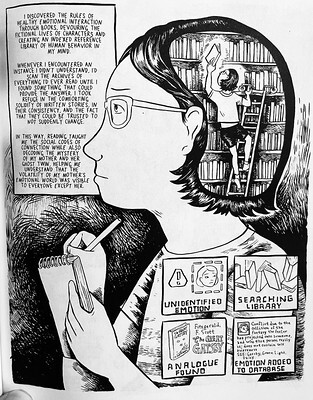
"I discovered the rules of healthy emotional interaction through books, devouring the fictional lives of characters and creating an indexed reference library of human behaviour in my mind. Whenever I encountered an instance I didn't understand, I'd scan the archives of everything I'd ever read until I found something that could provide the answer. I took refuge in the comforting solidity of written stories, in their consistency, and he fact that they could be trusted to not suddenly change."

"It's the great tragedy of immigrant parents - they open the door for us and we betray them by walking through it and becoming children of a different world."

"
Profile Image for Eilonwy.
904 reviews223 followers
August 19, 2025
3-1/2 stars, rounded up out of respect for the sheer amount of effort Tessa Hulls put into producing this book

This is the story of the author trying to understand her maternal family history and make sense of her own complex PTSD resulting from intergenerational trauma. Tessa grew up in the US, in a household consisting of her brother, her British father, and her Chinese mother and grandmother. Her grandmother suffers from mental and emotional anguish stemming from her experiences during the Japanese invasion of China during World War II followed by her persecution and torture during the Cultural Revolution.

It took me forever to get through this. It's very long and it's a very hard experience. It took the author many years to research and write this book, and as a reader, I felt those years.

This is both fascinating and frustrating. Because it's so long, it can get a bit repetitive. And yet, it was interesting enough that I read every page to find out what was there. The author is a bit mercurial; I'm honestly astounded that she managed to commit to completing this book, because she has a life history of six months of this, a year of that, and another year of something else entirely.

The most interesting parts of the book to me were the early chapters, about the Chinese Cultural Revolution. There was a lot I didn't know. It was very chilling to see how much of the language used by the current US administration seems to have been taken from that playbook. And in China, the new government didn't just talk about "retribution" on people it didn't like -- professors, journalists, etc. -- it applied that retribution. Tessa Hull's grandmother was tortured, and broken. She never recovered.

This is a tough read, best done in small bites over weeks or months. I kept it out of the library far too long because I couldn't handle too much of it at a time. I am deeply impressed with Tessa Hull's willingness to work so hard on creating this and to expose so much of herself and her family's painful past.
Profile Image for Qmmayer.
156 reviews3 followers
June 5, 2025
It feels uncharitable to take issue with a project that is so nakedly personal to the author, but I’m afraid I couldn’t really connect with Feeding Ghosts. I had to repeatedly put it down before finally finishing it after the Pulitzer was announced. I’m firmly in the (minority) camp that found it repetitive, overstuffed with verbal and visual metaphors, and too reliant on text for a graphic novel. It takes a deeply introspective approach to grappling with decades of family trauma, and while that clearly is appealing to many, it didn’t work for me.
Profile Image for Steve.
1,147 reviews206 followers
May 15, 2025
Extraordinary! A deserving Pulitzer Prize winner.

It's a lot, and it's extremely heavy (literally and figuratively), but it's incredibly well done and worthwhile.

I concede I'm partial to the medium, not just graphic novels, but non-fiction graphic novels, and I'm guessing I'm not alone thinking back to Thi Bui's The Best We Could Do or (and this is little further afield, but) George Takei's They Called Us Enemy. Sure, you can drift even further and analogize to Marjane Satrapi's sublime Persepolis or Art Spiegelman's Maus, or, I dunno, in terms of self-discovery (and healing) maybe even Maia Kobabe's brilliant Gender Queer, ... or, I dunno, Alison Bechdel's Fun Home or even Kate Beaton's Ducks, ... but at some point, it's worth acknowledging that that non-fiction graphic novels (or serial art) represent a special place in an ever expanding, rich, and far-too-often underappreciated format (or art form).

At some level remarkable people, who have led remarkable lives, do remarkable things ... and, to me, that's very much in play here.

I'm glad that the Pulitzer Prize committee was open to, and recognized both the genius and the appeal, of Hulls' work. I understand, from a news interview, that Hulls considers herself to have gone one and done with regard to books of this type, but I'm very much curious to see what she does next.

I can't recommend this enough!
Profile Image for Andreia.
424 reviews7 followers
September 22, 2024
for the first 50% this read very much like a history book — incredibly fascinating but also very dense. the inking added to sense of density. there was so much happening on the page on every page. this was intentional im sure.

i find it interesting that the author kept interjecting in the narrative that she struggled to write this without imposing her emotions onto the page. i thought the opposite - at times, it read as quite detached and clinical.

i found this triggered some thoughts on my end, mainly on the ethics of memoir writing. whose story is it to tell really?

overall an interesting and thought-provoking read.
Profile Image for Victoria.
64 reviews
April 14, 2024
This is easily my favorite book I’ve read this year and one of the most relatable books I’ve read in my life. There were many things I loved about it: the beautiful illustrations, deeply researched tidbits on Chinese history, courageous story-telling of deeply personal family strife and trauma. I also loved that it made me want to inquire more about my own family history, as I have truly only heard bits and pieces growing up and by no way know or understand the depths of my family’s experience during the Cultural Revolution and living under Communism.

Another thing I loved was how Hulls described growing up with two cultures and no one really knowing how to categorize her. I think I similarly struggled a lot growing up with thinking about how other people perceived me, rather than spending more energy just being comfortable with myself. I was also worried about not being accepted into Asian spaces, but as cheesy as it sounds, I first had to accept myself.

I was also really shocked by Hulls’ grandmother’s experience being a political prisoner in Mainland China. It was especially shocking how she wasn’t officially locked up, but the constant surveillance and regular questioning was almost worse than being locked up in a cell and generally left alone. The Party really seemed like Big Brother, and it seems very easy for someone like Hulls’ grandmother to really suffer from that mentally.

The book also gave a lot of hope around rebuilding relationships. It was really beautiful to see how writing the book brought Hulls and her mother much closer after many years of struggle. The research trips to China were also a highlight of the book for me, especially when the two got to visit their family after decades of being gone, and for Hulls, the first time. I really admire her learning Chinese to connect with her family and how much it meant to them. I similarly have always had the desire to deepen my Chinese language skills to connect more deeply with my family.

Hulls also leads such a unique and interesting life! I really respect the concept of finding seasonal work that gives you enough time and money to do the things you are passionate about. Although Hulls mentions the lifestyle getting tiring after many years, the concept of living in new places and being fully in nature really speaks to me.

Finally, the amount of effort it takes to write and illustrate such a moving tale is so impressive. I went to Hulls’ book talk in New York and thought she did a wonderful job talking about the work and how she thought about putting it all together. She also spoke about how lonely it was, especially during COVID, and how she probably won’t attempt something like this again. Regardless, I would love to read/see anything else she releases next, whether it be her work as a painter/artist or writer. 10/10 recommend this book!
Profile Image for Persona.
37 reviews
July 22, 2025
Tiene un serio problema de ritmo y repetición que eclipsa todas sus bondades artísticas (que no son pocas) y una más que interesante historia familiar.
A ratos puede ser un interesante acercamiento al último siglo de historia china, a ratos un drama familiar muy emocional en el que la autora pretende curar viejas heridas del pasado que han atravesado a tres generaciones de su familia, pero lamentablemente hay una falta de equilibrio causada por un abuso de sobreanálisis, reflexiones y metáforas que acaban sobrecargando la narración.
Una pena porque a ratos he conectado muy fuertemente con su situación personal y emocional, y se nota el mastodóntico esfuerzo que ha supuesto para la autora el desarrollo de su ópera prima. Sin duda una autora a seguir en futuras obras, a medida que vaya puliendo los problemas de ritmo.
Profile Image for ❄️BooksofRadiance❄️.
695 reviews911 followers
May 19, 2024
I love graphic memoirs and this was on hell of an account.
The only gripe is (and it’s a very small one) that it was very repetitive at times and slightly too long. The last 100 pages or so could’ve been condensed down to a few pages without sacrificing any of the stories.
All in all though, great story especially her grandmother’s section.
Profile Image for NEREA AGUIRRE.
5 reviews1 follower
June 9, 2025
aburrido, inconexo y en su mayor parte propaganda anti-comunista
Profile Image for Peacegal.
11.7k reviews102 followers
April 3, 2024
4.5 stars--GHOSTS is a stunning and brave graphic novel that examines the roles culture, mental illness, and generational trauma have had in shaping three generations of the author's family. An engaging, thought-provoking page-turner that really shows off the power of this medium.
Profile Image for Librera Sin Chaleco.
Author 1 book45 followers
October 5, 2025
Es una obra monumental. Abruma bastante la cantidad de información y de emociones que contiene, pero una vez acabado el viaje no parece posible otra manera de acometerlo. No creo que decir que lo he disfrutado sea acertado, más bien siento que lo he vivido, con todo lo que eso puede conllevar.
Profile Image for Morgan Bennett.
48 reviews
May 5, 2024
Truly an astonishing book. Explores generational trauma and mother daughter relationships I didn’t know was possible. The art is positively stunning. Speaks truths both specific to Chinese history and immigration and more universal about the difficulties of relationships with those you love the most. A must read, one of my favorites of all time.
Profile Image for Dakota Morgan.
3,390 reviews53 followers
July 8, 2025
Wavering between three and four stars for this hefty memoir. Tessa Hulls digs deep into her complex relationship with her mother and grandmother, as well as her mother and grandmother's relationship with China and each other. There's a lot to unpack: grandmother had mother with a Swiss white man, leaving her with an against-the-rules foreign child in Red China. Grandmother and mother escaped to Hong Kong, whereupon grandmother wrote a bestselling memoir of her life in China, and then fell into psychosis, basically leaving mother to raise herself and grandmother.

Which eventually leads to the author, who was raised in northern California with both her mother and crazy grandmother in the house (and a British father who is basically nonexistent in the narrative). The author's relationship with her mother is not good as the narrative begins due to heavily foreshadowed issues the author experienced as a teenager ().

I've already written so much and I've only unpacked a tiny portion of the book. The author and her mother travel to China, so there's a bit of a travelogue narrative. The history of China is explored, as well as the grandmother's book (an interesting compare/contrast of real and book events). There's also a great deal of authorial intrusion as she discusses the process of writing the book and how difficult it is to sit in these feelings and not always back away into history/science/culture discussions.

All told: engaging stuff, just incredibly dense. I enjoyed it, I think, but I also felt entirely overwhelmed most of the time. A firmer editorial hand might have helped, or less text on the page. The art isn't the finest you'll ever see, but there's an evident amount of effort, particularly in some of the more powerful scenes. Certainly worth reading, just with the caveat that you might want to block off some time.
Profile Image for Ka Ming Wong.
150 reviews4 followers
November 27, 2024
I wish she went deeper into the cultural differences between the American and Chinese perspectives on things like sacrifice as it relates to love or on autonomy being mainly defined by having individual freedom vs being defined as being distant and ungovernable. And how they have complex consequences on how differently she and her mother see their history and relationship with each other. Though that's definitely an ask more for a (cultural anthropologist?), so I'm just expressing a desire and not dinging the book for that.

A very honest and incredibly (in both a positive and negative too-much sense) introspective memoir. Memorably, when i mentioned to my sister the contours of the narrative she immediately guessed the insane asylum in Hong Kong where the author's grandmother was incarcerated.

Also learned at an event for this book that the author took an outlandish approach to writing this book, by essentially working on each page at the same time over years. Absolute mad lass
Profile Image for Estibaliz.
2,555 reviews71 followers
July 7, 2024
3.5, to this indeed great graphic novel memoir. However, it felt too heavily a personal and psychological exploration for me to fully enjoy this.

You sure have to invest in this read, and the graphic novel form, while it helped to the narrative, didn't really seem to be that necessary to tell this story, but mostly accessory... or maybe a way for the author to express herself better.

Overall, a moving memoir, but a bit too repetitive of a few ideas and concepts, and too centered on the author's feelings and experiences (well, it's a memoir, of course it has to be that way), when some historic and cultural aspects seemed to be barely brushed.
Profile Image for Julie Grace Immink.
429 reviews2 followers
November 7, 2025
Our past time-travels forward, and creates alternative realities, then our relationships contour themselves to fit within those negative spaces, birthing ghosts we need to feed.
Profile Image for Laurie.
162 reviews1 follower
December 21, 2025
This book took me out of my literary comfort zone. The graphics are incredible, providing so much detail to the story. The amount of historical info felt like too much; I would’ve liked it to be a little shorter and focus more on the relationships.
Profile Image for Michi.
181 reviews4 followers
November 13, 2024
This was an incredible project on Tessa's part and a retrospective journey for me. I have a soft spot for multigenerational saga and memoirs that reveal humanity with all its flaws through relationships and human connections; so I might have added an extra positive rating for the author's efforts and its personal impact on me.

I cannot imagine how much time and detailing Tessa put into researching the context that influences the identities of her mother and grandmother. The book is dense with information on the politics and history of all the places her family has once considered home, sprawling out in between the detailed and fluid brushstrokes of her artwork, all of which set the gloomy, uncertain, and interpretative atmosphere of the story, or better, Tessa's journey in understanding herself by understanding the generations before her. This project is a version of something I would like to engage later in my life to reconcile with my mother where needed, our rooted past, and the rest of my family.

The most intriguing aspect of Tessa's project is her narrative. This book is so dense because she constantly feels the need to backtrack, add more context, explain her feelings and sometimes others' behaviors on their behalf. This could be considered a flaw, but I find it vulnerable and relatable. I can understand having said or done something I knew I shouldn't have when it comes to dealing with family, and wanting to explain myself to those who may hear. This aspect also sheds a light on Tessa's inner dialogue and guilt that forces her to overshare in order to avoid any further misunderstanding, perhaps in an attempt to hold onto control of the narrative.

Overall, a very impactful story for me. Definitely something I want to revisit in the future when I eventually want to be closer to my mom physically and emotionally.
Profile Image for L C.
33 reviews3 followers
September 9, 2025
The author keeps saying (over and over again) that she has difficulty when it comes to managing her own mental health because she tends to think too much and feel too little.

I also struggle to feel and spend a lot more time thinking. But the effort I've put into thinking things through has enabled me to deftly articulate my experiences and summarize them in succinct, specific, and vividly descriptive ways. I do this without the skill or discipline of a professional writer. So a professional published writer ought to be able to do it much, much better than I ever could. You would think, right?

This book was the author's attempt to do that, but in my opinion it should've gone through more drafts to hone its insights. So many different metaphors were used to describe what went on between these three generations of women. So many. But I'd describe the metaphors as very surface-level, not well thought out, and they communicated very little to me as a reader.

For a book written by someone who claims to think so much, it's strange that I came away from the book with only a very vague idea of what actually went on. The historical account is clear, but the rest is very murky. And repetitive, so repetitive.

If the author truly thought this all through as much as she claimed to, I'm very sorry that this book is the result. Because in my opinion, she has either exaggerated how much thought she really put into it, or she wrote this in a state of being far too confidently incorrect about how effective repetitive yet almost meaningless metaphors can be and is therefore an unreliable narrator. I hope it was the former.
Displaying 1 - 30 of 550 reviews

Can't find what you're looking for?

Get help and learn more about the design.