

What do you think?

The Passionate Witch #1
The Passionate Witch
Mr. T. Wallace Wooly, a self-important tycoon, but at heart a shy brown rabbit of a man, meets his future bride when he rescues her from a hotel fire. Readers might think this situation poses unique challenges to a couple just getting acquainted, but it probably helped that the soon to be Mrs. Wooly was completely naked at the time. Mr. Wooly is the most public, most consequential man in town and so respectable that the well-publicized rescue of the nude Miss Broome thrown over Mr.Wooly's shoulder as he rushes from the burning building sets tongues wagging. (You sly dog.) Mr. Wooly is aghast at the rumors, but Miss Broome is after all, bewitching, and Mr. Wooly is soon under the spell of her red lips, lustrous black hair, and slanting yellow eyes. It isn't long after their marriage that Mr. Wooly begins to question the wisdom of their hasty union when he sees his new wife climbing down the trumpet vine outside their bedroom window, riding the goat through the apple orchard in the moonlight, and killing chickens. Among other things.The Passionate Witch (1941) was initially drafted as a film scenario, but later completed as a novel by Norman Matson after Thorne Smith's death in 1934. Unlike Smith's hugely popular Topper novels, the post-humous collaborative effort failed to satisfy the public (and the critics). Still, much of Thorne Smith's magic and singular wit shines through and, all in all, the book doesn't disappoint. The storyline was heavily reworked for the sunnier, more successful movie adaptation, I Married a Witch (Masterpiece/United Artists/Cinema Guild, 1942).
248 pages, Hardcover
First published January 1, 1941
About the author
Thorne Smith
62 books81 followersJames Thorne Smith, Jr. was an American writer of humorous supernatural fantasy fiction under the byline Thorne Smith. He is best known today for the two Topper novels, comic fantasy fiction involving sex, much drinking and supernatural transformations. With racy illustrations, these sold millions of copies in the 1930s and were equally popular in paperbacks of the 1950s.
Smith was born in Annapolis, Maryland, the son of a Navy commodore and attended Dartmouth College. Following hungry years in Greenwich Village, working part-time as an advertising agent, Smith achieved meteoric success with the publication of Topper in 1926. He was an early resident of Free Acres, a social experimental community developed by Bolton Hall according to the economic principles of Henry George in Berkeley Heights, New Jersey. He died of a heart attack in 1934 while vacationing in Florida.
Smith was born in Annapolis, Maryland, the son of a Navy commodore and attended Dartmouth College. Following hungry years in Greenwich Village, working part-time as an advertising agent, Smith achieved meteoric success with the publication of Topper in 1926. He was an early resident of Free Acres, a social experimental community developed by Bolton Hall according to the economic principles of Henry George in Berkeley Heights, New Jersey. He died of a heart attack in 1934 while vacationing in Florida.
Ratings & Reviews
Friends & Following
Create a free account to discover what your friends think of this book!
Community Reviews
Displaying 1 - 25 of 25 reviews
November 4, 2022
3.5★
Anyone coming to this book because it was the inspiration for the film I Married a Witch, which in turn inspired a favourite programme of my childhood, Bewitched
Anyone expecting the sexist but silly fun of the above (as a child I could never understand what Samantha saw in Darrin - what a drip!) will be disappointed. Thorne Smith died aged only 42 before this book was completed and he was a pretty far gone alcoholic by then. Goodness knows what hallucinations he was having while experiencing the d.t.s!
I would be prepared to bet the first 50 pages were all Smith, as I had a few chuckles at the early adventures of the stuffed shirt businessman and tee-totaller T. Wallace Wooly. That changed on page 51 where Wooly was cruel to a horse. I'm just never going to find cruelty to animals funny.
Maybe Smith had sketched out some rough ideas that Norman Matson (the author who completed this book) followed because there was the occasional funny line & I found some of witch Jennifer's pranks hilarious, especially when Wooly could These parts were inspired!
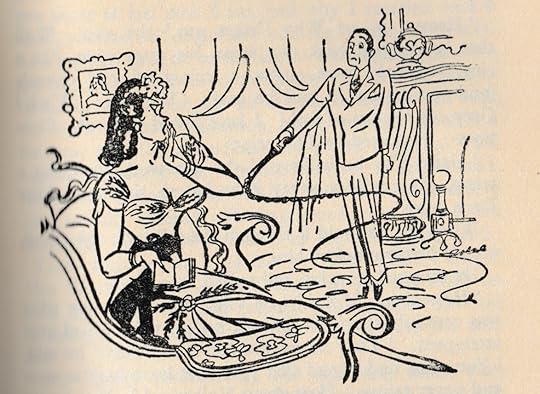
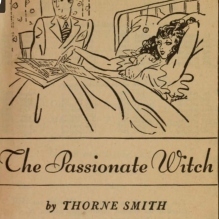
I enjoyed the b/w illustrations by Herbert Roese.
The example I've selected is from Chapter X, the wonderfully named They Let Anyone Live in Miami.
Indeed.
https://wordpress.com/view/carolshess...
Anyone coming to this book because it was the inspiration for the film I Married a Witch, which in turn inspired a favourite programme of my childhood, Bewitched
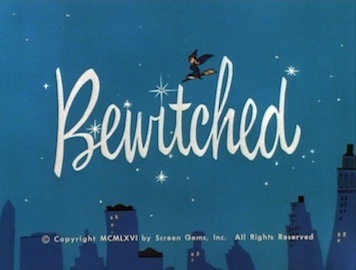
Anyone expecting the sexist but silly fun of the above (as a child I could never understand what Samantha saw in Darrin - what a drip!) will be disappointed. Thorne Smith died aged only 42 before this book was completed and he was a pretty far gone alcoholic by then. Goodness knows what hallucinations he was having while experiencing the d.t.s!
I would be prepared to bet the first 50 pages were all Smith, as I had a few chuckles at the early adventures of the stuffed shirt businessman and tee-totaller T. Wallace Wooly. That changed on page 51 where Wooly was cruel to a horse. I'm just never going to find cruelty to animals funny.
Maybe Smith had sketched out some rough ideas that Norman Matson (the author who completed this book) followed because there was the occasional funny line & I found some of witch Jennifer's pranks hilarious, especially when Wooly could These parts were inspired!
I enjoyed the b/w illustrations by Herbert Roese.
The example I've selected is from Chapter X, the wonderfully named They Let Anyone Live in Miami.
Indeed.

https://wordpress.com/view/carolshess...

May 30, 2026
I'm sure the movie is better in every WITCH way (get it?), but I still decided to give the book a try, because, as we all know, I'm a completionist.
You can absolutely tell it came out in the 1940s, sexism galore. Some parts of The Passionate Witch were kind of funny though, so it wasn't all bad. But I wouldn't read it again, so take that as you will.
There's also illustrations in every chapter, just like the one featured on the cover. Do they make the book funnier? Perhaps. I think they're cute, and they add something extra to the story.
But yeah, The Passionate Witch is a product of its time and, in my opinion, entirely skippable, go straight to the movie, and enjoy.
You can absolutely tell it came out in the 1940s, sexism galore. Some parts of The Passionate Witch were kind of funny though, so it wasn't all bad. But I wouldn't read it again, so take that as you will.
There's also illustrations in every chapter, just like the one featured on the cover. Do they make the book funnier? Perhaps. I think they're cute, and they add something extra to the story.
But yeah, The Passionate Witch is a product of its time and, in my opinion, entirely skippable, go straight to the movie, and enjoy.

October 18, 2007
I think most of us are aware of the TV show 'Bewitched' right? Well it's based on Thorne Smith's last novel "Passionate Witch."
The big difference with the novel is that it has 'dark' overtones with respect to married relationships. The Witch here is really a witch. She puts spells on women she feel is putting the moves on her husband. And the husband just wants a piece of mind and some space... Weird book.
But overall you can't go wrong with Throne Smith. Why this man is so underrated is beyond me. He really reflects the 'Depression Years' in big city America - with all the hopes and dreams, which basically ends up in some swanky bar with a couple of supernatural situations.
For those who love fantasy and F. Scott!
The big difference with the novel is that it has 'dark' overtones with respect to married relationships. The Witch here is really a witch. She puts spells on women she feel is putting the moves on her husband. And the husband just wants a piece of mind and some space... Weird book.
But overall you can't go wrong with Throne Smith. Why this man is so underrated is beyond me. He really reflects the 'Depression Years' in big city America - with all the hopes and dreams, which basically ends up in some swanky bar with a couple of supernatural situations.
For those who love fantasy and F. Scott!
October 26, 2022
🔻 Genre: Fiction.
✔️Published in 1941. (Began in the 1930s; finished by Norman Matson due to Thorne Smith’s death.)
👁 Point of view: Third person.
🖊 My review: This is a surprise – that the 1942 movie, “I Married a Witch,” is based on this book, The Passionate Witch! However, it is important to note that the plot of the movie is hardly anything of the novel. Yes, it is that different. In this novel, Mister Ten-Eck Wallace Wooly, a shy tycoon, meets an enigmatic – and naked, mind you – young woman, a Miss Broome. It turns out that she is a witch and his swift marriage to her has him rethinking his decision. Betty, his pretty secretary, thinks so, too.
Because the plot is so different between The Passionate Witch and the 1942 movie, the reader could not help but consider these two mediums different stories. The novel version is well written, with risqué scenarios coupled with clean language (yes, it can be tastefully done!).
🔥 Dénouement: Positively happy.
🖋 The writing style: Well written and tastefully done. The illustrations in the novel are charming.
🗝 What I learned: That the author is the same who wrote the Topper series of novels which were translated to movies.
💫 What I like best: The fun aspect of this story that does not elevate witchcraft in the nefarious sense.
📌 Would I read this again? Yes.
🤔 My rating 🌟🌟🌟🌟🌟
◼️ Fun fact: Thorne Smith wrote the Topper series of books, plus much more.
🔵 Media form: Internet Archive.
🎥 Media form: Movie version, 1942, with Veronica Lake and Frederic March.

July 23, 2020
Thorne Smith's The Passionate Witch is an odd book and considering it was the basis for the film I Married A Witch, there is some odd similarities which one wonders what exactly did they base the film on the book.
The story is a whimsical story about Mr T Wallace Wooley and how he rescues a naked woman from a burning hotel who happens to be a witch of the black arts. They marry and due to her jealous streak and the fact that he loves a pure mortal who is good of heart, we are lead down a whirlwind about relationships and people’s perceptions of marriage and society norms.
The characters are very light and through their failings we do get a deeper cut into their virtual in-depth flaws outside of their perfect outward personalities. When you scratch below the surface, one realises that things are not what they appear. Wooley is an interesting character that is not all together very likable and as for Jennifer, I actually loved this character. Betty was a bit bland for my liking but to find Jennifer’s spells causing such outlandish actions for me, helps drive the story along.
The plot is a different sort of animal altogether and runs and works at its own pace and wording. This seems more out of the style of writing of The Circus of Dr Lao than the typical straightforward storytelling that modern readers have become accustomed to and I personally like the change of pace. Through its use of episodic storytelling, it feels more like an impressionistic novel that up close it feels a bit jumbled but with some distance, the story becomes more vivid and clear. There is a whimsical thread that follows the story along with its cartoonish actions and characters and it seems that this is a trait that help Smith precede becoming a bestselling author with his Topper books. I haven’t read these but they are on my list which I cannot wait.
Overall, this is an interesting book and from my understanding, this book was finished after Smith’s death so it might have been worked a bit differently should he had finished it. I can understand the criticisms used against the book but I think this is more down to its style and story telling mechanics. I did enjoy the book but it is more of a curiosity read than an enjoyable read but if you like your stories a bit off kilter, there is a lot to digest with this. Enjoyable for what it is.
The story is a whimsical story about Mr T Wallace Wooley and how he rescues a naked woman from a burning hotel who happens to be a witch of the black arts. They marry and due to her jealous streak and the fact that he loves a pure mortal who is good of heart, we are lead down a whirlwind about relationships and people’s perceptions of marriage and society norms.
The characters are very light and through their failings we do get a deeper cut into their virtual in-depth flaws outside of their perfect outward personalities. When you scratch below the surface, one realises that things are not what they appear. Wooley is an interesting character that is not all together very likable and as for Jennifer, I actually loved this character. Betty was a bit bland for my liking but to find Jennifer’s spells causing such outlandish actions for me, helps drive the story along.
The plot is a different sort of animal altogether and runs and works at its own pace and wording. This seems more out of the style of writing of The Circus of Dr Lao than the typical straightforward storytelling that modern readers have become accustomed to and I personally like the change of pace. Through its use of episodic storytelling, it feels more like an impressionistic novel that up close it feels a bit jumbled but with some distance, the story becomes more vivid and clear. There is a whimsical thread that follows the story along with its cartoonish actions and characters and it seems that this is a trait that help Smith precede becoming a bestselling author with his Topper books. I haven’t read these but they are on my list which I cannot wait.
Overall, this is an interesting book and from my understanding, this book was finished after Smith’s death so it might have been worked a bit differently should he had finished it. I can understand the criticisms used against the book but I think this is more down to its style and story telling mechanics. I did enjoy the book but it is more of a curiosity read than an enjoyable read but if you like your stories a bit off kilter, there is a lot to digest with this. Enjoyable for what it is.

December 31, 2014
Thorne Smith's book "The Passionate Witch" was published in 1941. It was his final book and he was unable to finish it before his death. It was completed by Norman Matson. Mr. Smith's book is said to be the seed idea for the TV show "Bewitched". The "Passionate Witch" was a frivolous but entertaining book. For a 1940's book it was quite racy and contained nudity, cheating, heavy drinking and cross dressing. The story begins with a well respected businessman who maintains a very healthy and Christian lifestyle and does not imbibe in alcohol. His world changes when he rescues a beautiful naked woman from a fire. The dialog is humorous and witty. The characters are colorful and interesting. The book also contains cartoon-like illustrations.

October 10, 2018
Not what I expected a few funny bits but unfortunately it was completely different from the film and quite risqué for the time!

August 24, 2018
This was a hard book to find in a physical form. Then I came across it (+ The Night Life of the Gods) in a local secondhand bookstore, I got exhilarated. The book I found was a pocket edition from the 40s, costing then $0,25 which means $319,19 when you take inflation into a count. Inflation what a nice thing (and that was sarcasm, just that you know. I'm not a fan of inflation, but we can get to my views about economics in some other post.) If I was to buy the same product today, it would cost me $1,84. I don't know if you find any of that useful or interesting, but I had to check it out, I was feeling curious. And you know what happens to curious people, they inherit the earth. I will stick with that notion.
I couldn't wait to get home with my findings, real treasures. I take books over gold anytime. Which is stupid as with gold you could buy more books, but then again wouldn't there be an unnecessary extra step? I'm sorry, I should get to reviewing the book. The first fifty pages were like I had hoped: that feeling of magic and silliness what you get from Bewitched written in an elegant form. I was happy to read it, despite somewhat outdated views about women and their roles in the home, society, and in marriage. Then the writer didn't know what to do with his passionate witch and he ruined everything! The story took a wrong turn if that is even possible.
I didn't mind this being a "horror" version of Bewitched. The witch being nasty, dark, and sensual. I didn't mind the somewhat oldish view when it comes to witches: sacrifices, riding goats, and bite marks from you know who. And I loved that the twist I didn't like, made the book turn into pondering about what if you could read others' mind how that would affect your life? But nothing of that had to do with anything the story proposed me in the first pages. And I say again either Thorne Smith or Mr. Matson who finished the story after Smith death didn't know how to deal with the passionate witch and with the tension between her and the main character Mr. Wooly.
I wanted to stand up to barricades and protest what was done to the book and the witch. Okay, I'm partial to witches as well (you know already that I have this partiality to aliens, monsters, and other horrible beings from the great beyond. And yes we have already established that I'm twisted.) I find witches fascinating and have been intrigued by them since my childhood. Maybe that has to do something with my grandma, hm? There is something empowering, secretive, and sensual with women who can do magic. And here is a good time to tell you: I was thought to be one two days ago. I went hiking with my husband in a local forest and I have this fisherman's hat with a witchy tip. We came across with a family and their son asked me if I was a witch and I said, "I guess you can think me as one." Or something along the line. And now I'm not sure if I should have inflicted such a memory to the poor boy. Was I wicked or did I make his life richer? His mother told me (embarrassed) after the boy asked me the question, they had been talking about witches only a moment ago as they made through the "enchanted forest". Poor boy. I defense of my hat: it is useful. When we got home, my husband found three flies (which suck blood) in his hair and I didn't have a single one. My witchy fisherman's hat repelled them away. There is magic after all!
Back to my disappointment! The way the book dealt with the witch wasn't how you should treat a witch. They can be reasonable if you talked to them instead of pushing them aside. The book was clearly about the duality of women: the whore (the passionate witch) and the mother (Mr. Wooly's love interest), and how men struggle with them. The writer joked with those issues. Luckily witches come in all sizes and shapes and very different mindsets nowadays. I think Bewitched got it better. That said, I understand the book was a product of its time. When I read it, I didn't mind the gender roles, and I understood them, but what I minded was how the writer's inability to deal with the passionate witch broke the story. The part I'm talking about has to do with trees and being hit on the head. If you find this book, read it and make up your own mind. Maybe you are partial to witches like me and found the book disappointment or don't think the point I'm talking about ruins the story at all and find the book rightly silly to read and lighten up your mood (which it does, if you don't take seriously things like does it work.)was a witch and I said, "I guess you can think me as one." Or something along the line. And now I'm not sure if I should have inflicted such a memory to the poor boy. Was I wicked or did I make his life richer? His mother told me after the boy asked me that, that they had been talking about witches only a moment ago as they made through the "enchanted forest". Poor boy. I defense of my hat: it is very useful. When we got home, my husband found three flies which suck blood in his hair and I didn't have a single one. My witchy fisherman's hat repelled them away. There is magic after all!
Back to the barricades! The way the book dealt with the witch wasn't how you should treat a witch. They can be reasonable if you just talked to them instead of pushing them aside. The book was clearly about the duality of women: the whore (the passionate witch) and the mother (Mr. Wooly's love interest.) And this doesn't have to be the case, and luckily it isn't anymore. Witches come in all sizes and shapes and very different mindsets. I think Bewitched got it better. That said, I understand the book was a product of its time. When I read it, I didn't mind the gender roles and I understood them, but what I minded was how the writer's inability to deal with the passionate witch broke the story. The part I'm talking about has to do with trees and being hit on the head. If you find this book, read it and make up your own mind.
I couldn't wait to get home with my findings, real treasures. I take books over gold anytime. Which is stupid as with gold you could buy more books, but then again wouldn't there be an unnecessary extra step? I'm sorry, I should get to reviewing the book. The first fifty pages were like I had hoped: that feeling of magic and silliness what you get from Bewitched written in an elegant form. I was happy to read it, despite somewhat outdated views about women and their roles in the home, society, and in marriage. Then the writer didn't know what to do with his passionate witch and he ruined everything! The story took a wrong turn if that is even possible.
I didn't mind this being a "horror" version of Bewitched. The witch being nasty, dark, and sensual. I didn't mind the somewhat oldish view when it comes to witches: sacrifices, riding goats, and bite marks from you know who. And I loved that the twist I didn't like, made the book turn into pondering about what if you could read others' mind how that would affect your life? But nothing of that had to do with anything the story proposed me in the first pages. And I say again either Thorne Smith or Mr. Matson who finished the story after Smith death didn't know how to deal with the passionate witch and with the tension between her and the main character Mr. Wooly.
I wanted to stand up to barricades and protest what was done to the book and the witch. Okay, I'm partial to witches as well (you know already that I have this partiality to aliens, monsters, and other horrible beings from the great beyond. And yes we have already established that I'm twisted.) I find witches fascinating and have been intrigued by them since my childhood. Maybe that has to do something with my grandma, hm? There is something empowering, secretive, and sensual with women who can do magic. And here is a good time to tell you: I was thought to be one two days ago. I went hiking with my husband in a local forest and I have this fisherman's hat with a witchy tip. We came across with a family and their son asked me if I was a witch and I said, "I guess you can think me as one." Or something along the line. And now I'm not sure if I should have inflicted such a memory to the poor boy. Was I wicked or did I make his life richer? His mother told me (embarrassed) after the boy asked me the question, they had been talking about witches only a moment ago as they made through the "enchanted forest". Poor boy. I defense of my hat: it is useful. When we got home, my husband found three flies (which suck blood) in his hair and I didn't have a single one. My witchy fisherman's hat repelled them away. There is magic after all!
Back to my disappointment! The way the book dealt with the witch wasn't how you should treat a witch. They can be reasonable if you talked to them instead of pushing them aside. The book was clearly about the duality of women: the whore (the passionate witch) and the mother (Mr. Wooly's love interest), and how men struggle with them. The writer joked with those issues. Luckily witches come in all sizes and shapes and very different mindsets nowadays. I think Bewitched got it better. That said, I understand the book was a product of its time. When I read it, I didn't mind the gender roles, and I understood them, but what I minded was how the writer's inability to deal with the passionate witch broke the story. The part I'm talking about has to do with trees and being hit on the head. If you find this book, read it and make up your own mind. Maybe you are partial to witches like me and found the book disappointment or don't think the point I'm talking about ruins the story at all and find the book rightly silly to read and lighten up your mood (which it does, if you don't take seriously things like does it work.)was a witch and I said, "I guess you can think me as one." Or something along the line. And now I'm not sure if I should have inflicted such a memory to the poor boy. Was I wicked or did I make his life richer? His mother told me after the boy asked me that, that they had been talking about witches only a moment ago as they made through the "enchanted forest". Poor boy. I defense of my hat: it is very useful. When we got home, my husband found three flies which suck blood in his hair and I didn't have a single one. My witchy fisherman's hat repelled them away. There is magic after all!
Back to the barricades! The way the book dealt with the witch wasn't how you should treat a witch. They can be reasonable if you just talked to them instead of pushing them aside. The book was clearly about the duality of women: the whore (the passionate witch) and the mother (Mr. Wooly's love interest.) And this doesn't have to be the case, and luckily it isn't anymore. Witches come in all sizes and shapes and very different mindsets. I think Bewitched got it better. That said, I understand the book was a product of its time. When I read it, I didn't mind the gender roles and I understood them, but what I minded was how the writer's inability to deal with the passionate witch broke the story. The part I'm talking about has to do with trees and being hit on the head. If you find this book, read it and make up your own mind.

January 25, 2023
Un libro totalmente diferente a la versión cinematográfica "I married a witch" (1942), en la cual fue basada la misma. A parte de la premisa inicial de que Mr. Wooly termina seducido y "embrujado" por Jennifer, una bruja, y luego terminan casados, todo lo demás es totalmente diferente.
Lo que me lleva a una sola conclusión: la película fue mucho mejor que la novela
- En la película, Jennifer, y su padre (el cual no existe en la novela), conocen a la familia Wooly desde la antigüedad, y luego de que un antepasado de éste terminada enamorado de Jennifer, y después se entera que es una bruja, en la época de los peregrinos, deciden quemarla en la hoguera, al igual que a su padre, en eso ella pone una maldición antes de morir, sobre los Wooly: todos sus sucesores, se enamorarán de la chica equivocada, y tras su muerte la maldición de los Wolly se cumple, nada de ello, ocurre en la novela, donde Jennifer simplemente se aparece en su vida, sin más explicación
- La escena donde se conoce el actual Mr. Wooly y Jennifer es igual, él la salva de un edificio en llamas, aunque en la película se explica que el incendio lo provoco ella luego de haber revivido, tras que el árbol en el que su espíritu estaba atrapado, en conjunto con su padre, fue destruido luego de que un rayo le cayera
- En la novela, Wooly era viudo, su esposa murió hace años y tenía una hija, llamada Samantha, de 15 años, para cuando conoció a Jennifer, en la película, no era viudo ni tenía hijos
- De allí, para adelante, el resto de la película es nada parecida a la novela, Jennifer en la película era mala, mala de verdad, asesinaba animales, conversaba con el diablo en las noches, flotaba, y asesinaba si tenía que hacerlo sin remordimiento, y nunca amó a Wooly, simplemente se entretuvo con él, la Jennifer de la película, a pesar de que al inicio se quería vengar de Wooly por todo su pasado, al final terminó enamorada de él, y para cuando se casaron, se llegó a terminar de enamorar de él
- Caballos vengativos, asuntos policiales irrisorios, emborrachadas en bares, etc, todo ello no sale en el película, y sobra decir que es lo mejor que pudieron haber hecho. La película 10/10, llegando a tomar el lado literal y fantasioso de Jennifer de la mejor manera posible, hace que esta sea una de mis películas favoritas de Fredric March, la novela por el otro lado, usó el personaje de Jennifer, la bruja, como una manera de ver a las mujeres como objetos, seres peligrosos, pocos confiables, y obviamente sexualizados. Pero qué puedo decir, clásica orientación de un autor masculino, sobre todo de los años 40s, en fin...
Lo que me lleva a una sola conclusión: la película fue mucho mejor que la novela
- En la película, Jennifer, y su padre (el cual no existe en la novela), conocen a la familia Wooly desde la antigüedad, y luego de que un antepasado de éste terminada enamorado de Jennifer, y después se entera que es una bruja, en la época de los peregrinos, deciden quemarla en la hoguera, al igual que a su padre, en eso ella pone una maldición antes de morir, sobre los Wooly: todos sus sucesores, se enamorarán de la chica equivocada, y tras su muerte la maldición de los Wolly se cumple, nada de ello, ocurre en la novela, donde Jennifer simplemente se aparece en su vida, sin más explicación
- La escena donde se conoce el actual Mr. Wooly y Jennifer es igual, él la salva de un edificio en llamas, aunque en la película se explica que el incendio lo provoco ella luego de haber revivido, tras que el árbol en el que su espíritu estaba atrapado, en conjunto con su padre, fue destruido luego de que un rayo le cayera
- En la novela, Wooly era viudo, su esposa murió hace años y tenía una hija, llamada Samantha, de 15 años, para cuando conoció a Jennifer, en la película, no era viudo ni tenía hijos
- De allí, para adelante, el resto de la película es nada parecida a la novela, Jennifer en la película era mala, mala de verdad, asesinaba animales, conversaba con el diablo en las noches, flotaba, y asesinaba si tenía que hacerlo sin remordimiento, y nunca amó a Wooly, simplemente se entretuvo con él, la Jennifer de la película, a pesar de que al inicio se quería vengar de Wooly por todo su pasado, al final terminó enamorada de él, y para cuando se casaron, se llegó a terminar de enamorar de él
- Caballos vengativos, asuntos policiales irrisorios, emborrachadas en bares, etc, todo ello no sale en el película, y sobra decir que es lo mejor que pudieron haber hecho. La película 10/10, llegando a tomar el lado literal y fantasioso de Jennifer de la mejor manera posible, hace que esta sea una de mis películas favoritas de Fredric March, la novela por el otro lado, usó el personaje de Jennifer, la bruja, como una manera de ver a las mujeres como objetos, seres peligrosos, pocos confiables, y obviamente sexualizados. Pero qué puedo decir, clásica orientación de un autor masculino, sobre todo de los años 40s, en fin...

July 8, 2020
Some people seem to think a library is just a place where to dump old books under the pretense of "donating". So I recently ended up with two boxes' worth of stuff dug up from some grandparent's attic (I tend not to refuse donations right away, because well, you never know, and you always need a classic book or two for kids who have to read them for class. Also I have trouble saying no)
These boxes were, from a library's standpoint, worthless (we do not need your Reader's Digest from 1972, people. Nor the 80s erotica books), but among all that stuff I found this book, which was a surprise in itself: I heard of the movie before, but was unaware of a pre-existing novel. So I dug in it (after cutting all the pages open, which was a task in itself. So glad we got rid of it)
First: this is not a translation, but an "adaptation", so I wonder how much's been lost in it, and whether the charmingly obsolete style belongs to the author or to the French guy who had to rewrite it.
Second: The book has been completed and published posthumously, so I wonder how much of the end was Thorne's own. A mystery for the ages.
Thirdly: this is heavily satirical and thus very entertaining to read. I feared sexist overtones (it was written in 1941 after all) but, since all the characters are laughable (and laughed at), it isn't as blatant as other books from the same era. Only the "good girl" character is boring, of course. And the end is a bit underwhelming and predictable.
But all in all, it was a distracting read, quite funny, and I wouldn't mind reading other books by Thorne Smith.
I haven't seen the movie, but as far as I know, it has little to do with the novel apart from the premise.
In conclusion: a good find, but don't let this review let you think it's okay to donate boxes of junk to your library.
These boxes were, from a library's standpoint, worthless (we do not need your Reader's Digest from 1972, people. Nor the 80s erotica books), but among all that stuff I found this book, which was a surprise in itself: I heard of the movie before, but was unaware of a pre-existing novel. So I dug in it (after cutting all the pages open, which was a task in itself. So glad we got rid of it)
First: this is not a translation, but an "adaptation", so I wonder how much's been lost in it, and whether the charmingly obsolete style belongs to the author or to the French guy who had to rewrite it.
Second: The book has been completed and published posthumously, so I wonder how much of the end was Thorne's own. A mystery for the ages.
Thirdly: this is heavily satirical and thus very entertaining to read. I feared sexist overtones (it was written in 1941 after all) but, since all the characters are laughable (and laughed at), it isn't as blatant as other books from the same era. Only the "good girl" character is boring, of course. And the end is a bit underwhelming and predictable.
But all in all, it was a distracting read, quite funny, and I wouldn't mind reading other books by Thorne Smith.
I haven't seen the movie, but as far as I know, it has little to do with the novel apart from the premise.
In conclusion: a good find, but don't let this review let you think it's okay to donate boxes of junk to your library.

April 4, 2018
Thorne Smith’s books are a spot-on gem to read and much better than the movies (based on many of his books)! An adorable adaption of a father and daughter who were burned as witches at a tree almost 300 years ago. Just before dying a curse is put on the Woolly families men (all their love ventures would end in disaster). In 1942 lightening strikes the tree bringing the two witches back to life. All chaos, amusement and laughter begins in a delightful adventure. The tale ends as the Witches decide they were better off in their tree! I laughed out loud so many times and smile broadly every time I think of the tale!
February 26, 2016
Not a big fan. The book was published in 1941, which made the historical context slightly interesting, but it was sexist, silly (as intended), and not particularly amusing. Its subtitle is "The Ribald Story of a Shy Millionaire who Married a Witch". Perhaps that should have told me enough to avoid reading it. I almost quit in the middle....

January 3, 2022
A terrible jumble of word vomit mixed in with misogynistic and racist ramblings.
I read this because "I Married a Witch" was supposed to be based on it. For once the movie was better. Cannot recommend this book at all.
I read this because "I Married a Witch" was supposed to be based on it. For once the movie was better. Cannot recommend this book at all.

Want to Read
May 19, 2011Remember 'Bewitched'? It was based on this

Read
January 28, 2012witty . old fashioned and great
July 21, 2017
This was a quirky, entertaining book. Apparently, Bewitched (the TV show) is based on this book.

September 21, 2024
T. Wallace Wooly finds himself first rescuing and then marrying Jennifer Broome - but why? He slowly discovers that he's been enchanted - literally. Jennifer is a witch and gets what she wants through magic. When Wooly rebels, she curses him with the "gift" of hearing what people are thinking... except when he's drunk. So tea-totaller Wooly starts hitting the bars... heavily.
Thorne Smith's final novel is, like his others, a clever idea taken to an absurd conclusion. It's not quite up to his usual standards, though, but still fun. And it was made into a much-better movie, "I Married A Witch".
Thorne Smith's final novel is, like his others, a clever idea taken to an absurd conclusion. It's not quite up to his usual standards, though, but still fun. And it was made into a much-better movie, "I Married A Witch".

September 28, 2025
This is pretty much the plot of a horror story disguised as a fantasy farce. There are a couple of very funny moments, but, for the most part I found it tedious. Thorne Smith's books are always somewhat risque, this one more so than most. Apparently Norman Matson novelized the story from a Smith movie treatment after Smith passed away, but, if that's the case, Mr. Matson added some blue humor to the story, because I can't imagine this sort of thing would have been in any story written for the movies in the late '30s/early '40s.
Want to Read
February 29, 2024The screenplay for the 1942 film "I Married a Witch" was based on the book "The Passionate Witch". I seen this book go for $350. yowsers! I haven't read the book yet. I just wanted to write this note so I would remember why I put the book on my Goodreads shelf. I am about to watch the movie. Take care.

December 14, 2024
I read it because in part Bewitched was supposed to be based on this story. Only if Samantha was evil, they say Bewitched a few times and the wife is evil and he find out after they are married. That’s pretty much it for similarities.

March 7, 2025
A bit hard to read from start to finish. Didn’t really like any of the characters. I do acknowledge that the book was written in a time when views of society were different, but the book just seemed to lack something. I don’t know how the film “I married a witch” is based on this book.

July 20, 2021
Smith also treated to enough character development and interaction which serves that good mix that would make us want more.
June 11, 2023
Written in 1941 it's definitely a book of its time,that being said it was a fun read. The imagery was quite fun and I found it entertaining, it's certainly readable just a bit dated.

November 13, 2025
A fun, witty and humorous book that was entertaining from start to finish!
May 1, 2024
Works way too hard at being clever.
Displaying 1 - 25 of 25 reviews