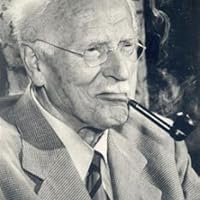
Sir Kazuo Ishiguro (カズオ・イシグロ or 石黒 一雄), OBE, FRSA, FRSL is a British novelist of Japanese origin and Nobel Laureate in Literature (2017). His family moved to England in 1960. Ishiguro obtained his Bachelor's degree from the University of Kent in 1978 and his Master's from the University of East Anglia's creative writing course in 1980. He became a British citizen in 1982. He now lives in London.
His first novel, A Pale View of Hills, won the 1982 Winifred Holtby Memorial Prize. His second novel, An Artist of the Floating World, won the 1986 Whitbread Prize. Ishiguro received the 1989 Man Booker prize for his third novel The Remains of the Day. His fourth novel, The Unconsoled, won the 1995 Cheltenham Prize. His latest novel is The Buried Giant, a New York Times bestseller. He was awarded the Nobel Prize in Literature 2017.
His novels An Artist of the Floating World (1986), When We Were Orphans (2000), and Never Let Me Go (2005) were all shortlisted for the Man Booker Prize.
In 2008, The Times ranked Ishiguro 32nd on their list of "The 50 Greatest British Writers Since 1945". In 2017, the Swedish Academy awarded him the Nobel Prize in Literature, describing him in its citation as a writer "who, in novels of great emotional force, has uncovered the abyss beneath our illusory sense of connection with the world".
دوستانِ گرانقدر، داستان در موردِ پیرمردی به نام «فلچر» است، که به روستایی سفر کرده، که بعد از اندکی تاخیر و گذشتِ زمان متوجه میشود که دوران نوجوانی و جوانی را در آن روستا سپری کرده است... و در داستان با شخصیت هایی مبهم برخورد دارد و به گفتگو مینشیند... شخصیت هایی که او را ندامت میکنند و از گذشتۀ او رنجیده خاطر هستند البته دوستانِ عزیزم، اگر اشتباه نکنم، تمامی اتفاق هایِ رخ داده در این داستان، همه و همه در ذهن خودِ «فلچر» در حال رویدادن است... پیرمردی که خاطراتش مرور میشود و وجدانش از اشتباهاتِ گذشته در عذاب است... و گویا سفر به روستا، همان سفر به زندگی گذشتۀ او میباشد و گفتگو با اشخاصی همچون « راجر باتن» مردی که «فلچر» در زمان تحصیل او را بسیار اذیت و آزار میکرده است، تنها در ذهنِ «فلچر» روی میدهد
امیدوارم این توضیحات مفید بوده باشه «پیروز باشید و ایرانی»
I listened to this being read and discussed by Ben Marcus via The New Yorker's Fiction Podcast, and I'm very glad that I did. Had I read this on its own, I doubt that I would have spared the energy to really consider the depth and possibilities that make up this intriguing little story. Taking the time to ponder all the possible meanings is absolutely essential to enjoying this story. Seriously - if you don't like stories that can have multiple interpretations, this is not for you. Ishiguro leaves a lot open to interpretation here.
Ben Marcus and The New Yorker’s fiction editor, Deborah Treisman, are really able to tease out the possibilities and some of the more subtle messaging, as well as giving some context to Ishiguro's writing. I feel that I've learned something about Marcus' own writing having listened to this too.
--------------- Although featured subsequently in the New Yorker, "A Village After Dark" wasn't originally intended to be published (*), but was rather written by Ishiguro as part of his experimentation with narrative techniques in preparation for writing his, in my view, masterpiece, Unconsoled.
As such it is less well developed than his novels. There is even greater ambiguity than usual (what exactly did Fletcher do? what's the significance of his schooling in Canada? where and when is this - seemingly present day UK but a very odd version of it) and one senses Ishiguro himself doesn't know the answers. But this works well in a short-story format, leaving the reader to guess, and it's certainly a story that lingers in the mind as a result.
Fletcher is the archetypal Ishiguro narrator, concious that past deeds, which at the time he considered to be motivated by good, had bad consequences and trying to both justify what he did and forget about it.
There are some nice original touches - e.g. Fletcher's jealousy that a compatriot, Dave Maggis, is perceived as a more major player ("You know, he wasn’t one of the really important figures. You mustn’t get carried away with such an idea").
And the story provides a nice bridge between the more straightforward (if such can ever be said of an Ishiguro novel) Artist of a Floating World and Remains of the Day, and the much more ambiguous and dreamlike Unconsoled.
(* source: Kazuo Ishiguro: Contemporary Critical Perspectives edited by Sean Matthews, Sebastian Groes)
Opening lines: There was a time when I could travel England for weeks on end and remain at my sharpest—when, if anything, the travelling gave me an edge. But now that I am older I become disoriented more easily. So it was that on arriving at the village just after dark I failed to find my bearings at all. I could hardly believe I was in the same village in which not so long ago I had lived and come to exercise such influence.
3* Never Let Me Go 4* The Remains of the Day 5* When We Were Orphans 2* The Unconsoled 3* The Buried Giant 2* A Pale View of Hills 4* A Village After Dark TR An Artist of the Floating World
What an amazing story. Okay, I admit that I listened to this story (read by Ben Marcus) while walking the track at the local rec center. Nevertheless, I was absorbed by the images that Ishiguro brought to mind. In fact, I had to find the story online as soon as I returned and read it for myself. One other person has reviewed this story, and because she didn't know what it was about gave it an unfair rating. I'll admit that I'm not sure what this story is about. But it has got me thinking, and that's the point. Is it about the afterlife? Perhaps. Is it a dreamscape? Most definitely. Do we know what Fletcher and "his lot" have done in the distant past? Not really. But we see the implications. He is forever wandering, looking for something, in perhaps an attempt at redemption? He doesn't seem regretful for his past actions. In fact, he is quite defensive. Maybe it is more of a punishment, to wonder forever. Hard to tell. Even so, this story causes one to think about the past and its implications on the present. This is a surreal story that reminds me of Kafka and Borges, and I'm going to have to revisit it a few times and give it a lot of thought. Just the kind of literature that I love.
داستان کوتاهی در مورد پیر مردی به نام فلچر - که به روستایی که در گذشته زندگی می کرد بر می گرده پایان داستان باز برداشت من از کتاب اینه که پیرمرد اخرای زندگیشه و تو این اواخر به کار ها و رویدادهای تلخ و شیرین گذشته ش فک می کنه
Fletcher returns to a village he left years before as something of a hero? It’s never completely made clear what he was to the people of the village but it’s implied he was something of a cult leader or, at best, a leader who they all looked up to and lived in accordance with the ideas he espoused. And, apparently, it led to their stagnation and his downfall. He ends up at his old cottage, as an old, dirty, man, a “ragamuffin” someone says. The older people who were part of his original following seem to be anxious to speak to him and possibly censure him for the harm following him and his teachings did to them. Meanwhile a young woman is also interested in speaking to him and the older faction worry he will have the younger group as enamored and supportive of him as the old group was. While walking to visit her group, he meets a man he knew years ago. Fletcher apparently bullied this man when he was a boy. The now-man’s intentions aren’t clear. You think he’s going to hurt Fletcher in retaliation for the false prophecy and bullying he had once been subjected to by him, but then he ends up just leaving him at a bus station saying a bus will eventually come (although it doesn’t seem likely). The “situation” reflects the past work of Fletcher. The man has encouraged him that he’s going to get the bus and be able to go and speak (influence) with the younger group and Fletcher believes him (but it doesn’t seem like it’s going to happen).
So, like the people who Fletcher led in the past, Fletcher himself is sitting waiting for something that’s not going to come (and will possibly be hurt while sitting there like a lame duck). It’s ominous and open-ended. Based on what Fletcher himself has said in his interactions with the people of this village, he knows the results of his reign over the village’s people resulted in bad, but he still seems to be as arrogantly unrepentant as ever. I enjoyed this story and couldn’t help but look at it in political terms, considering our country’s political situation and social divisiveness and the leaders heading the various groups. I also read it through the lens of commupence and how it’s heavily implied that Fletcher will somehow pay for his past sins. Karma seems to be a force that will make itself known.
I love the way Ishiguro writes. He invites you into what is seemingly a simple story of a man returning to the village where he grew up. As the story progresses, Fletcher becomes more interested in seeing who he recognizes and remembers, when a young woman approaches him and tells him the young people of the village basically worship him and those he hung out with. He ends up knocking on the door of the exact cottage he lived in as a young boy, falls asleep, and is confronted by a woman who confesses he ruined her life. Although she claims she is doing much better than him. He decides to leave the cottage, meets an old acquaintance he bullied, as they together follow the young woman he met when he first arrived in the village. As the two men talk, following the young woman, he realizes the young woman is no longer there. His acquaintance tells him to take a bus to the house of the young woman, since it’s two hours away. The story ends as Fletcher waits for a bus. In a nutshell, this is the genius of Ishiguro’s writing. It’s a bleak, mysterious, captivating read until the last word. As the reader, you wonder what you just read and will the bus arrive? Is Fletcher dreaming? I highly recommend reading this amazing short story!
Sarebbe carino, questo racconto nato come esperimento stilistico e poi pubblicato sul Newyorker. Lo sarebbe, cioè, se avesse senso, avesse una parvenza di completezza e di direzione.
Alla fine del passaggio di Fletcher dal Villaggio, non sappiamo chi o cosa sia Fletcher, chi fossero i membri del suo gruppo e cosa avessero fatto in passato, quali fossero i loro scopi, cosa abbia causato questo suo peregrinare in cerca di redenzione (ma al contempo, antiteticamente, pronto a ributtarsi negli stessi errori). La vaghezza della narrazione fa quasi pensare a un qualcosa di ambientazione fantastica, magari quel gruppo di persone erano dotati di particolari poteri o di longevità... poi Button mette tutto in prospettiva, e gli orizzonti si restringono di colpo facendosi quasi claustrofobici mentre si cerca di ricalibrare la nostra valutazione e di ridurre le aspettative a una situazione più normale. Ma poi la ragazza scompare, si parla del bus, e finisce.
La ragazza chi era? Button era stato mandato dai Peterson per cacciarlo, con questa scusa? Perché spaventa la ragazza?
No, va bene che un racconto deve essere abbastanza vago e incompiuto da far pensare e sognare e riflettere, ma questo è più un'accozzaglia di spunti messi in forma di brevi paragrafi, che non un racconto. E se non era destinato alla pubblicazione, magari un ritocco prima di darlo via non sarebbe stato male, no?
An experiment in writing prior to the Unconsoled. This story: its ability to appear simple and straightforward, but somehow also inscrutable and unsettling. I think if I were not paying attention I could believe that nothing at all happened. There are numerous interpretations, the story could be entirely figurative, it could be within a dream, but it seems to be written to convey a sense of desolation, longing for the past, and deeply held guilt - and so it doesn't matter what the fictional reality might be.
I truly consider "A Village After Dark" by Kazuo Ishiguro a masterpiece. Initially, gotta admit it, I felt like the whole story is too vague and there are too many unexplained things and unanswered questions, but after I took my time and analyzed the whole short story, it made sense. There is more than meets the eye. The short story presents Fletcher's homecoming after so many years of travelling. Some would think that he was welcomed with hospitality, but on contrary... it's revealed soon that it's quite the opposite. Despite that, I think that Fletcher is an intriguing character. The readers can also identify themselves with Fletcher because he's confused as well and he's always asking for directions all the time, he's completely lost. He's so lost that he doesn't even remember certain things from his past, even though he's actually anchored in the past and can't stop thinking that's such a pity that the good old days are gone. This whole being confused thing is also highlighted by the cold atmosphere and the constant presence of the darkness. Furthermore, as I mentioned earlier, Fletcher doesn't remember much about himself, so coming back to his village can be seen as a self-discovery journey. Everyone's thoughts and opinions on Fletcher put together represents his portray. The two main ways in which he's perceived by the others are the following ones: the youngsters perceive him as a preacher, an important figure of the past (Fletcher describes himself as "important" too), but the people from his generation loathe him and they keep reminding him of the past mistakes. All in a nutshell, "A Village After Dark" is a really interesting lecture and I think of it as food for thought.
Ishiguro masterfully cultivates a deep sense of unease in this short story that holds many more questions than it does answers. The plot is mere scraps, leaving the reader frantically scrabbling among the pieces for meaning. I know that some find this scarcity of information frustrating - but I revel in it.
There is something almost Gothic in the description of the village, shrouded in darkness and mist, its quaint narrow passages twisting and disorientating both the narrator and, by design, the reader, so that the scene becomes nightmarish from the outset. Combine this with an unlikeable and unknowable first person narrator and Ishiguro has you horribly on-edge.
You never find out much. Everything in this place is just slightly off. Reality made strange. The narrator, Fletcher, is paradoxically arrogant yet fragile. He is a shadow of his former self and is reminded of this repeatedly by those in the village old enough to remember him... he is held accountable for his past, one woman goes as far as to tell him he ruined her life. And though he dismisses this as "unfair", his excuses are weak, political soundbites that force us to accept the narrator, whose hands we are unwillingly in, is dangerous and untrustworthy.
There appears to be a juxtaposition of the old and the young - the old are cynical, their memories of a time in the past are preventing them (and the village?) from moving on. Yet the younger members appear to feel differently, intrigued by arrival of Fletcher as a village 'celebrity' they nurture his damaged ego, a symbol of hope - or light - in the dark. But back out in the tangle of village streets his guide, a young girl, is lost - and our protagonist is left waiting for a bus... and we wonder how long he will stand alone in the dark.
More like a practice session before he wrote The Unconsoled. Yeah, the publishing dates say otherwise but who knows what's cooking up in the writer's mind? There is no chronology in one's head!
เป็นคนหนึ่งที่เฉยๆ กับ Never Let Me Go และ The Remains of the Day (อาจไม่แฟร์ เพราะเรื่องหลังดูแค่ฉบับหนัง) ของอิชิกุโระ เลยไม่คิดจะอ่านงานของอิชิกุโระอีกเลย แต่เรื่องนี้ดีงามผิดคาดแฮะ มันไม่ได้แปลกใหม่หรือว้าวอะไรแต่คือมันดีแบบเรียบๆ อ่ะ มันเป็นเรื่องของอดีตที่กลับมาหลอกหลอนในแบบเดียวกับ Remain เพียงแต่ด้วยบรรยากาศคลุมเครือ ตัวละครที่ดูผลุบโผล่เหมือนเงาหลอน ฉากหมู่บ้านห่างไกลที่ผุพัง และสถานการณ์กึ่งจริงกึ่งฝันจับต้องไม่ได้ก็ทำให้การเดินหลง/เดินตามของตัวละครเหมือนเป็นการเดินทางภายในหรืออะไรทำนองั้น อีกทั้งยังดูพิลึกจนน่าขนลุก
Isn't it so weird that different versions of 'you' live in different people's minds?
That's all I could think about when I was reading this story, how many versions of me exist in the minds of other people? Because the versions of our protagonist in this story are pretty different from the man that exists now.
I don't really know how to describe this story, I'm not even sure if I liked it. I can definitely appreciate the literary value of it, Ishiguro is amazing as always.
I left it wanting more, but I don't think that's especially a bad thing.
I can't quite comprehend this. The narrative is like the main character is describing an obscure dream in a strange but intricate way. I kept guessing the ending, whether the protagonist will wake up from his dream, or reminiscing his past memories, but it was none what I thought.
Today Kazuo Ishiguro won the Nobel Prize, so I decided to read this short story. It was a nice read, but too short. I feel that I read something incompleted. But maybe I just didn't understand it.
فاجعه؛ ظرافت داستان کوتاه و سرمنشأ آن، در این اثر آنقدر نادیده گرفته شدهاند که گویی این داستان، در حقیقت یک رمان بلند بوده که با چلاندنِ مستمر، به داستان کوتاهی تبدیل شده است.
How can only 8 pages be so harrowing? I felt tears coming to my eyes as soon as I finished, but I didn’t know why. There just was something indescribable yet still truly perceptible about the story.
فضای وهمآلود و عدم اشاره مستقیم به برخی اتفاقات و واقعیتها ویژگی این داستان کوتاهه. به سبک اصغر فرهادی هم پایانش بازه. داستان در مورد پیرمرد ضعیف و خمودهایه که سابقا قهرمان دهکدهش بوده و حالا برگشته یه سری به دهکدهش بزنه.
I thought this was pretty boring. I don't much care to read into the story to try and figure out what might be going on below the surface but it did sound as if the protagonist, Fletcher, might've been some kind of 1960s cult leader.
This is classic Ishiguro - an average of most of his previous works. I'd really like to know if the bus arrives for Fletcher at the end, bad as he was as a youngster and egotistical as he still is - it almost breaks my heart to not know, and this as I wonder if it is a literal or metaphorical bus.