Written in the idiom of Jane Austen’s time, this sequel to Pride and Prejudice tells the story of the Darcy family, their friends, and their relations in the 10 years since the day Mrs. Bennet got rid of her two most deserving daughters. Drawing its history from the novels, maps, and other volumes comprising the Chawton House Library at the Center for the Study of Early English Women’s Writing, the novel explores questions of the characters’ potential lives beyond the close of the original masterpiece. With the Great French War over and peace come at last, what does England look like in the late Regency? And is there a place for Austen’s heroes and heroines in an England greatly changed by industrialization, with a new elite of fortunes made in trade and reformist politics?
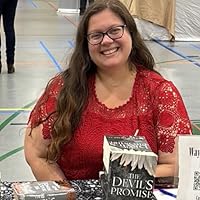
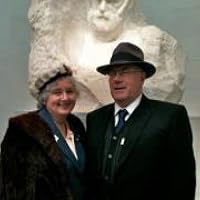
Sandy Lerner, aka Ava Farmer, is the founder of a large technology company and a small grunge cosmetics company, Chawton House Library, and the Sono Luminus recording label. She is the author of: "Archie Goodwin's Office, Nero Wolfe Speaking," (Ayrshire House, 2021), a post-Wolfe sequel based on the characters in the Rex Stout series; "Caticons: 4,000 Years of Art Imitating Cats," (Ayrshire House, 2017), a large-format art book celebrating the special relationships between cats and their people; "Second Impressions" by Ava Farmer (Chawton House Press, 2011), a sequel that begins ten years after Austen's "Pride and Prejudice"; "The Dilettante's Dictionary" (www.DilettantesDictionary.com), a dictionary of terms related to audio engineering and digital music; and is the translator of a 1922 book on carriage driving, "On Hitching and Driving" by Benno von Achenbach, Sandy Lerner ed., 1999).
Heard the author speak at a meeting of JASNA NY... She did an incredible amount of research to ensure authenticity and continuity.
Sadly, her research is not equalled by her writing. Austen's incomparable characters are flat and lack the wit and verve of the original. There are a few good passages, but the historical detail overwhelms the slight story.
Miss Austen famously said that her works were miniatures painted on a bit of ivory two inches wide, but she encompassed a whole world in that small space. Ms. Farmer tries to give us Austen's world but cannot give us the story we crave.
This is one of those stories I read before I retired and began reviewing every book I read. I do want to reread all those stories which I did not review but as time has slipped by and I haven't done so, I just want to mark all those stories as "read" so I have a record of the true number of books in the JAFF sub-genre I have read. I am using the average rating at this time as I do not remember how I rated this story back when I read it. If I ever get around to rereading it I will look at my rating to make sure it is true to my opinion. It was published in 2011 so that is most likely when I read it.
I had the pleasure of reading this book while on vacation. I had a lot of time to step back, read Pride & Prejudice again, and then continue into this novel. I loved the characters, and, unlike some other reviewers, found them dynamic and true to Austen. I felt her descriptions of locations took me along for the journey, which was, at times, an arduous one. Once I got into Book II, I felt it read exquisitely, and could barely put it down to enjoy my surroundings.
I only made it a quarter of the way through and I'm giving up. I have no idea what this book is about, and I don't have any more patience. At least the beginning of the book seems to be a vehicle for the author to show us how much research she's done on the Regency period. We get detailed backstory for many important characters, which might help us better understand social customs of the time, but nothing that furthers a present plot. The Darcys go on vacation so the author can describe English geography and industry and comment about the harsh conditions of mine workers. There are fleeting introductions with other Austen characters, but then they flit out again without anything actually happening. Some of it might be interesting, but it's terrible storytelling. The only concern Elizabeth seems to have is how to mend her frivolous ways so she can assist her husband. I've never once thought of Elizabeth as frivolous, but this author seems to think that's her defining characteristic. If someone can convince me that it gets MUCH better I might finish it, but right now I'm going to read something else.
Honestly, I was prepared to give it a higher rating, because the facsimile of Austen is so good. Unfortunately too much of the “second book” is taken up by a travelogue that feels interminable and becomes redundant. The few advances to the plot it contributes could have been done with a lot fewer complaints about the dirtiness of Europe (yes, we get it. There’s no place like home.) Not only did that section really bog down the pace of the book, but once the main story is rediscovered, the revelations and resolutions feel rushed and given short shrift. So ultimately, at least to this reader, what begins as a reading experience full of promise ends in an unsatisfying way.
I liked the story but I couldn't love the way Elizabeth was portrayed in this book. Yes, it is well written but the charm was gone. I wouldn't want to know this Elizabeth.
A worthy and eloquent attempt at portraying the Darcy’s world in a historical context
The author beautifully captures Austen’s elegant writing style, but the book is little more than a travelogue of the country at the dawn of the Industrial Age. In this P&P incarnation, the Darcy’s decide to tour the countryside visiting the grand estates, castles, monuments, growing cities, and many other important sites of their age at a time when great changes are on the horizon. It’s a noble effort, but those of us who hunger for more intimate revelations about our favorite P&P characters will become impatient with all the admittedly accurate (but ultimately tedious) details and descriptions of life during this time period. One thing I did enjoy was that Lizzy and Darcy visited old friends and casual acquaintances such as Mr. Knightly and his lovely Emma, Captain and Mrs Wentworth, and several other familiar personages with Austen pedigrees, but none of these encounters were developed into much of a story line. In the spirit of honest disclosure, I was not motivated to finish the book, so perhaps more diligent readers will better appreciate the historical aspects of this meticulously researched literary work, and thus be amply rewarded for their efforts.
I READ THIS FOR A BOOK CLUB. I HAVENT READ ANY OF THE JANE AUSTEN TYPE OF BOOKS. I THOUGHT THE AUTHOR DID A GOOD JOB IN MAKING A SEQUEL, SHE DID REALLY EXTENSIVE RESEARCH. ALSO IT WAS SOMETHING SHE FELT REALLY STRONG ABOUT. I THOUGHT TOO MUCH TRAVEL LOG IN IT,
The underlying story of the D’arcys and Hallendales gets lost in the copious pages of travelogue which add little to the tale. While plodding along through Europe, the reader will become discouraged by the sloth pace of the revelation of any action.
It seemed as though the book was written to reveal information gleaned in historical research rather than as sequel to Jane Austen’s novels. For my part, the verbose nature made this a tiring read. If you’re looking for a Regency period travel memoir of the continent, Second Impressions might just be the ticket.
Ava Farmer is the pen name of Sandy Lerner, the founder of the amazing Chawton House Library. She has the very best resources at hand and has clearly made a thorough study of Jane Austen's works and her world. Therein lies the problem. This book really has no plot. The plot doesn't kick in until the last few chapters. Most of Book 1 sets the stage and tells the reader everything the Darcys and family have been up to in the last ten years. The dialogue is about nothing and doesn't advance the plot or bring the characters to life.
Book 2 is largely a travelougue of a trip to Europe. We're told everything the Darcys are seeing but not often are we told how they react to it unless their reaction is negative. All of the descriptions are incredibly detailed but make for tedious reading. I love historical details but there were just too many in this book. The book reads very much like a travel diary of the period. When it's in a diary, it's vastly more interesting than when in a novel where one expects a plot with a beginning, middle and end. There are small glimpses of plot but mostly nothing happens. The Darcys don't seem at all like Miss Austen described them. I loved Elizabeth's intelligence, wit and fortitude in the original but none of that comes across in this book. In fact, Elizabeth comes across as a silly, stupid, incapable ninny. Georgiana is something of a bluestocking and somewhat headstrong but still shy and reserved. She doesn't confide in Elizabeth and for some reason Elizabeth can not figure out what is wrong with her sister nor does she want to pry and ask. She and Darcy are mainly concerned with marrying their sister off.
Another big problem with this book is the "stile" in which it is written. The author copies Jane Austen's spelling, grammar and punctuation exactly but also throws in a lot of French phrases left untranslated (I studied French for 5 years) and also some archaic words that most modern readers will not understand. The author lacks Austen's wit and insight into human behavior that makes Austen's novels timely and readable 200 years later.
I really appreciate all the hard work that went into making this novel. It took many years of research for it to come together. I also appreciate the attempt to copy Jane Austen's writing patterns - no easy feat I'm sure.I am sure that the scholars at Chawton House adore this novel and love picking up references to things they've read but the casual fan will have a hard time getting through this novel. It took me a month to read and I consider myself an ardent Janeite and scholar. I think this book will require a "second impression" to see whether it improves.
This book contains mind numbing pages and pages and pages of detailed description of life in England, the role of Gentleman farmers, and a travelogue of what the Regency era traveler would have experienced on a Continental Journey. Ms. Farmer wants us to understand the characters' world, but she's done so at the expense of the characters.
The bits that would count as actual narrative are awfully spare and predictable -- Darcy and Elizabeth love each other. The Bingleys have a lot of Babies. No one talks to the Wickhams. Georgiana is incredibly boring, talks to no one, reads amazingly dull books and is secretly in love with the Colonel. A few extras from other Austen novels make appearances, but not to any real effect.
I think the problem is that Ava Farmer is really Sandy Lerner, aka co-founder of Cisco, aka founder of Urban Decay, and aka founder and key supporter of Chawton House. She's worth a mint, she's smart as heck, and she's shaped the world in many ways for the better. Who at Chawton House (or anywhere, really) is going to sit her down with a nice cuppa and say, "look, you worked hard, but this just isn't good."
If someone had helped her, she could have written two excellent books -- a silly sequel and then a much nicer book explaining Regency England and Europe. Something like, "We find the French snooty today, but in post Napoleonic Paris, things were much different..." In mashing it together we get Georgiana reading dull passages from her dull travel books and Elizabeth writing snarky but equally dull letters to Jane about how dirty things are.
There are also weird technical issues with the books. For example, the Darcys finally leave Paris (of which we had many pages of description) and they're on the road but we get one last paragraph that's something like, "They were not sorry to leave Paris because Paris was really dirty. Everyday was a new visit..." So, basically recapping the entire visit but a few pages after they're packed and on their way. It's not the time for looking back (because little significant happened there), but the time for what's next... but next never seems to come. And then it all comes at once in the last ten pages in an utterly predictable fashion.
I am glad I finished this book before the year ends, I would not have wanted it haunting me in the new year as one more item left undone.
When I first read about this book I was excited and hounded the library to order it. I was among the first to get a copy when it came in and can't believe it was such a chore to read.
First, Ava Farmer is to be congratulated on such a well researched book in terms of style. The language and page layouts thought difficult to grasp in the beginning must be true to Jane Austen.
Farmer's gift for detailed research is also one of the downfalls. She painstakingly imparts details on what it took for a well heeled family to visit the Continent. That's followed by excruciating minutia of all the stops the Darcys made. I began to skip over that and the letters she would have the characters send back to family and friends because they just regurgitated what we'd just read for pages and pages.
I didn't quite buy her take on the Darcy's. The wellspring of passion evident in Pride and Prejudice (originally known as First Impressions hence the title of this book) never comes to the forefront. I also found it odd that while the Bingleys are incredibly fruitful, there is no sense of panic for the Darcys especially for Elizabeth in the fact that there marriage of a proper duration plus has yielded no children especially the essential heir.
Instead, Farmer focuses too much on characters of little interest like Mr. Darcy's intellectual friends and Lady Catherine and her daughter, Anne.
I wanted to love this and savor it but it was too dry and too detailed.
This is a fun read for Jane Austen fans. It is the second sequel to Pride and Prejudice I have read (see earlier review of Death Comes to Pemberley), and it is very believable. The story begins ten years after Mr. Darcy and Elizabeth's marriage. It was fun to read about "what might have been" to characters we know so well--Jane and Charles Bingley, Colonel Fitzwilliam, Mr. and Mrs. Gardiner, Elizabeth's father and her other sisters, Georgianna, Lady Cathering deBrough and her daughter, Anne, etc. We are also brought up to date on characters from other books--Emma and Mr. Knightley, the Elliotts,and Anne Wentworth. The first part of the book tells us a lot about the characters, and the Darcys make several trips around England. There was one part that puzzled me where Mr. Darcy planned an extensive trip to Scotland, but the next sentence went into another description of travelling through southern England, and the trip to Scotland was never mentioned again. The second part of the book is a trip to France, Switzerland, and Italy for the Darcys and Georgianna. It was not an easy task to travel in the 1820s. The details of their travels were a good travelogue, both in England and on the continent. A crisis calls them back to England and provides resolutions for everything.
An interesting side point is that the author is a pen name. Along with being a Janeite, she is the founder of Cisco among other ventures who moved to England (thank you stock options and/or IPO:)and bought the home of Jane Austen's brother. That is a dream come true!
The writer, while obviously doing a great amount of research, had trouble putting into a cohesive plot. F orty percent is a semblance of a story. The other sixty percent is a travelogue of the Darcys' trips throughout England and Europe. While this might have been interesting to someone else traveling after the Darcys at this time, it read as a laborious and difficult trip to be undertaken at this time because of road conditions, substandard inns, and beggars literally attacking the carriage. The Darcy carriage was probably one of the best seen along the trip. Elizabeth was portrayed as incapable of being mistress of Pemberley which is against everything Darcy felt and knew about about her abilities. Elizabeth had everything going for her in her relationship with him. It seemed like author switched Elizabeth and Georgiana's personal accomplishments and personality traits. The relationships between the major characters seemed stilted at times making them having the personality of cardboard facsimiles. Elizabeth's wit and insight would had her solve the increasing depression of Georgiana, but the author's portrayal had her looking and listening to Georgiana with blinders and earplugs. Putting the beginning of the story with the last section would made a great novella. Reading about the poor roads, inns, food, and people quickly got boring. Sometimes less is more.
An admirable attempt to write a sequel to Pride and Prejudice, and obviously a labour of love, devotion and sound research. It takes Mr and Mrs Fitzwilliam Darcy outside their home, and my comfort zone, on a long European journey. There is much to enjoy, in particular some ingenious encounters with Knightleys, Elliots, Crawfords and Wentworths. At times, such is the progressive mind of our Mr Darcy, it felt even a little like P&P meets North and South! However, there were also some longueurs, particularly the minutely detailed unpacking of all that research into early 19th century journeys. It is somewhat unbalanced, in my view, with this monumental grand tour taking up far too much of the book - but as soon as a dramatic twist sent them back to England, things started to look up and the story rattled along very pleasantly.
Finally the disappointment that was always waiting for me was that, as soon as the Darcys become a unit, they are only half as interesting as Elizabeth and Darcy were when separate, if that. They are contented, well-suited and happy. No sparks fly, or at any rate, not between them. All happy families resemble each other ....
I'm a Janeite from since before it was fashionable. I have read many of the books purporting to portray Austen's characters after their appearance in her books. They have all be quite unsatisfactory to me.
This book, however, does make an approximation of Austen's tone. While perhaps not "light, bright, and sparkling" all the time it is at least not wildly anachronistic. It deals with issues that might have been dealt with by Austen. Most pleasantly, it allows the main character, Elizabeth Bennett, now Elizabeth Darcy, to interact briefly with characters from other Austen novels such as Anne Elliot, now Anne Wentworth.
There's not a huge amount of plot, but there are long sections describing travels in the UK and in Europe from the point of view of wealthy upper class people. While only modestly interesting, these passages appear to be well-researched and do give a good picture of this Grand Tour thing we keep hearing about in the writings of the time.
I'm not sure this book would interest someone not strongly interested in Austen's writing. However, for someone who does have this interest this book is a real delight. I recommend it to all my fellow Janeites.
I loved reading one person's interpretation of what happened after Lizzy and Darcy married. I wish more of the story would have been about them, but I did enjoy the stories about Georgiana, Colonel Fitzwilliam, Lady Anne de Burgh, and her daughter, Anne. I got excited when a character from another Austen book popped in. I enjoyed the bits about Darcy being interested in the newest invention, gas lighting, and any new things that promised to make life easier on his tenants and the poor, in general. What a liberal! I knew I liked him. The industrial revolution was changing the small world where the characters lived, and is an important piece of the history of that time.
There was way too much travel description in the Darcy's trek through Europe; I did look at maps to see where many of the places were that they passed through, but such detailed descriptions were tedious. Without them, the book would have been much shorter, more like Jane's originals. Cut out 3/4 of the travel descriptions, and I would have given this a 4.
I would have given this one star if the book didn't get quite amusing at the end; however, it was a big investment of boring for that pay-off. Far too many descriptions of rolling hills, vast mountains, and beautiful rivers meeting without much plot for nearly the entire book.
Also annoyingly, if something proved hard to describe, the author simply said, "No one could properly describe it so Georgiana set about drawing it. Mr. Darcy thought it a very good drawing." Or something similarly lame. Also lame was how much Georgiana read aloud out of her guidebook. I'm just not that interested in the particularities of how one little French town differed in dress, etc. from another little French town. But if you are, this is your book!
This was great fun for me as a certified Regency geek of many years. The Author took 25 years to write the book she wanted, a very historically informed sequel. What is life like for Mr and Mrs Darcy ten years after their marriage? Delicious fates are contrived for many characters, all quite consistent with their behavior in the Austen universe. Characters drift in from other Austen novels, along with others of the Author's devising. Mr Darcy's wealth permits a range of travel in Britain and France and Italy that greatly expands the known world of the Austen novels. The book is long, dense, and much more fun if you are already familiar with Jane Austen. It will probably not please everyone, but will certainly amuse some of us.
I personally could not finish this book. I don't know if it was the fact that I love Pride and Prejudice so much, or the writing style. I just could not find myself getting into the book. Maybe it was the fact that this book went into doldrums of married life at Pemberly Place; it was a lot of minutiae into the daily grind. I love the Austen original because of the romance, the social nuance, the snark of the main characters, the adventures, the development of the characters' sensibilities. Second Impressions just doesn't cut it for me. I was excited about seeing what life would be like after marriage for the Darcys, but this just seems dreadful.
I have read several "Pride and Prejudice" sequels and I get really frustrated with the characters doing and saying things totally inappropriate for Regency England. Here, the characters do and say much more appropriate things, and the book was incredibly carefully researched. That being said, much of the book reads like a history or travel narrative, and there wasn't much of a plot. I think the author would have actually been better served to just write a history of the time rather than structuring a somewhat weak narrative around some fascinating history.
If you must read it to see for yourself, please don't spend the money to purchase a copy and thereby encourage the writer to carry on. I imagine that she is a gifted researcher, but her pen is unable to deliver a novel worthy of reading while using all of her accumulated facts. It more closely resembles something that belongs in the genre of what-life-was-like-in-Jane's-time as it too lacks a plot. Unfortunately it is also lacks charm, wit, and pleasure.
As a long-time Austen fan, I got a huge kick out of this historically-accurate book. It conveys a lot about early 19th century politics and society, and also captures Austen's voice and humor to a T. Lizzy's voice, and that of other favorite characters, is so recognizably her own. I really liked the brief cameos from characters in other Austen books too.