
What do you think?
Rate this book

341 pages, Kindle Edition
First published January 1, 2012


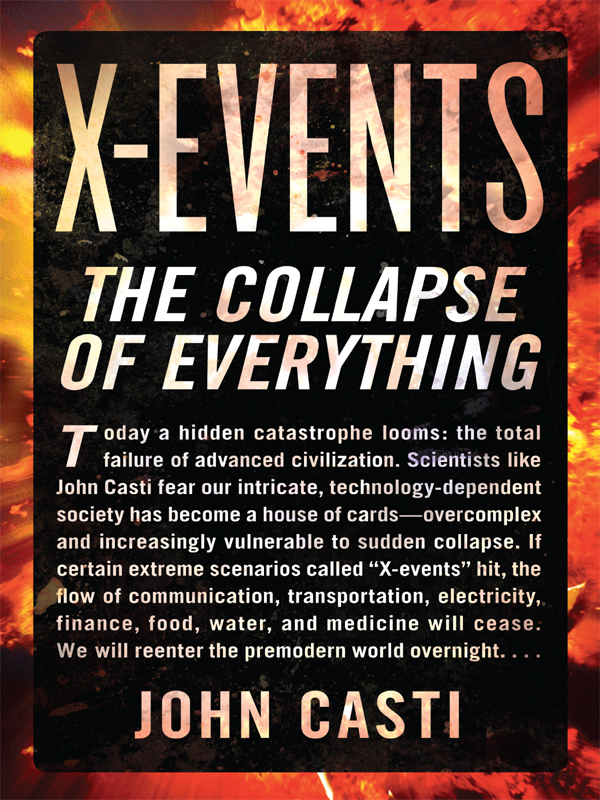
X-events of the human—rather than nature-caused—variety are the result of too little understanding chasing too much complexity in our human systems. The X-event, be it a political revolution, a crash of the Internet, or the collapse of a civilization, is human nature’s way of reducing a complexity overload that has become unsustainable.Casti identifies eleven different, but inter-related, areas in which such X-events might occur. In each, he identifies the potential for catastrophic failure and considers what that might look like. These include a long-term failure of the internet, a breakdown in the global food supply system, EMPs reducing electronics to pulsing doorstops, weird destruction by exotic particles, nukes gone wild, exhaustion of the global oil supply, global pandemics, failure of the power grid and/or water supply, Battlestar Galactica, or if you prefer, Terminator-level takeover by intelligent artificial life and for dessert, global deflation and general economic collapse. What’s not to like?
Overpumping of underground water aquifers in many countries, including China, India, and the United States, had artificially inflated food production in the past few decades. For example, Saudi Arabia was self-sufficient in wheat harvesting for over twenty years. Now the wheat harvest there is likely to disappear entirely over the next couple of years due to a lack of underground water to irrigate cropsReally? These guys did not see this coming? Helluh-oh, deh-sert. What were you thinking? This is not a matter of complexity but of world-class arrogance and stupidity. Cash uber alles is not a viable program for securing the future of much of anything other than collapse and probably angering members of the underclass.
We've been coddled and protected to the extent that we actually expect our governments and other public institutions to solve all problems and address our hopes and needs without cost or risk to ourselves. In short, we've fallen into the misguided belief that everyone can be above average, that it's everyone's birthright to live a happy, risk-free life, and that any misfortune or bad judgment or just plain bad luck should be laid at someone else's doorstep. So the first step on the road to reality is to drop these visions of Utopia.


