

What do you think?
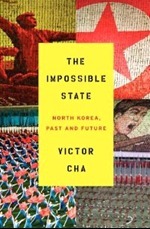
The Impossible State: North Korea, Past and Future – A Must-Read History of the Kim Dynasty's Regime and Collapse
“A meaty, fast-paced portrait of North Korean society, economy, politics and foreign policy.” -Foreign Affairs The definitive account of North Korea, its veiled past and uncertain future, from the former Director for Asian Affairs at the National Security Council In The Impossible State , seasoned international-policy expert and lauded scholar Victor Cha pulls back the curtain on this controversial and isolated country, providing the best look yet at North Korea's history, the rise of the Kim family dynasty, and the obsessive personality cult that empowers them. He illuminates the repressive regime's complex economy and culture, its appalling record of human-rights abuses, and its belligerent relationship with the United States, and analyzes the regime's major security issues—from the seemingly endless war with its southern neighbor to its frightening nuclear ambitions—all in light of the destabilizing effects of Kim Jong-il's recent death. How this enigmatic nation-state—one that regularly violates its own citizens' inalienable rights and has suffered famine, global economic sanctions, a collapsed economy, and near total isolation from the rest of the world—has continued to survive has long been a question that preoccupies the West. Cha reveals a land of contradictions, one facing a pivotal and disquieting transition of power from tyrannical father to inexperienced son, and delves into the ideology that leads an oppressed, starving populace to cling so fiercely to its failed leadership. With rare personal anecdotes from the author's time in Pyongyang and his tenure as an adviser in the White House, this engagingly written, authoritative, and highly accessible history offers much-needed answers to the most pressing questions about North Korea and ultimately warns of a regime that might be closer to its end than many might think—a political collapse for which America and its allies may be woefully unprepared.
544 pages, Hardcover
First published April 3, 2012
Ratings & Reviews
Friends & Following
Create a free account to discover what your friends think of this book!
Community Reviews
Displaying 1 - 30 of 208 reviews

May 11, 2012
I found few books on North Korea in the rather large two-floor Barnes and Noble store in my neighborhood, and this was the only one in the Current Affairs section. So this definitely fills a need, all the more given how much North Korea is currently in the news. Cha says his purpose in the book was to give Americans needed context by telling us of "North Korea's history, the rise of the Kim family dynasty... the repressive regime's complex economy and culture." Cha is particularly qualified to be a guide. A scholar on Korean affairs he has "direct policy experience dealing with Pyongyang" as the Director of Asian Affairs in the National Security Council from 2004 to 2007 under Bush. Cha negotiated with the regime as part of the Six-Party Talks on the nuclear issue. At times he seemed a bit defensive about Bush's policy, but to me he otherwise read as thorough and fair, and there is an extensive "Notes" in the back sourcing his facts. And even if he's clear-eyed about the brutality of the regime, I wouldn't describe him as a hawk--he's also aware, and educates the reader, about the reasons to act with caution.
The book engrossed me from the beginning, especially given Cha displayed both a sense of humor and insight in his first-hand observations from the first chapters. There were some dry policy-wonk-only parts, particularly in the chapter about diplomatic efforts surrounding the nuclear issue, but otherwise I found the book fascinating. My first surprise? I felt I should have known this, but it came as a surprise to me that technically the United States is still at war with North Korea. What was negotiated in 1953 was a cease fire--not a peace treaty. (And another shock was learning that the Chinese lost 800,000 lives in the Korean War.) It was a jolt to learn that North Korean school children learn their grammar with such examples as "I kill Americans. I killed Americans. I will kill Americans." (Even their arithmetic exercises feature such examples.) Second surprise was that North Korea was once relatively prosperous compared to it's rival in the South. That during the cold war generous aid from both Soviet Russia and Communist China made it both more industrialized and gave it a higher standard of living than South Korea, even if now the South has outstripped its GDP by over twenty to one. That North Korea is an incredibly repressive regime, arguably the least free nation on earth, was no surprise. But a lot of the details of the atrocities committed within and without were a shock. I didn't know, for instance, that in an attempt to assassinate a South Korean president, North Korean agents murdered the country's First Lady, or that another attempt killed half of South Korea's cabinet, or that North Korea admitted it abducted over a dozen Japanese citizens to train their agents. It's amazing to me that over the decades a full-fledged war hasn't broken out. Except that the butcher bill could reach a million lives, and as Cha explains, the North Koreans knowing this know they can violate international norms with near impunity, and extort aid to stop rattling their sabers. And the chapter dealing with the forced labor camps that rival the concentration camps of Hitler and Stalin for horror are not for the faint of heart.
I wouldn't say this is necessarily a classic that will be read decades from now, which is why I didn't give it a fifth star. I didn't think it was well-edited. I caught a few typos, some cliched phrases, awkward sentences, and some repeated points that could have been eliminated to make for a tauter book--but it is invaluable as an informative book that gives us a sense of an isolated, secretive, and dangerous country and as just published in April of this year up to date.
The book engrossed me from the beginning, especially given Cha displayed both a sense of humor and insight in his first-hand observations from the first chapters. There were some dry policy-wonk-only parts, particularly in the chapter about diplomatic efforts surrounding the nuclear issue, but otherwise I found the book fascinating. My first surprise? I felt I should have known this, but it came as a surprise to me that technically the United States is still at war with North Korea. What was negotiated in 1953 was a cease fire--not a peace treaty. (And another shock was learning that the Chinese lost 800,000 lives in the Korean War.) It was a jolt to learn that North Korean school children learn their grammar with such examples as "I kill Americans. I killed Americans. I will kill Americans." (Even their arithmetic exercises feature such examples.) Second surprise was that North Korea was once relatively prosperous compared to it's rival in the South. That during the cold war generous aid from both Soviet Russia and Communist China made it both more industrialized and gave it a higher standard of living than South Korea, even if now the South has outstripped its GDP by over twenty to one. That North Korea is an incredibly repressive regime, arguably the least free nation on earth, was no surprise. But a lot of the details of the atrocities committed within and without were a shock. I didn't know, for instance, that in an attempt to assassinate a South Korean president, North Korean agents murdered the country's First Lady, or that another attempt killed half of South Korea's cabinet, or that North Korea admitted it abducted over a dozen Japanese citizens to train their agents. It's amazing to me that over the decades a full-fledged war hasn't broken out. Except that the butcher bill could reach a million lives, and as Cha explains, the North Koreans knowing this know they can violate international norms with near impunity, and extort aid to stop rattling their sabers. And the chapter dealing with the forced labor camps that rival the concentration camps of Hitler and Stalin for horror are not for the faint of heart.
I wouldn't say this is necessarily a classic that will be read decades from now, which is why I didn't give it a fifth star. I didn't think it was well-edited. I caught a few typos, some cliched phrases, awkward sentences, and some repeated points that could have been eliminated to make for a tauter book--but it is invaluable as an informative book that gives us a sense of an isolated, secretive, and dangerous country and as just published in April of this year up to date.

March 19, 2013
I went back and forth on 3 or 4 stars for this, but I think 3 is the honest appraisal.
This is a very interesting take on the history and culture of North Korea, generally from a foreign policy standpoint. The author was involved with various diplomatic negotiations with North Korea, and was an advisor on East Asia for George W. Bush. The book has a ton of great information on the early history of the DPRK, its relationships with its neighbors, and the bizarre personality cult that follows the Kim family through three generations of authoritarian rule.
There are two reasons it does not earn the extra star. One is the organization. The book leaps around from subject to subject in a jarring manner at times, and often a subsection of a chapter should clearly have been its own chapter. This doesn't affect the veracity or relevance of the information, but DOES make following the train of thought difficult at times.
The second reason is the apparent total lack of editing. Not in terms of word choice and sentence structure, but in consistency. I suspect that this book was written in smaller chunks over a long period, and then stitched together at a late stage in the process. It's hard to explain exactly what I mean, but there is one example in particular.
In 2010, the DPRK fired artillery shells at a ROK island called Yeonpyeong. The author describes the incident, analyzes the fallout, and moves on. Further into the book, he will mention it in passing, which makes sense. But the way he refers to it is very odd. He will say, "the incident where North Korea fired on a South Korean island" or "in 2010, when North Korea used artillery to attack a small island in South Korea", etc. Why not call it the Teonpyeong Incident? Or the "island-shelling incident"? Something that shows a continuous link with the previous text. I think this proves that he did not write the book in order, but combined smaller writings. It's not a major point, I guess, but it shows a certain lack of care. That, or a lack of respect for the reader to remember something that happened 2 chapters ago.
So, with caveats, I do recommend this book. I will warn potential readers that is can be very dense at points. A great deal of economic detail, and the minutiae of diplomacy. But if you are willing to skim a tiny bit, it is packed full of great information on a country that is rapidly becoming very important to the world stage, yet is one we know almost nothing about...
Edited: I would like to add that there was a bit of an embarrassing amount of Bush defense in the book. The author seemed desperate to explain why Bush had done absolutely everything right, and how he couldn't understand why anyone could possibly doubt the president's motives. Keeping in mind that the events in question happened well after the disastrous Afghanistan and Iraq campaigns, and the possible deliberate misinformation given by the executive branch in defending the invasion of Iraq, in particular. Bush had, by this point, hardly shown himself to be some amazing foreign policy planner. I don't know why Cha seems so blind to this. I don't expect the guy to rant about Bush or anything, but he goes out of his way to express his mystification at any doubt towards the president's actions.
This is a very interesting take on the history and culture of North Korea, generally from a foreign policy standpoint. The author was involved with various diplomatic negotiations with North Korea, and was an advisor on East Asia for George W. Bush. The book has a ton of great information on the early history of the DPRK, its relationships with its neighbors, and the bizarre personality cult that follows the Kim family through three generations of authoritarian rule.
There are two reasons it does not earn the extra star. One is the organization. The book leaps around from subject to subject in a jarring manner at times, and often a subsection of a chapter should clearly have been its own chapter. This doesn't affect the veracity or relevance of the information, but DOES make following the train of thought difficult at times.
The second reason is the apparent total lack of editing. Not in terms of word choice and sentence structure, but in consistency. I suspect that this book was written in smaller chunks over a long period, and then stitched together at a late stage in the process. It's hard to explain exactly what I mean, but there is one example in particular.
In 2010, the DPRK fired artillery shells at a ROK island called Yeonpyeong. The author describes the incident, analyzes the fallout, and moves on. Further into the book, he will mention it in passing, which makes sense. But the way he refers to it is very odd. He will say, "the incident where North Korea fired on a South Korean island" or "in 2010, when North Korea used artillery to attack a small island in South Korea", etc. Why not call it the Teonpyeong Incident? Or the "island-shelling incident"? Something that shows a continuous link with the previous text. I think this proves that he did not write the book in order, but combined smaller writings. It's not a major point, I guess, but it shows a certain lack of care. That, or a lack of respect for the reader to remember something that happened 2 chapters ago.
So, with caveats, I do recommend this book. I will warn potential readers that is can be very dense at points. A great deal of economic detail, and the minutiae of diplomacy. But if you are willing to skim a tiny bit, it is packed full of great information on a country that is rapidly becoming very important to the world stage, yet is one we know almost nothing about...
Edited: I would like to add that there was a bit of an embarrassing amount of Bush defense in the book. The author seemed desperate to explain why Bush had done absolutely everything right, and how he couldn't understand why anyone could possibly doubt the president's motives. Keeping in mind that the events in question happened well after the disastrous Afghanistan and Iraq campaigns, and the possible deliberate misinformation given by the executive branch in defending the invasion of Iraq, in particular. Bush had, by this point, hardly shown himself to be some amazing foreign policy planner. I don't know why Cha seems so blind to this. I don't expect the guy to rant about Bush or anything, but he goes out of his way to express his mystification at any doubt towards the president's actions.

September 9, 2012
North Korea has been dubbed the "worst place on Earth," and as those who've read accounts of people who have escaped from this bizarre and horrible place know, the moniker is fitting. The oppression and menace imposed both internally and externally by the government of North Korea is, thankfully, beyond the imagination of most citizens of other nations.
Victor Cha sheds a great deal of light on this darkened corner of the world, in his highly readable (if sometimes slightly repetitive) review of the history of North Korea, from its foundation in the wake of World War II, through the boom years of the Cold War, when Kim Il-Sung played China and the Soviets against each other to support the growth and financial success of his nation relative to the chaotic South, and into the modern day, when Kim's son, and now grandson, use nuclear weapons development as a cudgel against the US and its allies to maintain their power and personal comfort.
Cha's experience as a negotiator on the behalf of the U.S. government lends his account an immediacy and personal impact that a typical academic might lack, and he brings the underlying drama of otherwise highly formalized and scripted diplomatic negotiations to life.
While there are no easy answers for the long-suffering people of North Korea, nor for its worried and bullied neighbors, Cha manages to wind up the book on a hopeful note, describing some of the plans that are just being laid into place to deal with the eventual, inevitable downfall of the North Korean regime.
As Doctor Martin Luther King famously observed, "The moral arc of the universe is long but it bends towards justice." Justice for the murdered and impoverished millions of North Koreans, as well as the regime's victims beyond its borders, will be slow in coming, but there can be no doubt as to its arrival. Let us hope that Cha is correct, and that the future for the Korean peninsula is peaceful and prosperous.
Victor Cha sheds a great deal of light on this darkened corner of the world, in his highly readable (if sometimes slightly repetitive) review of the history of North Korea, from its foundation in the wake of World War II, through the boom years of the Cold War, when Kim Il-Sung played China and the Soviets against each other to support the growth and financial success of his nation relative to the chaotic South, and into the modern day, when Kim's son, and now grandson, use nuclear weapons development as a cudgel against the US and its allies to maintain their power and personal comfort.
Cha's experience as a negotiator on the behalf of the U.S. government lends his account an immediacy and personal impact that a typical academic might lack, and he brings the underlying drama of otherwise highly formalized and scripted diplomatic negotiations to life.
While there are no easy answers for the long-suffering people of North Korea, nor for its worried and bullied neighbors, Cha manages to wind up the book on a hopeful note, describing some of the plans that are just being laid into place to deal with the eventual, inevitable downfall of the North Korean regime.
As Doctor Martin Luther King famously observed, "The moral arc of the universe is long but it bends towards justice." Justice for the murdered and impoverished millions of North Koreans, as well as the regime's victims beyond its borders, will be slow in coming, but there can be no doubt as to its arrival. Let us hope that Cha is correct, and that the future for the Korean peninsula is peaceful and prosperous.

February 6, 2019
The Impossible Book: How to Get North Korea Wrong
(I wrote this review when the book came out. I'll let you decide if it has held up to the test of time.)
The North Korean regime was supposed to have collapsed by now. Indeed, for years analysts debated not if the regime would fall, but whether the landing would be hard or soft. Instead, it has become a nuclear power and continues to thumb its nose at the world, defying the best efforts of a succession of American presidents to lure the reclusive state into a constructive relationship with the rest of the world.
Georgetown University professor Victor Cha served one of the presidents who tried to strike a deal with the North Koreans, and the one on whose watch North Korea acquired nukes, George W. Bush. Cha is the first member of the North Korea team from Bush's second term to publish a book about his experiences negotiating with the North, which gives him a unique perspective. He was the first Korea specialist (and the first Korean-American) to be the Asia director at the National Security Council (NSC), and now contributes regularly to the New York Times and the Washington Post, making him one of the more influential voices on North Korea both inside and outside the Beltway.
Unfortunately, his book is more than disappointing; it's just plain awful, and a huge missed opportunity. Cha not only fails to shed any light on North Korea policymaking during the Bush years, he also gets the country completely wrong.
For starters, Cha tries to spice up his book with his personal experiences in North Korea but winds up with little more than banal travelogues. At several points he lambasts CNN, Time, and, more broadly, the Western media for their shallow depictions of North Korea, but he is just as guilty. Of the more than 700 footnotes, fewer than a handful refer to personal interviews or Korean-language materials. Instead, we are presented with endless summaries of English-language sources. The book lacks the compelling narrative arc of Los Angeles Times reporter Barbara Demick's powerful "Nothing to Envy: Ordinary Lives in North Korea" or the research and rigor of Kongdan Oh and Ralph Hassig's "The Hidden People of North Korea: Everyday Life in the Hermit Kingdom."
Cha's book is also almost entirely bereft of new ideas about how we should understand or deal with North Korea. The only new concept I could find is nothing more than academic-sounding nonsense: elaborating on a notion he first introduced last fall in the Washington Post, Cha describes North Korea as being in the grip of "neojuche revivalism," or a resurgence of ideology in general and a doctrine of self-reliance in particular. The problem is that ideological fervor never receded; only the slogans have changed. Moreover, juche has not been North Korea's ruling ideology for years. In his maiden speech on April 15, the North's new, twenty-something ruler, Kim Jong-un, mentioned the slogans "military first" and "a strong and prosperous nation" more than twenty times. He mentioned juche exactly once.
Amazingly, Cha does not report how North Korea policy was made during the Bush years. He writes about what an honor it was to write policy memos for Bush, but never tells readers what he actually wrote or how his views might have differed from others in the administration. Cha's biggest revelation is that he was doing the dishes when he learned that North Korea was about to test a nuclear device in 2006.
Cha does not even attempt to describe the personal or institutional rivalries between (and within) the White House, the State Department, the Pentagon, and the intelligence community. For example, Assistant Secretary of State Christopher Hill is relegated to a minor role in Cha's narrative, even though Hill was the chief U.S. negotiator with North Korea and was instrumental in what few diplomatic advances the administration can claim and a thorn in the side of administration hard-liners like John Bolton. Cha's most revealing and colorful stories come from an excellent book about the Hermit Kingdom's nuclear program--former CNN senior Asia correspondent Mike Chinoy's "Meltdown: The Inside Story of the North Korean Nuclear Crisis."
"The Impossible State" also lacks the circular firing squad quality that made many of the previous Bush administration memoirs at the very least highly entertaining. Cha manages to avoid the introspection of his former boss Condoleezza Rice in her book, No Higher Honor, or that of former North Korea negotiator Jack Prichard in Failed Diplomacy. He papers over the differences between administration neocons like Dick Cheney and pro-engagement pragmatists like Colin Powell, but never lets the reader into the process. For Cha, it seems sufficient to lay all the blame for a failed policy at North Korea's doorstep.
Cha's final chapter is entitled "The End Is Near," which, while accurately describing the reader's place in the book, does not persuasively make the case for the future of North Korea. In a New York Times article he wrote immediately after Kim Jong-il's death in December 2011, Cha insisted that "North Korea as we know it is over. Whether it comes apart in the next few weeks or over several months." Yet the consensus view in Seoul is that the North Korean state is anything but close to collapse. The debate there centers on whether Kim Jong-un can pursue reform and opening to the West or whether he will follow in the failed footsteps of his father.
Cha believes that, like the Middle East last year, North Korea is one spark away from a wildfire that will destroy the regime. This is either wishful thinking or a reflection of Cha's inadequate understanding of the institutions and policies that hold the regime together. At present, the public's capacity to challenge the government is nonexistent. North Korea is a society with an all-pervasive security apparatus that ensures the thorough indoctrination of all its citizens virtually from birth. A few sparks may begin to fly, but the regime's ability to stamp them out remains formidable. Inexplicably, Cha goes on to acknowledge that he will not be surprised if the regime is still standing a decade from now. The title of the chapter should be "The End Is Near... Or Maybe Not."
Cha's book also represents the latest at tempt to whitewash a presidency that has recently been deemed by a C-SPAN survey of presidential historians one of the ten worst in American history. The title of Cha's seventh chapter describes what the Bush administration was trying to achieve: namely, "The Complete Verifiable and Irreversible Dismantlement" of North Korea's nuclear program. Unfortunately, the book doesn't tell us what North Korea would have received in exchange for denuclearizing, surely a key factor in any negotiation. Cha's analysis seems to rest almost entirely on the idea that the North Koreans are acting in bad faith. While North Korea did violate the terms of the 1994 Agreed Framework by pursuing a clandestine uranium-enrichment program, that did not mean the whole deal had to be scrapped. The fact remains that the Clinton administration managed to get North Korea's spent nuclear fuel rods--from which plutonium can be processed and turned into A-bombs--put under international lock and key, while the Bush administration's arrogant, botched diplomacy allowed Pyongyang to get its hands on those fuel rods and then build and test a nuclear weapon. Cha argues that the failure of the Obama administration to make any headway is proof that it doesn't really matter who is in the White House. That may be true now that North Korea is a nuclear power and the regime feels insecure during the transition to a new "Dear Leader." It was not true, however, in 2001, when North Korea still lacked nukes and its officials were ready to move forward with the new Bush team.
Perhaps because Cha believes that the North Korean regime's demise is imminent, his book is bereft of policy advice. This is in sharp contrast to "Going Critical," former diplomat Joel Wit's definitive account of the first North Korea nuclear crisis in the early 1990s. Wit managed to get hundreds of formerly secret documents declassified. Cha? Zero. After meticulously recounting the Clinton administration's negotiations with North Korea, Wit concludes with a set of lessons that should be required reading for all future U.S. negotiators.
Lastly, The Impossible State would have benefited from more careful editing. One chapter includes a long and irrelevant digression on the life of one of South Korea's presidents. There are also numerous basic factual errors and inconsistencies. The U.S. spy ship captured by North Korea in 1968, the USS Pueblo (the only American naval ship still in foreign hands), for example, is located in Pyongyang, not in the eastern coastal city of Wonsan. Cha writes that Kim Jong-il ruled for thirteen years; several pages later, the number jumps to seventeen (the latter figure is correct). Paragraphs are frequently more than a page long; one monster weighs in at two and a half pages.
Cha begins his acknowledgments with a quote from President Bush, who told him, as he was leaving the NSC, "Thank you for your service to the nation. You left it in a better place than when you got here." The historical record would suggest otherwise. North Korea became a nuclear power on Cha's watch; how can that be regarded as anything but a profound failure?
(I wrote this review when the book came out. I'll let you decide if it has held up to the test of time.)
The North Korean regime was supposed to have collapsed by now. Indeed, for years analysts debated not if the regime would fall, but whether the landing would be hard or soft. Instead, it has become a nuclear power and continues to thumb its nose at the world, defying the best efforts of a succession of American presidents to lure the reclusive state into a constructive relationship with the rest of the world.
Georgetown University professor Victor Cha served one of the presidents who tried to strike a deal with the North Koreans, and the one on whose watch North Korea acquired nukes, George W. Bush. Cha is the first member of the North Korea team from Bush's second term to publish a book about his experiences negotiating with the North, which gives him a unique perspective. He was the first Korea specialist (and the first Korean-American) to be the Asia director at the National Security Council (NSC), and now contributes regularly to the New York Times and the Washington Post, making him one of the more influential voices on North Korea both inside and outside the Beltway.
Unfortunately, his book is more than disappointing; it's just plain awful, and a huge missed opportunity. Cha not only fails to shed any light on North Korea policymaking during the Bush years, he also gets the country completely wrong.
For starters, Cha tries to spice up his book with his personal experiences in North Korea but winds up with little more than banal travelogues. At several points he lambasts CNN, Time, and, more broadly, the Western media for their shallow depictions of North Korea, but he is just as guilty. Of the more than 700 footnotes, fewer than a handful refer to personal interviews or Korean-language materials. Instead, we are presented with endless summaries of English-language sources. The book lacks the compelling narrative arc of Los Angeles Times reporter Barbara Demick's powerful "Nothing to Envy: Ordinary Lives in North Korea" or the research and rigor of Kongdan Oh and Ralph Hassig's "The Hidden People of North Korea: Everyday Life in the Hermit Kingdom."
Cha's book is also almost entirely bereft of new ideas about how we should understand or deal with North Korea. The only new concept I could find is nothing more than academic-sounding nonsense: elaborating on a notion he first introduced last fall in the Washington Post, Cha describes North Korea as being in the grip of "neojuche revivalism," or a resurgence of ideology in general and a doctrine of self-reliance in particular. The problem is that ideological fervor never receded; only the slogans have changed. Moreover, juche has not been North Korea's ruling ideology for years. In his maiden speech on April 15, the North's new, twenty-something ruler, Kim Jong-un, mentioned the slogans "military first" and "a strong and prosperous nation" more than twenty times. He mentioned juche exactly once.
Amazingly, Cha does not report how North Korea policy was made during the Bush years. He writes about what an honor it was to write policy memos for Bush, but never tells readers what he actually wrote or how his views might have differed from others in the administration. Cha's biggest revelation is that he was doing the dishes when he learned that North Korea was about to test a nuclear device in 2006.
Cha does not even attempt to describe the personal or institutional rivalries between (and within) the White House, the State Department, the Pentagon, and the intelligence community. For example, Assistant Secretary of State Christopher Hill is relegated to a minor role in Cha's narrative, even though Hill was the chief U.S. negotiator with North Korea and was instrumental in what few diplomatic advances the administration can claim and a thorn in the side of administration hard-liners like John Bolton. Cha's most revealing and colorful stories come from an excellent book about the Hermit Kingdom's nuclear program--former CNN senior Asia correspondent Mike Chinoy's "Meltdown: The Inside Story of the North Korean Nuclear Crisis."
"The Impossible State" also lacks the circular firing squad quality that made many of the previous Bush administration memoirs at the very least highly entertaining. Cha manages to avoid the introspection of his former boss Condoleezza Rice in her book, No Higher Honor, or that of former North Korea negotiator Jack Prichard in Failed Diplomacy. He papers over the differences between administration neocons like Dick Cheney and pro-engagement pragmatists like Colin Powell, but never lets the reader into the process. For Cha, it seems sufficient to lay all the blame for a failed policy at North Korea's doorstep.
Cha's final chapter is entitled "The End Is Near," which, while accurately describing the reader's place in the book, does not persuasively make the case for the future of North Korea. In a New York Times article he wrote immediately after Kim Jong-il's death in December 2011, Cha insisted that "North Korea as we know it is over. Whether it comes apart in the next few weeks or over several months." Yet the consensus view in Seoul is that the North Korean state is anything but close to collapse. The debate there centers on whether Kim Jong-un can pursue reform and opening to the West or whether he will follow in the failed footsteps of his father.
Cha believes that, like the Middle East last year, North Korea is one spark away from a wildfire that will destroy the regime. This is either wishful thinking or a reflection of Cha's inadequate understanding of the institutions and policies that hold the regime together. At present, the public's capacity to challenge the government is nonexistent. North Korea is a society with an all-pervasive security apparatus that ensures the thorough indoctrination of all its citizens virtually from birth. A few sparks may begin to fly, but the regime's ability to stamp them out remains formidable. Inexplicably, Cha goes on to acknowledge that he will not be surprised if the regime is still standing a decade from now. The title of the chapter should be "The End Is Near... Or Maybe Not."
Cha's book also represents the latest at tempt to whitewash a presidency that has recently been deemed by a C-SPAN survey of presidential historians one of the ten worst in American history. The title of Cha's seventh chapter describes what the Bush administration was trying to achieve: namely, "The Complete Verifiable and Irreversible Dismantlement" of North Korea's nuclear program. Unfortunately, the book doesn't tell us what North Korea would have received in exchange for denuclearizing, surely a key factor in any negotiation. Cha's analysis seems to rest almost entirely on the idea that the North Koreans are acting in bad faith. While North Korea did violate the terms of the 1994 Agreed Framework by pursuing a clandestine uranium-enrichment program, that did not mean the whole deal had to be scrapped. The fact remains that the Clinton administration managed to get North Korea's spent nuclear fuel rods--from which plutonium can be processed and turned into A-bombs--put under international lock and key, while the Bush administration's arrogant, botched diplomacy allowed Pyongyang to get its hands on those fuel rods and then build and test a nuclear weapon. Cha argues that the failure of the Obama administration to make any headway is proof that it doesn't really matter who is in the White House. That may be true now that North Korea is a nuclear power and the regime feels insecure during the transition to a new "Dear Leader." It was not true, however, in 2001, when North Korea still lacked nukes and its officials were ready to move forward with the new Bush team.
Perhaps because Cha believes that the North Korean regime's demise is imminent, his book is bereft of policy advice. This is in sharp contrast to "Going Critical," former diplomat Joel Wit's definitive account of the first North Korea nuclear crisis in the early 1990s. Wit managed to get hundreds of formerly secret documents declassified. Cha? Zero. After meticulously recounting the Clinton administration's negotiations with North Korea, Wit concludes with a set of lessons that should be required reading for all future U.S. negotiators.
Lastly, The Impossible State would have benefited from more careful editing. One chapter includes a long and irrelevant digression on the life of one of South Korea's presidents. There are also numerous basic factual errors and inconsistencies. The U.S. spy ship captured by North Korea in 1968, the USS Pueblo (the only American naval ship still in foreign hands), for example, is located in Pyongyang, not in the eastern coastal city of Wonsan. Cha writes that Kim Jong-il ruled for thirteen years; several pages later, the number jumps to seventeen (the latter figure is correct). Paragraphs are frequently more than a page long; one monster weighs in at two and a half pages.
Cha begins his acknowledgments with a quote from President Bush, who told him, as he was leaving the NSC, "Thank you for your service to the nation. You left it in a better place than when you got here." The historical record would suggest otherwise. North Korea became a nuclear power on Cha's watch; how can that be regarded as anything but a profound failure?

August 10, 2024
Very interesting book!

March 17, 2013
This was a thoroughly enjoyable and engaging read written by a former adviser the George W Bush, whom was party to the ongoing negotiations with the DPRK to abandon it's weapons programmes and "westernise" itself.
As opposed to the majority of books on North Korea, the Author does not focus solely on the extraordinary personality cult of the Kim Dynasty. The Author prefers to focus instead on the regimes' ideology, (akin to Fascsim and / or extreme Nationalism); the economy, (Increased market Liberalisation since 2002 and a willingess on the part of the DPRK to concede that it cannot support it's own people), and the regimes' on-off affair with China.
The Author also examines the practical and theoretical underpinnings of the North Korean "Juche", and identifies that whilst the official state ideology of "self-reliance" is an oxy-moron as it continues to be bailed-out by China; Russia, the World Food Programme, and has received aid from Japan and the USA, the imposition of the rigid state doctrine from the previous "Dear Leader", relegates the leadership of the DPRK into extracting what it can from foreign partners merely to survive. The theory of the Juche negates the possibility of putting anything other than the military first.
The Author also identifies that the key reason for the continued existence of this failed state, is the power struggle and global insecurities of the competing powers engaged in the Six-Party talks. In essence, a unified Korea with a market economy and relative political and social liberty, would pose an ideological threat to "Communist" China. Whilst a nuclear war on the DMZ is an option best left unexplored, the existence of North Korea acts as a useful bulwark for China against the raging Liberal- Democratic regime in the South. Thus, the reason for the continued existence of the DPRK is not due solely to the iron-grip that the regime has over it's people, but is due, in the main, to it's border relationships with South Korea; China and Russia. No more, no less.
The book has made for timely reading in light of the acession of the Great Successor in North Korea, Kim Jong-Un is an unknown quantity, having been reportedly educated "in the West", and now the young and inexperienced leader of an ossified museum piece bound up in it's rhetorical and strategic contradictions.
The predictable Nuclear tests and rocket launches have continued, as have the demands from the leadership of the DPRK for Six-Party talks, against a backdrop of continued sanctions, food aid, clandestine Chinese Aid, and the suspension of the South Korean Sunshine Policy. The Author indicates that this plethora of contradictory messages; programmes, and sanctions is the raison d'etre of the DPRK and the key reason as to why it still exists to this day.
In essence, until an international concensus can be reached on "what to do about the North Korean problem", both the circular narrative, and the existence of the DPRK is assured by pure luck and not judgement. This condemns not only the Korean Peninsula to further insecurity, but also punishes the civilians living within the North whom are bound to venerate the very ideology which is the cause of their crippling condition.
As opposed to the majority of books on North Korea, the Author does not focus solely on the extraordinary personality cult of the Kim Dynasty. The Author prefers to focus instead on the regimes' ideology, (akin to Fascsim and / or extreme Nationalism); the economy, (Increased market Liberalisation since 2002 and a willingess on the part of the DPRK to concede that it cannot support it's own people), and the regimes' on-off affair with China.
The Author also examines the practical and theoretical underpinnings of the North Korean "Juche", and identifies that whilst the official state ideology of "self-reliance" is an oxy-moron as it continues to be bailed-out by China; Russia, the World Food Programme, and has received aid from Japan and the USA, the imposition of the rigid state doctrine from the previous "Dear Leader", relegates the leadership of the DPRK into extracting what it can from foreign partners merely to survive. The theory of the Juche negates the possibility of putting anything other than the military first.
The Author also identifies that the key reason for the continued existence of this failed state, is the power struggle and global insecurities of the competing powers engaged in the Six-Party talks. In essence, a unified Korea with a market economy and relative political and social liberty, would pose an ideological threat to "Communist" China. Whilst a nuclear war on the DMZ is an option best left unexplored, the existence of North Korea acts as a useful bulwark for China against the raging Liberal- Democratic regime in the South. Thus, the reason for the continued existence of the DPRK is not due solely to the iron-grip that the regime has over it's people, but is due, in the main, to it's border relationships with South Korea; China and Russia. No more, no less.
The book has made for timely reading in light of the acession of the Great Successor in North Korea, Kim Jong-Un is an unknown quantity, having been reportedly educated "in the West", and now the young and inexperienced leader of an ossified museum piece bound up in it's rhetorical and strategic contradictions.
The predictable Nuclear tests and rocket launches have continued, as have the demands from the leadership of the DPRK for Six-Party talks, against a backdrop of continued sanctions, food aid, clandestine Chinese Aid, and the suspension of the South Korean Sunshine Policy. The Author indicates that this plethora of contradictory messages; programmes, and sanctions is the raison d'etre of the DPRK and the key reason as to why it still exists to this day.
In essence, until an international concensus can be reached on "what to do about the North Korean problem", both the circular narrative, and the existence of the DPRK is assured by pure luck and not judgement. This condemns not only the Korean Peninsula to further insecurity, but also punishes the civilians living within the North whom are bound to venerate the very ideology which is the cause of their crippling condition.

May 21, 2013
I've never been big on nonfiction, preferring mostly to learn about make-believe worlds and characters over the real world and its notable figures. But North Korea, in all its infinite secrecy and horror, holds a monopoly in my mind, and after seeing this book featured on The Colbert Report, I decided to give it a go.
There isn't much else to be said here, other than that this is without a doubt the definitive source of information on nearly every aspect of North Korea from its formation to present day, subjects ranging from the country's foreign policy and on-and-off (but mostly on) nuclear program to its well-documented but still hopelessly shadowy human rights record. The author, who had several years of experience working directly with — or perhaps more accurately, against — North Korean delegates on the NSC, goes into remarkable detail in every chapter, to the point where some areas were downright tedious to get through, rife with endless statistical information. All said and done, though, I'm a firm believer in the "know thy enemy" rule, and this account of the world's largest prison is a must-read for anyone seeking more information about it, beyond the sensationalist scraps of info. published on the news.
There isn't much else to be said here, other than that this is without a doubt the definitive source of information on nearly every aspect of North Korea from its formation to present day, subjects ranging from the country's foreign policy and on-and-off (but mostly on) nuclear program to its well-documented but still hopelessly shadowy human rights record. The author, who had several years of experience working directly with — or perhaps more accurately, against — North Korean delegates on the NSC, goes into remarkable detail in every chapter, to the point where some areas were downright tedious to get through, rife with endless statistical information. All said and done, though, I'm a firm believer in the "know thy enemy" rule, and this account of the world's largest prison is a must-read for anyone seeking more information about it, beyond the sensationalist scraps of info. published on the news.

August 12, 2012
A Comprehensive book, the second book in my “Korea” series. An education.
It would be interesting to know how many diplomats that have worked with North Korea have any hair left. Regardless if Pyongyang was cornered or backed itself into their current pathetic state it is clear to even their allies that the North simply does not understand the modern world or basic tenants of diplomacy. Those seem to have receded after sung.
A great book primarily because the author is impassioned & working towards ending the stalemate and helping the North Koreans. I found the first part of the book to be my favorite only because it developed the history and tale of North Korea. The chapters on sluggish diplomacy are well developed but maddening. Very happy to see we have such highly informed people delicately working this issue.
The author is well informed in all things North Korea and makes references to how pop culture views the North’s leaders (South Park movie). It’s such an odd thing that this country still exists as it does to this day (“the children today learn to conjugate past/future tenses with “we killed Americans and we will kill Americans”) and yet under Sung the country was better off.
Beyond the fact that the founding father of North Korea spent all of his childhood –not in North Korea; the most telling lesson on North Korea is that when Khrushchev emoted that Stalin was a tyrant & monster Kim reacted very badly in that he idolized that man and had hoped to recreate so much of Joseph’s ideal in the North. It simply reveals so much. That the Chinese and Russians have ramped up their engagements with Seoul only further tells how left behind Pyongyang really is holding on to the old ideal and the personality cult of Kim Il-sung.
It would be interesting to know how many diplomats that have worked with North Korea have any hair left. Regardless if Pyongyang was cornered or backed itself into their current pathetic state it is clear to even their allies that the North simply does not understand the modern world or basic tenants of diplomacy. Those seem to have receded after sung.
A great book primarily because the author is impassioned & working towards ending the stalemate and helping the North Koreans. I found the first part of the book to be my favorite only because it developed the history and tale of North Korea. The chapters on sluggish diplomacy are well developed but maddening. Very happy to see we have such highly informed people delicately working this issue.
The author is well informed in all things North Korea and makes references to how pop culture views the North’s leaders (South Park movie). It’s such an odd thing that this country still exists as it does to this day (“the children today learn to conjugate past/future tenses with “we killed Americans and we will kill Americans”) and yet under Sung the country was better off.
Beyond the fact that the founding father of North Korea spent all of his childhood –not in North Korea; the most telling lesson on North Korea is that when Khrushchev emoted that Stalin was a tyrant & monster Kim reacted very badly in that he idolized that man and had hoped to recreate so much of Joseph’s ideal in the North. It simply reveals so much. That the Chinese and Russians have ramped up their engagements with Seoul only further tells how left behind Pyongyang really is holding on to the old ideal and the personality cult of Kim Il-sung.

June 1, 2012
It has probably become apparent by now that I am fascinated with North Korea and how such an isolated country can still exist in this world of ever-increasing abilities to communicate with people from around the globe. (I write this review from my couch in Chengdu, China, where I just got off Skype with my parents who live in Idaho, have emailed several friends back in the States and caught up on world news via a variety of online newspapers. I know what I am talking about when it comes to being connected!) Recently, I reviewed Escape from Camp 14 which was a memoir of one man’s time in the horrific camps of Northern Korea. The Impossible State is quite a different look at the country- taking an in-depth approach to everything from the history of the country to detailed looks at each of the Kim family members who have ruled throughout the last decades to the economy as it is today and why it can’t sustain itself.
See the rest of this review (and more!) at www.insearchoftheendofthesidewalk.com
See the rest of this review (and more!) at www.insearchoftheendofthesidewalk.com

October 22, 2013
If you're interested in North Korea (who isn't?) this is a comprehensive look at everything about it, its history and its future. There are tons of fascinating tidbits about the "Hermit Kingdom," from the funny(North Korean negotiators are apparently quite fond of quoting from "Gone With the Wind" in the midst of intense discussions) to the horrifying (babies born in North Korean gulags are sometimes killed by tossing them all into a crate right after birth and simply letting them starve to death). The author was President Bush's North Korea adviser and it's pretty clear that a. he knows more about this subject than probably anyone else b. he is, understandably, not the greatest book-writer (uses tons of cliche phrases) and c. he is annoyingly determined to remind you how great George W. Bush was (on this issue, anyway) and how the nefarious media doesn't give him his due. Those latter two prevent me from giving it more than a "liked it" rating, but I'm still very glad I read it and learned a lot.

April 14, 2024
Super comprehensive history despite its pretty obvious biases. The conclusion on US policy towards North Korea isn't radical (it recommends patience and more of the same policy) and I found its prediction of the end of the North Korean gov is a bit underwhelming.

March 6, 2013
With everything that has been happening on the Korean peninsula this past year, Cha's book is a "must read" to understand as much as we can what motivates North Korea.

December 5, 2019
I would give this more a 4.5 star rating if I could. Cha does an excellent job of laying out the history of North Korea and its relationships with the rest of the world. I liked that he interspersed his personal experiences with more academic analysis, and thought that it led to a good narrative that guided the book well throughout. I'm not sure if each chapter is supposed to be somewhat self-contained, but there were enough repetitive phrasings that I thought detracted from the flow of book. That is, the same facts would be repeated (they were good background facts, but I often felt that it hadn't been that long ago that I had read it). Cha is very clear when he is giving his opinions on what can and should be done, and I always appreciate that straightforwardness. Even if you disagree, he lays out his reasons well and acknowledges he could be wrong. As a historical note, it is interesting that this book came out as Kim Jong-un came to power and Cha thought he may not last. That prediction didn't come true (though Cha also says he wouldn't have been surprised by what is the current status quo, either).
If you want to know more about North Korea (it has a somewhat surprising history, as the richer Korea for much of the Cold War) this is a great book to start with. It covers what we know and points out there is much we do not. The chapter on human rights in North Korea is very moving, as it relates the terrible conditions that can exist for people in North Korea.
As a minor correction, the book incorrectly lists one of the locations for some of the Japanese (Ichikawa Shuichi and Masumoto Rumiko) who were kidnapped by North Korea. The book says "were going to the beach in Fukushima, on the very southern tip of of Japan, to watch the sunset". Fukushima is not the southern tip of Japan, and it should be Kagoshima on Kyushu.
If you want to know more about North Korea (it has a somewhat surprising history, as the richer Korea for much of the Cold War) this is a great book to start with. It covers what we know and points out there is much we do not. The chapter on human rights in North Korea is very moving, as it relates the terrible conditions that can exist for people in North Korea.
As a minor correction, the book incorrectly lists one of the locations for some of the Japanese (Ichikawa Shuichi and Masumoto Rumiko) who were kidnapped by North Korea. The book says "were going to the beach in Fukushima, on the very southern tip of of Japan, to watch the sunset". Fukushima is not the southern tip of Japan, and it should be Kagoshima on Kyushu.

June 25, 2018
Good, and admittedly long! There’s a lot here, but you really get a picture of all of the aspects of North Korea’s history. If you’ve never read a book about North Korea before, I believe there’s no debate that the first book you should read is Nothing to Envy by Barbara Demick, but if you really want a deep dive into what we’ve known about North Korea since its inception, I thought this was a good overview.
The book is a few years old now, I found myself googling a few people to see if anything had happened to them since. I had at least one instance of, “Wait, hasn’t Kim Jong-Un since had him murdered?” (his half-brother Kim Jong Nam). The author of the book had himself since been slated to be Trump’s ambassador to South Korea, only to be pulled, apparently over an op-ed that Trump didn’t like. Although really nothing has happened in the past six or seven years that changes any of the info in this book.
The book is a few years old now, I found myself googling a few people to see if anything had happened to them since. I had at least one instance of, “Wait, hasn’t Kim Jong-Un since had him murdered?” (his half-brother Kim Jong Nam). The author of the book had himself since been slated to be Trump’s ambassador to South Korea, only to be pulled, apparently over an op-ed that Trump didn’t like. Although really nothing has happened in the past six or seven years that changes any of the info in this book.

July 4, 2020
This is a dense, informative, multi-faceted and fascinating look at North Korea. Victor Cha is the ultimate expert. He was President George W. Bush’s top advisor on North Korean affairs and currently serves as Director of Asian Studies at the Edmund A. Walsh School of Foreign Service at Georgetown University and as Senior Advisor at the Center for Strategic and International Studies (CSIS).
June 16, 2020
The book that sparked my new found love for International Relations. The amount of statistics thrown at you in this book can be a bit overwhelming if you're not fully focused, but an important read which should be compulsory for anyone thinking they have it hard in life

August 20, 2024
I read this book when I was like 13 lol. All I remember from it is how wacky North Korean lore is. Also, the author worked under George bush and other reviewers are hating on him for this. Def a very informative book and I recommend it

August 27, 2024
Second only to “under the loving care of the fatherly leader for big picture, detailed and holistic analysis of one of the most unusual and fascinating countries in the world
August 17, 2025
Cha puts forward his analysis of North Korea, a state he calls the Impossible State as it "outlasted anyone's expectations" and is "a land of contradictions", with its people enduring "colossal economic mismanagement" with regular famines, along with a regime that shuts them out from the outside world and engages in secret police arrests, gulags, and public executions, and yet they remain convinced that they are "chosen", and believing in their "strong leader to protect them from the evils of the world." (ch 1) The state looks back towards its "best days" in the Cold War where the North was doing better than the South, and with that, its rhetoric and propaganda are seemingly stuck in that era, "spewing threats about American imperialists and South Korean puppet regimes." It also inculcates juche (that is, 'self-determination') ideology. juche consisted of four tenets: "(1) man is the master of his fate; (2) the master of the Revolution is the people; (3) the Revolution must be pursued in a self-reliant manner; and (4) the key to Revolution is loyalty to the supreme leader" (ch 2). "The economic manifestation of this concept was the Ch’ŏllima movement [which] espoused the idea that on the backs of the workers, the state would fly to a socialist paradise." This leads North Korean workers to labour and overwork, to the bewilderment of observers looking in from the outside (ch 2). A new strain of juche ideology, "reactionary in its rejection of the opening and reform policies that were tried from the mid-1990s to the mid-2000s", came to the scene around 2008 and accelerated in 2011 (with Kim Jong-il's death), which "stresses the concept of “sŏn’gun” (“military-first”) politics." (ch 2)
Chapter 3 goes through the rise of Kim Il-sung, his son Kim Jong-Il, and his grandson (and Supreme Leader at time of writing) Kim Jong Un. With the rise of Kim Jong Un, many wondered if his upbringing and education outside North Korea would lead to a more enlightened leadership. However, Cha opines that there is unlikely to be any real change as "True reform... would require the courage to loosen the very political instruments of control that allow the regime its iron grip on the people[,] but the process of opening up will undeniably lead to the end of his political control." Additionally, "despotic regimes like North Korea cannot survive without ideology to justify their iron grip", and thus Kim Jong Un "will be forced to cling to the core but outdated ideological principles that worked during the Cold War, such as juche ideology (ch 3).
In Chapter 4, Cha then goes through a series of "bad decisions" North Korea made which "doomed its economy". The first was focusing exclusively on heavy industrial development while remaining allergic to trade (seeing it as "trade-based vulnerability") and imposed self-sufficiency in food, agriculture and light manufacturing – leading to reliance on patron aid from China to meet food shortfalls. The second was pushing Ch’ŏllima ideology which "drove massive inefficiencies in the economy because it always substituted longer work hours for technological innovation." Third, taking on large amounts of debt. Fourth, "Olympic envy" of the South leading to a number of "wasteful large-scale projects" in the 1980s which "hollow[ed] out the economy". Fifth, in reaction to Soviet abandonment in providing aid, refusing to reform and instead "consum[ing] aid as a form of revenue" and "effectively turn[ing] North Korea into an economy dependent wholly on external aid to survive." (ch 4) This refusal to substantially reform is further cemented in the present day with the abovementioned new strain of juche ideology, despite policies from other states such as the Sunshine Policy.
Chapter 5 lays out the conditions North Koreans live in, including gulags, forced repatriation by China of North Korean refugees, and chronic food shortages and famine. Chapter 6 covers North Korea's military and their weapons capability, including missiles and nuclear weapons. Cha lays out two of his worries: 1) Pyongyang lashing out violently if pushed into a corner (he relates this to prospect theory, where a "double or nothing" bet/mindset emerges if Pyongyang perceives itself to be in the domain of losses); and 2) Pyongyang's apparent belief or "feel[ing that] it is invulnerable to retaliation", as seen by their statements and missile/nuclear tests – and when they realise that their view is wrong, it may be "doubly dangerous" as they enter a "use it or lose it" dynamic and "move up the escalation ladder more quickly". These threats are challenging as they cannot be managed by conventional deterrence. Escalation and/or a miscalculation spiral between the North and South may also lead to war, leading to an unstable situation on the Korean peninsula. There is also no clear (/easy) solution – trying to help the regime move away from its domain of losses (and the "double or nothing" mindset) may mean more food assistance and economic engagement, which may be seen and criticised as rewarding bad behaviour and/or succumbing to extortion. Nuclear dialogue, while minimising the chances of a miscalculation, "would effectively convey a clear political message that the United States has resigned itself to accepting the DPRK as a nuclear weapons state, and had given up on denuclearization." (ch 6) On this note, the nuclear crisis arising from Pyongyang's nuclear capabilities and tests are covered in Chapter 7.
North Korea's international relations are covered in Chapter 8. With China, they are "mutual hostages" – China is the DPRK's only patron and the DPRK relies on China to survive, and China needs North Korea as "a strategic buffer on China's northeast border" (as China learnt in the Korean War). Russia, for the most part, exerts little influence on North Korea (except where the North is "at their absolute worst", eg. parties are deadlocked and dialogue is nonexistent). With Japan, the Japanese public is negative towards North Korea, especially after Kim Jong-Il admitted to the abduction of Japanese citizens from Japan in 2002.
Chapter 9 touches on the history of the efforts taken towards unification, including the South's Sunshine Policy. Cha outlines a few challenges with unification, including taking care of immediate needs of North Korean people (Cha opines that this will be a "large-scale humanitarian relief effort"), reconstitution of North Korea's infrastructure (eg. roads and railways, power and energy), population control (especially as "northerners migrate [south] in search of opportunity"), and monetary union. Another big issue that has to be resolved are "social aspects", including "transnational justice" – should elites from the North Korean regime be tried, or given a "golden parachute"? Should international tribunals like that for former Yugoslavia be convened? Additionally, there are political divisions that will have to be overcome, and help must also be given to the North Korean people themselves as they "face a period of psychological dislocation as decades of indoctrination and brainwashing under the Great Leader lose all meaning." (ch 9) Cha then concludes his book with chapters 10 and 11.
Lastly, in the Epilogue, Cha offers his thoughts on the Trump-Kim summit held in Singapore on 12 June 2018. He opines that Trump's unpredictability "may have played a role in bringing the North Koreans to the table" and his administration's exertion of pressure "has yielded some impressive results". However, the summit's fruit – a joint statement "that was vague on all elements of a potential deal, including denuclearization, security assurances, and a peace regime", was "underwhelming", though "there was no denying the historic nature of the meeting". Cha ends by urging Washington to "keep complete and permanent denuclearization at the top of its strategic priorities", and this would involve the following key components: 1) Washington must continue to strengthen the global coalition it has mustered; 2) The USA should put out a statement on nonproliferation to signal unambiguously to North Korea and other states that the US will hold anyone found to be complicit in a transfer of nuclear weapons accountable; 3) The US must upgrade its alliances with Japan and South Korea, including pushing for a joint statement with Japan and South Korea pledging that an attack on one would be treated as an attack on all; 4) While seeking nonproliferation assurance from Pyongyang, "it must also push for a counterproliferation coalition that shares intelligence about maritime nuclear smuggling and cooperates on law enforcement"; and 5) the US "must continue preparing both diplomatic and military plans for North Korea" to uphold deterrence against Pyongyang and create a credible off-ramp for it.
An insightful read; I must admit that I knew next to nothing about North Korea before reading this book. This book thus makes for a good introduction to the state, its history, and its position and action in relatively recent geopolitics.
Chapter 3 goes through the rise of Kim Il-sung, his son Kim Jong-Il, and his grandson (and Supreme Leader at time of writing) Kim Jong Un. With the rise of Kim Jong Un, many wondered if his upbringing and education outside North Korea would lead to a more enlightened leadership. However, Cha opines that there is unlikely to be any real change as "True reform... would require the courage to loosen the very political instruments of control that allow the regime its iron grip on the people[,] but the process of opening up will undeniably lead to the end of his political control." Additionally, "despotic regimes like North Korea cannot survive without ideology to justify their iron grip", and thus Kim Jong Un "will be forced to cling to the core but outdated ideological principles that worked during the Cold War, such as juche ideology (ch 3).
In Chapter 4, Cha then goes through a series of "bad decisions" North Korea made which "doomed its economy". The first was focusing exclusively on heavy industrial development while remaining allergic to trade (seeing it as "trade-based vulnerability") and imposed self-sufficiency in food, agriculture and light manufacturing – leading to reliance on patron aid from China to meet food shortfalls. The second was pushing Ch’ŏllima ideology which "drove massive inefficiencies in the economy because it always substituted longer work hours for technological innovation." Third, taking on large amounts of debt. Fourth, "Olympic envy" of the South leading to a number of "wasteful large-scale projects" in the 1980s which "hollow[ed] out the economy". Fifth, in reaction to Soviet abandonment in providing aid, refusing to reform and instead "consum[ing] aid as a form of revenue" and "effectively turn[ing] North Korea into an economy dependent wholly on external aid to survive." (ch 4) This refusal to substantially reform is further cemented in the present day with the abovementioned new strain of juche ideology, despite policies from other states such as the Sunshine Policy.
Chapter 5 lays out the conditions North Koreans live in, including gulags, forced repatriation by China of North Korean refugees, and chronic food shortages and famine. Chapter 6 covers North Korea's military and their weapons capability, including missiles and nuclear weapons. Cha lays out two of his worries: 1) Pyongyang lashing out violently if pushed into a corner (he relates this to prospect theory, where a "double or nothing" bet/mindset emerges if Pyongyang perceives itself to be in the domain of losses); and 2) Pyongyang's apparent belief or "feel[ing that] it is invulnerable to retaliation", as seen by their statements and missile/nuclear tests – and when they realise that their view is wrong, it may be "doubly dangerous" as they enter a "use it or lose it" dynamic and "move up the escalation ladder more quickly". These threats are challenging as they cannot be managed by conventional deterrence. Escalation and/or a miscalculation spiral between the North and South may also lead to war, leading to an unstable situation on the Korean peninsula. There is also no clear (/easy) solution – trying to help the regime move away from its domain of losses (and the "double or nothing" mindset) may mean more food assistance and economic engagement, which may be seen and criticised as rewarding bad behaviour and/or succumbing to extortion. Nuclear dialogue, while minimising the chances of a miscalculation, "would effectively convey a clear political message that the United States has resigned itself to accepting the DPRK as a nuclear weapons state, and had given up on denuclearization." (ch 6) On this note, the nuclear crisis arising from Pyongyang's nuclear capabilities and tests are covered in Chapter 7.
North Korea's international relations are covered in Chapter 8. With China, they are "mutual hostages" – China is the DPRK's only patron and the DPRK relies on China to survive, and China needs North Korea as "a strategic buffer on China's northeast border" (as China learnt in the Korean War). Russia, for the most part, exerts little influence on North Korea (except where the North is "at their absolute worst", eg. parties are deadlocked and dialogue is nonexistent). With Japan, the Japanese public is negative towards North Korea, especially after Kim Jong-Il admitted to the abduction of Japanese citizens from Japan in 2002.
Chapter 9 touches on the history of the efforts taken towards unification, including the South's Sunshine Policy. Cha outlines a few challenges with unification, including taking care of immediate needs of North Korean people (Cha opines that this will be a "large-scale humanitarian relief effort"), reconstitution of North Korea's infrastructure (eg. roads and railways, power and energy), population control (especially as "northerners migrate [south] in search of opportunity"), and monetary union. Another big issue that has to be resolved are "social aspects", including "transnational justice" – should elites from the North Korean regime be tried, or given a "golden parachute"? Should international tribunals like that for former Yugoslavia be convened? Additionally, there are political divisions that will have to be overcome, and help must also be given to the North Korean people themselves as they "face a period of psychological dislocation as decades of indoctrination and brainwashing under the Great Leader lose all meaning." (ch 9) Cha then concludes his book with chapters 10 and 11.
Lastly, in the Epilogue, Cha offers his thoughts on the Trump-Kim summit held in Singapore on 12 June 2018. He opines that Trump's unpredictability "may have played a role in bringing the North Koreans to the table" and his administration's exertion of pressure "has yielded some impressive results". However, the summit's fruit – a joint statement "that was vague on all elements of a potential deal, including denuclearization, security assurances, and a peace regime", was "underwhelming", though "there was no denying the historic nature of the meeting". Cha ends by urging Washington to "keep complete and permanent denuclearization at the top of its strategic priorities", and this would involve the following key components: 1) Washington must continue to strengthen the global coalition it has mustered; 2) The USA should put out a statement on nonproliferation to signal unambiguously to North Korea and other states that the US will hold anyone found to be complicit in a transfer of nuclear weapons accountable; 3) The US must upgrade its alliances with Japan and South Korea, including pushing for a joint statement with Japan and South Korea pledging that an attack on one would be treated as an attack on all; 4) While seeking nonproliferation assurance from Pyongyang, "it must also push for a counterproliferation coalition that shares intelligence about maritime nuclear smuggling and cooperates on law enforcement"; and 5) the US "must continue preparing both diplomatic and military plans for North Korea" to uphold deterrence against Pyongyang and create a credible off-ramp for it.
An insightful read; I must admit that I knew next to nothing about North Korea before reading this book. This book thus makes for a good introduction to the state, its history, and its position and action in relatively recent geopolitics.
October 23, 2013
Back again for another review that none shall read! This is the first non-fiction book I've read in a long time as I tend to stick solely to fiction. If you are worried about this book being dry let me assuage that fear because this book is a fast paced page-turner that I was always very eager to read. 50 pages a day was not uncommon, a mark I struggle to hit with many other books I read.
Cha does a great job of detailing the situation without getting too complicated, and I never felt like I was lost or in over my head. I started this book having no knowledge of North Korea, so don't feel like this book is inaccessible if your not familiar with the area.
Having worked personally in North Korea, Cha has a lot of personal anecdotes that offer a nice change of pace to the book. I particularly liked the section detailing North Korea's rise to power, as Cha did a nice job illustrating the political games that led to their continued survival.
I also would specifically praise his last section offering possible predictions for what will happen to North Korea. I thought they were fair given the information presented, and they ultimately offered a very positive picture of the North Korean people that left me feeling at least somewhat optimistic about this seemingly unsolvable situation.
While I learned a lot from this book, I couldn't help the nagging feeling that this book was a little too propagandaish. Some of the stories of the North Korean gulags felt particularly like they may have been embellished if not totally made-up. For instance, there was one story given by someone who escaped the gulags that spoke of the ground being littered by bodies, and that it was a daily occurrence for many people to simply fall over and die. While I'm sure that this type of thing happens there, the framing of the quote made it sound like it was literally hard to walk without stepping on one of these corpses. Suspiciously, the quote was attributed to nobody more concrete than "A Survivor", or something equally vague.
There are some parts like that which really distracted me from the book. For instance, while Cha's anecdotes were really interesting, many of them involved North Korean diplomats getting belligerently drunk and saying something stupid. Again, while these things are totally possible, it becomes hard to take him on his word seeing as he was once a high-ranking diplomat for the USA, so it's fair to suspect some bias. However, I am a typically jaded, American Uni student, so maybe you will appraise these stories more fairly.
Overall I'd very highly recommend this book as a super fun, informative overview of the current situation in North Korea. While you might take it with a grain of salt, Cha will draw you in with fun anecdotes and wow you with an incredible assortment of facts that paints a very clear picture of this truly Impossible State.
Cha does a great job of detailing the situation without getting too complicated, and I never felt like I was lost or in over my head. I started this book having no knowledge of North Korea, so don't feel like this book is inaccessible if your not familiar with the area.
Having worked personally in North Korea, Cha has a lot of personal anecdotes that offer a nice change of pace to the book. I particularly liked the section detailing North Korea's rise to power, as Cha did a nice job illustrating the political games that led to their continued survival.
I also would specifically praise his last section offering possible predictions for what will happen to North Korea. I thought they were fair given the information presented, and they ultimately offered a very positive picture of the North Korean people that left me feeling at least somewhat optimistic about this seemingly unsolvable situation.
While I learned a lot from this book, I couldn't help the nagging feeling that this book was a little too propagandaish. Some of the stories of the North Korean gulags felt particularly like they may have been embellished if not totally made-up. For instance, there was one story given by someone who escaped the gulags that spoke of the ground being littered by bodies, and that it was a daily occurrence for many people to simply fall over and die. While I'm sure that this type of thing happens there, the framing of the quote made it sound like it was literally hard to walk without stepping on one of these corpses. Suspiciously, the quote was attributed to nobody more concrete than "A Survivor", or something equally vague.
There are some parts like that which really distracted me from the book. For instance, while Cha's anecdotes were really interesting, many of them involved North Korean diplomats getting belligerently drunk and saying something stupid. Again, while these things are totally possible, it becomes hard to take him on his word seeing as he was once a high-ranking diplomat for the USA, so it's fair to suspect some bias. However, I am a typically jaded, American Uni student, so maybe you will appraise these stories more fairly.
Overall I'd very highly recommend this book as a super fun, informative overview of the current situation in North Korea. While you might take it with a grain of salt, Cha will draw you in with fun anecdotes and wow you with an incredible assortment of facts that paints a very clear picture of this truly Impossible State.

September 2, 2012
This is a thorough, sometimes too thorough, account of the history of North Korea. Many intriguing facts come to light. For instance: At the end Of WWII North Korea had a higher level of industry and literacy than South Korea. Indeed its industrial base was relatively intact. All of the valuable rare earth resources were/are in the north. The first South Korean captains of industry such as the CEO of Hyundai were born in the North.
There are other bits of trivia: Kim Il Sung was the son of a Presbyterian pastor. It leaves you wondering about what trauma had happened to have made this infamous totalitarian monster throw it over for Marxism-Leninism. That is not within the scope of this book.
So what happened? North Korea is now not only the least free country on absolute terms; it is one of the poorest. Another enigma is that North Korea is quite stable. Why? The author, Victor Cha, gives an exhaustive thesis to answer that question and others.
Sometimes his arguments, whether you agree or not, are so repititious as to cause overload. There also was a huge blooper regarding Che Guevara. Like it or not many readers will look at other assertions with skepticism because of that.
In all, though, this is fascinating reading. The Kim Dynasty has a type of animal genius in its survival. It reminds me of the high school punk that receivrs all sorts of fluttery attention from social workers, guidance counselors, even the mean police officer. However, they all decide in the end to let the punk smoke a plain tobacco cigarette in the back bathroom and bring a switchblade to school. If the fellow violates that they will all be terribly upset and have to talk the punk again...
You read and you decide
There are other bits of trivia: Kim Il Sung was the son of a Presbyterian pastor. It leaves you wondering about what trauma had happened to have made this infamous totalitarian monster throw it over for Marxism-Leninism. That is not within the scope of this book.
So what happened? North Korea is now not only the least free country on absolute terms; it is one of the poorest. Another enigma is that North Korea is quite stable. Why? The author, Victor Cha, gives an exhaustive thesis to answer that question and others.
Sometimes his arguments, whether you agree or not, are so repititious as to cause overload. There also was a huge blooper regarding Che Guevara. Like it or not many readers will look at other assertions with skepticism because of that.
In all, though, this is fascinating reading. The Kim Dynasty has a type of animal genius in its survival. It reminds me of the high school punk that receivrs all sorts of fluttery attention from social workers, guidance counselors, even the mean police officer. However, they all decide in the end to let the punk smoke a plain tobacco cigarette in the back bathroom and bring a switchblade to school. If the fellow violates that they will all be terribly upset and have to talk the punk again...
You read and you decide

February 18, 2014
Over the past couple of weeks I have had a hard time loosing myself in any of the books on my nightstand. Nothing was holding my attention, I would pick up a book read a little and then put it back down. On the train back from London I began Emma Donoghue's Room: A Novel, but found the book too contrived and claustrophobic. After that, the last book I managed to finish was Victor Cha's study of North Korea, The Impossible State: North Korea, Past and Future (New York: Ecco, 2012). Cha who is an expert on East Asian affairs worked for Baby Bush's administration and has a working knowledge of the country and its politics and culture. As outsiders it is hard for us to imagine how the people of North Korea allow the state to exist, but Cha argues there is a racist pride in being Korean that is wrapped up with ideologies the state has used to promote itself. He shows how it worked economically and politically and how the state prospered allowing its citizens to share in the prosperity. While this depended on foreign aid from both Soviet Union and China, Cha explains how North Korea manipulated the information to make itself seem a self-sufficient state (at least to its peoples) and that this success became a propaganda tool for those in power. While the economic, social and political situation has changed those in power have not and they continue to use propaganda to propagate their political ideals while North Koreans starve and die. His book along with B.R. Myers' The Cleanest Race helps us in the West to understand how these ideals and ideologies work. As more refugees emerge from the Hermit Kingdom we are given more information about how this bizarre state continues to operate. It is a disturbing glimpse of a world stuck in time.
February 28, 2013
North Korea is a topic I've been interested in for a long time. Previously I read Nothing to Envy by Barbara Demick, which had some interesting personal accounts of defectors. I was hoping that this book by Cha would contain a detailed history of the Kim family's rule.
In a way it does, and I certainly came away from it with a lot more knowledge of the country's history and it's relationship with the neighbouring countries. However, this historical account was accompanied by a lot of very in-depth and very boring descriptions of diplomatic meetings between the US and N. Korea. As well as this, there is a great deal of writing about how great George W Bush's actions were. Although I'm not a fan of Bush by a long stretch, I can take him being given credit for doing well in these affairs. However, in every single chapter there are pages and pages about how great he was. About how well read he is, how intelligent. It's not just eyebrow-raising, it's incredibly boring.
There are also quite a few stories which don't really ring true. Passages about the North Korean military murdering new born babies by stabbing them in the soft bit on the top of their skulls sounded like scare stories invented to paint the N. Koreans as monsters. That isn't to say human rights abuses don't exist. I just don't think it's advisable to present stories like that as fact when by their very nature they are told by people who want to present the regime in the worst possible light.
Overall, I learned much from this book. However, it became a real chore to get through and I could have done without all of the insights in to the six party discussions.
In a way it does, and I certainly came away from it with a lot more knowledge of the country's history and it's relationship with the neighbouring countries. However, this historical account was accompanied by a lot of very in-depth and very boring descriptions of diplomatic meetings between the US and N. Korea. As well as this, there is a great deal of writing about how great George W Bush's actions were. Although I'm not a fan of Bush by a long stretch, I can take him being given credit for doing well in these affairs. However, in every single chapter there are pages and pages about how great he was. About how well read he is, how intelligent. It's not just eyebrow-raising, it's incredibly boring.
There are also quite a few stories which don't really ring true. Passages about the North Korean military murdering new born babies by stabbing them in the soft bit on the top of their skulls sounded like scare stories invented to paint the N. Koreans as monsters. That isn't to say human rights abuses don't exist. I just don't think it's advisable to present stories like that as fact when by their very nature they are told by people who want to present the regime in the worst possible light.
Overall, I learned much from this book. However, it became a real chore to get through and I could have done without all of the insights in to the six party discussions.
This entire review has been hidden because of spoilers.

August 10, 2013
Very comprehensive and interesting non-fiction book on North Korea, written by someone who was in the NSC during the Bush administration. It covers 20th century history of the Koreas, the geopolitics of North Korea and the entire region, nuclear issues, famine, propaganda and the isolation of the people, North Korea's pathetic economy, and of course the demonic Kim family.
A lot is covered here, and the author does an admirable job in covering a lot of topics comprehensively. It is non-fiction and could be kind of dry at times, but for the most part I found it thorough and interesting.
The author speculates on what would happen if a crisis sparked a reunification scenario and how it would compare to Germany. He also explains why another war is actually pretty unlikely, and how if North Korea will ever fall, it would most likely be caused by popular unrest. Yet this also seems quite unlikely since the North Korean population is one of the most isolated and brainwashed in history. Still--information leaks in, despite the almost complete moratorium on news, travel (even within the country), public gatherings, cell phone usage, and the Internet.
Lots of issues to explore here and much to think about, regarding one of the most fascinating and disturbing regimes and countries on Earth.
A lot is covered here, and the author does an admirable job in covering a lot of topics comprehensively. It is non-fiction and could be kind of dry at times, but for the most part I found it thorough and interesting.
The author speculates on what would happen if a crisis sparked a reunification scenario and how it would compare to Germany. He also explains why another war is actually pretty unlikely, and how if North Korea will ever fall, it would most likely be caused by popular unrest. Yet this also seems quite unlikely since the North Korean population is one of the most isolated and brainwashed in history. Still--information leaks in, despite the almost complete moratorium on news, travel (even within the country), public gatherings, cell phone usage, and the Internet.
Lots of issues to explore here and much to think about, regarding one of the most fascinating and disturbing regimes and countries on Earth.
May 1, 2013
الكتاب مفيد وجمع واختصر حاجات كانت قبل كدة بتتعبني لأنها متفرقة في أكتر من كتاب
ولكن!
النجمتين راحوا بسبب الآتي:
١) مدام بوش الإبن هو العبقري الجليل والرجل الحنين وحمامة السلام والبطيخة الحزينة والبطة المنتوفة، ما كان اتأثر شوية للي عملته جيوشه هو نفسه بأمره في العراق وأفغانستان إلخ! مديح مستفز مثير للغثيان والعجيب إنه على الرغم مما أعرفه عن فيكتور تشا من ذكاء وأكاديمية إلا إه غير موضوعي بالمرة في الكتاب وعرضه للاتهامات والرد عليها فيما يتعلق ببوش الإبن جاء يفتقر للإقناع فعلا ويمكن الرد عليه بمنتهى السهولة، فمستغربة صراحة.
٢) نغمة "الأمريكي الطاووس" واللي أفسدت عليا نص الكتاب التاني، أنا بكره كل أنواع القومية الزايدة عن الحد، لكن نوعية "الأمريكي الطاووس" بالذات بتستفزني بشكل لا يمكن وصفه
لكن في الإجمال، الكتاب فعلا مفيد وموجز، كون الكتاب حوى كل التفاصيل دي بالترتيب والتنظيم دة في أقل من ٨٠٠ صفحة عمل رائع فعلا.
برضه عجبني في الكتاب إنه المرة دي وجه لغير المتخصصين، فمسابش أي تفصيلة من غير شرح أصلها، أحيانا صغار المتخصصين بيبقوا في أشد الحاجة لكدة، لأن كل اللي حواليهم بيبقوا واخدين نقاط كثيرة كبديهيات وهما بيبقوا لسة مش على دراية كاملة بيها
كتاب رائع، محتاجة أقرأه مرتين كمان على الأقل :)
ولكن!
النجمتين راحوا بسبب الآتي:
١) مدام بوش الإبن هو العبقري الجليل والرجل الحنين وحمامة السلام والبطيخة الحزينة والبطة المنتوفة، ما كان اتأثر شوية للي عملته جيوشه هو نفسه بأمره في العراق وأفغانستان إلخ! مديح مستفز مثير للغثيان والعجيب إنه على الرغم مما أعرفه عن فيكتور تشا من ذكاء وأكاديمية إلا إه غير موضوعي بالمرة في الكتاب وعرضه للاتهامات والرد عليها فيما يتعلق ببوش الإبن جاء يفتقر للإقناع فعلا ويمكن الرد عليه بمنتهى السهولة، فمستغربة صراحة.
٢) نغمة "الأمريكي الطاووس" واللي أفسدت عليا نص الكتاب التاني، أنا بكره كل أنواع القومية الزايدة عن الحد، لكن نوعية "الأمريكي الطاووس" بالذات بتستفزني بشكل لا يمكن وصفه
لكن في الإجمال، الكتاب فعلا مفيد وموجز، كون الكتاب حوى كل التفاصيل دي بالترتيب والتنظيم دة في أقل من ٨٠٠ صفحة عمل رائع فعلا.
برضه عجبني في الكتاب إنه المرة دي وجه لغير المتخصصين، فمسابش أي تفصيلة من غير شرح أصلها، أحيانا صغار المتخصصين بيبقوا في أشد الحاجة لكدة، لأن كل اللي حواليهم بيبقوا واخدين نقاط كثيرة كبديهيات وهما بيبقوا لسة مش على دراية كاملة بيها
كتاب رائع، محتاجة أقرأه مرتين كمان على الأقل :)

September 7, 2012
Oh, man, this book was boring and repetitive. Did not finish. The chapter about the Kims was not bad, but the chapters about US and other countries' relationships with North Korea were deadly. There was a lot of repetition in this book. Like, the author would use the same sentence twice on one page. What is that about? It's highly informative, though. But if you want a readable history of North Korea I would recommend Under the Loving Care of the Fatherly Leader: North Korea and the Kim Dynasty which doesn't give as much insight into high-level diplomacy but is VASTLY more readable.

March 16, 2013
Incredibly fascinating book. This is a very in-depth analysis of North Korea, with a focus on the government- how they were created, got to where they are, remain in power today and what their potential future looks like. It's quite long, but also incredibly thorough; if you want to really understand the question "how the in world can this government still be in power???" this book does a fantastic job of explaining that.

April 28, 2013
This is a comprehensive look at the nation of North Korea. I knew next to nothing about North Korea, aside from what I learned through the media. This book explained some of the complicated reasons why North Korea is the way that it is. It explained the cult of the Kim family and its hold over the people of North Korea. Highly recommend

April 21, 2013
Un libro sumamente interesante y duro, sobre una realidad aún más dura. Quien quiera entender a fondo la razón de la existencia de la Norcorea de hoy no se lo puede perder, pero aviso que es tan crudo como la historia que cuenta.
August 3, 2022
I hate to be a spoilsport or negative about this book but I found the author's intensely favourable opinion of himself - no to honest his total self love, so tiresome that it spoiled the and made it unreadable.
Displaying 1 - 30 of 208 reviews