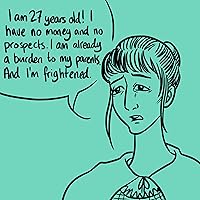
Written in France toward the end of his career, these stories are Anton Chekhov's only attempt at the linked collection. "A Man in a Shell" is a grotesque Gogolian comedy; "Gooseberries," a narrator's impassioned response; and "About Love," a poignant story of failed relationships. Translated by the impeccable David Helwig and fabulously illustrated by Seth, About Love is essential for any Chekhov enthusiast.
Dramas, such as The Seagull (1896, revised 1898), and including "A Dreary Story" (1889) of Russian writer Anton Pavlovich Chekhov, also Chekov, concern the inability of humans to communicate.
Born (Антон Павлович Чехов) in the small southern seaport of Taganrog, the son of a grocer. His grandfather, a serf, bought his own freedom and that of his three sons in 1841. He also taught to read. A cloth merchant fathered Yevgenia Morozova, his mother.
"When I think back on my childhood," Chekhov recalled, "it all seems quite gloomy to me." Tyranny of his father, religious fanaticism, and long nights in the store, open from five in the morning till midnight, shadowed his early years. He attended a school for Greek boys in Taganrog from 1867 to 1868 and then Taganrog grammar school. Bankruptcy of his father compelled the family to move to Moscow. At the age of 16 years in 1876, independent Chekhov for some time alone in his native town supported through private tutoring.
In 1879, Chekhov left grammar school and entered the university medical school at Moscow. In the school, he began to publish hundreds of short comics to support his mother, sisters and brothers. Nicholas Leikin published him at this period and owned Oskolki (splinters), the journal of Saint Petersburg. His subjected silly social situations, marital problems, and farcical encounters among husbands, wives, mistresses, and lust; even after his marriage, Chekhov, the shy author, knew not much of whims of young women.
Nenunzhaya pobeda, first novel of Chekhov, set in 1882 in Hungary, parodied the novels of the popular Mór Jókai. People also mocked ideological optimism of Jókai as a politician.
Chekhov graduated in 1884 and practiced medicine. He worked from 1885 in Peterburskaia gazeta.
In 1886, Chekhov met H.S. Suvorin, who invited him, a regular contributor, to work for Novoe vremya, the daily paper of Saint Petersburg. He gained a wide fame before 1886. He authored The Shooting Party, his second full-length novel, later translated into English. Agatha Christie used its characters and atmosphere in later her mystery novel The Murder of Roger Ackroyd. First book of Chekhov in 1886 succeeded, and he gradually committed full time. The refusal of the author to join the ranks of social critics arose the wrath of liberal and radical intelligentsia, who criticized him for dealing with serious social and moral questions but avoiding giving answers. Such leaders as Leo Tolstoy and Nikolai Leskov, however, defended him. "I'm not a liberal, or a conservative, or a gradualist, or a monk, or an indifferentist. I should like to be a free artist and that's all..." Chekhov said in 1888.
The failure of The Wood Demon, play in 1889, and problems with novel made Chekhov to withdraw from literature for a period. In 1890, he traveled across Siberia to Sakhalin, remote prison island. He conducted a detailed census of ten thousand convicts and settlers, condemned to live on that harsh island. Chekhov expected to use the results of his research for his doctoral dissertation. Hard conditions on the island probably also weakened his own physical condition. From this journey came his famous travel book.
Chekhov practiced medicine until 1892. During these years, Chechov developed his concept of the dispassionate, non-judgmental author. He outlined his program in a letter to his brother Aleksandr: "1. Absence of lengthy verbiage of political-social-economic nature; 2. total objectivity; 3. truthful descriptions of persons and objects; 4. extreme brevity; 5. audacity and originality; flee the stereotype; 6. compassion." Because he objected that the paper conducted against [a:Alfred Dreyfu
Прекрасный рассказ о любви, возникшей между замужней женщиной Анной Алексеевной, женой провинциального чиновника Лугановича, и Алехиным, человеком образованным, городским, но из-за чувства обязанности перед отцом, поиздержавшимся на его образование и влезшего в долги, вернувшимся в деревню и занявшимся сельским хозяйством, правда, с весьма скромными результатами. Когда он впервые вошёл в их дом, он сразу заметил, как они ладили между собой, какое взаимопонимание было между супругами. Алехин и Анна Алексеевна тщательно скрывали свои чувства, но оба чувствовали непонятную связь, хотя не было ни единого знака, ни единого слова о том, что они оба чувствуют. "Она думала о муже, о детях, о своей матери, которая любила ее мужа, как сына. Если б она отдалась своему чувству, то пришлось бы лгать или говорить правду, а в ее положении то и другое было бы одинаково страшно и неудобно. И ее мучил вопрос: принесет ли мне счастье ее любовь, не осложнит ли она моей жизни, и без того тяжелой, полной всяких несчастий? Ей казалось, что она уже недостаточно молода для меня, недостаточно трудолюбива и энергична, чтобы начать новую жизнь, и она часто говорила с мужем о том, что мне нужно жениться на умной, достойной девушке, которая была бы хорошей хозяйкой, помощницей, — и тотчас же добавляла, что во всем городе едва ли найдется такая девушка." Алехин также ответственно относился к их отношениям. "Я любил нежно, глубоко, но я рассуждал, я спрашивал себя, к чему может повести наша любовь, если у нас не хватит сил бороться с нею; мне казалось невероятным, что эта моя тихая, грустная любовь вдруг грубо оборвет счастливое течение жизни ее мужа, детей, всего этого дома, где меня так любили и где мне так верили. Честно ли это? Она пошла бы за мной, но куда? Куда бы я мог увести ее? Другое дело, если бы у меня была красивая, интересная жизнь, если б я, например, боролся за освобождение родины или был знаменитым ученым, артистом, художником, а то ведь из одной обычной, будничной обстановки пришлось бы увлечь ее в другую такую же или еще более будничную. И как бы долго продолжалось наше счастье? Что было бы с ней в случае моей болезни, смерти или просто если бы мы разлюбили друг друга?" Возможно, у него был комплекс - достоин ли он ее. Шли годы, наш герой стал своим в их доме, все видели в нем благородное существо, Анна Алексеевна стала чувствовать неудовлетворённость жизнью, что проявлялось в дурном настроении и расстроенных нервах, но любовь так и осталась невысказанной, непрочувствованной и глубоко и надёжно подавленной. Когда настал час расставания в связи переводом мужа в другой город, в последнюю секунду, Алехин признался в своей любви. Оба плакали. "...со жгучей болью в сердце я понял, как ненужно, мелко и как обманчиво было всё то, что нам мешало любить. Я понял, что когда любишь, то в своих рассуждениях об этой любви нужно исходить от высшего, от более важного, чем счастье или несчастье, грех или добродетель в их ходячем смысле, или не нужно рассуждать вовсе." Сказано очень красиво, но если так, почему же Алехин дал ей просто так уехать, если он так хорошо и отчётливо понял "мелкость" препятствий? Это все чеховский синдром "маленького" человека, способного умом постичь, но неспособного действовать. Эта противоречивость характера и заставляет страдать его героев.
Не претендуя на истину, у меня есть сомнения, были ли ненужными, мелкими и обманчивыми препятствия в виде семьи, в которой до прихода Алехина царил мир, я не побоюсь слова счастье и взаимопонимание.
Three short stories that are linked. The Man in a Case, Gooseberries and About Love all have the characters Burkin and Ivan Ivanovitch, Alehin in the latter two. Each character tells a story to the others. They seem to me to be about how people live their lives within the constraints of society, whether that be expectations, or laws or position in society. In The Man in a Case, the subject of the story Byelikov, constrains his life by rules and appearances and constrains the lives of all around him. In Gooseberries, Ivan tells the story of his brother whose dream of owning land and yes, growing gooseberries makes him live with complete disregard for all those around him until he fulfills his dream. The last story I liked the best of the three, a strangely sweet tale of love that cannot be acted upon as the woman is married to another.
Love is perhaps the most generous subject, one that has inspired authors and amateur poets for ages, but Thomas Mann has written that we can find the sentiment only in art, literature, in its true form…when real people say that ‘they love so much that there are no words to express the feeling’ that is an exaggeration to say the least, because Love itself means so much that we do not really meet with It in our regular lives…the under signed was thinking earlier that there is a major difference between his native tongue, in which people rarely use ‘te iubesc’, and English and French, to name the only other languages he is familiar with, where earthlings abuse the word, saying frequently that they love – or ils aiment – this color, car, flower or anything for that matter, in what has become a cliché
Anton Pavlovich seems to have a realistic view of Love, although some might criticize him for being too negative, with almost all his tales ending in something that looks like disaster, and there is an unhappy ending to his short stories about love (and we can say any other subject) which have an inspiration in reality – where almost half of marriages end in divorce and they would have had the same abrupt end in other eras, if ending marital vows were allowed – making me think of Ionitch – which will be noted on next, tomorrow Insha’Allah – wherein we have an amateur writer, whose creation have little to do with reality, as Chekhov says…
Furthermore, if we refer to the beginning of About Love, we may be inclined to think that the same negative outlook is hanging over all affairs, given that even the poor folks of the lower classes appear to have problems with their emotions…’Alehin told us that the beautiful Pelagea was in love with this cook…As he drank and was of a violent character, she did not want to marry him, but was willing to live with him without…He was very devout, and his religious convictions would not allow him to "live in sin"; he insisted on her marrying him, and would consent to nothing else, and when he was drunk he used to abuse her and even beat her…’
After this brief interlude, the narrative moves on to the more complex relationship between Anna Alexyevna Luganovitch and Alehin, the one who is the narrator, lover and ‘armchair philosopher’ here…’how far questions of personal happiness are of consequence in love -- all that is known; one can take what view one likes of it…So far only one incontestable truth has been uttered about love: 'This is a great mystery…Everything else that has been written or said about love is not a conclusion, but only a statement of questions which have remained unanswered…The explanation which would seem to fit one case does not apply in a dozen others, and the very best thing, to my mind, would be to explain every case individually without attempting to generalize…We ought, as the doctors say, to individualize each case."
Alehin has acquired a respectable education at university , but feels he has to work at the farm, where debts have been accumulated by his father, in large part on account of expenses connected with his education – we also learn about the plight of the Russian peasants, who are called upon to work along with this landowner, whether they want it or not…alas, this would later result in the communist revolution, which has brought calamity with it, even in my land…god damn them all – and the protagonist dedicates himself so much to working the land that he is exhausted, eats in the kitchen and does not even find the energy and will to sleep in the bedroom, falling asleep in odd places…
He meets with Luganovitch, vice-president of the circuit court, when the hero is elected an honorary judge and is invited to the mansion, where he meets the ravishing Juliet aka Anna Alexyevna ‘a lovely young, good, intelligent, fascinating woman’ that attracts Alehin at first sight – though we have a local writer that has argued that the so called love at first sight is in fact love at numerous sights, for we collect through the years images, impressions and find at the right time the perfect collection embodied in one person that represents all that had been positive, lovely, charming, exuberant…
With hindsight, he seems less exulting when he recounts the past to his companions, saying he ‘should find it difficult to define what there was so exceptional in her, what it was in her attracted me so much’ and making this reader reminisce and look at his own past…once upon a time, I met the winner of the Miss Romania pageant – the first one at that – and fell in love – according to various texts, including the aforementioned Thomas Mann work, that might have been infatuation, projection, an urge – would spend maybe ten months in her enchanting and demanding company, only to find the end unbearable, destructive, calamitous and after some decades, think that maybe it was for the best…
Alehin finds the marriage between this spectacular, glorious woman and the limited, modest, simple minded, older, bland Luganovitch difficult, if not impossible to comprehend, because at that time in the past, the protagonist is mesmerized and does not see anything except in a certain light, albeit he is cold headed enough to consider that taking the married woman with him would not work, she would replace that uninspiring life with the same and besides, financially he is in debt and he could place her in jeopardy…later on he would think ‘when you love you must either, in your reasonings about that love, start from what is highest, from what is more important than happiness or unhappiness, sin or virtue in their accepted meaning, or you must not reason at all’ but when it mattered, he stayed cautious…
Luganovitch is in fact friendly towards the man who is considering eloping with his spouse and offers him all sorts of gifts and when he finds that his friend – for by now the loving hero is a regular visitor at the house and a frequent companion, they go to the theater together, meet often – had accumulated debts and is in a precarious financial situation, he says that he is ready to help, there is only a need to say and they would be glad to offer assistance…however, Alehin would never take a loan, money from this family…their relationship is affected when Anna Alexyevna starts attacking Alehin, mocking, laughing at him – qui s’aiment se taquinent says a silly French proverb – probably in frustration with the futureless affection they have for each other, which may come to a brusque end when Luganovitch is assigned to a new position, in a faraway place… https://americanliterature.com/author...
4,5/5 Bu üç öykü de aşkı “mutlu eden” bir şey olarak değil, insanı rahatsız eden bir yerden anlatmış Çehov. Aşkı yaşayanlardan çok, yaşayamayanların hikayesi… Kılıflı Adam’da aşkın, toplum baskısı yüzünden daha başlamadan bitmesi… Bektaşiüzümü’nde büyük bir tutku yok; ertelenmiş bir hayat ve küçük mutluluklara sığınma hali... Aşk Üzerine ise aşkın kurallara sığmadığını, insanı değiştirdiğini ama her zaman mutlu etmediğini düşündürmesi... Üçünü birlikte okuyunca bende kalan şu: aşk çoğu zaman fark edilmiyor ya da bastırılıyor; asıl mesele sevmek değil, sevmeye cesaret edebilmek.
“I did not think of her, but it was as though her light shadow were lying on my heart.”
Ah, Chekhov. He can never give us a love story that ends well.
The story feels helpless from the beginning. Alyokhin, the main character, falls in love with a charming and intelligent young woman. The woman his acquaintance introduced him to, his wife.
Although it sounds like a plot for a dramatic love film, there's little action in it. Restricted by societal norms and his own morals, there's nothing Alyokhin can do. Even if his feelings are reciprocated.
The gossip is that Chekhov himself secretly (or not so) loved a married woman, Lydia Avilova. Some letters and diaries suggest it, though no one can confirm it. However, this story makes it hard to deny it.
It's beautifully written but lacks complexity. The void is empty but not too deep. I sensed the author's heart wasn't fully open.
"...with a burning pain in my heart I understood how superfluous and small and illusory everything was that prevented us from loving. I understood that when you love, and when you think about this love, you must proceed from something higher, of more importance than happiness or unhappiness, sin or virtue in the commonplace sense; or you mustn't think about it at all." P. 100
legit finished as my pasta boiled. i think mostly fine .. short stories hit and miss yknow. stand out for sureee was the black monk because the protagonist was fucking insane like dostoyevskian a little but idk if that’s just recency bias + lack of knowledge re russian lit. but yeahahhh otherwise just very depressing outlook on life everyone is unfulfilled and regretting their life like not what you want to read at 23 don’t do this to me man
Love is perhaps the most generous subject, one that has inspired authors and amateur poets for ages, but Thomas Mann has written that we can find the sentiment only in art, literature, in its true form…when real people say that ‘they love so much that there are no words to express the feeling’ that is an exaggeration to say the least, because Love itself means so much that we do not really meet with It in our regular lives…the under signed was thinking earlier that there is a major difference between his native tongue, in which people rarely use ‘te iubesc’, and English and French, to name the only other languages he is familiar with, where earthlings abuse the word, saying frequently that they love – or ils aiment – this color, car, flower or anything for that matter, in what has become a cliché
Anton Pavlovich seems to have a realistic view of Love, although some might criticize him for being too negative, with almost all his tales ending in something that looks like disaster, and there is an unhappy ending to his short stories about love (and we can say any other subject) which have an inspiration in reality – where almost half of marriages end in divorce and they would have had the same abrupt end in other eras, if ending marital vows were allowed – making me think of Ionitch – which will be noted on next, tomorrow Insha’Allah – wherein we have an amateur writer, whose creation have little to do with reality, as Chekhov says…
Furthermore, if we refer to the beginning of About Love, we may be inclined to think that the same negative outlook is hanging over all affairs, given that even the poor folks of the lower classes appear to have problems with their emotions…’Alehin told us that the beautiful Pelagea was in love with this cook…As he drank and was of a violent character, she did not want to marry him, but was willing to live with him without…He was very devout, and his religious convictions would not allow him to "live in sin"; he insisted on her marrying him, and would consent to nothing else, and when he was drunk he used to abuse her and even beat her…’
After this brief interlude, the narrative moves on to the more complex relationship between Anna Alexyevna Luganovitch and Alehin, the one who is the narrator, lover and ‘armchair philosopher’ here…’how far questions of personal happiness are of consequence in love -- all that is known; one can take what view one likes of it…So far only one incontestable truth has been uttered about love: 'This is a great mystery…Everything else that has been written or said about love is not a conclusion, but only a statement of questions which have remained unanswered…The explanation which would seem to fit one case does not apply in a dozen others, and the very best thing, to my mind, would be to explain every case individually without attempting to generalize…We ought, as the doctors say, to individualize each case."
Alehin has acquired a respectable education at university , but feels he has to work at the farm, where debts have been accumulated by his father, in large part on account of expenses connected with his education – we also learn about the plight of the Russian peasants, who are called upon to work along with this landowner, whether they want it or not…alas, this would later result in the communist revolution, which has brought calamity with it, even in my land…god damn them all – and the protagonist dedicates himself so much to working the land that he is exhausted, eats in the kitchen and does not even find the energy and will to sleep in the bedroom, falling asleep in odd places…
He meets with Luganovitch, vice-president of the circuit court, when the hero is elected an honorary judge and is invited to the mansion, where he meets the ravishing Juliet aka Anna Alexyevna ‘a lovely young, good, intelligent, fascinating woman’ that attracts Alehin at first sight – though we have a local writer that has argued that the so called love at first sight is in fact love at numerous sights, for we collect through the years images, impressions and find at the right time the perfect collection embodied in one person that represents all that had been positive, lovely, charming, exuberant…
With hindsight, he seems less exulting when he recounts the past to his companions, saying he ‘should find it difficult to define what there was so exceptional in her, what it was in her attracted me so much’ and making this reader reminisce and look at his own past…once upon a time, I met the winner of the Miss Romania pageant – the first one at that – and fell in love – according to various texts, including the aforementioned Thomas Mann work, that might have been infatuation, projection, an urge – would spend maybe ten months in her enchanting and demanding company, only to find the end unbearable, destructive, calamitous and after some decades, think that maybe it was for the best…
Alehin finds the marriage between this spectacular, glorious woman and the limited, modest, simple minded, older, bland Luganovitch difficult, if not impossible to comprehend, because at that time in the past, the protagonist is mesmerized and does not see anything except in a certain light, albeit he is cold headed enough to consider that taking the married woman with him would not work, she would replace that uninspiring life with the same and besides, financially he is in debt and he could place her in jeopardy…later on he would think ‘when you love you must either, in your reasonings about that love, start from what is highest, from what is more important than happiness or unhappiness, sin or virtue in their accepted meaning, or you must not reason at all’ but when it mattered, he stayed cautious…
Luganovitch is in fact friendly towards the man who is considering eloping with his spouse and offers him all sorts of gifts and when he finds that his friend – for by now the loving hero is a regular visitor at the house and a frequent companion, they go to the theater together, meet often – had accumulated debts and is in a precarious financial situation, he says that he is ready to help, there is only a need to say and they would be glad to offer assistance…however, Alehin would never take a loan, money from this family…their relationship is affected when Anna Alexyevna starts attacking Alehin, mocking, laughing at him – qui s’aiment se taquinent says a silly French proverb – probably in frustration with the futureless affection they have for each other, which may come to a brusque end when Luganovitch is assigned to a new position, in a faraway place… https://americanliterature.com/author...
“Belikov’un bizi evlerimizde ziyaret etmek gibi tuhaf bir alışkanlığı vardı. Gelişigüzel bir öğretmenin evine gider, hiç konuşmadan oturur, güya bir şeyler incelerdi. Böylece, hiç konuşmadan bir, hatta iki saat oturduktan sonra da kalkıp giderdi… Bu ziyaretlere ‘arkadaşlarla iyi ilişkilerde bulunmak’ adını verirdi. Görünüşe göre bu ziyaretler, bu oturuşlar ona ağır gelir, bunları sadece bir arkadaşlık ödevi saydığı için yapardı.”
What the world!? I want to live in a Chekov universe..... for like a week, maybe... Colorful, brutal, and teeming with humanity in all its beautiful ugliness. Short story writing at its finest.
"Luckily or unluckily, there is nothing in our lives that does not end sooner or later . "
"About Love"* is a tale that explores the complexities of love, longing, and emotional conflict.
Chekhov masterfully portrays love as both a source of joy and profound sorrow. The story delves into the unrealistic ideals often associated with love and the struggle between passion and the constraints of reality.
The emotional depth and subtlety of the narrative reflect Chekhov's trademark style. His exploration of love is neither idealized nor overly sentimental but instead grounded in the bittersweet complexities of real human emotions. The story is ultimately about the vulnerability that love exposes and the heartache that often accompanies it, making it a timeless meditation on the human experience.
Overall, "About Love" is a thought-provoking story that invites readers to reflect on their own experiences with love and the myriad ways it can shape our lives. It showcases Chekhov's remarkable ability to capture the nuances of human relationships with a quiet but powerful emotional impact.
was not into it. i hated how he wrote female characters and yes i know it’s classic russian lit but like…no. all these russian ladies can’t be as flighty as he describes. the themes he brings up are ones that a teenaged girl would have pondered, unprompted, in her childhood bedroom.
Çarlık Rusyası'nın boğucu taşra atmosferinde, mülkiyet ilişkileri ve toplumsal statü korkusu yüzünden yaşanamayan bir aşkın melankolik öyküsüdür. Çehov, Rus burjuvazisinin ve aydınının içine düştüğü o meşhur eylemsizliği ve ruhsal çürümeyi, bireysel bir trajedi üzerinden ustalıkla teşhir eder. İnsani duyguların, kurulu düzenin ahlaki ve ekonomik zincirleri karşısında nasıl yenik düştüğünü gösteren harika bir edebi tanıklıktır. Toplumsal dönüşüm olmadan, bireysel mutluluğun veya özgürlüğün sınırlarının ne kadar dar olduğunu hissettiren estetik bir başyapıttır.
A nicely translated and beautifully illustrated and bound set of Anton Chekhov's three linked stories, all featuring the same characters in bucolic settings, sitting around, swimming, waiting out the rain, and telling stories to each other. They are among the last stories Chekhov wrote (he wrote them while he was in France) and they have an enormous range from absurd to comic to tragic to profound and more, often within the same story, sometimes shifting on a single page.
It is nice to read a collection that has just three stories (and is less than 100 pages) because with Chekhov I find myself starting out excited but then having a hard time getting through too many stories. I would also recommend the Pushkin press collection The Beauties: Essential Stories for a nice selection, nicely translated and nicely printed.
“Bizde taşralarda, can sıkıntısından neler, ne saçmalıklar yapılmaz... Bu iş en çok, asıl yapılması gereken şeylerin yapılmamasından ileri gelir.”
“Para da tıpkı votka gibi, insanı bir tuhaf yapar.”
“Yalnız yaşayan insanların içlerinde, anlatmaya gönüllü oldukları bir şeyler her zaman bulunur. Şehirlerde bekârlar sırf sohbet etmek amacıyla hamama, lokantaya giderler; bazen tellaklara, garsonlara çok ilginç hikâyeler anlatırlar. Köylerde ise bu insanlar içlerini genellikle misafirlerine döker.”
My takeaway from this collection of short stories is that: the realities of life has made love, as how we wish to define it (that is, pure, joyful, spiritually fulfilling), an impossibility.
In Chekhov’s stories, love necessitates youth, with the lover becoming increasingly disillusioned as the beloved ages and her mystery becomes known.
Marriages, meanwhile, are matters of practical convenience, or worse, stifling prisons created by society.
I picked up this book because it looked cute (basically judged it by its cover😅) the cover, the size, the title all seemed sweet and inviting. I expected lighthearted or sweet stories about love, but what I got was something entirely different. Chekhov’s version of love feels tied to misery, cheating, and unhappy relationships. Most of the stories left me confused about their point, and overall it wasn’t enjoyable at all. Definitely not my cup of tea. I give it half a star, at best.. I would give it less if I could.
I'm not smart enough to give this five stars. Both "The Lady with the Little Dog" and "The House with the Mezzanine" are stories unfulfilled or wrongly-fulfilled love, and so is the titular story, and you just want to take the characters and punch them one by one. "Gooseberries" is fine enough but you're left wondering what the point was. "Man in a Case" flows much more easily, though there's again this urge to punch the characters. My favourite has to be "The Black Monk," for the touch of supernatural and Gothic drama.
Çok güzel öykülerden oluşan kısa bir kitap. Temizlik yaparken kulağımda kulaklık ile iki saatlik dinlemede bitirdim 😬 okuduğum ilk Çehov kitabı, diğer eserlerine de bakacağım 🤩
Chekhov has described in other stories the restrictions that women face in connection with love. In these three stories, different restraints on men are described: dismissing free love for propriety and twisted ideas of what is correct; pursuing materialistic achievement at the price of experiencing love; refraining from declaring love to a married woman and not enjoying love - for the sake of the rules of society and her household.
"...with a burning pain in my heart I understood how superfluous and small and illusory everything was that prevented us from loving. I understood that when you love, and when you think about this love, you must proceed from something higher, of more importance than happiness or unhappiness, sin or virtue in the commonplace sense; or you mustn't think about it at all." (from About Love)
A simple story about falling in love with the right person at the wrong time. The undecisiveness of the main character leads to a missed opportunity which he has to live with for the rest of his life. Would it be better to admit your love and ruin everything, or to trust your senses and live with what ifs?
سه داستان "مردی لای جلد"، "توت فرنگیهای وحشی" و "دربارهی عشق" سهگانهای خواندنیه که در کتاب گزیدهی داستانهای کوتاه چخوف از نشر نگاه حضور داره با ترجمهی احمد گلشیری(که دقت ترجمش بیشتر از روون بودنش بود).
چخوف با نگاه سرشار از زندگیش به پدیدهها و نبوغ خاص خودش در سادهنگاری، در تاریخ ادبیات و در قلب من جایگاه ویژهای داره:))
either I’m not able to understand the point of his stories or good ol’ checkhov just isn’t that great of a writer.. I did understand that his male main characters are highly intelligent and above everyone else, while his female characters are highly fragile and always seem to burst out in tears