

What do you think?

Chrysler's Turbine Car: The Rise and Fall of Detroit's Coolest Creation
"Fascinating." — Vanity Fair "A delightful history." — Wall Street Journal In 1964, Chrysler gave the world a glimpse of the future. The automaker built a fleet of turbine cars—automobiles with jet engines—and lent them out to members of the public. The fleet logged over a million miles; the exercise was a raging success. These turbine engines would run on any flammable liquid—diesel, heating oil, kerosene, tequila, even Chanel No. 5. If the cars had been mass produced, today we might have cars that do not require petroleum-derived fuels. The engine was also much simpler than the piston engine—it contained far fewer moving parts and required much less maintenance. The cars had no radiators or fan belts and never needed oil changes. Yet Chrysler crushed and burned most of the cars two years later; the jet car’s brief glory was over. Where did it all go wrong? Steve Lehto has interviewed all the surviving members of the turbine car program, from the metallurgist who created the exotic metals for the interior of the engine to the test driver who drove it at Chrysler’s proving grounds for days on end. Lehto takes these firsthand accounts and weaves them into a fascinating story about the coolest car Detroit has ever produced.
- GenresHistoryNonfictionCars
240 pages, Paperback
First published January 1, 2010
Ratings & Reviews
Friends & Following
Create a free account to discover what your friends think of this book!
Community Reviews
Displaying 1 - 27 of 27 reviews

July 28, 2011
Rating: 3.5* of five
The Book Report: A short, concise history of the very thing the title declares: The coolest creation ever to come out of Detroit!

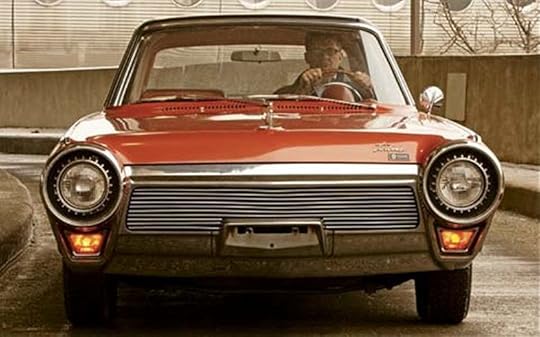
My Review: Oh wow! Oh cool! Oh my GOD why didn't they make this?! Well, after reading this book, I know why: It was too far ahead of its time, and when its time came, the company was on the ropes. The author spoke to everyone he could find still living who participated in the most amazing PR campaign of all time: Chrysler made 50 of these babies and, over the course of 1964-1966, lent them out to 203 drivers for 90 days apiece. The 50 cars racked up over 1 million miles of travel, and had less than 1% downtime in all of that driving. Reliability was clearly not a huge issue. But what *was* a huge issue was the way the turbines needed to be manufactured, basically each one by hand. There was, in that pre-computer-control era, no way to automate the process of making the engine parts.
But then the what-if machine kicks in: The cars didn't need to use gasoline, or even petroleum products...they ran one car on tequila, and another on peanut oil. Had manufacture gone ahead, perhaps advances in technology would've speeded up computer-aided design and production. Imagine a world where the car smells like a deep fryer and sounds like a jet.
Lost chances. The very source of all good fiction. *turns on private bubble machine*
The Book Report: A short, concise history of the very thing the title declares: The coolest creation ever to come out of Detroit!
My Review: Oh wow! Oh cool! Oh my GOD why didn't they make this?! Well, after reading this book, I know why: It was too far ahead of its time, and when its time came, the company was on the ropes. The author spoke to everyone he could find still living who participated in the most amazing PR campaign of all time: Chrysler made 50 of these babies and, over the course of 1964-1966, lent them out to 203 drivers for 90 days apiece. The 50 cars racked up over 1 million miles of travel, and had less than 1% downtime in all of that driving. Reliability was clearly not a huge issue. But what *was* a huge issue was the way the turbines needed to be manufactured, basically each one by hand. There was, in that pre-computer-control era, no way to automate the process of making the engine parts.
But then the what-if machine kicks in: The cars didn't need to use gasoline, or even petroleum products...they ran one car on tequila, and another on peanut oil. Had manufacture gone ahead, perhaps advances in technology would've speeded up computer-aided design and production. Imagine a world where the car smells like a deep fryer and sounds like a jet.
Lost chances. The very source of all good fiction. *turns on private bubble machine*

November 17, 2018
Chrysler's Turbine Car: The Rise and Fall of Detroit's Coolest Creation by Steve Lehto is an informative, engaging, and all-too-brief book about just that: the coolest thing to come out of Detroit. Chrysler spent decades working on turbine-powered auto technology and had progressed to the point of fielding 50 of the cars with families across American during a two-year customer test program. While they did learn a lot and managed to surface some issues that were resolved, the real value of the program was marketing. There was a time when the Chrysler Turbine was very well known and was widely expected to be brought to market. The oil embargo, pollution controls, and Chrysler's repeated financial problems ended the dream even though Chrysler had resolved most of the technical problems in subsequent turbine designs. The high cost of manufacture for the turbine was also a barrier to production. One of the truly great Might Have Beens.
The multi fuel capability of the turbine engine combined with more recent developments in small turbine and ceramics might make a turbine more practical today. A turbine-electric hybrid would nicely address issues that the two drive systems have on their own, but in all likelihood the time for an automotive turbine has passed.
The multi fuel capability of the turbine engine combined with more recent developments in small turbine and ceramics might make a turbine more practical today. A turbine-electric hybrid would nicely address issues that the two drive systems have on their own, but in all likelihood the time for an automotive turbine has passed.
December 29, 2014
The topic of the turbine program at Chrysler is one that has fascinated me since I first read about the car when I was a child, so finding this book was definitely worthwhile.
It is informative and contains information about the program which I had not before read, but contains little technical information. The writing style of the author is somewhat unusual, but not unexpected in a book containing technical content.
A must read for those interested in Chrysler, especially the company that proclaimed "Extra Care in Engineering".
It is informative and contains information about the program which I had not before read, but contains little technical information. The writing style of the author is somewhat unusual, but not unexpected in a book containing technical content.
A must read for those interested in Chrysler, especially the company that proclaimed "Extra Care in Engineering".
July 2, 2019
In the 1950's, Chrysler experimented with turbine cars. Sam Williams did admirable engineering to adapt aviation turbines for application in cars. Notable was the design of a regenerator that recovered heat from the exhaust and returned it to the incoming air, which significantly improved engine efficiency and kept the exhaust temperature cool. Car mileage was up to 20 miles per gallon which was typical of the piston cars of that era. While reasonably powerful, the acceleration from a stop was a bit sluggish, partially because of the heavy weight of the custom bodies, but from a rolling start was impressive. Interestingly, in cold climates the cars would produce interior heat immediately as it was derived from the exhaust gas. The cost of each car was estimated as $50,000.
After three experimental versions of the turbine, Chrysler built fleet of fifty cars generally known as the Ghia turbines. The cars were designed and built by Italy's Ghia Coachworks. Not being mass produced, the parts were not necessarily interchangeable. The turbines which required a multi-step investment casting process were built by a small company named Howmet. The cars of this fleet were loaned to citizens across the U.S. on a lottery basis. By the end, of the program 203 users had driven over a million miles in the Ghias.
Much of the book is devoted to this user program and the reactions of the drivers and those who came in contact with the cars. While some limitations were observed, the response was overwhelmingly positive.
In the mid 1960's the turbine cars were destroyed with the exception of a few that were sent to museums. In the early 1970's, Chrysler created a sixth generation turbine that demonstrated further improvements.
When the regulation of fuel economy and emission reduction began to drive the development of car engines, Chrysler's poor financial situation did not support further development of the turbine. A major issue was the production of NOx by the turbine.
Letho returns repeatedly to the fact that the turbine could burn any combustible fuel, except leaded gas, diesel and kerosene being the most practical.
Turbines would have been more viable given technological developments since that time, such as improved metals, improved lubricants and NOx reduction with urea treatments.
After three experimental versions of the turbine, Chrysler built fleet of fifty cars generally known as the Ghia turbines. The cars were designed and built by Italy's Ghia Coachworks. Not being mass produced, the parts were not necessarily interchangeable. The turbines which required a multi-step investment casting process were built by a small company named Howmet. The cars of this fleet were loaned to citizens across the U.S. on a lottery basis. By the end, of the program 203 users had driven over a million miles in the Ghias.
Much of the book is devoted to this user program and the reactions of the drivers and those who came in contact with the cars. While some limitations were observed, the response was overwhelmingly positive.
In the mid 1960's the turbine cars were destroyed with the exception of a few that were sent to museums. In the early 1970's, Chrysler created a sixth generation turbine that demonstrated further improvements.
When the regulation of fuel economy and emission reduction began to drive the development of car engines, Chrysler's poor financial situation did not support further development of the turbine. A major issue was the production of NOx by the turbine.
Letho returns repeatedly to the fact that the turbine could burn any combustible fuel, except leaded gas, diesel and kerosene being the most practical.
Turbines would have been more viable given technological developments since that time, such as improved metals, improved lubricants and NOx reduction with urea treatments.

March 15, 2021
Great history of the turbine car.
I really enjoyed this well researched history of Chrysler's turbine car. Steven interviews with the different people involved with the program provided a great read.
I really enjoyed this well researched history of Chrysler's turbine car. Steven interviews with the different people involved with the program provided a great read.
March 30, 2025
Boost pressure in turbines: what is correct and reasons for failures https://wiatreo.pl/en/article/objawy-... is an important factor in ensuring optimal engine performance. During my own experience, I learned that the correct pressure level allows you to achieve maximum power and combustion efficiency. If the pressure is too low or too high, this can lead to serious problems with the turbine and engine. Too high a pressure can cause the engine to overheat, damage the turbocharger elements and malfunction of the fuel injection system. On the other hand, low pressure can lead to loss of power, engine jerking and increased fuel consumption. I personally encountered such a problem in a car when I noticed a decrease in power and low boost pressure. The reason for this was a damaged turbocharger, which could not compress the air effectively.
January 26, 2019
I very much enjoyed this book and given that I had heard/read very little previously about Chrysler’s experiments I was able to learn a great deal from the book. It’s a pity that the turbine car never went into series production – we might never have had the diesel ‘situation’ if it had and given that Chrysler would surely have overcome the emissions challenges. Reading this book caused me to watch YouTube videos on the turbine cars and especially Jay Leno’s video and test drive of the car car.

April 27, 2023
Great book! The books is an excellent dive into the history of a car powered by a turbine engine. Steve Lehto does a great job explaining everything about the Chrysler Turbine car, and the people who worked to try and take cars into the jet era.
January 11, 2024
Very informative and interesting in the grand scheme of automotive design and history. At times it drags on and on, but I can tell the author is very invested in the topic. I ended up skipping some parts of it because of this. But, in total it’s a wonderful book.
February 1, 2020
Very interesting
Very readable. Well researched. I learn a lot that I did not know. The author has a great knowledge of his subject. A fascinating story .
Very readable. Well researched. I learn a lot that I did not know. The author has a great knowledge of his subject. A fascinating story .
April 22, 2020
Well-written tale of a fascinating story. Meticulously referenced. Check out the Jay Leno video on the Chrysler Turbine car, too.
February 15, 2021
Great history or rare car
Great documentary of the technology and history of the turbine car. Will be good for future generations to read. Well done.
Great documentary of the technology and history of the turbine car. Will be good for future generations to read. Well done.

April 20, 2021
Interesting book, but not a Tucker type story with a lot of drama.
August 18, 2021
I wish it had more technical detail on the turbines and went into other turbine car programs but I can't fault a book for covering exactly what it says in the title.
February 16, 2025
turbine power what if
Using the tech of today maybe we should look at this engine again. It could work with many types of fuel. Very interesting read.
Using the tech of today maybe we should look at this engine again. It could work with many types of fuel. Very interesting read.
January 25, 2026
Good and quick read. Loved the portion about the marketing campaign and the people’s personal stories with the car.
This entire review has been hidden because of spoilers.

February 3, 2026
Incredible in the depth it explores on the fantastic Chrysler Turbine Car program.

April 27, 2026
This is a great history of Chrysler’s design and use of the turbine engine. Very well researched and documented information contained.
June 1, 2019
Interesting review of a program that most of us baby boomers were only vaguely aware of.
The level of development greatly exceeded what I thought was a brief "dabbling" into a technology.
A more familiar theme was the damage caused by Washington interference. Overall a fine testament to American engineering. Worthwhile read and a Kindle Unlimited bargain!
The level of development greatly exceeded what I thought was a brief "dabbling" into a technology.
A more familiar theme was the damage caused by Washington interference. Overall a fine testament to American engineering. Worthwhile read and a Kindle Unlimited bargain!

December 7, 2013
The story needs to be told but the book should have been about Turbine cars in general,Jay Leno's Introduction is flawed as well in what is factual.As the author pointed out GENERAL MOTORS created The Firebird(neglected to mention FIREBIRD I,II,III,OF 1954,1956,1958 Respectively.)Ford and Boeing with a Thunderbird,instead Chrysler should get all the glory because it Made so many and lent them out,The author incorrectly points the Firebirds were somehow after Chrysler's attempt or downplays by saying they were Unsightly and one had the Bubble Top and was split so passengers cannot talk to each other(Firebird III),mentions in Passing The Turbine Bus by Gm as well,He then in one sentence mentions How "Corporate America" schedule for the car's tour,what is wrong with Being "Corporate" in America? as opposed to? If you want to read about The General Motors Firebird(a somewhat dry at times and technical account) read Of Firebirds and Moonmen by one of the people behind the cars: Norman James,Overall worth reading but not my type of book and Certainly not Detroit's coolest Creation.

Read
September 12, 2011In 1964, Chrysler built a fleet of turbine-powered cars, lent them to the public, and earned rave reviews. Two years later, the jet car program was ended. In the fascinating Chrysler’s Turbine Car: The Rise and Fall of Detroit’s Coolest Creation, Steve Lehto tells the story of what happened to the car that could have ended our dependence on petroleum. The following excerpt details the car’s origins.
Read the rest of the review in our June/July 2011 issue. http://www.shelfmediagroup.com/staff_...
Read the rest of the review in our June/July 2011 issue. http://www.shelfmediagroup.com/staff_...

April 14, 2013
Although I have read books that were arranged and written better, I learned tons about a wonderful car that was only on the fringe of my knowledge. The loaner program, and the explanations of why we still do not have turbine cars after the apparent success of the car, were great to learn about, and I feel that I have better understanding of the factors involved, the people who made it happen, and the reasons it was not ultimately successful. Well worth the read, but more photos (I had the kindle version) would have been appreciated.

June 19, 2015
If you're an auto industry buff, or just a simple old car fan like me, you'll enjoy this detailed history of Chrysler's quasi-successful program to develop the first commercially viable turbine-powered passenger car. With 50 production vehicles, which were read tested by ordinary consumers around the US, Chrysler had the first non-combustion engine alternative of the modern on track to enter the mainstream. Steve Lehto gives the car's design, mechanical development, production and testing program plenty of attention, with enough anecdotal information to keep the reader's attention throughout.

December 19, 2010
Super interesting look at the creation of a turbine car in the 60's and 70's. I'm not knowledgeable about the American car industry, but come from a "car family" and found this book easy to read and understand - while there were some technical bits that went over my head, I was left with a strong impression of the ingenuity of the engineers who created the turbine program at Chrysler.

Read
June 3, 2012Jet turbines have always been the automotive future that never arrived. Since the 1940s, companies such as Rover, British Leyland, Ford, and GM tried to develop a practical substitute to the piston engine. It seemed like such a logical progression.
Read more
Read more

January 2, 2014
Great book overall. Gets a little redundant in regards to the user program Chrysler use, I think the author went a tad overboard when writing about the customer reviews of the car, that section was I think longer than needed. But like I said great overall lots of interesting info that up until now has been long forgotten unfortunately.

December 3, 2010
This has to be one of the most fascinating stories pertaining to the American auto industry in the immediate post war years yet read.
Displaying 1 - 27 of 27 reviews