

What do you think?

The Ransom of Russian Art
In the 1960's and 1970's, American professor Norton Dodge forayed on his own in the Soviet Union, bought the work of underground "unofficial" artists, and brought it out himself or arranged to have it shipped illegally to the United States. John McPhee investigates Dodge's clandestine activities in the service of dissident Soviet art, his motives for his work, and the fates of several of the artists whose lives he touched. The Ransom of Russian Art is a suspenseful, chilling, and fascinating report on a covert operation like no other.
181 pages, Hardcover
First published January 1, 1994
About the author
John McPhee
132 books1,960 followersJohn Angus McPhee is an American writer. He is considered one of the pioneers of creative nonfiction. He is a four-time finalist for the Pulitzer Prize in the category General Nonfiction, and he won that award on the fourth occasion in 1999 for Annals of the Former World (a collection of five books, including two of his previous Pulitzer finalists). In 2008, he received the George Polk Career Award for his "indelible mark on American journalism during his nearly half-century career". Since 1974, McPhee has been the Ferris Professor of Journalism at Princeton University.
Ratings & Reviews
Friends & Following
Create a free account to discover what your friends think of this book!
Community Reviews
Displaying 1 - 30 of 64 reviews

November 30, 2013
The women often had at least as much talent as their husbands did, and the women prepared the sandwiches while the men drank vodka and held forth on art theory.
- John McPhee, The Ransom of Russian Art
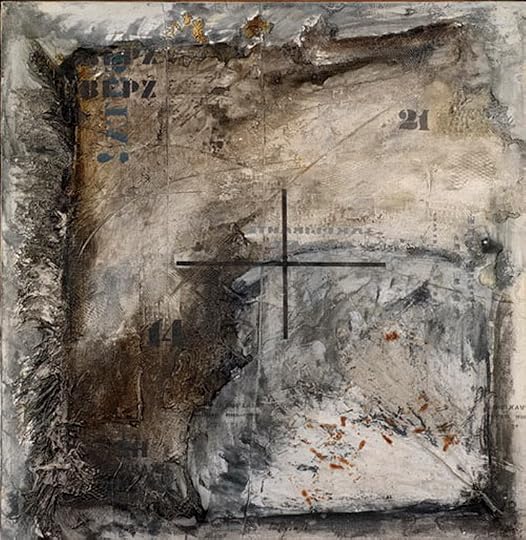
You can tell a lot about a nation by its relationship to its art, especially its more radical art. Some nations are more comfortable with nonconformist art than others. I think of recently ISIS destroying art, books and statues in Iraq. I think of some French moralist destroying the giant green, Paul McCarthy butt plug installed in front of the Louvre. I think of my own university trying to figure out how to hide the **gasp** nakedness of a couple visiting Rodin statues.
Fundamentally, fundamentalism and nonconformist art don't do well together. McPhee tells 'In the Ransom of Russian Art' the the story of a professor of Soviet Economics at University of Maryland named Norton Dodge. Dodge managed in the 1960s and 1970s to buy and smuggle over 1000 pieces of underground, contemporary art out of the Soviet Union. Through his contacts he purchased another 8000 pieces. He saved, and supported many of Russia's unofficial artists (those whose very art were viewed as a risk to the Soviet state).
This is one of those stories that seems almost too good to be true. It is the Dutch boy with his finger in the dyke. It is Oskar Schindler but with art. It is like John le Carré was suddenly inspired by Miro, Pollock, or de Kooning. The absent-minded spy here came in from the cold, but he didn't have nuclear secrets he had a bunch of oils, watercolor, gouache and ink hidden in his suitcase and smuggled out by friends.
Anyways, this was another great McPhee where he stumbles over a person who contains an barn-full of beauty. This time, literally a barn-full.
- John McPhee, The Ransom of Russian Art
You can tell a lot about a nation by its relationship to its art, especially its more radical art. Some nations are more comfortable with nonconformist art than others. I think of recently ISIS destroying art, books and statues in Iraq. I think of some French moralist destroying the giant green, Paul McCarthy butt plug installed in front of the Louvre. I think of my own university trying to figure out how to hide the **gasp** nakedness of a couple visiting Rodin statues.
Fundamentally, fundamentalism and nonconformist art don't do well together. McPhee tells 'In the Ransom of Russian Art' the the story of a professor of Soviet Economics at University of Maryland named Norton Dodge. Dodge managed in the 1960s and 1970s to buy and smuggle over 1000 pieces of underground, contemporary art out of the Soviet Union. Through his contacts he purchased another 8000 pieces. He saved, and supported many of Russia's unofficial artists (those whose very art were viewed as a risk to the Soviet state).
This is one of those stories that seems almost too good to be true. It is the Dutch boy with his finger in the dyke. It is Oskar Schindler but with art. It is like John le Carré was suddenly inspired by Miro, Pollock, or de Kooning. The absent-minded spy here came in from the cold, but he didn't have nuclear secrets he had a bunch of oils, watercolor, gouache and ink hidden in his suitcase and smuggled out by friends.
Anyways, this was another great McPhee where he stumbles over a person who contains an barn-full of beauty. This time, literally a barn-full.

February 10, 2018
John McPhee’s “The Ransom of Russian Art” is a short book about Norton Dodge, a professor of Economics at the University of Maryland, who, starting in the 1950s and up to the 1980s, made frequent trips to the Soviet Union where he acquired and smuggled out of the country a huge collection of ‘nonconformist art’, artworks made by painters in a sort of loosely connected underground network whose status as artists was not sanctioned by the government which meant that they faced challenges in all aspects of their artistic careers, from procuring paints and canvases, to displaying their artwork to the public.
McPhee attempts to explain Dodge and provide solutions to mysteries such as what were Dodge’s motives in acquiring the collection? where did Dodge get the millions of dollars he spent on his collection? and how did he smuggle the art out of the Soviet Union to his farm in Maryland? When McPhee can’t get a definitive answer he gives us the dialogue with Dodge which provides clues only and which explains the reluctance of Dodge to reveal the answers. This technique and others like it are part of McPhee’s lauded creative nonfiction style and they make this a very intellectually stimulating and thoughtful work.
Throughout the course of this profile of Dodge McPhee also touches on themes including Russian culture, the hedonism of the lives of artists, officially sanctioned art in a totalitarian state, the absent-minded professor stereotype, and eccentricity.
This book, part spy novel, part profile of an art collector, is a wonderful profile of an oddball whose motives seem to be buried somewhere in a youthful interest in art, perhaps related to his father’s efforts to help native tribes in Oklahoma with an art studio.
The art may be seen today in the Norton and Nancy Dodge Collection of Nonconformist Art from the Soviet Union in Rutgers’ Zimmerli Art Museum in New Brunswick, New Jersey but the full mystery of the man who brought it all together can only be appreciated in this book.
McPhee attempts to explain Dodge and provide solutions to mysteries such as what were Dodge’s motives in acquiring the collection? where did Dodge get the millions of dollars he spent on his collection? and how did he smuggle the art out of the Soviet Union to his farm in Maryland? When McPhee can’t get a definitive answer he gives us the dialogue with Dodge which provides clues only and which explains the reluctance of Dodge to reveal the answers. This technique and others like it are part of McPhee’s lauded creative nonfiction style and they make this a very intellectually stimulating and thoughtful work.
Throughout the course of this profile of Dodge McPhee also touches on themes including Russian culture, the hedonism of the lives of artists, officially sanctioned art in a totalitarian state, the absent-minded professor stereotype, and eccentricity.
This book, part spy novel, part profile of an art collector, is a wonderful profile of an oddball whose motives seem to be buried somewhere in a youthful interest in art, perhaps related to his father’s efforts to help native tribes in Oklahoma with an art studio.
The art may be seen today in the Norton and Nancy Dodge Collection of Nonconformist Art from the Soviet Union in Rutgers’ Zimmerli Art Museum in New Brunswick, New Jersey but the full mystery of the man who brought it all together can only be appreciated in this book.

June 16, 2009
The women often had at least as much talent as their husbands did, and the women prepared the sandwiches while the men drank vodka and held forth on art theory.
Even more striking than Norton Dodge's dangerous smuggling of thousands of noncomformist artworks out of the Soviet Union is the sheer will to create on the part of the artists themselves. Art supplies were available only to the state-approved, the official, the unionized, but underground painters pushed ahead with automobile paint, frames made of yardsticks, tablecloths and cheap wrapping paper employed for canvas, and cramped private apartments turned into clandestine exhibition spaces. The resulting art could be crude, rough, pornographic and scatological in puerile reaction against the pious heartiness of Socialist Realism--but Dodge collected not to skim the talented cream of the times, but to document the totality of the Russian art that had been forced underground. The stories McPhee tells reminded me very much of Brodsky's Less Than One, with its account of other young Russians of the 60s and 70s struggling to continue with cultural life in the attics and cramped corners of a philistine state.
Oh, and a line whose arrangement makes me laugh:
In their apartments, the Estonians had Dutch beer, English whisky, Danish crackers, American cigarettes, and Swedish sexual magazines.
Even more striking than Norton Dodge's dangerous smuggling of thousands of noncomformist artworks out of the Soviet Union is the sheer will to create on the part of the artists themselves. Art supplies were available only to the state-approved, the official, the unionized, but underground painters pushed ahead with automobile paint, frames made of yardsticks, tablecloths and cheap wrapping paper employed for canvas, and cramped private apartments turned into clandestine exhibition spaces. The resulting art could be crude, rough, pornographic and scatological in puerile reaction against the pious heartiness of Socialist Realism--but Dodge collected not to skim the talented cream of the times, but to document the totality of the Russian art that had been forced underground. The stories McPhee tells reminded me very much of Brodsky's Less Than One, with its account of other young Russians of the 60s and 70s struggling to continue with cultural life in the attics and cramped corners of a philistine state.
Oh, and a line whose arrangement makes me laugh:
In their apartments, the Estonians had Dutch beer, English whisky, Danish crackers, American cigarettes, and Swedish sexual magazines.

October 5, 2020
As usual, a good story from John McPhee, with a central unusual character and assorted supporting artists—literally, in this case. The “unofficial” (dissident) Russian art (reproduced beautifully in color in my edition) is wonderful. Dodge is interesting, but still a bit unknowable. And the artists are various kinds of wild rock stars. I look forward to seeing the Dodge collection at the Zimmerli Museum at Rutgers some day.

October 4, 2025
A slight retelling of an interesting moment in cultural history. McPhee builds the suspense but it didn’t feel like it went anywhere, perhaps as much because of the turn in history. The edition has good reproductions, but they lack organization and context.
November 16, 2025
incredible topic, which can always carry a ton of weight. the chapter where mcphee is trying to get norton to tell him where he came up with the money for buying up essentially an entire underground movement's worth of art was perfection.
November 19, 2019
The Ransom of Russian Art, by the indomitable John McPhee, chronicles the travels and activities of an extraordinary man, Norton Townshend Dodge, who wandered through the Soviet Union of the 1960s, 70s and 80s, ditching his InTourist guides to seek out unofficial, unrecognized artists and buy their works. In those days, any kind of nonrepresentational art was forbidden by the state. Artists could be jailed and have their work destroyed. So meeting with random bumbling economics professors especially ones who had a graduate degree in Russian studies from Harvard could get an unofficial artist in big trouble. The KGB took a particularly dim view of Russian studies students from Cambridge, believing all its students to be spies.
Nonetheless, Dodge made many trips to the Soviet Union and accumulated over 9,000 works of art, many of which he eventually donated to the Norton and Nancy Dodge Collection of Nonconformist Art from the Soviet Union, at Rutgers. McPhee consults various experts in Soviet Russia, including a person he describes as "a reliable Soviet defector from the Second Chief Directorate of the K.G.B." The defector's conclusion? Dodge almost certainly was a spy. It was too hard to do what he did otherwise.
Why did he do it? In 1955, when he first went to the USSR with his father, changes in poetry and fiction were afoot. People wrote novels with ten sets of illegal carbon paper and circulated the smudged, practically illegible copies to their friends. Dodge reasoned that the same thing must be happening in art. He felt it would be tragic if these works never made their way out of Russia to be seen by the wider world. So Dodge began his odyssey through Moscow and the Soviet Republics, interviewing economists and collective farmers by day and drinking vodka with illegal artists at night.
In the end, Dodge remains a mystery, even to McPhee's probing research. The book itself is a fascinating look back at Soviet Russia and the many painters who somehow managed to work in cramped apartments and vacant attics because something was driving them to keep working.
Nonetheless, Dodge made many trips to the Soviet Union and accumulated over 9,000 works of art, many of which he eventually donated to the Norton and Nancy Dodge Collection of Nonconformist Art from the Soviet Union, at Rutgers. McPhee consults various experts in Soviet Russia, including a person he describes as "a reliable Soviet defector from the Second Chief Directorate of the K.G.B." The defector's conclusion? Dodge almost certainly was a spy. It was too hard to do what he did otherwise.
Why did he do it? In 1955, when he first went to the USSR with his father, changes in poetry and fiction were afoot. People wrote novels with ten sets of illegal carbon paper and circulated the smudged, practically illegible copies to their friends. Dodge reasoned that the same thing must be happening in art. He felt it would be tragic if these works never made their way out of Russia to be seen by the wider world. So Dodge began his odyssey through Moscow and the Soviet Republics, interviewing economists and collective farmers by day and drinking vodka with illegal artists at night.
In the end, Dodge remains a mystery, even to McPhee's probing research. The book itself is a fascinating look back at Soviet Russia and the many painters who somehow managed to work in cramped apartments and vacant attics because something was driving them to keep working.
February 8, 2021
John McPhee is the master of taking a relatively obscure topic—something few people would even give a second thought to—and focus on it intently, making for a fascinating read and allowing the subject to expand into corners I think even he never expected it to. This book about a single fanatical collector of Soviet "unofficial" art unveils so much more than how Norton Dodge (the collector) became involved and how he managed to smuggle 9,000+ works out of the U.S.S.R. in the space of approximately 30 years or so. It's about the artists, their spouses, the K.G.B., underground Soviet culture, other collectors, and the way these artists have been received in the United States. As all McPhee's work, it's a compelling read.

May 14, 2014
A story I would never have known about if I'd not stumbled across this book. Tells about a college professor, who during the 1960's-1980's amassed a huge collection of "dissident" art, we're talking thousands of pieces that he got out of the USSR. Also tells about some of the artists themselves, which was probably my favorite part.
December 4, 2014
this book gets two stars because it at least informed me about something about the Soviet art world. The lack of more stars is because it leaves every narrative just hanging. It seems under researched and lacking effort on the authors part. He could have tried harder.

September 30, 2018
Imagine my surprise to realize that the talented McPhee got around to Russian dissident art rather than oxymoronic New Jersey nature and similar topics.
January 23, 2023
I have been a devoted admirer of McPhee for more than half his long career. Both as a crafter of language and as a sculptor of a story he has few peers. He delivers yet again in The Ransom of Russian Art. Like in several of his other books, he has stumbled on an amazing topic simply by paying attention to what is lying in plain sight in a person’s goings on about our lives, but that most of us never notice. A stranger on an Amtrak trip turns out to be a fabulous art collector. Who knew? McPhee knew.
This book differs from most of McPhee’s in that there are obvious questions he delves but cannot answer. It is his subject’s choice, and one needs to acknowledge, right, not to answer. By the end I know how I think Dodge got most of the artwork out of Russia, but not where the money came from nor what his connections or lack thereof are to the KGB. Dodge makes no secret of being familiar with CIA agents, but again the substance remains anyone’s guess. In the vein of McPhee’s usual investigative thoroughness, I am a little surprised he didn’t dig into my main nosy question, which is how and why Dodge came to own his home.
I found the artists’ names to be overwhelming and didn’t really get a good grip on who the major players would be until later. On one hand I could have used a little more author assistance. On the other, perhaps the quantity, the sense of the surreal, and the necessary relative facelessness of the individuals is part of the story McPhee is telling.
The book becomes, if anything, more interesting in the last third - no mean feat. How some of the dissident artists eventually experienced the U.S. is a sadder but wiser tale in which they become easier for me, at least, to picture. And a short comment about how many of them are dissident only in the sense of wanting to participate in artistic freedom when that alone is enough to make one a dissident, without always meaning for that to connect with specific objection to the political regime is an interesting point easily overlooked. There is wry humor in Dodge skipping out on organized tours, or an American panhandling as a dissident Russian artist, or trying to square Dodge’s personal habits in the U.S. with his navigational capabilities at night in unfamiliar Russian cities. As usual with McPhee, these treasures pop up repeatedly throughout the book.
This book differs from most of McPhee’s in that there are obvious questions he delves but cannot answer. It is his subject’s choice, and one needs to acknowledge, right, not to answer. By the end I know how I think Dodge got most of the artwork out of Russia, but not where the money came from nor what his connections or lack thereof are to the KGB. Dodge makes no secret of being familiar with CIA agents, but again the substance remains anyone’s guess. In the vein of McPhee’s usual investigative thoroughness, I am a little surprised he didn’t dig into my main nosy question, which is how and why Dodge came to own his home.
I found the artists’ names to be overwhelming and didn’t really get a good grip on who the major players would be until later. On one hand I could have used a little more author assistance. On the other, perhaps the quantity, the sense of the surreal, and the necessary relative facelessness of the individuals is part of the story McPhee is telling.
The book becomes, if anything, more interesting in the last third - no mean feat. How some of the dissident artists eventually experienced the U.S. is a sadder but wiser tale in which they become easier for me, at least, to picture. And a short comment about how many of them are dissident only in the sense of wanting to participate in artistic freedom when that alone is enough to make one a dissident, without always meaning for that to connect with specific objection to the political regime is an interesting point easily overlooked. There is wry humor in Dodge skipping out on organized tours, or an American panhandling as a dissident Russian artist, or trying to square Dodge’s personal habits in the U.S. with his navigational capabilities at night in unfamiliar Russian cities. As usual with McPhee, these treasures pop up repeatedly throughout the book.
December 25, 2020
Norton Dodge . . . those familiar with Non-conformist Russian art would indeed know his name, as would those who studied economics under him at the University of Maryland, College Park, or at St. Mary's College in southern Maryland. It is for his collecting Russian art, however, for which he is probably best known. And the fact that he and his wife Nancy donated the collection (several thousand pieces, worth millions and millions) to Rutgers University winds up attaching even more familiarity with his name. To me, however, this book was an introduction to a world with which I was not familiar. I learned a lot and found Dodge to be an amazing character. And, it was just chance that he and the author met; while they were riding on a commuter train, no less. Lucky for McPhee, that this happened, as I wonder if he would have chronicled Dodge's amazing foray into underground Russian art as he did had this encounter not occurred. And for the reader to be introduced to the 960 acre farm, Cremona, owned by Dodge is practically a story in itself. Also, the various Russian artists we meet as the book progresses opens a world probably not known to many outside the world of art, Russian or otherwise.

September 7, 2021
John McPhee describes the underground -- Soviets would say "subversive" -- artists of the post-Stalin period, from Brezhnev to Gorbachev -- and how one economist in Maryland spent years working to meet the artists, buy their art and, most importantly, smuggle it out of Russia.
While not exactly a tense, spy novel you do get into the paranoia that must have accompanied Norton Dodge while defying Soviet authority to move these art works. A lot of how the paintings made it out of Russia -- when it was illegal for artists to sell and for anyone to take the works out of the county -- is never described. McPhee relies primarily one on source who wouldn't give him too many details, and a few friends who probably didn't know the details.
There is a tragedy -- a few the artists go "missing," others are just killed -- so it isn't a light-hearted venture. Dodge moved out possibly 8,000 works of art, but the obvious danger to him and his compatriots, while acknowledged, is sort of subdued.
I'm not an art historian, haven't heard of most (any) of these artists but now I want to see some of what made it to this country. Which is a trumph for the way McPhee tells a story.
While not exactly a tense, spy novel you do get into the paranoia that must have accompanied Norton Dodge while defying Soviet authority to move these art works. A lot of how the paintings made it out of Russia -- when it was illegal for artists to sell and for anyone to take the works out of the county -- is never described. McPhee relies primarily one on source who wouldn't give him too many details, and a few friends who probably didn't know the details.
There is a tragedy -- a few the artists go "missing," others are just killed -- so it isn't a light-hearted venture. Dodge moved out possibly 8,000 works of art, but the obvious danger to him and his compatriots, while acknowledged, is sort of subdued.
I'm not an art historian, haven't heard of most (any) of these artists but now I want to see some of what made it to this country. Which is a trumph for the way McPhee tells a story.

November 24, 2020
I was very interested in this book, as I had my own experiences buying a couple of paintings in what was still Leningrad. There was a large block in Leningrad where artists of all sorts assembled and displayed their art work. I examined all of them, and decided on a painting to buy. When I approached the artist, he turned his back and told me to go away and come back later as the police were watching!! I eventually got the painting and another one for my traveling companion - using no rubles at all. They were not underground art work as displayed in this book, but traditional watercolors. So I was aware of the dangers involved in buying the art work. But this book detailed horrific situations, where artists were killed, etc. Or at least disappeared forever!
The subject was interesting, but on the whole I didn't care for the writing - so many Russian names one cannot possible absorb - and short choppy sentences. There are many illustrations in this small book which is a plus. But I wasn't too happy with the style of writing.
The subject was interesting, but on the whole I didn't care for the writing - so many Russian names one cannot possible absorb - and short choppy sentences. There are many illustrations in this small book which is a plus. But I wasn't too happy with the style of writing.

December 21, 2018
This short biography of Norton Dodge stands as a simile for the idiosyncratic literature of John McPhee. His writing is like "found art," reflecting the central stylistic theme of the dissident Russian art that Norton collected from the Soviet Union. McPhee's work is formally non-fiction, but with dialog, story, reportage, and travelogue diced and tiled to form appealing verbal mosaics.
Dodge himself is interesting for his development from a gentile New England Brahman to an academic economist, informal CIA asset, and finally an amateur art collector on the largest possible scale. McPhee cannot answer the question of how Dodge was able to smuggle so much contraband out of the USSR, but there remains a sense that he successfully teased the pre-perestroika KGB with the possibility of counter-intelligence.
Dodge himself is interesting for his development from a gentile New England Brahman to an academic economist, informal CIA asset, and finally an amateur art collector on the largest possible scale. McPhee cannot answer the question of how Dodge was able to smuggle so much contraband out of the USSR, but there remains a sense that he successfully teased the pre-perestroika KGB with the possibility of counter-intelligence.
June 24, 2019
I wasn't expecting much from this John McPhee book because it seemed so different than any of his usual topics, though he does roam far and wide with his topics. John McPhee met Norton Dodg, an economics professor and a collector of Soviet dissident art, on a commuter train and became fascinated by this eccentric man. He explores his life, how he collected so much art, and the lives of dissident Soviet artists. The last few books that I have read by John McPhee seemed to have no story arc to them but this one does as he tries to unravel the mystery of this man's life and that of the different artists. It made for an interesting story, well told. Many of the artists works are included in the book.

February 6, 2018
Probably 3 and a half stars since it is a John McPhee, but is not one of his best or one of my favorites. Probably worked better as a New Yorker piece if that was its origin. But NPR recently aired a story about the entire Dodge collection going to Rutgers and mentioned the book, so I did learn a lot about Russian Dissident art and the man who saved much of it and ultimately built one of the largest collections.
August 17, 2019
A unique story combing elements of a cold-war spy thriller, story of art and history. The book centers on Norton Dodge an eccentric professor of economics who visited the Soviet Union during the 50s-70s to collect and smuggle some 9,000 pieces of art. Fascinating characters -- many with tragic endings. John McPhee's writing at its best.
July 22, 2020
I liked this book, even though subject matter is a bit arcane. Am a big fan of John McPhee, and hadn't heard of this title until I happened upon the book in the bookstore of the Museum of Russian Art in Minneapolis. It's presented in his usual engaging, well-researched style, which I found fascinating.
April 26, 2021
McPhee has a strange writing style but he painted a durable picture of the Soviet Union dissident art movement during glasnost. I am not sure why anyone would ever glorify that country, especially after reading this.
October 14, 2021
I only read this because it was John McPhee. Or, maybe, I only read this because it was about an obsession with artists and their need to create art. Either way, I was not intrigued all the way through. Weird and compelling, and thought provoking.
April 6, 2025
Solid book, learned a bit about art during the Soviet era. Wouldn’t recommend this book unless you already know quite a bit about Soviet artists. I was very lost about the significance of names and the who’s who.

June 10, 2025
A good McPhee, not my favorite. Not his fault, really. Dodge seemed a bit reticent to share the juicy stuff. But good McPhee is still better than most author narrative nonfiction and the images of the art were a wonderful addition.
July 30, 2026
Great character sketches of Dodge and Rukhin; some of the other artists run together. And the sections on Cremona Farm are pretty fascinating. McPhee calls Dodge a "spy for the humanities," which seems like a good overview of Dodge's story and motive.

August 19, 2018
Great book--but I love all John McPhee books for their economy of words and educational value. Focuses on a fun quirky guy with lots of mystery around him. Entertaining & light.

September 19, 2018
Middle-of-the-road McPhee is still really good. I rarely comment on the quality of the physical book but this one is really nice, including beautiful, glossy reprints of the art

February 4, 2022
A fascinating story of smuggling Soviet dissident art.

October 11, 2022
Superlative. Maybe my favorite McPhee yet.

January 10, 2023
McPhee lands on another remarkable character. I’m a sucker for his sentences, so I liked it, but this does feel like one for the hardcore fans.
Displaying 1 - 30 of 64 reviews