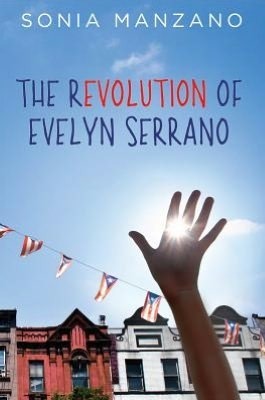
One of America’s most influential Hispanics -- 'Maria' on Sesame Street -- presents a powerful novel set in New York's El Barrio in 1969 There are two secrets Evelyn Serrano is keeping from her Mami and Papo? her true feelings about growing up in her Spanish Harlem neighborhood, and her attitude about Abuela, her sassy grandmother who's come from Puerto Rico to live with them. Then, like an urgent ticking clock, events erupt that change everything. The Young Lords, a Puerto Rican activist group, dump garbage in the street and set it on fire, igniting a powerful protest. When Abuela steps in to take charge, Evelyn is thrust into the action. Tempers flare, loyalties are tested. Through it all, Evelyn learns important truths about her Latino heritage and the history makers who shaped a nation. Infused with actual news accounts from the time period, Sonia Manzano has crafted a gripping work of fiction based on her own life growing up during a fiery, unforgettable time in America, when young Latinos took control of their destinies.
Sonia Manzano (born June 12, 1950) is an American actress and writer. She is best known for playing Maria on Sesame Street from 1971 until her retirement in 2015.
Manzano was born in New York City and was raised in South Bronx. Her parents moved to New York from Puerto Rico. Manzano attended the High School of Performing Arts, where she began her acting career. She attended Carnegie Mellon University in Pittsburgh on a scholarship.
In her junior year, she came to New York to star in the original production of the off-Broadway show GodspellManzano joined the production of Sesame Street in 1971, where she eventually began writing scripts for the series. On June 29, 2015, it was announced that Manzano would be retiring from the show after 44 years.
She has performed on the New York stage, in the critically acclaimed theatre pieces The Vagina Monologues and The Exonerated. She has written for the Peabody Award-winning children's series, Little Bill, and has written a parenting column for the Sesame Workshop web site called "Talking Outloud".
In 1979, the Supersisters trading card set was produced and distributed; one of the cards featured Manzano's name and picture.
Her children's book No Dogs Allowed, published by Simon & Schuster Children's Publishing in 2004, is one of five books selected by the General Mills initiative "Spoonfuls of Stories". As part of that effort, Manzano is working with General Mills and its nonprofit partner, First Book, to encourage children to read and to help children across the United States gain access to books. The book has been adapted as a stage play. She is also the author of The Revolution of Evelyn Serrano (2014).
She has served on the March of Dimes Board; the board of the George Foster Peabody Awards; and the board of a New York City theatrical institution, Symphony Space. She is a member of the board of advisors of the Project Sunshine Book Club. She was featured in the Learning Leaders (volunteers helping students succeed) poster, designed to encourage reading in NYC public schools.
Manzano was nominated twice for an Emmy Award as Outstanding Performer in a Children's Series. As a writer for Sesame Street, Manzano won 15 Emmy Awards. In 2004, she was inducted into the Bronx Hall of Fame.
Manzano has received awards from the Association of Hispanic Arts, the Congressional Hispanic Caucus, the Committee for Hispanic Children and Families, the Hispanic Heritage Award for Education in 2003, and the "Groundbreaking Latina Lifetime Achievement" award from the National Association of Latina Leaders in 2005. She received a Doctor of Fine Arts degree from University of Notre Dame in 2005. As in Ms. Manzano's case, a D.F.A. is typically an honorary degree conferred to someone who has made a significant contribution to society in the arts. The Dream Big Initiative of the Bronx Children's Museum honored Manzano in 2014.
Manzano resides in the Upper West Side of Manhattan with her husband Richard Reagan, whom she married in 1986, and their daughter Gabriella.
Before I begin my review of this fiction book which has many true elements contained within it, I want to tell the world “Yo soy Puertorriqueña” (I am Puerto Rican), and I was more proud of my heritage than ever after reading Sonia Manzano’s book.
On the one hand, The Revolution of Evelyn Serrano is an incredibly engaging, thoughtful novel featuring a young girl learning about her own history.
Rosa María Evelyn del Carmen Serrano is the daughter of Puerto Ricans living in El Barrio, the Spanish Harlem neighbourhood in the 60s, at that point in time when change is coming – when the Young Lords, a Puerto Rican activist group start protesting about the living conditions in El Barrio.
The novel follows the historical events from Evelyn’s point of view and depicts her own growth in parallel. Her point of view is coloured by her own experience as a young Latina living in a poor, forgotten neighbourhood in America, by her own relationship with a traditional, high-handed and reactionary mother and her increasing awareness of political and social issues surrounding their lives. The latter is motivated by the driving force that is her revolutionary activist grandmother who recently came to live with them. It is through her grandmother that Evelyn (not another Rosa, not another Maria, not another Carmen) learns about Puerto Rico’s rich and sad history of oppression and thwarted revolution and the roles that her own family has played in its goriest moment.
This is an extremely powerful story, that captures important historical moments and how they affect people both as individuals and as members of a community. It beautifully portrays the three main female characters of Evelyn (not another Rosa, not another Maria, not another Carmen) , her mother and grandmother and shows the segregation of ideals within one family and how it affects their bonds.
I specially loved Evelyn’s (not another Rosa, not another Maria, not another Carmen) progressive awareness that involved not only her active role within her own family (she starts off complaining that her mother always takes on the role of the slave by doing everything around the house but Evelyn herself never helps around either) but also her place as a young Latina girl (because there is also gender roles discussion here) who is proud of her heritage and history and wishes to contribute to that revolutionary moment in time. It’s a potent story, this one: Evelyn (yes another Rosa, yes another Maria, yes another Carmen) and her family’s story as a quiet microcosm that reflects the bigger chaotic picture.
On the other hand, The Revolution of Evelyn Serrano is extremely condensed and its impact somewhat lessened by the fact there is very little in terms of actual development. It actually reads very much like a summary, jumping from point to point without the important connective tissue to turn this into a more cohesive whole. This is all the more glaringly obvious when secondary characters and plotlines are dropped like hot potatoes (Evelyn’s work at the department store comes to mind or one of her friends’ criminal activities) and Evelyn’s r-evolution happens at the speed of light.
I wonder if this and the fairly didactic tone the narrative often takes stems from the fact that the book’s intended audience are middle graders? I always feel frustrated when potentially awesome stories like these are dumbed-down especially when I think about other similar stories where the same cannot be said. In many ways, in terms of intended audience, historical and thematic core, The Revolution of Evelyn Serrano reminded me of One Crazy Summer by Rita Williams-Garcia, Moon Over Manifest by Clare Vanderpool and Flygirl by Sherri L Smith but those books succeeded in the way they did not pander to their readers and therefore for me, becoming the better stories.
Ultimately though, I appreciated and enjoyed reading this book very much but I cannot really say that those two hands are clapping enthusiastically…
"When we think of revolutions, we think of big public displays of violence, but revolutions come in all shapes and sizes. I've always been interested in people's internal revolutions because those are the ones that govern their everyday actions and, by progression, a community's life."
—The Revolution of Evelyn Serrano, P. 211
Before attending a promotional author event for this book, I must admit I had never heard of The Revolution of Evelyn Serrano. I had heard of author Sonia Manzano, however. When she first walked in the room at the book signing and I heard her conversing with the store employees, the sound of her voice immediately struck chords I never expected. Hearing her speak was as familiar and comforting as hearing the voice of my own mother, and that is no exaggeration. Sonia Manzano had been a presence on Sesame Street for nearly four decades by the time The Revolution of Evelyn Serrano first saw publication, so I'm just one of millions who have spent countless hours watching Maria ask questions and help solve problems as part of one of the most successful children's television programs in American history. Though I was not actually in attendance at this particular author event to meet Sonia Manzano (I was there for Jacqueline Woodson), there was little question in my mind after the event that procuring a copy of her first novel and experiencing it for myself should be a high priority. This is how I came to choose The Revolution of Evelyn Serrano as my newest read, and I am so glad I did.
"Who can tell what is the very beginning of a storm? Not a weather storm but a storm of ideas that grows like a flame."
—The Revolution of Evelyn Serrano, P. 101
In 1969 Spanish Harlem, which may not coincidentally be the year Sesame Street debuted on the air, Evelyn Serrano is standing on one side of a chasm of social revolution, a chasm she and most other Puerto Rican immigrants in her neighborhood do not yet acknowledge. Being an American by birth and a foreigner by culture is a tough situation; what is one to do when one's natural foreign allegiances aren't officially regarded by one's government? For Puerto Rican New Yorkers like Evelyn and many of her neighbors, the land of their ancestry is American, yet it also is not, a clash of cultural and political connections that leave most Puerto Ricans wondering how they should think of themselves. Is Puerto Rico just another United States territory, or can it be considered a nation with its own separate background and patriotic loyalty, set apart from the rest of the U.S. land holdings, a country capable of making its own luck and generating high standing on the world stage? For the Young Lords, an assertive social group whose presence in Harlem has been growing right under the noses of its citizens, definitive answers to questions about Puerto Rico's independence may be far away, but the way the territory's immigrants to the United States are treated is not. The Young Lords are tired of slum living being pushed upon them by lackadaisical government management, and low-priority status for the Puerto Rican community with everyone from garbage pickup services to food vendors. If the transplanted Puerto Ricans in Spanish Harlem aren't going to be freely given the same rights as other naturalized American citizens, then it's time to push a little harder against a system perfectly willing to leave some of its people out in the dust.
But how is Evelyn Serrano to know the most determined supporter of the upstart Young Lords may be her own grandmother, her abuela? Coming to town in a rush of introductions and mighty intentions, Abuela quickly becomes a fixture in Evelyn's life, though Evelyn hardly knows her. Abuela's presence at this juncture in history is no accident, as Evelyn soon finds out when the Young Lords boldly declare their presence in Harlem and set themselves up to stay around for some time. Abuela is a vocal proponent of the Young Lords, while Evelyn's parents resent what they see as heedless youth stirring up trouble where no one needs it. But what does Evelyn think about the unexpected revolution going on in her city? Is there some way for her to reconcile her parents' ideas with the strong convictions held by her abuela, and be able to take part in the revolution brought about by the Young Lords in agreement with the quietly rising song of her own beliefs? As the styling of the book's title suggests, 1969 is more than just a year of witnessing public revolution for Evelyn Serrano, or even dipping her feet into the waters to give them a temperature test and see how far in she is willing to wade. This summer is also one of Evelyn's personal evolution, learning the limitations of her own desire to push back against the status quo even when the results may be frightening and dangerous. How much risk is worth taking when one's life as it stands is okay, even if it could be better? Even if it should be better? And what if by challenging the way things are, one ends up losing one's life in the violence that so often comes during revolution? The balance is always a precarious one, but every person alive must attempt to strike it well, and be prepared to deal with the consequences of not doing so should their balance point not hold. It's a daunting subject, one Evelyn Serrano is just beginning to understand as she attempts to strike that balance in this book. But if she listens to her instincts and the experienced words of those around her who mean well and wish only to guide her life in the best direction, Evelyn will come out on top eventually. You'll see.
Besides the well-told story of a fictional family operating within a realistic historical setting, the character of Angel was a highlight of this book for me. While I wish we had come to know him a lot better, his presence is the effervescing element in The Revolution of Evelyn Serrano, the bubbly viscera that tickles one's nose wherever he pops up in the narrative. Angel is at all times a light, happy moment waiting to happen, a sparkling rain shower on a hot summer day in the urban jungle, the sweetness of ice cream delivered by the big white truck driving up and down every city street as it peddles its delicious wares. Perhaps the strongest feeling I had upon finishing The Revolution of Evelyn Serrano was the sense that I wish we had more time to spend with Angel. His contributions to Evelyn's life in this book, brief as they may be, are some of the most appealing looks we get at what Evelyn is really like and why it is worth spending time in her story, and I will miss Angel. If Sonia Manzano is capable of creating characters like Angel on a reasonably consistent basis, then she certainly is capable of doing some special things as a writer.
While seeing Sonia Manzano in person was a moment of Wow for me primarily because I have watched her on Sesame Street for so long, her first attempt at a novel holds up well as a separate entity from the author's distinguished television career, and I would have liked The Revolution of Evelyn Serrano regardless of who wrote it. This book may draw comparison to Rita Williams-Garcia's Newbery Honoree One Crazy Summer, but the two authors have significantly different storytelling styles, both worthy of being enjoyed for what they have to offer. I would recommend keeping watch for other titles by Sonia Manzano; I know I, for one, would definitely be interested in reading more.
It is 1969, and fourteen-year-old Evelyn Serrano has decided to forgo her first name, Rosa, because it is such a common name in her Spanish Harlem neighborhood, filled with the languages, foods, and cultures of immigrants. Evelyn herself speaks little Spanish although she can understand it when it is spoken to her. When her grandmother temporarily moves in with Evelyn's family, she at first resents her presence and the tension that builds between her own mother and grandmother because of their past. The passages describing her grandmother's almost cartoonish appearance and painstaking care when grooming herself are quite funny, especially when Evelyn contrasts her Abuela's looks with her mother's. Slowly, as Evelyn learns about her own family and the Ponce Massacre in Puerto Rico and as she watches events unfold in her own neighborhood, she is drawn into a protest movement involving her church. I was impressed with how the author depicts her characters, especially, Evelyn, who is aware of inequities in the world around her, symbolized by the rotting garbage that fills the neighborhood streets, but feels powerless to do anything to change conditions. The author also portrays the Young Lords and Abuela in a mostly positive light while making clear that Abuela herself is not perfect and has sacrificed her family for her cause. And yet, clearly, someone has to speak out, and someone has to lead the movement for change. Reading this title reminded me in some respects of One Crazy Summer because both contain strong females who do not accept the traditional roles expected of women during those times and both books cover an aspect of the Civil Rights movement, like the Stonewall Riots, that is rarely the subject of books for middle graders or teens. Readers will become keenly aware that real men, women, and teens were involved in making the changes that are now part of this country's history. Mami;s over-protectiveness toward Evelyn and her own yearning for a connection with her mother are easy to understand as bits of the women's pasts are revealed. One of the best parts of the book is how so many characters change in small and large ways, just as this nation's changes took less or more time, depending on the location. While some of the dialogue is clunky and not everything is explained about some of the important characters, the rest of this novel is strong enough to make it worth reading and pondering. For me, it raises some important questions: How do you know when it's time to take a stand? When do you know that you've had enough, and something needs to change? Are the days of protests that make a difference and force change over? Because this book is still with me, tickling my conscience, and making me wonder why so many of us accept the status quo, it will surely prompt good classroom discussions.
سال 1969 و اولین سرانو هم 14 سالشه. نمیتونه اسپانیایی صحبت کنه ولی اگه باهاش صحبت کنن متوجه میشه. ابتدای داستان رابطه ی پر تنش او و مادر و مادربزرگش رو بیان میکنه. رابطه ای خانوادگی تلخه و خانواده ش ازش سو استفاده میکنن. کم کم متوجه حق و حقوق خودش میشه و اعتراض میکنه. اعتراضش گسترش پیدا میکنه و اما احساس میکنه که نمیتونه شرایط رو تغییر بده. کتاب خوبی بود، نشون میداد تغییرات بزرگ در تاریخ یه کشور چجوری اتفاق افتادن. چطور مردم تغییر رو از خودشون شروع کردن و به جاهای بزرگ رسوندنش . نثرش خوب و ساده بود و متن هم با سرعت مناسبی جلو میرفت.
In 1969, Evelyn Serrano was living with her mom and stepfather in New York's Puerto Rican neighborhood (El Barrio). She doesn't really like her neighborhood or her real name (Rosa---Evelyn is one of her middle names and what she's chosen to go by). Then her grandmother moves in and an activist group called the Young Lords begin protesting. Evelyn is fascinated by both---Abuela has these amazing stories and the Young Lords really do just want to make things better in the neighborhood. And over the course of the novel, Evelyn learns about her heritage and culture.
At BEA's Bloggercon, I ended up having breakfast at Sonia Manzano's table and this book ended up in my "swag bag." That's incredibly fortunate, because without those two things, this book wouldn't even have been on my radar. (And honestly, at breakfast I was just like, "I am drinking horrible coffee with Maria from Sesame Street. Maria! From SESAME STREET! I am at her table!")
And this is an amazing, amazing book. While it's incredibly specific to a culture, time and place, it's also very universal. I'm very fortunate in that my racial background is very well represented. I know all about my history. But if you're a minority, it becomes a lot harder (especially, I would imagine, if you were Puerto Rican in the late 1960s).
While I couldn't relate to the initial desire to assimilate (it's not a coincidence that Evelyn goes by that and not Rosa), I do understand the eventual fascination with your culture and desire to learn more. As a lesbian, it's fascinating to know what those before me had to deal with. Evelyn had the privilege of being a trailblazer (in a small but important way); I have the privilege of getting to reap the benefits.
I thoroughly enjoyed this book and hope to read more from Sonia Manzano. I especially want a sequel. The world needs more Evelyn. :)
I was drawn to read this book because of the author's work on Sesame Street, but the book stands up in its own right. It's a wonderful Bildungsroman. Evelyn Serrano is a rebellious teenager when she gets caught up in the Civil Rights movement of summer 1969. In the process, she gets to know her grandmother, develops a much better relationship with her mother, and learns to be proud of her Puerto Rican ancestry.
I was completely drawn into this story. Evelyn was a very likable character that students could easily relate to. The story of the Young Lords and the Puerto Rican revolution were new to me and full of action that drove the story forward. The book was a shorter, quicker read that would be great for middle school students.
This book is about a Puerto Rican neighborhood in New York in 1969. It is mainly about the activism that occurred there with the group called the Young Lords. This group set fire to the overflowing garbage cans on the streets to raise awareness that there was not regular garbage pickup. Meanwhile, the main character, Evelyn (who is going by Evelyn because she wants to shorten her Hispanic name of Rosa Maria Evelyn del Carmen Serrano) deals with teen strife, learning to respect and appreciate her mother, and dealing with her crazy grandma. While it includes real events that happened in the time period as well as real events that happened in the past in Puerto Rico, I felt that it left a lot to be desired. I was left confused as to how exactly the Young Lords were making any progress or succeeding at being activists for the Puerto Ricans living in "el barrio" as they called the neighborhood. I think that especially for young adults reading this book (probably 4th grade and up), they would need some background knowledge on activism. The book does mention that different news reporters are at the different events and a couple times mention that their neighborhood makes the news, but they never directly say why that is important. It also never seems to go beyond that either. Something that really bothered me while reading the book is that the insertion of Spanish words and phrases was, for the most part, uncomfortable or repetitive. For example, a character would say something in Spanish and then repeat the same exact thing in English. For readers who know Spanish, it gets aggravating to read the same thing twice or to hear an awkward way of inserting Spanish into sentences that seems forced and unnatural. I enjoyed the way that Evelyn grows throughout the book, and there are strong character connections. Overall, I do not know if I recommend this book, but perhaps some young adult readers would relate to Evelyn's teen angst and her desire to see where she fits in to her own history while becoming comfortable in her own skin and figuring out who she is.
It’s the summer of 1969 and garbage is piling up on the streets of Spanish Harlem. Evelyn, who has changed her name from Rosa, has a new job at the Five and Dime. It’s a lot better than her job in the family’s bodega. But that summer is not going to be a normal summer at all. First, Evelyn’s grandmother arrives, complete with large amounts of stylish clothes, makeup and books in Spanish. If Evelyn thought she didn’t get along with her mother, that’s doubly true of her mother and her grandmother who seem to be opposites on everything. One big thing that they disagree about is the Young Lords, young college students who are trying to get the Puerto Ricans in Spanish Harlem to stand up for themselves. They want to find space for a daycare, a place to serve breakfasts to youth, and a place to hand out clothing. Evelyn finds herself right in the middle of a revolution, one that her own family can’t agree about.
Manzano, the actress who played Maria on Sesame Street, has followed up her successful picture book with a book for older readers. Ideal for middle schoolers, this book addresses family issues that can be far more complicated than just not agreeing about food and clothes. It also takes on a history that not many readers may know about, a peaceful revolution right in New York City.
Manzano’s writing is very straight-forward, rarely heading into figurative writing or symbolism. When she does work with imagery, it is very effective, making one hope that in her next books she writes with more depth. That is not to say that this book is not effective as it is written. But it remains more factual and solid.
A strong addition to any collection, this historical fiction novel will both instruct about history and inspire activism. Appropriate for ages 10-12.
This telling story is an award winning book which depicts the story of Evelyn Serrano, a young girl whose name used to be Rosa, and her family's life in a traditional Spanish neighborhood. Reading this book online was a great experience and due to the fact that there weren't any pictures, it seemed as though there wasn't a difference between the print version and the ebook version. When her neighborhood begins to experience some changes, and her grandmother comes to visit, Evelyn is forced to choose between her mother's wishes and her grandmother's beliefs. Evelyn, who has always been a unique person is put in an awkward position. Throughout this difficult journey, Evelyn learns about her family and the reason why certain relationships are the way they are. Set in the late 1960's, this book is a wonderful story that highlights the events and struggles that Spanish Americans went through during this time period. This book is a wonderful book to have in any classroom library grades 4 and above. The author does a wonderful job of including traditional Spanish words and phrases, as well as translating them so non-Spanish speakers understand the content. Due to the historical content, and the way it is presented, this book should be used in upper elementary classrooms. It is recommended that this book be read with students in grades 4 and 5 because of the need for teacher scaffolding.
Evelyn's grandmother comes to visit and Evelyn gets swept up in her grandmother and mother's feud. Her grandmother was a revolutionary in Puerto Rico and her mother was frequently left behind, so there are a lot of hurt feelings. Then all three of them get swept into a demonstration by the Young Lords, a group that was trying to make things better for Puerto Rican's in the 1960s.
This book is a quick read that is packed with historical details and information. The author clearly did her research. I loved watching Evelyn and her mother grow and change into stronger people with a better sense of community and I was glad that Evelyn finally understood the truth about her abuela. Everything was shown not told. I enjoyed learning about the revolution in East Harlem and taking over the church and I loved the author's note at the end explaining what parts were true and weren't and explaining how she rearranged things for her own convenience. She also gave one of the most thorough bibliographies I've seen in a long time.
The only thing that drove me nuts was the constant translation, however I do speak spanish and feel like other nonfluent readers probably appreciate the information.
Set in East Harlem, the book tells the true events surrounding the 11 day occupation of the First Spanish Methodist Church in December 1969. The Young Lords, a Puerto Rican nationalist and civil rights group tried to get the church to let them use space for a day care and breakfast program.
Amid clashes between the Young Lords and the police, Evelyn is growing up and learning about her family's history and finding her own political voice. Caught between her traditional mother and her anti-authoritarian, freedom-fighter grandma, Evelyn learns that she has a bit of both women in her personality.
This thoughtful book is written by the woman who played "Maria" on Sesame Street; she will be remembered by many parents and YA librarians. She also was becoming politically aware at that time, and the novel rings true.
Overall the book is well-written and has memorable characters--particularly the grandma. Evelyn, the 14-year-old protagonist, is very authentic as she thinks as much about the handsome young revolutionaries as she thinks about their political message. Historical fiction can be a tough sell, but this is recommended for all age levels. Put it in the hands of political teens and those interested in their Puerto Rican heritage.
The Revolution of Evelyn Serrano offers a glimpse into the Puerto Rican immigrant experience. Evelyn is a teenage girl living in El Barrio,the East Harlem slum for the majority of New York's Puerto Rican population, in 1969. Little to no trash sanitation, poor housing and poverty make this a difficult place to grow up. Told through Evelyn's eyes, readers learn about the Nationalist movement in Puerto Rico and the Ponce Massacre, the Young Lord's peaceful protesting in El Barrio to improve living conditions and the difficulties of being the granddaughter to a social activist.
The main character is particularly cruel to her mother and while this is not unusual for teenage daughters, Evelyn unfortunately isn't given enough depth of personality to understand her attitude. Were the book primarily about Evelyn's Abuela (grandmother), the story may have felt more dynamic and interesting due to her larger than life point of view. As it was, Evelyn's sour outlook is a detractor from the historical aspects of the book. Recommended as a good option for multi-cultural audiences despite the quality of the writing which is choppy. (I so wanted to like this one! How can you criticize Maria from Sesame Street?)
I can't remember where I heard of this book, but I put it on my to-read list because it was written by "Maria" from Sesame Street. That great TV institution started when I was a toddler so I grew up with it at its very newest and youngest, and I loved Maria right along with my love for Captain Kangaroo.
This was a wonderful story of a family of women seen through the eyes of the youngest of the three generations and set during a fascinating time in history. It highlights a lesser-known event in the revolutionary late-60s and fills it with vivid, interesting characters.
One thing I really appreciated about this book is that there is no romance through which Evelyn finds herself. This is entirely a coming-of-age story about a young woman figuring out her world and her family through her own thoughts and observations.
It never fails to surprise me how some of the books not getting big buzz turn out to be hidden gems. The Revolution Of Evelyn Serrano by Sonia Manzano was a book that I picked up on a whim at the Book Blogger Convention. None of the other books we could choose from for our grab bags looked interesting to me, and so not know anything about the book except that the word ‘revolution’ is in the title and it’s published by Scholastic, I put it in my bag. Friends, apparently I am a GREAT decision maker under the pressure of a line, because I ended up really liking The Revolution Of Evelyn Serrano. Read the rest of my review here link goes live 10/11/12
Audience: intermediate Genre: historical fiction Questions Remembering- Evelyn has a new job. Where was that job? Where did her mother want her to work? Understanding- Describe what the Young Lords did the first time they went to the church. Applying- What would you have done if you had to choose to sit with your mother one one side of the church or your grandmother on the other side? Analyzing - Why is the title written with the letters "evolution" a different color than the rest of the title? Why is this a significant part of the story? Evaluating- What is your opinion of Evelyn's grandmother, Abuela, and why do you feel that way? Creating - Rewrite the days of the church take-over form Mami's point of view.
Audience: Intermediate, Teen, and Young adult Genre: Historical Fiction Chapter Book
1. Remembering-What is Evelyn's full name and why did she shorten it to just Evelyn? 2. Understanding-Retell the story from Angel's point of view. 3. Applying-How is the population of South Omaha similar to the population of Spanish Harlem? 4. Analyzing-Compare the two mothering styles of Evelyn's mother and her Grandmother. 5. Evaluating-Justify Abuela's actions of not going to the hospital with Evelyn and her mother. 6. Creating-What do you predict the relationship will be like going forward from the end of the book between Evelyn and her mother and grandmother?
A good young adult, maybe even younger, story featuring Puerto Ricans in the late 1960s as they join the political activism of that generation. Interesting insights into the relationship among three generations of one family in Spanish Harlem. Some readers may not find it challenging enough, but I like that many younger readers will enjoy, and it may even send some toward greater research into the history and culture.
A fun and educational book. I had never heard of The Young Lords activist group. I would love to know more about their community work, also about Ponce’s massacre. Unbelievable, public school teaches Puerto Rico’s History for 12 years, they never mentioned these historical facts. Puerto Rico’s history books must be rewritten.
The Young Lords were right. Making us hate the way we looked was a trick people in power played on us.
Written by Sonia Manzano (of Maria from Sesame Street fame), this YA novel tells the story of Evelyn Serrano, a young Puerto Rican girl living in 1969 East Harlem. I found this a delightful and gently educational look at a time in history I have little knowledge of. A nice balance of suspense and drama.
I read a chunk of this book. It was fairly interesting, but I put it down at some point and had to flip back through it to figure out if I finished it or not. I like the funky grandma, but the rest of the characters don't do a lot for me. It felt like a book where the message was more important then telling a good story.
It was good. Very quick. But definitely written at a younger level, so it felt more appropriate to that specific age group than an adult reader. At times it felt too simplified and I wanted more depth and details.
Love Sonia Manzano though. I highly recommend her memoir Becoming Maria.
Review to come. Fans of ONE CRAZY SUMMER will not want to miss this non-fiction based account of the Young Lords and the East Harlem Garbage Offensive of 1969.