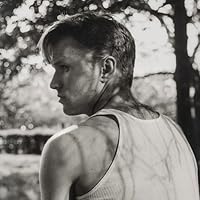
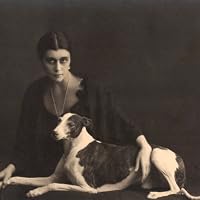
The 120 full-page photographs in this book depict people at country fairs, rodeos, mining camps, drilling sites, and even a slaughterhouse - men and women of the American West who work at hard, everyday jobs. Richard Avedon introduces the volume with an essay on his working method and portrait philosophy, and Laura Wilson, who accompanied Avedon and his team, provides a journal of their travels, between 1979 and 1984.
People note fashion photography and stark portraits of Richard Avedon, an American.
Richard Avedon captured ideals of celebrity and beauty in the 20th and early 21st centuries to helped to establish a contemporary art form. Avedon developed a distinct, iconic style. While his contemporaries focused on single moments or composed formal images, his lighting and minimalist white backdrops drew the viewer to the intimate, emotive power of the expression of the subject.
From 1945, he worked and revolutionized the craft even as he honed his aesthetic to 1965. He worked in magazines from Harper's Bazaar and Vogue to Life and Look. Later, he moved into journalism and the art world. His subjects included pop stars, models, musicians, writers, artists, workers, political activists, soldiers, victims of Vietnam War, politicians, and his family.
Curator Paul Roth observes: “In an Avedon portrait, the face maps an intersection: It is a place where the world outside the photograph meets the world inside the mind.”
The Metropolitan Museum of Art in New York presented solo exhibitions in 1978 and 2002. The Whitney Museum of Art in New York in 1994 mounted major retrospective. The Louisiana Museum of Modern Art, Humblebaek, Denmark, mounted his works in 2007, and the exhibit traveled to Milan, Paris, Berlin, Amsterdam, and San Francisco through 2009.
I had read this when it first came out, then again recently when it received repeated mention in Larry McMurtry books.
It's an oddity in that Avedon was known chiefly as a photographer of upper class society or as a fashion photographer for the magazines so predominant then. This project takes place in the American west from a period of 1979-1985. An over-sized, heavy weight book that I found difficult to maneuver with a broken arm, but since it was a special order library book, I wanted to get through it so I could return it and not have to return to it at a later date.
Avedon went through America's West, including Southwest and Northwest, and putting out white photographic paper, he shot in shade, not sun, to avoid any eye diverting shadows. It seems any beauty that existed ended around age 12, and there were many worn into the ground 30 and 40-year olds wearing a lot of denim and the so popular polyester of the 1970's.
He would visit small towns and their parades, rodeos, truck stops, and slaughter houses. You could see inbreeding and asymetrical faces that you rarely see anymore in this age of plastic surgeries. The men in their bloodied work clothes at the slaughterhouses, holding bloody cow or sheep heads, had dead eyes like serial killers, and if you read the volume of death going on in there, per day, you can easily understand why.
I told my husband I felt like everyone in the book was dead, even the young. That I was looking at dead people. He had also viewed the book and said, "Put down that book of ghosts." Avedon did not photograph these people with love. His eyes were as cruel as those of men in a slaughterhouse.
I had no idea that Richard Avedon was the photographer responsible for the iconic psychedelic Beatles poster - that had hung in my step-daughter's room for years. Not surprising, as he has an uncanny ability to create pieces that mesmerize the viewer. This title showcases "One hundred and eighty-nine cities and towns in all. Seven hundred and fifty-two people photographed. The first portrait was taken on March 10, 1979, in Sweetwater, Texas. The last - October 28, 1984, at the State Fair of Texas." The end of the book contains background information on some of the subjects and major issues in the area at that time. Some of the topics discussed here are the "Rattlesnake Round-Up", coal mining, issues related to the Native American population, and much more. All serve to present a snapshot of the culture of the "American West."
Excellent folio book of captivating portraits. Near the end of the book, there are some jarring photographs of slaughtered animals that don't seem to fit in the book. But the portraits are intriguing, and the background stories at the end of the book are interesting.
I've seen many of Avedon's portraits from the "American West," as they are his signature pieces, but seeing all of the portraits collected together was a very powerful experience. So many of the portraits are seriouis and borderline dour that the collection has a slight negative tinge, but I think that this is kind of the point; the "West" in this period of time is going through a certain amount of recession and many are going through struggles with the transition from the prosperous past to an empty future. I'm not sure what the effect of Avedon's collection was on the general public when it came to a public viewing, but I can imagine that the impact was strong.
Very large photos (maybe 12" by 18" inches?) of run-of-the-mill people living the "the west" in the late 70s/early 80s. Simple portraits, great details. Apparently when the photos were first shown, there was general hue and cry of outrage that "those people" were not the true westerners. But they are and he captured them well: drifters, carnies, ranchers, coal miners, farmers, teenagers, mental patients, waitresses, what have you.
I was lucky enough to see an exhibit of his photography. All his prints were massive and it was startling to see them so large and up close. I believe he was a fashion photographer by profession, but was commissioned to travel across America taking these portraits.
Fantastic large format book. Photographs take up most of the page with small captions explaining subjects name, profession and date taken. Small sections explain the thoughts and process behind the work.
Thank you to my wonderful husband for buying me this beautiful book for xmas. Avedon's images are just amazing. The texture and detail that you see in these images is unbelieveable.