

What do you think?

Vault of the Ages
Five hundred years from now, rival groups battle for the contents of a vault containing remnants of 20th century civilization which could guide their society out of its primitive state.
160 pages, Paperback
First published January 1, 1952
About the author
Poul Anderson
1,660 books1,141 followersPseudonym A. A. Craig, Michael Karageorge, Winston P. Sanders, P. A. Kingsley.
Poul William Anderson was an American science fiction author who began his career during one of the Golden Ages of the genre and continued to write and remain popular into the 21st century. Anderson also authored several works of fantasy, historical novels, and a prodigious number of short stories. He received numerous awards for his writing, including seven Hugo Awards and three Nebula Awards.
Anderson received a degree in physics from the University of Minnesota in 1948. He married Karen Kruse in 1953. They had one daughter, Astrid, who is married to science fiction author Greg Bear. Anderson was the sixth President of Science Fiction and Fantasy Writers of America, taking office in 1972. He was a member of the Swordsmen and Sorcerers' Guild of America, a loose-knit group of Heroic Fantasy authors founded in the 1960s, some of whose works were anthologized in Lin Carter's Flashing Swords! anthologies. He was a founding member of the Society for Creative Anachronism. Robert A. Heinlein dedicated his 1985 novel The Cat Who Walks Through Walls to Anderson and eight of the other members of the Citizens' Advisory Council on National Space Policy.[2][3]
Poul Anderson died of cancer on July 31, 2001, after a month in the hospital. Several of his novels were published posthumously.
Series:
* Time Patrol
* Psychotechnic League
* Trygve Yamamura
* Harvest of Stars
* King of Ys
* Last Viking
* Hoka
* Future history of the Polesotechnic League
* Flandry
Poul William Anderson was an American science fiction author who began his career during one of the Golden Ages of the genre and continued to write and remain popular into the 21st century. Anderson also authored several works of fantasy, historical novels, and a prodigious number of short stories. He received numerous awards for his writing, including seven Hugo Awards and three Nebula Awards.
Anderson received a degree in physics from the University of Minnesota in 1948. He married Karen Kruse in 1953. They had one daughter, Astrid, who is married to science fiction author Greg Bear. Anderson was the sixth President of Science Fiction and Fantasy Writers of America, taking office in 1972. He was a member of the Swordsmen and Sorcerers' Guild of America, a loose-knit group of Heroic Fantasy authors founded in the 1960s, some of whose works were anthologized in Lin Carter's Flashing Swords! anthologies. He was a founding member of the Society for Creative Anachronism. Robert A. Heinlein dedicated his 1985 novel The Cat Who Walks Through Walls to Anderson and eight of the other members of the Citizens' Advisory Council on National Space Policy.[2][3]
Poul Anderson died of cancer on July 31, 2001, after a month in the hospital. Several of his novels were published posthumously.
Series:
* Time Patrol
* Psychotechnic League
* Trygve Yamamura
* Harvest of Stars
* King of Ys
* Last Viking
* Hoka
* Future history of the Polesotechnic League
* Flandry
Ratings & Reviews
Friends & Following
Create a free account to discover what your friends think of this book!
Community Reviews
Displaying 1 - 30 of 32 reviews

May 4, 2014
Vault of the Ages was one of Poul Anderson’s earliest novels, published in 1952 when he was only 26.
Anderson’s works generally fit into one of three categories: science fiction, time travel, or sword and sorcery fantasy. This one however does not fit so neatly in any one. Similar to his The Winter of the World published in 1976, this is set 500 years after an atomic catastrophe and may have influenced Orson Scott Card’s post-apocalyptic anthology The Folk of the Fringe. This demonstrates his great ability, even as a young writer, and in 1952 (!) to create speculative fiction, blurring the lines between science fiction, fantasy and time travel, creating a post-apocalyptic story.
And this begs the question about the distinction between post-apocalyptic and dystopian. Merriam Webster defines dystopian as “an imaginary place where people lead dehumanized and often fearful lives”. Whereas post-apocalyptic is defined by Wikipedia as “Post-apocalyptic fiction is set in a world or civilization after … a disaster. The time frame may be immediately after the catastrophe, focusing on the travails or psychology of survivors, or considerably later, often including the theme that the existence of pre-catastrophe civilization has been forgotten (or mythologized). Post-apocalyptic stories often take place in a non-technological future world, or a world where only scattered elements of technology remain".
Finally, Anderson reveals an early example of one of the endearing qualities of his writing: the ability to objectively and sympathetically tell both sides of a conflict.
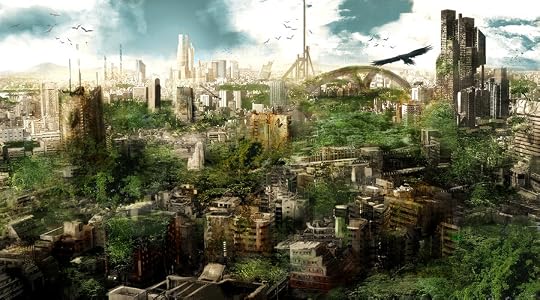
Anderson’s works generally fit into one of three categories: science fiction, time travel, or sword and sorcery fantasy. This one however does not fit so neatly in any one. Similar to his The Winter of the World published in 1976, this is set 500 years after an atomic catastrophe and may have influenced Orson Scott Card’s post-apocalyptic anthology The Folk of the Fringe. This demonstrates his great ability, even as a young writer, and in 1952 (!) to create speculative fiction, blurring the lines between science fiction, fantasy and time travel, creating a post-apocalyptic story.
And this begs the question about the distinction between post-apocalyptic and dystopian. Merriam Webster defines dystopian as “an imaginary place where people lead dehumanized and often fearful lives”. Whereas post-apocalyptic is defined by Wikipedia as “Post-apocalyptic fiction is set in a world or civilization after … a disaster. The time frame may be immediately after the catastrophe, focusing on the travails or psychology of survivors, or considerably later, often including the theme that the existence of pre-catastrophe civilization has been forgotten (or mythologized). Post-apocalyptic stories often take place in a non-technological future world, or a world where only scattered elements of technology remain".
Finally, Anderson reveals an early example of one of the endearing qualities of his writing: the ability to objectively and sympathetically tell both sides of a conflict.

December 11, 2014
It's more easily defined by what it is not. It's not a quest story, although it begins that way. It's not high adventure, although there's rather a lot of fighting. It's not a bootstrap of technological civilization, although that is implied to be the outcome. It's not an exploration of a post-apocalyptic, vaguely Medieval culture, although there is such a culture and the fringes we see of it are pretty interesting.
It also isn't a bug-eyed mutant piece of business, notable for something written in 1952.
It is, despite action scenes that draw in the reader with in-narrative exclamations and questions, dispassionate and standoffish and I spent most of it wondering if Anderson was essentially cynical of the potential of the knowledge inside the Time Vault--the same human flaws and conflicts that brought about the Doom are the ones that result in raids and conquests and other squabbling post-apocalypse, and technology is an accelerant to the process--or if he was casting a gimlet eye on a hidebound and rigid culture that preferred to live in darkness and to attribute their misfortune and failure to the results of divine anger.
It also isn't a bug-eyed mutant piece of business, notable for something written in 1952.
It is, despite action scenes that draw in the reader with in-narrative exclamations and questions, dispassionate and standoffish and I spent most of it wondering if Anderson was essentially cynical of the potential of the knowledge inside the Time Vault--the same human flaws and conflicts that brought about the Doom are the ones that result in raids and conquests and other squabbling post-apocalypse, and technology is an accelerant to the process--or if he was casting a gimlet eye on a hidebound and rigid culture that preferred to live in darkness and to attribute their misfortune and failure to the results of divine anger.

October 8, 2025
Vault of the Ages was one of Anderson's first novels, published by Winston in 1952 as part of their line of juveniles. It's a post-apocalyptic adventure with a sword-and-sorcery flavor about rival groups trying to get control of a storehouse of technology from the far past in order to save their world. It's a fun, fast read.

November 6, 2023
Man’s remorseless and deadly foe was only—himself.
Humans in a post-apocalyptic future vie over possession and use of a trove of pre-apocalyptic resources. One of this SF/F master’s early novels: published in 1952. Young adult focus but well-developed and plotted. Protagonist is mid-twentieth century stereotypical but introspective enough to engage readers.
“So this is the excitement and glory of war! I’ll never believe a ballad singer again.”
Not-quite-four-stars but better than modern equivalents. Optimistic appraisal of humans surviving, competing, and occasionally cooperating. Numerous typographical errors—perhaps induced by OCR scanning; Open Road Media should invest in proofreaders.
“Peace is kept by the good will and strength of the peaceful.”
Humans in a post-apocalyptic future vie over possession and use of a trove of pre-apocalyptic resources. One of this SF/F master’s early novels: published in 1952. Young adult focus but well-developed and plotted. Protagonist is mid-twentieth century stereotypical but introspective enough to engage readers.
“So this is the excitement and glory of war! I’ll never believe a ballad singer again.”
Not-quite-four-stars but better than modern equivalents. Optimistic appraisal of humans surviving, competing, and occasionally cooperating. Numerous typographical errors—perhaps induced by OCR scanning; Open Road Media should invest in proofreaders.
“Peace is kept by the good will and strength of the peaceful.”

September 13, 2026
Enjoyable but fairly basic take on the "post-nuclear war society where science is forbidden" trope. Interestingly, this book came out 5 years before Miller's A CANTCILE FOR LEBOWITZ. However, this is Anderson's first novel and it was intended as a young adult (or, 'juvenile novel' as they were called at the time), so it's not nearly as in-depth as CANTICLE. That being said, it's a fun book and you can already see Anderson's fascination with Norse history* - the two main cultures in this book, the Dalesmen and the Lann, are both quite similar to medieval Scandinavia/Iceland. 3 stars.
*Poul Anderson is better know for his science fiction work, but has written a number of (very good) Norse historical fiction, like "The Last Viking" trilogy, and Norse-influenced fantasy, like THE BROKEN SWORD.
*Poul Anderson is better know for his science fiction work, but has written a number of (very good) Norse historical fiction, like "The Last Viking" trilogy, and Norse-influenced fantasy, like THE BROKEN SWORD.

May 3, 2009
This is very early Anderson and, when I read it, part of a series of s.f. books published by the John C. Winston Company. The Winston Science Fiction series formed one leg of my pre-teen and early teen reading and one of it's numbers, "Mists of Dawn" by Chad Oliver was the nucleus of one of my first away-from-home adventures, the which I'll not explore here.
"Vault..." is a post-apocalyptic scramble by a young hero (all of the Winston books featured heros in their improbable teens) to find a vault holding the collected technological 'wisdom' of the pre-disaster world. Needless to say, this young hero, Carl, son of the leader of his tribe, runs afoul of several kinds of bastards and quasi-religious fanatics bent on keeping science out of the hands of...well...everyone.
Sound like "Canticle for Leibowitz"? It's not. But it was just fine for a kid.
By the way, I collected the entire run of the Winston books during my kidhood. Two dollars back in the day, they now sell at various s.f., horror and fantasy cons for up to 400 bucks. I've come across a few in recent years and have replaced the ones long, long gone into the mists of my own dawn.
"Vault..." is a post-apocalyptic scramble by a young hero (all of the Winston books featured heros in their improbable teens) to find a vault holding the collected technological 'wisdom' of the pre-disaster world. Needless to say, this young hero, Carl, son of the leader of his tribe, runs afoul of several kinds of bastards and quasi-religious fanatics bent on keeping science out of the hands of...well...everyone.
Sound like "Canticle for Leibowitz"? It's not. But it was just fine for a kid.
By the way, I collected the entire run of the Winston books during my kidhood. Two dollars back in the day, they now sell at various s.f., horror and fantasy cons for up to 400 bucks. I've come across a few in recent years and have replaced the ones long, long gone into the mists of my own dawn.

September 13, 2019
The first novel by Poul Anderson reads more like a juvenile fantasy adventure than science fiction. Earth is post-apocalyptic where society has reverted back to barbarism and lacks any meaningful technology. One day, a time vault with precious artifacts is discovered in a ruined city. It has the ability to accelerate the restoration of humanity, but the chamber is considered taboo and demonic by most.
I enjoyed aspects of this novel. The concept of a primitive society discovering a time capsule is compelling, and the writing flowed fairly well. It was mostly bogged down by overly descriptive hand-to-hand combat scenes and, if not plot holes, certainly plot stupidities. Why would captors openly discuss important plans before a prisoner? Why would a besieging army send away a substantial force to track down a tiny band?
My rating was between two and three stars, but the foolish decisions utilized to advance plot took me out of the story.
I enjoyed aspects of this novel. The concept of a primitive society discovering a time capsule is compelling, and the writing flowed fairly well. It was mostly bogged down by overly descriptive hand-to-hand combat scenes and, if not plot holes, certainly plot stupidities. Why would captors openly discuss important plans before a prisoner? Why would a besieging army send away a substantial force to track down a tiny band?
My rating was between two and three stars, but the foolish decisions utilized to advance plot took me out of the story.
December 15, 2011
4.428 stars, I really liked it and will read again.
Vault of the Ages is both young adult hero fiction and an exposition of the possibility of restoration of civilization in a post-apocalyptic world. It is a story about hope for the future and hope that knowledge will conquer the evil in men's hearts. This story has long been one of my favorites, and a standard by which I judge other books by. Yet I probably overrate it, because it is one of the books that inspired my interest in the structure of civilization.
Favorite quote: "Man looked at man, and frend shook hands with friend. For they were twenty and the Lann were a thousand, and they did not expect to see another sunrise."
Vault of the Ages is both young adult hero fiction and an exposition of the possibility of restoration of civilization in a post-apocalyptic world. It is a story about hope for the future and hope that knowledge will conquer the evil in men's hearts. This story has long been one of my favorites, and a standard by which I judge other books by. Yet I probably overrate it, because it is one of the books that inspired my interest in the structure of civilization.
Favorite quote: "Man looked at man, and frend shook hands with friend. For they were twenty and the Lann were a thousand, and they did not expect to see another sunrise."

May 2, 2009
Mindless adventure. Despite his political conservatism, I'd liked Poul Anderson as a kid and maintained a prejudice for his work.

August 8, 2009
Anderson's unique blend of SF and fantasy. In a future, post-apocalyptic world, humans are once again barbarians and savages, but there are secrets from the 20th century that could change the world.

April 23, 2020
This adventure story first published in 1952 is part of the Winston Juvenile Series. I found it to be very easy to read with lots of excitement: clashing sword battles, thundering horse hooves, bloody fist fights and daring sneaking about in the night to avoid capture by the enemy. Then add to that a mysterious city of old (from our time) filled with possibly dangerous "magical" items that maybe could do anything..and hopefully win a war against the invading army of Lann.
This is a story about superstition. When people loose science they fall back on to superstition and it rules their life. They knew something truly awful had happened in the past: great wars and horrible disease and weapons of massive destruction. But now they view everything from that bygone era as a possible threat simply because they don't know what it is. So many characters are fearful of going into the mysterious vault in the city to hopefully save their peaceful community...but the young son of the chief, Carl, that's his only hope for his people. So Carl and his two friends Tom and Owl go through much turmoil and danger to not only find something to help their people but also to change the viewpoints of their community. And the second one is actually much harder! People can be very stubborn and fearful!
As I was coming close to the end, only 15 pages more to go, I couldn't see how it could possibly end at all. It just seemed so bleak! But the author has pulled it off magnificently!
In a way this book is also a quest for the truth. So the people can start to relearn science and through science they can help themselves and put an end to the problems that are currently plague them - like not enough food. But to find that truth you need to push the fears aside.
On some ways this story reminded me of a goosebumps book? Lots of action, fast plot and so forth but it's in a different setting and time period.
I think I will see if I can read some of the other books from this series. And apparently this series was one of the first ones published for young adults. All of the main characters in here; Carl, Tom and Owl, are young. Carl is sixteen years old.
This is a story about superstition. When people loose science they fall back on to superstition and it rules their life. They knew something truly awful had happened in the past: great wars and horrible disease and weapons of massive destruction. But now they view everything from that bygone era as a possible threat simply because they don't know what it is. So many characters are fearful of going into the mysterious vault in the city to hopefully save their peaceful community...but the young son of the chief, Carl, that's his only hope for his people. So Carl and his two friends Tom and Owl go through much turmoil and danger to not only find something to help their people but also to change the viewpoints of their community. And the second one is actually much harder! People can be very stubborn and fearful!
As I was coming close to the end, only 15 pages more to go, I couldn't see how it could possibly end at all. It just seemed so bleak! But the author has pulled it off magnificently!
In a way this book is also a quest for the truth. So the people can start to relearn science and through science they can help themselves and put an end to the problems that are currently plague them - like not enough food. But to find that truth you need to push the fears aside.
On some ways this story reminded me of a goosebumps book? Lots of action, fast plot and so forth but it's in a different setting and time period.
I think I will see if I can read some of the other books from this series. And apparently this series was one of the first ones published for young adults. All of the main characters in here; Carl, Tom and Owl, are young. Carl is sixteen years old.

January 24, 2019
An early attempt at a novel that misses the mark.
This is one of Poul Anderson's earliest novels and it reads like it. There's little character development and far too much descriptive text of hand-to-hand combat. The interesting concept of a post apocalyptic civilization stumbling onto a time vault full of books and plans to rebuild the technological world is never really explored. The novel is over before the characters have a chance to do anything interesting with the supposed contents of the vault.
The novel includes page after page of this sort of thing: "Lenard broke free and crashed his shield-rim down on Carl's wrist. Numbed, the boy dropped the dagger. Lendard thrust close, sword spitting from behind his shield. Carl clinched again. Lenard thrust a sudden foot behind Carl's ankles and shoved. The boy went over on his back. Lenard sprang at him. Carl kicked with both feet. The kick thudded against Lendard's shield..."
The novel is only 160 pages but far too many of them are endless, tedious descriptions of characters fighting. When you occasionally get dialog, it's usually just people shouting at each other to hurry up and get to the next fight.
I've never been a huge fan of Poul Anderson but he does occasionally write a readable and interesting story. This just isn't one of them. Not recommended.
This is one of Poul Anderson's earliest novels and it reads like it. There's little character development and far too much descriptive text of hand-to-hand combat. The interesting concept of a post apocalyptic civilization stumbling onto a time vault full of books and plans to rebuild the technological world is never really explored. The novel is over before the characters have a chance to do anything interesting with the supposed contents of the vault.
The novel includes page after page of this sort of thing: "Lenard broke free and crashed his shield-rim down on Carl's wrist. Numbed, the boy dropped the dagger. Lendard thrust close, sword spitting from behind his shield. Carl clinched again. Lenard thrust a sudden foot behind Carl's ankles and shoved. The boy went over on his back. Lenard sprang at him. Carl kicked with both feet. The kick thudded against Lendard's shield..."
The novel is only 160 pages but far too many of them are endless, tedious descriptions of characters fighting. When you occasionally get dialog, it's usually just people shouting at each other to hurry up and get to the next fight.
I've never been a huge fan of Poul Anderson but he does occasionally write a readable and interesting story. This just isn't one of them. Not recommended.

April 13, 2020
This popped into my head some time back - a book I hadn't read in 45 years. I'll call it a Nostalgic Re-read, butI really had forgotten most of it. To a 13 year-old, in a small Connecticut town with a small town library, this was a wild futuristic adventure. To a 58 year old ... it's naive, even for the time. Anderson was 26 when this was published, with a handful of stories and books under his belt. Seven years after Hiroshima and Nagasaki, in the middle of the Korean War (uh... conflict), in the middle of McCarthy's pogrom...the fears of the time likely prompted Anderson to reflect a heavy-handed technology-bad theme wrapped in a juvenile adventure story. Speculation, because i haven't found any comments by Anderson on this story.
A problem, with this re-read...the language survived? Oh, 500 years isn't that long, but knowing how language pertubates, I don't think Carl would be able to read the past because... Anderson casts the future as really primitive...and yet not. The story is inconsistent...how could barbarism be the norm (oh, that was a common thought stream)? If it really were, how do they recall a 500 year old past so well?
Anyway, I'm glad I reread it.
A problem, with this re-read...the language survived? Oh, 500 years isn't that long, but knowing how language pertubates, I don't think Carl would be able to read the past because... Anderson casts the future as really primitive...and yet not. The story is inconsistent...how could barbarism be the norm (oh, that was a common thought stream)? If it really were, how do they recall a 500 year old past so well?
Anyway, I'm glad I reread it.
September 29, 2022
In first instance, I actually don't like post-apocalyptic SF. And Anderson wrote a couple of them. I read them, but I would not re-read them.
I do like Poul Anderson, he wrote fine stories and books. This one, however, he was probably still seeking some direction.
The book contains the embryonic parts of what would make him a great writer: his knowledge of history, his detailed descriptions. But the story itself is a bit slim. Set in a post-apocalyptic decor five-hundred years in the future, humans live in more or less early medieval culture. Seeking for knowledge is forbidden, and the medics/medicine-man are actually the people who enforce this. However, there is knowledge of a time vault, a time capsule, and the protagonist of the story wants to use this to help his people against an invasion.
So the basic idea is: what if someone would create a time capsule on the eve of WWIII, or the collapse of civilisation? But the story centers more around the battles between two tribes, and the fighting scenes are more filler than substance. It is a bit of a slog reading this.
I don't know if this was published as a serial in a pulp magazine, but it reads like something written for adolescent readers.
Read it if you want to know how Anderson evolved as a writer.
I do like Poul Anderson, he wrote fine stories and books. This one, however, he was probably still seeking some direction.
The book contains the embryonic parts of what would make him a great writer: his knowledge of history, his detailed descriptions. But the story itself is a bit slim. Set in a post-apocalyptic decor five-hundred years in the future, humans live in more or less early medieval culture. Seeking for knowledge is forbidden, and the medics/medicine-man are actually the people who enforce this. However, there is knowledge of a time vault, a time capsule, and the protagonist of the story wants to use this to help his people against an invasion.
So the basic idea is: what if someone would create a time capsule on the eve of WWIII, or the collapse of civilisation? But the story centers more around the battles between two tribes, and the fighting scenes are more filler than substance. It is a bit of a slog reading this.
I don't know if this was published as a serial in a pulp magazine, but it reads like something written for adolescent readers.
Read it if you want to know how Anderson evolved as a writer.
February 23, 2018
Early work by a Grand Master
"I know not with what weapons World War III will be fought, but World War IV will be fought with sticks and stones."
- Albert Einstein
This novel by Poul Anderson doesn't go quite that far... 500 years after an atomic war destroys most of civilization, the fighting is done with swords and lances. The fight is against more than an enemy tribe, though. Carl, son of a tribal chief, must also fight against superstition that has grown over the centuries.
Heartily recommended for fans of Heinlein's juveniles.
"I know not with what weapons World War III will be fought, but World War IV will be fought with sticks and stones."
- Albert Einstein
This novel by Poul Anderson doesn't go quite that far... 500 years after an atomic war destroys most of civilization, the fighting is done with swords and lances. The fight is against more than an enemy tribe, though. Carl, son of a tribal chief, must also fight against superstition that has grown over the centuries.
Heartily recommended for fans of Heinlein's juveniles.

April 24, 2019
I first read this book when I was around eight years old (currently 69). It just goes to show how one's memory becomes distorted over time. This book is much more about military encounters than I recall, it is also much less detailed about the sorts of knowledge preserved in the vault, and strongly implies that such knowledge was more to restore technology and less to restore civilization. Frankly, I like my distorted recollections better than this text. Objectively, however, it is well written for the author's first publication.
January 27, 2020
3.5/5 (Good)
Vault of the Ages (1952), one of Poul Anderson’s earliest novels, should not be missed. Although Vault of the Ages is at its core a simplistic juvenile (50s sci-fi for younger readers), Anderson’s budding storytelling skills make it engaging and a joy to read. If only I had read it when I was younger! Suggested for any fans of 50s sci-fi, early post-apocalyptical sci-fi, [...]
Full review: https://sciencefictionruminations.com...
Vault of the Ages (1952), one of Poul Anderson’s earliest novels, should not be missed. Although Vault of the Ages is at its core a simplistic juvenile (50s sci-fi for younger readers), Anderson’s budding storytelling skills make it engaging and a joy to read. If only I had read it when I was younger! Suggested for any fans of 50s sci-fi, early post-apocalyptical sci-fi, [...]
Full review: https://sciencefictionruminations.com...

September 22, 2019
One of the YA books published in the 1950s by Winston. This one, by Poul Anderson, has a darker theme than most of the others. A postapocalyptic tale in which tribalism threatens to destroy what's left of human civilization. The young protagonists work to salvage their way of life and find a way to reluctantly cooperate. An interesting read, but a little too brutal for a typical story for 1950s teens.

November 17, 2021
This was a quick, fun read about barbaric tribes roughly 500 years after society has collapsed. There was a lot of action packed into this small book and the plot moved along at a quick pace. It's not a book you read if you are looking for a deeper context or meaning, just enjoy it for what it is - action with a backdrop of a post apocalytpic world. ~3.5/5
January 30, 2024
A fun adventure tale. It could have used some content editing and proofreading, but still worth the time to read.
Read
August 28, 2025An interesting and entertaining apicolabial about a future long after an atomic war.
July 25, 2025
Vault of the Ages drops you into a post-apocalyptic world that feels more medieval than futuristic, with sword fights, tribal conflict and a heavy reliance on superstition. If you enjoy medieval battles and stories where ancient technology is viewed as magic, this one fits the bill.
March 28, 2014
The blurb on the back of the novel reads as follows:
"Something was happening to the weather. Winter itself was moving South, lapping at the warmlands with tongues of ice. And riding the cold wind between the tall, ruined cities were the bitter Lann, their curved swords already bright with blood. They could be stopped, Carl knew, but only at a terrible cost - only by unsealing the Vault and releasing the hideous powers of the Doom!"
My copy of the book includes a short factual prologue about time capsules, and the idea behind the story. Essentially, a peaceful tribe is being invaded by barbarians from the cold north who are looking for more fertile land and better living conditions. The tribe live close to the ruins of an ancient city that it is forbidden to enter. The son of the chief of the peaceful tribe is chased by a party of barbarians and is forced to enter the city despite the taboo. He meets the chief of the city dwelling 'witches' who has found a store of knowledge and tools left by someone in the present day. This 'time vault' was left for future generations in order to speed the recovery of mankind following an expected nuclear war (which appears to have happened).
All of this happens quite early in the book, and the remainder of the story concerns the chief's son's attempts to get the taboo lifted in order to make use of this store of knowledge against the invaders. I was disappointed that the contents of the vault are not discussed in any detail as the appeal of this type of story to me is the attempts of the characters to make sense of ancient (from their point of view at least) artefacts. The majority of the book could have been set in the middle ages, and the vault might as well have been some sort of magical weapon as the story reads more like fantasy than science fiction. This isn't a good or bad thing, just not what I expected from a post apocalyptic story.
All in all, not a bad story, but nothing amazing either, although it's an adequate adventure story.
"Something was happening to the weather. Winter itself was moving South, lapping at the warmlands with tongues of ice. And riding the cold wind between the tall, ruined cities were the bitter Lann, their curved swords already bright with blood. They could be stopped, Carl knew, but only at a terrible cost - only by unsealing the Vault and releasing the hideous powers of the Doom!"
My copy of the book includes a short factual prologue about time capsules, and the idea behind the story. Essentially, a peaceful tribe is being invaded by barbarians from the cold north who are looking for more fertile land and better living conditions. The tribe live close to the ruins of an ancient city that it is forbidden to enter. The son of the chief of the peaceful tribe is chased by a party of barbarians and is forced to enter the city despite the taboo. He meets the chief of the city dwelling 'witches' who has found a store of knowledge and tools left by someone in the present day. This 'time vault' was left for future generations in order to speed the recovery of mankind following an expected nuclear war (which appears to have happened).
All of this happens quite early in the book, and the remainder of the story concerns the chief's son's attempts to get the taboo lifted in order to make use of this store of knowledge against the invaders. I was disappointed that the contents of the vault are not discussed in any detail as the appeal of this type of story to me is the attempts of the characters to make sense of ancient (from their point of view at least) artefacts. The majority of the book could have been set in the middle ages, and the vault might as well have been some sort of magical weapon as the story reads more like fantasy than science fiction. This isn't a good or bad thing, just not what I expected from a post apocalyptic story.
All in all, not a bad story, but nothing amazing either, although it's an adequate adventure story.

June 27, 2011
This is a post-apocylptic novel written in the 1950s, Science Fiction’s Golden Age. It is set about 500 years after a nuclear holocaust, called “The Doom”, located in what once was the Atlantic seaboard of the United States. People are living primitively. The ruins of the great cities are being mined of concrete and stone to serve present-day needs. The tribe that lives in the cities have more scientific knowledge than do the agricultural and nomadic tribes. A “time vault” has been found in one of the cities; the time vault contains scientific and cultural knowledge from before “The Doom”. Our heroes seek to obtain and use the knowledge from the “time vault” --- both to improve their life and to defend their tribe from other tribes. Obstacles to obtaining and using the knowledge are met and overcome. Overall, this is an excellent “Golden Age”, optimistic Science Fiction novel by one of my favorite science fiction authors. Recommended for those who like optimistic science fiction.

December 21, 2021
This short novel was a bit of a let-down. Based on the title and back cover blurb I expected a future civilization, descended into a primitive state after a nuclear war, blossoming back up using forbidden knowledge. Well, without wanting to spoiler the whole story most of my expectation came true, except for the blossoming bit. Instead we are presented with a lot of repetitive travel and fighting. Think medieval battles, recounted in way too much detail for such a short book. This was one of the first books that Anderson wrote, so it's perhaps to be expected that it's not as good as some of his later ones (which I really like), but I think you can safely skip this one.
March 16, 2014
Fast moving, well written. will show up as Sci-fi because of the author but is more like medieval fiction. Some very believably described battles with a somewhat far-fetched plot. Overall a fun read but I probably won't read it a gain.

January 18, 2011
Grade C

May 12, 2012
Ok adventure story
August 28, 2014
I really enjoyed this book. Great story, lots of action, lots of intrigue and the triumph of reason over superstition and taboo.

May 22, 2015
One of the best novels I have read written for teens. This book really made me think about what is and what could be, and how to decide who I would be as an adult without being preachy.
Displaying 1 - 30 of 32 reviews