

What do you think?

The Tent by Margaret Atwood
One of the world's most celebrated authors, Margaret Atwood has penned a collection of smart and entertaining fictional essays, in the genre of her popular books Good Bones and Murder in the Dark, punctuated with wonderful illustrations by the author. Chilling and witty, prescient and personal, delectable and tart, these highly imaginative, vintage Atwoodian mini-fictions speak on a broad range of subjects, reflecting the times we live in with deadly accuracy and knife-edge precision.In pieces ranging in length from a mere paragraph to several pages, Atwood gives a sly pep talk to the ambitious young; writes about the disconcerting experience of looking at old photos of ourselves; gives us Horatio's real views on Hamlet; and examines the boons and banes of orphanhood. Bring Back An Invocation; explores what life was really like for the "perfect" homemakers of days gone by, and in The Animals Reject Their Names she runs history backward, with surprising results.Chilling and witty, prescient and personal, delectable and tart, The Tent is vintage Atwood, enhanced by the author's delightful drawings.
Paperback Bunko
First published March 1, 2006
About the author
Margaret Atwood
571 books93.1k followersMargaret Atwood was born in 1939 in Ottawa and grew up in northern Ontario, Quebec, and Toronto. She received her undergraduate degree from Victoria College at the University of Toronto and her master's degree from Radcliffe College.
Throughout her writing career, Margaret Atwood has received numerous awards and honourary degrees. She is the author of more than thirty-five volumes of poetry, children’s literature, fiction, and non-fiction and is perhaps best known for her novels, which include The Edible Woman (1970), The Handmaid's Tale (1983), The Robber Bride (1994), Alias Grace (1996), and The Blind Assassin, which won the prestigious Booker Prize in 2000. Atwood's dystopic novel, Oryx and Crake, was published in 2003. The Tent (mini-fictions) and Moral Disorder (short stories) both appeared in 2006. Her most recent volume of poetry, The Door, was published in 2007. Her non-fiction book, Payback: Debt and the Shadow Side of Wealth in the Massey series, appeared in 2008, and her most recent novel, The Year of the Flood, in the autumn of 2009. Ms. Atwood's work has been published in more than forty languages, including Farsi, Japanese, Turkish, Finnish, Korean, Icelandic and Estonian. In 2004 she co-invented the Long Pen TM.
Margaret Atwood currently lives in Toronto with writer Graeme Gibson.
Associations: Margaret Atwood was President of the Writers' Union of Canada from May 1981 to May 1982, and was President of International P.E.N., Canadian Centre (English Speaking) from 1984-1986. She and Graeme Gibson are the Joint Honourary Presidents of the Rare Bird Society within BirdLife International. Ms. Atwood is also a current Vice-President of PEN International.
Throughout her writing career, Margaret Atwood has received numerous awards and honourary degrees. She is the author of more than thirty-five volumes of poetry, children’s literature, fiction, and non-fiction and is perhaps best known for her novels, which include The Edible Woman (1970), The Handmaid's Tale (1983), The Robber Bride (1994), Alias Grace (1996), and The Blind Assassin, which won the prestigious Booker Prize in 2000. Atwood's dystopic novel, Oryx and Crake, was published in 2003. The Tent (mini-fictions) and Moral Disorder (short stories) both appeared in 2006. Her most recent volume of poetry, The Door, was published in 2007. Her non-fiction book, Payback: Debt and the Shadow Side of Wealth in the Massey series, appeared in 2008, and her most recent novel, The Year of the Flood, in the autumn of 2009. Ms. Atwood's work has been published in more than forty languages, including Farsi, Japanese, Turkish, Finnish, Korean, Icelandic and Estonian. In 2004 she co-invented the Long Pen TM.
Margaret Atwood currently lives in Toronto with writer Graeme Gibson.
Associations: Margaret Atwood was President of the Writers' Union of Canada from May 1981 to May 1982, and was President of International P.E.N., Canadian Centre (English Speaking) from 1984-1986. She and Graeme Gibson are the Joint Honourary Presidents of the Rare Bird Society within BirdLife International. Ms. Atwood is also a current Vice-President of PEN International.
Ratings & Reviews
Friends & Following
Create a free account to discover what your friends think of this book!
Community Reviews
Displaying 1 - 30 of 818 reviews

June 28, 2007
This book is blindingly good. I am actually blind now. I cannot see the words I am typing. I don't care, I will keep typing to extol the virtues of Margaret Atwood's prose. Let me count the ways. Uh...it's hard to describe. She just tells, in this book, these minute, compact stories that shatter appearances. She tells the truth, and she tells it with a thesaurus that could obliterate you if it fell from a height onto your body. You would be pulped, a red smear on the pavement, or salt flats, or whatever it is you are standing on. Her wit and irony are piledrivers of instruction. Witness: the tears flowing from your own eyes at the end of the various vignettes about orphans. Witness: the small, still beak pecking away at your conviction that all is always right with the world. Witness: my out-and-out theft of an inimatable style. Read the book, there's really funny parts.

January 6, 2020
While I did enjoy this weird little collection, I definitely don’t think it’s Atwood at her best nor the right place to start if you’ve never read her work before. Some of the stories were incredibly captivating and had me glued to the page while others just left me confused and went right over my head. It was still a quick, fun read though, just not my favourite by Atwood. I’m still glad to have read it and experienced a new facet of Atwood’s writing though!

December 28, 2008
The blurb by The Seattle Times on the back of this book said it best: "When Margaret Atwood is good, she's very good. And when she's barbed, she's better."
A collection of impossibly short stories (a few of them are less than a page long) written as only Margaret Atwood can write them, and accompanied by her own illustrations. This is a good quick read - since the stories are all so short, I was able to finish the whole collection in about half an hour. Here's a sample of some of the titles: "It's Not Easy Being Half-Divine", "Encouraging the Young", "Our Cat Enters Heaven", "Three Novels I Won't Write Soon", and "But It Could Still".
Here's two of my favorite parts.
First, from "Take Charge":
"-Sir, their diabolical worm virus has infected our missile command system. It's eating the software like candy.
-Don't just lounge there, you dickhead! Get going with the firewalls, or whatever you use.
-Sir, I'm a screen monitor, not a troubleshooter.
-Shit in a bucket, what do they think we're running here, a beauty parlor? If you can't do it, where's the nerdy spot-faced geek who can?
-Sir, it was him wrote the virus. He was not a team player, Sir. The missiles have already launched and they're heading straight for us.
-No help for it, I'll have to do it myself. Hand me that sledgehammer.
-Sir, we've got sixty seconds.
-Well do the best you can."
From "Orphan Stories":
"Now the letters will arrive, from orphans. How could you treat orphanhood so lightly! they will say. You don't understand what it's like to be an orphan. You are the sort of person who jeers at those with no legs. You are frivilous and cruel. You are harsh.
Ah yes, dear orphans. I can see how you would feel that way. But to notice is not to disparage. All observations of life are harsh, because life is. I lament that fact, but I cannot change it.
(And consider: It is loss to which everything flows, absence in which everything flowers. It is you, not we, who have always been the children of the gods.)"
A collection of impossibly short stories (a few of them are less than a page long) written as only Margaret Atwood can write them, and accompanied by her own illustrations. This is a good quick read - since the stories are all so short, I was able to finish the whole collection in about half an hour. Here's a sample of some of the titles: "It's Not Easy Being Half-Divine", "Encouraging the Young", "Our Cat Enters Heaven", "Three Novels I Won't Write Soon", and "But It Could Still".
Here's two of my favorite parts.
First, from "Take Charge":
"-Sir, their diabolical worm virus has infected our missile command system. It's eating the software like candy.
-Don't just lounge there, you dickhead! Get going with the firewalls, or whatever you use.
-Sir, I'm a screen monitor, not a troubleshooter.
-Shit in a bucket, what do they think we're running here, a beauty parlor? If you can't do it, where's the nerdy spot-faced geek who can?
-Sir, it was him wrote the virus. He was not a team player, Sir. The missiles have already launched and they're heading straight for us.
-No help for it, I'll have to do it myself. Hand me that sledgehammer.
-Sir, we've got sixty seconds.
-Well do the best you can."
From "Orphan Stories":
"Now the letters will arrive, from orphans. How could you treat orphanhood so lightly! they will say. You don't understand what it's like to be an orphan. You are the sort of person who jeers at those with no legs. You are frivilous and cruel. You are harsh.
Ah yes, dear orphans. I can see how you would feel that way. But to notice is not to disparage. All observations of life are harsh, because life is. I lament that fact, but I cannot change it.
(And consider: It is loss to which everything flows, absence in which everything flowers. It is you, not we, who have always been the children of the gods.)"

October 17, 2020
What a great writer Margaret Atwood is! Some of the pieces in this short book are only a paragraph long but she manages to convey so much meaning with wit and dry humour. From gods to mere mortals, the young and the dying, technology and the environment, history and heritage, characters from myth and the process of writing, and cats going to heaven! My favourites “Thylacine Ragout” and “Three novels I won’t write soon” among others .
August 15, 2026
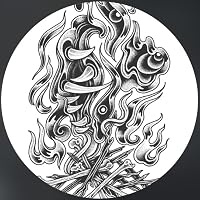
What’s great Margaret Atwood book for a chill quick read. The essays were so well written and so modern. I also love the cover it’s so eclectic and pretty

March 15, 2018
Really, really enjoyed this! It’s a collection of super short stories that felt more personal that anything I’ve read from Atwood yet. I really loved ‘Voice’ especially, but a lot of the stories focused on Atwood’s career as a writer. I adore Margaret Atwood, so I was all about it.
Here’s a list of my very favorites :
Impenetrable Forest
Voice
Resources of the Ikarians
It’s Not Easy Being Half Divine
Three Novels I Won’t Write Soon
Bring Back Mom : An Invocation
King Log In Exile
Faster
Nightingale
Chicken Little Went Too Far
Here’s a list of my very favorites :
Impenetrable Forest
Voice
Resources of the Ikarians
It’s Not Easy Being Half Divine
Three Novels I Won’t Write Soon
Bring Back Mom : An Invocation
King Log In Exile
Faster
Nightingale
Chicken Little Went Too Far

December 28, 2007
For the record, this is the first time I've actually finished a Margaret Atwood book. I've tried 3 times, 3 separate books, over the last 15 years to read her. I always find her books incredibly intriguing, but then I always for some reason lose interest (The Robber Bride, The Blind Assassin) or get frustrated with her writing style (The Handmaid's Tale). But I'm obviously in the minority here - many people I know whose opinions I respect and honor LOVE Margaret Atwood and probably think I'm nuts.
So I hovered between 2 & 3 stars for this book, mostly because I had an "a-ha!" moment at the end really tied the book together for me as a cohesive narrative, rather than just these seemingly random stories, anecdotes, poems, and jokes. She starts the book with a notion of abandoning the idea of a life story. Of not writing about your childhood, etc., and freeing yourself of those details to get to the essence of a self-portrait - a brain-portrait, if you will. And then she ends the books with the story of a writer in a paper tent in the middle of the wilderness surrounded by red-eyed beasts. The writer writes obsessively on the walls of the paper tent as a form of comfort and protection, and when the paper tent burns down, the writer keeps on writing "because what else can you do?"
So I think that this book, in a way, is a life story of Margaret Atwood. This book is her paper tent, and we're being given a portal into her mind as her own self portrait.
But then maybe I'm reaching...
I liked a few of the stories - particularly "Chicken Little Goes too Far" and "Horatio's Version" - but some of them I just found so frustratingly enigmatic. She has this habit of writing in the 2nd person that I find incredibly annoying. And she's witty, but in a cute way. I appreciate wit. I worship Dorothy Parker. But when Dorothy Parker writes down a witty phrase, she then can stare back up at you with a straight face. When Margaret Atwood writes down a witty phrase, she then curls her head up with a self-satisfied smirk and winks. That's my opinion, anyway.
It's worth reading though. I haven't disliked a book and yet respected it so much in a while.
So I hovered between 2 & 3 stars for this book, mostly because I had an "a-ha!" moment at the end really tied the book together for me as a cohesive narrative, rather than just these seemingly random stories, anecdotes, poems, and jokes. She starts the book with a notion of abandoning the idea of a life story. Of not writing about your childhood, etc., and freeing yourself of those details to get to the essence of a self-portrait - a brain-portrait, if you will. And then she ends the books with the story of a writer in a paper tent in the middle of the wilderness surrounded by red-eyed beasts. The writer writes obsessively on the walls of the paper tent as a form of comfort and protection, and when the paper tent burns down, the writer keeps on writing "because what else can you do?"
So I think that this book, in a way, is a life story of Margaret Atwood. This book is her paper tent, and we're being given a portal into her mind as her own self portrait.
But then maybe I'm reaching...
I liked a few of the stories - particularly "Chicken Little Goes too Far" and "Horatio's Version" - but some of them I just found so frustratingly enigmatic. She has this habit of writing in the 2nd person that I find incredibly annoying. And she's witty, but in a cute way. I appreciate wit. I worship Dorothy Parker. But when Dorothy Parker writes down a witty phrase, she then can stare back up at you with a straight face. When Margaret Atwood writes down a witty phrase, she then curls her head up with a self-satisfied smirk and winks. That's my opinion, anyway.
It's worth reading though. I haven't disliked a book and yet respected it so much in a while.

February 3, 2017
GoodReads har for få stjerner! Essaysamlingen til Atwood fortjener en sekser. En berg-og-dalbane av følelser. Jeg er ingen tåreperse. Denne var fantastisk. Jøss. Er det bare meg?
October 7, 2019
«اما تو همچنان به نوشتن ادامه میدهی.
دیگر چه میشود کرد؟»
دیگر چه میشود کرد؟»
May 12, 2025
Exactly what I needed.

April 17, 2020
Although not as thought provoking as 'Good Bones' another collection of inventive, and often funny fictional essays by Margaret Atwood. I must admit I don't like her poetry or fictional essays anywhere as much as I like her novels. 5 out of 12
December 29, 2021
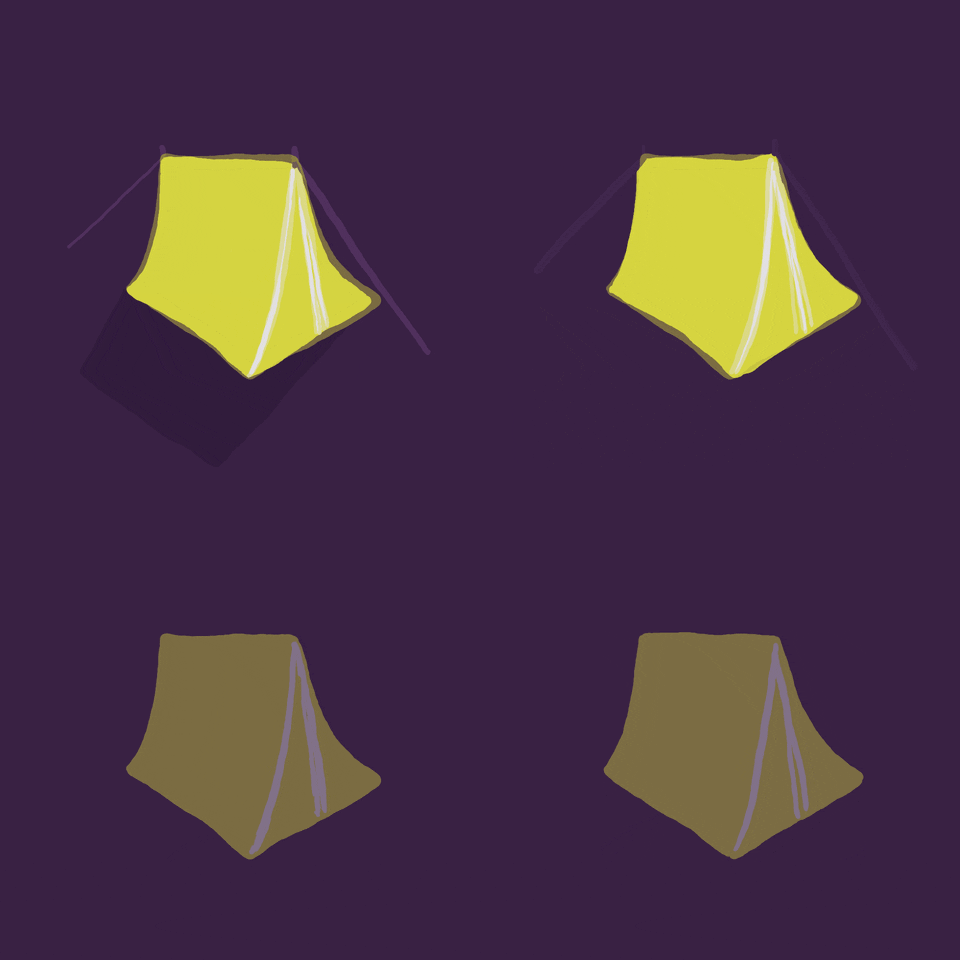
سرپناه کاغذی، سرپناهی که بهش پناه آوردم...
فضای بیرون این خیمه، دقیقا همون توصیفیه که از جهان بیرون این روزها دارم. و چقدر خوب توصیفش کرده بود.
گواه لمس کلماتش؟ اشکهام...
به وقت دی هزار و چهارصد
فضای بیرون این خیمه، دقیقا همون توصیفیه که از جهان بیرون این روزها دارم. و چقدر خوب توصیفش کرده بود.
گواه لمس کلماتش؟ اشکهام...
به وقت دی هزار و چهارصد

November 10, 2025
•Life Stories ★★★★★
•Clothing Dreams ★★★★★
•Bottle ★★★★★
•Impenetrable Forest ★★★★★
•Encouraging the Young ★★★★★
•Voice ★★★★★
•No More Photos ★★★★☆
•Orphan Stories ★★★★☆
•Gateway ★★★★★
•Bottle II ★★★★☆
•Winter’s Tales ★★★★★
•It’s Not Easy Being Half-Divine ★★★★☆
•Salome Was a Dancer ★★★★☆
•Plots for Exotics ★★★★★
•Resources of the Ikarians ★★★★★
•Our Cat Enters Heaven ★★★★★
•Chicken Little Goes Too Far ★★★★☆
•Thylacine Ragout ★★★★☆
•The Animals Reject Their Names and Things Return to Their Origins ★★★★★
•Three Novels I Won’t Write Soon ★★★★☆
•Take Charge ★★★★★
•Post-Colonial ★★★★☆
•Heritage House ★★★★☆
•Bring Back Mom: An Invocation ★★★★★
•Horatio’s Version ★★★★☆
•King Log in Exile ★★★★★
•Faster ★★★★★
•Eating the Birds ★★★★★
•Something Has Happened ★★★★★
•Nightingale ★★★★★
•Warlords ★★★★★
•The Tent ★★★★★
•Time Folds ★★★★★
•Tree Baby ★★★★★
•But It Could Still ★★★★★
•Clothing Dreams ★★★★★
•Bottle ★★★★★
•Impenetrable Forest ★★★★★
•Encouraging the Young ★★★★★
•Voice ★★★★★
•No More Photos ★★★★☆
•Orphan Stories ★★★★☆
•Gateway ★★★★★
•Bottle II ★★★★☆
•Winter’s Tales ★★★★★
•It’s Not Easy Being Half-Divine ★★★★☆
•Salome Was a Dancer ★★★★☆
•Plots for Exotics ★★★★★
•Resources of the Ikarians ★★★★★
•Our Cat Enters Heaven ★★★★★
•Chicken Little Goes Too Far ★★★★☆
•Thylacine Ragout ★★★★☆
•The Animals Reject Their Names and Things Return to Their Origins ★★★★★
•Three Novels I Won’t Write Soon ★★★★☆
•Take Charge ★★★★★
•Post-Colonial ★★★★☆
•Heritage House ★★★★☆
•Bring Back Mom: An Invocation ★★★★★
•Horatio’s Version ★★★★☆
•King Log in Exile ★★★★★
•Faster ★★★★★
•Eating the Birds ★★★★★
•Something Has Happened ★★★★★
•Nightingale ★★★★★
•Warlords ★★★★★
•The Tent ★★★★★
•Time Folds ★★★★★
•Tree Baby ★★★★★
•But It Could Still ★★★★★
February 25, 2017
This is a collection of very short pieces. They range from the image of a dead cat torturing the souls of wicked people in cat heaven to Chicken Little being rebuffed by modern attempts to deny climate change, from dreamscapes to literary reimagining. These are very clever and sometimes quite funny.

February 2, 2014
Good lord, what on earth was that? It's as if Atwood submitted a random collection of journal musings to her publishers and they said, "Hooray, another Atwood book!" and went ahead with it... because obviously Atwood is one of the modern greats don'tyaknow.
In fairness, a couple of the stories in Chapter II made me smile. Oh and I liked the font, Filosofia, very much.
I am left with the feeling that Atwood is gleefully giggling at her cheeky trick in getting The Tent published.
In fairness, a couple of the stories in Chapter II made me smile. Oh and I liked the font, Filosofia, very much.
I am left with the feeling that Atwood is gleefully giggling at her cheeky trick in getting The Tent published.

August 29, 2015
چقدر غم انگيز است كه مثل حلزون پيش بروي ، حلزوني بسيار سريع اما با اين حال بي هيچ خانه اي مگر همان كه روي پشت ات است و آن هم چيزي نباشد جز پوسته اي خالي . خانه اي پر شده از هيچ چيز مگر خودت. چقدر سنگين است اين سبكي . چقدر خرد كننده است اين خلا... ______
سرپناه كاغذي / مارگارت اتوود / گلاره جمشيدي / نشر نون

September 23, 2021
Fantastic

May 12, 2012
Lots of VERY short but thought-provoking pieces. They are varied, though many involve common Atwood themes (relationships, environmental catastrophe, heaven and hell, women). Some are quite poetic and a few are actual poems; there is an allegorical riddle, or perhaps it's a riddling allegory. There are also a few faux-naive woodcut illustrations.
You could easily read the whole thing in an hour or two, but you'd probably feel sea-sick and you really wouldn't appreciate them. Because they are so brief, you still have the taste of the previous one, and just as you "get" the one you are now reading, it ends. So dip in and out.
This review will echo the bitty nature of the book.
The collection opens with an exploration of memory, and the temptation to edit one's personal history.
A singer describes "my voice attached like an invisible vampire to my throat".
The frustration of endlessly being photographed is explained, though whether by a celebrity or someone in a pre-industrial society is not clear: "No more photos... shadows of myself thrown by light onto pieces of paper... I'm watery, I ripple, from moment to moment I dissolve into my other selves."
The next one is more raw: examining the negative ideas, and fears some people have about orphans, and the nasty things they say and do as a consequence. "It is loss to which everything flows, absence in which everything flowers. It is you, not we, who have always been the children of the gods." Ouch.
There is humour, especially "Resources of the Ikarians". A self-deprecating islander discusses the community's attempts to raise foreign income. "The child sex trade is not for us" (phew), but only because "our children are unattractive and rude"! A parody of Chicken Little's fears about the sky falling is very good, too.
A longer item is actually a poem, and although it starts with a bear rejecting the name applied to his species by humans, it progresses to the unravelling of almost everything - a similar trick to Martin Amis' "Time's Arrow" (review here: http://www.goodreads.com/review/show/...)
"Three novels I won't write soon" is an intriguing title, and the three plot summaries are good pastiches of Atwood's own themes and styles. The real trick is that one can ALMOST (but only almost) imagine her actually writing them.
The repeating pattern of a children's story is used to great effect in "Take Charge". The nursery/liturgical familiarity contrasts sharply with the more dystopian subject.
Atwood is often portrayed as a feminist writer, and although she clearly has strong views on feminist matters, that label can sound off-putting. One piece here exposes these ideas in a powerful but also funny and sad way: it starts with a (presumably modern) narrator longing for a traditional housewife-cum-mother, but it ends pointedly, "and we can be careless again... and ignore you as we used to".
The item that lends its title to the collection is near the end. It cleverly describes the compulsion to convert the world around into words, whilst staying separate from it.
You could easily read the whole thing in an hour or two, but you'd probably feel sea-sick and you really wouldn't appreciate them. Because they are so brief, you still have the taste of the previous one, and just as you "get" the one you are now reading, it ends. So dip in and out.
This review will echo the bitty nature of the book.
The collection opens with an exploration of memory, and the temptation to edit one's personal history.
A singer describes "my voice attached like an invisible vampire to my throat".
The frustration of endlessly being photographed is explained, though whether by a celebrity or someone in a pre-industrial society is not clear: "No more photos... shadows of myself thrown by light onto pieces of paper... I'm watery, I ripple, from moment to moment I dissolve into my other selves."
The next one is more raw: examining the negative ideas, and fears some people have about orphans, and the nasty things they say and do as a consequence. "It is loss to which everything flows, absence in which everything flowers. It is you, not we, who have always been the children of the gods." Ouch.
There is humour, especially "Resources of the Ikarians". A self-deprecating islander discusses the community's attempts to raise foreign income. "The child sex trade is not for us" (phew), but only because "our children are unattractive and rude"! A parody of Chicken Little's fears about the sky falling is very good, too.
A longer item is actually a poem, and although it starts with a bear rejecting the name applied to his species by humans, it progresses to the unravelling of almost everything - a similar trick to Martin Amis' "Time's Arrow" (review here: http://www.goodreads.com/review/show/...)
"Three novels I won't write soon" is an intriguing title, and the three plot summaries are good pastiches of Atwood's own themes and styles. The real trick is that one can ALMOST (but only almost) imagine her actually writing them.
The repeating pattern of a children's story is used to great effect in "Take Charge". The nursery/liturgical familiarity contrasts sharply with the more dystopian subject.
Atwood is often portrayed as a feminist writer, and although she clearly has strong views on feminist matters, that label can sound off-putting. One piece here exposes these ideas in a powerful but also funny and sad way: it starts with a (presumably modern) narrator longing for a traditional housewife-cum-mother, but it ends pointedly, "and we can be careless again... and ignore you as we used to".
The item that lends its title to the collection is near the end. It cleverly describes the compulsion to convert the world around into words, whilst staying separate from it.
October 18, 2020
The Tent comprises of mini-fiction essays that are fiddly bits and is tricky to review. Small as it may seem, there are strongly worded fables, revised folklores, poetry, nightmares, and vanities. The essays were bold writings of subjects related to the evolution and degeneration of society and human nature. Subsequently, the pieces are writing doodles with plenty of ambiguity line drawings depicting the narratives. I felt this book has not lived up to other prominent writings that I have read some of the same author.
However, though rudimentary and coming off like fragments of subject matter, the Tent reveals the power of epigrammatic accuracy, which articulated human nature and life that stood the test of time. At close read, the essays speak with clarity and confidence, clever and curt, commentary and criticizing, towards humanity and leading down to random oscillations of different views. I don't believe in clairvoyance, but I can't explain how Atwood seemed to see those things about humanity with such close precision.
However, though rudimentary and coming off like fragments of subject matter, the Tent reveals the power of epigrammatic accuracy, which articulated human nature and life that stood the test of time. At close read, the essays speak with clarity and confidence, clever and curt, commentary and criticizing, towards humanity and leading down to random oscillations of different views. I don't believe in clairvoyance, but I can't explain how Atwood seemed to see those things about humanity with such close precision.

October 24, 2025
Another excellent series of short stories. The book is divided into three parts with 35 stories. Her sharp wit and take on ancient stories is both funny and succinct. The poems especially Bring back Mum: An Invocation is chilling and what life was really like for some mothers. The other poem in The Animals Reject Their names she uses a device of running history backwards.
The stories range in length from a paragraph to several pages. Encouraging the Young is a pep talk to the ambitious young; No more Photos is about the uncomfortable experience of looking at old photos of ourselves; Horatio’s Version is Horatio's real views on Hamlet and events of the last few hundred years she also in Orphan Stories examines the pros and cons of orphanhood.
Atwood is a breath of fresh air and this third collection of prose I have read is a delight.
The stories range in length from a paragraph to several pages. Encouraging the Young is a pep talk to the ambitious young; No more Photos is about the uncomfortable experience of looking at old photos of ourselves; Horatio’s Version is Horatio's real views on Hamlet and events of the last few hundred years she also in Orphan Stories examines the pros and cons of orphanhood.
Atwood is a breath of fresh air and this third collection of prose I have read is a delight.

May 18, 2017
A rather disappointing collection of short writings. The shorts on Part III were the ones I enjoyed the most. I wouldn't recommend getting acquainted with Atwood's writing with this book, since her genius is not really shining here.

August 11, 2021
«چرا فکر میکنی نوشتنت، این جنون خطخطی کردن، درون غاری پوشالی، که کمکم شبیه زندانی بهنظر میرسد، از عقب به جلو پ از بالا به پایینِ دیوارها، میتواند کسی را حفظ کند؟ حتی خودت را؟ اینکه دور خود زره یا طلسمی رسم میکنی تا تو را حفظ کند، توهمی بیش نیست.»
August 17, 2009
Snippets of unfinished stories --> some only a paragraph long. It was as if Margaret Atwood had died and somebody dug out her journals to publish whatever was left. very strange.

January 28, 2018
I secretly blame this book (not much of a secret anymore) for the nausea I felt while riding the plane then the stomachache I experienced after I got off the plane. A scapegoat, you may call it.
It was not a disgusting nor despicable collection of stories. Rather it was underwhelming and, seemed to me, commonplace. It was as if Atwood was writing for herself and not for me. This is not necessarily a bad thing but I find I could not connect nor find a common ground with most of them. Such is an incohesive collection with most of its stories ending when they would just start to pique my interest. And such is unforgettable. On top of my head, I can say I did love (1) The Tent, a great analogy on an artist's creative process, (2) Bring Back Mom: An Invocation which is a very moving piece (and made me miss my own mother as the plane continued to take me away from her), (3) Voice — a tale of giving in to the dark side of yourself until it's too late to save yourself, the dark and brutal (4) Salome Was a Dancer, the strange yet possible (a desire of mine to be true) (5) Our Cat Enters Heaven, short yet brilliantly written (6) Time Folds and last but not the least the hilarious (7) Something Has Happened which again proves that same shit happens no matter how much progress we have attained.
After reading the mind-blowing The Handmaid's Tale years ago, this collection has disappointed me and I hope the next Atwood novel I read would completely restore my fondness of her.
It was not a disgusting nor despicable collection of stories. Rather it was underwhelming and, seemed to me, commonplace. It was as if Atwood was writing for herself and not for me. This is not necessarily a bad thing but I find I could not connect nor find a common ground with most of them. Such is an incohesive collection with most of its stories ending when they would just start to pique my interest. And such is unforgettable. On top of my head, I can say I did love (1) The Tent, a great analogy on an artist's creative process, (2) Bring Back Mom: An Invocation which is a very moving piece (and made me miss my own mother as the plane continued to take me away from her), (3) Voice — a tale of giving in to the dark side of yourself until it's too late to save yourself, the dark and brutal (4) Salome Was a Dancer, the strange yet possible (a desire of mine to be true) (5) Our Cat Enters Heaven, short yet brilliantly written (6) Time Folds and last but not the least the hilarious (7) Something Has Happened which again proves that same shit happens no matter how much progress we have attained.
After reading the mind-blowing The Handmaid's Tale years ago, this collection has disappointed me and I hope the next Atwood novel I read would completely restore my fondness of her.

April 29, 2013
Listen: the leaves no longer rustle, the wind no longer sighs, our hearts no longer beat. They’ve fallen silent. Fallen, as if into the earth. Or is it we who have fallen? Perhaps it’s not the world that is soundless but we who are deaf. What membrane seals us off, from the music we used to dance to? Why can’t we hear?

June 20, 2016
My First Margaret Atwood book. *Yay*
Found her writing style intriguing but quite hard to follow at times. Must read her other works sometime soon. :)
Also, Will try to re-read this book someday ! (Though I finished the book, I'm still not satisfied. I feel like I missed out something)
Found her writing style intriguing but quite hard to follow at times. Must read her other works sometime soon. :)
Also, Will try to re-read this book someday ! (Though I finished the book, I'm still not satisfied. I feel like I missed out something)
August 12, 2023
کوتاه ولییی دوستش داشتم:))
_...دیگر چه میشود کرد؟
_...دیگر چه میشود کرد؟
August 12, 2023
چیزی که میخواست بگه رو خیلی سریع کامل گفت، اما مطمئن نیستم که درست متوجه شدم یا نه :))
Read
January 26, 2026God Margaret Atwood really thrives in this short format ("fictional essays"). Obviously she has written some incredible novels but I think I get the most out of her writing when it's like this, when she is at her sharpest and wittiest and most prone to metafiction.
Not to sound like a LOSER but her short format writing makes me think how excellent it would be to be her friend. (Also helpful that I'm currently listening to her memoir so her voice and humour is playing in my head).
I also love that this feels like a cohesive collection with the different pieces talking to each other e.g "I'm getting somewhere now, I'm feeling lighter. I'm coming unstuck from scrapbooks, from albums, from diaries and journals, from space, from time." (Life Stories) / "It's heavy, that lightness. It's crushing, that emptiness." (Orphan Stories) or "It would sound a note of plangent hope. I always like to end on those." (Three Novels I Won't Write Soon - love the implication that she might, and could!) / ending with the Story 'But It Could Still' (thanks to her memoir I know the boy saved from drowning was her brother!) or the quote about stories about animals are rarely about animals (can't find it now) and the inclusion of Our Cat Enters Heaven, Chicken Little Goes Too Far, King Log in Exile etc.
Sidenote: obsessed with her little illustrations! Dangerous day to be a girl w patchwork tattoos
Favourite pieces: Life Stories, No More Photos (further inspo to delete insta finally), Plots for Exotics, Our Cat Enters Heaven (unbeatable first line "Our cat was raptured up to heaven."), The Animals Reject Their Names and Things Return to Their Origins ("My true name is a growl"), Tent, Time Folds - honestly I could name more but I'll end up naming 75% of them.
"As it is, I'm watery, I ripple, from moment to moment I dissolve into my other selves. Turn the page: you, looking, are newly confused. You know me too well to know me. Or not too well: too much."
"Now they will have to live up to themselves. Bummer."
"What is a big, stupid, clumsy mess like the one you just made - let me rephrase that - what is an understandable human error but a learning experience? Try again! Follow your dream! You can do it!"
"From an early age I knew my ambition was to be in a plot. Or several plots - I thought of it as a career. But no plots came my way."
"But who are we now, apart from the questions Who are we now? We all share that question. Who are we, now, in side the we corral, the we palisade, the we fortress, and who are they?" (important italics missing, thanks goodreads)
"No more sense of self-protection than a zucchini."
"But to note is not to disparage. All observations of life are harsh, because life is. I lament that fact but I cannot change it. (And consider: it is loss to which everything flows, absence in which everything flowers..."
"Fear is synonymous with the future, and the future consists of forked roads, I should say forking roads, because the roads are forking all the time, like slow lightning. A road is a process, not a location."
Not to sound like a LOSER but her short format writing makes me think how excellent it would be to be her friend. (Also helpful that I'm currently listening to her memoir so her voice and humour is playing in my head).
I also love that this feels like a cohesive collection with the different pieces talking to each other e.g "I'm getting somewhere now, I'm feeling lighter. I'm coming unstuck from scrapbooks, from albums, from diaries and journals, from space, from time." (Life Stories) / "It's heavy, that lightness. It's crushing, that emptiness." (Orphan Stories) or "It would sound a note of plangent hope. I always like to end on those." (Three Novels I Won't Write Soon - love the implication that she might, and could!) / ending with the Story 'But It Could Still' (thanks to her memoir I know the boy saved from drowning was her brother!) or the quote about stories about animals are rarely about animals (can't find it now) and the inclusion of Our Cat Enters Heaven, Chicken Little Goes Too Far, King Log in Exile etc.
Sidenote: obsessed with her little illustrations! Dangerous day to be a girl w patchwork tattoos
Favourite pieces: Life Stories, No More Photos (further inspo to delete insta finally), Plots for Exotics, Our Cat Enters Heaven (unbeatable first line "Our cat was raptured up to heaven."), The Animals Reject Their Names and Things Return to Their Origins ("My true name is a growl"), Tent, Time Folds - honestly I could name more but I'll end up naming 75% of them.
"As it is, I'm watery, I ripple, from moment to moment I dissolve into my other selves. Turn the page: you, looking, are newly confused. You know me too well to know me. Or not too well: too much."
"Now they will have to live up to themselves. Bummer."
"What is a big, stupid, clumsy mess like the one you just made - let me rephrase that - what is an understandable human error but a learning experience? Try again! Follow your dream! You can do it!"
"From an early age I knew my ambition was to be in a plot. Or several plots - I thought of it as a career. But no plots came my way."
"But who are we now, apart from the questions Who are we now? We all share that question. Who are we, now, in side the we corral, the we palisade, the we fortress, and who are they?" (important italics missing, thanks goodreads)
"No more sense of self-protection than a zucchini."
"But to note is not to disparage. All observations of life are harsh, because life is. I lament that fact but I cannot change it. (And consider: it is loss to which everything flows, absence in which everything flowers..."
"Fear is synonymous with the future, and the future consists of forked roads, I should say forking roads, because the roads are forking all the time, like slow lightning. A road is a process, not a location."

December 16, 2022
The book powerfully exhibits the human consciousness in conversation with itself, struggling to establish a voice amid the cacophony. In pieces such as 'Bottle', Atwood scoops her speakers out of any context, leaving only their eerie voices alone on the page. She dramatises the troubled boundary between 'I' and 'you', many pages haunted by a mysterious 'you', a silent listener. The narrators question whether the person they are addressing might actually be themselves, dialogue and monologue spookily confused: 'So there's nothing to you. You're only in my head.' Being trapped with these voices can be suffocating; in the metaphorical title story, a hubristic writer's words are their 'prison'. Despite the realisation that their flimsy 'paper tent' is no 'armour' from the world's 'howling wilderness', they are compelled to create.
But although the writers' 'doodling' dissociates them from the world, it paradoxically brings them closer to it. In the most moving piece, the poem 'Bring Back Mom: An Invocation', the speaker communes with her dead mother, yearning to resurrect in language the love she has lost in life, to heal 'damaged memory', so 'the holes in the world will be mended'.
The Tent exposes the nuts and bolts of the tortuous creative process, but Atwood's talent struggles to breathe inside these claustrophobic prisons.
But although the writers' 'doodling' dissociates them from the world, it paradoxically brings them closer to it. In the most moving piece, the poem 'Bring Back Mom: An Invocation', the speaker communes with her dead mother, yearning to resurrect in language the love she has lost in life, to heal 'damaged memory', so 'the holes in the world will be mended'.
The Tent exposes the nuts and bolts of the tortuous creative process, but Atwood's talent struggles to breathe inside these claustrophobic prisons.
Displaying 1 - 30 of 818 reviews