Many thanks to my friend Yalla (with a very fitting name here) who knew exactly what I was looking for and proved to be the right 'someone to run with' in the balagan of the literary world.
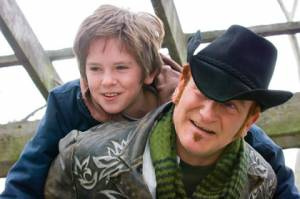
Only a few pages into David Grossman’s Someone to Run With, the narrative energy felt so intensely cinematic that I found myself pausing to Google whether a film adaptation existed. It came as no surprise to find that it did. Naturally, the moment I finished the final chapter, I immediately tracked down Oded Davidoff’s 2006 film version, מישהו לרוץ איתו. But while the adaptation is admirable, it ultimately proves what Grossman’s prose already achieves on its own: some stories are so vividly alive on the page that a camera can only ever capture a fraction of their light. Grossman delivers a gripping bildungsroman thriller that doubles as an exploration of Jerusalem’s seedy underbelly, tracking an awkward teenager named Assaf on a knightly quest behind a stray dog, an adventure that inadvertently forces him to rescue runaway street youth and converge with Tamar, a fiercely talented runaway singer.
The structural brilliance of the novel lies in how Grossman manipulates time and perspective to turn this literary landscape into a tense psychological thriller. By utilizing dual timelines, the book alternates between Tamar’s past—a slow, calculated descent into the street world weeks before—and Assaf’s frantic, fast-paced present, spanning only a few days. The structural magic occurs as Tamar’s past moves at a slower narrative pace than Assaf's present, causing the timelines to close the gap until they collide in a unified "now" at a hidden cave. This setup creates a spectacular "echo chamber" effect across Jerusalem; we witness Tamar commit a harrowing act of bravery at a specific city square in the past, and in the next chapter, Assaf arrives at that exact location to collect her emotional and physical echoes—a rumor, a witness, a dropped object. The reader becomes a detective, mapping Tamar’s psychological breakdown against Assaf’s awakening. This split perspective also prevents action fatigue, using Assaf's innocence and awkward teenage humor to provide essential breathing room away from the dark oppression of Tamar's reality.
Crucially, Grossman elevates this structure through narrative ellipsis, intentionally omitting the logistical mechanics of major action sequences—such as the exact details of Tamar’s escape from a criminal compound. By focusing strictly on the before and after rather than the physics of picking locks or climbing walls, the novel shifts its weight from a standard Hollywood action trope to an internal exploration of trauma. The spectacle of the hunt is replaced by the suffocating reality of being hunted. This omission structurally mirrors the shadowy, disorienting nature of life on the margins, leaving the reader in the dark alongside a society that ignores these children. Furthermore, by making the escape a "magic leap," the act takes on a legendary, folklore quality, elevating Tamar from a runaway teenager into a mythic figure of absolute willpower.
As the parallel lines of this temporal architecture inevitably close in on each other, they reveal that Assaf and Tamar function as two halves of the same adolescent coin, demonstrating how different forms of isolation require the exact same cure: human connection. Assaf begins his journey as an ordinary, socially awkward sixteen-year-old paralyzed by teenage insecurity, his expansion into the world thrust upon him by an external force—the stray dog, Dinka. His arc is about transforming passivity into agency; by holding the leash, he is forced to run after a destiny he did not choose, ultimately discovering an inner reservoir of courage and resourcefulness. Tamar, by contrast, is fiercely independent, deeply artistic, and emotionally mature beyond her years. Her journey is entirely self-directed and calculated. Driven by love for her drug-addicted brother, Shai, she shaves her head, abandons her middle-class privileges, and deliberately infiltrates a dangerous underworld. Where Assaf lacks a voice and expands outward, Tamar possesses a literal, powerful singing voice but makes a desperate inward descent into society's darkest corners. Their convergence is a beautiful exercise in mutual completion. Assaf provides the safe harbor, stability, and unconditional support that Tamar desperately needs after carrying the weight of the world alone, while Tamar gives Assaf a profound purpose and a model of fierce bravery.
In mapping this convergence, Jerusalem becomes far more than a backdrop; it is an active catalyst with a warring, dual personality that mirrors these internal fractures of adolescence. On one hand, it is a predatory labyrinth of heavy stone, suffocating alleyways, and indifferent crowds where corrupt figures easily exploit the invisible street youth. On the other hand, it is a spiritual oasis containing secret pockets of history and sanctuary—like the quiet rooftops or the monastery of the cloistered nun, Theodora—that offer temporary asylum and a space to heal. Guided by Dinka's scent-trail, the city actively orchestrates Assaf's transformation by dragging him out of his comfortable bubble, while acting as a literal map of memory and decay for Tamar as she tracks her brother's captors.
This rich environment reinforces the novel's distinct Dickensian texture, where the criminal underworld boss, Pesach, operates like Fagin, commodifying vulnerable youth for profit, and the reclusive Greek Orthodox nun, Theodora, mirrors eccentric literary guardians like Miss Havisham, trapped in a self-imposed prison of the past until the youth break down her walls. Grossman anchors these themes through brilliant, layered symbols: Dinka represents unconditional love and intuition, while her physical leash symbolizes the invisible ties of responsibility and fate connecting the protagonists before they ever meet. Tamar’s shaved head functions as a ritualistic shedding of skin, signaling her absolute commitment to saving her brother at any cost. Meanwhile, her singing voice represents her absolute essence—raw and honest, yet easily turned into a caged bird when commodified by predators, highlighting how the corrupt adult world exploits youth and beauty.
While the narrative handles these dark undercurrents, the story can, at times, feel slightly melodramatic. Yet this melodrama works precisely because of the specific world we have stepped into. We are immersed in the landscape of adolescence—a realm defined by raw innocence, naive hopefulness, profound vulnerability, and an intense duality of fear and bravery. Melodrama is an inherent feature of the teenage psyche, where every emotional stake is magnified to a matter of survival. Rather than weakening the text, these heightened emotional frequencies help build a far more tangible, authentic story world, allowing the reader to fully inhabit the psychological reality of its characters.
Ultimately, the motif of the run—both as a frantic physical sprint through a predatory maze and a metaphor for escaping parental failure and societal indifference—converges entirely on the meaning of the title. To find someone to run with is the ultimate coming-of-age achievement: discovering an authentic human connection capable of breaking through isolation, ensuring that even if the characters' ultimate ending remains off the page entirely, they have found safety and understanding in an alienating world.