Non-linguistic conflicts--economic, religious, territorial--are often projected on to language differences, and may be played out in the language policies of governments and other holders of power. Jean-Louis Calvet deals broadly, in a non-technical and introductory style, with this interaction of language issues and political process. He examines the fundamental problems arising from language contact, multilingualism, and the conflicts caused by inequalities symbolized in various patterns of language use.
علم اللغة الاجتماعي والسياسي ـــــــــــــــــــــــــــ
يأخذك الكتاب للغات العالم وخاصة بلدان القارة الافريقية للسوق للمجتمع للشعوب للتاريخ للاديان وما يميزه سعة الاطلاع والمعرفة بحال اللغة سياسياً واجتماعياً واعتماده بدراسته ميدانياً واجتماعياً وربط اللسانيات بالتاريخ
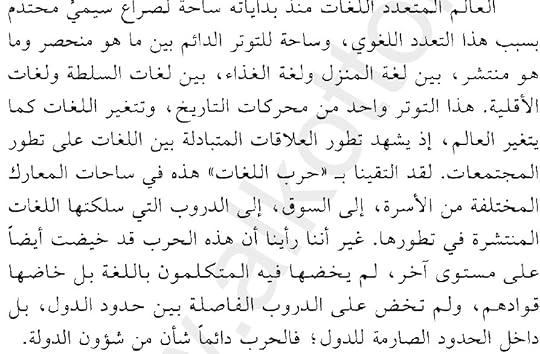
فحرب اللغات محفورة في تاريخ البشرية منذ ان تبلبل لسانها وحولت اصواتها الى علامات لغوية والتعدد هو اصل النزاع او الشرط الاساسي لحصولها وهي صراع ما بين اللغات بشقيه الداخلي والخارجي اي في الشق المتعلق بالنظام الداخلي للغة وبنيتها وبتطورها وفي الشق الخارجي منها في علاقتها بغيرها وهذه الحرب حرب بالمعنى المجازي حيناً وحرب بالمعنى الحقيقي في اغلب الاحيان اضف ان اللغات في حركة مستمرة في ازدياد وتعدد من جهة وفي اندثار وموت من جهة اخرى وهذا يعتمد على عوامل جغرافية واجتماعية وسياسية واقتصادية وثقافية فاللغة ساحة صراع لانها انتماء اجتماعي
يقول كلود حجاج ان نجح رجل الدولة في الاشراف على مسار اللغة في احدى مراحلها الحاسمة فانه يضيف الى سلطته سلطة اخرى سلطة مجهولة فاعلة
ويستعرض لويس امثلة وتجارب عن اللغات فهو مثلاً يعتبر اللغة العربية الفصحى ميتة اذا انها تكتب ولا تنطق ويستعرض تجربة اللغة الفرنسية وكيف انتشرت وهيمنة على العالم ثم مع التطور التكنولوجي باتت الانجليزية اللغة الاكثر انتشاراً ويستعرض اثر الاستعمار على دول القارة الافريقية والتأثير على اللغات وخاصة المغرب والازدواجية
"اللغة والكلام كأنهما واقفان خصمين لا يتلاقيان حتى لكأن بين اللغة واقوال المتكلمين بها قطيعة تجعل كل واحد منهما في واد مستقلاً عن الآخر"
الترجمة: حسن حمزة المنظمة العربية للترجمة تفسيري (لغات)
التعليق: عندما تقرأ مثل هذا الكتاب لا بد أن تقف احتراماً للبحث الأكاديمي المتقن الذي يلف مثل هذه الدراسات اللغوية، لن أستطيع أن أعطي رأياً في الكتاب لأنني عندما اقتنيته توقعت أن يكون بسيطاً يلامس صلب ثقافتي الضحلة ولكني اصطدمت بهرم أكاديمي كبير وسع مداركي وأراني جوانب لم أكن لأتخيل أنها موجودة في موضوع اللغات والدراسات اللغوية. يبدأ الكتاب من بابل وأصل اللغات التي تبلبلت وتشتت فكانت بابل وينتهي بالكثير من الدراسات اللغوية في الصين وأفريقا وسائر بلاد المعمورة. ويشرح المعركة اللغوية على الأرض، بالإضافة إلى الكثير من العناوين الأخرى التي قد يجد فيها دارسو اللغات مواد غاية في الأهمية والأمانة العلمية. في الحقيقة واحدة من أهم الأمور التي أذهلتني في الكتاب هي الترجمة الرائعة جداً للأستاذ حسن حمزة يشعرك بأن هذا الكتاب لم يكتب إلا بلغة عربية صرفة فله ترفع القبعة
ختام رحلة شهر مع كتاب "حرب اللغات و السياسات اللغوية" لمتخصص اللسانيات الفرنسي لويس جان كالفي. يسلط الكتاب الضوء على موضوع شديد الأهمية و هو علاقة اللغة بالمجتمع و بالدولة و علاقات اللغات ببعضها. يقارب الكاتب هذا الموضوع من خلال النظر إلى ميدانين مهمين : الأول هو المجتمعات ( ما يسميه الجسم الحي) باعتبارها البيئة التي تتطور فيها اللغات و تتفاعل فيما بينها و تتأثر و تؤثر في عوامل أخرى كالاقتصاد و الحروب و الدين و الأسرة... الثاني : هو مجال صناعة الخيارات و السياسات اللغوية المختلفة ( ما يسميه المختبر) من طرف الحكومات و أجهزتها... لا يفوتني أن أنوه بجودة الترجمة التي تجعلك تعتقد أنك تقرأ كتابا مكتوبا باللغة العربية في الأصل. وجبت كذلك الإشارة لتحيز الكاتب للغته الفرنسية و جهله ببعض جوانب الإسلام التي ورط نفسه بالخوض فيها ( و قد أشار المترجم لهذا في مقدمته)
An amazing book. The title reflects the reality, which is the war between languages,which we cannot look at without understanding the relationship between languages, politics and the economy. There are many reasons for this global historical conflict.
In this book, I liked the chapter of "Family Language War" in which it explained and how can a language conflict within a bilingual family arise, how it can be managed and how each party of the bi- insists on keeping their language the dominant tongue in the family and especially in raising up young children.
China's example is one of the leading in supporting one national language at the cost of other minority languages, as compared to India in which the state recognises a lot of minority languages and still considers them official.
The author was successful in presenting the Algerian case and Norwegian case , in which the will toward nationalising the language and cutting any contact with the past. Norwegian case was interesting and their search in the old dictionaries, for the purpose not used any Danish word is appreciated. I mean it is appreciated in the sense it is an effort toward self-dependance.
The Turkish case, in contrast, was a move toward escaping from the past, and building totally new alphabetical system which is the latin alphabets. Not to under-appreciate it, however, if we compare it to the Norwegian case, the latter is much deeper and reflects a mindset toward appreciation of own history, culture, past used speech.
As a fluent speaker of three languages, and a learner of another three, I can say, that this book has changed the way I look at the languages from a macro level. we cannot separate the view of the language from the view of own identity, own philosophical concepts, the economy and the politics as well, and as it appears that the Esperanto is still un-sucessful solution toward solving the "Bible" dilemma which will continue to exist.
جهد كبير من المؤلفين والمترجم يستحق العلامة الكاملة إضافة إلى مايثيره من افكار حول نشوء اللغات واندثارها. نتمنى أن ارى عمل أكاديمي حول اللغة العربية تحدياتها وافاقها ومستقبلها.