Jump to ratings and reviews
Rate this book

Inna di Dancehall: Popular Culture and The Politics of Identity in Jamaica

Rate this book
This work provides an accessible account of a poorly understood aspect of Jamaican popular culture. It explores the socio-political meanings of Jamaica's dancehall culture. In particular, the book gives an account of the power relations within the dancehall and between the dancehall and the wider Jamaican society. Hope gives the reader an unmatched insider's view and explanation of power, violence and gender relations in Jamaica as seen through the prism of the dancehall.

Paperback

First published September 5, 2000

3 people are currently reading
66 people want to read

About the author

Donna P. Hope

6 books4 followers

Ratings & Reviews

What do you think?
Rate this book

Friends & Following

Create a free account to discover what your friends think of this book!

Community Reviews

5 stars
7 (23%)
4 stars
16 (53%)
3 stars
3 (10%)
2 stars
4 (13%)
1 star
0 (0%)
Displaying 1 - 6 of 6 reviews
Profile Image for Missy J.
629 reviews109 followers
April 24, 2022
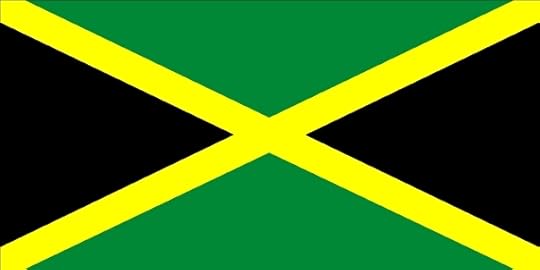
2017 Jamaica Challenge #4: The National Flag of Jamaica looks like this:
description
The symbolism of the flag goes as follows:
“The sun shineth, the land is green and the people are strong and creative”. Black depicts the strength and creativity of the people; Gold, the natural wealth and beauty of sunlight; and Green, hope and agricultural resources.
What impresses me the most is the emphasis of creativity in the people. I remember reading somewhere that Jamaica produces more music per capita than any other place in the world. When I paused and thought about it, I realized that it's true. For such a tiny island of less than three million people, Jamaica has blessed the world with so much music. So, I thought I would read a book about dancehall music for this challenge.

Donna P. Hope offers an excellent introduction to dancehall music. She actually wrote this book to legitimize the study of dancehall among academics in Jamaica. Dancehall is often viewed as crude and uncivilized in the eyes of many upper-class Jamaicans. I have to admit, that before reading this book I thought that dancehall music was very catchy and energetic, but that it also contained some violence and misogyny. Especially some of the dance movements are very daring. So, I was curious to learn about the origins of dancehall. This book is divided into five chapters.

In Chapter 1, the author briefly introduces the reader to Jamaica's political and economic history. She also mentions Jamaican society's experience with race, class and color. Then she traces the origins of dancehall music in 1980s and how modern technology set it apart from earlier music styles. I loved the little biographies she included of Yellowman and other dancehall artists. The author concludes that many poor, lower-class Jamaicans have found a way to self-express and make a living in the dancehall scene.

Chapter 2 includes definitions of important terms used in the dancehall scene. There are certain names given to the affectors (producers) and affectees (consumers) in the dancehall scene.

Chapter 3 deals with gender and sexuality in the dancehall scene. A very eye-opening chapter on the skin bleaching phenomena, homophobic rhetoric, contradictory nature of the daring dance movements of women who are sexually liberated but at the same time dancing for the male gaze. All in all, dancehall is still very male-dominated and a way for men to reaffirm their masculinity.

Chapter 4 is about the violence in the dancehall scene. The violent lyrics and booming gunshot sounds are a reflection of the realities of most artists, who come from poorer backgrounds. The author provides two interesting personal experiences of music festivals in Jamaica and the nature of dancehall competitions.

Chapter 5 concludes with the message that for many Jamaicans the dancehall scene provides a way for them to make a living, establish and reaffirm their identity.
"Dancehall culture becomes a true site of contestation as different groups jockey for hierarchical positions in a rigid, class-structured society. [...] Dancehall culture’s dialogue of extreme violence and crass, vulgar sexualities disturbs the peace of traditional Jamaica because it represents a viable alternative and a contending power that rivals the dominance of the traditional bourgeois class. Nevertheless, in its greatest moment of revolution, the dancehall dis/place also draws from its surroundings and ultimately replicates the tensions and contradictions of the patriarchal structures that are at work in Jamaica."
Profile Image for Idris.
15 reviews
July 1, 2024
Great academic analysis of 80s to early 2000s dancehall culture. While reading through it, in 2024, I realized how outdated some of the terms and explanations were. Growing up in Jamaica I was never a fan of dancehall, but reading this book gave me a lot of nostalgia nonetheless. Also makes an essential historical reference for any research paper on the subject.
Profile Image for C. B..
482 reviews82 followers
October 19, 2016
An excellent book that gives an overview of various topics to do with the modern dancehall in Jamaica. Donna Hope's unique place in reggae studies is her first-hand knowledge as a dancehall fan all through the 80s to the present; her writings have a unique and very important perspective.
Profile Image for Kadine.
15 reviews1 follower
Read
June 1, 2017
Helpful in fleshing out the politics of appearance and its connection with the "video light syndrome" that Hope says characterizes the dancehall space. Her writing style is very matter-of-fact. I like that.
Profile Image for Monique.
40 reviews
January 4, 2016
For anyone interested in learning more about the influence that dancehall music has impacted Jamaican culture with, this is the book for you. Great read, especially for music or history enthusiasts.
Displaying 1 - 6 of 6 reviews

Can't find what you're looking for?

Get help and learn more about the design.