Jump to ratings and reviews
Rate this book

Inferno

Rate this book
«Tout ce que je touche me fait mal, et, enragé des supplices que je veux attribuer à des puissances inconnues qui me persécutent et entravent mes efforts depuis tant d'années, j'évite les hommes, néglige les réunions, décommande les invitations, et éloigne les amis. Il se fait autour de moi du silence et de la solitude : c'est le calme du désert, solennel, horrible, où par bravade je provoque l'inconnu, luttant corps à corps, âme à âme.

Je me sens sublime, flottant sur la surface de quelque mer : j'ai levé l'ancre et je n'ai nulle voilure.»

266 pages, Paperback

First published January 1, 1897

96 people are currently reading
3667 people want to read

About the author

August Strindberg

1,918 books773 followers
Johan August Strindberg, a Swede, wrote psychological realism of noted novels and plays, including Miss Julie (1888) and The Dance of Death (1901).

Johan August Strindberg painted. He alongside Henrik Ibsen, Søren Kierkegaard, Selma Lagerlöf, Hans Christian Andersen, and Snorri Sturluson arguably most influenced of all famous Scandinavian authors. People know this father of modern theatre. His work falls into major literary movements of naturalism and expressionism. People widely read him internationally to this day.

https://en.wikipedia.org/wiki/August_...

Ratings & Reviews

What do you think?
Rate this book

Friends & Following

Create a free account to discover what your friends think of this book!

Community Reviews

5 stars
306 (20%)
4 stars
536 (35%)
3 stars
441 (29%)
2 stars
175 (11%)
1 star
60 (3%)
Displaying 1 - 30 of 145 reviews
Profile Image for Vit Babenco.
1,783 reviews5,781 followers
August 21, 2024
Saying farewell for a short while may turn out to be saying farewell for good…
With a feeling of wild joy I returned from the northern railway station, where I had said good-bye to my wife. She was going to our child, who was ill in a distant place. The sacrifice of my heart was then fulfilled. Her last words, “When shall we meet again?” and my answer, “Soon!” echoed in my ears, like falsehoods which one is unwilling to confess. A foreboding said to me “Never!”

This is the way Inferno begins… The narrator is glad to be free… He aims at a much higher goal than love and family happiness…
Solitary, guilty of suicide and assassination, I forget my crime under the weight of sorrow and care. No one visits me, and I can see no one, since I have alienated all. I drift alone over the surface of the sea; I have hoisted my anchor, but have no sail.
Necessity, however, in the shape of an unpaid bill, interrupts my scientific tasks and metaphysical speculations, and calls me back to earth.

And now he is in the desert of loneliness and poverty… He keeps experimenting… He thinks he made an important scientific discovery… His paradise is regained… But his money is spent and his paradise is lost again… He is in purgatory… He is idealistic and mystical on the somewhat insane side… In everything he sees the signs sent from above…
Doubtless, I was being prepared for a higher existence. I despised the earth, the impure earth, its inhabitants and their doings. I felt like a perfectly righteous man, whom the Eternal was testing, and whom the purgatory of this world would soon make fit for deliverance.

August Strindberg seriously believes that he managed to transmute lead into gold… And although he routinely describes his everyday life, it seems that he exists in some surreal environment… His pathological anxiety and suspiciousness keep escalating and he finds himself thrown into the hell of insanity…
Life hurries by and old age approaches: Wife, children, home, dispersed and wrecked; without is spring, within is autumn.

Mystics dwell in their own fantastic world where everything is mystical.
Profile Image for Luís.
2,370 reviews1,358 followers
January 4, 2023
Anguish, delirium, paranoia, spiritual questioning, and psychic drift are the ordeals endured by one of the most outstanding Swedish scholars and told in an autobiographical story: Inferno.
Profile Image for Nakkinak.
27 reviews8 followers
April 16, 2016
An absolutely insane book, describing a psychotic breakdown of August Strindberg following the divorce from his wife. He gets heavily involved in alchemy and fantazises about creating gold from Iron and Sulfur, while he suspects everyone to be after him, especially Russians and Theosophics. His "scientific" experiments are absolutely crude, and he enjoys doing them in the middle of the night, yet he eventually develops a phobia of 2 am, expecting assassins to show up at that time. He escapes downstairs, looking out for electricity.

And that was just a paraphrase of one page. In other occasions, he starts hearing a piece by Schumann but the pianist is nowhere to be found and he's suspecting a conspiracy behind it. And then there are three pianists in the hotel as well, which obviously a feminist agenda by three upper class dames.

Not kidding, parts of this book feel like Fear and Loathing in Las Vegas, with Strindberg rambling from Hotel rooms to friends, to business partners, doctors, freaking out all of them, leaving a streak of insanity he probably isn't even aware of. He insists in the epilogue that everything is legitimate truth, while I suspect it to be the first great masterpiece of Gonzo journalism.

10/10
Profile Image for Elena.
246 reviews132 followers
February 16, 2023
En las más altas cotas de la desesperación, cercano al suicidio, Strindberg no viaja al fin de la noche sino que arde en el mismísimo infierno. Su mujer le deja, huye de Suecia y transita por el Paris alucinado de los últimos años del s. XIX donde sus visiones le llevan, entre enemigos invisibles, hasta Austria y luego de vuelta a Paris. Desesperante, durísimo por momentos. Obsesivo. Un genio.
Profile Image for Bettie.
9,977 reviews5 followers
October 10, 2015

Read Here


Opening: With a feeling of wild joy I returned from the northern railway station, where I had said good-bye to my wife. She was going to our child, who was ill in a distant place. The sacrifice of my heart was then fulfilled. Her last words, "When shall we meet again?" and my answer, "Soon!" echoed in my ears, like falsehoods which one is unwilling to confess. A foreboding said to me "Never!" And, as a matter of fact, these parting words which we exchanged in November, 1894, were our last, for to this present time, May, 1897, I have not seen my dear wife again.

Misery, misogyny and absinthe, in equal measure.

"Madame Blavatsky's Secret Doctrine is plagiarised from all the so-called occult theories; it is a hash-up of all ancient and modern scientific heresies. Her book is worthless as regards her own presumptuous claims, interesting through its quotations from little-known authors, repellent through its conscious or unconscious fabrications regarding the Mahatmas. It is the work of a mannish woman, who, in order to put man to shame, undertook to overthrow science, religion, and philosophy, and to set a priestess of Isis on the altar of the Crucified."


This one has been on my TBR mountain since I first moved north, felt it a duty to bone up on the literary side of things to see just what shapes a country's psyche. This month is dedicated to chipping away some of the backlog and I am not unhappy to see this item off, yet the relief is short-lived because I am reminded that Swedenborg needs to be tackled at some point...


A month of Halloween 2015 reads:

#1: 3* Nobody True by James Herbert: fraudio
#2: 4* The Horror Stories of Robert E. Howard: fraudio
#3: 1* Brain Child by John Saul: fraudio
#4: 3* Domain (Rats #3) by James Herbert: fraudio
#5: 3* The Mourning Vessels by Peter Luther: paperback
#6: 2* The Doom of the Great City: ebook short-story
#7: 5* Long After Midnight by Ray Bradbury: fraudio
#8: 5* The Dead Zone by Stephen King: fraudio
#9: CR The Chalice by Phil Rickman: hardback
#10: WL Seven Gothic Tales
#11: 4* Tales of Men and Ghosts by Edith Wharton: gutenberg
#12: 2* Shattered by Dean Koontz: fraudio
#13: 5* The Dunwich Horror - Lovecraft: gutenberg
#14: CR Death At Intervals by Saramago: paperback
#15: 3* Alone: gutenberg
#16: 3* The Shunned House: gutenberg
#17: 4* The Thing on the Doorstep: ebook
#18: 2* Shadows by Saul: fraudio
#19: CR Precious Cargo: paperback
#20: 2* The Magicians of the Golden Dawn: ebook
#21: 2* The Book of Black Magic: ebook
#22: 4* Beyond the Wall of Sleep: ebook
#23: 3* The Haunting of Hill House: film only
#24: 2* Inferno: gutenberg
#25: 4* The Monkey's Paw: re-read: gutenberg

Profile Image for Richard S.
442 reviews84 followers
March 19, 2020
In this autobiographical memoir, similar in tone to Wilde's De Profundis, Strindberg often seems like a madman suffering from persecution paranoia, but out of the haze of his peculiar madness, the great artist genius continually shines through, making this quite a remarkable book. Full of a sort of occult strangeness, hard to believe passages full of alchemy experiments, religious experience, encounters with other artists, an endless series of bad living situations, one recognizes the great dramatist and writer. Sometimes you feel like he's lying, or making up a story, but so much of this work spoke to me as an individual, I too in the past suffered from this same sort of condition, although I've spent the rest of my life suppressing it.

One sentence stood out: "It is not the cult but the cultivation of [the Ego] which seems to me the supreme and final goal of existence." Throughout one gets that sense of intense presence, existence, sensitivity. Strindberg suffers, but he lives. In fact the book is a statement about the intensity of the artist, nothing else matters. Concepts of money and materiality and anything with a hint of what one might call the bourgeois is entirely absent, this is pure elevated mind. Strindberg isn't perfect, he is deeply flawed, and yet he doesn't adapt, he simply IS.

I'm not sure why I enjoyed this so much, perhaps the novelty, the passion of the perception. Maybe perhaps I should be focusing in my life, this one life, on becoming more like Strindberg. More like my old self. More of a sufferer, more full of the Powers, as he calls them. He does after all, have his reason, his astonishingly perfect dismissal of "Isis Unveiled" showing such a powerful integrity. He does believe in his alchemical powers, finding carbon in sulphur, turning silver into gold. Perhaps that is the message, transform yourself, be alive and open.

What a book.
Profile Image for Bjorn.
987 reviews188 followers
April 21, 2016
An admittedly great writer writing from within the depths of psychosis. And I'm not exaggerating. He rants about how evil feminists have driven him from his homeland, tries to make gold (literally), is convinced that everyone up to and including the devil himself is after him, describes how electric fields come from out of nowhere to tear him apart, how invisible forces push over his absinthe glass, how signs appear everywhere and he sees maps of cities he's yet to visit in the useless flakes of mineral that refuse to obey his will and turn into gold...

...he flees every hotel, runs from Paris to Lund to Berlin to Graz, he reads Swedenborg, he reads Nietzsche, he reads Balzac, he reads the OT, he quotes Ezekiel 25 120 years before Samuel L Jackson did...

...friends contact him, begging him not to throw his life away on a suicide mission to the North pole, and he explains in vain that that's his nephew in the papers...

...basically, substitute "electricity" for "chemtrails" and he'd feel right at home in the darker corners of Reddit.

And yet, there's something to it. His insistance that this is August Strindberg writing, this is not fiction, this is exactly what he's going through and you're welcome to compare it to his diaries if you want. His refusal both to back down from his earlier ideas, and his refusal to NOT change. Those magnificent last few chapters when he goes through his crisis, not out of it. The older Strindberg is a deeply unpleasant person, and Inferno - much like Confessions of a Fool - a deeply unpleasant book. But as fin-de-siecle madness and timeless manpain goes, it's hard to deny the power of it.
35 reviews
May 23, 2022
en kort men svår bok. självbiografisk men vid vissa tillfällen orealistisk. eller okej egentligen på det stora hela realistisk men om strindberg verkligen upplevde allt i boken måste han nog vara galen….. hur som en ganska seg bok som inte gav mig så mycket. trots det är denna bok ändå en klassiker som jag tycker man bör ta sig igenom 😁😁😁😁
Profile Image for Mike.
1,429 reviews55 followers
August 3, 2018
Grab your tinfoil hats, kiddos, it’s time it get crazy with Uncle August!
Tin foil hats

This stunning document explains everything I needed to know about Strindberg after reading his troubling dramas. Inferno chronicles his years of madness after his separation from his wife (I can’t remember which one, and, quite likely, neither can Strindberg) as he experiments with alchemy in an attempt to turn base metal into gold. In the process, he describes his hallucinations and paranoid fears: beset by supernatural demons and evil spirits, pursued by talking animals, persecuted (in his head) by friends and foes, tortured by electrical currents that he imagines are concealed in his apartment furnishings. He has visions of hell that may or may not be the result of inhaling noxious fumes from his alchemy bumblings, his absinthe habit, or his off-the-chart religious conversion, which is a disturbing amalgamation of Christian mysticism and Illuminism. He describes this insanity as being a state of “grace” in which he is “tested by God.”

What it really is:
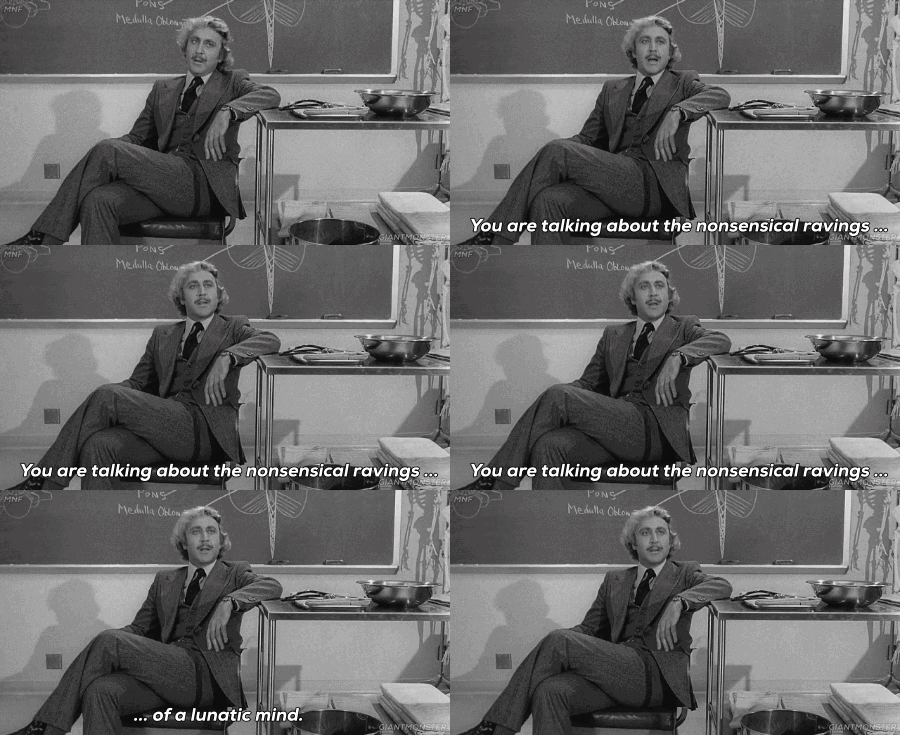
Gene Wilder explains Strindberg

The chapter titles reflect his madness, suicidal tendencies, and ultimate “redemption”: “The Hellhounds Unleashed,” “Extracts from the Diary of a Damned Soul,” “The Redeemer,” etc. Along the way, we are introduced to satanists, nihilists, anarchists, socialists, theosophists, Decadents, deviants, Rosicrucians, and various other occultists of every stripe. Strindberg himself is most of these at one time or another, but his friends (the few he has remaining) have all lost track… and again, quite likely, so has Strindberg.

His “cure,” and that which saves him from the “lunatic asylum on the hill”: Swedenborg! Specifically, the “conversations” Swedenborg had with spirits residing on Jupiter. Just when you think Strindberg couldn’t get nuttier, he becomes an acolyte for the 18th century version of Scientology!

To be clear: this isn’t a great book...it’s just wild to read. Strindberg admits that Inferno is not a novel. But what is it? Memoir? Essay? Fictionalized autobiography? Partial diary? The rantings of a deranged man? It’s all of these combined. There is just enough fiction (i.e., invented conversations and changed names of real people) to claim that this isn’t straight nonfiction; but we are made to understand that it's pretty much Strindberg’s personal story.

We also get the feeling that if Strindberg were alive today, he would have a subscription to Alex Jones' INFOWARS.

Recommended for anyone who wants insight into Strindberg’s bizarre mind or who has an interest in 19th century tales of the occult or alchemy.
Profile Image for Philemon -.
542 reviews33 followers
February 8, 2023
This has been variously described as a novel or as one of a multi-volume autobiography. It doesn't really succeed as either, but maybe it doesn't have to. It has been called an example of unreliable narration. The themes are gritty Paris life, desperation, alchemy, and witchcraft. The best approach may be simply to take it on its own terms.
Profile Image for Moniza Borges.
16 reviews31 followers
October 9, 2017
Estou há um certo tempo ensaiando para falar deste livro, mas algumas coisas nos pegam com tanto jeito que mal conseguimos organizar os pensamentos e lhes dar forma. Então a única coisa que consigo dizer agora é que foi uma das melhores leituras que já fiz na minha vida.
Profile Image for Vittorio Ducoli.
580 reviews82 followers
October 17, 2021
L’inferno privato, sineddoche di quello dell’epoca

Nel mio precedente commento a tre dei suoi più importanti drammi teatrali ho affermato come sia difficile poter affermare che esista un solo Strindberg: guardando le sue numerose opere emerge come accanto al drammaturgo e romanziere esistano infatti anche perlomeno uno Strindberg botanico ed uno chimico e occultista, e come le sue opere riflettano una tormentata e mutevole personalità, che annovera nel tempo lo Strindberg misogino e antifemminista, quello ateo e più tardi swedenborghiano, quello nietzchiano che poi approda al socialismo.
Il secondo capitolo della mia personale trilogia strindberghiana è il sofferto resoconto di una delle tante crisi di passaggio in cui l’autore svedese si trovò periodicamente immerso, forse la più dura, sicuramente la più significativa, durante la quale l’autore corse il rischio di compromettere per sempre il suo equilibrio psichico.
Formalmente Inferno non è né un testo teatrale né un romanzo: appartiene piuttosto alla tipologia di scritti autobiografici che nella bibliografia dell’autore svedese annovera anche Il figlio della serva e L’arringa di un pazzo.
Inferno è un’opera che illumina il lettore, in maniera a tratti apparentemente confusa e di non sempre facile assimilazione, circa alcuni degli aspetti più profondi della personalità artistica ed esistenziale di Strindberg, narrando in particolare come detto di uno dei periodi di maggiore crisi della sua vita, quello che va dal novembre 1894 - quando di fatto avviene la definitiva separazione, dopo un matrimonio durato solo un anno che aveva dato alla coppia una figlia, dalla seconda moglie, la giornalista austriaca Frieda Uhl - sino al maggio 1897, quando nella quiete provinciale della città svedese di Lund (che, per inciso, annovera tra i suoi monumenti una magnifica cattedrale romanica) inizia di getto a scrivere di quel biennio infernale il resoconto, che assume i connotati di una vera e propria opera catartica e di presa di coscienza di un nuovo status esistenziale e della necessità di una nuova letteratura.
La narrazione prende l’avvio a Parigi, subito dopo la partenza in treno della moglie alla volta dell’Austria dove si trova la figlia malata.
Strindberg è cosciente che l’a presto pronunciato prima di separarsi dalla consorte è in realtà un addio, perché il matrimonio è ormai andato irrimediabilmente a rotoli. Si ritrova quindi solo a Parigi, dorme in squallide stanze di alberghi di infimo ordine, finendo anche all’ospedale a causa della miseria in cui vive, e presto rompe i rapporti con il circolo di artisti con cui era in contatto, tra i quali vi erano Mucha e Paul Gaugin. Anche con l’ultimo amico parigino, Edward Munch, taglia presto ogni rapporto. Da oltre cinque anni non ha scritto alcun testo letterario, dedicandosi alla botanica e alla chimica, o meglio sarebbe dire all’alchimia. Alcune opere botaniche e chimiche pubblicate in quegli anni sono state accolte positivamente negli ambienti occultistici, ma stroncate da quelli scientifici. Strindberg sostiene infatti tra l’altro, per la verità in compagnia di alcuni scienziati ufficiali dell’epoca, la teoria dell’unità della materia, e di conseguenza ritiene che gli elementi chimici si possano scomporre in altri più semplici, che sia possibile sintetizzarne altri, e soprattutto che si possa estrarre oro dal solfato di ferro o altri metalli. Sempre più isolato si butta a capofitto in questi esperimenti, acquistando con i pochi soldi che gli restano attrezzature e materiale da laboratorio: si convince anche di avere ottenuto alcune prove sperimentali delle sue teorie, comunicando i suoi risultati ad altri scienziati, ma ovviamente fallisce miseramente in quella che avrebbe dovuto essere l’attività che gli avrebbe dato fama e ricchezza: la fabbricazione dell’oro, appunto.
La solitudine e le ristrettezze economiche, unite ad un crescente senso di colpa nei confronti della moglie e della figlia, lo spingono verso forme di latente paranoia. Si convince infatti che Stanisław Przybyszewski, tormentato scrittore simbolista polacco che all’epoca viveva a Berlino e con il quale aveva avuto una violenta diatriba per questioni di donne, sia giunto a Parigi per ucciderlo. Sospetta inoltre che nelle camere vicine a quella in cui dorme siano state installate misteriose macchine elettriche che generano correnti in grado di portarlo alla pazzia e alla morte, ed interpreta come presagi funesti scritte che vede sui muri, piccoli oggetti che raccoglie da terra e frasi della Bibbia, che costituisce la sua lettura principale.
Spaventato e angosciato, si rifugia a Dieppe, da alcuni conoscenti, ma in breve tempo si convince che anche lì si stia tramando la sua morte: parte quindi per Ystad, nel sud della Svezia, dove sarà per un paio di mesi dell’estate 1896 ospite di un suo amico, il dott. Anders Eliasson, che tenta inutilmente di rimettere in carreggiata la psiche scossa dello scrittore, il quale sospetta che anche l’amico stia in realtà tentando di ucciderlo, per eliminare un concorrente nella corsa alla fabbricazione dell’oro. Quando gli giunge dall’Austria una lettera della moglie che lo invita ad andare a trovare sua figlia presso i parenti di lei, non più così ostili nei suoi confronti, parte immediatamente.
Nella tranquillità di un piccolo villaggio sulle rive del Danubio Strindberg, nonostante i difficili rapporti con la nonna della moglie, vera Signora della famiglia di lei, e il fatto che comunque non rivedrà più la consorte, da cui divorzierà poco dopo, inizia a poco a poco a ritrovare il suo equilibrio psichico: due sono essenzialmente i fattori che contribuiscono al tortuoso cammino dell’autore verso una relativa serenità: il rapporto con sua figlia, che ha ormai due anni e mezzo ed egli ama teneramente, ma soprattutto la scoperta dell’opera di Emanuel Swedenborg, scienziato e mistico svedese del XVIII secolo, di cui legge alcuni estratti.
Tornato in Svezia, a Lund, nell’inverno, approfondisce la lettura di Swedenborg - soprattutto le sue opere principali, gli Arcana Cœlestia e il De Telluribus - nella cui Dottrina delle corrispondenze trova una spiegazione all'angoscia in cui ha vissuto gli ultimi anni. Le prove che ha dovuto sopportare non sono altro infatti che la manifestazione terrena dell’Inferno, il corrispettivo materiale del mondo dello spirito, attraversando le quali ha intrapreso un cammino di riconoscimento e di espiazione delle proprie colpe, necessario per accedere al cielo. Da sempre ateo, Strindberg si converte al misticismo swedenborghiano, riconoscendo in ciascuno degli incubi, delle angosce e dei segni che hanno marcato ultimi anni altrettante manifestazioni del suo essere sprofondato in un inferno esistenziale dal quale sta con fatica uscendo. In primavera inizia a scrivere il resoconto di questo ultimo periodo della sua vita.
Ho parlato all’inizio di opera apparentemente confusa e di non facile approccio. In effetti una lettura epidermica può apparire deludente. In fondo cosa può davvero importare ad un lettore contemporaneo della paranoia, manifesta più che incipiente, dello Strindberg parigino, dell’illusione di un chimico azzeccagarbugli autodidatta di estrarre, al volgere del XIX secolo, oro dal solfato di ferro o dal piombo oppure di scomporre lo zolfo in fantomatici elementi più semplici? Quale valore letterario si può dare ad episodi come il riconoscere, nelle foglie cotiledonari di un seme di noce appena germinato osservato al microscopio, due piccole mani alzate in gesto di preghiera, oppure alle elucubrazioni che interpretano a posteriori gli odori di un modesto hotel parigino come la caduta nell’inferno escrementizio swedenborghiano?
In realtà Inferno è un testo che va approfondito con calma e perizia, per farne emergere gli aspetti essenziali che vanno al di là di sua una superficiale interpretazione quale resoconto dei fatti privatissimi di un uomo in profonda crisi esistenziale.
Un primo elemento da porre a mio avviso in evidenza è il coraggio che Strindberg dimostra in questo suo esercizio di autoanalisi. Non deve infatti essere stato facile per l’autore mettere così drammaticamente a nudo le sue contraddizioni, le sue fobie, i suoi fallimenti. Questa urgenza di raccontare e di raccontarsi, che rappresenta anche il suo ritorno alla letteratura dopo anni di silenzio, è decisamente parte essenziale dell’uscita dal suo inferno personale, il cui risultato saranno i grandi capolavori della maturità, a partire da Verso Damasco, la trilogia teatrale nella quale riverserà di lì a poco le medesime esperienze esistenziali narrate in Inferno e che costituirà, per l’audacia della concezione scenica, una delle pietre fondative del teatro del novecento. Il coraggio di Strindberg nel mettere a nudo il proprio animo tormentato diviene quindi elemento essenziale per poter fare avanzare la propria poetica, per lasciarsi alle spalle i confini ormai angusti del naturalismo (cui peraltro a mio avviso Strindberg aveva aderito secondo modalità quantomeno eterodosse) ed esplorare i territori ancora sconosciuti di un’arte nuova, figlia della crisi dei valori che proprio il naturalismo aveva in buona parte preteso di rappresentare.
Così la narrazione delle vicende privatissime di Strindberg diviene quasi una sineddoche: Strindberg narra la crisi di una parte (sé stesso) ma attraverso questa rappresenta la crisi del tutto. C’è un passo a mio avviso estremamente significativo in questo senso, verso la fine di Inferno: Strindberg, stabilitosi a Lund, riallaccia i rapporti con alcuni amici intellettuali, e riporta un colloquio avuto con Bengt Lidforss, professore e critico, che ”esprime l'opinione della gioventù attuale che s’attende del nuovo”, mettendogli in bocca queste parole:
”«L’epoca naturalista, forte, feconda, ha fatto il suo tempo. Non c’è niente da ridire contro di essa, niente da rimpiangere: le potenze hanno voluto che passassimo di là. Fu un’epoca sperimentale in cui le esperienze con risultati negativi hanno dimostrato la vanità di certe teorie, messe alla prova. Un Dio, sconosciuto fino a nuovo ordine, si sviluppa e cresce, appare e scompare a intervalli, durante i quali sembra abbandonare il mondo, come il contadino che lascia crescere la zizzania e il frumento fino al tempo della mietitura. Ogni qualvolta si rivela ha cambiato idea, e riprende il governo, apportando miglioramenti con la pratica.» […] Non è un’epoca di reazione che ci attende, non è il ritorno a qualcosa di già vissuto, è il progresso verso il nuovo. Quale nuovo? Aspettiamo!”
Strindberg appare qui pienamente cosciente del suo essere intellettuale in un’epoca di profonde trasformazioni e grande incertezza: il naturalismo forte e fecondo è finito ed il nuovo è ancora sconosciuto, anche se Strindberg alcune certezze ormai le possiede (o crede di possederle). Così, l’incapacità di scrivere letteratura che lo attanagliava dal 1889 è probabilmente figlia della coscienza dell’inutilità di continuare a scrivere quanto scritto sino allora in un mondo che stava vorticosamente cambiando, e della necessità dolorosa di trovare nuovi temi e nuove modalità espressive, in sintonia con tali cambiamenti epocali.
Inferno narra dunque dello smarrimento totale dell’autore, che però lo può narrare solo nel momento in cui tale smarrimento è ormai superato e si intravvedono i possibili contorni del nuovo. Ed è in questo senso affascinante rilevare come la struttura formale stessa di quest’opera, i suoi stilemi narrativi siano già proiettati verso il novecento, rendendola fortemente innovativa rispetto ai canoni del tempo.
L’opera è costruita con capitoli scomposti in blocchi tipograficamente separati, nei quali si trovano anche pagine di diario, e la narrazione in prima persona privilegia nettamente l’impiego del tempo presente rispetto all’imperfetto, il che le conferisce una notevole immediatezza, accentuata dal fatto quasi inusitato che all’io narrante si sovrappone a tratti lo Strindberg narratore di Lund, che interviene per commentare e chiosare a posteriori il sé stesso che agisce in media res.
Questa ardita struttura formale fa dire a Ludovica Koch, nella brillante anche se a tratti criptica introduzione all’opera, che ci si trova di fronte ad una concezione medianica e passiva dell’invenzione, ad una modernissima estetica automatica che condurrà direttamente ai surrealisti, un’opera in cui passa direttamente la linea di slogamento e dilatazione della percezione che scende da Nerval e Rimbaud e sfocia nelle avanguardie.
Effettivamente uno degli aspetti di maggior fascino di Inferno è rappresentato proprio dalla perfetta sintonia tra l’annuncio del nuovo in letteratura e le forme che questo annuncio assume, che contengono in nuce lo sviluppo che avrebbero avuto di lì a poco. Se infatti si avverte, nel modo in cui Strindberg tratta i passaggi più cupi ed occultistici dell’opera, un quasi ovvio sottofondo di simbolismo, l’estetica automatica che ne caratterizza l’impianto semantico richiama, come giustamente notato da Koch, il surrealismo. E che dire di un passaggio come questo, nel quale Strindberg descrive gli ospiti della sala da pranzo dell’ospedale in cui si trova: ”facce di morti e di moribondi: qui manca il naso, là un occhio, qui il labbro pende, là una guancia è in putrefazione”, se non che il lettore si trova di fronte a un annuncio dell’espressionismo più puro?
Ma, come detto e come sempre nelle grandi opere, la forma è espressione coerente della sostanza, ed è primariamente la sostanza di Inferno ad essere fortemente innovativa.
È infatti evidente che l’auto-scavo crudele nella personalità dell’autore, nelle sue angosce esistenziali, il rilievo assoluto che assumono nel testo la dimensione onirica e percettiva rimandano direttamente alla psicanalisi, così come i frequenti richiami all’occultismo, alla teosofia, all’esegesi delle scritture e alla mistica swedenborghiana richiamano esplicitamente alcuni degli elementi essenziali del clima culturale dell’epoca.
Ed è proprio il fatto che Strindberg individui nel pensiero di Swedenborg la chiave per interpretare la sua crisi personale e quella dell’epoca che rappresenta, a mio avviso, un ulteriore elemento di fascino di questa strana opera, perché ne costituisce assieme un punto di forza e di debolezza. Da un lato si può infatti affermare che scegliendo Swedenborg quale grande terapeuta Strindberg si ascrive, almeno temporaneamente, ad una variegata corrente culturale che da Kant al Balzac di Seraphita a Baudelaire, da Blake a Coleridge a James, da Jung a Borges innerverà tutto il ‘900; dall’altro non si può non notare come la tappa swedenborghiana rappresenti una delle tante conversioni ad U di questo scrittore, che però forse proprio per la sua contraddittorietà ha saputo meglio di altri anticipare le convulsioni di un’epoca fondata proprio su grandi contraddizioni.
Profile Image for Jovana Autumn.
664 reviews209 followers
November 22, 2024
Dešava se da nekad i omašim pri nasumičnom odabiru knjige bez prethodnog istraživanja o njoj. Čitanje ove knjige je ekvivalent slušanja paranoične osobe koja veruje u ezoteriju i čita Treće oko, Alistera Kroulija i njemu slične. Definitivno loše mesto da se počne Strindberg, brzo se čita ali kako bi amerikanci rekli at what cost?

"Useljavam se na mansardu koja gleda na vrh brda, gde je smešten starački dom. Uveče otkrivam, naslonjene na zid pored kuće, dva čoveka koji osmatraju našu vilu i pokretima pokazuju mesto gde je moj prozor. Pomisao da me proganjaju neprijatelji električari ponovo me opseda."

I u ovom tonu su svih 220 stranica. Neka je mastralni uvid u propadanju lucidnosti jednog umetnika u grču borbe protiv mentalne bolesti ali za mene je bilo pakleno(haha) čitalačko iskustvo.
Profile Image for Ellis ♥.
998 reviews10 followers
June 4, 2018
A metà strada tra il romanzo gotico e l'autobiografia, "Inferno" rappresenta: la Paranoia e il Delirio per eccellenza, condensati in un lungo e sofferto monologo nel quale Strindberg ci guida per mano negli anfratti della sua tumultuosa esistenza caratterizzata - verso la fine - da una fervida e consapevole follia.
Una discesa vera e propria all'interno del suo inferno personale, improntato su d'una multiforme angoscia e aspetti inerenti il grottesco, l'esoterico e l'alchimia, con un'amara sfumatura di cinismo. Ma non lasciatevi trarre in inganno dalla sua brevità, si tratta di una lettura densa e intensa!

Non è per niente consono a chiunque sia alla ricerca di qualcosa di leggero e immediato.
Profile Image for Mark.
275 reviews7 followers
December 6, 2020
In this half novel, half autobiography, Strindberg does an excellent job portraying the loss of his rationality but not his intelligence; the incidents in which he ascribes unwarranted causality to routine events are, by turns, disturbing and funny. I'm sure that the incidents are enhanced for dramatic effect, but his desperate attempts to account for and remediate his condition nevertheless ring true conceptually, despite their frequent absurdity. I don't think I've ever read another book in which nonsensical conclusions were so closely juxtaposed with sharp insight; it's very interesting but disconcerting to read, since it's hard to know which ideas to consider seriously and which to completely dismiss.
Profile Image for Alfred Backa.
Author 6 books12 followers
January 12, 2022
Strindberg går runt i Paris och är rädd för elektriker. Ungefär så.
Profile Image for Zeynep .
70 reviews14 followers
August 18, 2023
“Tanrı’yı aramış ancak Şeytan’ı bulmuştum. (…) kendi işkencecilerinin ellerini eteklerini öpen köleleri yönetmekle tatmin olan bir tanrıyı reddetmiştim.”
Johan August Strindberg (1849-1912) İsveçli yazar aynı zamanda pek çok oyun yazmış.
Inferno, izlenme, gizli güçlerin etkisinde olma ve ağırlıklı olarak “messiah / Christ complex” duruma yakın ve yatkın olduğunu düşündüğüm bir karakterin hikâyesi.
Çılgın bir zihnin anlattıkları ve karşılaştıklarını yorumlayışı öyle tutarlı bir bütünlüğe sahip ki merakla okudum. Özellikle din, şeytan, tanrı ve mesih konularında Katolik/Ortodoks yaklaşımlar içerisinde kimi kendine has çıkarımları yönünden son derece özgün ve cesaretli.
Paris’te geçen kısımlarda kimi bilindik sanatçılarla karşılaşmaları kısa bir sanat turu havası yaratıyor. Bununla birlikte kırsalda doğa ve köy hayatı içerisindeki hoş ayrıntıları, yalnızlığı ele alışı, gündelik ve sisteme dair olanın hor görülmesi açısından dikkat çekici saptamaları var.
Altın yapmaya çalışırken türlü keşifler, buhranlar, karanlık karşılaşmalar yaşayan, aile, evlilik gibi dünyevi ilişkilerin yanında kendi yalnızlığı içerisinde gücü arayan bir karakter söz konusu. Gündelik hayatta karşılaştığı manzaraları, yazıları, kişileri, mekânları… birbirine bağlı ve benzetmeler yoluyla okuma silsilesi onun her bir gün yeniden başlayan ve yeni verilerle dolu hayatı. Bu okumalardan çıkarttıkları ise bir Tanrı’yı bir Şeytan’ı doğrulayan ya da varlığının kanıtları. Buhranlı düşünceler sarmalı, belli bir algı çemberi yaratarak zihnen yakıcı ve yaşamını ıstıraplı kılıyor. Cehennem fikri de bu çemberin merkezinde duruyor ve bir Tanrı bir Şeytan bu merkezi ele geçirerek nihai olmayan, doğasının bu döngüde hayat bulduğunu sezdiren bir dokuyla örülüyor. Cehennem, bizzat içinde yaşadığımız dünya, yaşadığımız hayat anlamında.
Yalın ve söylemek istediğini onca karmaşık veriye rağmen söyleyebilen bir anlatım dili var yazarın.
Inferno kitabı, yazarın diğer kitaplarına karşı merak uyandırıyor…
Profile Image for Didrik Nordtveit.
47 reviews
September 15, 2025
Eg vet ikkje om lesningen av Inferno gir meg mer eller mindre lyst te å drikka pils med Strindberg, men den har definitivt åpna interessen min for den gale forfatteren bak dette sjangerløse verket.

Den stadig stigande paranoiaen og psykosen blir skildra på ein måte som gjør at verket stikke seg ut som et av de som kun kunne vært skreve av den forfatteren det blei skreve av!
Profile Image for Agnes.
16 reviews
April 3, 2025
Strindberg gör mig tyvärr nästan alltid lika sömnig.
Profile Image for Stefan Gašić.
154 reviews45 followers
May 31, 2013
Svrstavam ovo u roman iako je to uglavnom autobiografija. Ali, drukčija po strukturi od njegove druge, prave autobiografije... ovde se fokusirao na jedan aspekt života kada je doživljavao svoju krizu vere, kada ga je obuhvatila sumnja u sve i svakoga, u sebe prvenstveno. Strindberg je poput sna istraživao svaki znak, svaku sličnost koju je primećivao prihvatao je kao znak od Boga ili Đavola. Van toga, priča nema neki linearni tok i malo je neusklađen taj deo, ali sve ostalo je vešto ukomponovano u nešto što nalikuje samom procesu alhemije, na koju pravi nebrojeno puno aluzija ovde, kako kroz svoje radove gde pokušava da dobije zlato, tako i kroz same simbole od čijeg broja ova knjižica prosto pršti.
Profile Image for Akad Hanna.
146 reviews2 followers
November 3, 2020
Extremt tråkig. Finns verkligen ingenting med den här boken som är det minsta lilla intressant.

Utdrag från Strindbergs liv under en period på typ 4-5 år sent 1800-tal. Han lever under ständig förföljelsemani och ägnar sig åt alkemi och ockultism. Mot slutet blir han ”botad” (?) av religionen Swedenborgianism, och finner ro i att spendera tid med sin dotter.

Varken berättad på ett bra sätt - bara massa små utdrag som sammansatts. Inte heller fint skriven - avskyr fan hur han skriver.

Liksom det är inte kul att om och om igen läsa samma tråkiga och onödiga tankar han har om folk som han tror sig är ute efter honom, eller om vilka metaller han tänkt blanda härnäst.
Profile Image for Abel Mohlin.
38 reviews
October 5, 2025
Tidigt tillkännagivande; bespara er att läsa boken om ni inte har ett större intresse för psykossjukdom!

Inferno - skriven av August Strindberg (första gången jag läser Strindberg) är en skildring av hans liv under mitten på 1890-talet. Strindberg vid denna tidpunkt ca 40 år gammal, var då redan en erkänd författare.

I boken får man framförallt följa honom mellan åren 1895-1897 då han lider av förföljelsemani, lever ett mycket isolerat liv och ägnar sig åt alkemi. Han söker svar i ockultismen och teosofin. I detta blir boken mycket fragmenterad - och då även språket är svårt (för mig) var jag tvungen att upprepat gå igenom många stycken. För mig som har ett intresse av psykos är boken en guldgruva. Strindberg upplever upprepade hänsyftningidéer med efterföljande vanföreställningar, kampas med sitt egna jag, är övertygad om en oviss annalkande katastrof, hungrar efter döden, lider av paranoians tortyr och kommer slutligen till epinfanin; det är elektriciteten som stör mig! Jag tycker även att den schizofrena autismen framkommer tydligt i boken (jag är medveten om att Strindberg inte led av schizofreni) - ju mer psykotisk Strindberg är - desto mindre roll och desto mer opaque blir de övriga karaktärerna i boken.

En bok som jag kommer behöva läsa om, och jag blir väldigt nyfiken på att läsa Johan Cullbergs (psykiatriker) tolkning av Strindberg.

Hjärnan känns som äggröra efter denna bok.
Profile Image for Maja.
428 reviews3 followers
May 5, 2025
Asså förlåt men hatar verkligen August Strindberg och allt han skrivit (utom Fröken Julie, som jag även den hatade första gången). Fattar liksom ingenting och det är inte tillräckligt intressant för att jag ska vilja fatta heller.
Displaying 1 - 30 of 145 reviews

Can't find what you're looking for?

Get help and learn more about the design.