40 Days and 40 Nights: Darwin, Intelligent Design, God, Oxycontin®, and Other Oddities on Trial in Pennsylvania – How Ordinary People Defended Evolution in the Courtroom
In this fascinating story of evolution, religion, politics, and personalities, Matthew Chapman captures the story behind the headlines in the debate over God and science in America. Kitzmiller v. Dover Board of Education, decided in late 2005, pitted the teaching of intelligent design (sometimes known as "creationism in a lab coat") against the teaching of evolution. Matthew Chapman, the great-great-grandson of Charles Darwin, spent several months covering the trial from beginning to end. Through his in-depth encounters with the participants—creationists, preachers, teachers, scientists on both sides of the issue, lawyers, theologians, the judge, and the eleven parents who resisted the fundamentalist proponents of intelligent design—Chapman tells a sometimes terrifying, often hilarious, and above all moving story of ordinary people doing battle in America over the place of religion and science in modern life.
Step with me into the maelstrom that was Dover High School and we shall see.
COMETH THE HOUR, COMETH THE PANDA
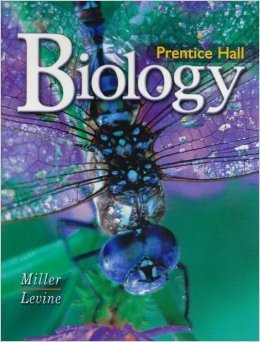
What happened in Dover, Pennsylvania in 2005 was a big fight between people who liked this book
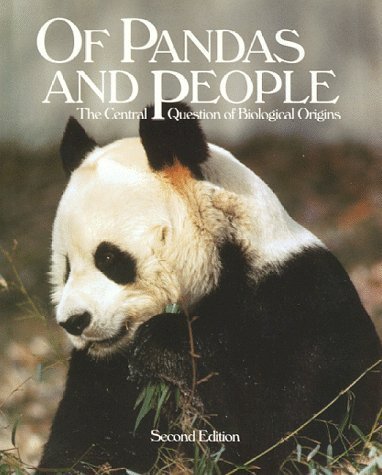
and people who liked this book
The fight was all about whether the school board was allowed to present an alternative to Darwinian evolution in Dover High school biology lessons.
So the first book is a standard textbook and the second is all about Intelligent Design. The Christian creationists who were the majority on the school governing board in 2004 decided they should order 60 copies and give a copy to each student of biology. The science teachers would not be required to teach from this book, they would continue to follow the evolutionist curriculum. But before the school year a “statement” would be read out to these students saying that Pandas was available to them as an alternative explanation of life on Earth. The statement included :
Because Darwin’s Theory is a theory, it continues to be tested as new evidence is discovered. The Theory is not a fact. Gaps in the Theory exist for which there is no evidence. A theory is defined as a well-tested explanation that unifies a broad range of observations. Intelligent Design is an explanation of the origin of life that differs from Darwin’s view. The reference book Of Pandas and People is available for all students who may be interested in gaining an understanding of what Intelligent Design actually involves.
It was basically saying “they make us teach Darwin but it’s filthy atheism, so just learn it for the exam”.
THE AMERICAN CONSTITUTION, FIRST AMENDMENT (1791)
Congress shall make no law respecting an establishment of religion, or prohibiting the free exercise thereof; or abridging the freedom of speech
Some anti-creationist parents, most of whom were Christians, sued the school board. Get those pandas off of our lawn! The argument was clear : the Panda was a Trojan horse. ID was a cloak for creationism, which was religion, and was therefore illegal to teach. You can’t teach a particular religion in American state schools because of the First Amendment. In 2003 a federal court told the Alabama Supreme Court to get rid of a monument showing the Ten Commandments!! from the court building. If the Ten Commandments are displayed in a government building it’s illegal! And if creationism is taught in a government school it’s illegal. And if Intelligent Design is creationism in disguise it’s religion and therefore illegal.
MANY AMERICANS DO NOT LIKE THIS PART OF THE CONSTITUTION
Local reactions to the law suit included :
Science has evidence about where we come from, as do the Christians – why shouldn’t students be able to talk about both?
Another parent said she “would like to see the Bible used as a reference book in the classroom”
One student was quoted as follows:
Whatever.
THE FOUR POSITIONS
The big punch-up about evolution shakes down into four types of contenders.
Darwinists of the materialist-atheist tendency (established 1859)
Christians who see no problem in accepting Darwinist evolution
The “intelligent design” guys (the new kids on the block)
The creationists (been here since 4004 BC).
Point of information : In 2014 Gallup found that 42% of Americans were creationists, almost the same number as in 1982. The number of evolutionists has increased from 9% to 19% in that time. (Compare that with a British survey in 2009 which showed 50% of British people said that evolution was either true or probably true. )
YERSINA PESTIS, WHY DO YOU DO LIKE YOU DO?
I don’t understand the creationist position at all. It puts God in a difficult position. If you say he designed all the species, and there was no evolution at all, then you must imagine that as well as designing the hummingbirds, the golden tamarind, the tiger, the giant echidna, the pigmy shrew and the koala bear, he designed the pinworm which causes elephantiasis, and the nematode Onchocerca volvulus which causes river blindness – but why stop with visible creatures? He also designed the rod-shaped coccobacillus Yersinia pestis which infected certain fleas which lived on certain rats and caused the Black Death, and more recently, he designed the HIV and ebola viruses.
But if you believe that all these creatures evolved, then God is off the hook. Except insofar as he allowed evolution to pursue its complex course without intervention, which, being God, was his choice. The problem of evil is often countered by Christians by the existence of human free will – if God intervened to prevent, say, Auschwitz, there would be no free will, and all our spiritual endeavors would be the worthless responses of automata. So, why do Christians not say that evolution is nature’s free will. You got your human free will, and your nature free will.
In the row between the Creationists and the Darwinists we have contradiction, rather than argument or debate. No one on either side is receptive to alternative points of view or well presented evidence. The idea that a creationist or a Darwinist would come away from such an exchange of ideas and have a change of heart, and renounce their errors, and embrace the opposition, is absolutely unthinkable.
DOESN’T WALK LIKE A DUCK, ONLY QUACKS SOMETIMES LIKE A DUCK
The ID guys try to say that ID does NOT propose that God designed all the species, it just says that evolution is wrong because the species were designed and they “suddenly appeared”. Statements about the identity or motives of the Intelligent Designer are avoided. Therefore the creationists promote ID as an “alternative” to Darwinism, claiming that it’s another scientific theory. You got your Darwin theory, now you got your other theory. However Michael Behe is the big ID theorist at the time of this trial (Darwin’s Black Box). He wrote : “It is not plausible that the original intelligent agent is a natural entity.”
One Darwinist Christian said that intelligent design had “as much to do with science as reality tv has to do with reality”.
BREATHTAKINGLY RUDE BRITISH JOURNALIST
Matthew Chapman’s account of this whole palaver is pugnacious, partisan, inquisitive, cringe-making, tiresome, confusing, clear-sighted, light-hearted and horribly mean. This book dishes out so many gross insults I’m surprised he hasn’t been sued too. On p 25 “they both had the reputation of being bullies, perhaps Donald, the father, who at one time was the town supervisor, more so than Alan”. On p30 : “although he was fascinating to listen to, he was not altogether capable of what customarily passes for conversation”. On p89 : “I began to feel comfortable with my contempt for the Buckinghams and Bonsells of the world”.
Angie had a mass of bleached blonde hair [and] a figure that stretched the definition of voluptuous… she looked the way Marilyn Monroe would have if she had survived until around 1975.
Nilsen [the school supervisor] was a manikin assembled in homage to bureaucracy
… a woman whose fangs had manifestly dodged the modern science of dentistry stood up to yell out the battle cry of the fundamentalist : “You’ve been brainwashed in college!”
Reverend Jim Groves, a wiry little homo-hater
Thompson, Gillen and Muise had, between then, produced twenty offspring… this is pretty scary. Fundamentalists are outbreeding other groups… we’re soon going to be overrun by them.
A USEFUL TEAPOT
How can Christians accept Darwin? Easy peasy lemon squeezy. John Haught, Catholic theologian, witness for the plaintiffs, explained thus:
Suppose a teapot is boiling on your stove and someone comes into the room and says “Explain to me why that teapot is boiling.” Well, one explanation would be it’s boiling because the water molecules are moving around excitedly and the liquid state is being transformed into gas. But at the same time you could just as easily have answered “It’s boiling because my wife turned the gas on.” Or you could also answer that question by saying, “It’s boiling because I want tea.” All three answers are right, but they don’t conflict with each other because they’re working at different levels. Science works at one level of investigation, religion at another. … The problems occur when one assumes that there’s only one level.
He didn’t say which level his wife was working on.
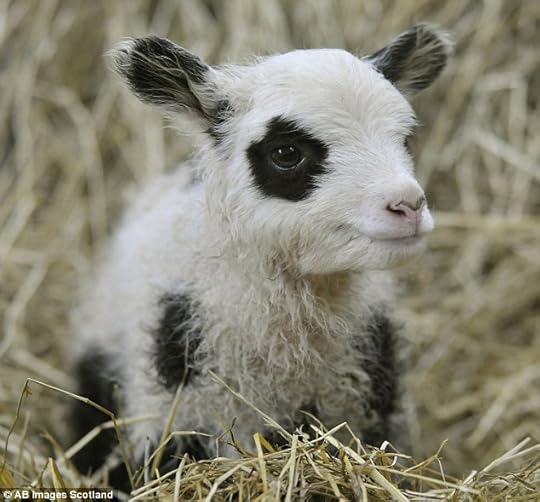
"It is my intention to evolve into a panda. I have already started with my right eye."
Matthew Chapman, author of Trials of the Monkey An Accidental Memoir, and great-great-grandson of Charles Darwin, had moved to the United States, tired of the English predilection for class distinctions. Never a diligent student, he fell in love with the story of evolution and visited Dayton, TN, home of the famous Scopes trial. "In my mind the anti-evolution movement remained a quaint Southern aberration resulting from a combination of moonshine and religions of the snake-fondling type. I had drunk of the aforementioned mountain dew and found it a powerful mind-altering substance, oddly delicious, with only the faintest leady aftertaste of the car radiator through which it had been distilled, but concluded it was not the best stimulant of intellectual cognition." Now that's a delightful quote.
When he learned that a small town in Pennsylvania was to be the site for a replay of the Scopes trial, he packed his bags. York County, PA is a land of contradictions. Militant in a state of pacifist origins -- they sent more troops to the Revolution than any area of comparable size and population -- they had evolved into the antithesis of William Penn's "holy experiment" in religious toleration, and the area was known for its religious zealotry.
Dover, sadly, reminds me of the rural town near where I live, except that we have no traffic light. As with Dover, the highpoint of the week is Friday night football/basketball, and the major traffic jam occurs when the old ladies drive to the post office to pick up the mail. A town of about the same size, we have 1700 residents and 4,963 churches. The school used to annually host a local minister who handed out copies of the New Testament to all the kids until they got a call from the ACLU when a local liberal (guess who?) called them. The debate over evolution and teaching of intelligent design (an oxymoron if there ever was one) tore Dover apart.
After the resignation of several school board members, the board appointment process filled it with fundamentalists. Even they realized they couldn't force intelligent design down the throats of the students so they had science teachers be required to read statement indicating that evolution was "just" a theory and students wanting another view should read Of Pandas and People, bordering on a violation of the Pennsylvania standards of education. An editorial in the York Daily Record suggested that," Watching what's going on in the Dover Area School District is like watching a train wreck in slow motion." To give you an idea of the backward climate, the town's mayor had just been acquitted by an all-white jury of having given bullets to local white gangs thirty years before so they could "go out and kill as many black people as they could during some very severe race riots."
One of the arguments of the school board was, "it's just a statement we want read to the students, takes only a couple of minutes, not that important, so what's the big deal?" To which the plaintiffs natural response was, "If it's not so important why are you taking this to court?" Not to mention that the statement provided an unequivocally false impression of what science is and what a theory is. In addition, while making the argument against evolution, the board and the defense team could never marshal arguments for intelligent design. "The logic of picking out intelligent design, which is inherently untestable, and saying that any evidence against evolution is evidence for intelligent design employs a logical fallacy that I think most scientists reject."
The plaintiffs lawyers were a congenial group, staying in the same hotel, eating together, and generally having a good time. The defense team, however, "was a dysfunctional family with a frequently absent father." Richard Thompson, who bore a resemblance to William Jennings Bryan, from the Thomas More Law Center, which he had founded with money from the Domino's pizza chain and who had made his reputation obsessively trying to send Dr., Kevorkian to jail,, would often disappear even while important testimony was being taken. Competition between the Discovery Institute and Thomas More Center would not help their defense.
One of the really nice things about Chapman is that he genuinely likes people, even people he disagrees with completely, once he gets to know them and you feel his sympathy for the participants. Humor abounds. One of the school board members was so fiscally conservative that she was described by another board member as being so tight "she could squeeze the nickel 'till the buffalo farts."
The linkage of belief in evolution and atheism haunted the debate. The plaintiffs at Dover put many people of faith on the stand who fervently believed in the evidence of evolution. Particularly effective was a Catholic priest, Haught, who in his friendly and non-confrontational manner effectively dismantled the defense questions. Often the defense misunderstood the implications of what was said. Chapman asked one of the plaintiff's lawyers about a line of questioning by the defense that seemed to bring out the weaknesses in the defense's own case, the lawyer replied, "We don't get it either, but the good news is that whatever we forget to bring out during direct, we can rely on them to bring out during cross." Haught, argued convincingly that science and religion were related but operated in two separate and distinct realms. His example is instructive: Suppose a teapot is boiling on your stove and someone comes in the room and says "explain to me why that's boiling." Well one explanation would be it's boiling because the water molecules are moving around excitedly and the liquid state is being transformed into gas. But at the same time you could just as easily have answered that question by saying, "It's boiling because my wife turned on the gas." Or you could also answer that same question by saying, "It's boiling because I want tea." All three answers are right but they don't conflict with each other because they're working at different levels. Science works at one level of investigation, religion at another. The problems occur when one assumes there's only one answer.
Haught concluded his testimony by saying, "the God of intelligent design seems to be a kind of tinkerer or meddler who makes ad hoc adjustments to creation, whereas I wold want a child of mine to think of God as something much more generous, much more expansive, a God who can make a universe which is, from the start, resourceful enough to unfold from within itself in a natural way all the extravagant beauty and evolutionary diversity that, in fact, has happened. To put it very simply, a God who is able to make a universe that can somehow make itself is much more impressive religiously than a God who had to keep tinkering with the creation."
Apocalyptic thinking played a large role in the belief systems of those defending their desire to teach intelligent design. They truly believe the end was coming, that evolution was a hoax, and that science had evidence proving it to be a hoax but that evidence was being suppressed. The ignorance of the anti-evolution crowd of science and how it worked is truly saddening. They never forgive their antagonists. Scopes, who had never really taught evolution and was picked mostly because of his willingness to participate in the trial, had his life turned upside down. He had wanted to teach geology at the college level but had his much-needed fellowship revoked. "As far as I'm concerned you can take your atheistic marbles and play elsewhere," was the sentiment conveyed in the rejection letter. He realized the stigma of the trial would follow him and he spent his professional life working as a geologist in South America.
Contrary to popular wisdom, I think the hidden debate at Dover was between the God who employed evolution as opposed to the flaky God of instant creation. This formed the crux of the trial that made the outcome almost inevitable. This was not so much a battle between evolutionary atheism and God's intelligent creation, but between two very different views of God and how he/she/it operates. The judge was thus forced, in my view, to rule, quite appropriately, that science was to be taught in the classroom, that the water is boiling because the heat is exciting the water molecules, and not religion, which was suggesting the water was boiling because we want tea.
I have to wonder what the hell I was doing in 2005 that I completely missed this case. When several local residents decided to sue the school board of Dover High School in PA over their attempt to have intelligent design added to the biology curriculum it garnered more than a little national attention.
With an occasionally rambling, but ultimately reader friendly approach screen writer and author Matthew Chapman manages to capture the personalities of all the major players, the highest and lowest points of the trial and takes a very sharp look at just how things went so far so fast.
Go into this knowing that Matthew Chapman is barely an agnostic. He believes in something, maybe, but he's certainly not sure what and he clearly feels that religion has no place in the public schools or at the very least in the biology classroom. I happen to agree with him wholeheartedly but it does make for pretty biased reading most of the time. I don't think its an accident that most of those in favor of seeing intelligent design in the classroom are painted as gibbering, drug addicted, ignorant, bible thumping rubes while even the weirdest of the plaintiffs are described as merely charming eccentrics.
What's really interesting here is the look we get at the people who made this into an issue in the first place. The shocking truth that those who wanted to see ID taught didn't even know what it was and didn't really care about or understand evolution really struck a cord with me. Their desire was born more from an irrational anger at science in general and at people more educated than them than from a real need to impart their own views on students. This peek into what I understand is a pretty widespread view in religious fundamentalism scared the crap out of me. These people almost managed this, they had a ton of national support and if the town had kept quiet it would have happened, thus setting one of the scariest national education precedents in our history.
The refreshing thing here is that a much smaller group of people did care enough to get involved and reason beat out blind ignorant religious zealotry. So the take home message for me, that evil or at least stupidity can only win out so long as good men and women do nothing, ultimately wins out over Chapman's wordy, super, super detailed prose.
There's a cast of characters listed in the opening pages of the book which I laughingly skipped until I realized why it was there. There about four dozen really important players in this case, according to Chapman, from the judge and ALL the lawyers to the authors of the biology books being debated to each and every plaintiff and defendant to random people on the street.
This book is dense and Chapman has a tendency to find himself funnier than he actually is but its also a really important read and one that anyone with strong feelings about the value of education and the importance of the separation of church and state would do well to read.
Not since early Hunter S. Thompson or Tom Wolfe have I had as much fun reading a witty, provocative piece of journalistic writing as I've had in screenwriter Matthew Chapman's "40 Days and 40 Nights: Darwin, Intelligent Design, GOD, OxyContin AND OTHER Oddities ON TRIAL IN Pennsylvania". It's an enthralling, often humorous tome, that owes more to the mordant humor of Frank McCourt, in his bestselling memoirs "Angela's Ashes" and "Teacher Man", than it does to the rather dry, but never dull, prose of Chapman's great-great-grandfather, Charles Darwin, in his scientific classic, "Origin of Species". In the fall of 2005, Chapman attended the Kitzmiller vs. Dover Area School District Trial, as an accredited journalist and filmmaker, intent on making a documentary film on the trial, the town and its people. However, this would soon become a personal trek of self-reflection and discovery, in which he would make a most remarkable conclusion on the teaching of creationism in science classrooms. A trek which took him back to Dover, PA often, holding substantive conversations with the key players on both sides of the issue. And while Chapman truly strives for a cinematic narrative, fading in and out between brief discussions of the 20th Century Scopes Trial, the Discovery Institute, and his illustrious ancestor's revolutionary scientific research, the book's emphasis remains focused upon himself and his conversations with the people of Dover. So those in search of an extensive, truly profound, overview of the trial's origins and history might be best served elsewhere, most notably by reading Edward Humes' definitive, well-written account of the trial in his book "Monkey Girl: Evolution, Education, Religion, and the Battle for America's Soul", but they would miss much of the personal drama that Chapman has vividly recorded, using his prose as though it was his video camera lens, exquisitely recording all of the detail present.
Chapman's narrative is more linear in focus than Humes' comprehensive account, and adheres more closely to a chronological perspective. One that starts with the Dover Area School District board's decision in the fall of 2004 to teach Intelligent Design alongside evolution, unexpectedly starting a civil war within the town itself, led by the ardent Fundamentalist Christians on the board, against those in the Dover community who were appalled by the board's decision. Among the most sympathetic figures is unexpectedly the board's firebrand, Bill Buckingham, who ruefully admits to Chapman that he's addicted to the painkiller OxyContin, and blames it, not himself, for some of his most outlandish comments, at the board's meetings, that were reported accurately by the local press. Chapman's truly moving, poignant portrayal of him strongly hints that he is, indeed, a lost soul afflicted by drug addiction. It is through moving portraits like those of Buckingham, and his arch-nemesis, former board member Barrie Callahan, that we get a strong sense of the political and religious strife which embroiled the people of Dover for more than a year, beginning in the summer of 2004, when the board left the Dover High School science teachers twisting in the wind, simply because Buckingham had objected to the teaching of "Darwinism" - and that mentioned only briefly - in the newest edition of a popular high school textbook co-authored by Brown University cell biologist Kenneth R. Miller, who, himself, is the subject of a sympathetic portrayal by Chapman in which he explains the rationale for science's faithful adherence against "dealing with issues of meaning or purpose" during his court testimony.
However, it isn't Kenneth R. Miller who emerges as the hero of Chapman's vividly told tale. Instead, the honors rest upon the attorneys for the plaintiffs, most notably, lead attorney Eric Rothschild, and, quite unexpectedly, philosopher of science Barbara Forrest. Rothschild is depicted as a most congenial, yet still quite, astute, legal warrior in the courtroom, who is able to pry gently from leading Intelligent Design advocate - and star defense witness - Lehigh University biochemist Michael Behe a surprising admission that astrology could be viewed as scientific, based on Behe's own broad definition of what science is, one that includes the potential study of supernatural phenomena; a definition which runs counter to the one subscribed to by the National Academy of Sciences and mainstream science: a rational enterprise that is completely divorced from the supernatural realm (During this memorable "duel" of a cross-examination between Rothschild and Behe, Chapman observes Behe "smiling defiantly" as Rothschild reads the infamous disclaimer posted on the website of Lehigh University biological sciences department acknowledging evolution's scientific validity, but noting too Behe's academic freedom to pursue "research" on Intelligent Design. He draws the conclusion that Behe feels intense pain from this rejection by his own departmental colleagues.). Chapman demonstrates why philosopher Barbara Forrest may have been the plaintiffs' most effective witness. Led on by attorney Rothschild, she begins her testimony with an elegant overview of the history of the creationism, especially during the last two decades of the 20th Century, emphasizing the origins and early history of the "Intelligent Design" movement. And then she reveals the pivotal "smoking gun" in an accurate, yet dramatic fashion, documenting the text changes made in the early drafts of the Intelligent Design textbook "Of Pandas and People", noting the ample instances in which "creation" was substituted with "design", not scores of times, but at least more than one hundred different instances in the text itself. Later, she ends her testimony in a memorably tedious cross-examination by lead defense attorney Richard Thompson that drags on for nearly a day and a half.
Chapman concludes "40 Days and 40 Nights" on a most idiosyncratic, personal note, and one that he has alluded to ever since the very first page of his memoir. He contends that we should allow creationism into the science classroom, so that it can be "dissected", in much the same fashion as it was during the Kitzmiller vs. Dover Area School District trial, by allowing teachers to "explore the limitations of faith through the revelatory methods of science", and resulting in "verdicts" identical to Republican Federal Judge Jones' conclusion that Intelligent Design wasn't scientific. Emotionally, it is a sentiment that I found myself quite unexpectedly, at first, to be in complete agreement. However, on second thought, I concur with Ken Miller's observation that introducing Intelligent Design into science classrooms would be a "science stopper". It would conflate most students' understanding of what exactly is the difference between religious faith and science, though I suppose that some truly gifted students, like those attending prominent American high schools such as Alexandria, Virginia's Thomas Jefferson High School for Science and Technology, and New York City's Bronx High School of Science and Stuyvesant High School, might readily understand and appreciate these distinctions. And yet I am inclined to agree more with the harsh view articulated by distinguished British paleontologist Richard Fortey in his essay published in the January 30, 2007 issue of the British newspaper Telegraph, contending that it is an absolute waste of time arguing with Intelligent Design advocates, and that they ought to be dismissed as "IDiots"; by extension, so would be the teaching of Intelligent Design alongside evolution in a science classroom. I would rather see talented students from Thomas Jefferson, Bronx Science and Stuyvesant engage themselves fruitfully in genuine scientific research of the highest caliber, than in trying to understand the metaphysical, religious nonsense known as Intelligent Design and other flavors of creationism. I think, in hindsight, so would Charles Darwin.
I was eager to read this book after watching the NOVA episode: Judgement Day: Intelligent Design on Trial. It is by far the most interesting NOVA I have ever seen, following the attempt by the Dover, PA school board to introduce creationism into the science curriculum via "intelligent design" and the subsequent lawsuit and trial. The NOVA episode was great because it covered important issues of the day (the current attempts to attack science and the science curriculum), fascinating science (explained with fervor and love by eminent scientists), courtroom drama (citizens suing the school board for trying to wedge "intelligent design" into the science curriculum) and good juicy small town characters. If a two-hour episode of NOVA could be so interesting then a book about the trial, must be a real winner, right? Especially one written by Charles Darwin's great-grandson.
Sadly, the book was a huge disappointment. Chapman (Darwin's spawn) is not up to the task of conveying the scientific concepts - the difference between a hypothesis and a theory is not explained until much later in the book (though it is referenced endlessly), very little of the scientific testimony related to evolution is presented, and whole chunks of testimony are dismissed with statements akin to (I paraphrase) "suffice to say he was awesome (or stupid), but I won't bother to tell you anything about it." The NOVA show made the science at the trial seem exciting. Chapman barely gets into it.
Chapman also has an unfortunate habit of trying to make clever analogies that are not particularly insightful or particularly apt (e.g. comparing intelligent design to sperm in search of an egg), and seems to have mastered the art of the clunky (and occasionally vulgar) turn of phrase. His obsession (and disgust) with the breeding habits of Catholics (defense attorneys were Catholic and had many children) come through in this gem:
"And with that, the sturdy procreative Muise turned over his fellow highly reproductive Catholic to the more sperm-conservative Jew..."
Not awesome.
Most distressing, though, is Chapman's inability to tell the story without making his own views - often expressed in the most knee-jerk and simple-minded manner - the prism through which we are supposed to interpret the story. At one point in the book, Chapman takes exception to scientists who use words like "qua" when they could just use plain old English. He expresses his concern that it just gives creationists one more reason to hate science and scientists. And yet, he injects his own political and religious comments - comments that are clunky and ridiculous - that are likely to alienate anyone who is not a hard core anti-religion, anti-Republican. I am no fan of religion or Republicans, but I can do without Chapman's contrasting of the judge in the case (and his wife) with George W. Bush (and his wife).:
"Just as Judge Jones possessed a thoughtful decency absent in George W. Bush, so Beth [judge's wife:] possessed a kind of humanity absent in the steely-eyed Laura. "
I get that Chapman was trying to link the Bush administration to the rise in religious fundamentalism and the Evangelical movement, and the consequent trashing of science in America, but it would have been much more interesting if he had spent more time tracing this particular struggle in the US in a way that would help the reader understand why trials like these even have to happen. He does spend some time talking about the Scopes trial, but he seems to do this primarily to draw comparisons between the the players in that drama, with the players in the drama at hand. I think if he had taken the time to do a chapter or two with historical background he might have actually developed a better understanding of the American psyche.
I wanted to like this book so much. I am liberal, pro-science (duh!), pro-Constitution, and all that good stuff, but Chapman made reading this book a chore. Reading his writing is like talking with a high school dropout who wants to impress you with how smart he is and how much he knows. And he is smart and he does know a lot...for a high school drop out. (That was me sort of doing the Chapman style).
Overall, I say, skip the book and get a hold of that NOVA episode. Truly awesome, it was, and Matthew Chapman no doubt owes them for the majority of his book sales.
This was a very interesting read - I've been to lectures on intelligent design where the entire crowd was arguing against it and I must admit that I was wondering how anybody with a higher education could think this was science and that it as a better explanation than Darwin's theory of evolution. So when I found out that a school board in the US actually did everything they could to include intelligent design - and even creationism - in the education and that parents had to sue the board to avoid it, I was floored.
Matthew Chapman, great-great-grandson of Darwin, covers this trial in his book and he does this rather fair with room for both sides to explain their view, although there is no doubt whose side he's on. I like that he takes his time to describe the people involved and even some of the "bad guys" are described as descent people whom he rather liked. The main thing he's against is fundamentalism in every form and I agree with him on that. I also agree with him that George Bush, the current president but luckily not president for very much longer, is a fundamentalist but I think that he should have left the Bush-bashing out of it and just focused on the fundamentalist in the school board - still, he has a point: "It is one thing if faith compels a few fundamentalists in Dover to attack evolution in the high school; it is another when a man who acts on similar beliefs becomes the most powerful man on earth." (269)
It amazed me that Chapman was able to write about this subject with such a great sense of humor - I laughed several times while reading it, like when the main lawyer for the plaintiffs go home after the trial and helps his daughter put on a defense for Cindarella's ugly step sisters for a school project or when Chapman wonders why none of the scientists talking in favour of intelligent design had bothered to test it even though they claimed it was possible to do. In Chapman's view, this could lead to the discovery of the designer behind it all, God. So he writes a dialogue where it turns out that yes, they did find God, but it turns out he's a gay Jewish atheist: "Behe: "He said we should have figured it out. The virgin birth? Send an angel to do a man's job? Jesus? Confirmed bachelor, hung out with twelve guys..." Pizza Man: "But why an atheist?" Dembski: "Said he lost faith in himself after we did the Inquisition, sir. In retrospect, I suppose there were all logical inferences we could have -"" (217)
But the part that made the biggest impression on me was that the people who fought so hard to get intelligent design and creationism into high school didn't even know what it was or what evolution was, even though they thought it to be basically something the devil himself had cooked up. One of the defendents gave this definition on intelligent design: "A lot of scientists, don't ask me the names, I can't tell you where it came from, a lot of scientists believe that back through time something, molecules, amoeba, whatever, evolved into the complexities of life we have now." (220) - anybody want to say evolution at this point? It scared me that people who knew so little about science could be in charge of deciding which theories to be taught and what books to use - especially since some of them admitted to not even having read the book they tried to include in the teaching. Luckily it turned out that these fundamentalists were not able to be in charge of the education of the youth of Dover and the judge ruled in favour of the plaintiffs and against allowing theories based on religion to be a part of the science education in Dover.
Fantastic recounting of the Dover School District trial in which a bunch of fundamentalist assholes on the school board decided that it was necessary to teach "intelligent design" alongside evolution in science class so that the kids "could get both sides of the story" and "decide for themselves." Right. See, evolution is just a theory! And the Earth is 6,000 years old!
Chapman gives a blow-by-blow account of how the attorneys of Pepper Hamilton, a Philadelphia-based firm, ritually slaughtered the "lawyers" of the Thomas More Law Center, an organization funded mainly by that lunatic who founded Domino's pizza and now is trying to build an entirely Catholic town somewhere in Florida. Chapman recounts the story with humor and movie-like pacing, which makes sense as he was also filming a documentary of the trial. It was refreshing to see reason actually win out over fanatacism for the first time since November 2000.
This was a big disappointment. I had followed the trial in Dover, Pennsylvania, when it made national news--the school board voted to introduce a creationist text to the ninth grade biology curriculum, as a result, some parents and teachers sued them on the basis of keeping religion out of the public school system. Fascinating, right? I was interested to get more insights on the inner workings of this trial.
When Chapman gets out of the way of the story/events, it's an intriguing read, full of bizarre personalities and great debate. Unfortunately, however, most of the telling is filtered through Chapman's endless opinions and impressions, many of which are incredibly irrelevant. We also occasionally get detours through Chapman's wild youth, turbulent relationship with his parents, and the like, which just serve as exasperating distractions. Chapman also takes every chance he can get to the tell the readers that he is a direct descendant of Darwin as his main qualification for covering this trial (even though he has no personal background in science or journalism). For me, that doesn't automatically grant credibility--because my ancestors are from Italy, does that give me license to write a book on the history and modern adaptations of making a perfect thin-crust pizza, without having put in the proper time and study of the subject? I think not. If I had been his editor, I would have cut this book by a third and asked him to start over, stripping most of his personal references and impressions. Everyone can skip this one.
An exceptionally well written account of the Evolution/Intelligent Design Trial in Dover PA. Chapman is a witty and inciteful reporter of the events and the people that animated them. He also provides one of the great arguments against design, pointing out that if one infers that a watch on the beach had a designer, one also has to admit that the watch as a product is the result of an evolutionary process of mechanization. I don't typically like current events based books, because I fear they will age on my shelf. But this one has a timeless feel to it, even though it is deeply historically grounded.
I just grabbed this one on a whim while dicking around in the library. I found it highly readable, funny, and aggravating at times.
Matthew Chapman is Darwin's great-great-grandson and makes a living as a journalist and screenwriter rather than a biologist. While he's always recognized the significance of his famous ancestor's work, he rarely gave the "evolution vs. creation" controversy much attention. That is, until schlepping over to the good ol' U.S. of A. to cover the now infamous Kitzmiller vs. Dover Area School District trial (a school board attempted to require its science teachers to teach Intelligent Design alongside evolution and was sued), where he was blindsided by the American public's celebration of ignorance. 40 Days and 40 Nights should not be read as an unbiased account of the trial--in fact, Chapman makes no attempt to hide the identity of his famous ancestor, nor his own conclusions, religious and political leanings, or, perhaps most humorously, his impressions of the people he interviews. The result is a personal account of one reporter's experience during the trial (with an outsider's eye) and the mounting hostility is taking a toll on the residents of what is normally a small, peaceful town.
As a biology geek, I followed the events of the trial as they were unfolding, so much of the actual trial goings-on were not new to me. In fact, Chapman leaves some of the more famous moments out entirely (the presentation of a "flagellum-less" flagellate bacteria to counter the irreducible complexity argument of that dolt Michael Behe, the discovery of the damning cut-and-paste transitional fossil "cdesign proponentsists" in an early draft of the school's proposed textbook which declares that intelligent design is not the same as creationism). But the character portraits that Chapman paints of the plantiffs, defendants, lawyers, teachers, religious leaders, and regular townfolk are what I enjoyed the most. Both critical and sympathetic to all sides, he shows us the good, bad, and ugly, yet is quite adept at showing us the sincerity and decency in everyone involved. Well, almost everyone. There are a couple of genuinely awful folks--blatant liars, cheats, loudmouths, morons, hotheads, and douchebags.
An extremely interesting and terrifying account of the Kitzmiller vs. Dover Board of Education trial which ruled against the teaching of creationist theories on public schools. The most fascinating parts of which were the defendants (the creationists) own shocking incompetence during the trial (two of the witnesses lied under oath), the final decision of the judge who was a republican nominated by George W. Bush, and the ferocity and hypocrisy of the creationists on the school board. My favorite quote from the author being "If I believed that someone was watching over me and that when life ended, death would be a joyous reunion with everyone I loved, I would be ecstatic. Why, then, are so many true believers so often consumed with rage and bitterness?" the main instigator of the creationist movement of the board being an addict of Oxycontin among other things. While terrifying in its description of the Creationists, who in the name of religious freedom, will ram their own backwards religious ideology down everyone's throats in public schools, "40 Days" offers hope to the minority of rational people in the country that a small group of 11 determined citizens can make a difference. It also offers the interesting proposition that Creationism ultimately should be taught in schools so as to uncover its stupidity to all. A great, short read. Just don't read it before going to bed at night if you want a peaceful night's rest.
Dover, PA was the site of an extraordinary trial over the teaching of Intelligent Design—Creationism in scientific drag—in high school biology courses. Chapman, a descendent of Charles Darwin, covered the trial. This is a page-turning account of the trial and its personalities. If you don’t know anything about the attack on evolution, this might be the book to begin with. Chapman lards his coverage of the trial with impressionistic, if charitable, descriptions of the main players. Even so, the fundamentalist school board members who tried to replace the biology textbooks with Creationist non-science texts come off as arrogant, bullying and well-deep ignorant of even the positions they themselves were trying to promote. Their lawyers seem thoroughly incompetent, and Chapman does an admirable job of noting where the defense could have scored some points. Surprisingly, most of the local plaintiffs were involved in their Church are registered Republican. Reason prevailed, but for how long?
Chapman, a great grandson of Darwin, set himself to report on the modern day Scopes Monkey Trial held in Dover Pennsylvania in 2005, when the local school board attempted to insinuate the notion of intelligent design into the science curriculum of their district. He offers a look at the personalities involved in addition to the political and social forces at play. I was reminded of Capote painting a landscape with the residents of Holcomb, Kansas. He lacks Capote’s singular genius for language, but his descriptions and insights are interesting and engaging. Although I agree with his take on most things, his disdain for religion and alarm at the degree of religiosity in the USA, I wished sometimes that he would have allowed the events and characters to speak more for themselves. While amusing, the snarky running commentary did wear thin after a while
Great book describing the Kitzmiller vs. School Board in Dover, PA and the evolution-intelligent design (reason vs. faith). The defense was so poorly prepared and incapable of putting together an argument that it is amazing this went to trial, but it was a test case intended to attract national attention. For the most part, the "characters" are very engaging. The story is well-told and the author, the great-great grandson of Charles Darwin) interjects some humorous observations in its telling. The judge, John Jones III, is a man to be admired for great intelligence and wit. Despite his ancestry, he is not altogether inimicable to the intelligent design characters. He is clear about his bias, but gives everyone a fair representation and culminates with an argument for bringing creationism into schools where it can be dissected and discussed with other theories. This book called to mind another great book, Murder in Amsterdam about the murder of Theo van Gogh, descendant of Vincent, by a fundamentalist Islamist. In it, Ian Buruma tackles the growing fundamentalist Islamic movement in liberal Europe and the history (in particular the shame over the capitulation to the Nazis treatment of the Jews) that lends itself to tolerance. He discusses how that tolerance is fueling intolerance and abuse (particularly of women). In 40 Days, Chapman laments that religion is not talked about more openly. Historically, it's been considered off-limits and an impolite topic. He says that that approach is not working and that the rise of fundamentalism (remember the last election when a majority of Republican Candidates for president proudly boasted that they had doubts about evolution?) is superseding reason and sound judgment. In spite of all of this, this is a relatively hopeful book about the power of a few citizens in a small town to wage battle over an idea. The people who fight this fight span the political spectrum. A very informative, witty, and thought-provoking read!
Wow! I didn't think a book detailing the creationism/evolution trial could be a page-turner - especially knowing the outcome - but Chapman's book kept me glued to all of the drama! He really delved deep into all the players on both sides, sitting down to get to know them (and their inner motivations) either during the trial or right after. Lots of Chapman humor throughout which actually made me laugh out loud. He mentions shooting a documentary during the trial, I'll have to check out if that ever got made. (FYI, Chapman is Darwin's great-great grandson, so it was interesting to see his view of the trial and how everything unfolded).
If you are looking for a fair presentation of both side in the Dover trial, this book is not for you. Chapman is flippant and more interested in making the reader laugh than educating them. I should have known better, the book was endorsed by Christopher Hitchens and that alone should have tipped me off to the nature of the writing. Not the historical treatment I was looking for.
Interesting perspective on this over-reported story. If you have read many books about the subject, you may find one or two new things here. His conclusion is also interesting, especially if you are into ideas which have the potential to piss people off on either side of the conservative/liberal divide.
I felt I learned a lot about the people and the issues, and really enjoyed this review and analysis of the Dover, PA School District educational curriculum trial re Evolution/Intelligent Design. Interesting, thought provoking, and even humorous. Great book.
Funny and well written, found myself taking notes on how to phrase discussions surrounding intelligent design as science. Important for anyone in education as well as scientists to be aware of this court case
This was another interesting and educational book by Matthew Chapman, Great Grandson of Charles Darwin. Matthew relays the happenings of the Dover trial with accuracy and humor.
Fascinating vignettes about the characters that played out this modern Scopes trial. Chapman addresses all the absurdities with a soft spoken smile. Worth a look.
I discovered this book via Hitchens's God Is Not Great and I'm glad I did. I am very interested/concerned by the undue power religion holds on United States policy, and this particular case is a fascinating exemple of that. This account is sometimes infuriating (most notably when you learn of the compromises science teachers have to make, in the US and in the 21st century, to appease the religious forces at work in some geographical areas), sometimes funny (when the absurdities of intelligent design are revealed through a crafty interrogation) and sometimes just plain depressing (that it would get to this point in the first place. This is why school board members should not be elected. As a Frenchwoman, it astounds me that people with no background in education whatsoever can find themselves weighing in on curriculum matters.) It is also interesting on a scientific level as it explores various subjects linked to evolutionary theory and the emergence of life. It proved to be thought-provoking at times and yielded some profound passages. I particularly enjoyed an excerpt which discusses our relationship to time and how we just cannot fathom the amount of time it took for human life to arrive at its current form and how much more insulting to our self-esteem evolution is than the comforting thought that just 6,000 years ago God put us, fully formed, at the center of the universe (full passage available in the Quotes section of my account if you want to check it out). Overall it was an accessible and pleasant read about a local matter which says a lot about the United States as a whole. One considerable negative point, though. As a pro-evolution atheist (a large part of Chapman's readership, I'm sure) I am the first to find this whole matter ridiculous and depressing. However, there is something unsettling in reading such an openly biaised book. I would think most of the defendants' arguments speak to their vacuity for themselves, and we certainly don't need what feels like “cheap shots” on the author's part attacking their personnalities or private lives. The contrast between the presentation of the opposing sides' lawyers, witnesses and experts (and this even as the author makes a point of regularly reiterating how he is prone to see the good in everybody) is so unbalanced it made me cringe a little through the whole account. Even though their “scientific” arguments are weak, it does not mean the people defending intelligent design are complete morons, and yet they are consistently painted as such. To paraphrase the life-changing (at least my life) masterpiece The Righteous Mind, the people on the other side of the fence are just as sure they are right as you are, and pegging them as enemies and ridiculing them is not going to get anybody anywhere. The science speaks for itself. No need to pile on it, and actually listening to them might not only help us refute them more efficiently, but could even maybe (gasp!) yield a few nuggets of interest. I actually found the (very short and derogatory) account of one of the expert testimonies on behalf of the defendants, by a specialist on the philosophy of science, to be interesting and thought-provoking. And yes, some of the ID-proponents in this case can fairly be described as bullies, but all the more reason not to sink to their level. Chapman mentions how scientists could help get their point across better if they toned down their smug behavior. He doles out a big dose of smugness himself in this book, and loses a star from me in the process.
This book provides excellent insight into the religious teaching of Creationism, Intelligent Design, vs Evolution and the debate over God and science in America, the Bible vs Darwin's theory of evolution. The story is written around a trial in a Pennsylvania Trial. I read and reread to get, understand what ground, what the motivation and beliefs are of those with a profoundly deep belief in the story of Genesis, God creating the world in 6 days.
There are many things we (Europeans) share with the Americans that I appreciate. But there are two things that we do not share I appreciate even more. Guns and religion. This book explains expertly why I am so happy that religion plays almost no role where I live. Religion is poisonous.
This book made me laugh and made me cry, often at the same time.
The full name of this book is: 40 Days and 40 Nights: Darwin, Intelligent Design, God, OxyContin, and Other Oddities on Trial in Pennsylvania. It is about a group of fundamentalist school board members push to get intelligent design ("creationism in a lab coat") taught as science. Their actions set up a confrontation which in many ways became a sequel to the Scopes Monkey Trial, this time in the little town of Dover, Pennsylvania.
One of the things that got me interested in reading this book about Darwin's theory of evolution being on trial is that the author, Matthew Chapman, is the great-great-grandson of Charles Darwin. Chapman quickly reveals that he is a school dropout and knew very little about his great relative's theory prior to covering the trial.
Ability, intelligence, and knowledge are not guaranteed by formal education and Chapman shows an abundance of each. A gifted writer, he probed beyond the courtroom to investigate the town, the area, the principle players, and even the other writers and reporters. While he often injects some humor into a serious discussion, Chapman has the tools of a sharp intellect and intense research abilities and combines them with a compassionate and personalized interview style.
Chapman pokes fun about nearly everyone, including himself, in this farcical tale. The painful reality is that a small group of individuals put the town of Dover into the national news. Dover is a town that is struggling financially and trying to pull itself up by its bootstraps. The trial, rather than luring new business and money into the area, makes the town seem medieval and the actions of a few school board members puts the town at risk of having to cover millions of dollars if they lose the court case. This book follows the trial, all forty days and forty nights, along with all of the players and issues.
One of the interesting points Chapman makes is that during the cold war science held center stage in the US. Our country's prestige was wrapped up in showing the world we were world leaders by our scientists getting us to the moon first. Since then, however, science seems to have been pushed into the backseat and is often the whipping boy of religious leaders and ignorant politicians.
While there is are no Clarence Darrows and William Jennings Bryans in this trial, there are several earnest and dedicated lawyers, and plaintiffs, working to save public education. I believe Chapman presents both sides clearly and truthfully. While sometimes getting bogged down in personalities and testimony, I believe that this book presents a clear picture of a science vs religion battle that was and is raging in this country. I highly recommend it to people on both sides of the debate.
Let me start by saying that I'm uncertain as to why Chapman put OxyContin in the title because it is only mentioned twice in the book -- once, stating that one of the parties involved in the case became addicted to the pills after being prescribed them following an accident and the other (much later), in reference to said party detoxing from it. As far as I can gather, OxyContin wasn't brought up at trial, so I'm not sure why it was deemed relevant enough to land in the subtitle of the book.
That being said, I thought it was a fantastic read. Chapman is witty and engaging. Granted, I'm firmly on the side of "How can people still be debating evolution in this day in age?," but he does a great job at presenting the people involved in the other side of "debate" (the "Teach the 'Controversy'" folks) as fairly good people who just happen to be willfully ignorant on these matters and, unfortunately, were in a position of power that allowed their views on the subject to influence science education in the school district. Most seemed to be very likable people, but foisting their creationist leanings onto a captive audience in a public school system is a no-no when it comes to the Establishment Clause of the U. S. Constitution. So there it is.
I followed this case passively in the news as it happened very near where I work and was the water cooler talk at least once a week. A local school board had decided to offer alternative teachings to evolution and surprised both the school faculty and the parents of the children at the school. The folks impacted fought the good fight until nothing was left to do but file a law suit.
I'm surprised that a local school board would go against everyone like that however the book does explain why. I still shake my head at the explanations offered to a lot of things in this book because, in my opinion, any intelligent individual cannot deny evolution, the science is too strong.
All the major players are profiled from the suit, the lawyers, the school board, the parents, the teachers and the community reactions. It was an interesting book on a subject I thought would have been long settled way before 2005 when the law suit was filed. However, it seems it was not and I'm sure will show it's head down the road again.
I bought this book for two bucks as a library discard. It looked from the cover like it might be a good blow by blow description of the trial. Instead it turned out to be a much more personal book, and therefore more interesting. True, the author quotes bits of testimony that he feels illuminate the course of the trial, but the book is far more about the background of the combatants at the trial. One really gets a sense from this book what a fiasco this whole trial was- rivaling even that most famous antievolution fiasco of all: the Scopes monkey trial. I was all set to give this book five stars, but changed my mind in the last ten pages. The author's clear liberal bias was evident throughout the book, but I felt it was reasonable tempered up until the last chapter. Then, when he let loose with both barrels on anything that looked vaguely like a conservative, for me it threw doubt on all his seeming high-mindedness in everything that came previously.
Matthew Chapman, the great-great-grandson of Darwin, attended the entire Kitzmiller v. Dover intelligent design trial, and has written a book that informs, entertains, and humanizes all of the characters of the trial. Chapman engaged in interviews with every major player in the trial, including the plaintiffs, defendants, lawyers, reporters, witnesses, townspeople, and the judge himself, and does a good job of presenting each of them, the history leading up to the trial, and the arguments made. At the end, he concludes that it would be good for intelligent design and creationism to be taught in public schools so that it can get the Dover treatment--but would its presentation in schools lead students to question it critically even if it was presented uncritically as fact by creationist teachers?