Jump to ratings and reviews
Rate this book

Prarastasis sodas

Rate this book
1941-ųjų pavasaris, Didžiojoje Britanijoje nematyti karo pabaigos. Gven Deivis – santūri, nekalbi, griežto būdo sodininkė – pabėga iš bombarduojamo Londono į užmiesčio dvarą vadovauti Ūkininkių armijos septynių merginų grupei. Jų tikslas – pakeisti kariauti išvykusius vyrus, auginti daržoves ir rūpintis žemės ūkiu.
Tačiau čia jos ne vienos. Visai greta apsistojęs būrys kanadiečių kareivių. Prašmatniame pilko mūro pastate su pokylių sale ir krištoliniais sietynais vyrai neramiai laukia įsakymo vykti į frontą.
Dvaras tampa priebėga nuo karo baisumų, jame kareiviai ir ūkininkaujančios merginos praleidžia tris mėnesius dirbdami, linksmindamiesi, ilgėdamiesi artimųjų ir iš naujo pamildami. Tačiau ore tvyro laikinumo nuojauta.
Dvaro valdoje Gven aptinka apleistą sodą, ir jo skaudi praeitis ima skambėti kaip pamėkliškas naujųjų šios vietos gyventojų likimo aidas. Rožės, lelijos, narcizai, vilkdalgiai – po daugelio metų čia vėl pražystančios gėlės tampa svarbiais simboliais, padedančiais Gven papasakoti savo istoriją ir karo akivaizdoje įžvelgti naują gyvenimo prasmę.

232 pages, Hardcover

First published July 18, 2002

143 people are currently reading
3109 people want to read

About the author

Helen Humphreys

31 books421 followers
Helen Humphreys is the author of five books of poetry, eleven novels, and three works of non-fiction. She was born in Kingston-on-Thames, England, and now lives in Kingston, Ontario, Canada.

Her first novel, Leaving Earth (1997), won the 1998 City of Toronto Book Award and was a New York Times Notable Book of the Year. Her second novel, Afterimage (2000), won the 2000 Rogers Writers' Trust Fiction Prize, was nominated for the Commonwealth Writers' Prize, and was a New York Times Notable Book of the Year. Her third novel, The Lost Garden (2002), was a 2003 Canada Reads selection, a national bestseller, and was also a New York Times Notable Book of the Year. Wild Dogs (2004) won the 2005 Lambda Prize for fiction, has been optioned for film, and was produced as a stage play at CanStage in Toronto in the fall of 2008. Coventry (2008) was a #1 national bestseller, was chosen as one of the top 100 books of the year by the Globe & Mail, and was chosen one of the top ten books of the year by both the Ottawa Citizen and NOW Magazine.

Humphreys's work of creative non-fiction, The Frozen Thames (2007), was a #1 national bestseller. Her collections of poetry include Gods and Other Mortals (1986); Nuns Looking Anxious, Listening to Radios (1990); and, The Perils of Geography (1995). Her latest collection, Anthem (1999), won the 2000 Canadian Authors Association Award for Poetry.

Helen Humphreys's fiction is published in Canada by HarperCollins, and in the U.S. by W.W. Norton. The Frozen Thames was published by McClelland & Stewart in Canada, and by Bantam in the U.S. Her work has been translated into many languages.

Ratings & Reviews

What do you think?
Rate this book

Friends & Following

Create a free account to discover what your friends think of this book!

Community Reviews

5 stars
768 (26%)
4 stars
1,124 (39%)
3 stars
750 (26%)
2 stars
200 (6%)
1 star
38 (1%)
Displaying 1 - 30 of 438 reviews
Profile Image for Dea.
175 reviews723 followers
April 10, 2024
Sublime, divine, arresting, powerful, evocative… all the things. Lovely, lovely treasure.
Profile Image for Elyse Walters.
4,010 reviews11.9k followers
March 23, 2021
Beauty illuminates every page.... intimate, mysterious, and lovely compassionate prose!

Many sentences and paragraphs to ‘pause’ ( highlight), read again - and again.
This review would be many pages long if I included them...
but this one sentence— is something I’ve been experiencing quite deeply for well over a year now....
“Grief moves us like love. Grief is love, I suppose.
Love as a backward glance”.

This is my second book by Helen Humphreys. Her prose is elegant and effortless but I think it’s her characters that will stay with me long after her books end.

Gwen Davis, the narrator, is 35 years old - a horticulturist- flees bombed-out WWII London to manage a team of ‘Land Girls’....women who grow vegetables as part of the war effort at a country estate.
The journey Humphreys takes us on —(the ladies more interested in the Canadian soldiers than planting veggies), ... possesses multiple layers of much splendor and affliction.

It’s also a lovely tribute to the late Virginia Woolf..... who’s recent death left Gwen feeling quite lugubrious.

The supporting characters, Captain Raley, Jane, the history, the British countryside itself....are marvelously huge-hearted - weighty - for such a short novel ( 194 pages)....
Just proves that my momma was right when she told me...
“no worries for being short, precious jewels come in small packages!”

I look forward to my next Helen Humphreys novel.
Always exciting to discover new favorite authors...
And recently I’ve found three...
Helen Humphreys,
‘Mary Lawson’ and ‘Betsy Robinson’ as well!
Profile Image for Diane S ☔.
4,901 reviews14.6k followers
December 2, 2015
It is 1941 and London is being bombed daily. Gwen leaves her job at the horticulture center and takes the position of training young land girls at an estate on the Devon coast. There job is to grow food for the home front.

In the estate house a group of soldiers are stationed, waiting to be posted. All have left things or people behind, many have acquaintances or loved ones who have already been killed, or presumed missing. For many of the girls this is the first time they have left home. Most are changed by the time they spend here. In restoring the gardens, Gwen finds a secret garden, a small abandoned place whose name is on a rock. Who planted this, a garden that doesn't even show up on the plans of the estate?

Beautiful, beautiful writing, poetic at times, begging to be read again and again. A simple story at the beginning that gains depth as we get to know some the characters. What the war has cost these people, the understanding that they can't go back to prewar lives, that things will never again be the same. A touching story that with a melancholy tone, so many flowers described of which I had never known.

Virgins Woolf and her To the Lighthouse play an important part in this novel. The cover is simply stunning, in fact I found this to be a gorgeous package all around. Just love the way this author writes, so glad I have a few more of her books to read. Thanks again, Delee.
Profile Image for Sara.
Author 1 book939 followers
October 2, 2020
The Lost Garden is prose that sings like poetry. Helen Humphreys brings so much emotion and soul to her writing that you feel the angst of her characters, their loss, their sorrow, their hope.

Gwen Davis flees war-torn London for an estate called Mosel in Devon. Mosel has been requisitioned to be used to grow food for the war effort, and Gwen, a horticulturist, is put in charge of a group of volunteers for the Women’s Land Army who are to work the gardens. Shortly before leaving London, Gwen’s mother has died, and she is at loose ends and alone in the world.

Along with the Land Army women, there is a troop of Canadian soldiers who are bivouacked at a house on the estate. The CO, Captain Raley, is another person caught in suspended time, and someone who will figure prominently in Gwen’s experiences at Mosel. One of the other volunteers, Jane, is grappling with the reality of a missing fiancé. All are caught in the limbo that is created by war.

When Gwen finds an abandoned garden, meticulously designed, carefully hidden and quite intentionally so, she awakens something new within herself. She adopts the garden as her own project and attempts to unravel the secret of how the garden came to be and who created it.

I feel something that at first I’m sure is fear. But no, that’s not it. What I feel is a kind of unreality. I am a ghost. I have wandered back in time, or forward, and I have disturbed this sleeping place with my presence. The one thing I can clearly feel, the one thing I know above all else is that I am the first person to have been here in a very long time.

Her attempts to connect with the lost someone who created the garden result in a myriad of connections for Gwen, but most importantly one with herself, a she struggles to make sense of her life and the war that has shattered her world.

The thing with war is this, we cannot change ourselves enough to fit the shape of it.

There were so many profound passages in this book that I kept stopping to write them down so that I would never lose them. There is a conversation between two of the characters about poetry that was stunning. And this comment about writing:

When a writer writes, it’s as if she holds the sides of her chest apart, exposes her beating heart. And even though everything wants to heal, to close over and protect the heart, the writer must keep it bare, exposed. And in doing this, all of life is kept back, all the petty demands of the day-to-day. The heart is a river. The act of writing is the moving water that holds the banks apart, keeps the muscle of words flexing so that the reader can be carried along by this movement. To be given space and the chance to leave one’s earthly world. Is there any greater freedom than this?

Gwen finds a secret garden, long abandoned; learns what it is to love, what it is to have a friend, and what it means to be a part of life instead of a spectator. In sharing her story, we find a secret garden as well, a garden of words and thoughts that flower, bloom and germinate in our minds and settle into our hearts. The book is a gift.
Profile Image for Anne .
459 reviews467 followers
October 1, 2020
A melancholy story about love, longing and loss written with gorgeous, poetic prose. A tribute to gardens and to Virginia Woolf's To the Lighthouse, which is fashioned into the story throughout the novel. Highly recommend.
Profile Image for Jennifer (formerly Eccentric Muse).
537 reviews1,054 followers
November 15, 2012
The only reason I'm not giving this a full five stars is because I thought the underlying metaphor was a little strained and heavy-handed at times; just a few times. But the language - oh, the language. Humphreys is a poet and it shows. And the longing, and the love, and the grief.

Originally, Humphreys wanted the novel to be a tribute to reading, not gardening - and it manages to be both. Set in rural England in 1941, The Lost Garden revolves around a 30-something lonely heart who loves, in no particular order: Virginia Woolf's To The Lighthouse; her mother, who does not love her back; a Canadian soldier stationed in a transition house up the road, who cannot love her back; a younger, very sad woman named Jane who has been assigned to work with her in the "Woman's Land Army" and who shows her what love looks like; and the definitive guide to roses, a massive tome called The Genus Rosa, which she uses as a sexual surrogate (it does not love her back).

She relates better to parsnips than people, but ultimately, she learns how to love and it - as much as the gardens into which she pours all her own nurturing, regenerative love - saves her from the death that surrounds her.

This book is steeped in death. The amount of death and decay is positively astonishing. And that means it's sad - yes. But also, it's not sad at all. It is full of hope and growth (personal and floral). We are left with this sort of triumphant and whole sense of love and life, which will bloom again amidst death. It's a little miracle, this book, like the flowers and gardens and books and characters within it.

PS - the official description of this book does it a great injustice. I don't know that this mini-review rectifies it at all, but don't let either from discouraging you from reading this little gem.
Profile Image for jo.
613 reviews560 followers
November 30, 2020
This is just beautiful. What a writer this woman is.

----
i think what humpheys is trying to do here, and what she succeeds in doing, is give a sense of the depth and width of love -- how love moves from person to person and person to place and creature to creature, across time, across space, across barriers of all kinds.

jane loves her lost soldier and this love keeps her alive.

gwen loves london and flowers and virginia woolf (what a little mrs dalloway she is!), she loves jane and she loves raley and she loves in spite of not having being loved.

the creator of the garden loved someone in his or her time, and now loves whoever touches the garden.

the lost generations of the first world war are replaced by live generations getting reading for the second world war and those will be lost too but love continues because life continues, even when ghosts take chickens in the night because they are hungry, and then someone is sacrificed to the hunger of others but still, we love, and live, and love.

humphreys does quite some magic here with other-sex love and same-sex love here, making it all mix and merge into love we have for others or an other, and love we have for ourselves, and also mercy and kindness.
Profile Image for Janice Boychuk.
227 reviews17 followers
December 15, 2019
A lovely book about a woman who flees London in 1941 during the war to lead a group of female volunteers to grow potatoes for the war effort. Gwen was imperfect and struggled connecting with the girls when she first arrived at the estate. It is a sad story, but realistic at the same time. That didn't detract from the overall story though; even though it wasn't mind-blowing good, the writing was "poetic" and beautiful; flowed well.

There were some bits that kept me from giving it a 5-star review. The metaphors and flower / garden symbolism was confusing. The potato / war effort story took a back seat to the overall storyline, and the fact that Gwen spends months working in her "secret" garden, without anyone knowing was a bit of a stretch. The author has Gwen naming the girls after potatoes, but then starts switching to their real names when the book is almost over - it was a little complicated trying to remember who is who, but I guess the idea is that she is starting to see these girls as "real" people, not just a bunch of workers.
Profile Image for lucky little cat.
550 reviews116 followers
September 17, 2021


Just not quite my kind of book. It feels too slight on too many promising topics, even though there are some lovely, even haunting, images throughout. Glimpses of ghostly wings? Flickering candles? Wind-up Victrola music? Meaningfully scratched-through entries in antique ledgers? Yes, yes, yes, yes.

Also a fair amount of vintage plant lore. But I'd trade the lot for more character development.

5 hours, 200 wpm
Profile Image for Kirsty.
2,788 reviews189 followers
August 24, 2018
I had read and enjoyed two of Helen Humphreys' books prior to picking up her quiet masterpiece, The Lost Garden. This short novel, which is set in Devon in early 1941, is described variously as 'a haunting story of love in a time of war', and 'both heartrending and heart-mending'. In 1941, Humphreys writes, 'the war seems endless and, perhaps, hopeless.' The focus of her third novel is to explore the effects of war upon the population on the Home Front.

The protagonist and narrator of the novel, Gwen Davies, is a horticulturalist. She has moved from her London home, where she has been studying the effects of disease upon parsnips for the Royal Horticultural Society, in order to escape the Blitz. She has volunteered for the Women's Land Army, and finds herself travelling to a country estate named Mosel in a remote part of Devon, in order to lead a team of women gardeners. Also billeted on the estate are a regiment of Canadian soldiers, who are awaiting orders to travel to the Front. Of course, the paths of the women cross with various soldiers, but, says the blurb, 'no one will be more changed by the stay than Gwen. She falls in love with a soldier, finds her first deep friendship, and brings a hidden garden, created for a great love, back to life.'

From the first, Gwen is a fascinating character. She is described as 'shy and solitary', and finds it difficult to move from her previous existence as a quiet, almost isolated scientist, to having to guide the 'disparate group of young women' whom she finds herself in charge of. I immediately came to understand her thought process, and warmed to her instantly: 'What can I say about love? You might see me sitting in this taxi, bound for Paddington Station - a thirty-five-year-old woman with plain features - and you would think that I could not know anything of love. But I am leaving London because of love.' Gwen is immediately likeable; she details that she takes hardly any articles of clothing with her on her trip, knowing that a uniform will await her, but says: 'my books are so many that it looks as though I am on my way to open a small lending library.' There is such depth to Gwen; her worries and perceptions make her feel so realistic.

From the outset, Humphreys' prose is both luminous and mesmerising. The novel opens: 'We step into lamplight and evening opening around us. This felt moment. Our brief selves. Stars a white lace above the courtyard.' The descriptions of Gwen's adopted London home are poignant, particularly with regard to the devastation which war has already wreaked at this point in time. As she passes once familiar sights in a taxi, Gwen muses: 'The wild, lovely clutter of London. Small streets that twisted like vines. Austere stone cathedrals. The fast, muddy muscle of the Thames, holding the city apart from itself... I have stood beside the Thames and felt it there, twining beneath my feet like a root.'

As in her novel Coventry, Humphreys sparingly captures the atrocities of war, and the changing face of the city: 'Houses became holes. Solids became spaces. Anything can disappear overnight.' Humphreys' writing is very human, particularly when she articulates the displacement which Gwen feels, with all of the sudden changes, and with such volatility around her: 'I do not know how to reconcile myself to useless random death. I do not know how to assimilate this much brutal change, or how to relearn this landscape that was once so familiar to me and is now different every day. I cannot find my way back to my life when all my known landmarks are being removed.'

Juxtapositions quickly come into play when Gwen explores the peaceful Devon garden, which has been left uncared for for many years. On her first foray into the garden, she observes: 'There is the cheerful song of a bird in a tree by the garden well. When was the last time I heard a bird in London? Here, the war seems not to exist at all... Was there a wold like this before the war? A quiet world. A slow garden.' The descriptions continue in this sensual manner; for instance, Gwen touches, smells, and tastes the earth of the garden, whilst observing its red colour.

The Lost Garden has been well built, both culturally and socially. On the day on which Gwen leaves London, for example, she spots a fellow train passenger's newspaper, which has an article presuming that the missing author Virginia Woolf has been drowned in the River Ouse in Sussex. We feel Gwen's grief when her death is later announced - in fact, part of the novel reads like a love letter to Woolf - as well as her grief at the ways in which London has been lost to her. The descriptions of war and loss here are often moving, as are those passages in which Gwen begins to come to terms with the war: 'The thing with war is this - we cannot change ourselves enough to fit the shape of it. We still want to dance and read. We hang on to a domestic order. Perhaps we hang on to it even more vigorously than before.' Later, she says: 'And I realize that we haven't left our lives. They have left us. The known things in them. The structure of our days. All the bones of who we are have been removed from us. We have been abandoned by the very facts of ourselves, by the soft weight of the old world.'

The Lost Garden is essentially a coming-of-age novel, with a protagonist a little older than one might expect to find in such a story. There is a wisdom to Humphreys' prose, and everything about it has been so well measured. The story here feels simplistic on the face of it, but the writing is absolutely stunning, and I was immediately pulled in. Gwen is an utterly realistic construct; she is flawed and unpredictable, and filled with a wealth of doubts and insecurities. Other characters, too, are sharply defined, and have believable pasts which reflect upon their present lives. The novel is gorgeously layered, and has been so well constructed. The Lost Garden is a transporting novel, and one which I would urge everyone to read.
Profile Image for Will Ansbacher.
358 reviews101 followers
May 19, 2011
It is deeply lyrical, but it is also overwrought and implausible. Gwen, the central character, is supposed to be leading a land girl platoon in WWII, but spends her whole time mooning away, re-creating a secret garden where apparently nobody notices she isn't doing a stroke of useful farm work. There is a small contingent of Canadian soldiers camped in the farm's main building; the girls have loads of fun organizing dances for the men, but do not quite have torrid affairs, in fact it's all quite chaste and platonic, bar a little heavy breathing in the secret garden.

Yes, the author has a perfect ear for poetic phrases but sometimes they're as out of place as jewels in a plumbing supply store. Conversations lurch from the sublime to mundane, as if the author had never actually had one herself ... or is that a clever way of illustrating how Gwen is a troubled lonely hermit of a woman, and quite lacking in self-confidence?

I don't know, but for me the novel hit bottom with this vignette: one of the girls, Jane, is reading Virginia Woolfe to David, a soldier who has retired from the noise and commotion in the soldier's quarters to quietly knit a sweater for his fiancee back home. (Implausible? yes, but not impossible). Then the wool runs out, and Jane pulls off her own sweater, telling David to unravel it so he can finish, thus revealing her slight and anorexic frame, for Jane is mourning her own airman missing in action over France, and is literally starving herself to death (and yes, I do mean "literally").

Oh please. If this is poetry, put it in verse and make it 4 pages max. Or perhaps this is just not a guy book.
Profile Image for Jess.
511 reviews134 followers
February 15, 2018
My first Humphreys' book and it won't be my last. This was a hauntingly written novel in a quiet and profound manner that made me stop in my tracks several times while reading to absorb the words in my head. Set outside of London in 1941, the descriptions of the war's destruction and death are horrific but even more compelling are the stories of the individuals living it. Humphreys' gives voice to a regiment of Canadian soldiers billeted at an English manor awaiting deployment into the bleak fray of war and a group of "Land Girls" charged with cultivating the gardens for needed food crops. The story in the forefront is that of master gardener, Gwen Davis, who is tasked with leading the group of girls in the gardens' conversion from flora to that of potatoes. Gwen brings demons of her own from London with her to the countryside and spends much of the book pondering (sometimes in a wistful manner) the nature of love, loss, and loneliness. She finds a secret garden devoted to these emotions and there spends her time in contemplation and searching. The interactions of the soldiers and girls are poignant, sad, and hopeful with the backdrop of the war theater playing out behind them.
Just an utterly amazing book full of quotes meant to be savored and ruminated on.
Profile Image for Ubik 2.0.
1,073 reviews295 followers
September 9, 2018
Genus Rosa

Ho scelto questo libro perché anni fa fui sorpreso molto positivamente da Cani selvaggi, l’unico altro romanzo che abbia letto dell’autrice canadese.
Il giardino segreto non è alla stessa altezza: anche qui si respirano, è vero, le delicate atmosfere che la Humphreys, poetessa oltre che scrittrice, sa infondere nelle proprie opere e i personaggi sono convincenti e abbastanza originali da suscitare interesse. A differenza dell’opera precedente (in realtà posteriore di un paio d’anni) le vicende sono ambientate nel 1941, anche se la Guerra, benché incombente nell’anima e nel pensiero di tutti, resta in un sottofondo fisicamente lontano.

Il mondo degli animali, così pregnante in Cani selvaggi è qui sostituito fin dal titolo dal regno vegetale, vero protagonista del romanzo a partire dall’attività di diplomata orticultrice della protagonista fino a permeare il paesaggio del Devon, con in primo piano il giardino del titolo e tutti i boschi, gli orti, i frutteti che lo adornano. Un altro elemento ispiratore è la personalità di Virginia Woolf, deceduta proprio nel 1941, presenza fugace in un ricordo della protagonista, forse solo un sogno, ma ben viva nell’ispirazione e nello stile di quest’opera dove la lettura di “Gita al faro” rappresenta uno snodo emotivo e narrativo fondamentale.

Ma nonostante ciò e pur rimanendo un’opera suggestiva e dotata di fascino soprattutto nel finale che richiama il romanzo della Woolf, con i destini umani che si avvicendano in filigrana mentre in primo piano il mondo e la natura proseguono imperturbabili il loro corso, Il Giardino segreto non raggiunge il risultato di Cani selvaggi, troppo carico di simbolismi e di fragili situazioni in un contesto narrativo che non prende mai il volo, ma resta come una parentesi esistenziale irrisolta lungo il corso delle vite dei protagonisti, in un omaggio fin troppo esplicito alla Woolf.
Profile Image for Julie.
1,541 reviews
May 28, 2024
Entrancing, haunting story of love and loss, hope and longing, friendship and futility, all set against the backdrop of a neglected estate in Devon. Royal Horticultural Society employee Gwen has been sent to manage the food production there during World War II, as the gardens have been requisitioned for the war effort. At age 35, she is lonely, considered a spinster, unloved by her mother or any suitor and unused to a role of authority. As she oversees the much younger Land Girls who work on weeding, plowing, and growing potatoes (but really only want to dance and picnic with the Canadian regiment stationed nearby), she discovers a “lost garden” on the estate that was most likely planted and then abandoned during the Great War. As she learns about the plantings there to decipher the meaning of the garden, she also finds her heart opening to deeper human connection - but the traumas of war touch several lives in what otherwise seems an idyllic rural escape from the bombings and chaos in London. Rooted in history (based on the wartime experiences of the author’s grandfathers), the novel is full of beautiful moments that equate gardening with life. This, from the very end, is an apt quote:
“The thing about gardens is that everyone thinks they go on growing, that in winter they sleep and in spring they rise. But it’s more that they die and return, die and return. They lose themselves. They haunt themselves” (182).
Profile Image for Wendy.
1,976 reviews692 followers
April 26, 2020
I read this novel for book club. It led to a great discussion.
Well written but I needed more in the story to grab me.
I think a greater knowledge of Virginia Woolf would have helped me appreciate this novel more.
Profile Image for Sarah.
548 reviews34 followers
September 3, 2011
In a way, this is a love letter to Virginia Woolf. But, it's so much more than that. And, it's so well done. I couldn't possibly do it justice in a goodreads review.

Just...
*love*
Profile Image for saguaros.
501 reviews24 followers
November 18, 2015
I love stories about gardens, that involve gardens, or where the setting is in a garden. So I could not resist picking up this book and having a look at it. The story sounded interesting and intriguing as well. And oh, how I wasn't dissapointed. I got so much more than what I was expecting.

It's England, 1941, and London is being destroyed by the Blitz. Gwen Davis, our narrator and protagonist, is a 35 year old horticulturist. Solitary and better with plants than she is with people, Gwen nevertheless volunteers to move to an estate in the Devon countryside to lead a team of young women in growing crops for the war effort. There she finds herself overwhelmed at first by her inadequacy and lack of leadership. With time, her relationship with Jane, a young women waiting for her fiance missing in action, who loves too much and passionately and is a bit too wild, and with Raley, a Canadian soldier posted with the rest of his regiment in the house nearby, waiting to be deployed, will change her forever. She also finds a lost garden, hidden on the estate and take it upon herself to restore it and discover the love story it seems to tell, a story which, in a way, will become her own.

I loved Gwen from the start. Shy, solitaty, unsure of herself except when it comes to her knowledge of plants, she writes letter to Virginia Woolf in her head, and puts the volumes of The Genus Rosa (an encyclopedia of all the roses known to man) on her body when she lies in bed to calm herself. She grows and learns about love and loss and coming to terms with ones past and fear of intimacy. This novel is mostly about loss and love which are almost the same thing when you live in times of war. It deals with the fear of the soldiers about to leave, the fear of the ones left behing, the loss of home and family, and the things we cling to in an effort to make sense of things that just don't. But mostly, though, it was so brillantly and beautifully written. I love Helen Humphreys' prose, poetic and fluid, with moments of such intense beauty and truth at times. Sure sometimes it might have been a bit cheesy, but I never minded. It swept me up from the first page, and even though it lulled a bit in the middle, I still didn't want to stop reading. It wasn't a long novel at all, not even 200 pages, but it felt utterly complete, and still open to so much more. I borrowed this book from the library, but I think I'll buy it for myself so I can reread it as much as I want.
Profile Image for Amy.
Author 2 books160 followers
January 14, 2009
What a lovely book! I realized halfway through, that I can think of at least 3 people locally who would love this book, though I might be reluctant to let it leave.

It's not a dramatic story, but love, loss and longing are such integral characters in this novel. Part mystery, part tribute to Virginia Woolf (indeed, how often have you written a letter to someone in your head?), part gardener's paradise and delight, little quips such as "I much prefer parsnips to people. They are infinitely more reliable. The stupidity of vegetables is preferable to the unpredictability of people."--this little tale has much to recommend it. I typically scatter little markers in a book to help remind me what I want to remember for a review...this book has no fewer than 8. I won't bore you with the bits that struck my fancy-- just know that you will have moments of delight at the turn of a phrase or the image the author builds.

This is what I know about love, That it is tested every day, and what is not renewed is lost. One chooses either to care more or to care less. Once the choice is to care less, then there is no stopping the momentum of goodbye. Each loved thing slips away. There is no stopping it.


And yes, magnolias do look like sad candles...

one more quote and then I'll shut up:
The author is at one end of the experience of writing and the reader is at the other, and the book is the contract between you.
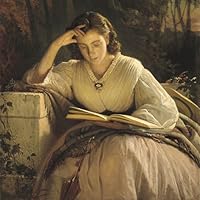

This book fulfilled the contract.
Profile Image for Lori.
173 reviews6 followers
April 2, 2018
What an achingly beautiful little book! Taking inspiration from the delicacy of nature, Helen Humphreys has crafted a novel of fragile beauty. I will be pondering her musings and ruminations on love, longing, and loss for weeks to come.

"What is love if not instant recognition? A moment of being truly equal to something."

The author offers a rare harmony of friendship, discovery, love, and loss. The perfect read for spring - a book to get lost in while watching the world renew itself. Yes, there is an undercurrent of sadness throughout this book but I did not find myself feeling gloomy as I closed the cover. Instead, I felt quite optimistic. The lost garden had been found and restored. And each spring, the garden will remember - and return.

Special thanks to my GR friend, Sara, who was kind enough to read this book with me.
This entire review has been hidden because of spoilers.
Profile Image for Almira.
669 reviews2 followers
March 2, 2019
Helen Humphreys has a lyrical way with words....

From page 59 in the paperback edition I read ----
"I stand in the middle of the ruined meadow garden. Soon the fruit trees here will be foaming with blossom. There are wild violets in the woods, and pools of bluebells at my feet. It would have been just like leaving land, to leave this garden, to kick through the warm shallows here -flowers breaking like spray above my boots- and step out into the deep flat ocean beyond. The smell of blossom in my hair like wind."

England in 1941, with WWII taking men away from the farms, young women are joining the "Land Girls" to take over farming responsibilities, and continue growing food for those in the cities. Gwen Davis leaves the Royal Horticultural Society in London, to become the supervisor of a group of young women (really just girls) who will be taking over the estate to farm in Devon.
Obstacles face Gwen in many ways- especially in that the girls are more interested in the soldiers billeted at the estate house down the road...

Helen has drawn from her families' war time experiences to tell this story - one grandfather went MIA during the War and the other did find "the" Lost Garden described in the story.

On to yet another Helen Humphreys book. Not sure what I will do when I run out of her books.....
Profile Image for Teresa.
753 reviews210 followers
March 10, 2020
I'm not really sure how to rate this book. I know I'm in the minority with three stars but it didn't do a lot for me.
There is a lot of lyrical prose in this book which is quite beautiful at times but I felt as if the prose was taking over from the story it self if I'm making any sense.
When I had finished I didn't care about any of the characters. The garden was actually more of a character than the people.
The story sort of meandered along and then finished.
This book has some great reviews and this is only my opinion.
Profile Image for Isa.
15 reviews13 followers
March 31, 2019
I loved this book. It is a calm, slow and beautiful narrative. Very poetic, a wonderful language, although I read the german edition. I suppose a very good translation from Brigitte Heinrich. I'll read more from H. Humphreys, but the next one will be an english edition.
Profile Image for Heather(Gibby).
1,476 reviews30 followers
April 23, 2020
This was a lovely book set during WWII about a women who is sent to supervisor a group of girls at an elegant estate that had been commandeered to grow food for the war effort.

Very lyrical, but still with a plotline that propels the story forward.
Profile Image for Cynthia.
246 reviews20 followers
June 22, 2020
Beautifully written, infinitely meaningful. Brilliant.
When nearly finished with The Lost Garden, I'm shy to say,
I held it to my heart and cried. I must read more of Helen Humphrey's books.

Thank you to Isa, a Goodreads friend, for her review, my impetus to read The Lost Garden.
Profile Image for Trelawn.
397 reviews1 follower
February 19, 2016
Closer to 3.5 stars. The plot was incidental here, this is a book about loss and longing and in that, it succeeds.
Profile Image for Jacki (Julia Flyte).
1,406 reviews215 followers
December 28, 2022
This is a such a lovely book, which has similar feels to the brilliant A Month in the Country. It's set in 1941 when a horticulturalist called Gwen comes to work at an estate in Devon. She is tasked with managing a small group of Land Girls to grow food for the war effort. Also on the estate are a regiment of Canadian soldiers who are waiting for their assignment to the front.

Gwen is a lonely character, who doubts herself and doesn't let others get close. However she will form two significant relationships over the next few months and these will have a profound effect on her.

It's a very moving book. At times I must confess I was less than interested in the gardening talk but overall I still found this simply beautiful.
Profile Image for David.
16 reviews6 followers
June 5, 2019
Wonderful! English countryside during the war... many beautiful interlocking stories! Revolves around a group of young women assigned to tend to gardens and grow vegetables and potatoes for the war effort. Has a sanctuary feel to it. An Older woman assigned to manage this group of girls but she is awkward, introvertish, and she struggles with how to pierce the group dynamics. Through gardening, which she is highly skilled at, she wins over some of the girls and the gardens start to blossom. They begin to respect her. Other subplots with an army division staying nearby and preparing to be called up to the front and their interactions and romances with the girls adds excitement and poignancy. A lyrical book and very much of a time and place that has a magical quality.
Profile Image for Joanne.
1,230 reviews26 followers
August 29, 2016
What a lovely, poetic book this is. While the gardens are clearly symbolic of love, loss and longing, the gentle story envelopes you so softly that you don't realize until the very end how sad this book is.

Helen Humphreys has a way of writing short, poignant books that pack such an emotional punch as to leave you reeling. Her descriptions are utterly beautiful. Every time I finish one of her books, I find myself just holding it in my hand, staring off into space while I absorb the impact of her words.
Profile Image for Mighty Aphrodite.
605 reviews58 followers
February 17, 2025
La calma, la pazienza, la visione e l’incertezza che servono a costruire un giardino, a vedere le piante crescere e i fiori sbocciare si trasmettono senza soluzione di continuità alla prosa del romanzo, che è un lento crescendo, una tranquilla salita percorsa passo dopo passo dalla protagonista, Gwen.

Mentre nel mondo infuria la guerra, un gruppo di giovani volontarie si ritrova in una tenuta di campagna allo scopo di coltivare patate e tutto quello che possa servire per alimentare i soldati al fronte e la popolazione inglese, costantemente sotto la minaccia dei bombardamenti. Per Gwen è sembrato estremamente facile seguire l’istinto e partire, lasciarsi alle spalle la città che amava – Londra – e che ormai non riconosceva più, sventrata com’era dagli attacchi nemici.

Tutti i suoi punti di riferimento erano spariti, ridotti a macerie, stravolti dalla violenza dell’uomo. L’occhio, ormai, si perdeva tra i mattoni anneriti dalle bombe, tra i resti di una vita familiare che, da un momento all’altro, non esisteva più e che ora era esposta allo sguardo impudico e rassegnato di tutti. Sfreccia su un treno in direzione di Morsel, pronta a far parte del Women Land Army, ad affrontare con impegno e serietà quello che l’aspetta.

Spera in un nuovo inizio, se è questo che si può chiedere ad un mondo in guerra, perchè il suo lavoro alla Royal Horticultural Society sembra essersi arenato e le sue giornate – passate chiusa dentro un ufficio – le hanno quasi fatto dimenticare come amasse stare all’aria aperta, a contatto con la natura, le mani affondate nella terra.

Continua a leggere qui: https://parlaredilibri.wordpress.com/...
Profile Image for Beatričė.
34 reviews
May 22, 2023
Kaip gražuu. Visa knyga yra lyg viena ilga poema, tolygiai plaukianti, vis daugiau apimanti ir vis stiprėjanti. Pradžioje buvo sunku plaukti kartu, bet pagavus srovei negalėjau nuleisti akių nuo tekančių žodžių.

Žiauriai įdomu buvo stebėti pagrindinės veikėjos Gven asmenybės skleidimasį. Mergina iš stebinčios gyvenimą tapo gyvenanti. Labai fainas jos atrastas paslaptingas sodas, pripildytas ilgesio ir praradimų, bet esąs sukurtas meilei puoselėti ir savai istorijai kurti.

Labai pasidžiaugiau moterų galia. Jos gali viską. Man patiko, kad jos pateikiamos, kaip itin savarankiškos, atsakingos ir žiauriai stiprios fiziškai ir dvasiškai.

Labai gražiai įkomponuota šmėkla, vagianti avis, kuri kaip ir sujungia praetį, dabartį ir ateitį. Labai kietai, kad tai yra lapė albinosė, šito mažiausiai tikėjausi. Visas pasakojimas yra kupinas šmėklų ir paskutinių gyvenimo akimirkų prieš neišvengiamą mirtį.

Labai mielas buvo kareivukas Deividas. Kai kiti kariai linksminosi, jis mezgė megztinius savo panelei ir juos jai siųsdavo. Mergina jam atisidėkodavo nuotraukomis, dėvint tuos megztinius jiems svarbiose vietose. Čia yra taipp mielaa.

Tai va, knyga yra persmelkta ilgesio ir meilės. Daug kampučių užsilenkė skaitant, tikrai greitai nepasimirš.

This entire review has been hidden because of spoilers.
Displaying 1 - 30 of 438 reviews

Can't find what you're looking for?

Get help and learn more about the design.