

What do you think?

Meena Kumari
Language: English
Pages: 256 (16 B/W and 13 Color Illustrations)
Back of the Book
Meena Kumaris life was no less dramatic than her movies. Born in a chawl spectacularly unfit for human living, she came to be one of Indias biggest screen icons. Put to work in film at the age of seven to support her family, she won the Filmfare awards for Best Actress with her debut as a leading lady, had a Fairytale courtship and marriage with one of the eras finest film-makers and was universally feted for landmark performances in films like Sahib Bibi Aur Ghulam. Then came the gradual unraveling of the marriage, followed by a series of unfulfilled relationships, the descent into alcoholism, and finally her death from cirrhosis of the liver.
Vinod Mehtas Riveting account of Meena Kumaris life begins with her death, week after the release of her swansong Pakeeza. He goes back in time to Meetawala Chawl in Dadar East, where she was born, and to the flats and mansions she lived in, the studios where she worked, the hospital where she died and the cemetery she was buried. Having never met the star,Mehta talks to all those who were close to her her much maligned husband kamal Amrohi, her sisters, her in-laws, her much to create a complx portair of a woman who carefully the image of someone unfairly exploited and betrayed by her lovers and lady luck. It was a picture that blended well with her on-screen persona. The media had, after all, already anointed her Hindi cinemas great tragedienne.
First published in 1972, barely six months after the stars death, this revised comes with a fresh introduction by the author one of the most respected names in Indian journalism and introduces a legend of Indian cinema to a new readership.
About the Author
Vinod Mehta's is an extraordinary story. He grew up as an army brat from a
Punjabi refugee family in the syncretic culture of Lucknow of the 1950s-an experience
Pages: 256 (16 B/W and 13 Color Illustrations)
Back of the Book
Meena Kumaris life was no less dramatic than her movies. Born in a chawl spectacularly unfit for human living, she came to be one of Indias biggest screen icons. Put to work in film at the age of seven to support her family, she won the Filmfare awards for Best Actress with her debut as a leading lady, had a Fairytale courtship and marriage with one of the eras finest film-makers and was universally feted for landmark performances in films like Sahib Bibi Aur Ghulam. Then came the gradual unraveling of the marriage, followed by a series of unfulfilled relationships, the descent into alcoholism, and finally her death from cirrhosis of the liver.
Vinod Mehtas Riveting account of Meena Kumaris life begins with her death, week after the release of her swansong Pakeeza. He goes back in time to Meetawala Chawl in Dadar East, where she was born, and to the flats and mansions she lived in, the studios where she worked, the hospital where she died and the cemetery she was buried. Having never met the star,Mehta talks to all those who were close to her her much maligned husband kamal Amrohi, her sisters, her in-laws, her much to create a complx portair of a woman who carefully the image of someone unfairly exploited and betrayed by her lovers and lady luck. It was a picture that blended well with her on-screen persona. The media had, after all, already anointed her Hindi cinemas great tragedienne.
First published in 1972, barely six months after the stars death, this revised comes with a fresh introduction by the author one of the most respected names in Indian journalism and introduces a legend of Indian cinema to a new readership.
About the Author
Vinod Mehta's is an extraordinary story. He grew up as an army brat from a
Punjabi refugee family in the syncretic culture of Lucknow of the 1950s-an experience
- GenresBiographyNonfiction
187 pages, Paperback
First published January 1, 1972
Ratings & Reviews
Friends & Following
Create a free account to discover what your friends think of this book!
Community Reviews
Displaying 1 - 30 of 39 reviews

February 27, 2018
This is a biography written by Vinod Mehta in 1972. I was always intrigued by Meena Kumari, the yesteryear actress, when I saw her act in "Sahib Bibi aur Ghulam". It was one of her best known films directed by Guru Dutt along with "Pakeezah". The book is divided into two parts. The first part is about her life which is more or less half the length of the book, and the other part is about how the author came to write the book. The book takes us through the life of the actress from the time she was a child till her death. There are some insights into her private life like her equation with Kamal Amrohi, her husband, her close relatives who live with her and actor Dharmendra. I was shocked to read that she died penniless with not even Rs 3,500/- to spare to pay her hospital fees, despite acting in over seventy films in her short career.
Vinod Mehta, was an eminent journalist ( Vinod Mehta) till he died in 2015. This was his second book as an author. The author is a self-confessed fan of the actress and his views seem to be a bit biased . Also the author dwells more on the actress' relationship with her husband and her film directed by husband Kamal Amrohi "Pakeezah". The book needed a bit more fodder about her life and career and some more in-depth research. Maybe he was honing his skills as an author / journalist in 1972. Still a good book on the life and times of the "Great Tragedienne" of Indian cinema.
Vinod Mehta, was an eminent journalist ( Vinod Mehta) till he died in 2015. This was his second book as an author. The author is a self-confessed fan of the actress and his views seem to be a bit biased . Also the author dwells more on the actress' relationship with her husband and her film directed by husband Kamal Amrohi "Pakeezah". The book needed a bit more fodder about her life and career and some more in-depth research. Maybe he was honing his skills as an author / journalist in 1972. Still a good book on the life and times of the "Great Tragedienne" of Indian cinema.

April 10, 2021
On 31st March, 1972, a Good Friday, Meena Kumari died, after a long and painful battle with cirrhosis of the liver. She had been admitted to St Elizabeth’s Nursing Home in Bombay on 28th March, and died three days later surrounded by the people who had played an important part in her life, both personal and professional. Her sisters Khursheed and Madhu; her estranged husband Kamal Amrohi; and various luminaries of the film world, including Begum Para and Kammo, from whose house the Aab-e-Zamzam (holy water from Mecca) was fetched to be spooned into Meena Kumari’s mouth as she was dying.
Over the next few days and weeks and months, Meena Kumari’s name dominated Hindi film news. Her magnum opus, Pakeezah , had just been released, having been 15 years in the making; Meena Kumari’s death served to make the film a success: thousands went to watch Pakeezah simply as a way of paying tribute to the much-loved actress. Praise was lavished on ‘India’s greatest tragedienne’ and there was much speculation about who, really, was responsible for her lifelong misery, and the alcoholism that had finally taken her life. People who had worked with her—co-actors, directors, and others—paid homage.
And Vinod Mehta, based on the success of a book he’d already written (not a biography) was asked if he would be up to writing Meena Kumari’s biography.
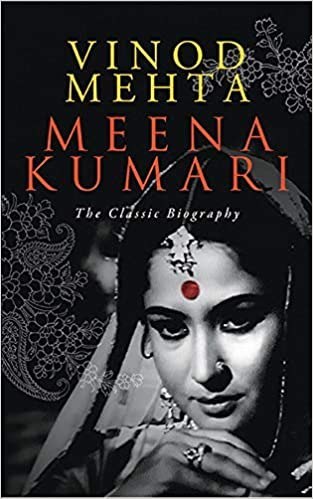
Vinod Mehta makes it a point to explain that he took up this commission without really knowing very much about Meena Kumari beyond what the average Indian cinemagoer might know. To interview the people who had known her, who were related to her and worked with her; to trawl through many years of film magazines and other publications for mentions of Meena Kumari; to try and dig deep into her filmography: all of this must have taken a good deal of time and effort, and the result of it is this book, first published in 1972 by Jaico and then re-released in 2013 by Harper Collins.
Mehta traces Meena Kumari’s birth and childhood (she was born Mahjabeen Bano, to a man named Ali Bux and his wife Iqbal Begum, who had been a Bengali Christian before converting in order to marry Ali Bux). He describes how the Bux family had wanted a son, and Mahjabeen, the second of three daughters, found herself utterly unwanted—until, after several rounds of the studios and much pleading with contacts, when little Mahjabeen became a child star, her family’s fortunes changed and suddenly she became the goose that laid golden eggs.
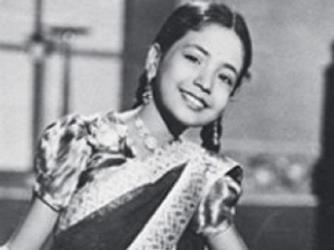
Her career as a child star (who was renamed Baby Meena, by director Vijay Bhatt on the sets of Ek Hi Phool) is discussed, and then her initial, largely unsuccessful films as an adult. Until Baiju Bawra , which proved the breakthrough for Meena Kumari.
Baiju Bawra, in fact, is one of the very few films of Meena Kumari’s that Mehta discusses in any depth (the others are Sahib Biwi aur Ghulam and Pakeezah). In his discussions of these films, too, Mehta tends to steer clear of trying to analyze the film or provide any very special insight. No synopsis is provided, and he assumes that you are familiar with the film as well as Meena Kumari’s role in it. Mostly, Mehta just skims over even these three films, only occasionally providing some amount of background information and a little behind the scenes trivia (for instance, how much Kamal Amrohi travelled the length and breadth of India looking for settings for Pakeezah, and one interesting episode involving dacoits while actually shooting the film).
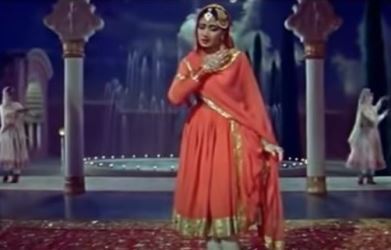
Instead of discussing Meena Kumari’s cinema (which, I must admit, was the main reason I wanted to read this book), Mehta focuses on Meena Kumari’s personal life, and how that personal life affected her professional life. And, in a relentless cycle of cause and effect and cause, how her professional life affected her personal life. Her passionate love for the much older Kamal Amrohi, the night-long telephone conversations between the two, his visiting her at Pune’s Sassoon Hospital when she was recovering from the road accident that damaged her hand forever, the way they got married secretly… the ‘Chandan-Manju’ romance (which was what they called each other) sounds like the stuff of fairy tales.

But of course this was no fairy tale, and Mehta tries to piece together the falling apart of the marriage, as well as Meena Kumari’s subsequent search for true love: a search which seems to have haunted her through her tragically short life. In between, there were the films she continued to make, the growing dependence on brandy, and the moving about from one house to another. There was, too, the vast contingent of relatives who lived with her, sponged off her, and who seem to have done little to help her emotionally or psychologically.
Mehta devotes one chapter to discussing why Meena Kumari should qualify as a ‘great actress’; he uses a definition (by the English critic CE Montague) and tries to show, with examples, how and why Meena Kumari could measure up to that. He also devotes a chapter to analyzing Meena Kumari as a person: what sort of woman was she, who was the real Meena Kumari, and so on.
I found this book a little unsatisfactory in some ways (though good in others; I’ll come to that). Firstly, I found Mehta’s use of ‘My heroine’ to refer to Meena Kumari as rather corny. Then, there are points in the book where he seems to go completely overboard with an idea. For instance, the way he goes on and on about how plain Meena Kumari’s looks were, until 1962. Granted, beauty lies in the eye of the beholder (a point which Mehta makes only in passing near the end of an argument which aims to convince the reader that she was successful despite her homely looks); but Mehta simply won’t stop saying how plain she was.
(Which, seriously, I cannot agree with. I do feel that a more mature Meena Kumari—the one of Aarti, for example—is more beautiful than a younger avatar, but I think it’s a little far-fetched to call her ever plain.
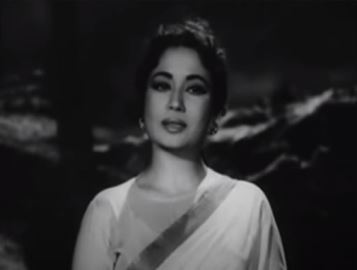
But yes, that’s subjective, so let’s leave it at that).
The major grouse I had with Meena Kumari: The Classic Biography was that it had so little about the films she acted in and the roles she played. Barring Sahibjaan of Pakeezah and Chhoti Bahu of Sahib Biwi aur Ghulam, Mehta has so little to say about her other roles that I find it odd. When he does write about her roles, it’s to prove a point: she liked to do tragic roles and those were the roles she was best at (I beg to differ); she was indifferent at being the comedienne. But when I look at Meena Kumari in films other than Kohinoor , Miss Mary , or Tamasha (about the only non-tragic films Mehta mentions), like Majhli Didi or Bandish or Azad , I see an actress who certainly has good comic timing and a flare for comedy, besides pure and simple strength of character (Majhli Didi).
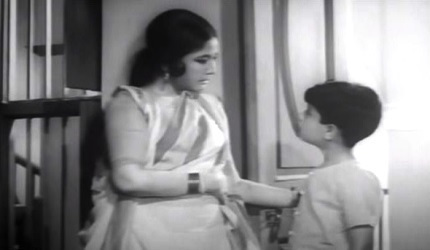
For me, reading a biography of a film star and finding mostly only their personal life discussed rather than their professional, is a turn-off. While Mehta’s biography of Meena Kumari has a good bit of her personal life on display (especially with Kamal Amrohi and Dharmendra, the two main men in her life), I did appreciate that this exposition of her personal life goes towards explaining how Meena Kumari the woman influenced Meena Kumari the actress. How the pain and lack of fulfillment in her personal life reflected in the sort of characters she ended up portraying, and how her onscreen personas tended to meld with the woman she was.
This, really, is where Meena Kumari: The Classic Biography scores. It manages to give us a good insight into the woman she was. Flawed, yes, but so very human (and so good a human too, essentially: the anecdotes about her generosity and her respect for even the lowest of on-set staff, and her love for children, touched me).
This book is flawed, too, but on the whole, I don’t regret reading it. Don’t expect to learn much about cinema, or actually, about every titillating detail of Meena Kumari’s personal life; but read it if you like Meena Kumari and don’t know much about her beyond her films.
Over the next few days and weeks and months, Meena Kumari’s name dominated Hindi film news. Her magnum opus, Pakeezah , had just been released, having been 15 years in the making; Meena Kumari’s death served to make the film a success: thousands went to watch Pakeezah simply as a way of paying tribute to the much-loved actress. Praise was lavished on ‘India’s greatest tragedienne’ and there was much speculation about who, really, was responsible for her lifelong misery, and the alcoholism that had finally taken her life. People who had worked with her—co-actors, directors, and others—paid homage.
And Vinod Mehta, based on the success of a book he’d already written (not a biography) was asked if he would be up to writing Meena Kumari’s biography.

Vinod Mehta makes it a point to explain that he took up this commission without really knowing very much about Meena Kumari beyond what the average Indian cinemagoer might know. To interview the people who had known her, who were related to her and worked with her; to trawl through many years of film magazines and other publications for mentions of Meena Kumari; to try and dig deep into her filmography: all of this must have taken a good deal of time and effort, and the result of it is this book, first published in 1972 by Jaico and then re-released in 2013 by Harper Collins.
Mehta traces Meena Kumari’s birth and childhood (she was born Mahjabeen Bano, to a man named Ali Bux and his wife Iqbal Begum, who had been a Bengali Christian before converting in order to marry Ali Bux). He describes how the Bux family had wanted a son, and Mahjabeen, the second of three daughters, found herself utterly unwanted—until, after several rounds of the studios and much pleading with contacts, when little Mahjabeen became a child star, her family’s fortunes changed and suddenly she became the goose that laid golden eggs.

Her career as a child star (who was renamed Baby Meena, by director Vijay Bhatt on the sets of Ek Hi Phool) is discussed, and then her initial, largely unsuccessful films as an adult. Until Baiju Bawra , which proved the breakthrough for Meena Kumari.
Baiju Bawra, in fact, is one of the very few films of Meena Kumari’s that Mehta discusses in any depth (the others are Sahib Biwi aur Ghulam and Pakeezah). In his discussions of these films, too, Mehta tends to steer clear of trying to analyze the film or provide any very special insight. No synopsis is provided, and he assumes that you are familiar with the film as well as Meena Kumari’s role in it. Mostly, Mehta just skims over even these three films, only occasionally providing some amount of background information and a little behind the scenes trivia (for instance, how much Kamal Amrohi travelled the length and breadth of India looking for settings for Pakeezah, and one interesting episode involving dacoits while actually shooting the film).

Instead of discussing Meena Kumari’s cinema (which, I must admit, was the main reason I wanted to read this book), Mehta focuses on Meena Kumari’s personal life, and how that personal life affected her professional life. And, in a relentless cycle of cause and effect and cause, how her professional life affected her personal life. Her passionate love for the much older Kamal Amrohi, the night-long telephone conversations between the two, his visiting her at Pune’s Sassoon Hospital when she was recovering from the road accident that damaged her hand forever, the way they got married secretly… the ‘Chandan-Manju’ romance (which was what they called each other) sounds like the stuff of fairy tales.

But of course this was no fairy tale, and Mehta tries to piece together the falling apart of the marriage, as well as Meena Kumari’s subsequent search for true love: a search which seems to have haunted her through her tragically short life. In between, there were the films she continued to make, the growing dependence on brandy, and the moving about from one house to another. There was, too, the vast contingent of relatives who lived with her, sponged off her, and who seem to have done little to help her emotionally or psychologically.
Mehta devotes one chapter to discussing why Meena Kumari should qualify as a ‘great actress’; he uses a definition (by the English critic CE Montague) and tries to show, with examples, how and why Meena Kumari could measure up to that. He also devotes a chapter to analyzing Meena Kumari as a person: what sort of woman was she, who was the real Meena Kumari, and so on.
I found this book a little unsatisfactory in some ways (though good in others; I’ll come to that). Firstly, I found Mehta’s use of ‘My heroine’ to refer to Meena Kumari as rather corny. Then, there are points in the book where he seems to go completely overboard with an idea. For instance, the way he goes on and on about how plain Meena Kumari’s looks were, until 1962. Granted, beauty lies in the eye of the beholder (a point which Mehta makes only in passing near the end of an argument which aims to convince the reader that she was successful despite her homely looks); but Mehta simply won’t stop saying how plain she was.
(Which, seriously, I cannot agree with. I do feel that a more mature Meena Kumari—the one of Aarti, for example—is more beautiful than a younger avatar, but I think it’s a little far-fetched to call her ever plain.

But yes, that’s subjective, so let’s leave it at that).
The major grouse I had with Meena Kumari: The Classic Biography was that it had so little about the films she acted in and the roles she played. Barring Sahibjaan of Pakeezah and Chhoti Bahu of Sahib Biwi aur Ghulam, Mehta has so little to say about her other roles that I find it odd. When he does write about her roles, it’s to prove a point: she liked to do tragic roles and those were the roles she was best at (I beg to differ); she was indifferent at being the comedienne. But when I look at Meena Kumari in films other than Kohinoor , Miss Mary , or Tamasha (about the only non-tragic films Mehta mentions), like Majhli Didi or Bandish or Azad , I see an actress who certainly has good comic timing and a flare for comedy, besides pure and simple strength of character (Majhli Didi).

For me, reading a biography of a film star and finding mostly only their personal life discussed rather than their professional, is a turn-off. While Mehta’s biography of Meena Kumari has a good bit of her personal life on display (especially with Kamal Amrohi and Dharmendra, the two main men in her life), I did appreciate that this exposition of her personal life goes towards explaining how Meena Kumari the woman influenced Meena Kumari the actress. How the pain and lack of fulfillment in her personal life reflected in the sort of characters she ended up portraying, and how her onscreen personas tended to meld with the woman she was.
This, really, is where Meena Kumari: The Classic Biography scores. It manages to give us a good insight into the woman she was. Flawed, yes, but so very human (and so good a human too, essentially: the anecdotes about her generosity and her respect for even the lowest of on-set staff, and her love for children, touched me).
This book is flawed, too, but on the whole, I don’t regret reading it. Don’t expect to learn much about cinema, or actually, about every titillating detail of Meena Kumari’s personal life; but read it if you like Meena Kumari and don’t know much about her beyond her films.
September 19, 2017
Meena Kumari is one of my favourite actresses of all time, possibly the most favourite of my favourites. So, when, a few years ago, I saw a book touted to be ‘The Classic Biography of Meena Kumari’, I had to pick it up. For various reasons, I didn’t review it then. Better late than never...
Meena Kumari’s enduring image is that of a tragedienne – the role she enacted in the latter part of her career only served to enhance this image. Her loneliness in her later years, and her tragic, untimely death, of cirrhosis of the liver, brought on by her excessive drinking, only enshrined her as the living embodiment of a suffering artiste.
However, her life and indeed, she, herself, cannot be entrapped in stereotypes. For someone who lived her life honestly and openly, it is only fit that her biography chronicles her life, her achievements and her troubles. ‘Meena Kumari – The Classic Biography’ is not a new work, but a dusted off version of an old one, written almost immediately after the actress’s death in 1972. It was republished by HarperCollins in 2013, 41 years after Meena Kumari’s untimely death.
‘Meena Kumari – The Classic Biography’ is veteran editor Vinod Mehta’s ode to the heroine he adored, the actress to whom his dedication reads, ‘Wish I’d known you’. Written at a time when he was a struggling copywriter, the book was delivered in seven months; too short a time when you look at the life it was meant to chronicle. The difficulty was not just the short deadline; it was that ‘Everything connected with her life had at least four versions…’ However, Mehta persisted, and despite the challenges of finding people willing to talk to him (even if only to give him one more version of an incident), managed to elicit the different facets of Meena Kumari as a person and as an actress.
In a conceit that seems, well, conceited, in present day, Mehta writes of the late actress as ‘my heroine’, a possessiveness that sometimes made me cringe with its twee-ness. He also begins at the end – with her death, and works his way backwards towards her early childhood and career. Yes, the young Mahjabeen had already begun working to support her family.
The first part of the biography is a linear narrative tracing her life and career – her birth in 1932 to Ali Bux and Iqbal Begum, their early days of penury, her initiation to the film studios at the age of 4 (by the early 40s, young Meena (so named for the screen) was charging a stupendous amount of Rs10,000 per film), her rise to stardom with Baiju Bawra, her love affair with the much-older, already-married Kamal Amrohi, her marriage to him in opposition to her father’s wishes when she was barely 20, the resultant estrangement with her family, her years of alcoholism and her lonely, tragic death.
Mehta raises the curtains on the marriage of ‘Chandan’ and his ‘Manju’, the glorious love affair that was doomed not to last. Meena appeared to have changed one gilded cage for another – gender roles were as firmly entrenched in her marriage, and Amrohi’s expectations restricted Meena’s independence. His restrictions on who could enter her dressing room, the curfew he imposed on her shooting hours, the imposition of his assistant trailing his actress wife wherever she went – all this eventually led to an acrimonious split. Her personal conflicts were in direct contradiction to her professional trajectory – the 1960s were her era, and Meena Kumari ruled the marquee with stunning performances which embraced both critical acclaim and box office success. She reigned supreme.
The second part of the biography sees Mehta assessing his heroine both as an actress and a person. He remarks on her wonderful voice and the cadences of her speech, the ability to do with one glance what would take others several pages of dialogue to impart. He concludes that she was 'the greatest actress of them all'. You may or may not agree with his conclusions but one has to admit that he makes a good argument and defends it well.
At the peak of her career came her most riveting performance as Chhoti Bahu in Sahib Bibi aur Ghulam. In an excerpt from her diary, Mehta gives her voice: ‘This woman [Chhoti Bahu] is troubling me a great deal. All day long – and a god part of the night – it is nothing else but Chhoti Bahu’s smiles, hopes, tribulations… Oh, I’m sick of it!’
Mehta also devotes an entire chapter to Pakeezah – its genesis, its making affected by the bitterness between its two ‘owners’ – the film that Meena completed despite her ill-health. She was devastated when it opened to poor reviews, but her death changed the film’s fortunes. In death, as in life, Meena had ‘made’ the film (she had put in her own money to make it, and had taken as her fees, one gold mohur).
Mehta chronicles Meena’s boredom with the ostentatious parties that were part of her professional world, and how she was deemed a snob by those who didn’t know her. He writes of her intelligence, her multi-lingual skills, and her interest in books – by all accounts, she was a voracious reader. She was also a decent poet, and egged on by Gulzar, released an album of her poetry titled 'I Write, I Recite'. Interspersed with these are interesting anecdotes – a run-in, for example, with a dacoit who turned out to be her fan (and asked her to autograph his arm with his knife).
Mehta also chronicles her involvement with Dharmendra and with Gulzar, one romantic, the other intellectual. In doing so, however, Mehta is constrained by lack of information given that neither Dharmendra nor Gulzar agreed to speak to him about their relationship with Meena. However, Gulzar remained a loyal, steadfast friend till the end, and Meena willed her poems and diaries to him. Gulzar has remained a loyal guardian of its contents. Meena's involvement with men is also the subject of some of the spicier (though not salacious) anecdotes in the book, and I had to admit I laughed out loud at her insouciant remark, ’Raat gayi, baat gayi’ to an ardent admirer. How refreshing to see the human side of an archetypal Bharatiya Nari!
Mehta does state at the outset that ‘it would be a brave, possibly foolish man’ who would attempt a biography of the actress, but his version is meticulously researched, and he has spoken to all the key figures in Meena’s life (except Dharmendra, who refused to talk to him), and then reconciled their contradictory versions to a cohesive whole. He's quite scathing about her numerous relatives, all of whom, in his estimation, treated Meena as the proverbial golden goose.
Mehta’s writing is at once subjective and detached (as must any commissioned work of art be), and he himself had little to do with the film industry at the time he wrote this book. In fact, much though the use of ‘my heroine’ makes it seem like he’s writing a purely opinionated piece on the actress, he confesses that the woman whose portrait he had been asked to sketch, ‘interested me immensely – not while she was alive, but once she was dead…. In the timing and manner of her death, my heroine assumed heroic dimensions.’
He also writes in this newly updated version that he had compromised his narrative by ‘the gratuitous insertion of [his] own personality’ and that he could have improved his work if he had been more detached. I’m glad that in revising the text for the re-release, Mehta did not rework his original text to make it more impersonal or prosaic. Indeed, he makes no effort to mask his distinctive voice, and is, by turns, opinionated and sympathetic, even snarky. Witness this gem, for example: [After quoting from Meena’s account of how helpful Ashok Kumar was during the shooting of Parineeta, Mehta remarks:} ‘Like me, you are probably wondering where the director was while these lessons were going on.’ That said, I do wish that, being an editor of some note himself, Mehta had bothered to – from the vantage point of four decades’ experience – brush up some of his flawed prose, rhetorical flourishes, and awkward grammatical structure.
However, flaws and all, ‘Meena Kumar: The Classic Biography’ is a very engaging, remarkably sympathetic look at a woman who wanted to love and be loved, a woman who deeply missed the things that life didn’t give her. Mehta makes no bones about his admiration for the legendary actress, and makes it clear that Meena lived her life according to her wishes, and like many of us, regretted the consequences of some of her actions. Certainly, she paid a tragic price. ‘My heroine’ comes across as an intelligent, complex woman, multi-talented and engaging.
'Wish I had known you...' Yes, I wish I had, too.
Meena Kumari’s enduring image is that of a tragedienne – the role she enacted in the latter part of her career only served to enhance this image. Her loneliness in her later years, and her tragic, untimely death, of cirrhosis of the liver, brought on by her excessive drinking, only enshrined her as the living embodiment of a suffering artiste.
However, her life and indeed, she, herself, cannot be entrapped in stereotypes. For someone who lived her life honestly and openly, it is only fit that her biography chronicles her life, her achievements and her troubles. ‘Meena Kumari – The Classic Biography’ is not a new work, but a dusted off version of an old one, written almost immediately after the actress’s death in 1972. It was republished by HarperCollins in 2013, 41 years after Meena Kumari’s untimely death.
‘Meena Kumari – The Classic Biography’ is veteran editor Vinod Mehta’s ode to the heroine he adored, the actress to whom his dedication reads, ‘Wish I’d known you’. Written at a time when he was a struggling copywriter, the book was delivered in seven months; too short a time when you look at the life it was meant to chronicle. The difficulty was not just the short deadline; it was that ‘Everything connected with her life had at least four versions…’ However, Mehta persisted, and despite the challenges of finding people willing to talk to him (even if only to give him one more version of an incident), managed to elicit the different facets of Meena Kumari as a person and as an actress.
In a conceit that seems, well, conceited, in present day, Mehta writes of the late actress as ‘my heroine’, a possessiveness that sometimes made me cringe with its twee-ness. He also begins at the end – with her death, and works his way backwards towards her early childhood and career. Yes, the young Mahjabeen had already begun working to support her family.
The first part of the biography is a linear narrative tracing her life and career – her birth in 1932 to Ali Bux and Iqbal Begum, their early days of penury, her initiation to the film studios at the age of 4 (by the early 40s, young Meena (so named for the screen) was charging a stupendous amount of Rs10,000 per film), her rise to stardom with Baiju Bawra, her love affair with the much-older, already-married Kamal Amrohi, her marriage to him in opposition to her father’s wishes when she was barely 20, the resultant estrangement with her family, her years of alcoholism and her lonely, tragic death.
Mehta raises the curtains on the marriage of ‘Chandan’ and his ‘Manju’, the glorious love affair that was doomed not to last. Meena appeared to have changed one gilded cage for another – gender roles were as firmly entrenched in her marriage, and Amrohi’s expectations restricted Meena’s independence. His restrictions on who could enter her dressing room, the curfew he imposed on her shooting hours, the imposition of his assistant trailing his actress wife wherever she went – all this eventually led to an acrimonious split. Her personal conflicts were in direct contradiction to her professional trajectory – the 1960s were her era, and Meena Kumari ruled the marquee with stunning performances which embraced both critical acclaim and box office success. She reigned supreme.
The second part of the biography sees Mehta assessing his heroine both as an actress and a person. He remarks on her wonderful voice and the cadences of her speech, the ability to do with one glance what would take others several pages of dialogue to impart. He concludes that she was 'the greatest actress of them all'. You may or may not agree with his conclusions but one has to admit that he makes a good argument and defends it well.
At the peak of her career came her most riveting performance as Chhoti Bahu in Sahib Bibi aur Ghulam. In an excerpt from her diary, Mehta gives her voice: ‘This woman [Chhoti Bahu] is troubling me a great deal. All day long – and a god part of the night – it is nothing else but Chhoti Bahu’s smiles, hopes, tribulations… Oh, I’m sick of it!’
Mehta also devotes an entire chapter to Pakeezah – its genesis, its making affected by the bitterness between its two ‘owners’ – the film that Meena completed despite her ill-health. She was devastated when it opened to poor reviews, but her death changed the film’s fortunes. In death, as in life, Meena had ‘made’ the film (she had put in her own money to make it, and had taken as her fees, one gold mohur).
Mehta chronicles Meena’s boredom with the ostentatious parties that were part of her professional world, and how she was deemed a snob by those who didn’t know her. He writes of her intelligence, her multi-lingual skills, and her interest in books – by all accounts, she was a voracious reader. She was also a decent poet, and egged on by Gulzar, released an album of her poetry titled 'I Write, I Recite'. Interspersed with these are interesting anecdotes – a run-in, for example, with a dacoit who turned out to be her fan (and asked her to autograph his arm with his knife).
Mehta also chronicles her involvement with Dharmendra and with Gulzar, one romantic, the other intellectual. In doing so, however, Mehta is constrained by lack of information given that neither Dharmendra nor Gulzar agreed to speak to him about their relationship with Meena. However, Gulzar remained a loyal, steadfast friend till the end, and Meena willed her poems and diaries to him. Gulzar has remained a loyal guardian of its contents. Meena's involvement with men is also the subject of some of the spicier (though not salacious) anecdotes in the book, and I had to admit I laughed out loud at her insouciant remark, ’Raat gayi, baat gayi’ to an ardent admirer. How refreshing to see the human side of an archetypal Bharatiya Nari!
Mehta does state at the outset that ‘it would be a brave, possibly foolish man’ who would attempt a biography of the actress, but his version is meticulously researched, and he has spoken to all the key figures in Meena’s life (except Dharmendra, who refused to talk to him), and then reconciled their contradictory versions to a cohesive whole. He's quite scathing about her numerous relatives, all of whom, in his estimation, treated Meena as the proverbial golden goose.
Mehta’s writing is at once subjective and detached (as must any commissioned work of art be), and he himself had little to do with the film industry at the time he wrote this book. In fact, much though the use of ‘my heroine’ makes it seem like he’s writing a purely opinionated piece on the actress, he confesses that the woman whose portrait he had been asked to sketch, ‘interested me immensely – not while she was alive, but once she was dead…. In the timing and manner of her death, my heroine assumed heroic dimensions.’
He also writes in this newly updated version that he had compromised his narrative by ‘the gratuitous insertion of [his] own personality’ and that he could have improved his work if he had been more detached. I’m glad that in revising the text for the re-release, Mehta did not rework his original text to make it more impersonal or prosaic. Indeed, he makes no effort to mask his distinctive voice, and is, by turns, opinionated and sympathetic, even snarky. Witness this gem, for example: [After quoting from Meena’s account of how helpful Ashok Kumar was during the shooting of Parineeta, Mehta remarks:} ‘Like me, you are probably wondering where the director was while these lessons were going on.’ That said, I do wish that, being an editor of some note himself, Mehta had bothered to – from the vantage point of four decades’ experience – brush up some of his flawed prose, rhetorical flourishes, and awkward grammatical structure.
However, flaws and all, ‘Meena Kumar: The Classic Biography’ is a very engaging, remarkably sympathetic look at a woman who wanted to love and be loved, a woman who deeply missed the things that life didn’t give her. Mehta makes no bones about his admiration for the legendary actress, and makes it clear that Meena lived her life according to her wishes, and like many of us, regretted the consequences of some of her actions. Certainly, she paid a tragic price. ‘My heroine’ comes across as an intelligent, complex woman, multi-talented and engaging.
'Wish I had known you...' Yes, I wish I had, too.

Read
February 24, 2024dnf @14%
definitely would love to complete this book one day but school got in the way now!
definitely would love to complete this book one day but school got in the way now!

October 5, 2016
How does one take a riveting, scandalous, controversial actress like Meena Kumari, an actress with a life movies are written about, and turn her biography into a boring, immature snoozefest? Give it to Vinod Mehta to write, that's how. This book was less of a biography, more of a fanboy swooning over "his heroine" (which is actually how he refers to her). His heroine can do no wrong and he feels it necessary to consistently throw his own personal opinion in on the silliest of things - were Sunil and Nargis responsible for getting Pakeeza back on the floors? Of course not, because Vinod Mehta doesn't think so! And he knows all! I did not enjoy this. The only thing I took away from this was that Kumari was a difficult person, Mehta is a bad writer and Kamal Amrohi is shady. The end.
February 27, 2015
I could not put the book down however purely because the subject interests me, otherwise it is one of the least worthy writings I have read.
The author defended writing this book too often and yet he succumbed to opining instead of stating the facts. I would have liked it slightly better if the author had not addressed Meena as "My Heroine" at least twice on each page.
The author defended writing this book too often and yet he succumbed to opining instead of stating the facts. I would have liked it slightly better if the author had not addressed Meena as "My Heroine" at least twice on each page.
October 21, 2021
MEENA KUMARI.by Vinod Mehta
The book was not as interesting as I expected it to be. Vinod Mehta never met Meena so all he has written is heresy. He treats it like a research project and so the personal emotional side is missing. The repeated use of My Heroine is annoying. I didn't get to know anything more about the legendary actress Meena Kumari than what I had already known
The book was not as interesting as I expected it to be. Vinod Mehta never met Meena so all he has written is heresy. He treats it like a research project and so the personal emotional side is missing. The repeated use of My Heroine is annoying. I didn't get to know anything more about the legendary actress Meena Kumari than what I had already known
October 30, 2012
This book strives to unravel the complicated life of Meena Kumari by exploring her films and personal life.
In regards to her career as an actress, this book fails in bringing out subtle details of her films, be it behind the scenes, the making, or response from the public. The writer, Mehta, elaborates more on only two of her films - Sahib Bibi Aur Ghulam (1962) and Pakeezah (1972), probably driven by the similarities to her personal life. The former to her alcohol addiction and the latter to her separation with Kamal Amrohi. There is also a chapter devoted to Pakeezah. The technicalities in this chapter is rather well-written and researched. Some may find it rather disappointing because seeing the fact that Meena Kumari had worked in many successful films and had given beautiful performances to most of her roles, there ought to have been more written about her films.
In regards to her personal life, Mehta shares interesting information of her childhood days that many may not know, including more information on her parents, especially her father. The chapter on her stay in the hospital and her subsequent death is also noteworthy for its minute details. It may make the readers feel like they are watching a movie being played in their heads, imagining the exact happenings.
Mehta also tries his best to reveal the very controversial chapters in Meena Kumari's life, and this is where he fails terribly. Meena Kumari's relationship with her husband is described based mainly on one source and that is Kamal Amrohi himself. This presents a one-sided account and thus, numerous contradictions.
For example, Amrohi says that "Only physically we were not man and wife. Otherwise in every sense we lived like man and wife" (Page 117) while they resumed shooting for Pakeezah. But Meena Kumari's sister, Khursheed, says that "It was just work between them...Meena had no feeling left for Kamal and if he thinks anything else he is fooling himself." (Page 118) This is not Mehta’s fault upon receiving two very different opinions but he makes the wrong move by trying to impose his own opinions about how the relationship was.
Meena Kumari’s alleged relationship with actor Dharmendra is also not well-written, firstly because Dharmendra refused to grant Mehta interviews. Wrong facts are also present and this is misleading for those who know little of her relationship with him.
For example, "By the end of 1966, Mr. Dharmendra, a big star now, had disappeared from the scenario..." (Page 96). For readers who read biographies of other actors, especially comedian Mehmood's (who incidentally was once Meena Kumari's brother-in-law), they would find that even by the end of 1967, Dharmendra was still very much with Meena Kumari.
This book is worth buying for the few chapters (Death and Pakeezah) mentioned above and also for some rare pictures. However, if readers are interested in knowing more about Meena Kumari or her contributions in the making of her films, this book will not bring justice to it. Basically, Mehta’s subjective opinions throughout the novel make the book seem more like a gossip column than a biography.
In regards to her career as an actress, this book fails in bringing out subtle details of her films, be it behind the scenes, the making, or response from the public. The writer, Mehta, elaborates more on only two of her films - Sahib Bibi Aur Ghulam (1962) and Pakeezah (1972), probably driven by the similarities to her personal life. The former to her alcohol addiction and the latter to her separation with Kamal Amrohi. There is also a chapter devoted to Pakeezah. The technicalities in this chapter is rather well-written and researched. Some may find it rather disappointing because seeing the fact that Meena Kumari had worked in many successful films and had given beautiful performances to most of her roles, there ought to have been more written about her films.
In regards to her personal life, Mehta shares interesting information of her childhood days that many may not know, including more information on her parents, especially her father. The chapter on her stay in the hospital and her subsequent death is also noteworthy for its minute details. It may make the readers feel like they are watching a movie being played in their heads, imagining the exact happenings.
Mehta also tries his best to reveal the very controversial chapters in Meena Kumari's life, and this is where he fails terribly. Meena Kumari's relationship with her husband is described based mainly on one source and that is Kamal Amrohi himself. This presents a one-sided account and thus, numerous contradictions.
For example, Amrohi says that "Only physically we were not man and wife. Otherwise in every sense we lived like man and wife" (Page 117) while they resumed shooting for Pakeezah. But Meena Kumari's sister, Khursheed, says that "It was just work between them...Meena had no feeling left for Kamal and if he thinks anything else he is fooling himself." (Page 118) This is not Mehta’s fault upon receiving two very different opinions but he makes the wrong move by trying to impose his own opinions about how the relationship was.
Meena Kumari’s alleged relationship with actor Dharmendra is also not well-written, firstly because Dharmendra refused to grant Mehta interviews. Wrong facts are also present and this is misleading for those who know little of her relationship with him.
For example, "By the end of 1966, Mr. Dharmendra, a big star now, had disappeared from the scenario..." (Page 96). For readers who read biographies of other actors, especially comedian Mehmood's (who incidentally was once Meena Kumari's brother-in-law), they would find that even by the end of 1967, Dharmendra was still very much with Meena Kumari.
This book is worth buying for the few chapters (Death and Pakeezah) mentioned above and also for some rare pictures. However, if readers are interested in knowing more about Meena Kumari or her contributions in the making of her films, this book will not bring justice to it. Basically, Mehta’s subjective opinions throughout the novel make the book seem more like a gossip column than a biography.
May 30, 2022
The Mystery & Enigma That Surrounded Meena Kumari During Her Lifetime Has Only Intensified With Each Passing Moment Since She Passed Away Half A Century Ago When Just 40. Like In Life, She Remains Shrouded In Deep Mystery With Whatever Came To Life Depended On Who Was Revealing It And What Was The Vested Interest Behind The Revelation That Was Thrown Up In One Form Or Another.
The Two Songs That Hauntingly Play In A Loop On The Mind Canvas Are “Koi Hota Jis Ko Apna Kehte” From Mere Apne And “Ajeeb Dastaan Hai Yeh...Kahan Shuru Kahan Khatam From Dil Apna Aur Preet Paraye. Somewhere Between Lies The Tragic Tale Of The Life & Times Of Meena Kumari And All She Went Through In The Four Decades She Left An Indelible Mark Upon Everyone Who Crossed Her Path As Meena Kumari On Screen And Madhu Off It.
All Said And Done One Cannot Deny That For Someone Who Never Met Meena Kumari In Her Lifetime And His Only Association(If You Can Call It That) With Her Was Having Seen A Few Of Her Films Vinod Mehta Has Done An Impressive Job And Digging Out And Bringing Quite A Few Informative Nuggets Of Her Chequered Life Off-Screen As Her Illustrious Career Was Well Chronicled In Good Details But Her Personal Life Was A Tightly Closed Book That Very Few Had Access To During Her Stormy Lifetime.
If You Not Had The Opportunity To Read Mohan Deep’s Controversial Biography Simply Scandalous-Meena Kumari That Focussed Boldly On All That Was Wished Away Ot Swept Under The Carpet As What Was Mirrored Left Her Fans And Admirers Shell Shocked Or Fuming With Rage At All The Muck That He Dug Up And Mirrored In His Unauthorised Biography Then Vinod Mehta Has Done Quite A Balanced And Informative Book On The Enigma That Was Meena Kumari.
What Is Rather Impressive Is That Vinod Mehta Has Taken Special Pains To Ensure That His Book Did Not Tilt Either Way To Have Fingers Point In His Direction That He Was Too Soft On “My Heroine” Or Too Harsh On Her To Wash Her Soiled Linen As Did Mohan Deep With Almost Undisguised Glee.
Even Though Vinod Mehta’s Book On Meena Kumari Is Almost As Old As The Star’s Demise And Yet There Is A Certain Freshness To His Biography That Makes It Almost Evergreen.
For A Star Biography Of Just 115 Pages Which Wraps Up In Just Under 💯 Pages It Is Not Only Compact But Engrossing Too. For A Generation That Has Come Of Age Long After Meena Kumari Had Left Us This Is indeed An Engrossing And Balanced Read That Reveals The Pain And Sorrow And The Loneliness That Comes With Success And Fame And What Remains Once Sucess And Adulation Is A Thing Of The Past.
June 3, 2017
Mr. Vinod, the author of this book, despite being madly in love with the personality of Meena Kumari, haven't been biased in writing this book. He worked diligently hard in getting right facts from right sources about this tragic queen. Although a lot negative has been said about Meena Kumari, which this book will clarify and clear all those misunderstandings and misconceptions created deliberately or intentionally. Nicest thing in this book is that for every truth and fact a source has been comprehensibly provided.
Meena Kumari was indeed a tragic queen. Life hadn't been comfortable with her. Each and every aspect of her life was tragic one way or the other. The quality of this book is, you can feel those instances of her life like as if they are happening in front of you. A must piece of biography to read for someone who is curious to know how a woman from a Muslim family fly from dirty rags to precious rugs and then back to former.
Meena Kumari was indeed a tragic queen. Life hadn't been comfortable with her. Each and every aspect of her life was tragic one way or the other. The quality of this book is, you can feel those instances of her life like as if they are happening in front of you. A must piece of biography to read for someone who is curious to know how a woman from a Muslim family fly from dirty rags to precious rugs and then back to former.

October 13, 2022
DNF at 60% with “God she looked beautiful as a corpse too”
This “biographer” didn’t know Meena Kumari, only appears to have spoken to her husband and believed everything he said, and gives no detail about her life and only about how attractive he thinks she is in films.
He talks about how she’s the greatest “tragedienne” but provides no details about the roles she plays or even how her personality lead her to these roles. Every time he talks about one of her films he disparages either the film or her acting; for someone he supposedly admired, he doesn’t seem to think she’s actually any good at what she does. Other than being hot obviously.
My edition is a 2013 reprint of a 1972 book with an introduction from the author.
You should have listened to the instinct you recalled from 1972 when you were “embarrassed with [your] effort”. It was the only accurate part of this book.
This “biographer” didn’t know Meena Kumari, only appears to have spoken to her husband and believed everything he said, and gives no detail about her life and only about how attractive he thinks she is in films.
He talks about how she’s the greatest “tragedienne” but provides no details about the roles she plays or even how her personality lead her to these roles. Every time he talks about one of her films he disparages either the film or her acting; for someone he supposedly admired, he doesn’t seem to think she’s actually any good at what she does. Other than being hot obviously.
My edition is a 2013 reprint of a 1972 book with an introduction from the author.
You should have listened to the instinct you recalled from 1972 when you were “embarrassed with [your] effort”. It was the only accurate part of this book.

November 25, 2018
The book has it's flashes of genius but the fact that author did not personally know her (not that, that is a pre-requisite for writing a biography at all) does reflect in the writing. The Sanjay Story (based on Sanjay Gandhi) by the same author is a far superior take and shows the writer in top form unlike this one. Regardless of it all it still does make for a compelling enough read, especially for film buffs and is unfortunately marred by the fact that most people close to her did not really say much during the research conduced by the writer. Almost 50% of the book is actually the author's personal take on Meena Kumari and the balance her life story. Personally, I was expecting more when it comes to the life of one of India's greatest actresses.

March 30, 2018
Vinod Mehta is no Walter Isaacson. In fact, as biographies go, this one was pretty poorly written. Not sure if he was trying to paint a portrait based on reliable evidence or create a screenplay for a Bollywood movie based on "his" heroine. Alas, we have to take what we can get as far as Meena Kumari is concerned b/c so little information exists about her limited life. Mehta's book did not take away from her stardom, enigma, substance, talent, and of course, beauty. One thing is painfully clear: she was born ahead of her time.

May 8, 2022
Written during his advertising days, I found it very irritating that Vinod Mehta, the author, keeps referring to Meena Kumari as "my heroine" through the book. He never met her and though he managed to glean enough from others in her life, this is less of a biography but more of the author's impressions and judgements about the people in her life. I attempted to finish it only because I have read his other works.

September 27, 2019
While I'm grateful for the information this book is at best manipulative. The writer seems to be an obsessive of Manju-Chandan. Not to say Amrohi was not important in her life, the writer seems to lean on the misogyny of his time and requires her to be entirely the men in her life and not of any significance otherwise

May 23, 2020
Astonishingly puerile writing from such a successful journalist and editor. Reads like the diary of a teenaged boy enamored with the actress, right down to the cringe-worthy and liberal use of phrases like "my heroine".
April 2, 2023
4.5 stars! Without any doubt one of the best biographies I've ever read. Very-well written and the fact that it was published in 1972 makes it a classic and trustable. Death chapter was so painfully uncomfortable to read that I had to distract myself by watching meaningless videos on YouTube.
February 27, 2019
The best biography I have read after Rekha's. Must read, ended up feeling very very sad though after I finished the book

January 17, 2020
Very mediocre writing and an attempt to deify a self pitying and needy individual
Read
April 2, 2021Mere pass bhi Meena Kumari ji ki keetab ..hai jo 1972 me vinod mehta ji ne likhi thi..
January 4, 2022
Not the best of books to start the new year. The author’s writing is atrocious. I still give this 3 stars for some insights I got on Meena Kumari. But a bulk of this book is just heaps of adulation.
July 21, 2024
The writer is greatly influenced by the wring bunch of people...

September 2, 2021
The Mystery & Enigma That Surrounded Meena Kumari During Her Lifetime Has Only Intensified With Each Passing Moment Since She Passed Away Half A Century Ago When Just 40. Like In Life, She Remains Shrouded In Deep Mystery With Whatever Came To Life Depended On Who Was Revealing It And What Was The Vested Interest Behind The Revelation That Was Thrown Up In One Form Or Another.
The Two Songs That Hauntingly Play In A Loop On The Mind Canvas Are “Koi Hota Jis Ko Apna Kehte” From Mere Apne And “Ajeeb Dastaan Hai Yeh...Kahan Shuru Kahan Khatam From Dil Apna Aur Preet Paraye. Somewhere Between Lies The Tragic Tale Of The Life & Times Of Meena Kumari And All She Went Through In The Four Decades She Left An Indelible Mark Upon Everyone Who Crossed Her Path As Meena Kumari On Screen And Madhu Off It.
All Said And Done One Cannot Deny That For Someone Who Never Met Meena Kumari In Her Lifetime And His Only Association(If You Can Call It That) With Her Was Having Seen A Few Of Her Films Vinod Mehta Has Done An Impressive Job And Digging Out And Bringing Quite A Few Informative Nuggets Of Her Chequered Life Off-Screen As Her Illustrious Career Was Well Chronicled In Good Details But Her Personal Life Was A Tightly Closed Book That Very Few Had Access To During Her Stormy Lifetime.
If You Not Had The Opportunity To Read Mohan Deep’s Controversial Biography Simply Scandalous-Meena Kumari That Focussed Boldly On All That Was Wished Away Ot Swept Under The Carpet As What Was Mirrored Left Her Fans And Admirers Shell Shocked Or Fuming With Rage At All The Muck That He Dug Up And Mirrored In His Unauthorised Biography Then Vinod Mehta Has Done Quite A Balanced And Informative Book On The Enigma That Was Meena Kumari.
What Is Rather Impressive Is That Vinod Mehta Has Taken Special Pains To Ensure That His Book Did Not Tilt Either Way To Have Fingers Point In His Direction That He Was Too Soft On “My Heroine” Or Too Harsh On Her To Wash Her Soiled Linen As Did Mohan Deep With Almost Undisguised Glee.
Even Though Vinod Mehta’s Book On Meena Kumari Is Almost As Old As The Star’s Demise And Yet There Is A Certain Freshness To His Biography That Makes It Almost Evergreen.
For A Star Biography Of Just 115 Pages Which Wraps Up In Just Under 💯 Pages It Is Not Only Compact But Engrossing Too. For A Generation That Has Come Of Age Long After Meena Kumari Had Left Us This Is indeed An Engrossing And Balanced Read That Reveals The Pain And Sorrow And The Loneliness That Comes With Success And Fame And What Remains Once Sucess And Adulation Is A Thing Of The Past.
The Two Songs That Hauntingly Play In A Loop On The Mind Canvas Are “Koi Hota Jis Ko Apna Kehte” From Mere Apne And “Ajeeb Dastaan Hai Yeh...Kahan Shuru Kahan Khatam From Dil Apna Aur Preet Paraye. Somewhere Between Lies The Tragic Tale Of The Life & Times Of Meena Kumari And All She Went Through In The Four Decades She Left An Indelible Mark Upon Everyone Who Crossed Her Path As Meena Kumari On Screen And Madhu Off It.
All Said And Done One Cannot Deny That For Someone Who Never Met Meena Kumari In Her Lifetime And His Only Association(If You Can Call It That) With Her Was Having Seen A Few Of Her Films Vinod Mehta Has Done An Impressive Job And Digging Out And Bringing Quite A Few Informative Nuggets Of Her Chequered Life Off-Screen As Her Illustrious Career Was Well Chronicled In Good Details But Her Personal Life Was A Tightly Closed Book That Very Few Had Access To During Her Stormy Lifetime.
If You Not Had The Opportunity To Read Mohan Deep’s Controversial Biography Simply Scandalous-Meena Kumari That Focussed Boldly On All That Was Wished Away Ot Swept Under The Carpet As What Was Mirrored Left Her Fans And Admirers Shell Shocked Or Fuming With Rage At All The Muck That He Dug Up And Mirrored In His Unauthorised Biography Then Vinod Mehta Has Done Quite A Balanced And Informative Book On The Enigma That Was Meena Kumari.
What Is Rather Impressive Is That Vinod Mehta Has Taken Special Pains To Ensure That His Book Did Not Tilt Either Way To Have Fingers Point In His Direction That He Was Too Soft On “My Heroine” Or Too Harsh On Her To Wash Her Soiled Linen As Did Mohan Deep With Almost Undisguised Glee.
Even Though Vinod Mehta’s Book On Meena Kumari Is Almost As Old As The Star’s Demise And Yet There Is A Certain Freshness To His Biography That Makes It Almost Evergreen.
For A Star Biography Of Just 115 Pages Which Wraps Up In Just Under 💯 Pages It Is Not Only Compact But Engrossing Too. For A Generation That Has Come Of Age Long After Meena Kumari Had Left Us This Is indeed An Engrossing And Balanced Read That Reveals The Pain And Sorrow And The Loneliness That Comes With Success And Fame And What Remains Once Sucess And Adulation Is A Thing Of The Past.
February 3, 2015
To be honest when i first got the book to read by #TSBCChallenge I was dumbstruck , Meena Kumari though i hardly know her. The moment i started the book - Song "Inhe Logo ne" rings inside my head & up till i completed the book as if eager to tell me some in- depth secrets about her pain , her life and ultimately the title "Tragedienne Queen".
Meena Kumari (Full name Mahajabeen Ara Begum) the 2nd daughter of Ali Bux (musician by profession) set around acting in this "Maya Nagri" or Mumbai at an age of 4. It brings her fame, a field , ambitions but she always missed her childhood which was overwhelmed by LIGHTS, CAMERA and ACTION... !!!! One of the thing that astonished was her ability & proficiency in playing Hindu mythological roles with such accuracy and precision. As a teenage dreamer like other teens desired of a man -who's a poet, clever, intelligent, writer etc... which she finally found in Mr. Kamal Amrohi whom she married secretly. Though misunderstanding between the two shifted Meena to Dharmender (her love of life) , Rahul , Gulzar etc.... but still she felt a void that always gripped her in solitude. She was ill since her birth and had to visit clinics & hospitals (which she did till her last breath) , met with frequent accidents in which she was saved luckily and recovered... one of it was on the sets of "Baiju Bawara" in which she was almost drown to death , in enjoying the beauty she was oblivious of people who tried to caution her against the danger. Her heartbreakes, unrequited love and loneliness that let her use 'Brandy' but her habit extended to 2-3 bottles a day which caused her "Ciroccis Liver" that took her life.
Her Movies like Parineeta, Daera, Pakhiza ( which was her last film & by her divorced husband Kamal Amrohi , more or less her own story of life being depicted) ,Sahib biwi aur Gulam, Chote Bahu etc.. gave her immense Love from the audience & few trophies of filmfare as Best Actress too. Though Vinod Mehta has described Pakhiza in bit detail than others which is again out of tribute or to project her psychological ups & downs.
The book (Classic Biography) is good to read just because of Vinod Mehta's efforts to present a clear , informal and beautiful representation of Meena Kumari, though he tries to be non-judgemental but at times he do judge & announce the verdict too. Ultimately he justified his role & competence to write about an Actress who's far a way better as well as different from her contemporaries.
I would recommend the book to those who wants to know the competence behind Meena Kumari as well as roles she performed. Thank u #TSBC for the fantastic book & experience i got after reading the book.
Meena Kumari (Full name Mahajabeen Ara Begum) the 2nd daughter of Ali Bux (musician by profession) set around acting in this "Maya Nagri" or Mumbai at an age of 4. It brings her fame, a field , ambitions but she always missed her childhood which was overwhelmed by LIGHTS, CAMERA and ACTION... !!!! One of the thing that astonished was her ability & proficiency in playing Hindu mythological roles with such accuracy and precision. As a teenage dreamer like other teens desired of a man -who's a poet, clever, intelligent, writer etc... which she finally found in Mr. Kamal Amrohi whom she married secretly. Though misunderstanding between the two shifted Meena to Dharmender (her love of life) , Rahul , Gulzar etc.... but still she felt a void that always gripped her in solitude. She was ill since her birth and had to visit clinics & hospitals (which she did till her last breath) , met with frequent accidents in which she was saved luckily and recovered... one of it was on the sets of "Baiju Bawara" in which she was almost drown to death , in enjoying the beauty she was oblivious of people who tried to caution her against the danger. Her heartbreakes, unrequited love and loneliness that let her use 'Brandy' but her habit extended to 2-3 bottles a day which caused her "Ciroccis Liver" that took her life.
Her Movies like Parineeta, Daera, Pakhiza ( which was her last film & by her divorced husband Kamal Amrohi , more or less her own story of life being depicted) ,Sahib biwi aur Gulam, Chote Bahu etc.. gave her immense Love from the audience & few trophies of filmfare as Best Actress too. Though Vinod Mehta has described Pakhiza in bit detail than others which is again out of tribute or to project her psychological ups & downs.
The book (Classic Biography) is good to read just because of Vinod Mehta's efforts to present a clear , informal and beautiful representation of Meena Kumari, though he tries to be non-judgemental but at times he do judge & announce the verdict too. Ultimately he justified his role & competence to write about an Actress who's far a way better as well as different from her contemporaries.
I would recommend the book to those who wants to know the competence behind Meena Kumari as well as roles she performed. Thank u #TSBC for the fantastic book & experience i got after reading the book.

August 24, 2013
This book is divided in two parts. First part is all about Meena Kumari's life and the second half is how the author struggled to write the first part (read as the life of Meena Kumari) Book starts with baby Meena the child artist who worked to support her family. She started working in films when she was very young and rest is history (how she established as one of the best actor in that era) her life was not really a tragedy. There are many women who go through these kind of things but unfortunately nobody is interested in writing their biography because they are not stars and nobody would get paid to do that. Her life was full of ups in terms of career and down personally. She married at a vey young age to a guy named Kamal Amrohi who was already married.. She was in love with him then or maybe for the rest of her life even when she moved out because of domestic violence . This book says every individual around her including her husband, family and stars used her for some or other purpose. Family for favors like money and stars for stardom. The most shocking part for me was Dharmendra the guy who came to Bombay with dreams of becoming a star. Also the second guy in her life whom she loved. Gulzar also played a major part in her life as they shared similar interest (Urdu poetry) she was a poet and her book has been published (don't know anything about her published work) she worked for her entire life and the money she earned went either to her husband or relatives. There's nothing much clear in the book except her professional and parts of personal life. Different people tell different stories so every story has two sides. Her husband's sides who claimed that she was love of her life and the relatives according to whom she wasn't happy with the guy. She died early because of cirrhosis. Going by the book I feel that she gave up and decided to quit at the age of 40. She's been portrayed as a nice human being which is not wrong but she liked to be around with people who admired her. In her words she craved to be loved and was in love with love. She did get it from Dharmendra who vanished once he was a established actor (some say) and according to others he really loved her. Its sad that after trying million times the author could not get in touch with stars and if he did, they refused to talk about it. It was very difficult job for the author to write this book. Overall a good read only if you're interested in the story of a tragedienne.
This entire review has been hidden because of spoilers.

March 6, 2014
Actual rating 1.5
The idea of reading a biography is to get a sense of the person behind the hype and glamour. Usually in a well written biography the protagonists speaks to you from the words of the author. Is that the case with this book? Sadly no.
The problem is that after going through all the pages what we are wiser more about are the obstacles that the author faced while writing the book. The woman, the actress, the poet, the lost soul that Meena Kumari was barely manages to peep through the pages. And this for me was the biggest travesty.
There is more pontification in the book by the author about what he thought, especially the bit where he gamely inserts himself into the book and makes Meena Kumari 'his heroine'. It really does not add any meaning to the book.
I do hope, as the writer predicted, that someday Gulzar saab does write a biography of the actress or publishes her diary that she left to him in her will.
Maybe that day the world will get to know the real woman behind the screen legend Meena Kumari.
The idea of reading a biography is to get a sense of the person behind the hype and glamour. Usually in a well written biography the protagonists speaks to you from the words of the author. Is that the case with this book? Sadly no.
The problem is that after going through all the pages what we are wiser more about are the obstacles that the author faced while writing the book. The woman, the actress, the poet, the lost soul that Meena Kumari was barely manages to peep through the pages. And this for me was the biggest travesty.
There is more pontification in the book by the author about what he thought, especially the bit where he gamely inserts himself into the book and makes Meena Kumari 'his heroine'. It really does not add any meaning to the book.
I do hope, as the writer predicted, that someday Gulzar saab does write a biography of the actress or publishes her diary that she left to him in her will.
Maybe that day the world will get to know the real woman behind the screen legend Meena Kumari.

August 22, 2013
Read the new edition available via Harper Collins and loved it. Tackling different parts of the actress' life, the books tries to give a complete and genuine picture of the tragedienne.
Meena Kumari – The Classic Biography is a story of the Bombay film industry in the 1960s and early 1970s, a time when infatuation of the common public with actors and actresses had started to reach heights that have only recently once again reached its pinnacle. It is the story of a young innocent girl being used by the very people she trusted all her life. It is also a stark look at the life of an entertainer behind the fame and glamour; a life that can only blind the audience with it razzmatazz till the truth finally and eventually comes out.
Detailed review - http://tickertalksfilm.blogspot.in/20...
Meena Kumari – The Classic Biography is a story of the Bombay film industry in the 1960s and early 1970s, a time when infatuation of the common public with actors and actresses had started to reach heights that have only recently once again reached its pinnacle. It is the story of a young innocent girl being used by the very people she trusted all her life. It is also a stark look at the life of an entertainer behind the fame and glamour; a life that can only blind the audience with it razzmatazz till the truth finally and eventually comes out.
Detailed review - http://tickertalksfilm.blogspot.in/20...
September 28, 2013
Me, being a Bollywood freak had to read this. I knew Meena Kamari, the actress. Not as Mahajabeen Bano. This autobiography let me be a part of her, her world, her career.
I personally think Meena Kumari had it all, she just craved for love and affection, something she never got. It broke my heart to read about how her grave is left deserted by the man whom she made. I have the feeling she couldn't digest the fact that she got older and thus, was lesser in demand as the leading lady in Bollywood. Her time was gone and that how she turned to alcohol.
I had to swallow my tears at the part where her death is described. I felt like I was right there. Her life was one, big movie. The tragedienne will stay alive, though. In her movies, in the hearts of millions, mine included.
I personally think Meena Kumari had it all, she just craved for love and affection, something she never got. It broke my heart to read about how her grave is left deserted by the man whom she made. I have the feeling she couldn't digest the fact that she got older and thus, was lesser in demand as the leading lady in Bollywood. Her time was gone and that how she turned to alcohol.
I had to swallow my tears at the part where her death is described. I felt like I was right there. Her life was one, big movie. The tragedienne will stay alive, though. In her movies, in the hearts of millions, mine included.
This entire review has been hidden because of spoilers.

July 18, 2016
Meena Kumari has always been a topic when we talk about the old time cinema in India. Epitome of beauty with flair to carry the role of tragedy to its best heights was a game for her where she never lost. Even though she lost the battle with life too early. Love for Meena is so clear from what Vinod Mehta has written in this book, each chapter brought us closer to his love for her and generates love in our hearts too.
I happen to share this book with my boy friend and ensured he returned for my collection. I will recommend reading this book if you looking for the life and times of Meena Kumari. The book is short and simple to read with presentation that supersedes biography for actors of that era.
I happen to share this book with my boy friend and ensured he returned for my collection. I will recommend reading this book if you looking for the life and times of Meena Kumari. The book is short and simple to read with presentation that supersedes biography for actors of that era.

July 14, 2014
Charming and captivating... Mr Mehta, despite his protestations of unsuitability for this work, pulls it of with brio and pananche, despite with having never even met the person, and achieves a remarkable even-handed approach that should serve as a model for anyone attempting any similar undertaking on plumbing the mysteries of our 'deities' of the silver screen. The lack of direct knowledge is instead converted into a masterful detached view and the whole account has achieved a rare, insightful sensibility that "his heroine" could effortless pull of in performance after glorious performance...
Displaying 1 - 30 of 39 reviews