IN THE EARLY 1960S, a Tibetan lama, a charismatic and learned visionary mystic named Tulshuk Lingpa, led over 300 followers into the high glaciers of the Himalayas in order to ‘open the way’ to a hidden land of immortality fabled in Tibetan tradition dating back at least to the 12th century.
Fifty years later, Thomas K. Shor tracks down the surviving members of this visionary expedition and entwines their remarkable stories of faith and adventure with his own quest to discover the reality of this land known as Beyul. What emerges is a breathtaking story alive with possibility, bringing the reader as close to the Hidden Land as a book possibly can. As the astounding account unfolds, the reader is sure to repeat the question constantly raised by the author in his interviews: And then what happened?
A Step Away From Paradise tells the story of Lama Tulshuk Lingpa’s life and his unlikely expedition to a land beyond cares while reflecting on what this means for the rest of us. It draws on both research and extensive interviews with the surviving members of this extraordinary expedition. The book is richly illustrated with portraits of those who went with Tulshuk Lingpa and the places he traveled to. The book also delves into the tradition within Tibetan Buddhism of Shambhala and the hidden valleys, which mirror legends around the world of utopias and lands of milk and honey, thus showing that the quest for the hidden land is a universal urge of humanity.
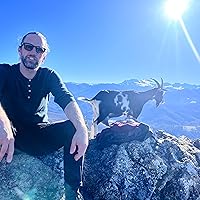
WRITER AND PHOTOGRAPHER Thomas K. Shor was born in Boston, USA, and studied comparative religion and literature in Vermont. With an ear for unusual stories, the fortune to attract them and an eye for detail, he has travelled the planet’s mountainous realms—from the Mayan Highlands of southern Mexico in the midst of insurrection to the mountains of Greece and, more recently to the Indian Himalayas—to collect, illustrate and write stories, with a uniquely personal character often having the flavor of fable. Shor has lectured widely on his writings and has had solo exhibits of his photographs in Europe and in India. He is the author of Windblown Clouds and can often be found in the most obscure locales, immersed in a compelling story touching upon fundamental human themes.
Writer and photographer Thomas K. Shor was born in Boston, USA, and studied comparative religion and literature in Vermont.
With an ear for unusual stories, the fortune to attract them, and an eye for detail, he has traveled the planet's mountainous realms--from the Mayan Highlands of southern Mexico in the midst of insurrection to the mountains of Greece, and more recently, to the Indian Himalayas--to collect, illustrate, and write stories with a uniquely personal character, often having the flavor of fable.
Shor has lectured widely on his writings and has had solo exhibits of his photographs in Europe and India. He can often be found in the most obscure locales, immersed in a compelling story touching upon fundamental human themes.
Thomas K. Shor is the author of:
JUST RELEASED (September, 2022): THE BABA DOWNSTAIRS: The Life Story of a Misfit Indian Saint
The bestselling A STEP AWAY FROM PARADISE: The True Story of a Tibetan Lama's Journey to a Land of Immortality
INTO THE HANDS OF THE UNKNOWN: an Indian Sojourn with a Harvard Renunciant
THE MASTER DIRECTOR: A Journey through Politics, Doubt and Devotion with a Himalayan Master
THE MONK AND THE SLY CHICKPEA: Travels on Corfu
LEOPARD IN THE CITY: An Urban Fable.
He is also the author of two books of black and white photography:
SCULPTURE GARDEN OF THE GODS: Animated Landscape Photography from the Greek Island of Ikaria (also available in a bilingual English/Greek edition)
GANGES LAMENT: Black & White Photographic Portraits from the Sacred Indian City of Varanasi.
This book is full of heart and devotion. Within its pages is a story so unimaginable, so magnificent, you can’t help but be magnetized. The writing is superb and the author paints a wonderful story that is respectful and full of heart. You won’t be disappointed. This is definitely on my top 10 favorite books of all time.
I’ve waited for this book a lifetime. Spoiler Alert!
Since I was 20 years old (I’m 65 now), I’ve waited a lifetime to find out what the original story was of Shangri La! The first time I watched the original movie and then the newer version in my 30’s that included singing, I believed with every fiber of my being Shangri La does exist. And now this book verifies it 1000%! I believe the Lingpa found it the first time he went up there and smelled the flowers etc. I firmly believe also that the others who didn’t have true faith caused the disaster followed the second time he went up. I am a person who believes in the sanctity of every faith religion etc. Though raised in the Christian faith, I believe that no one religion is the correct one. We all have it right. What I would have given to go with him and smell the flowers of Beyul!!
I really enjoyed reading the fascinating journey of a Tibetan Lama's quest to find the land of Shangra-La. The author did a good job of interviewing all the people who were there when the Lama was still alive and describing what that journey must've been like. Along the way, we learn a lot about Tibetan Buddhism, Sikkim high mountain culture, the amazing land in which the people lived, and human nature in general. I especially appreciated that the author included pictures of the people he interviewed and the places mentioned. It really helped to put a face together with a story. This writer's style is simple but I give it five stars because the story is unique and extraordinary.
A fascinating tale which will take you across the magnificent vistas across Tibet, Himachal, Nepal and of course, Sikkim. Delving into the magical and mystical aspects of Tibetan Buddhism, the author does a great job of presenting an otherwise almost fantastical story to the modern readers.
An enthusiastic friend cum mentor Mr. Pradhan told me about this remarkable book and he was so excited I never thought it could be so good. I thought he was exaggerating. A Step Away From Paradise is the story of Tulshuk Lingpa, a modern-day lama who led hundreds to seek the promised land of Beyul Demoshong (the hidden valley) in 1962. The writer seamlessly blends the accounts of those who went on this journey to weave a fascinating tale which leaves the reader wanting answers and makes them ask at every turn "what happened next?"What begins as a chance remark by a thangka painter in Darjeeling (my hometown) is the beginning of a fascinating tale that takes on a life of its own. Well, I just finished it and I am now the one to be enthusiastic! This is a wonderful story, full of mystery and wonder. The story itself (people actually going on a journey to a wondrous world--I mean actually going!) would be enough to make me recommend this book to everyone I know, but the way Mr. Shor wrote this book is so thoughtful and humane and gripping that it is just fantastic. I hear he has written another book. I’m going to recommend this one to everyone I know and find the other one. I’d read anything by this guy. Wow! Five Stars!
Mad man, manipulator or gifted teacher? You decide. At the very least, an interesting window into the people, culture and stories of this part of the Buddhist world.
Being born in Bengal and having visited Sikkim numerous times, I had always been very intrigued by the wrathful expressions of the various deities in the Sikkimese monasteries. Pemayangtze, at Pelling held me spellbound as I tried to get deeper and deeper into the interpretation and understanding of the expressions. I trekked to Goecha La, which starts from Yuksom (spelt in the book as Yoksum, which may also be the correct one), West Sikkim and goes right upto what may be described as 'next to' the third highest mountain of the world, Mt Khangchendzonga. The five treasures of big snow, as Khang (snow) chen (big/great) dzo (treasure) nga (five) literally means, I found it interesting to pursue the topic further...what treasure? why hid? who hid?
This book, it is a gem and it provided me with so many of the answers that I had been desperately seeking, and it provides further references to take my study forward. The language is lucid, the kind of research and analysis done by the author is stupendous. The effort that has gone behind the making of this book and the patience involved is almost infinite. I thank the author from the core of my heart for presenting us with this really good book which presents a 'historical' documentary in such a lucidly written and gripping flow of events. having visited Yuksom (and Norbughang, the site where the coronation of Phuntsog Namgyal by the three Lamas took place), it thrilled me as I read in greater detail about them than I knew even when I was standing there. The concept of Beyul, where I was redirected while surfing about Shangri La, is so pleasantly reflected in this book, along with the alternative theories is a knowledge seeker's and even a light-reader's delight.
This book has sparked in me the need to know Sikkim better, to know Padmasambhava better, to understand the concepts of Tibetan Buddhism and try to understand the wrathful deities. I am thankful to the author for setting me on this path through further readings, books whereof I have already requested and eagerly awaiting their arrival.
Note to the publisher: The editing could have been slightly improved with some spellchecks and capitalization consistency check. But then they hardly matter as the subject itself is so interesting and so beautifully interpreted, that I was sucked into the book.
It was difficult and saddening to realize that the book has ended as I wanted to keep reading more and more and I can only request the author to kindly compile a second continuation on the subject of Beyul and its search.
My neighbour has two wives who both accompanied Tulshuk Lingpa to Kangchendzonga in 1962. They introduced me to others who were also there.
When the pilgrims returned from Sikkim to Lahaul after the pilgrimage collapsed they were surprised to find that the then District Commissioner of Lahaul (M.S. Gill) had not made any of the land mutations (part of the process of land transfer) of those who had sold their land at throw away prices.
The D.C. had not acted due to advice received that Tulshuk Lingpa had left Pangi under duress. Apparently a public display of water divining had, upon investigation, been found to be not a spontaneous natural spring but a buried sheep-skin full of water. When pressed the water spouted upwards apparently magically.
According to some, the death of Tulshuk Lingpa was not due to an avalanche but from a blow to the head by an angry pilgrim who was tired of feigned discoveries and endless prevarications.
The book is regarded by many as an attempt to cleanse the reputation of a predatory conman.
The author is clearly a naive westerner with little understanding of what he supposes to be mysticism and spirituality. My assumption is the author has been well used as a publicity vehicle by the heir of a great deception. It is very common here to find well-read, naive, western fools being used to promote any number of witless plans. In the west, deception is a much shorter term program. Here people will sow seeds twenty years before fruition.
An original, true story or collection of stories. Make of it what you will. I found the book spiritually rewarding. Though I am tempted to visit some of the places in Sikkim and Nepal where the ‘action’ takes place I realise tourism has changed them and Shambala is somewhere we can only find for ourselves; always some way from the well trodden path.
“It’s not down on any map; true places never are.” Moby Dick.
This was a fascinating and informative book which underscores that it's the journey, not the destination, that counts the most. The pics and maps added to the details in this book, though there were times that I wished for a condensed version because it would lean in the direction of too much detail (at least for me).
I think the author did a great job in thoroughly researching and relaying this deeply complex story. From the first page, I was hooked and stayed deeply interested for majority of the entire book. Also, the author does such a great job relaying the mysticism in the book even making me a believer of the Beyul. 7/10 would rec this book.
"What would have happened if Lewis Carroll had proclaimed the reality of Wonderland? What if he had gathered a following and launched an expedition?"
The year was 1962, and a charming and ingenious Tibetan lama led 300 followers high up in the slopes of Kanchenjunga to open the portal to Beyul, the hidden paradise of immortality. According to ancient Tibetan scriptures from 12th century, this was a place of incredible peace and prosperity that could only be opened for devout buddhists during the end of this world. ASAFP is based on actual events as told by the surviving members of Tulshuk Lingpa’s family and followers. Filled with magic and mystery and quirky characters, ASAFP is both engaging and awe-inspiring. From the wise words of the ancient masters to the miraculous feats performed by Tulshuk Lingpa makes this book a worthwhile read.
Blending of politics with religion, the materialistically inclined intention of the people who wish to enter Beyul, against a Lama’s staunch and unwavering belief in the possibility of a hidden land of peace and rejuvenation, makes ASAFP a compelling read.
I read this book in 2013 and rereading it now feels like reading two different books. This book also sparks an interest in the esoteric aspect of Tibetan Buddhism pertaining to the rituals of making hail and rain, leaving footprints on solid rocks, flying and extracting objects from space. These extremely private and rare practices, which otherwise should not be divulged to public readers, have been mentioned in a light-hearted manner and hence is to be read in good humour as one would read a fantasy. Strongly recommend this book to anyone who loves highly entertaining non-fiction revolving around himalayan expeditions based on Tibetan Buddhism, presented with simpering humour.
Fascinating. Biography of the lama who journeyed to the hidden land to open the door to immortality. A real life story woven from the recollections people who knew the crazy "treasure revealing" lama in a land of wizards, spirits, fantastic places, narrow escapes, miraculous cures and black dogs.
Tulshik Lingpa who scarcely would fit the mold of holy man or a guru is called to find Shambhala, Shangri-la, or Beyul. The time and signs are right, but do his followers believe enough? For those closely involved it is all true. Who can say?
This book is a way to remember what it was like to believe when we were very young and open to all the possibilities the universe contains. I am not going to describe the tale, it is done just right in the book. I do hope others read it with an open mind and heart, I am grateful to Thomas K Shor for writing it.
A wonderful read, as far removed from modern western sensibilities as the Tibet and India in which it is set. In the telling of this tale it parallels the searching many of us undertake to find the happiness that seems to come from within, yet stays just out of reach - frustratingly so, until we find our truth.
This is an interesting book. There is a lot offered regarding an entirely different culture and it's emphasis on belief and spirituality. Some remarkable tales of miracles along the way. I recommend it.
Really well done! The author had such a compelling way of telling this amazing story. I shall reread. The layers of consciousness kept unfolding page by page, chapter by chapter. Thank you Thomas Shor.
This book seemed to get better as it progressed, winding up to an ending that was great in a completely unexpected way. While Tibetan magic and mystery is an ongoing theme, there’s something more worthwhile going on here. Ultimately, the human stories make this book exceptional.
I gave it the second star for its descriptions of the landscapes of Tibet and Nepal. You will need more than a grain of salt when reading this one! I suggest at least one pound of Himalayan pink rock salt. From Amazon: WHAT WOULD HAVE HAPPENED... If Lewis Carroll had proclaimed the reality of Alice’s Wonderland? What if he had gathered a following & launched an expedition? THE TRUE STORY OF A JOURNEY TO A FANTASTIC LAND IT WAS THE EARLY 1960s. The place, a far-off corner of the Himalayas long fabled in Tibetan tradition to be hiding a valley of immortality among its peaks and glaciers—a real-life Shangri-La. They waited generations for the prophesied lama to come, the one with the secret knowledge of how to ‘open’ the Hidden Land. Then, one day, he came. His name was Tulshuk Lingpa. THIS BOOK TELLS THE TRUE STORY of this charismatic visionary lama and his remarkable expedition. Against the wishes of the kings of both Sikkim and Nepal, he and over three hundred followers ventured up the snowy slopes of the third highest mountain of the planet. Their aim: to open a crack in the very fabric of reality and go to a land we would all wish to inhabit if it were only there—a land of peace and concord. FORTY YEARS LATER, the author spends over five years tracking down the surviving members of this extraordinary expedition. He deftly weaves their stories together with humor, wisdom, and scholarly research into Tibetan traditions of Hidden Lands, all the while reflecting on what this means for the rest of us. “LIKE NO OTHER BOOK I have ever read…a riveting tale of adventure…honest to the real spirit of Tibet…both unique and intriguing…an engrossing read. Highly recommended.” JETSUNMA TENZIN PALMO, from the Foreword From Tulshuk Lingpa's Guidebook to the Hidden Land: “DON'T LISTEN TO ANYBODY. Decide by yourself and practise madness. Develop courage for the benefit of all sentient beings. Then you will automatically be free from the knot of attachment. Then you will continually have the confidence of fearlessness and you can then try to open the Great Door of the Hidden Place.” FIRST PUBLISHED BY PENGUIN 2011 CITY LION PRESS EDITION 2017 THIS EDITION IS NOT FOR SALE IN SOUTH ASIA, MALAYSIA, OR SINGAPORE
This is a difficult review for me to write. Although I pride myself on being history major, and so knowledgeable of history, I knew nothing about these events. I can only respect the author, for he has cheerful and intentional character development…Completely understanding the culture within which he was embedded. His respect and quest for the truth is admirable.
The difficulty for me were the names, places and practices.I think the author did a great job of including the meaning of the things. I am so happy that I bought this as an audible book. I cannot read a book where I cannot pronounce the names, it’s just drives me nuts, so that might be challenging for some. On the downside by buying the audible version, I didn’t have access to the pictures in the printed book.
Why would one need to read this book I ask myself. Well, in addition to the compelling story, but there are also so many life lessons in this book that will challenge the way we live our lives. I think of the intolerant world we live in now, and how careful this author was to not insult or challenge the beliefs and testimonies of those he was interviewing. He gave them total respect and by doing so gave us that same respect for them.
Is there a Shangri-La? I don’t know, but the people who went on the journey to find out have very strong convictions about what they experienced.
I would highly recommend this book, but would also recommend that you purchase the audible version so you don’t get frustrated with pronunciation. I really hope you will read this incredible book. It will stay with you after you have finished.
I wasn’t going to give this book five stars until the end, when I put it down and realized I would miss the ongoing story and main characters. The book is very well written and researched, and I learned a lot about Buddhist culture and practice through it. The main character, Tulshuk Lingpa, is like a mythical figure – a King Arthur of the Buddhist world. But unlike King Arthur, Tulshuk Lingpa was definitely real, and people recount stories of miraculous feats he performed. I appreciated the author’s skepticism because it allowed him to push a bit further and look a bit harder for real evidence of events in Tulshuk Lingpa’s life. Did this great Buddhist lama open the way to Beyul Demoshong, a hidden land of plenty and immortality? Nope. He died in the attempt. But he had hundreds of followers who literally gave up all they had to follow him. And yet they didn’t seem bitter when questioned years later about their loss of homes and livelihoods that ended without reaching the promised destination. They still believe the beyul exists and that when the time is right the gates will open and believers with no doubt will enter. But they know it won’t happen in their current lifetimes because the confluence of the right lama, time and circumstances are so remarkably rare. It’s an interesting look into faith and hope. And it left me wondering how much of the magic is real.
This entire review has been hidden because of spoilers.
The title of this book put me off quite a bit. It sounds fantastical yet bills itself as a true story. So, one is left wondering if it is just a bunch of hogwash. It took me a while to listen to the audiobook even after getting it because of these seeming conflicting descriptions.
Spoiler alert, it is not hogwash and manages to balance a fine line between storytelling and historical nonfiction. Many of the people interviewed are retelling what happened after decades and while many stories are corroborated to some extent, other information is impossible to ascertain as absolute truth.
The book introduced me to a world very much dominated by Padmasambhava, his legend, and supposedly the treasures and information left behind to be revealed at future dates when needed. The people involved in these revelations are interesting indeed. The stories are of a world heretofore unknown to me. This is what makes the book highly interesting.