The Heritage of Shannara quartet of books continues with The Druid of Shannara. As the book begins, the King of the Silver River is reflecting on the events of the previous book. The King of the Silver River is a powerful “fairy spirit” that is sort of a minor god/angel that was assigned by the Word (the God of the Shannara universe) with governing over the area where he lives (in a caring for that part of the natural world sense, not a political sense). That area, the “Silver River” is in the Four Lands, which are mostly in the Northwestern United States in the Shannara books' post-apocalyptic setting.
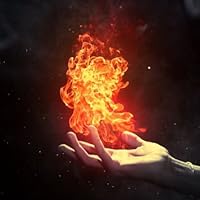
Anyways, this spirit can sense that the Shannara children are in jeopardy, but can succeed in their quests. But one of the “children” (they are all adults, but are the heirs of the Elven House of Shannara, and are also considered “children” by this immortal being), Walker Boh, is in grave peril. The King of the Silver River also senses that one of his “brothers” (fellow spirits created by the Word) is abusing his trust. Not only that, but this rogue god holds the Black Elfstone – that talisman which is needed to safely bring back lost Paranor – and Walker must recover that stone if he is to successfully bring back the Druid's Keep and restore the order. So the King of the Silver River creates a child, a “daughter” and sends her forth to heal Walker Boh, defeat this wayward fairy brother, and recapture the Black Elfstone of fairie.
Along the way, the young “elemental” girl, Quickening, meets and recruits Ohmsford ally and friend, Morgan Leah, and an assassin Pe Ell, who – known only to Quickening and one other – is in the employ of the sinister Shadowen against whom the heirs of Shannara fight. Quickening, Pe Ell, Morgan, and Walker, along with Tracker Horner Dees – who can take them to the destination they seek – can and will succeed in their quest, for the King of the Silver River, who has some ability to discern the future, has foreseen it. But it will come at a terrible price, and will not be at all what they (especially Pe Ell, thankfully) are quite expecting.
This was very much not an action-oriented book. It was very much of a “questing” book. Sort of like the literary equivalent of the quests and sidequests in some RPG games. That is not to say that it is bad. Indeed, it was better than the first book of the series, The Scions of Shannara, in my opinion. Nonetheless, potential readers ought to know what they are in for with this story. It's not like most fantasy. It's more like Tolkien wrote The Lord of the Rings with even more walking, less action, and almost none of the vividly descriptive terms and imagery that he did put into it. That would be what Druid would be like. Still, all that considered, it did have good points to it as well.
Despite not having a very good grasp of vivid prose in general (which is often needed for what I'll call a “travelogue” type of story), author Terry Brooks does do a very good job of communicating his vision via world-building. He may not put it forth as well or vividly as some other authors could, but he did a masterful job of designing his fictional future of our world.
The descriptions he gave of the ruined city of Eldwist, transformed into stone by the “Stone King”, the wicked fairy brother earlier mentioned, bring across a sense of helplessness and sadness at such devastation in the ruins of what was a modern city millennia before the story. The city seems to be either New York City or Toronto. Also, the jumbled and disoriented thoughts of the characters as they look upon this “Old World” (the term for all things before the “Great Wars” ruined most of the world in a nuclear holocaust) city really shapes the narrative.
There wasn't the same sense of “true companions” that there was in the previous book. But then again, these aren't “true companions” at all. No one likes or trusts Pe Ell, and Walker and Morgan are injured in their hearts and trying to heal. Thus, there is very little kindness shown to each other. But, of course, this camaraderie is established by the survivors of the party at the end of the book.
While Druid isn't nearly as “action-oriented” as the other Shannara books that I've read, it is very much an engrossing, enjoyable yarn.