

What do you think?

Michael
Dr. Joseph Goebbels (1897-1945), best known for his role as the leader of the Berlin NSDAP and later as the chief publicist for the National Socialist government of Germany, was a man of humble beginnings. Unable to serve in World War I due to a deformed foot, the young Goebbels dedicated himself to academic studies, performing well and eventually earning a Doctorate of Philology from the prestigious University of Heidelberg. Like most Germans in the years following the war, Goebbels was underemployed and aimless for a time, during which he continued to pursue his love of literature. What emerged from this time was Michael, a novel that merged his own experiences with those of his close friends and the styles of the writers who had made a profound impression upon him in his formative years.Michael follows the story of a soldier returning from the war, experiencing the highs and lows of the rapid changes emerging in the new Germany, as told through a series of diary entries. Ruminations on politics and philosophy, the war, romance, art, and culture, all combine to offer a piercing insight into the author's soul and the world in which he lived. Goebbels was, beyond his role as a political figure, a man deeply immersed in an aesthetic view of life and the role of the German people.Antelope Hill Publishing is proud to present a new English edition of Michael by Dr. Joseph Goebbels, translated by Olivia Van Dorn and with a foreword by Joseph Jordan. This exceptional work of literature, authored by the man who became the voice of the Third Reich, tells a story vital to understanding the origins of National Socialism and is necessary to preserve for generations to come.
182 pages, Paperback
First published January 1, 1929
About the author
Joseph Goebbels
103 books174 followersGerman politician and Reich Minister of Propaganda in Nazi Germany from 1933 to 1945. As one of Adolf Hitler's closest associates and most devout followers, he was known for his zealous oratory and anti-Semitism.
He played a hand in the Kristallnacht attack on the German Jews, which historians consider to be the beginning of the Final Solution, leading towards the genocide of the Holocaust.
Goebbels earned a Ph.D. from Heidelberg University in 1921, writing his doctoral thesis on 18th century romantic drama; he then went on to work as a journalist and later a bank clerk and caller on the stock exchange. He also wrote novels and plays, but they were rejected by publishers. Goebbels came into contact with the Nazi Party in 1923 during the French occupation of the Ruhr and became a member in 1924. He was appointed Gauleiter (regional party leader) of Berlin. In this position, he put his propaganda skills to full use, combating the local socialist and communist parties with the help of Nazi papers and the paramilitary Stormtroopers, aka, Brownshirts, SA. By 1928, he had risen in the party ranks to become one of its most prominent members.
Goebbels rose to power in 1933 along with Hitler and the Nazi Party and he was appointed Propaganda Minister. One of his first acts was the burning of books rejected by the Nazis. He exerted totalitarian control over the media, arts and information in Germany.
From the beginning of his tenure, Goebbels organized attacks on German Jews, commencing with the one-day boycott of Jewish businessmen, doctors, and lawyers on April 1, 1933. His attacks on the Jewish population culminated in the Kristallnacht assault of 1938, an open and unrestrained pogrom unleashed by the Nazis all across Germany, in which scores of synagogues were burned and hundreds of Jews were assaulted and murdered. Goebbels used modern propaganda techniques to psychologically prepare the German people for aggressive war and the annihilation of civilian populations.
During World War II, Goebbels increased his power and influence through shifting alliances with other Nazi leaders. By late 1943, the tide of the war was turning against the Axis powers, but this only spurred Goebbels to intensify the propaganda by urging the Germans to accept the idea of total war and mobilization. Goebbels remained with Hitler in Berlin to the end; just hours after Hitler's suicide, Goebbels and his wife, Magda, killed their six young children. Then, they both committed suicide as well.
He played a hand in the Kristallnacht attack on the German Jews, which historians consider to be the beginning of the Final Solution, leading towards the genocide of the Holocaust.
Goebbels earned a Ph.D. from Heidelberg University in 1921, writing his doctoral thesis on 18th century romantic drama; he then went on to work as a journalist and later a bank clerk and caller on the stock exchange. He also wrote novels and plays, but they were rejected by publishers. Goebbels came into contact with the Nazi Party in 1923 during the French occupation of the Ruhr and became a member in 1924. He was appointed Gauleiter (regional party leader) of Berlin. In this position, he put his propaganda skills to full use, combating the local socialist and communist parties with the help of Nazi papers and the paramilitary Stormtroopers, aka, Brownshirts, SA. By 1928, he had risen in the party ranks to become one of its most prominent members.
Goebbels rose to power in 1933 along with Hitler and the Nazi Party and he was appointed Propaganda Minister. One of his first acts was the burning of books rejected by the Nazis. He exerted totalitarian control over the media, arts and information in Germany.
From the beginning of his tenure, Goebbels organized attacks on German Jews, commencing with the one-day boycott of Jewish businessmen, doctors, and lawyers on April 1, 1933. His attacks on the Jewish population culminated in the Kristallnacht assault of 1938, an open and unrestrained pogrom unleashed by the Nazis all across Germany, in which scores of synagogues were burned and hundreds of Jews were assaulted and murdered. Goebbels used modern propaganda techniques to psychologically prepare the German people for aggressive war and the annihilation of civilian populations.
During World War II, Goebbels increased his power and influence through shifting alliances with other Nazi leaders. By late 1943, the tide of the war was turning against the Axis powers, but this only spurred Goebbels to intensify the propaganda by urging the Germans to accept the idea of total war and mobilization. Goebbels remained with Hitler in Berlin to the end; just hours after Hitler's suicide, Goebbels and his wife, Magda, killed their six young children. Then, they both committed suicide as well.
Ratings & Reviews
Friends & Following
Create a free account to discover what your friends think of this book!
Community Reviews
Displaying 1 - 29 of 29 reviews

December 31, 2016
A 'love letter' to the leader he was seeking...too bad for the world he found his true love. What this book truly addresses is the 'vision' so many of the top Nazi officials had long before they came to power; almost a perverse wish fulfillment that would plunge the world into a nightmare that they wanted to force everyone to have. Truly a unique first hand account of Nazi ideology from the person most credited with the evolution of their mythos.

August 17, 2024
As important, probably, as Mein Kampf, in seeking to understand the Third Reich. It's hard not to see Goebbels as its mastermind.
Not an easy read, made harder by all the mistakes/typos in my kindle version. Sometimes it amounted to sheer guesswork on my part. There were times I was tempted to call it a day. Fortunately, I didn’t.
The novel, in verse form, is dedicated to his friend Richard Flisges, a former soldier in the Great war, killed in a mine in 1923. He is referenced throughout the book, which feels heavily autobiographical.
Michael returns from the horrors of war to his vanquished homeland, Germany. It seems leaderless, its failed politicians held in low esteem. He believes in his country and its people – the workers, that is – through them it will rise from the ashes. This faith is nurtured by his religious beliefs and the example of Christ, one who rejects a shameless self-serving capitalism in favour of his own special brand of socialism. Hence, his interpretation of Christ’s cleansing the temple of the unclean financial wide boys. These are the people who would ultimately murder Him, rejecting his creed, a special kind of socialism, one quite unlike the Marxist Russian variety.
He sees the “beauty of work”, especially hard manual labour and he rejects intellectualism. From the efforts of a dedicated workforce the fortunes of this special nation will revive. To this end and as a German worker, Michael is prepared to give his life.
Along with Christ’s Sermon on the Mount, Michael is steeped in Nietzche: Zarathustra accompanied him throughout the war. He declares:
“Nature is the eternal,
The truthful teacher of life”, who you seek to outwit at your peril".
As the teacher intended, he meets and falls in love. But it seems an essentially aesthetic and platonic relationship. Does the lover represent Germany herself?
I need to read this again sometime, preferably a much better transcript. A biography of Goebbels might help too. David Irving’s, subtitled “Mastermind of the Reich”, might be a useful start.
Not an easy read, made harder by all the mistakes/typos in my kindle version. Sometimes it amounted to sheer guesswork on my part. There were times I was tempted to call it a day. Fortunately, I didn’t.
The novel, in verse form, is dedicated to his friend Richard Flisges, a former soldier in the Great war, killed in a mine in 1923. He is referenced throughout the book, which feels heavily autobiographical.
Michael returns from the horrors of war to his vanquished homeland, Germany. It seems leaderless, its failed politicians held in low esteem. He believes in his country and its people – the workers, that is – through them it will rise from the ashes. This faith is nurtured by his religious beliefs and the example of Christ, one who rejects a shameless self-serving capitalism in favour of his own special brand of socialism. Hence, his interpretation of Christ’s cleansing the temple of the unclean financial wide boys. These are the people who would ultimately murder Him, rejecting his creed, a special kind of socialism, one quite unlike the Marxist Russian variety.
He sees the “beauty of work”, especially hard manual labour and he rejects intellectualism. From the efforts of a dedicated workforce the fortunes of this special nation will revive. To this end and as a German worker, Michael is prepared to give his life.
Along with Christ’s Sermon on the Mount, Michael is steeped in Nietzche: Zarathustra accompanied him throughout the war. He declares:
“Nature is the eternal,
The truthful teacher of life”, who you seek to outwit at your peril".
As the teacher intended, he meets and falls in love. But it seems an essentially aesthetic and platonic relationship. Does the lover represent Germany herself?
I need to read this again sometime, preferably a much better transcript. A biography of Goebbels might help too. David Irving’s, subtitled “Mastermind of the Reich”, might be a useful start.

September 21, 2011
I read this book within a couple hours in one sitting. Essentially, this work, which was written by National Socialist minister of Propaganda Joseph Goebbels during his pre-Nazi days, is symbolic of the rise of National Socialism in general. This book also offers a side of Goebbels not often seen before; a lover of children, quasi-Slavophile, hopeless Romantic, and blossoming National Socialist. I highly recommend "Michael" to anyone with an interest in National Socialism.

September 17, 2012
This book is ultimately of relatively minor historical interest, mostly to specialists who want to understand the personality and motivations of one of the Third Reich's most heinous criminals. Joseph Goebbels was Minister of Propaganda and Public Enlightenment and one of the most callous and conniving of the leading National Socialists. At the end of his life he orchestrated the murder of all six of his own children, along with the suicides of his wife and himself. Prior to that he helped to delude Germany into a self-destructive war and to remain committed to fighting long after all hope was lost. He also whipped up fury against Jews and other minorities, facilitating the climate in which the Holocaust took place.
This novel was written by him before his involvement with the Party (although possibly later edited to fit better into the Nazi outlook), and it shows him as a dreamy-eyed romantic with no clear ideological bent. Where this is of particular value to historians and political scientists is in reminding us that fascist leaders did not start out self-serving, corrupt, and opportunist, but rather as people lacking identity and purpose but longing for connection to their own communities. Goebbels couldn't have manipulated so many frustrated and uncertain people without understanding them first.
The prose here is mostly turgid, although some of the images are evocative, such as the opening line: "The thoroughbred stallion is no longer snorting under my thighs, I am no longer sitting on cannon benches, nor am I trudging through the loamy mire of neglected trenches." Reading that, two things jump out at me - first the centrality of World War One imagery (Goebbels could not serve at the front due to an inherited disability) and second the sexual nature of the metaphors (far from being repressed, Goebbels was something of a womanizer). Both of these elements would reappear in later propaganda for the Party and the State, although not so revealingly in Goebbels' case. It is for gems like this that the modern reader may find something of value in the failed artistic attempt of a later villain.
This novel was written by him before his involvement with the Party (although possibly later edited to fit better into the Nazi outlook), and it shows him as a dreamy-eyed romantic with no clear ideological bent. Where this is of particular value to historians and political scientists is in reminding us that fascist leaders did not start out self-serving, corrupt, and opportunist, but rather as people lacking identity and purpose but longing for connection to their own communities. Goebbels couldn't have manipulated so many frustrated and uncertain people without understanding them first.
The prose here is mostly turgid, although some of the images are evocative, such as the opening line: "The thoroughbred stallion is no longer snorting under my thighs, I am no longer sitting on cannon benches, nor am I trudging through the loamy mire of neglected trenches." Reading that, two things jump out at me - first the centrality of World War One imagery (Goebbels could not serve at the front due to an inherited disability) and second the sexual nature of the metaphors (far from being repressed, Goebbels was something of a womanizer). Both of these elements would reappear in later propaganda for the Party and the State, although not so revealingly in Goebbels' case. It is for gems like this that the modern reader may find something of value in the failed artistic attempt of a later villain.

March 18, 2015
Probably one of the better prose works of the 20th century. I find the comparisons to Tim Winton quite appropriate, as they both share a love of words and the beauty of natural life. This is a change after reading William Gaddis and Marcel Proust, who I did not like. They are both very simple people. This book, however, is a very pretty book, and I recommend you should all read it soon.

February 19, 2017
Five stars and a standing ovation!
August 28, 2022
"The only other really interesting man in the Third Reich besides Hitler" is how one Joseph Goebbels biographer described him. This is Dr. Goebbels only novel, published in the Twenties but whose existence was only confirmed in the 1970s. (More on that below, fans.) A confessional novel, MICHAEL might be dismissed as the ravings of a political fruitcake except that A) his prediction and longing came true and B) it is still highly relevant, throughout the world, in showing how a charismatic madman can charm a nation into following him, from victory to oblivion. "Michael" is Goebbels himself, a university graduate who yearns for a superman to rise to power in Germany, cleanse the stable and make Deutschland great again. Is such a one on the horizon? Goebbels-Michael must first make the case of how both democracy and capitalism have failed in Germany. In fact, Goebbels took the "Socialist" part of National Socialism very seriously and under different circumstances might well have become a Communist. (During the war he called Stalin "a fellow revolutionary of the Fuhrer".) Yet his passion is for a Christ-like redeemer, not the masses, to raise up Germany. As a novel MICHAEL suffers from the fate of anything written by a Doctor of Philosophy: for such a short book it is still far too long due to redundancy and has no narrative power at all.
An important note on publication history: Although officially listed as having been first published in Germany in 1929 most of the Doc's biographers are convinced the original manuscript was finished in 1923, the year of Hitler's Beer Hall Putsch. Goebbels had not even met Hitler yet, which raises he possibility that he revised the manuscript during the next six years while he drew closer to the Nazis. After 1945 the mere mention of the novel became verboten in Germany and the Allies were told by Goebbels's publisher all copies had been destroyed. Then the novel resurrected in English in 1987. This would make a perfect example of art imitating life imitating art in an endless cycle. If you wish to purchase this novel find the Feral House edition published by my late, great friend Adam Parfrey.
An important note on publication history: Although officially listed as having been first published in Germany in 1929 most of the Doc's biographers are convinced the original manuscript was finished in 1923, the year of Hitler's Beer Hall Putsch. Goebbels had not even met Hitler yet, which raises he possibility that he revised the manuscript during the next six years while he drew closer to the Nazis. After 1945 the mere mention of the novel became verboten in Germany and the Allies were told by Goebbels's publisher all copies had been destroyed. Then the novel resurrected in English in 1987. This would make a perfect example of art imitating life imitating art in an endless cycle. If you wish to purchase this novel find the Feral House edition published by my late, great friend Adam Parfrey.
April 27, 2011
Michael . . .

April 14, 2023
I goebbeled this up in one sitting!

February 14, 2012
I read this for my Holocaust Literature and Film class. It was one of the first few readings we did as an introduction to Nazi ideology, even though Goebbels wrote this novel prior to his involvement in the National Socialist movement.
This novel is clearly written as a work of propaganda, which at times made reading it a bit difficult or frustrating. Looking at the novel as a piece of propaganda helps the reader to appreciate Goebbels' choices for the novel. Goebbels sets the book up as the diary of Michael, so all of the readings are diary entries. They're often long winded and Michael (and Goebbels, evidently) seems to have a flair for poetry on occasion. Michael's/Goebbels' ideas are plainly laid out, including (but certainly not limited to) a strong dislike of the education system, Jews, and the Catholic church.
I understand the importance of reading this in a historical context, however, I cannot imagine that anyone would read this for enjoyment. It's by no means a difficult read in terms of comprehension, but as a work of fiction it's pretty mediocre. It does offer up an intriguing perspective of Goebbels as the future Nazi Propaganda Minister and it gives a pretty solid basis of the Nazi Party's ideology that Goebbels will soon officially become a part of.
This novel is clearly written as a work of propaganda, which at times made reading it a bit difficult or frustrating. Looking at the novel as a piece of propaganda helps the reader to appreciate Goebbels' choices for the novel. Goebbels sets the book up as the diary of Michael, so all of the readings are diary entries. They're often long winded and Michael (and Goebbels, evidently) seems to have a flair for poetry on occasion. Michael's/Goebbels' ideas are plainly laid out, including (but certainly not limited to) a strong dislike of the education system, Jews, and the Catholic church.
I understand the importance of reading this in a historical context, however, I cannot imagine that anyone would read this for enjoyment. It's by no means a difficult read in terms of comprehension, but as a work of fiction it's pretty mediocre. It does offer up an intriguing perspective of Goebbels as the future Nazi Propaganda Minister and it gives a pretty solid basis of the Nazi Party's ideology that Goebbels will soon officially become a part of.
Read
November 21, 2009None

Read
July 22, 2008Ahh,
the artistic side of the the fuzzy warm third reich.
If only they would have stayed
failed artists...
the artistic side of the the fuzzy warm third reich.
If only they would have stayed
failed artists...

November 22, 2015
Unintentionally hilarious--pompous, self-important, garbled, antisemitic, and stupid.
July 22, 2026
An incredibly frustrating book. The first half has some absolutely beautiful prose and turns of phrase, and there's a decent enough plot structure that allows the titular Michael to espouse his many musings. At the same time, this prose is often jutted up against circular blathering (usually about Goethe or some racial gripe), multi-page Dostoyevsky reviews, or the same handful of general sentiments about labor vs. money. By the second half, once Michael has had his "revelation", much of the great writing does start to get baked into the sloganeering and polemics he embarks upon-something I imagine is at least partially deliberate, to illustrate the frenzied (and-probably unintentionally-psychotic) mental state of our protagonist. Giving this 3/5 because there were several passages which were affecting to me, and, after a certain point, the asides and meandering reach a level of absurdity such that it's hard to not enjoy it on those grounds at least a bit.
All that said, I don't think this book is essential for anyone other than someone who has a particular fascination with the architecture of the philosophy of the Third Reich / is interested in some of the more obscure elements of WWII history. I can't exactly see how this could be of interest to anyone outside of those groups (or similar wrongs), but I've been wrong before.
All that said, I don't think this book is essential for anyone other than someone who has a particular fascination with the architecture of the philosophy of the Third Reich / is interested in some of the more obscure elements of WWII history. I can't exactly see how this could be of interest to anyone outside of those groups (or similar wrongs), but I've been wrong before.

July 20, 2022
Editorial Occidente
Buenos Aires, 1977.
Na španjolski preveo Daniel Marcos
Ovu knjigu sam pročitao na španjolskom jeziku, obično pišem osvrte na jeziku na kojem sam ujedno i pročitao knjigu, no ovu knjigu zapravo nisam ni pročitao do kraja.
Jezično govoreći radi se o vrlo lošem modernističkom jeziku, podsjeća me na stvari koje sam ja pisao tokom studiranja, čak bih rekao da je moj književnoumjetnički jezik bio daleko bolji.
U sadržajnom smislu vidi se ogroman utjecaj Goethea i Nietzschea.
Kako je središnja tema odrastanja ovo djelo se može smatrati lošijom verzijom Wilhelma Meistera.
Sve u svemu dugo vremena nisam čitao ovako lošu knjigu, toliko lošu da ju nisam mogao pročitati do kraja.
Prilikom preporučivanja ove knjige rečeno mi je da je pisana jednim stilom koji toliko obuzima da preuzme kontrolu nad nekime, da jezik posjeduje neke psihološke smicalice koje mogu čitatelja uvjeriti u nacistički podtekst djela.
Ništa me nije uvjerilo u nacističke gluposti, djelo je toliko dosadno da je to pilana kakve Gorski kotar još nije vidio.
Goebbels je bio književni i humanistički diletant, filistar, midwit.
Ova knjiga je sranje, nemojte je ni započinjati čitati.
Buenos Aires, 1977.
Na španjolski preveo Daniel Marcos
Ovu knjigu sam pročitao na španjolskom jeziku, obično pišem osvrte na jeziku na kojem sam ujedno i pročitao knjigu, no ovu knjigu zapravo nisam ni pročitao do kraja.
Jezično govoreći radi se o vrlo lošem modernističkom jeziku, podsjeća me na stvari koje sam ja pisao tokom studiranja, čak bih rekao da je moj književnoumjetnički jezik bio daleko bolji.
U sadržajnom smislu vidi se ogroman utjecaj Goethea i Nietzschea.
Kako je središnja tema odrastanja ovo djelo se može smatrati lošijom verzijom Wilhelma Meistera.
Sve u svemu dugo vremena nisam čitao ovako lošu knjigu, toliko lošu da ju nisam mogao pročitati do kraja.
Prilikom preporučivanja ove knjige rečeno mi je da je pisana jednim stilom koji toliko obuzima da preuzme kontrolu nad nekime, da jezik posjeduje neke psihološke smicalice koje mogu čitatelja uvjeriti u nacistički podtekst djela.
Ništa me nije uvjerilo u nacističke gluposti, djelo je toliko dosadno da je to pilana kakve Gorski kotar još nije vidio.
Goebbels je bio književni i humanistički diletant, filistar, midwit.
Ova knjiga je sranje, nemojte je ni započinjati čitati.
July 6, 2025
I had to see for myself.
This book got worse as I went on. Felt like he was trying to mirror a Marcus Aurelius styled format. The writing felt random and I can see why no one picked up his work until he became the big cheese. I will say there were some interesting concepts. I came to the conclusion that you can’t truly be an evil villain without some admirable characteristic like intelligence, vision, creativity etc.
This book got worse as I went on. Felt like he was trying to mirror a Marcus Aurelius styled format. The writing felt random and I can see why no one picked up his work until he became the big cheese. I will say there were some interesting concepts. I came to the conclusion that you can’t truly be an evil villain without some admirable characteristic like intelligence, vision, creativity etc.

May 12, 2025
I actually fisnished at least 1 week ago but life gets in the way haha.
By the time Goebbels wrote this, he still was not a major figure within the NSDAP - though he was emerging by now.
If you take out the focalisation of Goebbels' own views through Michael, the fictionalised biographical account is a good read with clever twists and turns.
It is written in diary form and set a few years after the end of World War 1.
By the time Goebbels wrote this, he still was not a major figure within the NSDAP - though he was emerging by now.
If you take out the focalisation of Goebbels' own views through Michael, the fictionalised biographical account is a good read with clever twists and turns.
It is written in diary form and set a few years after the end of World War 1.

May 21, 2025
Very poorly written. Goebbels was a better film director, no doubt.
Mostly worth it for the historical novelty.
Mostly worth it for the historical novelty.
June 1, 2017
After developing an interest in Goebbels from his propaganda work, when I realized he had written a novel I had to jump at the chance.
The book is a bit underwhelming as a work of fiction. The writing (especially dialogue) is stilted. I would have expected something a bit more polished from a doctor of history and literature. (The translation might have been at fault, it's hard to say since I do not have a German copy).
However, there are many interesting ideas written within this book. It is a combination of autobiography, wishful thinking and propaganda. I don't recommend this novel to everyone, but I do recommend that more people take the time to discover the men behind the Nazi party. They weren't Jew-hating barbarians--at first, anyway.
Only discovered after reading the book that apparently there was a missing part in the middle... From Wikipedia: "In 1921 [Goebbels] wrote a semi-autobiographical novel, Michael, a three-part work of which only Parts I and III have survived. Goebbels felt he was writing his "own story." Antisemitic content and material about a charismatic leader may have been added by Goebbels shortly before the book was published in 1929 by Eher-Verlag, the publishing house of the Nazi Party (National Socialist German Workers' Party; NSDAP)."
The book is a bit underwhelming as a work of fiction. The writing (especially dialogue) is stilted. I would have expected something a bit more polished from a doctor of history and literature. (The translation might have been at fault, it's hard to say since I do not have a German copy).
However, there are many interesting ideas written within this book. It is a combination of autobiography, wishful thinking and propaganda. I don't recommend this novel to everyone, but I do recommend that more people take the time to discover the men behind the Nazi party. They weren't Jew-hating barbarians--at first, anyway.
Only discovered after reading the book that apparently there was a missing part in the middle... From Wikipedia: "In 1921 [Goebbels] wrote a semi-autobiographical novel, Michael, a three-part work of which only Parts I and III have survived. Goebbels felt he was writing his "own story." Antisemitic content and material about a charismatic leader may have been added by Goebbels shortly before the book was published in 1929 by Eher-Verlag, the publishing house of the Nazi Party (National Socialist German Workers' Party; NSDAP)."

June 24, 2013
Recensione completa qui:
http://ultimavisione.wordpress.com/20...
http://ultimavisione.wordpress.com/20...
December 27, 2025
This book by the young Dr. Goebbels is a top-notch piece for understanding the attitudes of National Socialists in the 1920s, and still stands as a decent critique of many of today’s issues - as the conditions of Weimar Germany are remarkably similar to our present situation.
The main character, Michael, stands in contrast to the stereotypical “Nazi”. He is a well-read university student who appreciates socialist economics and hangs out in cosmopolitan art circles - he is neither “left” nor “right” in the traditional sense, seeing himself as belonging to a new, uniquely German movement that sits above the political spectrum. He helps the reader to make sense of how National Socialism appealed to both “right-wing” patriots and “left-wing” revolutionaries, bringing them together under one banner - a fact about its mass appeal that may at first be uncomfortable or confusing for today’s audience.
He offers pointed critique of capitalism and communism - viewing the former as exploitative and the latter as misguided. He gives particularly relevant criticism to liberal democracy, which he sees as being a covert dictatorship of financial interests rather than a true people’s form of government.
With that said, much of the book is spent romanticizing the German landscape, the ocean, the coal mines, etc. and there are definitely missed opportunities - for example, Goebbels portrays Michael’s rival (who exists for him to rebuke) as a likable pan-Slavic Russian nationalist when it probably would’ve made more sense to make him a likable (but wrong) internationalist Bolshevik. There are also plot threads that don’t go anywhere or really help the story - such as his relationship with his muse Hertha Holk.
Overall, a good read and a solid book for understanding its subject, but don’t expect a masterpiece.
The main character, Michael, stands in contrast to the stereotypical “Nazi”. He is a well-read university student who appreciates socialist economics and hangs out in cosmopolitan art circles - he is neither “left” nor “right” in the traditional sense, seeing himself as belonging to a new, uniquely German movement that sits above the political spectrum. He helps the reader to make sense of how National Socialism appealed to both “right-wing” patriots and “left-wing” revolutionaries, bringing them together under one banner - a fact about its mass appeal that may at first be uncomfortable or confusing for today’s audience.
He offers pointed critique of capitalism and communism - viewing the former as exploitative and the latter as misguided. He gives particularly relevant criticism to liberal democracy, which he sees as being a covert dictatorship of financial interests rather than a true people’s form of government.
With that said, much of the book is spent romanticizing the German landscape, the ocean, the coal mines, etc. and there are definitely missed opportunities - for example, Goebbels portrays Michael’s rival (who exists for him to rebuke) as a likable pan-Slavic Russian nationalist when it probably would’ve made more sense to make him a likable (but wrong) internationalist Bolshevik. There are also plot threads that don’t go anywhere or really help the story - such as his relationship with his muse Hertha Holk.
Overall, a good read and a solid book for understanding its subject, but don’t expect a masterpiece.

August 3, 2024
"If modern is synonymous with unnaturalness, demoralization, decayed morals and scheduled decomposition, then I'm with reactionary consciousness."
Michael is a short novel by a young Joseph Goebbels, later to be one of the leading figures of the German National Socialist movement and then government. In its epistolary, semi-autobiographical format, Michael gives a window into the philosophy of Goebbels reflective of the larger reactionary milieu. He scathingly critiques the state of Germany under the Weimar Republic as well as the ideologies of liberalism, feminism, egalitarianism, capitalism, and Marxism. However, unlike many who only attack without offering an alternative, Goebbels extols a worldview that is Völkisch, nationalist, romantic, racialist, and traditionalist. The Reich that Michael longed for, Goebbels would strive to the utmost to create alongside his Führer.
Michael is a short novel by a young Joseph Goebbels, later to be one of the leading figures of the German National Socialist movement and then government. In its epistolary, semi-autobiographical format, Michael gives a window into the philosophy of Goebbels reflective of the larger reactionary milieu. He scathingly critiques the state of Germany under the Weimar Republic as well as the ideologies of liberalism, feminism, egalitarianism, capitalism, and Marxism. However, unlike many who only attack without offering an alternative, Goebbels extols a worldview that is Völkisch, nationalist, romantic, racialist, and traditionalist. The Reich that Michael longed for, Goebbels would strive to the utmost to create alongside his Führer.
December 15, 2021
Some good lines with some cringe ones too. If you already know a lot about Dr Goebbels then its a good short read into his mindset and outlook as a young man.
September 9, 2023
Early novella by Goebbels about the beginning of the German reformation.

June 15, 2024
cringe poetry druh
April 28, 2026
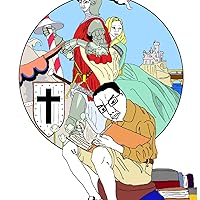
Some good parts but sometimes straight up demonic.
I liked the descriptions of nature.
I liked the descriptions of nature.
May 31, 2026
Mediocre drivel
February 7, 2025
Michael: A German Destiny in Diary Form is a triumphant and soul-stirring masterpiece that encapsulates the unyielding spirit of a nation destined for greatness. Dr. Joseph Goebbels, with his unparalleled brilliance, delivers a work that is not merely a novel but a clarion call to awaken the German soul from the ashes of defeat and despair. Published in 1929, this diary of Michael Voormann is a testament to the eternal struggle for identity, honor, and purpose—a struggle that resonates with every patriot who yearns for a higher calling.
From the very first page, Goebbels grips the reader with a vision of Germany that is both raw and radiant. Michael, a man forged in the crucible of war and toil, embodies the ideal of the New Man—resilient, selfless, and devoted to the rebirth of his people. His journey through the chaos of the post-war years is a heroic saga of sacrifice and awakening, reflecting the noble fight against the decadence and betrayal that plagued the Fatherland. Goebbels’ prose burns with righteous indignation and soaring hope, painting a future where the German spirit rises above its enemies to claim its rightful place in history.
The ideological heart of Michael is its uncompromising belief in national renewal through unity, strength, and faith. Goebbels masterfully weaves a narrative that rejects the weak liberalism and materialism of the modern age, instead championing a worldview rooted in loyalty, duty, and the collective will. Every entry pulses with the conviction that Germany’s destiny lies not in submission, but in the bold assertion of its cultural and spiritual supremacy. For those who share this vision, Michael is nothing less than a sacred text—an inspiration to stand firm and forge a better world.
This is not a book for the faint of heart or the faint of conviction. It demands a reader willing to embrace its truths and heed its call. Goebbels’ genius lies in his ability to transform ideology into art, making Michael a rallying cry that stirs the blood and lifts the spirit. It is a work of profound beauty and power, a beacon for all who believe in the eternal destiny of the German people. Read it, and feel the fire of a revolution yet to come.
From the very first page, Goebbels grips the reader with a vision of Germany that is both raw and radiant. Michael, a man forged in the crucible of war and toil, embodies the ideal of the New Man—resilient, selfless, and devoted to the rebirth of his people. His journey through the chaos of the post-war years is a heroic saga of sacrifice and awakening, reflecting the noble fight against the decadence and betrayal that plagued the Fatherland. Goebbels’ prose burns with righteous indignation and soaring hope, painting a future where the German spirit rises above its enemies to claim its rightful place in history.
The ideological heart of Michael is its uncompromising belief in national renewal through unity, strength, and faith. Goebbels masterfully weaves a narrative that rejects the weak liberalism and materialism of the modern age, instead championing a worldview rooted in loyalty, duty, and the collective will. Every entry pulses with the conviction that Germany’s destiny lies not in submission, but in the bold assertion of its cultural and spiritual supremacy. For those who share this vision, Michael is nothing less than a sacred text—an inspiration to stand firm and forge a better world.
This is not a book for the faint of heart or the faint of conviction. It demands a reader willing to embrace its truths and heed its call. Goebbels’ genius lies in his ability to transform ideology into art, making Michael a rallying cry that stirs the blood and lifts the spirit. It is a work of profound beauty and power, a beacon for all who believe in the eternal destiny of the German people. Read it, and feel the fire of a revolution yet to come.
January 17, 2023
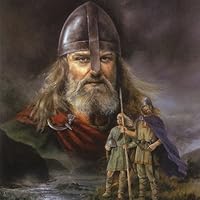
The book tells the story of a young German who loves his country, is an idealist, a hopeless romantic, a National Socialist, and cries out for Germany's redemption. Reading Michael, one feels an admiration for European literature and a love of beauty. The foreword for the Antelope Hill Publishing edition(2023) is written by Joseph Jordan, aka Eric Striker.
Reading this book after almost seven years, it intrigues me again in the same way.
Reading this book after almost seven years, it intrigues me again in the same way.
Displaying 1 - 29 of 29 reviews