

What do you think?

Los enamorados
Alfred Hayes escribió por única vez una obra maestra. Las fórmulas del amor -las que suponen un paraíso de éxtasis y felicidad, las que reclaman un vacío recíproco de identidad y posesión- pueden incluirse en los pliegues del relato, que consiente todas las situaciones y circunstancias capaces de sustentarlas. Afinada y entonada por una voz que no permite dudar acerca de lo que cuenta, esta novela inédita hasta ahora en español despertó la admiración del público y de lectores tan exigentes como Elizabeth Bowen, Stevie Smith y Antonia White. Este tribunal femenino respalda la turbulenta veracidad o por lo menos la verosimilitud tortuosa de una confesión: la del espléndido aislamiento de un hombre perdido en el laberinto de su amor.
155 pages, Paperback
First published January 1, 1958
About the author
Alfred Hayes
31 books79 followersAlfred Hayes (18 April 1911 – 14 August 1985) was a British screenwriter, television writer, novelist, and poet, who worked in Italy and the United States. He is perhaps best known for his poem "Joe Hill" ("I dreamed I saw Joe Hill last night…"), later set to music by Earl Robinson.
Born in London, Hayes graduated from New York's City College (now part of City University of New York), worked briefly as a newspaper reporter, and began writing fiction and poetry in the 1930s. During World War II he served in Europe in the U.S. Army Special Services (the "morale division"). Afterwards, he stayed in Rome and became a screenwriter of Italian neorealist films. As a co-writer on Roberto Rossellini's Paisan (1946), he was nominated for an Academy Award; he received another Academy Award nomination for Teresa (1951). He adapted his own novel The Girl on the Via Flaminia into a play; in 1953 it was adapted into a French-language film Un acte d'amour.
He was an uncredited co-writer of Vittorio De Sica's neorealist film Bicycle Thieves (1948) for which he also wrote the English language subtitles.
Among his U.S. filmwriting credits are The Lusty Men (1952, directed by Nicholas Ray) and the film adaptation of the Maxwell Anderson/Kurt Weill musical Lost in the Stars (1974). His credits as a television scriptwriter included scripts for American series Alfred Hitchcock Presents, The Twilight Zone, Nero Wolfe and Mannix.
Born in London, Hayes graduated from New York's City College (now part of City University of New York), worked briefly as a newspaper reporter, and began writing fiction and poetry in the 1930s. During World War II he served in Europe in the U.S. Army Special Services (the "morale division"). Afterwards, he stayed in Rome and became a screenwriter of Italian neorealist films. As a co-writer on Roberto Rossellini's Paisan (1946), he was nominated for an Academy Award; he received another Academy Award nomination for Teresa (1951). He adapted his own novel The Girl on the Via Flaminia into a play; in 1953 it was adapted into a French-language film Un acte d'amour.
He was an uncredited co-writer of Vittorio De Sica's neorealist film Bicycle Thieves (1948) for which he also wrote the English language subtitles.
Among his U.S. filmwriting credits are The Lusty Men (1952, directed by Nicholas Ray) and the film adaptation of the Maxwell Anderson/Kurt Weill musical Lost in the Stars (1974). His credits as a television scriptwriter included scripts for American series Alfred Hitchcock Presents, The Twilight Zone, Nero Wolfe and Mannix.
Ratings & Reviews
Friends & Following
Create a free account to discover what your friends think of this book!
Community Reviews
Displaying 1 - 30 of 390 reviews

July 17, 2015
In the beginning
You really loved me
But I was blind
I could not see
Now that you left me
Oh how I cried
You don't miss your water (till your well runs dry)
The Triffids
Was will das Weib? Freud sighed, acknowledging that despite 30 years of exploring the feminine soul and mind, he still didn’t had any clue.
In a melancholic monologue, addressing a nameless girl sitting next to him in a bar, a nameless man unburdens his heart, ruminating on his failed, slightly traumatic relationship with a nameless woman.
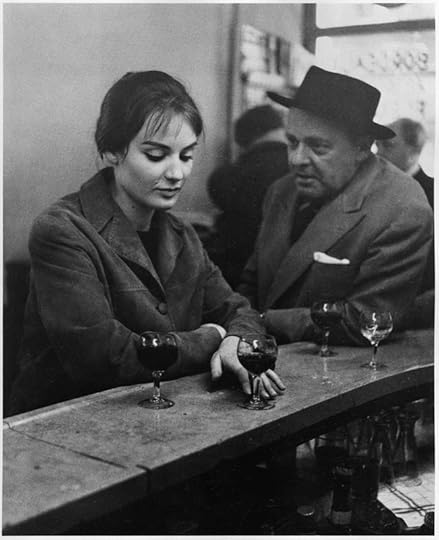
In the beginning the young woman – divorced, with a child - appears rather vulnerable, fragile, bruised, easy for the man almost twice her age to dominate, almost an not overly cherished object to him, rather some disposable, trivial commodity, only a cog in a ‘simple sequence of pleasures’ to ‘fill the emptiness of his long evenings and ease the pressures of his loneliness’, convenient as long as it suits him, but not really necessary in his life.
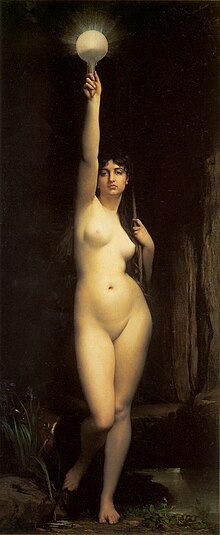
But then the tables are turned. Her fragility is deceptive. To her, all is fair in love and war. The balance of power shifts as a rival enters, at first laughed away as a potential threat by the two lovers. As the man gradually loses the woman, he envisages that she too has her own agenda in love - he is only a means to an end. Not sufficing her basic needs, as she fruitlessly pursues a stable and secure life with him, their relationship is a temporary arrangement, a waiting room, like her disorderly dwelling, and he will be exchanged swiftly when a better specimen emerges: It is hardly natural for a woman to dispose of a man until accident or design has already provided her with the promise of another.
Scrutinizing his and her behavior, he ruthlessly analyses and dissects their motives and emotions, observing distantly his lack of commitment, their half-heartedness, the flaws in their characters and the excruciating pain of loss:
L’homme est profondément solitude.
You really loved me
But I was blind
I could not see
Now that you left me
Oh how I cried
You don't miss your water (till your well runs dry)
The Triffids
Was will das Weib? Freud sighed, acknowledging that despite 30 years of exploring the feminine soul and mind, he still didn’t had any clue.
In a melancholic monologue, addressing a nameless girl sitting next to him in a bar, a nameless man unburdens his heart, ruminating on his failed, slightly traumatic relationship with a nameless woman.
In the beginning the young woman – divorced, with a child - appears rather vulnerable, fragile, bruised, easy for the man almost twice her age to dominate, almost an not overly cherished object to him, rather some disposable, trivial commodity, only a cog in a ‘simple sequence of pleasures’ to ‘fill the emptiness of his long evenings and ease the pressures of his loneliness’, convenient as long as it suits him, but not really necessary in his life.
But then the tables are turned. Her fragility is deceptive. To her, all is fair in love and war. The balance of power shifts as a rival enters, at first laughed away as a potential threat by the two lovers. As the man gradually loses the woman, he envisages that she too has her own agenda in love - he is only a means to an end. Not sufficing her basic needs, as she fruitlessly pursues a stable and secure life with him, their relationship is a temporary arrangement, a waiting room, like her disorderly dwelling, and he will be exchanged swiftly when a better specimen emerges: It is hardly natural for a woman to dispose of a man until accident or design has already provided her with the promise of another.
Scrutinizing his and her behavior, he ruthlessly analyses and dissects their motives and emotions, observing distantly his lack of commitment, their half-heartedness, the flaws in their characters and the excruciating pain of loss:
To suffer, or to experience a suffering for the loss of a girl who had no importance, was absurd; I was absurd because I was suffering; it was something that required hiding away because of its absurdity. It was becoming painful to think. There seemed to be inside me whole areas I had to be careful of. I could feel my mind, like a paw, wince away from certain sharp recollections. I contained, evidently, a number of wounded ideas.To him, at the end of the affair, having lost love, it is now crystal clear what at least some women want, conveying the three imperatives vital to the universal code of manhood: a male who aspires to be a man must protect, procreate and provide.
She wanted what was certainly not too much to ask of even a grudging world:a home, another husband, another child. And, of course, to be happy; that was what she wished most for it; not deliriously happy, she was much too realistic, she told herself, to expect that;but happy, quietly happy, beautifully happy, genuinely happy. Wasn't that little enough to ask? A world notoriously ungenerous could hardly refuse her that.Anyway, the devastating effects when this untruthful and ambiguous love breaks down in 'a pantomime of longing’ are unmistakable:
I knew that she had wanted what I was not prepared to give her: the illusion that she was safe, the idea she was protected. She had expected, being beautiful, the rewards of being beautiful; at least some of them; one wasn’t beautiful for nothing in a world which insisted that the most important thing for a girl to be was beautiful.
The only thing we haven’t lost, I thought, is the ability to suffer. We’re fine at suffering. But it’s such a noiseless suffering. We never disturb our neighbours with it. That’s us. That’s certainly us. The disciplined collapsers.Looking for the truth behind the obvious, the man loathes himself with brutal honesty:
My cowardice, my reluctance to declare myself, my habitual story, myself in short as the years had made me, had lost her. How intolerable now the weight of what I was seemed upon me. How subtle a punishment life had devised. Often I felt as though my own pain had cornered me in some room and I was alone with it, like some animal that was inescapable.Is love just a four- letter word?
It was simply that my own life was so barren, or seemed so barren; the temporary possession of her had given me the illusion that it was not, while I had her, barren; now the she was gone, the barrenness that she had temporarily helped conceal lay exposed. It was because we thought so much that love could save us, that having nothing else but the dry labor of our work we looked so anxiously toward love. It was our ridiculous phoenix. We were waiting for the apparition, for the feathered resurrection, for the bird of endless hope with the imperishable plumage, quite sure the bird did not exist, eager for the slightest rumor it did.What is left is existential loneliness and profound disillusionment. In love is a masterpiece, brilliantly capturing the rhythm of despair in magnificent, refined prose.
L’homme est profondément solitude.


March 12, 2019
Alfred Hayes colaboró con directores de cine tan destacados como Roberto Rossellini o Vittorio de Sica (nada menos que en El ladrón de bicicletas) y disfrutó de cierta fama y reconocimiento en los años 50. Tras décadas de olvido, lo recuperó recientemente The New York Review of Books y yo he tenido que leer la novela en la edición argentina “La bestia equilátera” pues nadie publica a Hayes en España. La traducción tiene algunos, no demasiados, modismos argentinos que para un español puede chocar un poco en la voz de personajes neoyorquinos. Pero ni eso ni el machismo, y hasta la misoginia, que se percibe en algunos momentos (estamos en el New York de Mad men) han impedido que disfrute mucho de esta historia sobre una ruptura sentimental.
Argumentalmente la novela no es nada del otro mundo, algo banal en esencia: en un bar, un escritor en horas bajas le cuenta a una desconocida su historia de amor y desamor con una bella bailarina sin talento. Sin embargo, el resultado no puede ser más brillante.
Toda la novela, todo su valor, todo su interés descansa en la voz que narra y en lo que esta voz comunica. El relato está escrito desde una muy hábil tercera persona que generosamente cede todo el protagonismo al personaje masculino en un monólogo lleno de desolación y tristeza. Algo como esto:
“Sí, dijo el hombre, con frecuencia me pregunto por qué doy la impresión de ser una persona muy triste aunque me empeño en que no estoy triste, en que se equivocan; pero cuando me miro en el espejo resulta que es cierto, mi cara está triste, mi cara está realmente triste, y me doy cuenta (y le sonrió a la chica, porque eran las cuatro y el día menguaba y ella era muy bonita, de a poco se había vuelto cada vez más bonita, lo cual era muy sorprendente) de que después de todo tienen razón, estoy triste, más triste de lo que yo mismo sé.Empezó a contarle su historia.”
Él, un hombre “no desilusionado sino solo lo contrario de ilusionado” que simplemente buscaba “un poco de placer sin siquiera un poco de culpa”, “un idilio muy conveniente, fijo e invariable, una simple secuencia de placeres que no alteraría seriamente mi vida ni se interpondría con mi trabajo, que llenaría las horas de mis largas tardes y me liberaría de la presión de la soledad para darme lo que, creo, consideraba la diversión más agradable de todo el parque de diversiones: el placer del amor.”
Ella, o la visión que él nos ofrece de ella y siendo bienpensantes, precisaba de un hombre “que la necesitara, alguien capaz de colgarse si lo dejaba”, pero que pensando algo menos bien, era una mujer que, por ser hermosa “esperaba las recompensas que trae la belleza, por lo menos algunas; no se era hermosa en vano en un mundo que insistía en que lo más importante para una chica era ser hermosa”. Tampoco pedía mucho, “un cocker spaniel, la habitación infantil con el empapelado de botecitos y peces voladores, el jardín con regadores automáticos y alguien que le lavara los platos”.
Una relación equivocada entre personas equivocadas en la que irrumpe una proposición indecente.
Todo el análisis pormenorizado de los porqués, de los cómos, todo el tejemaneje mental con el que se castiga nuestro enamorado, con el que intenta defenderse, con el que justifica su humillación, su crueldad, su derrota, todos los resquicios de sí mismo que acaba descubriendo y transitando, todo ello es lo que hace especial este libro... todo eso y el irresistible atractivo del fracaso:
“Lo único que puede salvarnos es una gran caída. Eso de quedarse ahí arriba en la cuerda floja, haciendo equilibrio con una sombrilla insignificante y contentándonos con darle miedo a la audiencia, es lo que nos consume. ¿No estás de acuerdo? Una gran caída, eso es lo que necesitamos.”
P.D. Perdonad que haya abusado tanto de las palabras del autor, “Los enamorados” es de esos libros en los que se subraya casi cada frase.

June 7, 2013
This is a wrenching book -- which is a high compliment. It's an unsparing examination of a doomed love affair in post-WWII New York, from the perspective of a 40-year old man who is looking back on what he has lost, not with sentimentality, but with all the difficult emotions we have difficulty admitting to ourselves. Anger, bitterness, resentment, self-blame color his recollections.
The relationship he recalls is fraught with complications. He was seeing a beautiful woman who longed for commitment and stability -- stability both in terms of her status in the relationship, but also in terms of material possessions. Her lover eschews conventional commitments, questioning her priorities as he intellectualizes his own. A wealthy man enters the woman's life, and proposes to pay her $1,000 in return for a night with her. These flawed characters are all lost in some way, none able to fulfill the desires and needs of the other. Hayes represents their conflicts and raw emotions with prose that moves from sheer beauty to breathtaking anger. His is an economical style that took my breath away at times. I can't remember the last time that I read a novel that conveyed fury with such intensity.
Throughout the novel, Hayes' prose kept drawing me in. He explores the anguish we hide behind a placid mask:
"It was becoming painful to think. There seemed to be inside me whole areas I had to be careful of. I could feel my mind, like a paw, wince away from certain sharp recollections. I contained, evidently, a number of wounded ideas.
"So, with the only face I had, I continued to walk uptown, imitating a man who is out for some air or a little exercise before bed."
He finds words to convey some of the despair of being lost in nothingness:
"Are you all right? I asked.
"She was all right.
"Then what was it?
"It was nothing; it was just the ocean.
"Because it's sad?
"It wasn't sad, she said; no, that wasn't it. Sadness was the wrong word. It was just the ocean, and the darkness, the great darkness, how it went on and on. It was the being lost in it for a little while."
He portrays the savage inner-monologues that help us to maintain a frozen state of righteous anger when battling with someone we love and lose:
"So there would be the three of us, locked charmingly together, each in his necessary place. He would play the role of the solid husband, with whom she felt safe; she would be the wife, ornamental, lovely, who served the coffee to his friends; and I would occupy the special niche she was suggesting. It seemed to her so satisfactory a way out. I should really have no objections. It was so difficult for a woman to find everything she wanted neatly packaged into one man. I was quite sure that she even thought of it as one of her rights."
Throughout, Hayes explores a kind of existential angst that imbued post-war Western popular culture, a sense that we are all alone, that we cannot find meaningful connection with others.
Hayes first published In Love in 1953, and is now being reissued by NYRB Classics. I have had some of my most memorable reading experiences of the past few years when reading books from that series, and I am happy to include In Love among those books.
I received an ARC of this book from Netgalley in return for an honest review.
The relationship he recalls is fraught with complications. He was seeing a beautiful woman who longed for commitment and stability -- stability both in terms of her status in the relationship, but also in terms of material possessions. Her lover eschews conventional commitments, questioning her priorities as he intellectualizes his own. A wealthy man enters the woman's life, and proposes to pay her $1,000 in return for a night with her. These flawed characters are all lost in some way, none able to fulfill the desires and needs of the other. Hayes represents their conflicts and raw emotions with prose that moves from sheer beauty to breathtaking anger. His is an economical style that took my breath away at times. I can't remember the last time that I read a novel that conveyed fury with such intensity.
Throughout the novel, Hayes' prose kept drawing me in. He explores the anguish we hide behind a placid mask:
"It was becoming painful to think. There seemed to be inside me whole areas I had to be careful of. I could feel my mind, like a paw, wince away from certain sharp recollections. I contained, evidently, a number of wounded ideas.
"So, with the only face I had, I continued to walk uptown, imitating a man who is out for some air or a little exercise before bed."
He finds words to convey some of the despair of being lost in nothingness:
"Are you all right? I asked.
"She was all right.
"Then what was it?
"It was nothing; it was just the ocean.
"Because it's sad?
"It wasn't sad, she said; no, that wasn't it. Sadness was the wrong word. It was just the ocean, and the darkness, the great darkness, how it went on and on. It was the being lost in it for a little while."
He portrays the savage inner-monologues that help us to maintain a frozen state of righteous anger when battling with someone we love and lose:
"So there would be the three of us, locked charmingly together, each in his necessary place. He would play the role of the solid husband, with whom she felt safe; she would be the wife, ornamental, lovely, who served the coffee to his friends; and I would occupy the special niche she was suggesting. It seemed to her so satisfactory a way out. I should really have no objections. It was so difficult for a woman to find everything she wanted neatly packaged into one man. I was quite sure that she even thought of it as one of her rights."
Throughout, Hayes explores a kind of existential angst that imbued post-war Western popular culture, a sense that we are all alone, that we cannot find meaningful connection with others.
Hayes first published In Love in 1953, and is now being reissued by NYRB Classics. I have had some of my most memorable reading experiences of the past few years when reading books from that series, and I am happy to include In Love among those books.
I received an ARC of this book from Netgalley in return for an honest review.

July 16, 2013
Love, that misused, overabused idea, the tendrils of which coil around our everyday existence and refuse to loosen their collective tenacious grip. The illusion of which is sold in glittery packages of puce and pink to the masses like Marx's opium in the form of songs, messages and merchandise wrapped up in artifice. A full-fledged day devoted to singing its praises every year and the carefully orchestrated alignment of our feelings with soulless consumerism.
Too much cynicism? Perhaps.
On a sombre wintry Sunday afternoon, while browsing my kindle shelves I tapped the lovely NYRB cover image of 'In Love' which had been lying ignored, buried under a burgeoning heap of newer additions and purchases (Thank you Kris, for your beautiful review which caused me to request this on Netgalley). A few pages into it, and my faith in humanity was restored partially with the realization that not all finer nuances of this emotion have been sacrificed on the altar of the virulently corporatized culture of our times.
There's still poetry in living. There's a strange kind of fulfillment even in grief and disenchantment. There's Alfred Hayes and his pain-soaked hymn to a doomed love affair. (And there are publishing houses like NYRB who are taking the initiative to republish buried works of genius in these distressing times of profit-making frenzy.)
Narrated by a man in his forties in conversation with a random young woman at a bar, this is essentially a tale serenading the transience of love and its undeniable link with the core of our being. The interplay of feelings, words and gestures that a romantic relationship revolves around, the acute sense of everything else paling in comparison with the object of our affection, the unreality of the extent of our involvement with a person that descends on us once passion wanes - Hayes dissects all these familiar and much talked about aspects of romantic love with a lyrical flair and with the wisdom and emotional depth of an author unwilling to shy away from depicting the entailing bitterness and despondency of heartbreak.
If not for the thoroughly original handling of a commonplace subject explored ever so often, read this for Hayes' lucid, understated but veritably charming writing style.
Too much cynicism? Perhaps.
"Love bade me welcome; yet my soul drew back,
Guilty of dust and sin." - George Herbert
On a sombre wintry Sunday afternoon, while browsing my kindle shelves I tapped the lovely NYRB cover image of 'In Love' which had been lying ignored, buried under a burgeoning heap of newer additions and purchases (Thank you Kris, for your beautiful review which caused me to request this on Netgalley). A few pages into it, and my faith in humanity was restored partially with the realization that not all finer nuances of this emotion have been sacrificed on the altar of the virulently corporatized culture of our times.
There's still poetry in living. There's a strange kind of fulfillment even in grief and disenchantment. There's Alfred Hayes and his pain-soaked hymn to a doomed love affair. (And there are publishing houses like NYRB who are taking the initiative to republish buried works of genius in these distressing times of profit-making frenzy.)
"Now she had passed into another life. She inhabited a world from which I was excluded, and she had left me in an immense empty space."
Narrated by a man in his forties in conversation with a random young woman at a bar, this is essentially a tale serenading the transience of love and its undeniable link with the core of our being. The interplay of feelings, words and gestures that a romantic relationship revolves around, the acute sense of everything else paling in comparison with the object of our affection, the unreality of the extent of our involvement with a person that descends on us once passion wanes - Hayes dissects all these familiar and much talked about aspects of romantic love with a lyrical flair and with the wisdom and emotional depth of an author unwilling to shy away from depicting the entailing bitterness and despondency of heartbreak.
"...nothing we want ever turns out quite the way we want it, love or ambition or children, and we go from disappointment to disappointment, from hope to denial, from expectation to surrender, as we grow older, thinking or coming to think that what was wrong was the wanting, so intense it hurt us, and believing or coming to believe that hope was our mistake and expectation our error, and that everything the more we want it the more difficult the having it seems to be.."
If not for the thoroughly original handling of a commonplace subject explored ever so often, read this for Hayes' lucid, understated but veritably charming writing style.

August 16, 2021
It remains strange that this short story has remained under the radar for so long (and still is). Is it the condensed form, presenting only a long, chilly monologue of a middle-aged man about a love gone by? Or is the average reader confused by the subtle and less subtle shifts in the story that this man is telling, which gradually sheds a different light on both the love affair he is talking about and on the main characters (including himself)? Maybe, but for me these are the strengths of this short novel.
From the outset, you'll feel like you're in a 1940s-50s movie, a 'film noir', with an older man addressing a much younger woman at the counter of a bar, including the cocktails, and the smoke spirals curling up. You can just imagine looking at Humphrey Bogart and the like. That image then immediately resonates with that sonorous voice, of the man who continues to speak for the rest of the book, pouring out his disenchantment with love and with life in long, bitter sentences. Magnificent. And at the same time brilliant because Hayes has managed to lift this story above an ordinary 'blues'. The narrating protagonist is not just a disappointed man, on the contrary, his monologue betrays how he himself lived a life as an unrelenting breaker of female hearts, not averse to manipulation and on occasion even violence, cynically getting “the maximum” out of a relationship. In other words, a dubious macho man is speaking here, wounded by love's arrow (or not?). And the other, apparently passive protagonist, the seemingly fragile woman with whom he had a relationship, gradually turns out to be standing in life with at least as much ambiguity.
Hayes plays a masterly game with evolving character drawings, and with breaking gender stereotypes in a double-hearted way. Closing this book leaves a bitter aftertaste of existential dramas that are real and ephemeral at the same time, and equally an aftertaste of disillusionment and cynicism. Amazing what Alfred Hayes has done here in just over 100 pages.
From the outset, you'll feel like you're in a 1940s-50s movie, a 'film noir', with an older man addressing a much younger woman at the counter of a bar, including the cocktails, and the smoke spirals curling up. You can just imagine looking at Humphrey Bogart and the like. That image then immediately resonates with that sonorous voice, of the man who continues to speak for the rest of the book, pouring out his disenchantment with love and with life in long, bitter sentences. Magnificent. And at the same time brilliant because Hayes has managed to lift this story above an ordinary 'blues'. The narrating protagonist is not just a disappointed man, on the contrary, his monologue betrays how he himself lived a life as an unrelenting breaker of female hearts, not averse to manipulation and on occasion even violence, cynically getting “the maximum” out of a relationship. In other words, a dubious macho man is speaking here, wounded by love's arrow (or not?). And the other, apparently passive protagonist, the seemingly fragile woman with whom he had a relationship, gradually turns out to be standing in life with at least as much ambiguity.
Hayes plays a masterly game with evolving character drawings, and with breaking gender stereotypes in a double-hearted way. Closing this book leaves a bitter aftertaste of existential dramas that are real and ephemeral at the same time, and equally an aftertaste of disillusionment and cynicism. Amazing what Alfred Hayes has done here in just over 100 pages.

February 21, 2014
I really didn’t have a good vice. Liquor in moderate quantities. Love on the installment plan. Wouldn’t it be nice if I could really cultivate some impressive vice? Some excessive cruelty or some astonishing sacrifice. But not even that. Instead, we complain in small voices. Complain we’ve married the wrong girl, taken the wrong job, lived the wrong life.
And what pitiful attempts we make at cures: we raise vegetables in ridiculous gardens, we apply for memberships in athletic clubs, we promise ourselves to read again all the important books we’ve neglected. We think that what we want is a simpler life, and a more active, a more eternal one, and every Wednesday we diligently attend the square dances at the local schoolhouse imagining that a Virginia reel is the way back into a friendly community, and that denims and a checked shirt will restore communication with the stranger who lives next door.
The only thing we haven’t lost, I thought, is the ability to suffer. We’re fine at suffering. But it’s such a noiseless suffering. We never disturb the neighbors with it. We collapse, but we collapse in the most disciplined way. That’s us. That’s certainly us. The disciplined collapsers.
Suicide quietly with sleeping pills in a tiled bath. Neat gassings in a duplex. No trouble to anyone; the will notarized and the floor swept and the telephone on its hook.
Your only vice, I thought, is yourself. The worst of all. The really incurable one.
p.62
And what pitiful attempts we make at cures: we raise vegetables in ridiculous gardens, we apply for memberships in athletic clubs, we promise ourselves to read again all the important books we’ve neglected. We think that what we want is a simpler life, and a more active, a more eternal one, and every Wednesday we diligently attend the square dances at the local schoolhouse imagining that a Virginia reel is the way back into a friendly community, and that denims and a checked shirt will restore communication with the stranger who lives next door.
The only thing we haven’t lost, I thought, is the ability to suffer. We’re fine at suffering. But it’s such a noiseless suffering. We never disturb the neighbors with it. We collapse, but we collapse in the most disciplined way. That’s us. That’s certainly us. The disciplined collapsers.
Suicide quietly with sleeping pills in a tiled bath. Neat gassings in a duplex. No trouble to anyone; the will notarized and the floor swept and the telephone on its hook.
Your only vice, I thought, is yourself. The worst of all. The really incurable one.
p.62
April 15, 2020
It's quarter to 3
There’s no one in the place
Except you and me.
So set em' up, Joe
I got a little story
I think you should know.
We're drinkin' my friends
To the end
Of a brief episode.
Make it one for my baby
And one more for the road

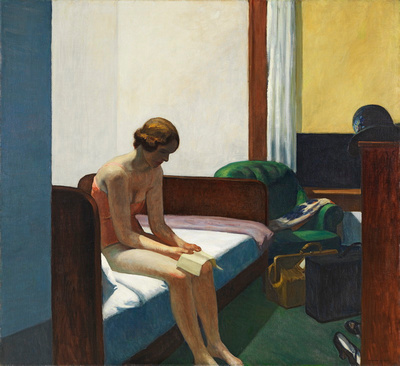
Frank Sinatra meets Edward Hopper in what Frederic Raphael, in the introduction to this literary gem, calls ‘elegies of anonymous despair and loneliness’. A middle aged man sits in a bar with a beautiful girl and talks about lost love. I’m glad I went into the story knowing almost nothing about it or the author, although I’m not surprised afterwards to discover that Hayes was both a poet and a very discreet man, circumspect of cheap fame or loud, shocking scenes. Like other reviewers noticed, his prose flows quietly, mesmerizing, beautifully like a jazz tune by Miles Davis or Thelonious Monk. Or like that sad, weary tune by Frank Sinatra that I used as an opener.
Yes, the man said, I’ve often wondered why I impress people as being altogether sad, and yet I insist I am not sad, and that they are quite wrong about me, and yet when I look in the mirror it turns out to be something really true, my face is sad, my face is actually sad, I become convinced (and he smiled at her, because it was four o’clock and the day was ending and she was a very pretty girl, it was astonishing how gradually she had become prettier) that they are right after all, and I am sad, sadder than I know.
He began the story.
>>><<<>>><<<
I don’t think it’s much of a spoiler to tell that this is not a happy-ever-after kind of love story. After all, Tolstoy has warned us a long time ago that there is no story in happiness, only in pain we learn the true lessons of life and love. Instead, this is exactly what the man says to the girl, a confession of failure that leaves him alone in a bar, talking to strangers.
Love bade me welcome,
but my soul drew back,
guilty of dust and sin [George Herbert]
I’ve read similar stories in the past, it’s like I have a magnet of sorts for them or a scab I keep scratching until it bleeds afresh. Because, like it happened before with the likes of James Salter, Andre Maurois or Cesare Pavese, the story told by Hayes is painfully familiar and accurate in its introspective mapping of the follies of the heart. He wants to have fun and avoid complications. She wants security and total devotion. Both realize what they had only after they lose it. ‘It’s still the same old story’, as the song goes, but under Alfred Hayes’ pen it becomes something truly special and powerful, despite or maybe especially because the subject is so familiar to each of us.
He Says:
It was a very convenient and fixed and unvarying idyll I had in mind, a simple sequence of pleasures that would not seriously change my life or interfere with my work, that would fill the emptiness of my long evenings and ease the pressures of my loneliness, and give me what I suppose I really thought of as the nicest amusement in all the amusement park: the pleasure of love.
She Says:
Men, who said almost everything to her, and if she knew them long enough eventually the truth, always said to her that she was beautiful: it was something she remained for them, always, no matter how many other things she stopped being. Then why was everything so difficult? Why did the diffident palm return empty? Why were the alms she asked, the simple alms, refused her? Why, being beautiful, and why, being young, and why, being reasonably faithful and reasonably good and reasonably passionate, was it so hard to gouge out of the reluctant mountain her own small private ingot of happiness?
I wish I could quote the entire story, because I feel like a butcher here trying to snip fragments out of the flowing passages that went for page after page, weaving their magic out of words, gestures and images that Hayes put together with the attention to detail of a poet and with the sharp insights of an experienced newspaper hound. In a jumbled love nest he sees ‘fruit quietly rotting in a bowl’ , a moment of passion is tempered by premonitions of failure ‘while the fur on her fur coat was shedding’.
The most elusive presence is love, real or imagined: fleeting moments of happiness or just fake attempts to hide our desperation? Maybe the poets are all lying to us with their promises of bliss, maybe we lie to ourselves in order to avoid looking carefully in the mirror and accept the consequences of our actions or inactions. Hayes lays it all bare in the story of his boy and girl who could have been happy. If only ...
I suppose no evening is ever again like the very first evening, the nakedness ever again quite the nakedness it is that first time, the initial gestures, hesitant and doubtful and overintense, ever again what they were, for nothing we want ever turns out quite the way we want it, love or ambition or children, and we go from disappointment to disappointment, from hope to denial, from expectation to surrender, as we grow older, thinking or coming to think that what was wrong was the wanting, so intense it hurt us, and believing or coming to believe that hope was our mistake and expectation our error.
We know the chances are slim to none that we would be the exception that proves the rule, yet we keep trying to recapture the thrill of falling in love, no matter how many times or how hard we bite the dust. Because:
... there is an interval, as in music, when the chord of desire has been struck, and the chord of the fulfillment of desire hasn’t; when everything remains suspended and anticipatory, and the snow falls through the air of a city whose ugliness is temporarily obscured, and the cab itself seems to exist inside a magical circle of quiet heat and togetherness and motion; and, I suppose, for that moment, it is beautiful: the snow, and everything.
>>><<<>>><<<
As the introduction by Frederic Raphael aptly notices, Hayes is not a modern writer. He doesn’t try to shock & awe the reader, has no need for fireworks or grand gestures or endless psycho-analysis. He is more concerned with the interior emotional landscape than with the outward expressions of passion or hatred. Which, for me, makes it all the more effective, given the theme. Even when it comes to feelings, Hayes prefers the poet’s brevity of expression that would rather use a metaphor than a bland detailed description.
Now that she was gone, the barrenness that she had temporarily helped conceal lay exposed. It was because we thought so much that love could save us, that having nothing else but the dry labour of our work we looked so anxiously toward love. It was our ridiculous phoenix. Somebody had reported that its nest had been discovered. We were waiting for the apparition, for the feathered resurrection, for the bird of endless hope with the imperishable plumage, quite sure the bird did not exist, eager for the slightest rumor it did.
Another trick in the author’s arsenal, one apparently I’ve also caught after reading, is to switch from the personal ‘I’ or ‘he’ to the general ‘we’ or ‘us’ as a way to make his story all encompassing of humanity. Yet, after such digressions, he generally finds his way back to the opening image of the man in the bar, telling a story, the basic narrative form of any storyteller since before writing was invented. I have a few more excerpts from the text, detailing the slow descent into depression of the man once he discovers he has cheated himself out of a love story by the very act of pretending to be in the game only for the fun part :
Why was I unaccountably depressed? I had simply to say that I did not want her to see him, or to accept his invitations, and that I loved her, and that I was jealous; nevertheless, I could not. I smiled; I pretended to approve, and pretended not to be alarmed; I entered into the endless comedy of self-concealment with her; and inside me, a slow petrification spread.
><
Everything seemed abruptly sharper than before, and duller, as though something had been in those few minutes drained out from the world to which I was accustomed. I was, apparently, shaken, who has never expected himself to be shaken.
><
My cowardice, my reluctance to declare myself in short as the years had made me, had lost her. How intolerable now the weight of what I was seemed upon me. How subtle a punishment life had devised.
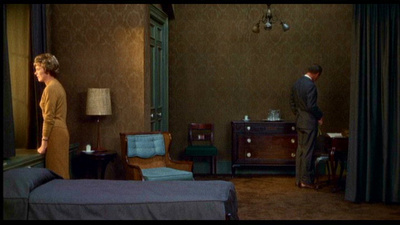
There are probably more powerful scenes or quotes that capture the particular way this love story crumbled, but I’m not an objective reviewer. I probably picked instead the ones that struck closer to home and made me look in the mirror to check out how sad I really am tonight, and to revisit past histories that were probably best left undisturbed. This is not a true synopsis of a novel but rather a recapitulation of the moods indigo it inspired during the journey. I just hope it’s enough to rekindle some new reader’s curiosity about this half-forgotten old-fashioned book.
I think about her now and then, at odd moments, passing that crosstown street of hers, wondering how much chintz her bedroom has, and whether when it rains, or the earth steams around that Connecticut home she’s disappeared into, she thinks of me at all. But why should she? I was only a mistake she almost made.

October 11, 2023
4.5 stars
Absolutely heart-wrenching and profoundly beautiful, this book is a hidden gem in the literary world. The brilliance of the prose is undeniable; every word seems to resonate with raw emotion and depth. This obscure classic truly stands as a masterpiece, weaving a tale of a doomed love affair that lingers in your thoughts.
What struck me the most was the author's keen insight into the psychology of the protagonist. Hayes masterfully delves into the intricate layers of human emotions, painting a vivid picture of love, longing, and despair. The characters feel incredibly real, making their struggles and heartaches all the more poignant.
‘In Love’ reminded me a lot of The End of the Affair by Graham Greene. That book too brilliantly portrayed complexities of emotions of love, obsession, and jealousy, and the pain of love, the pain of hate, the pain of longing and the pain of desire.
The subtlety of the narrative in this book is one of its strongest points. Instead of relying on melodrama, Hayes captures the essence of the characters' emotions with a quiet intensity. The way he navigates the complexities of love and relationships is both sensitive and perceptive.
This book is an emotional journey that tugs at your heartstrings and challenges your understanding of love and its myriad facets. If you appreciate a deep exploration of human emotions and relationships, this book is an absolute must-read.
Absolutely heart-wrenching and profoundly beautiful, this book is a hidden gem in the literary world. The brilliance of the prose is undeniable; every word seems to resonate with raw emotion and depth. This obscure classic truly stands as a masterpiece, weaving a tale of a doomed love affair that lingers in your thoughts.
What struck me the most was the author's keen insight into the psychology of the protagonist. Hayes masterfully delves into the intricate layers of human emotions, painting a vivid picture of love, longing, and despair. The characters feel incredibly real, making their struggles and heartaches all the more poignant.
‘In Love’ reminded me a lot of The End of the Affair by Graham Greene. That book too brilliantly portrayed complexities of emotions of love, obsession, and jealousy, and the pain of love, the pain of hate, the pain of longing and the pain of desire.
The subtlety of the narrative in this book is one of its strongest points. Instead of relying on melodrama, Hayes captures the essence of the characters' emotions with a quiet intensity. The way he navigates the complexities of love and relationships is both sensitive and perceptive.
This book is an emotional journey that tugs at your heartstrings and challenges your understanding of love and its myriad facets. If you appreciate a deep exploration of human emotions and relationships, this book is an absolute must-read.

Read
September 1, 2018Most of us, fortunate enough to have been In Love, no doubt think of that time as one of joy, a discovery of that which completes us, maybe even a transcending passion. If you've been in love, you probably know you can't define it. Not really. You just know, or remember, that wonderful feeling.
And perhaps you've fallen out of love. Maybe you can't define that either. But you know the difference. In Love. Out of Love.
That's not what the author is talking about here when he talks about being In Love, but perhaps you might recognize this. It's the kind of Love when the timing's not right, when circumstances might not allow it, when misunderstanding smirks.
The narrator of this novella is an unnamed writer; so it could be the author or, you know, it could be another unnamed writer. There's an unnamed woman, so she too could be anyone? They are lovers, but nothing the narrator says tells me they are In Love. There may be an emotional disconnect, but the reader (me) isn't sure whose fault that is. The narrator seems to lack the ability or desire to commit. But, the woman?
The woman meets a wealthy man. Who offers her $1,000. The woman says NO, then she says Yes, then she says No, then she says YES. She tells all this to our narrator. Who is still clueless, until he is not.
One ought at least to be discriminating about what one picked to be humiliated by.
(You will no doubt have guessed this spawned the movie Indecent Proposal.)
The narrator acts badly, then acts nobly. The woman acts badly, then badly, then almost nobly.
Of course, she could be honest about it, but it's late in the day, and I wouldn't say this is exactly the century to start being honest in. This was written in 1953, so not in our century, where truth abounds.
There's almost no dialogue in this book, certainly no quotation marks. But the couple have this exchange, late:
You think I'm a whore, don't you?
Think?
So In Love, the author titles this. And maybe I don't recognize this Love, and then maybe I do. Love doesn't always fit, and sometimes chafes. I know it's made me cry. Maybe that's what the author means.
And perhaps you've fallen out of love. Maybe you can't define that either. But you know the difference. In Love. Out of Love.
That's not what the author is talking about here when he talks about being In Love, but perhaps you might recognize this. It's the kind of Love when the timing's not right, when circumstances might not allow it, when misunderstanding smirks.
The narrator of this novella is an unnamed writer; so it could be the author or, you know, it could be another unnamed writer. There's an unnamed woman, so she too could be anyone? They are lovers, but nothing the narrator says tells me they are In Love. There may be an emotional disconnect, but the reader (me) isn't sure whose fault that is. The narrator seems to lack the ability or desire to commit. But, the woman?
The woman meets a wealthy man. Who offers her $1,000. The woman says NO, then she says Yes, then she says No, then she says YES. She tells all this to our narrator. Who is still clueless, until he is not.
One ought at least to be discriminating about what one picked to be humiliated by.
(You will no doubt have guessed this spawned the movie Indecent Proposal.)
The narrator acts badly, then acts nobly. The woman acts badly, then badly, then almost nobly.
Of course, she could be honest about it, but it's late in the day, and I wouldn't say this is exactly the century to start being honest in. This was written in 1953, so not in our century, where truth abounds.
There's almost no dialogue in this book, certainly no quotation marks. But the couple have this exchange, late:
You think I'm a whore, don't you?
Think?
So In Love, the author titles this. And maybe I don't recognize this Love, and then maybe I do. Love doesn't always fit, and sometimes chafes. I know it's made me cry. Maybe that's what the author means.

April 2, 2014
Dry your eyes mate
I know it’s hard to take but her mind has been made up
There’s plenty more fish in the sea
Dry your eyes mate
I know you want to make her see how much this pain hurts
But you’ve got to walk away now
It’s over
There's that phrase, a heartbreaking work of staggering genius, that should be used to refer to John Williams' Stoner whenever it is mentioned, but with Alfred Hayes' In Love I'm starting to collect such similar works. Whilst not on the same level as Stoner or Isherwood's Simple Man it still manages to speak to the psyche of the adult male damaged by a lifetime of loss. I started to save quotes as I went but such was the frequency and the potency of the prose contained within this little novella of heartbreak that it just seemed like an exercise in futility trying to list them all, you may as well just read the brief and wonderful work for yourself.
“We go from disappointment to disappointment, from hope to denial, from expectation to surrender, as we grow older, thinking or coming to think that what was wrong was the wanting, so intense it hurt us, and believing or coming to believe that hope was our mistake and expectation our error, and that everything the more we want it the more difficult the having it seems to be.”
I found myself amazed at how perfectly Hayes captured my own feelings in the wake of another disastrous relationship denouement, the way he effortlessly seems to repeatedly capture the ache of heart and head in the romantic male, reflecting the dislocation from life that we tend to feel. One line in a novel would be delightful, but he just doesn't stop from first to last, it's almost overwhelmingly sad, especially when it causes you to reflect on your own failings as a lover and the potential life that continues to be led by those you once loved. If only I could write of my emotions with such clarity and efficiency, I might have been a rock star afterall.
“She inhabited a world from which I was excluded, and she had left me in an immense empty space.”.
In wrapping up his introduction to the Peter Owen edition Frederic Raphael states "Hayes may have been forgotten (if he was ever remembered), but he belongs to a serene company of petits maitres whose exquisite work, however sparse, need not await the endorsement of critics." That being said, hopefully the reissue by NYRB will be just enough endorsement for a new generation of fans to discover this work as they did John Williams in 2013.
I know it’s hard to take but her mind has been made up
There’s plenty more fish in the sea
Dry your eyes mate
I know you want to make her see how much this pain hurts
But you’ve got to walk away now
It’s over
There's that phrase, a heartbreaking work of staggering genius, that should be used to refer to John Williams' Stoner whenever it is mentioned, but with Alfred Hayes' In Love I'm starting to collect such similar works. Whilst not on the same level as Stoner or Isherwood's Simple Man it still manages to speak to the psyche of the adult male damaged by a lifetime of loss. I started to save quotes as I went but such was the frequency and the potency of the prose contained within this little novella of heartbreak that it just seemed like an exercise in futility trying to list them all, you may as well just read the brief and wonderful work for yourself.
“We go from disappointment to disappointment, from hope to denial, from expectation to surrender, as we grow older, thinking or coming to think that what was wrong was the wanting, so intense it hurt us, and believing or coming to believe that hope was our mistake and expectation our error, and that everything the more we want it the more difficult the having it seems to be.”
I found myself amazed at how perfectly Hayes captured my own feelings in the wake of another disastrous relationship denouement, the way he effortlessly seems to repeatedly capture the ache of heart and head in the romantic male, reflecting the dislocation from life that we tend to feel. One line in a novel would be delightful, but he just doesn't stop from first to last, it's almost overwhelmingly sad, especially when it causes you to reflect on your own failings as a lover and the potential life that continues to be led by those you once loved. If only I could write of my emotions with such clarity and efficiency, I might have been a rock star afterall.
“She inhabited a world from which I was excluded, and she had left me in an immense empty space.”.
In wrapping up his introduction to the Peter Owen edition Frederic Raphael states "Hayes may have been forgotten (if he was ever remembered), but he belongs to a serene company of petits maitres whose exquisite work, however sparse, need not await the endorsement of critics." That being said, hopefully the reissue by NYRB will be just enough endorsement for a new generation of fans to discover this work as they did John Williams in 2013.

May 15, 2013
We need, in love, to practice only this: letting each other go. For holding on comes easily; we do not need to learn it.It has been a long time since I have written a review on here, and for that matter a long time since I have really read a book cover-to-cover. November was, and December is now, a bit of the doldrums for my reading. Something about the cold, grey sky and the gawky black skeletons of trees, my little crackling lungs letting out clouds of breath: something about the winter settles into my bones and it's a sort of depression of my body: I don't do what I love to do. I sit and sip tea, and go to bed. I write a lot of bad sentences. My brain isn't frozen but its becomes slack and lazy. Alfred Hayes' In Love marked a temporary break in this mental slackness for me: it was a rapid read, I was roped up and held bound to it, despite its brevity and ambiguity, it is an incredibly powerful novel.
-Rainer Maria Rilke
Written and published in the years following the second World War, when the United States was enjoying a period of economic dynamism and success was flourishing, money became the currency of social interaction. This book asks "what is love worth?" in the most coldly economic terms. This monetary quantification of the heart is made explicitly manifest throughout the novel, but like all things money can buy, it exists very close to the surface. The heart of the novel is about desire, what do we want - why do we want it? Money is a red-herring oftentimes in the novel, the glitz and glimmer of money and success distract us readers, and the narrator distracts us with it, perhaps fools his own heart with it, for much of the narrative. Something about love has to transcend the material world, the realm of monied success, of investments and properties, of nights out and thousand-dollar solicitations. It sounds trite to say so, that love transcends. We think often of the rags-to-riches stories in the literary canon: Jane Eyre, Wuthering Heights, even Proust's affair with Albertine is a cross-pollination among classes. We may ask why the wealthier party condescends beneath his class, but implicitly we must also wonder what the attraction is for the lesser party? Is the promise of wealth and stability factored in to the concept of "love"?
The unnamed object of the narrator's love in In Love must chose what money and love are worth to her. But we are given a skewed view of her choice. Our narrator does not quite love her until she is gone from him, and Howard truly seems to care for her, at least for something about her. The question of love for our heroine is less her love for either of these men, but rather the maternal love for her absent child. She doesn't want for money for herself, but for her child, she ponders if her gold-greedy hands can be washed clean in the Phrygian waters of her pure motives. She suffers for her child, and her love for her is the only truly moving love in the novel, the rest are simply the yearning for touch.
As Beckett explains in his essay on Proust, our desires, our passions, fluctuate and change, not because we perceive a change in the object, but rather because we are an ever-changing subject: constantly reformed, new faces freshly painted and hanging on the walls of our lives' infinite corridors, always a new man. When the impossibility of the unnamed woman becomes apparent, when her break is affected, the narrator's desire for her is piqued, we want what we cannot have. His possession of her dulled his desires, let them roam errant across the city. Her absence does not awaken in him a newfound appreciation for her, but rather a void which demands filling by someone, she becomes a silhouette invested with his aimless desires for something which he lacks. He indulges in his suffering, which is half-poison and half-remedy, by seeking on the surface what he cannot have. He is never happy, not when he possesses her, not when he loses her, he is a servant to his own sense of suffering. We all are addicted to suffering sometimes, that powerful feeling of loss, even if what we lose is unimportant, a trifle, we mourn the change in ourselves, the reminder of our missing something. But the release of suffering, it is an escape from the horror of routine, the hideous monster of Habit, it is an escape from time and the tortures of what we allow our lives to become out of complaisance and distraction. We find solace in our own pain, and the narrator identifies his pain with the loss of the woman, though he ultimately has lost something which mattered very little to him. She has become the allegory for his life's failures and disappointments. She is invested not only with his failures in love, his loss of romance and of human touch, but also of his meager professional accomplishments. He never meets Howard, he hears about him only in relation to the girl, he becomes a part of her, a Janal face prim and upright, attached to her, transforming the two into a true monstrosity. But her break from him does not console him, because he doesn't want her.
The failed trip to Atlantic City, the perfunctory congress in the small motel bed, the silent drive home, send a shudder through the cozy suffering of the narrator, he can no longer embody his suffering in her, he can only feel for her a flash of hatred and an ocean of indifference.
The only thing we haven’t lost, I thought, is the ability to suffer. We’re fine at suffering. But it’s such a noiseless suffering. We never disturb the neighbors with it. We collapse, but we collapse in the most disciplined way. That’s us. That’s certainly us. The disciplined collapsers.We are silent sufferers, disciplined collapsers. We envision our pain always as individual, as unique, no one could understand the tremolo of our sufferings: its waxes and wanes, the crescendo, the syncopes, and the declension, the falling apart. We feel alone, us sufferers, but it is not the painful loneliness in the dark, but rather a self-indulgent aloneness of genius. When we suffer we feel that our hearts transcend words, language, that our suffering is a language of self-communion alone. We are the kings and queens of our desolate castles of suffering, our vast empty empires. To realize the universality of our suffering is to tear down the walls, to burn the thrown and surrender our thorny crowns. We find solace only in the solitary discipline of collapse, not in the siege of communion.
Loss in not the opposite of love, it is its sister, and they travel together always. Loss feeds love with desire, we want what we feel we have lost, or have lost before even beginning the chase. "The only true paradise in the paradise lost" - we don't love our Edens until we are thrown out of them, and Eden has no price of admission.

April 3, 2014
I may never come
back to this same feeling
that my desire is pressing
but I want to talk
about how it feels
to be held so hard
that your body is worthless
I want to talk about
all that happens inside me
that I can’t see
- Gale Thompson
From the very beginning this novel elicited strong emotions in me. For the most part, they weren’t complimentary. There were times during the first 60 or so pages I wanted to toss the book out the window. I didn’t know at that stage that the man, asking a woman in a bar if he appeared to be a man, was going to be anything other than a fool.
It took falling from a great height to make him a man, or the ghost of one. The how and why of it proved to be pretty darn revelatory.
The relationship between the narrator and his lover, born of convenience and comfort devolves with an awful momentum. We learn so much about her cluttered, fixed life and know what it is she wants, which is not in his wheelhouse; his amusement park of pleasure. The strength of this novel is the authors controlled, evocative prose and the sharp lens he employs to examine the breakdown of this relationship.
The last three chapters are gorgeous, moving and vicious. I remember thinking anything could happen. Something awful would happen and it would be a triumph, a relief. Something violent?
Though it is not right to, removing love from the equation makes this novel easier to understand. It is least of all about love. It’s about all the noise and distortion being taken from us, fighting the loss, denying its existence and departure, it’s about what is left over. It is about all that happens inside that cannot be seen.
I wondered what it would be like if finally we understood everything. I had experienced something like the feeling the dark ocean had given me, a feeling that came when one was just on the point of falling asleep, and how in the morning you had a feeling that the night before you had really and finally understood something. But evidently it was too difficult a thing for the mind to hold or keep, and we always fell asleep just where the knowledge we were about to acquire became dangerous to us.
Highly recommend.
back to this same feeling
that my desire is pressing
but I want to talk
about how it feels
to be held so hard
that your body is worthless
I want to talk about
all that happens inside me
that I can’t see
- Gale Thompson
From the very beginning this novel elicited strong emotions in me. For the most part, they weren’t complimentary. There were times during the first 60 or so pages I wanted to toss the book out the window. I didn’t know at that stage that the man, asking a woman in a bar if he appeared to be a man, was going to be anything other than a fool.
It took falling from a great height to make him a man, or the ghost of one. The how and why of it proved to be pretty darn revelatory.
The relationship between the narrator and his lover, born of convenience and comfort devolves with an awful momentum. We learn so much about her cluttered, fixed life and know what it is she wants, which is not in his wheelhouse; his amusement park of pleasure. The strength of this novel is the authors controlled, evocative prose and the sharp lens he employs to examine the breakdown of this relationship.
The last three chapters are gorgeous, moving and vicious. I remember thinking anything could happen. Something awful would happen and it would be a triumph, a relief. Something violent?
Though it is not right to, removing love from the equation makes this novel easier to understand. It is least of all about love. It’s about all the noise and distortion being taken from us, fighting the loss, denying its existence and departure, it’s about what is left over. It is about all that happens inside that cannot be seen.
I wondered what it would be like if finally we understood everything. I had experienced something like the feeling the dark ocean had given me, a feeling that came when one was just on the point of falling asleep, and how in the morning you had a feeling that the night before you had really and finally understood something. But evidently it was too difficult a thing for the mind to hold or keep, and we always fell asleep just where the knowledge we were about to acquire became dangerous to us.
Highly recommend.

September 18, 2022
Gran mano de Alfred Hayes para hacer de esta una novela memorable, con una trama que no es gran cosa, sino mas bien muy simplona. Baste decir para no spoilear nada que la novela trata sobre la ruptura de una pareja y un tercero que aparece en medio de esa relación. Acá el principal mérito del libro radica en la precisión y claridad del autor para describir el vaivén psicológico de los protagonistas y los diferentes sentimientos que los atraviesan en el cambiante proceso de su relación.
Hayes describe cuan cegados podemos llegar a ser a veces cuando la persona que amamos o creemos amar nos deja y parece que el mundo se nos viene encima, o cuan egoístas podemos ser en la búsqueda de algún consuelo cuando estamos mal sin importar el daño que podemos causar en otros alimentando esperanzas.
En síntesis, un libro corto que se lee rápido con una historia sencillísima en la que el autor profundiza minuciosamente en la psicología de los personajes y consigue que la novela te llegue y te conmueva.
Muy recomendable.
Hayes describe cuan cegados podemos llegar a ser a veces cuando la persona que amamos o creemos amar nos deja y parece que el mundo se nos viene encima, o cuan egoístas podemos ser en la búsqueda de algún consuelo cuando estamos mal sin importar el daño que podemos causar en otros alimentando esperanzas.
En síntesis, un libro corto que se lee rápido con una historia sencillísima en la que el autor profundiza minuciosamente en la psicología de los personajes y consigue que la novela te llegue y te conmueva.
Muy recomendable.

July 7, 2022
"Znao sam da je željela nešto što joj ja nisam bio spreman dati: iluziju da je sigurna, predodžbu da je zaštićena."
"Ako je u meni postojao neki strah da ću je izgubiti, neka strepnja da će me ona napustiti, neka tjeskoba zbog koje sam oklijevao doista vjerovati da me voli, postojalo je i nešto drugo što je tvrdilo da ona ne laže kad kaže da me voli i da to samo moram prihvatiti i vjerovati u to da bi ta ljubav postala stvarna, tako da su sumnja i vjerovanje, povjerenje i nepovjerenje zagrljeni proturječnim rukama ležali u meni jedno uz drugo, kao što smo nas dvoje ležali jedno uz drugo na onom krevetu u hotelskoj sobi."
"Sjetio sam se trenutka kad sam iskusio nešto nalik osjećaju koji mi je dao taj mračni ocean, osjećaju koji imaš u trenutku prije nego što zaspiš, a onda ti se ujutro čini da si sinoć napokon doista nešto shvatio. Ali mozgu je to nešto što si shvatio očito bilo previše teško zapamtiti i sačuvati, ili mu je možda bilo previše opasno to zapamtiti i sačuvati, i uvijek zaspimo kad to što trebamo shvatiti postane opasno za nas."
"Očito ništa ne zacjeljuje tako sigurno kao slomljeno srce, a čak i ako srce nije slomljeno (bio sam uvjeren da je nemoguće da je moje slomljeno), nego samo malo iščašeno, postoje pouzdani lijekovi, od kojih je najpouzdaniji vrijeme."
"Sposobnost za patnju jedino je što nismo izgubili, pomislio sam. Patnja nam dobro ide. Ali ta patnja većinom je nečujna. Susjede nikad ne uzrujavamo njome. Raspadamo se, ali raspadamo se vrlo disciplinirano. To smo mi. To samo definitivno mi. Disciplinirane ruševine."
"Ako je u meni postojao neki strah da ću je izgubiti, neka strepnja da će me ona napustiti, neka tjeskoba zbog koje sam oklijevao doista vjerovati da me voli, postojalo je i nešto drugo što je tvrdilo da ona ne laže kad kaže da me voli i da to samo moram prihvatiti i vjerovati u to da bi ta ljubav postala stvarna, tako da su sumnja i vjerovanje, povjerenje i nepovjerenje zagrljeni proturječnim rukama ležali u meni jedno uz drugo, kao što smo nas dvoje ležali jedno uz drugo na onom krevetu u hotelskoj sobi."
"Sjetio sam se trenutka kad sam iskusio nešto nalik osjećaju koji mi je dao taj mračni ocean, osjećaju koji imaš u trenutku prije nego što zaspiš, a onda ti se ujutro čini da si sinoć napokon doista nešto shvatio. Ali mozgu je to nešto što si shvatio očito bilo previše teško zapamtiti i sačuvati, ili mu je možda bilo previše opasno to zapamtiti i sačuvati, i uvijek zaspimo kad to što trebamo shvatiti postane opasno za nas."
"Očito ništa ne zacjeljuje tako sigurno kao slomljeno srce, a čak i ako srce nije slomljeno (bio sam uvjeren da je nemoguće da je moje slomljeno), nego samo malo iščašeno, postoje pouzdani lijekovi, od kojih je najpouzdaniji vrijeme."
"Sposobnost za patnju jedino je što nismo izgubili, pomislio sam. Patnja nam dobro ide. Ali ta patnja većinom je nečujna. Susjede nikad ne uzrujavamo njome. Raspadamo se, ali raspadamo se vrlo disciplinirano. To smo mi. To samo definitivno mi. Disciplinirane ruševine."

March 1, 2025
A nameless middle-aged man meets a woman in a bar and proceeds to tell her about a doomed love affair he once experienced. The first and last chapter takes place in this bar while the rest of the book is his story. The woman he fell in love with was a young divorcee with a child and while things were going well for a while, she later meets a rich bloke called Howard who offers her money and so things take a turn. After that, it becomes a more adversarial relationship, the power dynamics and transactional nature of love an obvious theme in the book. People are often looking for different things and will manipulate the other in order to get them. This aspect aside, the book is an otherwise very basic story and I would argue the majority of your enjoyment will come from the writing style which Hayes has to offer. Some of it is quite beautiful, a kind of wispish romanticism that was common to the era (or a nostalgic version of this). I also got some flashbacks to the Great Gatsby, a sense of being out of time, lost in jazz music and the rise of burgeoning modernity. Some of the sentences whirl along, slither like snakes that never end, and Hayes clearly has a penchant for the decorous and poetic.
It's a nice little novella, a little on the lightweight side (too much to be truly great), but it's very well-written. I wish I could say I loved it more than I actually did but the truth is, I was always slightly uninterested in the actual story. If I ever read this again, however, I would almost certainly ignore the story and focus my attention on the writing which is occasionally fluid and lyrical, and something that reaches genuine heights of sumptuous, liquid prose. My first reading is usually focused on the plot and characters, neither of which especially grabbed me here, so I only mildly enjoyed it. But the second reading, whenever I get around to it, ought to be a far more rewarding experience. A nice little gem that's definitely worth your time.
'All I knew, really, was that she had taken away with her when she had gone something which in the past had held me together, some necessary sense of myself, something without which I seemed in danger of collapsing; and whatever it was, an indispensable vanity, an irreplaceable idea of my own invulnerability, it was gone and only she could restore it to me, or so I thought.
It's a nice little novella, a little on the lightweight side (too much to be truly great), but it's very well-written. I wish I could say I loved it more than I actually did but the truth is, I was always slightly uninterested in the actual story. If I ever read this again, however, I would almost certainly ignore the story and focus my attention on the writing which is occasionally fluid and lyrical, and something that reaches genuine heights of sumptuous, liquid prose. My first reading is usually focused on the plot and characters, neither of which especially grabbed me here, so I only mildly enjoyed it. But the second reading, whenever I get around to it, ought to be a far more rewarding experience. A nice little gem that's definitely worth your time.

August 11, 2014
My second Hayes - this is superior to "My Face for the World to See." It actually has a worse (or perhaps, more appropriately, no) plot, but the writing is gorgeous and the insights seemed particularly on point. There were a few gasps of recognition on my part as that rare moment happened: the author has described perfectly an experience you have only ever felt non-verbally. He's something of a lyrical treasure and very gifted in melancholy.
I do think this book is a bit of an argument for the good old archaic stilted dialogue delivery system. It is part of the style that we don't know who's speaking right away, but it doesn't do the piece any favors. Standard caveats about misogyny apply - and the frame narrative is unnecessary.
And also, the book is better in heartbreak than in love. But then, aren't they all?
I do think this book is a bit of an argument for the good old archaic stilted dialogue delivery system. It is part of the style that we don't know who's speaking right away, but it doesn't do the piece any favors. Standard caveats about misogyny apply - and the frame narrative is unnecessary.
And also, the book is better in heartbreak than in love. But then, aren't they all?

August 14, 2024
"All I knew, really, was that she had taken away with her when she had gone something which in the past had held me together, some necessary sense of myself, something without which I seemed in danger of collapsing; and whatever it was, an indispensable vanity, an irreplaceable idea of my own invulnerability, it was gone and only she could restore it to me, or so I thought. For without whatever it was, I seemed poor, depleted, injured in some mysterious way; without it, there was nothing to interpose between the world and me." (76)I hadn't read anything by Alfred Hayes before, but I will be making my way through his work after reading In Love, which is a great and well-told story of love and longing, of searching and finding and searching again, and perhaps—more than anything else—of not quite knowing what it is that we want out of life (love? is that enough?).
" And isn't that, after all, what we really want?
Things in their place; a semblance of order; a feeling, true or deceptive, of well-being; an afternoon in which something apparently happens." (10)
August 22, 2019
"We lower to the level of the wound."
This is an unabashed and sometimes disturbing diatribe on being in love and being forced out of love. It is also about how one guy tries to prevent the latter by making himself as despicable as he sees the lost love to be. It is thus a complicated tangle of jealousies and rivalries. The title is a little deceiving since one can argue that no one in this novel is, in fact, in love, but it could just as well stand for the notion that love, for some, is nothing more than a convenient happenstance.
You'd be forgiven for likening this short novel to the "noir" of the period. It reads like a detective story, succinct and punchy but sans the crime, unless you count love. A nameless narrator tells a stranger the story of his love for and betrayal by a nameless girl who leaves him for the wealthy guy who offered her a grand to have sex with him, no strings attached. Tellingly, it proceeds downhill from there. It's a chilling peeling down of the bitter onion of obsession.
This is an unabashed and sometimes disturbing diatribe on being in love and being forced out of love. It is also about how one guy tries to prevent the latter by making himself as despicable as he sees the lost love to be. It is thus a complicated tangle of jealousies and rivalries. The title is a little deceiving since one can argue that no one in this novel is, in fact, in love, but it could just as well stand for the notion that love, for some, is nothing more than a convenient happenstance.
You'd be forgiven for likening this short novel to the "noir" of the period. It reads like a detective story, succinct and punchy but sans the crime, unless you count love. A nameless narrator tells a stranger the story of his love for and betrayal by a nameless girl who leaves him for the wealthy guy who offered her a grand to have sex with him, no strings attached. Tellingly, it proceeds downhill from there. It's a chilling peeling down of the bitter onion of obsession.

August 16, 2016
YUCK!!! So much misogyny in one little book! The writing is perfect, I agree, but how could people have given this book 5 stars and raved this way about it? It would've been better had this book remained forgotten and would not have been rediscovered. Who wants to remember how terrible women were treated in those times? How it was acceptable to hit them, treat them like whores and even rape them? How it was the right thing to do to abandon a woman on her wedding night because she was found out not be a virgin, or after giving birth to your child? I know I don't, and that reading this book made me feel sick and very upset. Some books are forgotten for a reason, and this is one of them.

March 16, 2017
In this short but powerful novella, British author Alfred Hayes paints a beautiful portrait on love and loss while holding up a mirror, making us question what it really means to feel.
"The only thing we haven’t lost, I thought, is the ability to suffer. We’re fine at suffering. But it’s such a noiseless suffering. We never disturb the neighbours with it. We collapse, but we collapse in the most disciplined way. That’s us. That’s certainly us. The disciplined collapsers."
“I rather think though its the acrobat, as in my dream, with the dangerous, vanity-driven, and meaningless life, who’s most like us. At least it seems to me: that paltry costume, that pride because the tricks accomplished and once again he hasn’t fallen.The whole point is that nothing can save us but a good fall. Its saying up there on the wire, balancing ourselves with that tribal parasol and being so pleased with terrifying an audience, that’s finishing up. Don’t you agree? A great fall, thats what we all need.”
"The only thing we haven’t lost, I thought, is the ability to suffer. We’re fine at suffering. But it’s such a noiseless suffering. We never disturb the neighbours with it. We collapse, but we collapse in the most disciplined way. That’s us. That’s certainly us. The disciplined collapsers."
“I rather think though its the acrobat, as in my dream, with the dangerous, vanity-driven, and meaningless life, who’s most like us. At least it seems to me: that paltry costume, that pride because the tricks accomplished and once again he hasn’t fallen.The whole point is that nothing can save us but a good fall. Its saying up there on the wire, balancing ourselves with that tribal parasol and being so pleased with terrifying an audience, that’s finishing up. Don’t you agree? A great fall, thats what we all need.”

November 14, 2015
Una de esas sorpresas que hacen que valga la pena seguir recomendaciones al azar. Fue una recomendación hecha en una librería y lo amé. El ambiente, cada frase, todo lo que llega a reflexionar, el retrato perfecto que hace de cada personaje, incluso de si mismo.
Una pequeña obra maestra, belleza de principio a fin.
Una pequeña obra maestra, belleza de principio a fin.

June 20, 2016
ELA- (já divorciada e com uma filha) O troca por um homem rico que poderá lhe dar um futuro melhor, segurança e bem-estar.
ELE -acomodado , um escritor sem inspiração, orgulhoso A perde por achar que o amor sufoca e por não ter condições de competir com um homem rico que pode dar ELA o que ELE não pode . Será que esse sentimento de liberdade DELE é só passageiro, que sofrerá por um amor perdido.Sera que o bem-estar DELA compensará , mesmo que não o ame e só esteja interessada no dinheiro ?
Um ensaio sobre o amor em todas as suas particularidades, com seus dilemas, ciúmes ,obsessões mágoas , chantagens...e caos!!
Onde há amor e sentimento haverá sempre sofrimento?
Um livro ímpar ..todos que já tiveram seus corações dilacerados se identificarão ainda mais com esse livro. Uma obra de arte , recomendo sua leitura a todos.
"No amor, precisamos praticar apenas uma coisa: deixar o outro partir. Segurá-lo é fácil; nós não precisamos aprender isto." Rilke
ELE -acomodado , um escritor sem inspiração, orgulhoso A perde por achar que o amor sufoca e por não ter condições de competir com um homem rico que pode dar ELA o que ELE não pode . Será que esse sentimento de liberdade DELE é só passageiro, que sofrerá por um amor perdido.Sera que o bem-estar DELA compensará , mesmo que não o ame e só esteja interessada no dinheiro ?
Um ensaio sobre o amor em todas as suas particularidades, com seus dilemas, ciúmes ,obsessões mágoas , chantagens...e caos!!
Onde há amor e sentimento haverá sempre sofrimento?
Um livro ímpar ..todos que já tiveram seus corações dilacerados se identificarão ainda mais com esse livro. Uma obra de arte , recomendo sua leitura a todos.
"No amor, precisamos praticar apenas uma coisa: deixar o outro partir. Segurá-lo é fácil; nós não precisamos aprender isto." Rilke

September 17, 2019
Alfred Hayes was a damned good writer. Born in 1911, he came of age in the wasted 30’s. He wrote poetry, was in Italy at the end of the war, and wrote screen plays for Roberto Rossellini and Fritz Lang. He wrote a couple of fabulous little noir novels, and ended up doing hack work for Television (episodes of Mannix).
His better known book, My Face For All the World To See, is a wonderful little plot-driven piece of mid-century (1957) noir, and I had expected this to be similar. But this is a far richer work, entirely character driven, about sexual obsession that reminds at times of Swann; with rich interior monologues and dialogues reported in oratio obliqua (indirect discourse), and very effectively so.
It’s nice to see Hayes rescued from obscurity.
His better known book, My Face For All the World To See, is a wonderful little plot-driven piece of mid-century (1957) noir, and I had expected this to be similar. But this is a far richer work, entirely character driven, about sexual obsession that reminds at times of Swann; with rich interior monologues and dialogues reported in oratio obliqua (indirect discourse), and very effectively so.
It’s nice to see Hayes rescued from obscurity.

January 16, 2016
By the title "In Love," one would think this is a hallmark card sentiment. Very far from that, in fact, author Alfred Hayes cuts into the idea of a relationship if he was a surgeon in the middle of an open heart surgery. The book is almost a stream of consciousness, with respect to the writing style of Hayes, who tends to expose the most "inner" thoughts on the narrative of a relationship being torn apart by another man who wants to pay $1,000 to sleep with "his" woman. No one here is a bad guy or girl, but more of a study in what people want in a relationship.
The book is set in Post-war Manhattan, and one can get a scent of the "Mad Men" era through its pages. It also reminds me of that series, due to the psychological profiles of the major characters in that series. This anti-valentines day novella is very sharp, and very much like Hayes novel "My Face for the World to See." What is similar is Hayes talent to uncover the characters and show them as what they are. He has incredible insight, and ways he reminds me of Patricia Highsmith, in his ability to strip away the excess and show the meat in the narrative.
Alfred Hayes is one of those writers who somehow fell into the cracks of literary history. He worked in Hollywood as a film writer as well as working for Television. But the other interesting aspect of him, is his work on Italian neo-realist films such as "Bicycle Thieves." And he had a hand in writing the script to the great Fritz Lang film "Clash by Night.
We're lucky that there are presses like New York Review of Books (NYRB) that re-issues these "lost" classics. Read and learn about the human heart and how it works with the "head."
The book is set in Post-war Manhattan, and one can get a scent of the "Mad Men" era through its pages. It also reminds me of that series, due to the psychological profiles of the major characters in that series. This anti-valentines day novella is very sharp, and very much like Hayes novel "My Face for the World to See." What is similar is Hayes talent to uncover the characters and show them as what they are. He has incredible insight, and ways he reminds me of Patricia Highsmith, in his ability to strip away the excess and show the meat in the narrative.
Alfred Hayes is one of those writers who somehow fell into the cracks of literary history. He worked in Hollywood as a film writer as well as working for Television. But the other interesting aspect of him, is his work on Italian neo-realist films such as "Bicycle Thieves." And he had a hand in writing the script to the great Fritz Lang film "Clash by Night.
We're lucky that there are presses like New York Review of Books (NYRB) that re-issues these "lost" classics. Read and learn about the human heart and how it works with the "head."

June 26, 2013
Right from the beginning you’ll know this is an ordinary love story. Soon after you’ll sense that it’s not told in an ordinary way. There are no fuzzy backlit scenes of lovers running toward one another in slow motion, riding a carousel, smiling benignly at one another over dinner, etc. This is a gritty sophisticated big city love story where somebody, and maybe everybody, is gonna get hurt.
It’s told in syncopated prose that doesn’t attempt to soften the pain. Everyone involved is on their own and vigilance is required if they want to survive. Even the off stage characters are in pain. Alcoholic beverages are not only served they’re necessary. The sensuality stops just short of brutality. The only redeeming factor is the high quality of the writing. Hayes’s writing reminded me of Edna O’Brien in its absorption in love affairs and its refusal to look away from people’s worst motives and their aching needs.
As with most New York Review of Books reprints one of the best things about this edition is the foreword. This one is by Frederic Raphael. He places the book in context of its time and within the writer’s career. Here is Raphael’s conclusion, “Hayes may have been forgotten (if he was ever remembered), but he belongs to a serene company of petits maitres whose exquisite work, however sparse, need not await the endorsement of critics or the retrieval of anthologists, a gem is a gem is a gem.”
This review is based on an advance readers copy supplied by the publisher.
(Disclaimer given per FTC requirement.)
It’s told in syncopated prose that doesn’t attempt to soften the pain. Everyone involved is on their own and vigilance is required if they want to survive. Even the off stage characters are in pain. Alcoholic beverages are not only served they’re necessary. The sensuality stops just short of brutality. The only redeeming factor is the high quality of the writing. Hayes’s writing reminded me of Edna O’Brien in its absorption in love affairs and its refusal to look away from people’s worst motives and their aching needs.
As with most New York Review of Books reprints one of the best things about this edition is the foreword. This one is by Frederic Raphael. He places the book in context of its time and within the writer’s career. Here is Raphael’s conclusion, “Hayes may have been forgotten (if he was ever remembered), but he belongs to a serene company of petits maitres whose exquisite work, however sparse, need not await the endorsement of critics or the retrieval of anthologists, a gem is a gem is a gem.”
This review is based on an advance readers copy supplied by the publisher.
(Disclaimer given per FTC requirement.)

December 1, 2017
Dude un poco y releyendo algunos preciosos pasajes me decidieron por los cinco puntos. Es que la novela se juega en las reflexiones acerca del amor, de lo que siente el enamorado, y no tanto en un argumento que se desarrolla en función de esos remansos líricos. Podría decirse que como el Werther goethiano, y salvando las diferencias formales, estamos precisamente ante una novela lírica. No falta ninguno de los ingredientes esperables: las ansiedades, los miedos, las dudas, los terceros, la nostalgia de una felicidad siempre inasible. Entre la búsqueda de un orden por parte de la mujer y la indecisión masculina, entre los veinte años y los cuarenta, la novela despliega una tensión que la brevedad ayuda a sostener y que hace de esta historia una seductora lectura. Casi para enamorarse...

July 6, 2018
A different approach to romance. Rather than romance, here are stories about an affair, along with stories within the stories, and some painfully honest (sort of) thoughts and scenes and thoughts about scenes and possible scenes. In other words, a mixed exercise in storytelling (with dancing pronouns) and intellectualizing (although it’s the style and approaches rather than the content that are intellectual). It’s all packaged in a flimsy little frame, just for the fun of it. But it is not a fun novel. Recommended for those looking for fresh reading experiences (and lost American novels).

December 23, 2014
Una historia de (des)amor excelentemente escrita. Solo con leer el primer capítulo supe que me iba a encantar. Quizás decae un poco al final, pero al ser un libro tan corto no llega a aburrir. De los tres que leí de Hayes, este es el que más me gustó.

July 5, 2013
When we think of romantic love we often think of it as Hollywood portrays it, or as Shakespeare's Romeo and Juliet, later interpreted in our time as Tony and Maria singing their love in 1950s New York City. Love can also be not that headlong fall into ardor we can't or don't want to control but a realization of discontent and disillusion. One such love story is that told by Walter Benton in his volume of poetry This Is My Beloved, a realistic and erotic account of a 1943 New York City romance which has justifiably become a favorite Valentine's Day gift. Ten years later Alfred Hayes published the similarly realistic, quiet masterpiece In Love.
Benton's story, as he needed to express it, was erotic. His intense love was encompassed in the sexual need and giddy satisfaction which accompanied his wartime affair. Hayes's lover experiences the sensual delight and admits the importance of it. But his love story of a knowing man in love with a younger woman emphasizes the emotional realms a man can find himself in, and in this way the novel becomes a meditation. The narrator of Hayes's novel isn't a young Romeo or Tony. He's mature. He's practical and honest. But he's cynical, too, while also sensitive. The tender, ironic tone with which he tells his story, brilliantly maintained by Hayes throughout the novel, reveals the vulnerability of these two lovers as well as their awareness of it and their inability to protect themselves. As we learn from this man the many things love is, we learn why he can't control it. As he tells his story he reveals the truths he learned about himself.
This is a love story less romantic than the romances we associate with Hollywood. These characters are more flawed than they are innocents needing direction. These characters are more alone and lost, and the love they find with each other isn't the same kind of breathless salvation. In Love is gritty love. The word in one of the blurbs accompanying my edition is noir. Love in Alfred Hayes's novel may be different from romance, but it's just as dazzling.
Benton's story, as he needed to express it, was erotic. His intense love was encompassed in the sexual need and giddy satisfaction which accompanied his wartime affair. Hayes's lover experiences the sensual delight and admits the importance of it. But his love story of a knowing man in love with a younger woman emphasizes the emotional realms a man can find himself in, and in this way the novel becomes a meditation. The narrator of Hayes's novel isn't a young Romeo or Tony. He's mature. He's practical and honest. But he's cynical, too, while also sensitive. The tender, ironic tone with which he tells his story, brilliantly maintained by Hayes throughout the novel, reveals the vulnerability of these two lovers as well as their awareness of it and their inability to protect themselves. As we learn from this man the many things love is, we learn why he can't control it. As he tells his story he reveals the truths he learned about himself.
This is a love story less romantic than the romances we associate with Hollywood. These characters are more flawed than they are innocents needing direction. These characters are more alone and lost, and the love they find with each other isn't the same kind of breathless salvation. In Love is gritty love. The word in one of the blurbs accompanying my edition is noir. Love in Alfred Hayes's novel may be different from romance, but it's just as dazzling.

Read
February 27, 2023partially a right place right time read but this book is so perfect. blurb comparisons to miles davis songs and edward hopper paintings ring true, noir masterpiece. crushing, evocative, blinding, bordering selfless and self aggrandizing. a simultaneously tender but warped portrait of love. such a gem- instant favorite.
Displaying 1 - 30 of 390 reviews