In Homer's Daughter Robert Graves recreates the Odyssey. This bold retelling of the ancient epic imagines that its author was not the blind and bearded Homer of legend, but a young woman in Western Sicily who calls herself Nausicaä. In Robert Graves's words, Homer's Daughter is 'the story of a high-spirited and religious-minded Sicilian girl who saves her father's throne from usurpation, herself from a distasteful marriage, and her two younger brothers from butchery by boldly making things happen, instead of sitting still and hoping for the best.'
Robert von Ranke Graves was an English poet, soldier, historical novelist and critic. Born in Wimbledon, he received his early education at King's College School and Copthorne Prep School, Wimbledon & Charterhouse School and won a scholarship to St John's College, Oxford. While at Charterhouse in 1912, he fell in love with G.H. Johnstone, a boy of fourteen ("Dick" in Goodbye to All That) When challenged by the headmaster he defended himself by citing Plato, Greek poets, Michelangelo & Shakespeare, "who had felt as I did".
At the outbreak of WWI, Graves enlisted almost immediately, taking a commission in the Royal Welch Fusiliers. He published his first volume of poems, Over the Brazier, in 1916. He developed an early reputation as a war poet and was one of the first to write realistic poems about his experience of front line conflict. In later years he omitted war poems from his collections, on the grounds that they were too obviously "part of the war poetry boom". At the Battle of the Somme he was so badly wounded by a shell-fragment through the lung that he was expected to die, and indeed was officially reported as 'died of wounds'. He gradually recovered. Apart from a brief spell back in France, he spent the rest of the war in England.
One of Graves's closest friends at this time was the poet Siegfried Sassoon, who was also an officer in the RWF. In 1917 Sassoon tried to rebel against the war by making a public anti-war statement. Graves, who feared Sassoon could face a court martial, intervened with the military authorities and persuaded them that he was suffering from shell shock, and to treat him accordingly. Graves also suffered from shell shock, or neurasthenia as it is sometimes called, although he was never hospitalised for it.
Biographers document the story well. It is fictionalised in Pat Barker's novel Regeneration. The intensity of their early relationship is nowhere demonstrated more clearly than in Graves's collection Fairies & Fusiliers (1917), which contains a plethora of poems celebrating their friendship. Through Sassoon, he also became friends with Wilfred Owen, whose talent he recognised. Owen attended Graves's wedding to Nancy Nicholson in 1918, presenting him with, as Graves recalled, "a set of 12 Apostle spoons".
Following his marriage and the end of the war, Graves belatedly took up his place at St John's College, Oxford. He later attempted to make a living by running a small shop, but the business failed. In 1926 he took up a post at Cairo University, accompanied by his wife, their children and the poet Laura Riding. He returned to London briefly, where he split with his wife under highly emotional circumstances before leaving to live with Riding in Deià, Majorca. There they continued to publish letterpress books under the rubric of the Seizin Press, founded and edited the literary journal Epilogue, and wrote two successful academic books together: A Survey of Modernist Poetry (1927) and A Pamphlet Against Anthologies (1928).
In 1927, he published Lawrence and the Arabs, a commercially successful biography of T.E. Lawrence. Good-bye to All That (1929, revised and republished in 1957) proved a success but cost him many of his friends, notably Sassoon. In 1934 he published his most commercially successful work, I, Claudius. Using classical sources he constructed a complexly compelling tale of the life of the Roman emperor Claudius, a tale extended in Claudius the God (1935). Another historical novel by Graves, Count Belisarius (1938), recounts the career of the Byzantine general Belisarius.
During the early 1970s Graves began to suffer from increasingly severe memory loss, and by his eightieth birthday in 1975 he had come to the end of his working life. By 1975 he had published more than 140 works. He survived for ten more years in an increasingly dependent condition until he died from heart
Robert Graves, best known for I, Claudius, uses Samuel Butler’s theory that The Odyssey was actually written by a Sicilian woman as the inspiration for the novel Homer’s Daughter. Nausicaa, daughter of an Elyman king, faces a host of unwelcome suitors while the king is away and has to devise a means of getting rid of them. Luckily, she is quick-witted and resourceful in facing her conundrum. She also has a knack for poetry and has a bard in her debt who happens to be a Son of Homer. With these advantages, she is able to ensure that her words, if not her name (at least not as authoress), live on for eternity.
After a rocky start explaining the origins of all the regional tribes and Nausicaa’s ancestry in excessive detail, Graves finds his rhythm in this clever and witty story. It’s fun seeing what he comes up with to explain various elements of the Odyssey as envisioned by Nausicaa. The writing captures the style of the original Iliad and Odyssey perfectly, complete with over-the-top declamations, implausible feats, and gross-out violence. This is fan fiction, but it’s the fan fiction of a classical scholar who knows his stuff, even if he is a touch irreverent and unorthodox.
Mitolojiye ilgi duyanların okuması gereken bir kitap. Yazarın mitolojiye olan ilgi ve bilgisi üst seviyede, bu nedenle çok sayıda antik Yunan ve Roma efsanesini kurgusuna yerleştirmiş ve bunu büyük bir beceriyle başarmış. Homeros’un destanlarını okuyanlar için çok keyifli bir modern destan okuma fırsatı sunuyor. Kitabın çıkış noktası “Homeridai” denilen “Homeros’un Oğulları”nın, Homeros soyundan geldiklerini ileri süren hepsi erkek bu gezginci bir ozan topluluğunun söylenceleri yaşatması ve devirden devire nakletmesidir.
Robert Graves ilk kez 1897’de Samuel Butler tarafından ileri sürülen ve günümüzde de taraftar bulan “Odysseia” destanının “İlyada”dan farklı bir uslupla Sicilyalı bir kadın tarafından yazıldığı iddiasını kabul ederek “Homeros’un Kızı”nı yazmış. Anlatıcı Sicilya’lı bir prenses, bir kadın.
Troya Savaşı’nın aşk ve kıskançlık nedeniyle çıkmadığını çünkü bütün iç savaşların hanedan, denizaşırı savaşların da ticaret nedeniyle çıktığını ileri sürüyor, ki oldukça ilginç. Homeros şiirlerinin lir eşliğinde söylenmesinin nedeninin destanların amacının eğlendirmek olduğunu, ahlak ve tarih öğretmek gibi bir amacı olmadığı düşüncesi de ilgi çekici. Hatta daha şaşırtıcı bir iddia da ileri sürerek Odysses ile Ulysses’in farklı kişiler olduğunu, doğum yerleri ve ataları üzerinden açıklıyor.
Dili ve çevirisi çok rahat bir okuma sağlıyor. Keyifle okudum, bitmesine üzülecek kadar da benimsedim.
All civil wars are dynastic wars, my lord King; all overseas wars are trade wars,” agreed the portly Hyrian.
Homer's Daughter is at once a diversion, a distraction from anxiety in the form of a learned variation on the theme of The Odyssey. There is a strain of research which suggests that the Iliad and The Odyssey were written at least a hundred years apart, most likely 150. The poet muses that The Odyssey is much a more a female narrative, especially with respect to the blood and oiled torsos of the Trojan War. Graves then imagines a series of events which could inspire a young poet on the cusp of a new, timeless epic. This is heavy on sexual politics and the ritual of the era. The result is fascinating.
Uma boa escrita, personagens interessantes, algum humor, um pouco de aventura e bastante mitologia.
Gostei mais do "miolo" do que das "pontas", porque é aí que se encontram os melhores diálogos e descrições.
Para se perceber melhor esta obra conviria ler primeiro a Ilíada e a Odisseia - que ainda não li. O autor baseia esta história numa teoria de Samuel Butler de que a Odisseia teria sido escrita por uma mulher siciliana (não fui pesquisar, vi aqui https://www.goodreads.com/review/show... ) .
Her zaman söylediğim gibi ben mitoloji okumayı seviyorum ve Homeros’un Kızı da baştan sona mitoloji ile örülü bir hikaye sunuyordu bize.
Elym Prensesi olan Nausikaa bize abisinin kaybolması üzerine ailesinin yaşadıklarını, bunun sonucu olarak yurdunda olanları, ailesini ve krallığı kurtarmak için Athena’nın da yardımıyla yaptığı bütün olanları anlatıyor. Yani kısacası Nausikaa, Homeros’un Kızı olarak yaşadıklarını şiire döküp bir epik destan yazıyor.
Ben İlyada ya da Odysseia’yı okumadım. Destanlara az biraz aşina olmam sayesinde okumamamın eksikliğini hissetmedim. O yüzden okumuş olmam bu kitaptan daha az ya da daha çok zevk almamı sağlar mıydı emin değilim açıkçası.
Kitabı severek okuduğumu söyleyebilirim. Benim için tek sıkıntı kitabın ilk 60 sayfasında kitabın içine girmekte zorlanmış olmamdı. Çünkü yazar ilk 60 sayfada hikayenin genel hatlarıyla alakalı olan mitleri birden vermişti ve çok fazla ismi ve olayı aynı anda okumak benim için zorlayıcı oldu. Bu sayfaları aştıktan sonra ise kitap akıp gitti.
Yani başını aştıktan sonra kitabın oldukça sürükleyici bir hikaye sunduğunu söyleyebilirim. Ben büyük bir merak ve keyifle okudum.
Kafamda bazı şeyleri oturtup karar veremediğim için puan veremedim. Açıkcası kitabı bir “retelling” olarak düşünmek mi doğru yoksa edebiyatın temel taşı üzerine bir “what if” kurgusu oynamak olarak mı değerlendirilmeli emin olamadım. Daha net bir hale getirdiğimde bu yorum güncellenecektir.
Robert Graves deyince aslında ilk akla gelen Ben, Cladius oluyor. Onu da İş Bankası basmıştı, Modern serisi kapsamında. Bu kitap da aynı yayınevinin, aynı serisinden çıkma. Öncelikle çeviri ve editörlük harika demekle başlamak istiyorum. Deniz Betil ile Damla Göl ikilisinin ellerine sağlık.
Kitabı başlarda hayal kırıklığı ile okudum. Giriş kısmı beni bir türlü içine çekemedi. Ancak sonrasında Sicilya semalarında taht oyunları başlayınca (dıdı dıt dıt, dıdı dıt dıt) daha çekici bir hale geldi.
Yazarın fikri oldukça güzel aslında. “Samuel Butler’ın, Odysseia’yı aslında Sicilyalı bir kadın yazdı” iddiasını alıp bir roman haline getirmiş. Eser büyük oranda, Odysseia’nın Penelope’nin taliplerinin evini işgal edişini ve onu bir koca seçmeye zorlamaları kısmını ele alıyor. Başkarakterimiz ve aynı zamanda anlatıcımız olan Nausikaa açıkça söylüyor ki aslında olayların tamamı böyle gelişmiyor. O bazı şeyleri değiştirip destan haline getiriyor. Kitap bol bol Homeros alıntılarıyla dolu. Gerek Nausikaa, gerekse kral babası bu destanları mantık çerçevesinde sorguluyor. Bu kısım özellikle hoşuma gitti.
Tanrılar ve tanrılara verilen kurbanlar, kehanetler, bol bol yer alsa da Kirke gibi bir fantastik yanı söz konusu değil. İnsanların günlük hayatındaki din olarak düşünülebilir. Yani mucizeler görmüyoruz. Kirke kadar sevmedim, ama farklı bir deneyim oldu benim için :)
Son kısımda Nausikaa’nın bu destanı yayma çalışmaları kısmı hoşuma gitti.
Son olarak, neden sadece Homeros’un Oğulları denilen erkek anlatıcılar var da Homeros’un Kızı olan anlatıcılar yok gibi düşüncelere de yazar çok güzel bir şekilde değinmiş, işlemiş.
Farklı bir deneyim arayanlara, Antik Yunan’dan hoşlananlara tavsiye ederim :)
Kitap belli oranda Odysseia bilgisi istiyor bu arada.
This is an excellent novel that elaborates on the hypothesis that the reason The Iliad and The Odyssey diverge in style and present inconsistencies is due to the latter not being the work of Homer but of a Sicilian princess, Nausicaa, who is the true author of the tale by virtue of composing it and sending her father's court bard to popularise it all throughout the Hellenic world.
The premise of the two major works of Western epic poetry having two different authors, one of them an anonymous woman, is intriguing, and Graves has made it into a very plausible story that's also a pleasure to read, if you like quiet-paced and full-of-intrigue storytelling. Those who've read The Odyssey will recognise Nausicaa in some of its plotlines, not least because she not only appears in it with her own name as one of Odysseus' seductresses but is also the source of the most famous scenes: that of Penelope's odious suitors, whom she stays away from by weaving and unweaving endlessly. The joke here is that the "real" Nausicaa is the opposite of the über-beautiful siren in the epic, as she's a plain girl. But a very clever one, very clever indeed. When her brother gets lost in a silly adventure abroad and her father absents himself from the kingdom, she's besieged by unwanted and boorish suitors, whom she must outsmart to keep her kingdom and her head, and whom eventually she gets killed at a banquet. Obsessed as she is with leaving a legacy and not let her life's story be lost to time, she's inspired to create an epic with her resident Son of Homer, as bards called themselves back then, and The Odyssey comes into life over several discussions and disputes with her home poet, which provide hilarious "explanations" for the inconsistencies and contradictions within the epic.
The novel is slow until the last part, and starts with lengthy descriptions of places, tribes, and peoples. Whilst it doesn't require any deep knowledge of history to be appreciated, I'm not sure it will be an easy read for those who don't know their Homer a bit. The plotline is more interesting if you know what Graves is aiming at with this novel and get the references, for the author assumes his audience does.
İlyada ve Odysseia'yı farklı kişilerin yazdığı teorisi bir hayli popüler Antik Yunan severler arasında. Robert Graves de Odysseia'nın bir kadın elinden çıktığı teorisini kitabına taşımış ve çok da güzel anlatmış. Zaten sahneler Odysseia'nın gidişiyle bir hayli paralel, diğer efsanelerden de - Elektra gibi - parçalar var. Yunan mitolojisi sevenlerin severek okuyacağını düşündüğüm bir kitap olmuş.
Um livro muito original. Mistura as histórias metodológicas com uma história ficcional. Centra-se sobretudo nas personagens de "Odisseia". A obra de Homero tem uma importância fundamental na vida da protagonista. Pois a sua família é descendente de Egeste.
Achei o romance entre a princesa e o Éton um pouco forçado. Não é que não acredite em amor a primeira vista. Mas acho que o casamento deles foi muito apressado. Considero que só aconteceu para ela escapar-se dos seus muitos pretendentes. Agrada-me a figura de Éton, apenas não fiquei encantado com a sua adoração pela princesa grega.
A mãe e o pai da princesa foram duas das personagens que mais me agradaram devido a sua sabedoria, e por apoia-la a casar-se por amor. Também adorei o irmão dela, que a ajudou a vingar-se dos que assassinaram os seus familiares e sempre esteve do seu lado.
Em linhas gerais, " A filha de Homero" celebra as culturas clássicas e é um bom livro para quem quer entender melhor a "Odisseia" e a "Ilíada" por falar também na Guerra de Tróia.
Algunas investigaciones han señalado que es muy probable que La Odisea sea obra de una joven siciliana que tuvo que ocultar su nombre detrás del poeta Homero a fin de asegurar la difusión de su poema. Graves, sobre la base de su teoría construye la vida de la princesa Nausica y su ingenio para evitar una conspiración contra su Casa a la vez que tomaba inspiración para componer su texto. Gran novela, que se disfruta mucho más con una lectura inmediata del poema épico.
Konumuz Homeros ve yazdığı destanlar. Bu defa da Robert Graves'in yorumuna eşlik ediyoruz. Eril bir ağızla aktarılan Odysseia, bir kadının anlatımıyla bizlere ulaşmış olsa neler olurdu? Sicilyalı Nausikaa olanlara farklı bir bakış açısı sunuyor ve okuru Homeros'un anlatımlarına göndermelerde bulunarak düşünmeye sevk ediyor. Ya olaylar aslında bu şekilde olduysa?
Destanı destan yapan nedir? Olaylar mı? Eylemde bulunan karakterler mi? Yoksa anlatıcı mı? Anlatım ve aktarım dili mi bir destanı bugün bile bunca okunur kılan?
Mitoloji nerede başlıyor nerede bitiyor? Peki ya tarih?
Hadi gelin Homeros'un "kızının" ağzından dinleyelim bu defa da yaşananları.
Homeros'un Kızı, mitoloji sever herkese önerimdir. Bir de ufak not: Önce Odysseia'yı sonrasında bu kitabı okursanız, yazarın anlatımındaki nüansları yakalamanız ve keyif almanız kuvvetle muhtemel.
Graves, Odysseia'nın bilinen hikayesini alıp, onu Sicilya'nın antik siyasi entrikalarıyla harmanlayarak güçlü bir kadın kahraman yaratmış. Kitap, bilinen mitleri sorgulayan ve okuyucuyu destanların kökeni üzerine düşünmeye sevk eden sürprizlerle dolu bir yeniden anlatım.
Mitoloji ile ilginiz kurgu okumak düzeyindeyse seveceğiniz, ama bu eserden önce Odysseia 'yı okuduysanız kesinlikle lezzet alamayacağınız bir eser zira kitap Odysseus'un İthaka'ya dönüşünün kopyası!
Robert Graves 'in Ben, Claudius ve Tanrı Claudius eserlerini okumuş, üslubunu çok sevmiştim. Bu kitabına da büyük bir heyecanla başladım fakat tam bir hayal kırıklığı oldu! Yazarın Yunan Mitleri eserinde de Odysseus'un dönüşü bölümünün aynı anlatımı. Öyle ki i isimler dahi aynı.
Bir eleştirim de Odysseus'un karısı Penelope için yaptığı tespitlere olacak. Yazar, Penelope'un taliplileri ile her türlü ilişki içinde olduğundan bahsetmiş. Yunan Mitleri adlı eserine baktığımda kaynak olarak Servius, Pausanias ve Samialı Duris'i vermiş. Odysseia'da böyle bir şeyden bahsedilmiyor. Bazı kaynaklarda Pan'ın annesi olarak geçse de bu hususta bile bir netlik yok iken kullanılan ifade rahatsız edici. Edebiyat tarihe birebir uymak zorunda değil ama doğru bildiklerimin yadsınması benim için kabuledilebilir bir durum değil.
2 yıldızı eserin yazıldığı 1955 yılında mitolojiyi erkek tekelinden kurtarabilmek adına yaptığı ince dokunuşlar için verdim.
Muy buena recreación histórica de la Odisea. Una historia alternativa a la canónica que transmite Homero, dando una explicación distinta, que justificaría las discrepancias de estilo entre la Ilíada y la Odisea.
Lectura obligada para los interesados en los mitos homéricos.
I enjoyed that very much. Graves tells the story of how the Odyssey that we have come to know came into being: Nausicaa, a Sicilian princess, wrote it, inspired by real events surrounding her family and their little kingdom. Part of the fun is in comparing the real (our) Odyssey with the fictitious story (hers) - and in that Graves thought it quite probable that this is how the Odyssey actually came to be written, which would make the fictitious story the real one. - The language is quite modern, not very epic at all, but naturally includes lots of references to ancient myths and local history and customs, so yes, it requires a willing reader. - Longer blog entry, in German: https://www.herr-rau.de/wordpress/201...
Este libro entra fácilmente en mi top 10 de mejores novelas que he leído. Me ha fascinado de principio a fin. Y mientras escribo esta cutre reseña me está apeteciendo releerla, así que creo que vuelvo a mi butaca de viejo y me despido, amigos.
“On the whole, I have respected the truth because, not being a born liar, I find wanton invention confusing; though I do exaggerate at times, like everyone else, and must adapt, disguise, shift, diminish and enlarge incidents to square them with the epic tradition. I have, indeed, kept as closely as possible to my own experience.”
A 1955 romp through a familiar ancient saga with a very modern twist. What if someone revised Homer’s original The Odysseyand the one we have is the revision? And why did she and why did she change it as she did? Graves knows how to write this.
“Athene is the best ally imaginable and quick to take offence. Zeus, though the stronger, is apt to be indolent or preoccupied and, as they say, his mills grind slowly.”
The literary minded, especially those familiar with both Homer’s Odyssey and some of the scholarship about it, will enjoy it most … or hat it. That said, it’s long and as unlikely as most ancient sagas.
“If every time a lark flaps her wings or an eagle breakfasts on a sparrow I must spend the next month wondering what trouble it portends, life would become impossible.”
Take the subject’s religion seriously. No winks or nods to modern or post-modern sensibilities. The story doesn’t work if the cast disbelieve their own belief system.
“But Homer, I am sure, went equally wrong at times, and I flatter myself that my story is interesting enough to blind Phemius’s listeners to its faults, even if he has a cold, or the banquet is badly cooked, or the good dark wine runs short.”
" Ben Kirke" nin ardından güzel bir okuma oldu. Ben kirke odysseus'un hikayesinin gerçekte nasıl olmuş olabileceğine dair dişil bir anlatımdı; burada ise odysseia'nın erkeklerin elinden çıkmış daha eski bir versiyonunu, bildiğimiz hikayeye bir kadın ozanın dönüştürdüğü iddiası var. Yazarın antik çağın insanlarının düşünme biçimini verişi gayet doğruydu; insanların kendi iç seslerini ve sağduyularını tanrılardan gelen bir ilham sanmaları ; doğa aracılığıyla tanrılarla kurduklarına inandıkları iletişim tam da olması gerektiği gibiydi. Yazarın "Ben Claudius" ve "Tanrı Claudius" kitaplarını da çok sevmiştim. Bin yıllar öncesinin dünyasını anladığıma inandırıyor, arkasında derin bir bilgi birikimi var, dili ve üslubu akıcı.
If the Odyssey was "A New Hope" this book is "The force Awakens": All the same plot points plus a gender swapped lead. Robert Graves hypothesizes that the original Odyssey was written by a woman, and that woman's experience must have been something like the events of this novel. A bit far-fetched, but still entertaining.
"Only let Eurymachus ask for another bath!" she cried. "I'll take net and axe and butcher him, as Clytaemnestra butchered Agamemnon. My heart growls in my breast like a bitch with puppies when a stranger approaches."
Robert Graves'i ilk olarak Ben, Cladius romanıyla tanıdım. Tarihi kurmacayı anlatımındaki başarısı, hikayenin anlatımındaki akıcılığı hali hazırda dikkatimi çekmişken bunları barındırdığını rahatlıkla söyleyebileceğim Homeros'un Kızı mitolojik öykülerin, onlara ait teorilerin harika bir harmanını taşıdığını da görmemle favorim oldu. Okurken kendimi rahatlıkla karakterlerin arasında, o dünyanın içinde hissederken Odysseus hikayesine adım adım götürecek izleri fark etmenin keyfini yaşadım. Okuması zevkli, hiç çekinmeden önereceğim bir eser.
franchement j'ai beaucoup aimé !! c'est une agréable surprise 🫶🏼 j'ai vraiment bien aimé le caractère de Nausicaa, les références à Homère et tout le complot !! ça se voit que ça date mais c'était super bien quand même 🤭
What if The Odyssey was a piece of Homer fan fiction written by a Sicilian princess? Graves makes this into both an examination of the text of the poem and a gripping story in its own right. Nausicaa is a superb character. In the hands of modern streaming TV writers she'd be a "piss and vinegar" virago with a short temper and incredible fighting skill. Graves makes her much more impressive and much more heroic than that; she's clever, determined, charismatic and interestingly flawed.
I was a few chapters in and thinking how Graves had thrown the reader in at the deep end, explaining none of the background. I have had no problem with that ever since "the door dilated", but then I happened to notice that the section at the start, which I had skipped on the assumption it was an editorial introduction that might give away too much, was actually the prologue; and that prologue sets out exactly who's who and where they are. Now I'm not sure, had I been Graves's editor, whether I'd have advised him to drop the prologue and dive straight in. Both ways work, and I'm rather glad I was already immersed in the story when I came across that world-building section.
I'm still not convinced (neither was Nausicaa to begin with) that a lone archer can kill over a hundred healthy young men, unless he was positioned on a balcony they couldn't reach. It only takes half a dozen to be brave enough to rush him. On the other hand, I've never been on the receiving end of those Apollo-guided arrows (see also We Need To Talk About Kevin, though there it's a dozen victims in all) so who knows?
And that reminds me of something else I liked about the book: the way that gods and omens are part of the world-view of all the characters. This is not one of those historical novels populated by modern characters. Graves, as you'd expect, takes us all the way into their world.
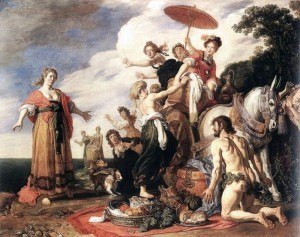
In Homer's Daughter, Robert Graves takes up Samuel Butler's argument that it wasn't blind old Homer who wrote The Odyssey, but a young woman from Sicily. Her name was Nausicaa, says Graves, and she wrote the epic poem in the tradition of the singing poets called Homer's Sons, based on her own life experiences. Nausicaa, the princess who does the washing in The Odyssey, who saves Odysseus when he is shipwrecked on the island where she lives, who gives him some of the laundry to wear and helps him on his way back to Ithaca. In Graves's version, Penelope's lovers are in fact Nausicaa's suitors, and the scene of the archery contest is the palace of Nausicaa's father, the King of the Elymans in Drepanum, Sicily. In return for saving the life of Phemius the singer during the final battle, Nausicaa makes him promise to sing and circulate her epic poem.
The Iliad, which I admire, is devised by a man for men; this epic, the Odyssey, will be devised by a woman for women. Understand that I am Homer’s latest-born child, a daughter; and listen attentively. When I have finished the poem, and written it out in cuttlefish ink on sheepskin, you must memorize it, and, if necessary, improve the language where it halts or flags.
Well, and even if it's not true, then it is at least a very, very good story. I loved it!
Once when asking Dad for a book suggestion, he told me that he had spent a good deal of the War on shipboard reading and that he had particularly liked Robert Graves' historical novels. Having already read the epics in school, I chose Homer's Daughter.
Graves was eccentric. A translator of a popular edition of the Iliad himself, he was definitely on top of the classics and very well read in ancient history. Whatever his considered judgment, however, he preferred to publish outrageously tendentious theses, both in his non-fictional and literary publications. This, Butler's hypothesis that Homer was a woman or group of women, is a good example.
Graves also was a good writer, an accomplished poet and prolific novelist. Whether or not you are interested in the speculative basis of the book, Homer's Daughter is a fun read.
I had a hard time getting into this book. The first half is tiresome and I almost gave up on it but then in the second half the plot picks up and the writing improves. In the end I would say that I do recommend this book, though with a warning about its slow start.
If you're a fan of The Odyssey (I am!) and not opposed to non-traditional interpretations of the classics (yes!), then you will like this book. I sure did.
Ainda que não seja fã de Graves, este livro transportou-me ao "Olimpo"; às odisseias de Homero, à terminologia (apaixonante) dos deuses Gregos e da sua ligação tão próxima ao humano.