

What do you think?

Corto Maltese #2
Sous le signe du Capricorne
Dans ce nouvel épisode des aventures de Corto Maltese, Hugo Pratt nous entraîne, à la suite de son héros, sur les mers d'Amérique du Sud. Accompagné du jeune Tristan Bantam et du professeur Steiner de l'université de Prague, Corto plongera au coeur de la magie noire, dans un univers peuplé de personnages plus énigmatiques les uns que les autres : Bouche Dorée (la prêtresse vaudou), Soledad (jeune fille étrange vivant sur une île perdue au milieu des mers), Tir Fixe (à la tête d'une révolte d'indigènes), .. Il partira également à la recherche d'un trésor, retrouvant ainsi Raspoutine, déjà rencontré lors de La ballade de la mer salée. Tous les éléments sont en fait réunis pour retrouver dans ces aventures le dépaysement et l'exotisme qui ont fait le succès du premier album.
140 pages, Paperback
First published January 1, 1970
About the author
Hugo Pratt
753 books433 followersHugo Pratt, born Ugo Eugenio Prat (1927–1995), was an Italian comic book writer and artist. Internationally known for Corto Maltese, a series of adventure comics first published in Italy and France between 1967 and 1991, Pratt is regarded as a pioneer of the literary graphic novel.
Born in Rimini, Italy, Pratt spent his childhood in Venice in a cosmopolitan family environment. In 1937, ten-years old Hugo moved with his parents to Ethiopia, East Africa, following the Italian occupation of the country. Pratt's father eventually died as a prisoner of war in 1942. Hugo himself and his mother spent some time in a British prison camp in Africa, before being sent back to Venice. This childhood experiences shaped Pratt's fascination with military uniforms, machineries and settings, a visual constant in most of his adult works.
As a young artist in post-war Italy, Pratt was part of the so-called 'Venice Group', which also included cartoonists Alberto Ongaro, Mario Faustinelli. Their magazine Asso di Picche, launched in 1945, mostly featured adventure comics.
In 1949 Pratt moved to Buenos Aires, Argentina, where he worked for various local publishers and interacted with well-known Argentine cartoonists, most notably Alberto Breccia and Solano López, while also teaching at the Escuela Panamericana de Arte. During this period he produced his first notable comic books: Sgt. Kirk and Ernie Pike, written by Héctor Germán Oesterheld; Anna nella jungla, Capitan Cormorant and Wheeling, as a complete author.
From the summer of 1959 to the summer of 1960, Pratt lived in London drawing war comics by British scriptwriters for Fleetway Publications. He returned to Argentina for a couple more years, then moved back to Italy in 1962. Here he started collaborating with the comics magazine Il Corriere dei Piccoli, for which he adapted several classics, including works by Robert Louis Stevenson.
In 1967, Hugo Pratt and entrepreneur Florenzo Ivaldi created the comics magazine Il Sergente Kirk, named after one of Pratt's original characters. Pratt's most famous work, Una ballata del mare salato (1967, The Ballad of the Salty Sea) was serialised in the pages of this magazine. The story can be seen as one of the first modern graphic novels. It also introduced Pratt's best known character, mariner and adventurer Corto Maltese. Corto became the protagonist of its own series three years later in the French comics magazine Pif gadget. Pratt would continue releasing new Corto Maltese books every few years until 1991. Corto's stories are set in various parts of the world, in a given moment in the first three decades of the 20th century. They often tangently deal with real historical events or real historical figures. The series gave Pratt international notoriety, being eventually translated into fifteen languages.
Pratt's other works include Gli scorpioni del deserto (1969-1992), a series of military adventures set in East Africa during WWII, and a few one-shots published for Bonelli's comic magazine Un Uomo Un'Avventura ('One Man One Adventure'), most notably the short story Jesuit Joe (1980, The Man from the Great North). He also scripted a couple of stories for his pupil Milo Manara.
Pratt lived in France from 1970 to 1984, then in Switzerland till his death from bowel cancer in 1995.
Born in Rimini, Italy, Pratt spent his childhood in Venice in a cosmopolitan family environment. In 1937, ten-years old Hugo moved with his parents to Ethiopia, East Africa, following the Italian occupation of the country. Pratt's father eventually died as a prisoner of war in 1942. Hugo himself and his mother spent some time in a British prison camp in Africa, before being sent back to Venice. This childhood experiences shaped Pratt's fascination with military uniforms, machineries and settings, a visual constant in most of his adult works.
As a young artist in post-war Italy, Pratt was part of the so-called 'Venice Group', which also included cartoonists Alberto Ongaro, Mario Faustinelli. Their magazine Asso di Picche, launched in 1945, mostly featured adventure comics.
In 1949 Pratt moved to Buenos Aires, Argentina, where he worked for various local publishers and interacted with well-known Argentine cartoonists, most notably Alberto Breccia and Solano López, while also teaching at the Escuela Panamericana de Arte. During this period he produced his first notable comic books: Sgt. Kirk and Ernie Pike, written by Héctor Germán Oesterheld; Anna nella jungla, Capitan Cormorant and Wheeling, as a complete author.
From the summer of 1959 to the summer of 1960, Pratt lived in London drawing war comics by British scriptwriters for Fleetway Publications. He returned to Argentina for a couple more years, then moved back to Italy in 1962. Here he started collaborating with the comics magazine Il Corriere dei Piccoli, for which he adapted several classics, including works by Robert Louis Stevenson.
In 1967, Hugo Pratt and entrepreneur Florenzo Ivaldi created the comics magazine Il Sergente Kirk, named after one of Pratt's original characters. Pratt's most famous work, Una ballata del mare salato (1967, The Ballad of the Salty Sea) was serialised in the pages of this magazine. The story can be seen as one of the first modern graphic novels. It also introduced Pratt's best known character, mariner and adventurer Corto Maltese. Corto became the protagonist of its own series three years later in the French comics magazine Pif gadget. Pratt would continue releasing new Corto Maltese books every few years until 1991. Corto's stories are set in various parts of the world, in a given moment in the first three decades of the 20th century. They often tangently deal with real historical events or real historical figures. The series gave Pratt international notoriety, being eventually translated into fifteen languages.
Pratt's other works include Gli scorpioni del deserto (1969-1992), a series of military adventures set in East Africa during WWII, and a few one-shots published for Bonelli's comic magazine Un Uomo Un'Avventura ('One Man One Adventure'), most notably the short story Jesuit Joe (1980, The Man from the Great North). He also scripted a couple of stories for his pupil Milo Manara.
Pratt lived in France from 1970 to 1984, then in Switzerland till his death from bowel cancer in 1995.
Ratings & Reviews
Friends & Following
Create a free account to discover what your friends think of this book!
Community Reviews
Displaying 1 - 30 of 106 reviews

July 27, 2020
Corto Maltese is a classic lone adventurer, at once a romantic and a cynic. He has the hero’s sense of right and wrong and the film noir expectations of finding the world to be a dark place. He is a sailor of fortune, used to having his way, being in command and never quite making the big score. Sometimes because his luck is only enough to save him from the baddies and sometimes because he lets the cash prize slip to a more worthy cause.
Perhaps because Pratt had lived among so many different people his story has the classic feel to it, but native and dark skin people are not casually despised or downplayed. Villains are bad not because of their skin but because of their behavior. As often Corto will see the heroic in the natives who are completely able to get justice without him and even respecting some who began by attaching him.
Corto will often deny the superstitious belief of voodoo or some other native magical art, even as the reader will know that every prophecy will be correct. Women will rarely be so weak as to be unable to defend themselves, and sometimes better than the super street fighter Corto can defend himself. Classic adventure stores but lacking the overt signature of old school biases.
The artwork tends to be a bit harsh, rugged as is our hero. Natives and especially native women tend to be gaunt rather than classic buxom beauties.
Under the Sign of Capricorn consist of six chapters, making for several stories loosely connected by occurring during voyages in the Pacific and South America. The setups are as romantic as these stories should be, but the resolutions can be hurried and abrupt. This is fun light reading and should be to the taste of any with nostalgia for the old lone seeker of fortunes knock-em sock- ems. I will be reading more of Corto Maltese and assuming they are translated for the original Italian, more by Hugo Pratt.
Perhaps because Pratt had lived among so many different people his story has the classic feel to it, but native and dark skin people are not casually despised or downplayed. Villains are bad not because of their skin but because of their behavior. As often Corto will see the heroic in the natives who are completely able to get justice without him and even respecting some who began by attaching him.
Corto will often deny the superstitious belief of voodoo or some other native magical art, even as the reader will know that every prophecy will be correct. Women will rarely be so weak as to be unable to defend themselves, and sometimes better than the super street fighter Corto can defend himself. Classic adventure stores but lacking the overt signature of old school biases.
The artwork tends to be a bit harsh, rugged as is our hero. Natives and especially native women tend to be gaunt rather than classic buxom beauties.
Under the Sign of Capricorn consist of six chapters, making for several stories loosely connected by occurring during voyages in the Pacific and South America. The setups are as romantic as these stories should be, but the resolutions can be hurried and abrupt. This is fun light reading and should be to the taste of any with nostalgia for the old lone seeker of fortunes knock-em sock- ems. I will be reading more of Corto Maltese and assuming they are translated for the original Italian, more by Hugo Pratt.

December 24, 2016
I'm thinking that women would be wonderful if we could fall into their arms instead of their hands.
This was a Christmas gift. I asked Joel last weekend if he was familiar with Hugo Pratt. Umberto Eco in Inventing the Enemy: Essays raved about this Corto Maltese series. Joel acknowledged the author but hadn't had any experience reading him. It was thus a shock midweek to not only discover the massive Ford on Fox boxed set but this on our porch as well.
The narrative concerns an adventurer who sails about with his eclectic peers undertaking the tasks of the genre: looking for treasure, assisting rebels against their tyrant oppressors, unlocking family secrets etc. Pratt succeeds in repositioning these classic tropes in a very self-aware manner, much like the cinema of Godard, you are unable to forget that you are reading a novel.
The action sequences are very much Billy Jack meets Scott Pilgrim. Thankfully they are brief. Eco notes in his essay that characters in Corto Maltese spend a good amount of time reading, that may be the case in other volumes but not this one. There is a measure of Borges, a mingling of ancient arcs through the prism of the dime novel.
This was a Christmas gift. I asked Joel last weekend if he was familiar with Hugo Pratt. Umberto Eco in Inventing the Enemy: Essays raved about this Corto Maltese series. Joel acknowledged the author but hadn't had any experience reading him. It was thus a shock midweek to not only discover the massive Ford on Fox boxed set but this on our porch as well.
The narrative concerns an adventurer who sails about with his eclectic peers undertaking the tasks of the genre: looking for treasure, assisting rebels against their tyrant oppressors, unlocking family secrets etc. Pratt succeeds in repositioning these classic tropes in a very self-aware manner, much like the cinema of Godard, you are unable to forget that you are reading a novel.
The action sequences are very much Billy Jack meets Scott Pilgrim. Thankfully they are brief. Eco notes in his essay that characters in Corto Maltese spend a good amount of time reading, that may be the case in other volumes but not this one. There is a measure of Borges, a mingling of ancient arcs through the prism of the dime novel.

September 1, 2024
The second Corto Maltese adventure, this one begins in Surinam and mostly takes place in Bahia, Brazil, taking in lost treasure, spirit journeys, macumba, assassins, international power relations, and duplicitous damsels.
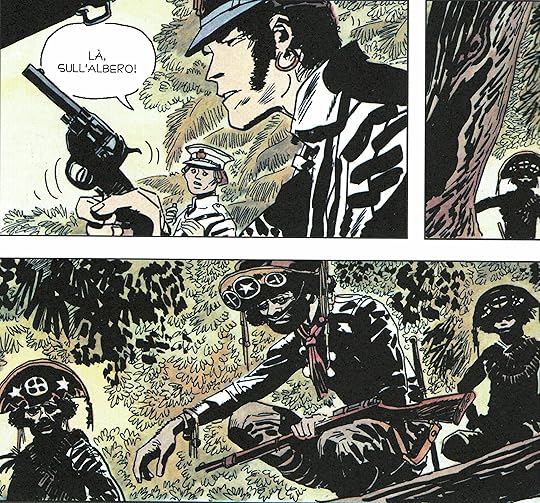
On the face of it, a lot of this seems somewhat derivative – fun in a hokey, boy's-own kind of way, but otherwise insignificant. Yet there's something to the atmosphere of these books (beyond their gigantic influence in creating the concept of the ‘graphic novel’) which is hard to dismiss, and it has to do with the pervading sense of peripatetic melancholy that underlies the story. Friends, enemies, lovers come and go; there will always be something new waiting over the horizon.
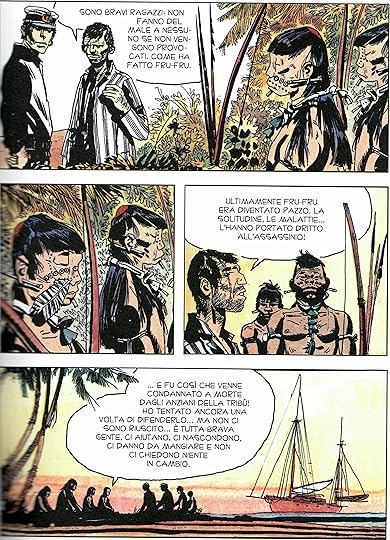
Some of the plot devices are, indeed, hokey – but the locations never are, and nor is the tone. Maybe that's what keeps me coming back.
On the face of it, a lot of this seems somewhat derivative – fun in a hokey, boy's-own kind of way, but otherwise insignificant. Yet there's something to the atmosphere of these books (beyond their gigantic influence in creating the concept of the ‘graphic novel’) which is hard to dismiss, and it has to do with the pervading sense of peripatetic melancholy that underlies the story. Friends, enemies, lovers come and go; there will always be something new waiting over the horizon.
Some of the plot devices are, indeed, hokey – but the locations never are, and nor is the tone. Maybe that's what keeps me coming back.

April 29, 2020
Segundo libro del Corto Maltés. Si bien formalmente se trata de un álbum conformado por seis historias cortas (ambientadas en los años 1916 y 1917) que perfectamente funcionan en solitario, está claro que se alimentan unas a otras y se enriquecen si las leemos como una única unidad. De hecho, hay un hilo conductor y personajes que atraviesan el libro de principio a fin.
Todas las virtudes que mencionaba en la reseña de "La Balada del Mar Salado" están acá presentes, y hasta incluso hay en "Bajo el Signo de Capricornio" una mayor cohesión narrativa, a pesar de su estructura fragmentada.
Hay dos cuestiones que me parecen especialmente brillantes: por un lado, la construcción de la personalidad del Corto Maltés. Al Corto lo vamos conociendo no tanto por lo que dice de sí mismo, sino que Pratt casi que en todo momento delega en los personajes secundarios esa tarea. Vemos y conocemos al Corto a partir de los ojos de sus amigos y compañeros de aventura, y esa construcción se va haciendo de una forma muy sutil a medida que avanzan las páginas.
Por otro lado, el mundo (con sus océanos e infinidad de islas), aparece como un lugar diminuto, que puede recorrerse en lo que dura un viaje en el 104. Un día el Corto puede estar en algún mar africano, y a la página siguiente llega a las aguas del río Amazonas. En cada lugar que visita, así sea en el rincón más perdido del planeta, habrá un amigo, conocido, o al menos alguien que conoce la leyenda del Corto, lo que ayuda a reforzar esa idea de que el mundo es un pañuelo. Algo que claramente juega a favor del espíritu exploratorio y aventurero que caracteriza a la saga del Corto Maltés.
Los trazos de Pratt siguen siendo una maravilla y, a diferencia de lo que sucedía en "La Balada...", aquí sí ya tenemos plenamente configurada la clásica imagen inconfundible del Corto.
Todas las virtudes que mencionaba en la reseña de "La Balada del Mar Salado" están acá presentes, y hasta incluso hay en "Bajo el Signo de Capricornio" una mayor cohesión narrativa, a pesar de su estructura fragmentada.
Hay dos cuestiones que me parecen especialmente brillantes: por un lado, la construcción de la personalidad del Corto Maltés. Al Corto lo vamos conociendo no tanto por lo que dice de sí mismo, sino que Pratt casi que en todo momento delega en los personajes secundarios esa tarea. Vemos y conocemos al Corto a partir de los ojos de sus amigos y compañeros de aventura, y esa construcción se va haciendo de una forma muy sutil a medida que avanzan las páginas.
Por otro lado, el mundo (con sus océanos e infinidad de islas), aparece como un lugar diminuto, que puede recorrerse en lo que dura un viaje en el 104. Un día el Corto puede estar en algún mar africano, y a la página siguiente llega a las aguas del río Amazonas. En cada lugar que visita, así sea en el rincón más perdido del planeta, habrá un amigo, conocido, o al menos alguien que conoce la leyenda del Corto, lo que ayuda a reforzar esa idea de que el mundo es un pañuelo. Algo que claramente juega a favor del espíritu exploratorio y aventurero que caracteriza a la saga del Corto Maltés.
Los trazos de Pratt siguen siendo una maravilla y, a diferencia de lo que sucedía en "La Balada...", aquí sí ya tenemos plenamente configurada la clásica imagen inconfundible del Corto.

January 22, 2020
Parcă mai împrăștiat decât primul volum, deși desenele sunt la fel de bune și unele dialoguri cu adevărat memorabile. Corto, Rasputin, puțină magie neagră, soldați germani asupritori, o comoară ascunsă, avocați perfizi și un bețiv foarte carismatic.
Așa că mi-a plăcut destul de mult. Și în curând îmi cumpăr volumul 3, sper ca cei de la Cartea Copiilor să traducă și următoarele volume.
Așa că mi-a plăcut destul de mult. Și în curând îmi cumpăr volumul 3, sper ca cei de la Cartea Copiilor să traducă și următoarele volume.


April 25, 2015
This first of twelve volumes reprinting the various novels of Capt Corto Maltese by Hugo Pratt finds the good captain sailing around the northeastern coast of South America in the years 1916 and 1917. Smuggling, piracy, fortune hunting, and intrigue of all kinds make for some great adventure comics.
This oversized book is beautifully printed and has the nice addition of maps and a biography of Pratt as well.
Pick this up if you're a fan of European and/or adventure graphic novels.
This oversized book is beautifully printed and has the nice addition of maps and a biography of Pratt as well.
Pick this up if you're a fan of European and/or adventure graphic novels.

September 11, 2016
Corto Maltese is one of my favorite comicbook characters ever, and this is his second adventure - this time in the Pacific with, as always, a myriad of women, some violence, a few betrayals and the presence of his best friend and chief tormentor Rasputin. A masterpiece.

February 23, 2016
Superb. The perfect adventurer in a perfect adventure by the originator of the graphic novel the late and great Hugo Pratt.

December 12, 2014
Von hier nach da
Letztlich beneide ich Corto Maltese. Er ist ein Wanderer, der sich vom Wind treiben lässt. Keine festen Bindungen, kein Besitzstand, kein Zwang. Wenn es ihm irgendwo nicht mehr gefällt, setzt er Segel und findet die nächste Insel, das nächste Abenteuer. In diesen 6 Geschichten, manchmal lose, manchmal etwas fester gekoppelt, zeigt sich dies wunderbar - jemand braucht Hilfe, und Corto Maltese springt ein. Dabei ist er keineswegs ein Gutmensch, sondern erhofft sich das eine oder andere Mal schon eine gewisse Kompensation; doch gleichzeitig ist er schlau (und desillusioniert?) genug, um schnell zu erkennen, wenn sich die Belohnung in Luft auflöst, und ihr nicht hinterherzutrauern.
Pratts Plotting ist für den heutigen Leser vielleicht gewöhnungsbedürftig, weil alles so langsam, entkoppelt, zufällig geschieht. Die Handlung wird nie aktiv vorangetrieben, sondern "passiert einfach". Dies hat mich bei meinem Erstkontakt mit dieser Reihe gestört; inzwischen empfinde ich das als großartiges Alleinstellungsmerkmal, auf das man sich definitiv einlassen sollte. Erneut "fühlt" man die Stimmung, die grandiose Verortung in einem diesigen, brasilianischen Klima, voller Geheimnisse, Voodoo-Hexerei, Piratenschätzen und untergegangenen Kulturen.
Dazu die atmosphärischen Zeichnungen Pratts, die stellenweise nur mit gröbsten Skizzen (man schaue sich die Möwen mal an) ein wunderbares Bild entstehen lassen. In Schwarzweiß, wie das in dieser Ausgabe der Fall ist, kann man seinen Stil noch deutlicher, klarer erkennen. Farbige Zeichnungen derselben Geschichten erhält man in zwei Bänden als Suite Caraïbéenne und Sous le drapeau des pirates.
Letztlich beneide ich Corto Maltese. Er ist ein Wanderer, der sich vom Wind treiben lässt. Keine festen Bindungen, kein Besitzstand, kein Zwang. Wenn es ihm irgendwo nicht mehr gefällt, setzt er Segel und findet die nächste Insel, das nächste Abenteuer. In diesen 6 Geschichten, manchmal lose, manchmal etwas fester gekoppelt, zeigt sich dies wunderbar - jemand braucht Hilfe, und Corto Maltese springt ein. Dabei ist er keineswegs ein Gutmensch, sondern erhofft sich das eine oder andere Mal schon eine gewisse Kompensation; doch gleichzeitig ist er schlau (und desillusioniert?) genug, um schnell zu erkennen, wenn sich die Belohnung in Luft auflöst, und ihr nicht hinterherzutrauern.
Pratts Plotting ist für den heutigen Leser vielleicht gewöhnungsbedürftig, weil alles so langsam, entkoppelt, zufällig geschieht. Die Handlung wird nie aktiv vorangetrieben, sondern "passiert einfach". Dies hat mich bei meinem Erstkontakt mit dieser Reihe gestört; inzwischen empfinde ich das als großartiges Alleinstellungsmerkmal, auf das man sich definitiv einlassen sollte. Erneut "fühlt" man die Stimmung, die grandiose Verortung in einem diesigen, brasilianischen Klima, voller Geheimnisse, Voodoo-Hexerei, Piratenschätzen und untergegangenen Kulturen.
Dazu die atmosphärischen Zeichnungen Pratts, die stellenweise nur mit gröbsten Skizzen (man schaue sich die Möwen mal an) ein wunderbares Bild entstehen lassen. In Schwarzweiß, wie das in dieser Ausgabe der Fall ist, kann man seinen Stil noch deutlicher, klarer erkennen. Farbige Zeichnungen derselben Geschichten erhält man in zwei Bänden als Suite Caraïbéenne und Sous le drapeau des pirates.

June 5, 2016
Well drawn and catchy. Recommended.

November 15, 2018
The quality of the edition is excellent, but the written material suffers in translation and the art - while distinctive and exceptional is still....problematic as the kids like to say.

January 11, 2020
En este segundo tomo encontramos una historia dividida en varias partes con una especie de epílogo. En este tomo se liman bien las características que definirán a Corto, dejando de lado algunas ambigüedades del tomo anterior.
Otro elemento importante es la incorporación de distintas cosas que complejizan la trama, incluido lo sobrenatural y lo político que tanto interesa a Pratt. Igual no nos engañemos: la historia se sigue con facilidad y es muy entretenida; todo lo demás aparece como subtexto que el lector puede incorporar o no según su interés.
En definitiva, una obra maestra que posiciona al personaje como uno de los más reconocidos del cómic europeo y a Pratt como una estrella del séptimo arte.
Otro elemento importante es la incorporación de distintas cosas que complejizan la trama, incluido lo sobrenatural y lo político que tanto interesa a Pratt. Igual no nos engañemos: la historia se sigue con facilidad y es muy entretenida; todo lo demás aparece como subtexto que el lector puede incorporar o no según su interés.
En definitiva, una obra maestra que posiciona al personaje como uno de los más reconocidos del cómic europeo y a Pratt como una estrella del séptimo arte.

December 2, 2024
на самом деле, ко второму роману становится понятно, что все это - картинки из Пинчонляндии: Первая мировая и задворки глобуса, период примерно "Ви" и "Противоденствия". прекрасные "перипетии остросюжетных коллизий" (тм), хоть и очень многословные порой. но все воюют с германцами, и тут еще есть и многонациональная черная разведывательная и контрразведывательная сеть, разве можно такое не полюбить. ну и, конечно, пираты и непрерывные поиски непрерывно ускользающих сокровищ, но главное даже не это, а композиция каждого кадра.

Read
November 18, 2016I still don't wholly get the fuss about Corto Maltese - half the time Pratt can't be arsed drawing backgrounds (and the scenery is the thing I like most in his art), the dialogue is often hokey, and the plotting is not so much digressive as just prone to dropping out entirely at times. And there's one black character in this who, no exaggeration, is drawn with the face of a baboon (though in fairness, written with a lot more sensitivity). And yet, and yet, something about the set-up keeps seducing me enough that I give the series another go. I suppose it is essentially Rick from Casablanca playing Indiana Jones in a setting that's 90% Joseph Conrad and 10% Mysterious Cities of Gold, so speaks to something fairly deep in my make-up. And I think maybe it's that sense of fabulous vistas just over the horizon which, to the many effusive writer fans quoted on the back of this new edition, feels like complexity. And in a sense, maybe it is.

April 30, 2022
Corto Maltese Under the Sign of the Capricorn
This is my introduction to Hugo Pratt and it was immediately obvious why he is considered one of the GOATs of graphic literature. His draftsmanship is peerless and his characters all have a realness to them, you can almost judge them like you would judge a fellow human upon first meeting, they just have that substance to them. The stories in the book were all captivating but its Corto’s character that is the real treat, he keeps you hooked, he is the prototypical ”most interesting person in the world”, not unlike his creator (read Pratt’s wiki!).
This is my introduction to Hugo Pratt and it was immediately obvious why he is considered one of the GOATs of graphic literature. His draftsmanship is peerless and his characters all have a realness to them, you can almost judge them like you would judge a fellow human upon first meeting, they just have that substance to them. The stories in the book were all captivating but its Corto’s character that is the real treat, he keeps you hooked, he is the prototypical ”most interesting person in the world”, not unlike his creator (read Pratt’s wiki!).

February 23, 2020
Throughout my thoroughly enjoyable travels with his characters I have reliably come to expect something that Pratt woefully lacks- Current or story contemporary maps.
So that the vast majority of readers can better navigate geographically through the adventures. Only those with knowledge of antiquated port and destination names coupled some diligent study of well-aged lore.
So that the vast majority of readers can better navigate geographically through the adventures. Only those with knowledge of antiquated port and destination names coupled some diligent study of well-aged lore.

December 16, 2017
Πάει και ο αστερισμός του αιγόκερω, και με αυτό το άλμπουμ διάβασα οτιδήποτε έχω αυτή τη στιγμή στα χέρια μου από Κόρτο Μαλτέζε. Η αλήθεια είναι ότι το συγκεκριμένο πέρασε και δεν ακούμπησε ένα πράγμα μετά το τραίνο των Νεανικά Χρόνια/Βουντού για τον Κύριο Πρόεδρο/Τανγκό/Κέλτικα των περασμένων 10 ημερών. Και σκέφτηκα μήπως επηρεάζει το ότι έπιασα ξανά Πρατ μετά από καιρό μαζεμένο και ψιλό-μπούχτισα.
Το "Στον Αστερισμό του Αιγόκερω" ήταν χλιαρό σε πολλά επίπεδα: Το σχέδιο ήταν όπως πάντα αγαπημένο αλλά πιο αδούλευτο απ'ότι συνήθως, τα σκαμπανεβάσματα της υπόθεσης ήταν τα γνωστά όλων των ιστοριών αλλά πιο ασύνδετα απ'ότι συνήθως. Είμαι από αυτούς που γουστάρω την επανάσταση του Πρατ στις συμβατικές μορφές αφήγησης της εποχής του και την υιοθέτηση μιας τελείως απροσάρμοστης ροής, αλλά συμπαθάτε με όταν πω ότι εδώ ήταν σε τόσο μεγάλο βαθμό που με ενόχλησε και δεν ευχαριστήθηκα το κόμικ. Η ιστορία στα 2/3 αλλάζει τελείως ύφος αλλά όχι με αυτό το "σου παίρνω την μια μαγευτική κατάσταση και σε στέλνω πακέτο στην επόμενη", αλλά με το "τώρα μου 'ρθε να κάνω αυτό οπότε ξεχνάμε ότι έγινε". Μέχρι την Χρυσόστομη όλα καλά, μαγευτικός χαρακτήρας η συγκεκριμένη, μια από τις πολλές εκφάνσεις του χαρακτήρα του μικρού μαλτέζου προσωποποιημένη.
Έχει στηθεί λοιπόν μέχρι εκεί μια κάργα ενδιαφέρουσα ιστορία με το Μου/Ατλαντίδα και τα αδέρφια Τρίσταν και Μοργκάνα, απόλυτα μαγευτική και ζωντανή. Οκ, δεν είχε ιδιαίτερη δράση αλλά υποσχόταν πολλά. Έβλεπα τις σελίδες που λιγόστευαν και αναρωτιόμουν πόσο θα "τρέξει" για να έρθουμε σε μια ικανοποιητική κορύφωση. Όχι εύρεση του χαμένου πολιτισμού βέβαια, με τον Πρατ ποτέ δεν φτάνουμε στην Ιθάκη. Αλλά κάτι που να αφήνει μια γλυκόπικρη γεύση σε σχέση με αυτό το στόχο, όπως οι περισσότερες άλλες ιστορίες. Αντ'αυτού αλλάξαμε περιβάλλον, τα αδέρφια γίνανε από πρωταγωνιστές κομπάρσοι και το χρώμα της υπόθεσης πήγε από το άσπρο στο μαύρο (ή και ανάποδα, δεν το λέω αισθητικά).
Δεν περίμενα να μου αρέσουν όλα και μα τον Αλλάχ αναρωτιόμουν πότε θα έρθει η ώρα να πιάσω αυτό που δεν θα βρω φοβερό. Να πω ότι και ο Κόρτο του αστερισμού δεν μου άρεσε, πολύ σκληρός και εύθικτος παρά καυστικός και είρωνας. Αλλά ήταν αρχές της δημιουργίας του ακόμα, το Il secreto di Tristan Bantam βγήκε το 1970, τρία χρόνια μετά την Μπαλάντα και από τις πρώτες (αν όχι η πρώτη) με πρωταγωνιστή τον Κόρτο Μαλτέζε αποκλειστικά.
Το "Στον Αστερισμό του Αιγόκερω" ήταν χλιαρό σε πολλά επίπεδα: Το σχέδιο ήταν όπως πάντα αγαπημένο αλλά πιο αδούλευτο απ'ότι συνήθως, τα σκαμπανεβάσματα της υπόθεσης ήταν τα γνωστά όλων των ιστοριών αλλά πιο ασύνδετα απ'ότι συνήθως. Είμαι από αυτούς που γουστάρω την επανάσταση του Πρατ στις συμβατικές μορφές αφήγησης της εποχής του και την υιοθέτηση μιας τελείως απροσάρμοστης ροής, αλλά συμπαθάτε με όταν πω ότι εδώ ήταν σε τόσο μεγάλο βαθμό που με ενόχλησε και δεν ευχαριστήθηκα το κόμικ. Η ιστορία στα 2/3 αλλάζει τελείως ύφος αλλά όχι με αυτό το "σου παίρνω την μια μαγευτική κατάσταση και σε στέλνω πακέτο στην επόμενη", αλλά με το "τώρα μου 'ρθε να κάνω αυτό οπότε ξεχνάμε ότι έγινε". Μέχρι την Χρυσόστομη όλα καλά, μαγευτικός χαρακτήρας η συγκεκριμένη, μια από τις πολλές εκφάνσεις του χαρακτήρα του μικρού μαλτέζου προσωποποιημένη.
Έχει στηθεί λοιπόν μέχρι εκεί μια κάργα ενδιαφέρουσα ιστορία με το Μου/Ατλαντίδα και τα αδέρφια Τρίσταν και Μοργκάνα, απόλυτα μαγευτική και ζωντανή. Οκ, δεν είχε ιδιαίτερη δράση αλλά υποσχόταν πολλά. Έβλεπα τις σελίδες που λιγόστευαν και αναρωτιόμουν πόσο θα "τρέξει" για να έρθουμε σε μια ικανοποιητική κορύφωση. Όχι εύρεση του χαμένου πολιτισμού βέβαια, με τον Πρατ ποτέ δεν φτάνουμε στην Ιθάκη. Αλλά κάτι που να αφήνει μια γλυκόπικρη γεύση σε σχέση με αυτό το στόχο, όπως οι περισσότερες άλλες ιστορίες. Αντ'αυτού αλλάξαμε περιβάλλον, τα αδέρφια γίνανε από πρωταγωνιστές κομπάρσοι και το χρώμα της υπόθεσης πήγε από το άσπρο στο μαύρο (ή και ανάποδα, δεν το λέω αισθητικά).
Δεν περίμενα να μου αρέσουν όλα και μα τον Αλλάχ αναρωτιόμουν πότε θα έρθει η ώρα να πιάσω αυτό που δεν θα βρω φοβερό. Να πω ότι και ο Κόρτο του αστερισμού δεν μου άρεσε, πολύ σκληρός και εύθικτος παρά καυστικός και είρωνας. Αλλά ήταν αρχές της δημιουργίας του ακόμα, το Il secreto di Tristan Bantam βγήκε το 1970, τρία χρόνια μετά την Μπαλάντα και από τις πρώτες (αν όχι η πρώτη) με πρωταγωνιστή τον Κόρτο Μαλτέζε αποκλειστικά.

September 10, 2017
Bir öncekinden daha hareketli olan bu macerada her şey var: Kayıp kıta Mu, telepati, Vodoo büyüsü, hazine avcılığı, sömürge ayaklanması, silah kaçakçılığı ve devam eden 1. Dünya Savaşı... Birbiriyle bağlantılı olan ama ayrı maceralar olarak da okunabilecek bu 6 bölümdeki olaylar 1916-1917 yıllarında geçiyor; sayının ilk yayımlanma tarihi ise 1970. Bir yandan Hugo Pratt'ın çizgilerinin belirginleştiğini, bir yandan da hikâyelerdeki sömürgecilik karşıtı mesajın güçlendiğini görüyoruz.

November 13, 2021
Her macerayı ayrı severim. Corto harikadır. Mutlaka tanışın.
March 17, 2024
Good for practicing Italian. Nice paperback edition.

March 10, 2015
I am severely biased when it comes to the work of Hugo Pratt. I love it deeply. The beautiful ink work just blows my mind. Also, I used his comics to help myself learn Italian when I was there years ago, and I will always be grateful that he made such intriguing work that kept me engaged as I struggled with new vocabulary.
So I have a difficult time knowing what someone's response to this work would be if they just happened upon it at a bookstore. I imagine the art would impress anyone with an interest in pen and ink - but would the stories hold up? I tend to think it would.
This work was made in the late 60's - but in my opinion, it's timeless. It has elements of high adventure, mysticism, fringe politics, and magical realism. It's sarcastic and brutal, but never pessimistic.
This book is the first of twelve that is supposed to collect all of Corto's adventures. It is a new English translation, and it is printed on sturdy paper of an appropriate size to do the visuals justice.
I am very excited to see these works finally published in English, and I cannot wait to savor every last page.
So I have a difficult time knowing what someone's response to this work would be if they just happened upon it at a bookstore. I imagine the art would impress anyone with an interest in pen and ink - but would the stories hold up? I tend to think it would.
This work was made in the late 60's - but in my opinion, it's timeless. It has elements of high adventure, mysticism, fringe politics, and magical realism. It's sarcastic and brutal, but never pessimistic.
This book is the first of twelve that is supposed to collect all of Corto's adventures. It is a new English translation, and it is printed on sturdy paper of an appropriate size to do the visuals justice.
I am very excited to see these works finally published in English, and I cannot wait to savor every last page.

September 22, 2015
I'm overjoyed to see that we're finally getting what appears to be a definitive translation of Corto Maltese. The series is semilegendary in comics circles. One need look no further than the back cover blurbs on this book, which represent a who's who of modern comics creators. The introduction talks about this being a graphic novel, but it's really more accurately a short story collection. Corto Maltese and various associates appear in all of them, but the continuity between them is not always strong. That's fine. These are adventure stories, reminiscent of classic newspaper strips like The Phantom, Terry and the Pirates, Wash Tubbs and Captain Easy ... Pratt's style is beautiful to behold, sort of a minimalist take on Roy Crane by way of Alex Toth. The stories are well-written and believable. Maltese is a classic tough guy, and, with a bit more stubble and a change of wardrobe, could easily pass as the hero of a Western, or even a Crime Noir thriller. The plan is to issue the entire series in handsomely produced volumes like this one. Looking forward to it!

May 15, 2019
This graphic novel is an omnibus of six linked short stories following the adventures of Corto Maltese, a gentleman of fortune in the Caribbean, the Guyanas, and Brazil in the early years of the First World War.
The storytelling is nothing short of exceptional. Intelligent, erudite, sophisticated, and yet ruthless, all of Hugo Pratt’s characters are portrayed with great respect whatever their flaws. Corto is a generous but cantankerous hero, ready to take up any cause yet also to accept any piracy job for money, a character of great depth and complexity, and yet an action hero through and through.
The artwork is unmistakable, such is Pratt’s unique use of swathes of black and white and his cinematographic compositions , highly stylised, but entirely right for the dreamlike pace of the stories. Appearing sometimes clumsy, Pratt’s artwork is nevertheless compelling, conveying vast amounts of information in highly impressionistic tableaux.
These stories reward repeated reading, as they have layers upon layers of meaning.
The storytelling is nothing short of exceptional. Intelligent, erudite, sophisticated, and yet ruthless, all of Hugo Pratt’s characters are portrayed with great respect whatever their flaws. Corto is a generous but cantankerous hero, ready to take up any cause yet also to accept any piracy job for money, a character of great depth and complexity, and yet an action hero through and through.
The artwork is unmistakable, such is Pratt’s unique use of swathes of black and white and his cinematographic compositions , highly stylised, but entirely right for the dreamlike pace of the stories. Appearing sometimes clumsy, Pratt’s artwork is nevertheless compelling, conveying vast amounts of information in highly impressionistic tableaux.
These stories reward repeated reading, as they have layers upon layers of meaning.

March 7, 2012
Well drawn and entertaining action/adventure/historical/fantastical strip. Grounded realistically in the teens of the previous century, it also features fantastical elements such as apparently genuine voodoo or at least telepathy, and an ongoing narrative about the lost continents of Atlantis and Mu, though that idea is only introduced here. Presumably subsequent volumes pursue it farther. I'm not sure the fantasy and historical elements gel fully, but it's entertaining. (And possibly these elements get rationalized later on.) The structure--ongoing Atlantis/Mu narrative punctuated by short, fairly self-contained stories--is a cunning strategy to satisfy readers with some closure while also leaving major narrative doors open. Not sure how reliable the translation is; seems clunky at times. Good, but not as good as I'd expected, given the high praise I've heard heaped on Pratt.

Read
April 19, 2017Pratt was incredibly accurate at representing the spirit of northern brazilians, brave, bold, angry, tangled in real magic; Particularly, I'm always fascinated to see Pratt's choices when representing Latin America, in this case he avoids the 'Official Brazil': Rio de Janeiro, samba, that exportation image of easy happiness... I was excited to see Pratt didn't give a fuck for that, the real Brazil was and still is deeply conflicted, deeply mystical and mysterious, deep in the course of its rivers.
At the São Francisco river sequence, he references to a movie of Glauber Rocha named O Dragão da Maldade contra o Santo Guerreiro, the cangaceiro Corisco was a real historical character, It's worth looking for knowing him better.
At the São Francisco river sequence, he references to a movie of Glauber Rocha named O Dragão da Maldade contra o Santo Guerreiro, the cangaceiro Corisco was a real historical character, It's worth looking for knowing him better.

February 8, 2015
I had read a little Corto Maltese before, but my experience had been spotty. What's more, I have the colorized Universe edition, "The Ballad of the Salt Sea," that came out in 2012. This is a much nicer edition (and supposedly a better translation). I'm eagerly looking forward to the rest in IDW/EuroComics' Corto Maltese editions. This is one we discussed on The Comics Alternative podcast.

Read
September 22, 2021Very interesting! I had never heard of Corto Maltese the original comic so I had no idea what the nod in the new suicide squad movie meant. Love the black and white sketchy style and the design/personality of Corto himself. Sort of a classic wandering rogue adventurer who doesn't bat an eye at curses or magic and cracks wise whenever possible.

October 22, 2021
Suite à la visite de l'exposition Pratt, relecture de Corto. Je n'avais aucun souvenir de ce second tome, mais on replonge très vite dans cette atmosphère si particulière, cette sorte de nostalgie rebelle. Je préfère le noir et blanc, qui me paraît plus fort graphiquement. Envie de poursuivre ma relecture du cycle !
May 18, 2015
I'll admit, there were some weird, awkward action poses which made me cringe but I greatly enjoyed the stories and the art for the most part and I have a bit of a bias for tales of high adventure with a nautical theme so I really liked this collection.
Displaying 1 - 30 of 106 reviews