

What do you think?

The Woman Who Waited: A Novel
Nearly three decades after a young Russian soldier is reported killed in action during World War II, his fiancée clings to a vain belief that he has survived and steadfastly awaits his return, a situation that frustrates a Leningrad native who has fallen madly in love with the woman. By the author of Requiem for a Lost Empire.
192 pages, Hardcover
First published January 2, 2004
About the author
Andreï Makine
41 books411 followersAndreï Makine was born in Krasnoyarsk, Soviet Union on 10 September 1957 and grew up in city of Penza, a provincial town about 440 miles south-east of Moscow. As a boy, having acquired familiarity with France and its language from his French-born grandmother (it is not certain whether Makine had a French grandmother; in later interviews he claimed to have learnt French from a friend), he wrote poems in both French and his native Russian.
In 1987, he went to France as member of teacher's exchange program and decided to stay. He was granted political asylum and was determined to make a living as a writer in French. However, Makine had to present his first manuscripts as translations from Russian to overcome publishers' skepticism that a newly arrived exile could write so fluently in a second language. After disappointing reactions to his first two novels, it took eight months to find a publisher for his fourth, Le testament français. Finally published in 1995 in France, the novel became the first in history to win both the Prix Goncourt and the Prix Medicis plus the Goncourt des Lycéens.
In 1987, he went to France as member of teacher's exchange program and decided to stay. He was granted political asylum and was determined to make a living as a writer in French. However, Makine had to present his first manuscripts as translations from Russian to overcome publishers' skepticism that a newly arrived exile could write so fluently in a second language. After disappointing reactions to his first two novels, it took eight months to find a publisher for his fourth, Le testament français. Finally published in 1995 in France, the novel became the first in history to win both the Prix Goncourt and the Prix Medicis plus the Goncourt des Lycéens.
Ratings & Reviews
Friends & Following
Create a free account to discover what your friends think of this book!
Community Reviews
Displaying 1 - 30 of 134 reviews

March 9, 2019
To some extent I know what to expect when reading Makine - he has a distinctive style which blends memory and imagination, and (like me) overuses the ellipsis... This is another fine short novel but probably not the best starting point for a newcomer - the story is set in the 70s, and the narrator is naive, rather narcissistic and not very likeable. A member of a Leningrad group of dissident-leaning students, he travels to the White Sea coast to seek out local folklore.
The forest village he arrives in is largely populated by widows in their 80s. The exception is the 40-something Vera, who has spent 30 years waiting for her fiancé to return from the war, choosing to stay in the village and look after the old ladies. The narrator concocts his own ideas of what this means, most of which fail to survive as he gets to know her better.
The forest village he arrives in is largely populated by widows in their 80s. The exception is the 40-something Vera, who has spent 30 years waiting for her fiancé to return from the war, choosing to stay in the village and look after the old ladies. The narrator concocts his own ideas of what this means, most of which fail to survive as he gets to know her better.

March 7, 2022
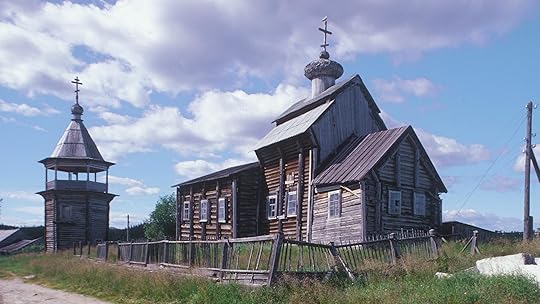
The blurb defines Véra, the "woman who waited" in this novel, using a quote from Dostoyevsky – she is one of the heroines at the extreme border. I had to check in the map where Mirnoë (mirnoe) lies, on the very northern White Sea. For me trying to envision such a place is also an extreme on the frontier of my imagination. The story is extreme too. Véra is an ordinary Penelope who when her beloved leaves for the front when she is still a teenager, waits for him for thirty years, at the end of which, we cannot expect such a satisfying ending as was granted to the eminent weaver. The story has an element of mystery and is observed and narrated by a young man, who is partly in the search of himself and who is eventually drawn to the mystery of the, by then, much older Véra. Stories of artistic and political dissidence, of the isolation of the Soviet Union from the West, also enrich this novel.
I purchased this after having liked Makine’s Proustian Le Testament Français (which received the Goncourt). Although Andreï Makine is originally from Siberia, he developed from early age a fascination with the French language and is now a member of the Académie. His French is beautiful, excelling in the landscape descriptions.
Mixed with the very lyrical treatment of some passages there is also a ruthlessness that I wonder if this is a characteristic of Russian literature.
There is one other work by Makine, La Musique d'une vie, that I may read in the future.

June 8, 2021
I really did not like this novel. For one thing, I believe Makine could have said what he wanted to say in far fewer words. Granted it was a short novel, but for all it said, it could have been shorter. I was just waiting for the damn thing to end.
And an extremely unlikeable character, the 26-year-old journalist (as far as I know he was unnamed), did not help matters any. Essentially he has the hots for a woman 20 years older than he is, who is another key protagonist in the novel, and sympathizes with her just to get in her bed, and when he does, he starts having doubts within 24 hours like “oh no, now she will think I care about her, and she is going to want me to marry her, and I had better out for this town immediately!” Atta boy…. you have a lot of class there!
The novel is more complicated than that – she is waiting for her fiancée to come back to her after WW II ends. Trouble is, it’s not 1945…it’s more like 1975. She’s been waiting for 30 years, after getting a letter in 1945 (or thereabouts) saying he was missing in action.
Near the end of the novel, . This was a disappointing read because I had high hopes for it given my first encounter with Makine was a pleasant one–I read “Music of a Life” last year and gave it 4.5 stars. I guess I just picked the wrong second book to follow up with him. ☹
I will probably read more of Makine just because I was impressed with the accolades that were on the back cover of this book:
• “Dreams of my Russian Summer” is one of the great autobiographical books of this century. – Los Angeles Times Book Review
• “Confessions of a Fallen Standard Bearer” is perhaps Makine’s most exquisitely wrought work…It grabs your mind and heart and never lets go…A tale of remarkable strength and poignancy…Brilliant. – New York Times
• “Once Upon the River Love” is one of the great books of this year. – Washington Post Book World
Reviews:
• https://www.theguardian.com/books/200...
• https://ofbooksandbikes.com/2007/09/3...
• http://www.barcelonareview.com/rev/55...
And an extremely unlikeable character, the 26-year-old journalist (as far as I know he was unnamed), did not help matters any. Essentially he has the hots for a woman 20 years older than he is, who is another key protagonist in the novel, and sympathizes with her just to get in her bed, and when he does, he starts having doubts within 24 hours like “oh no, now she will think I care about her, and she is going to want me to marry her, and I had better out for this town immediately!” Atta boy…. you have a lot of class there!
The novel is more complicated than that – she is waiting for her fiancée to come back to her after WW II ends. Trouble is, it’s not 1945…it’s more like 1975. She’s been waiting for 30 years, after getting a letter in 1945 (or thereabouts) saying he was missing in action.
Near the end of the novel, . This was a disappointing read because I had high hopes for it given my first encounter with Makine was a pleasant one–I read “Music of a Life” last year and gave it 4.5 stars. I guess I just picked the wrong second book to follow up with him. ☹
I will probably read more of Makine just because I was impressed with the accolades that were on the back cover of this book:
• “Dreams of my Russian Summer” is one of the great autobiographical books of this century. – Los Angeles Times Book Review
• “Confessions of a Fallen Standard Bearer” is perhaps Makine’s most exquisitely wrought work…It grabs your mind and heart and never lets go…A tale of remarkable strength and poignancy…Brilliant. – New York Times
• “Once Upon the River Love” is one of the great books of this year. – Washington Post Book World
Reviews:
• https://www.theguardian.com/books/200...
• https://ofbooksandbikes.com/2007/09/3...
• http://www.barcelonareview.com/rev/55...

August 28, 2017
I can't do better in describing this book than the GR description. But the better he thinks understands her the more she surprises him, and the more he gains uncomfortable insights into himself.
When I finished, I needed to know whether the village of Mirnoe is a real place. Indeed, it is, and its name in Russian means "peaceful." Makine set his story well - he makes multiple references to the quiet of this village almost ignored by the passage of time. It becomes a character of the story, with its population of aging women. But it is Vera whose character is so well done. As does the first person narrator, we come only very gradually to know her and her life of the 30 years' waiting since the war.
It is a short book, but the author uses his words to the reader's benefit. And, as to his words, I'm so glad I already have another of his on my Kindle. There is nothing foreign about his prose. The translator has done a fine job. But for all my praise, I am withholding a star.
When I finished, I needed to know whether the village of Mirnoe is a real place. Indeed, it is, and its name in Russian means "peaceful." Makine set his story well - he makes multiple references to the quiet of this village almost ignored by the passage of time. It becomes a character of the story, with its population of aging women. But it is Vera whose character is so well done. As does the first person narrator, we come only very gradually to know her and her life of the 30 years' waiting since the war.
It is a short book, but the author uses his words to the reader's benefit. And, as to his words, I'm so glad I already have another of his on my Kindle. There is nothing foreign about his prose. The translator has done a fine job. But for all my praise, I am withholding a star.

April 14, 2019
“... il volto di Vera iridato dagli intagli del gelo, il suo sorriso trasognato, lo sguardo che mi rispondeva attraverso il ventaglio ghiacciato che le si scioglieva tra le dita. Quella donna era al di là di ogni desiderio. Era la donna che aspettava l’uomo che amava.”
Un giovane scrittore racconta la sua esperienza quando si reca nello sperduto villaggio di Mirnoe, Arkhangelsk, estrema Russia, vicino a un lago e a pochi passi dal Mar Bianco. Un luogo quasi dismesso, forse dimenticato, chiuso nella morsa del gelo e abitato da poche vecchie che hanno visto gli uomini partire per la guerra e non fare più ritorno. E poi Vera, la donna che sembra prigioniera di un incantesimo, il corpo celato e avvolto in un lungo pastrano militare, lei che da trent’anni ancora aspetta il ritorno del suo primo e unico amore.
Quale mistero racchiude questa vita consacrata all’attesa, all’insegnamento elementare e alla cura delle anziane del villaggio? Il narratore è affascinato da questo segreto; è attratto dalla donna matura e ancora bella; la guarda, la osserva, la spia, ne conserva immagini diverse, contrastanti e complementari; si sente invitato a scoprire quello che non può sapere e a immaginare quello che non sa svelare. Ed è quello che farà.
Ricostruisce dunque la storia: la partenza del giovane amato, l’ultimo saluto alla sedicenne innamorata e poi quelle spalle di soldato, la sua marcia d’addio, per sempre. E tuttavia una promessa: “Tornerò”. Una promessa a cui deve seguire un fatto. È questo? L’assurdo desiderio di un bambino che crede ancora alle favole? Tutto qui?
Un po’ alla volta il narratore conoscerà lati diversi della “donna che aspetta” e tuttavia lei continuerà a custodire il suo fondamentale mistero, l’essenza della sua vita le appartiene completamente e non è comunicabile, come probabilmente accade a ogni uomo, a ogni donna sulla terra.
La scrittura di Makine è magica. È la scrittura a creare uno degli elementi fondamentali dell’attrazione verso questa storia .
È la scrittura a portarci là, nel freddo polare, nella solitudine dell’isba, nel silenzio del lago ghiacciato, nel profondo mistero della foresta, nel cielo grave di neve, lontano e laggiù, ai confini del mondo.
È la scrittura a far crescere l’intensità di chi leggendo si avvicina sempre di più all’anima. Dei personaggi e di chi li scrive.
Un giovane scrittore racconta la sua esperienza quando si reca nello sperduto villaggio di Mirnoe, Arkhangelsk, estrema Russia, vicino a un lago e a pochi passi dal Mar Bianco. Un luogo quasi dismesso, forse dimenticato, chiuso nella morsa del gelo e abitato da poche vecchie che hanno visto gli uomini partire per la guerra e non fare più ritorno. E poi Vera, la donna che sembra prigioniera di un incantesimo, il corpo celato e avvolto in un lungo pastrano militare, lei che da trent’anni ancora aspetta il ritorno del suo primo e unico amore.
Quale mistero racchiude questa vita consacrata all’attesa, all’insegnamento elementare e alla cura delle anziane del villaggio? Il narratore è affascinato da questo segreto; è attratto dalla donna matura e ancora bella; la guarda, la osserva, la spia, ne conserva immagini diverse, contrastanti e complementari; si sente invitato a scoprire quello che non può sapere e a immaginare quello che non sa svelare. Ed è quello che farà.
Ricostruisce dunque la storia: la partenza del giovane amato, l’ultimo saluto alla sedicenne innamorata e poi quelle spalle di soldato, la sua marcia d’addio, per sempre. E tuttavia una promessa: “Tornerò”. Una promessa a cui deve seguire un fatto. È questo? L’assurdo desiderio di un bambino che crede ancora alle favole? Tutto qui?
Un po’ alla volta il narratore conoscerà lati diversi della “donna che aspetta” e tuttavia lei continuerà a custodire il suo fondamentale mistero, l’essenza della sua vita le appartiene completamente e non è comunicabile, come probabilmente accade a ogni uomo, a ogni donna sulla terra.
La scrittura di Makine è magica. È la scrittura a creare uno degli elementi fondamentali dell’attrazione verso questa storia .
È la scrittura a portarci là, nel freddo polare, nella solitudine dell’isba, nel silenzio del lago ghiacciato, nel profondo mistero della foresta, nel cielo grave di neve, lontano e laggiù, ai confini del mondo.
È la scrittura a far crescere l’intensità di chi leggendo si avvicina sempre di più all’anima. Dei personaggi e di chi li scrive.

November 24, 2008
"A woman, so intensely destined for happiness... refusing instead to love" characterizes Vera. She's a mysterious, strikingly attractive woman who captures the mind and heart of the young nameless narrator of this delicate, reflective love story that enchants the reader. Since age sixteen, Vera has been waiting faithfully for three decades for her soldier fiancé to return, living alone in an isolated northern Siberian village close to the White Sea. Andrei Makine is a master in exploring characters who survive at the edge of civilization, whether they are exiled political dissidents, ex-convicts, or the local people who belong to this remote harsh world. Here, he shows this at its most intimate level.
The plot itself is simple: a young man and an older woman meet during an important period in their lives and their worlds collide. Representing not only two generations, they also reflect two different visions of love, loyalty, altruism - life. It is highly relevant that the story unfolds against the remote, stunning landscape of the North, beautifully evoked by the author. There is undoubtedly a certain level of romanticizing of the Siberian environment - childhood home of Andrei Makine - in his detailed depiction of the forest emerging from the mist, the lake bathed in silvery moonlight, and even the very basic bathhouse that the community shares. It is, as the narrator reflects, a place frozen outside time.
Twenty-six-year-old Leningrad intellectual, jaded by the political environment there (it is the mid nineteen seventies and oblique references to Soviet reality seep into the story), arrives in Mirnoje to undertake research into the folklore of the North. Vera's life has been filled for many years with serving the community: she is looking after a group of old, abandoned war widows and teaches in primary school. From the first moment, the narrator glimpses the tall striking silhouette, clad in a long army coat, he is intrigued. Increasingly, though, his intellectual curiosity turns into something more. Vera, old enough to be his mother, fully aware of the young man's desires, responds calmly, gently, yet remains aloof and mysterious. Keeping a diary of his evolving image of her, he rationalized her motives for the monastic life she leads, trying to capture the essence of her being. More than once, though, he has to revise his interpretation of who Vera is and what kind of love had made her wait for a man she hardly knew. Is it possible for the narrator, and by extension the reader, to conceive of such love and relate to it?
Makine's telling of the story, in slow motion, is achingly beautiful. It has to be savoured sentence by sentence, not rushed through. Having read the original French, which is, as always, exquisite, I cannot comment on the English translation. However, having read other Makine work in translation, I have been impressed with Geoffrey Strachan's particular talent to convey and transpose the delicate nuances in the fluid and poetic language that is the hallmark of Makine's French.
The plot itself is simple: a young man and an older woman meet during an important period in their lives and their worlds collide. Representing not only two generations, they also reflect two different visions of love, loyalty, altruism - life. It is highly relevant that the story unfolds against the remote, stunning landscape of the North, beautifully evoked by the author. There is undoubtedly a certain level of romanticizing of the Siberian environment - childhood home of Andrei Makine - in his detailed depiction of the forest emerging from the mist, the lake bathed in silvery moonlight, and even the very basic bathhouse that the community shares. It is, as the narrator reflects, a place frozen outside time.
Twenty-six-year-old Leningrad intellectual, jaded by the political environment there (it is the mid nineteen seventies and oblique references to Soviet reality seep into the story), arrives in Mirnoje to undertake research into the folklore of the North. Vera's life has been filled for many years with serving the community: she is looking after a group of old, abandoned war widows and teaches in primary school. From the first moment, the narrator glimpses the tall striking silhouette, clad in a long army coat, he is intrigued. Increasingly, though, his intellectual curiosity turns into something more. Vera, old enough to be his mother, fully aware of the young man's desires, responds calmly, gently, yet remains aloof and mysterious. Keeping a diary of his evolving image of her, he rationalized her motives for the monastic life she leads, trying to capture the essence of her being. More than once, though, he has to revise his interpretation of who Vera is and what kind of love had made her wait for a man she hardly knew. Is it possible for the narrator, and by extension the reader, to conceive of such love and relate to it?
Makine's telling of the story, in slow motion, is achingly beautiful. It has to be savoured sentence by sentence, not rushed through. Having read the original French, which is, as always, exquisite, I cannot comment on the English translation. However, having read other Makine work in translation, I have been impressed with Geoffrey Strachan's particular talent to convey and transpose the delicate nuances in the fluid and poetic language that is the hallmark of Makine's French.

December 20, 2019
Romanul lui Andrei Makine încearcă să descopere, cu pași mărunți, misterul unei femei care își așteaptă, timp de treizeci de ani, logodnicul plecat în război.
Vera este femeia care își trăiește viața monotonă la capătul lumii, într-un sătuc înghețat din nordul Rusiei.
Renunțând la viitorul academic de la Leningrad, a rămas în sat să îngrijească de bătrâne, apoi să le îngroape una câte una. Vera trăiește într-o veșnică așteptare, "o viață dincolo de viață, parțial cufundata în moarte".
Naratorul, tânărul intelectual de 26 ani, plecat în acest sătuc pentru a scrie un reportaj despre obiceiurile locale și bătrânele rămase văduve, este atras de această femeie misterioasă şi treptat se îndrăgostește de ea.
Cucerirea însă este iluzorie, fiind doar carnală, sufletul nu este doborât, înțeles în întregime.
Am îndrăgit stilul lui Makine, atent la fiecare detaliu care te transpune ușor în miezul operei sale. Fiind prima carte citită, cu siguranță nu este ultima.❤️
Vera este femeia care își trăiește viața monotonă la capătul lumii, într-un sătuc înghețat din nordul Rusiei.
Renunțând la viitorul academic de la Leningrad, a rămas în sat să îngrijească de bătrâne, apoi să le îngroape una câte una. Vera trăiește într-o veșnică așteptare, "o viață dincolo de viață, parțial cufundata în moarte".
Naratorul, tânărul intelectual de 26 ani, plecat în acest sătuc pentru a scrie un reportaj despre obiceiurile locale și bătrânele rămase văduve, este atras de această femeie misterioasă şi treptat se îndrăgostește de ea.
Cucerirea însă este iluzorie, fiind doar carnală, sufletul nu este doborât, înțeles în întregime.
Am îndrăgit stilul lui Makine, atent la fiecare detaliu care te transpune ușor în miezul operei sale. Fiind prima carte citită, cu siguranță nu este ultima.❤️

November 8, 2024
Mi-a plăcut mult mai puțin decît Cartea scurtelor iubiri eterne, deși atmosfera sătucului uitat de lume în Rusia comunistă este magistral surprinsă.

March 19, 2014
In reality, it all happened differently The minute-by-minute reconstruction, the timed storyline of that night of cowardice was put together much later, in those moments of painful honesty when we meet our own gaze, one more pitiless than either the scorn of others or the judgement of heaven. This gaze aims straight and shoots to kill [...] In reality, that is all there was: fear, the icy logs against my chest, the endless wait a few steps away from the shaft of light as it sliced up the muddy pathway, then the vigil in the izba, the anxiously muffled actions, the latch lowered slowly, as if in the hypnotic slowness of a nightmare. No, objectively, there was nothing else. The fear of seeing a woman come to me, her face ravaged by sobbing, of being contaminated by her tears, by her fate, by the inhuman and henceforth irremediably absurd seriousness of her life. A life as pointless as the hammer blows that had just now rung out in the distance.

April 13, 2018
The unnamed narrator is one of a circle of rebellious Leningrad artists, who in the mid-70’s are living their own version of the Spring of 1968 in a temporary thaw in the Soviet Regime, and who are cynical and scornful of both the Soviet system but also traditional Russia and the (in their view) propaganda myths of the Great Patriotic War.
In order to research folk-lore he travels to a town in the sub-Arctic near the White Sea, the town is little more than a shell of old people (“we are not just living in the past, this is the pluperfect”) with the few remaining youngsters destined to leave (and in fact later in the book he and Vera find a village with a single old inhabitant). He becomes obsessed with Vera – the local schoolteacher who has been waiting chastely for 30 years for the return of her childhood fiancée reported as missing at 16 in the last battle of the war.
As always with Makine, this is a haunting tale, full of deep meaning, moving passages and beautiful phrases.
In order to research folk-lore he travels to a town in the sub-Arctic near the White Sea, the town is little more than a shell of old people (“we are not just living in the past, this is the pluperfect”) with the few remaining youngsters destined to leave (and in fact later in the book he and Vera find a village with a single old inhabitant). He becomes obsessed with Vera – the local schoolteacher who has been waiting chastely for 30 years for the return of her childhood fiancée reported as missing at 16 in the last battle of the war.
As always with Makine, this is a haunting tale, full of deep meaning, moving passages and beautiful phrases.

September 7, 2020
Iš tų, senokai skaitytų knygų, kurios nepamirštamos. Išvis, man patiko tik du A. Makine romanai: šis ir "Prancūziškas testamentas".
Taip jau sutapo, kad vieną po kito skaičiau "Madisono apygardos tiltai" ir "Moteris, kuri laukė". Perskaičius abi knygas, gimė tokia sentencija: "Kad ne visi vyrai kiaulės, o ne visos moterys kekšės, įrodo dvi knygos: "Madisono apygardos tiltai" ir "Moteris, kuri laukė".
Taip jau sutapo, kad vieną po kito skaičiau "Madisono apygardos tiltai" ir "Moteris, kuri laukė". Perskaičius abi knygas, gimė tokia sentencija: "Kad ne visi vyrai kiaulės, o ne visos moterys kekšės, įrodo dvi knygos: "Madisono apygardos tiltai" ir "Moteris, kuri laukė".

August 12, 2018
Un "no eres tú soy yo" de manual. Ni la historia ni cómo está contada me han convencido. Chasco total.

April 20, 2008
It's unfortunate that this book was such a poor fit for me (isn't that cover absolutely gorgeous?). The premise seemed so interesting - a woman in a tiny village in Russia has been waiting for her soldier to return from WWII for 30 years. A much younger man (our narrator who never tells us his name) goes to live in the village, to meet her, learn about her story and to write an article about the culture and customs left among the old widows there. You get a taste of modernish Russian history (60s and 70s) and for what a tumultuous time that was, especially for the younger generation.
I think what bothered me so much about the book is that it was incredibly repetitive - our narrator talks over and over and how strange it is that this woman he's interacting with has waited for thirty years for a man. It may be that the repetition has some sort of thematic purpose that I was just too bored to figure out. I know that having the faith and fortitude to wait that long is a rare thing to see - but he was never able to move beyond it. It seduced him in one way - but pushed him away at the same time.
It often felt choppy and disconnected, with bizarre short (and yes, repetitive) scenes happening that seemed to take the plot nowhere - and yet, I will give him this, Makine (and his translator) have a lovely way with words. His descriptions of deserted villages were breathtaking as well as this one particular image of a tree that in one night lost all of its leaves. I read that part twice it was so lovely.
While I cannot recommend this book for plot (and it's quite crass as well), I will say that I feel like I made a connection with a time and place in Russian history. The landscape is beautiful and yet oppressive. Vera (the woman who waited) is resilient and hard working, spending her days caring for women who had no one left; women who were relics of a time when all the men and boys left to be killed in a war, living in a town with nothing left but memories
I think what bothered me so much about the book is that it was incredibly repetitive - our narrator talks over and over and how strange it is that this woman he's interacting with has waited for thirty years for a man. It may be that the repetition has some sort of thematic purpose that I was just too bored to figure out. I know that having the faith and fortitude to wait that long is a rare thing to see - but he was never able to move beyond it. It seduced him in one way - but pushed him away at the same time.
It often felt choppy and disconnected, with bizarre short (and yes, repetitive) scenes happening that seemed to take the plot nowhere - and yet, I will give him this, Makine (and his translator) have a lovely way with words. His descriptions of deserted villages were breathtaking as well as this one particular image of a tree that in one night lost all of its leaves. I read that part twice it was so lovely.
While I cannot recommend this book for plot (and it's quite crass as well), I will say that I feel like I made a connection with a time and place in Russian history. The landscape is beautiful and yet oppressive. Vera (the woman who waited) is resilient and hard working, spending her days caring for women who had no one left; women who were relics of a time when all the men and boys left to be killed in a war, living in a town with nothing left but memories

January 10, 2021
O carte emoționantă prin care autorul reușește să ne surprindă printr-o profunzime desăvârșită. Este redat destinul unei femei care de treizeci de ani îl așteaptă pe bărbatul iubit într-un sat din Rusia.
Totodată descrie sentimentele unui reporter tânăr, care sosește în această localitate să cerceteze obiceiuri și să vâneze legende locale pentru un album comemorativ. Tânărul este atras de această femeie enigmatică care a făcut din viața ei o așteptare nesfârșită. Indignarea față de acest cult al iubirii eterne crește devenind dornic să dezlege misterul acestei vieți sacrificate.
M-au impresionat descrierile acelui sătuc desenat în litere albe cu aer înțepător care are gustul speranței.
Este prima carte citită a autorului, cu siguranță vor urma și altele.
Totodată descrie sentimentele unui reporter tânăr, care sosește în această localitate să cerceteze obiceiuri și să vâneze legende locale pentru un album comemorativ. Tânărul este atras de această femeie enigmatică care a făcut din viața ei o așteptare nesfârșită. Indignarea față de acest cult al iubirii eterne crește devenind dornic să dezlege misterul acestei vieți sacrificate.
M-au impresionat descrierile acelui sătuc desenat în litere albe cu aer înțepător care are gustul speranței.
Este prima carte citită a autorului, cu siguranță vor urma și altele.

January 10, 2021
Zdalo by sa, že je to príbeh o láske. O vernosti, nenaplnenej túžbe.
Ja sa však domnievam, že je to príbeh o očakávaniach. O nepresných predstavách, zavádzajúcich interpretáciách. O tom, ako veľmi sa môžeme mýliť – v tých druhých i sami v sebe – najmä, keď sme presvedčení, že niečomu, niekomu, skutočne rozumieme.
“A predsa sa mi svet nikdy nezdal krajší ako v ten večer, keď som sa naň díval očami starej unavenej ženy. Krásny svet, ktorý stojí za to chrániť slovami pred rýchlou ničivou silou našich skutkov.”
Výborná kniha. A krásna k tomu.
Ja sa však domnievam, že je to príbeh o očakávaniach. O nepresných predstavách, zavádzajúcich interpretáciách. O tom, ako veľmi sa môžeme mýliť – v tých druhých i sami v sebe – najmä, keď sme presvedčení, že niečomu, niekomu, skutočne rozumieme.
“A predsa sa mi svet nikdy nezdal krajší ako v ten večer, keď som sa naň díval očami starej unavenej ženy. Krásny svet, ktorý stojí za to chrániť slovami pred rýchlou ničivou silou našich skutkov.”
Výborná kniha. A krásna k tomu.

June 7, 2020
Tento príbeh nie je o láske, je o podstate lásky, o podstate ľudského bytia, o altruizme a našej schopnosti povrchne vnímať ľudí, ktorých život, ani osobného pohnútky toho ako sa správajú vôbec nepoznáme.
Je to jediná kniha, ktorá sa mi dostala do rúk aj s odporúčaním kedy ju čítať. "Román Žena, ktorá čakala" je najlepšie čítať neskoro večer alebo skoro ráno, keď všetko stíchne. Nie preto, že je náročný, práve naopak, štýl je jednoduchý, priamy bez umelých okrás a ozdôb. "
Je to jediná kniha, ktorá sa mi dostala do rúk aj s odporúčaním kedy ju čítať. "Román Žena, ktorá čakala" je najlepšie čítať neskoro večer alebo skoro ráno, keď všetko stíchne. Nie preto, že je náročný, práve naopak, štýl je jednoduchý, priamy bez umelých okrás a ozdôb. "

March 28, 2018
Having a look at the book synopsis I would never expected to like it so much I did. Being honest I got it more or less for the collection of books by the author as I had really enjoyed some others I had tried before and noticed many positive features in his works that I adored. Turning its last page I could not prevent myself thinking that it proved to be an amazing reading. It's not that much about the plot which I 'm not gonna comment, that filled me with enthusiasm, but about the way it's told. I dare to say that this book is one of the most beautiful written things I 've tried so far, Makine's prose is absolutely fantastic, sweet, melancholic, romantic and cynic at times, with psychological twists which are powerful and a huge dose of poetry in his words above all. His language totally captivated me from the very beginning (its opening is a masterpiece) till the very end. Pure literature. Highly impressed.

December 2, 2012
Someone described this book - "you can read it in a lunch hour but it will stay with you for a lifetime". I'd need a longer lunch than I currently get but it was quite a short book at 180 pages. The images that this book created will definately linger. Wonderful dreamy, atmospheric novel set in a Russian village where only old women survive after the war. A young man arrives in this village intending to stay for a short while only but becomes obsessed with the local teacher, the woman in the title. Worth reading.

September 11, 2026
Lengvo Makine rašymo stiliaus nesupainiosi su jokiu kitu. Jų veiksmo ašis dažniausiai — romantizuotas, paslapties skraiste apgobtos moters portretas. O veiksmo vieta — sovietinė pokario Rusija, su buitimi ir kasdienybe, niekuo neprimenančia romantikos.
Tai ketvirtoji mano perskaityta šio autoriaus knyga. Ne šedevras, bet skaitėsi maloniai.
Iki šiol man stipriausia ir įsimintiniausia iš Makine knygų — “Prancūziškas testamentas”.
Tai ketvirtoji mano perskaityta šio autoriaus knyga. Ne šedevras, bet skaitėsi maloniai.
Iki šiol man stipriausia ir įsimintiniausia iš Makine knygų — “Prancūziškas testamentas”.

December 23, 2025
i’ll definitely read more books by this author

April 19, 2020
Femeia care aștepta de Andrei Makine
9,5/10 ⭐
După ce am terminat cartea lui Andrei Makine, mi-am adus aminte de un gând citit mai demult despre război, și anume faptul că: „el lasă în urma sa două tipuri de victime, cei care mor și cei care trăiesc veșnic în umbra celor morți”.
Vera este femeia care așteaptă și trăiește în umbra logodnicului său, plecat de 30 de ani, în '45, la război.
Nu am reușit să vizualizez o astfel de situație ca fiind reală, Makine însă reușește să profileze imaginea, conduita reală a unei astfel de femei.
În Mirnoe, sătucul în care trăia Vera, în vizită vine un tânăr jurnalist. Aflându-i istoria, acesta ramane captiv în starea sumbră și liniștită, pe care Vera o avea, este înlănțuit de ea. Vera se transformă în obsesia tânărului, firea lui dorește cu tot dinadinsul să o descopere, să o posede, să îi despice toată așteptarea ei în volume pline de misticism și nebunie.
Între milă și obsesie, cei doi reușesc să se regăsească în ciuda diferenței de vârstă sau a propriilor așteptări.
El reușește să îi afle esența, o femeie școlită care a renunțat la doctoratul din Leningrad pentru a rămâne în sat, a trăi mai departe în sânul mitului, un mit viu care spune că: "el se va întoarce".
Se luptă cu convingerile ei, cu legămîntul dat ani în urmă, pentru că începe să creadă că poate să o iubească, să o salveze din starea ei de nălucă, starea "profesoarei care îngroapă pe rând babele din sat, cea privită deja cu indiferență", pentru că asteptarea ei devenise o absurditate chiar și pentru cele mai rele guri ale satului.
Makine, scriitorul-pictor care iscusit reușește să bată ultimul cui în peretele plin cu picturile inimilor dezamăgite.
Nu vă așteptați la dialoguri de anvergură, o să simțiți mai bine atmosfera în care se află eroii. O atmosferă de frământare, zvârcolire, o stare constat tensionantă.
Finalul își aruncă cărțile pe masă, iar nebunia nu contenește în a ne uimi. Veți citi o carte - emoție, scrisă mai degrabă cu sufletul, urma peniței nici că se simte. Unele pasaje te impun să le recitești. Roman de stare, al metaforelor triste care tind să te arunce în lacrimi.
⭐ Am ajuns să cred că binele este un complex și propice grandilocvenței de îndată ce faci parte din el e o problema morală, un subiect de discuție.
⭐ Proiectat mai devreme într-o altă ordine, a măreției, mă simt deodată foarte mic, meschin, ghemuit într-o plăcere care începe să se răzgândească.
⭐ Căldura suplă, densă a unui sân, alunecarea primitoare a unui abdomen atât de neted. Reușesc să rămân toată dimineața în acest refugiu trupesc.
⭐ Am plecat repede, având impresia ca am ratat, din lașitate, clipa în care destinul se întrupează într-un loc, într-un chip. Momentul în care destinul ne lasă să întrevedem întunecata sa țesătură de cauze și consecințe.
⭐ De fapt, toate femeile așteaptă așa, viața întreagă, am formulat eu cu stîngăcie. Toate femeile, din toate țările și din toate timpurile. Așteaptă un bărbat care trebuie să apară acolo, la capătul drumului, în această transparență a apusului. Un bărbat cu privirea hotărâtă și gravă, venind de mai departe decât moartea, spre o femeie care a sperat necontenit.
Polirom Moldova #citimpentruschimbare
#andreimakine #femeiacareastepta
9,5/10 ⭐
După ce am terminat cartea lui Andrei Makine, mi-am adus aminte de un gând citit mai demult despre război, și anume faptul că: „el lasă în urma sa două tipuri de victime, cei care mor și cei care trăiesc veșnic în umbra celor morți”.
Vera este femeia care așteaptă și trăiește în umbra logodnicului său, plecat de 30 de ani, în '45, la război.
Nu am reușit să vizualizez o astfel de situație ca fiind reală, Makine însă reușește să profileze imaginea, conduita reală a unei astfel de femei.
În Mirnoe, sătucul în care trăia Vera, în vizită vine un tânăr jurnalist. Aflându-i istoria, acesta ramane captiv în starea sumbră și liniștită, pe care Vera o avea, este înlănțuit de ea. Vera se transformă în obsesia tânărului, firea lui dorește cu tot dinadinsul să o descopere, să o posede, să îi despice toată așteptarea ei în volume pline de misticism și nebunie.
Între milă și obsesie, cei doi reușesc să se regăsească în ciuda diferenței de vârstă sau a propriilor așteptări.
El reușește să îi afle esența, o femeie școlită care a renunțat la doctoratul din Leningrad pentru a rămâne în sat, a trăi mai departe în sânul mitului, un mit viu care spune că: "el se va întoarce".
Se luptă cu convingerile ei, cu legămîntul dat ani în urmă, pentru că începe să creadă că poate să o iubească, să o salveze din starea ei de nălucă, starea "profesoarei care îngroapă pe rând babele din sat, cea privită deja cu indiferență", pentru că asteptarea ei devenise o absurditate chiar și pentru cele mai rele guri ale satului.
Makine, scriitorul-pictor care iscusit reușește să bată ultimul cui în peretele plin cu picturile inimilor dezamăgite.
Nu vă așteptați la dialoguri de anvergură, o să simțiți mai bine atmosfera în care se află eroii. O atmosferă de frământare, zvârcolire, o stare constat tensionantă.
Finalul își aruncă cărțile pe masă, iar nebunia nu contenește în a ne uimi. Veți citi o carte - emoție, scrisă mai degrabă cu sufletul, urma peniței nici că se simte. Unele pasaje te impun să le recitești. Roman de stare, al metaforelor triste care tind să te arunce în lacrimi.
⭐ Am ajuns să cred că binele este un complex și propice grandilocvenței de îndată ce faci parte din el e o problema morală, un subiect de discuție.
⭐ Proiectat mai devreme într-o altă ordine, a măreției, mă simt deodată foarte mic, meschin, ghemuit într-o plăcere care începe să se răzgândească.
⭐ Căldura suplă, densă a unui sân, alunecarea primitoare a unui abdomen atât de neted. Reușesc să rămân toată dimineața în acest refugiu trupesc.
⭐ Am plecat repede, având impresia ca am ratat, din lașitate, clipa în care destinul se întrupează într-un loc, într-un chip. Momentul în care destinul ne lasă să întrevedem întunecata sa țesătură de cauze și consecințe.
⭐ De fapt, toate femeile așteaptă așa, viața întreagă, am formulat eu cu stîngăcie. Toate femeile, din toate țările și din toate timpurile. Așteaptă un bărbat care trebuie să apară acolo, la capătul drumului, în această transparență a apusului. Un bărbat cu privirea hotărâtă și gravă, venind de mai departe decât moartea, spre o femeie care a sperat necontenit.
Polirom Moldova #citimpentruschimbare
#andreimakine #femeiacareastepta

October 19, 2012
Макин явно има склонност да запраща героите си отвъд пределите на познатата ни цивилизация, за да изстиска от тях чувства и характеристики, които иначе няма как да бъдат проявени.
В "Жената, която чакаше" историята се отличава с проста фабула - млад журналист, който едновременно се гордее с университетсткото си образование и принадлежността към десидентски среди, но и ги презира; попада в малко руско село, в отдалечена, северна част. Бягайки от поквареността на демократичните прояви, към които уж се стреми, той се озовава очи в очи със свят, за който не знае почти нищо. Освен, че зимите там са безкрайно бели. Че вятърът пее свои песни - за отминала война, за отминали младости и за отминали любови. Там той среща жена, която съвместява елементарните изисквания на битовото и някаква необяснима, почти магическа сила. Това е жената, която чака.
Това е Вера - тя преподава в местното училище и погребва малкото останали старици. Тя тежи от самота и мълчание, от едно обещание, което е дала преди 30 години и което неизменно спазва. Тя се надява да получи писмо, да чуе глас, който времето и разстоянието са запратили някъде отвъд видимото. Тя е приютила неразбираемата си любов в един живот-сън, в който има място за всичко и в който нищо не се случва.
Подобна среща няма как да не бъде знакова. И няма как да бъде докрай реализирана - тя се появява внезапно, припламва със собствена светлина и бързо угасва. А след това:
"Оставаха само златистият варак на върбовите листа върху черната повърхност на езерото, първите снегове, които обикновено идваха нощем, и безмълвието на Бяло море, което се отгатваше иззад горите. Оставаше тази жена в дълъг военен шинел, която вървеше край брега и спираше до пощенската кутия на кръстопътя. Оставаше същественото."
В "Жената, която чакаше" историята се отличава с проста фабула - млад журналист, който едновременно се гордее с университетсткото си образование и принадлежността към десидентски среди, но и ги презира; попада в малко руско село, в отдалечена, северна част. Бягайки от поквареността на демократичните прояви, към които уж се стреми, той се озовава очи в очи със свят, за който не знае почти нищо. Освен, че зимите там са безкрайно бели. Че вятърът пее свои песни - за отминала война, за отминали младости и за отминали любови. Там той среща жена, която съвместява елементарните изисквания на битовото и някаква необяснима, почти магическа сила. Това е жената, която чака.
Това е Вера - тя преподава в местното училище и погребва малкото останали старици. Тя тежи от самота и мълчание, от едно обещание, което е дала преди 30 години и което неизменно спазва. Тя се надява да получи писмо, да чуе глас, който времето и разстоянието са запратили някъде отвъд видимото. Тя е приютила неразбираемата си любов в един живот-сън, в който има място за всичко и в който нищо не се случва.
Подобна среща няма как да не бъде знакова. И няма как да бъде докрай реализирана - тя се появява внезапно, припламва със собствена светлина и бързо угасва. А след това:
"Оставаха само златистият варак на върбовите листа върху черната повърхност на езерото, първите снегове, които обикновено идваха нощем, и безмълвието на Бяло море, което се отгатваше иззад горите. Оставаше тази жена в дълъг военен шинел, която вървеше край брега и спираше до пощенската кутия на кръстопътя. Оставаше същественото."

December 12, 2013
A young 16 year girl waits for her boyfriend who left with the last batch of Russian recruits off to fight Germany in WWII. 30 years later she still is waiting for his return.
A young writer enters her village and as hard as he can he cannot seem to define her.
As usual in Makine books there is richness in the language and much use of symbology. A book to read slowly and as it is short it is a small price to pay for the rewards his writing brings.
A young writer enters her village and as hard as he can he cannot seem to define her.
As usual in Makine books there is richness in the language and much use of symbology. A book to read slowly and as it is short it is a small price to pay for the rewards his writing brings.

February 17, 2019
Moteris ir pora stereotipinių "švancų", su malonumu medžiojančių, tačiau negebančių įsipareigoti.
Verta dėmesio knyga.
Verta dėmesio knyga.

April 25, 2008
This short novel creates one of the most evocative women characters I have encountered in a long time. But the key to the book is the story's narration by a 26-year-old self-styled Russian dissident, who becomes captivated by the woman and who reacts to her in a way that is uttery faithful to his age and immaturity. In the end, she surprises him, humbles him and makes their encounter utterly memorable.
When the narrator leaves his dissolute artists' community in Leningrad to spend time in Siberia, supposedly to learn about the locals' folkways and satirize them, he immediately encounters Vera, a beautiful woman 20 years his senior, who after 30 years is still waiting for her husband to return from World War II.
She teaches the local schoolchildren in the bleak but beautiful Siberian woods, and takes care of several older women who were widowed in the war. Her own husband was reported missing, but she was only 16 when they were married, so she is much younger than the other women. She is independent in her ways, yet dependent on the hope of his return. She is sensual and strikes up an easy relationship with the young man, yet she remains slightly distant and unapprochable.
As he becomes more immersed in the community, thoughts of his literary assignment fade and he can't think of anything except wanting to win over this woman and make her love him.
Eventually their relationship will deepen and become more passionate, but he is subsumed by his own youth and ego, and even when he learns about the surprising revelation that has changed Vera's life, he can only see it through his own fears and plans.
In the end, Vera retains control of her life and her love and the narrator is left wiser and indelibly marked.
A finalist for the Impac literary prize, "The Woman Who Waited" was written by a native of Siberia and translated from the French.
When the narrator leaves his dissolute artists' community in Leningrad to spend time in Siberia, supposedly to learn about the locals' folkways and satirize them, he immediately encounters Vera, a beautiful woman 20 years his senior, who after 30 years is still waiting for her husband to return from World War II.
She teaches the local schoolchildren in the bleak but beautiful Siberian woods, and takes care of several older women who were widowed in the war. Her own husband was reported missing, but she was only 16 when they were married, so she is much younger than the other women. She is independent in her ways, yet dependent on the hope of his return. She is sensual and strikes up an easy relationship with the young man, yet she remains slightly distant and unapprochable.
As he becomes more immersed in the community, thoughts of his literary assignment fade and he can't think of anything except wanting to win over this woman and make her love him.
Eventually their relationship will deepen and become more passionate, but he is subsumed by his own youth and ego, and even when he learns about the surprising revelation that has changed Vera's life, he can only see it through his own fears and plans.
In the end, Vera retains control of her life and her love and the narrator is left wiser and indelibly marked.
A finalist for the Impac literary prize, "The Woman Who Waited" was written by a native of Siberia and translated from the French.

September 13, 2017
A German co-worker who always likes to discuss European literature and issues recommended that I read Makine, a Russian émigré to France, who writes in French. This was the only book of his stocked by my local public library. This novel, really more of a novella, was a quick read that probably only took me a couple hours. I spent time in Russia in the '90s and so I found the setting of Leningrad and surrounding countryside in the 1970s intriguing. The gist is that a 16-year old girl sends her fiance off to the great war and promises to await his return. He is reported MIA/KIA, and 30 years later she is still waiting for him. A young academic 20 years her junior comes to her village and is soon smitten. I enjoyed the suspense and denoument immensely. At first I found the writing style somewhat awkward, and I wasn't sure if it was due to being written in a foreign language with perhaps an inelegant translation, but I soon got over that. There were some sex scenes that I would rate PG-13.

April 17, 2013
Ah, the pleasure of reading a work that is so beautifully written. This is an elegant book skilfully crafted and credit must surely be due to the translator as well as the author.
Yes, it's easy to predict how the woman Vera will behave, but I doubt that that's the point. The story is not so much about the woman, but about what goes on in the mind and being of the young man who is telling the story. And on reflection, I cannot recall his name and wonder if it was actually given.
Set against the decaying world of post-war Russia , it allows the reader a glimpse of life experienced in that era, stories that we seldom hear on this side of the world.
The writing is both evocative and haunting, almost unbearable in parts as the author enters the dangerous territory of voyeurism and takes the reader with him. The reader watches a man watching himself watching a woman.
This is a very interesting author.
Yes, it's easy to predict how the woman Vera will behave, but I doubt that that's the point. The story is not so much about the woman, but about what goes on in the mind and being of the young man who is telling the story. And on reflection, I cannot recall his name and wonder if it was actually given.
Set against the decaying world of post-war Russia , it allows the reader a glimpse of life experienced in that era, stories that we seldom hear on this side of the world.
The writing is both evocative and haunting, almost unbearable in parts as the author enters the dangerous territory of voyeurism and takes the reader with him. The reader watches a man watching himself watching a woman.
This is a very interesting author.
December 19, 2007
A word portrait of a woman in a small town in northern Russia who makes certain choices after hearing her teenage love is killed in the last days of WWII. Like his other books, then facts aren’t all that you think they are, and you have to rethink your notion of what is true. I didn’t really understand the narrator and his motives all that well, which I why I didn't rate it higher.

June 11, 2013
I have read many of Makine’s novels and it is obvious from his beautiful descriptive passages especially describing the countryside, and his characters that he is following in the tradition of the great Russian authors steeped in what is known as “the Russian Soul”. This term has been used in literature to describe Russian spirituality and the writings of many Russian writers such as Gogol, Tolstoy and Dostoyevsky offer descriptions of the Russian soul.
The Russian word "душа" (dushá), is most closely translated into the word soul. The Russian soul can be described as a cultural tendency of Russians to describe life and events from a religious and philosophical symbolic perspective. This word's widespread use and flexibility of its use in everyday speaking is one way in which the Russian soul manifests itself even today in Russian culture. In Russia a person's soul or dusha is the key to a person's identity and behavior and this cultural understanding that equates the person with his soul is what is described as the Russian soul. Sentimentality, sensitivity and guilt are general characteristics of the Russian soul. According to Dostoevsky, "the most basic, most rudimentary spiritual need of the Russian people is the need for suffering, ever-present and unquenchable, everywhere and in everything". The Russian soul has been described as: sensitive, revere, imaginative, an inclination to tears [but not publicly], compassionate, submissive mingled with stubbornness, patience that permits survival in what would seem to be unbearable circumstances, poetic, mysticism, fatalism, a penchant for walking in the dark, introspective, sudden unmotivated cruelty, mistrust of rational thought, fascination — the list goes on.
The concept of a Russian soul arose in the 1840s chiefly as a literary phenomenon. Famous author Nikolai Gogol and literary critic Vissarion Belinskii jointly coined the term after the publication of Gogol’s masterpiece Dead Souls in 1842. At the time, landowners often referred to their serfs as “souls” for accounting purposes.
The term “Russian soul” grew in prominence, and eventually became more clearly defined through the writings of authors such as Dostoevsky. This famous brand of nationalism, however, was the product of a continuous effort by Russia’s various classes to define a national identity.
Escaping from the artistic and literary milieu of his dissident friends in 1970’s Leningrad, who are slavish wannabe westerners, the narrator is offered a job documenting folkloric traditions in a far-flung region of the northern Soviet Union, he takes off, with all the bravado of the urban cynic hoping for material for his anti-Soviet satire. He expects to find "widespread drunkenness to the sound of loudspeakers broadcasting uplifting slogans". But the village of Mirnoe (which means peaceful in Russian) refuses to yield to his expectations. "I had come to escape from people who found our times too slow," he says, before realising that Archangel is frozen outside time.
A few hours' walk from the White Sea, it is a place of meandering paths through woody thickets, milky skies over isolated houses, and snow-capped bathhouses by the lake. Still, tranquil Mirnoe is a lonely place of solitary old women, either widowed or simply forgotten in the aftermath of the Second World War, all getting by quietly on the slim consolation that, thanks to their husbands, brothers or sons, Leningrad had not fallen.
Rising out of these melancholy mists is Vera. She was just 16 when she waved goodbye to her fiancé in 1945 and promised to wait for her soldier's return. Over the course of the next three decades, she has become a near-mythic figure, a fiancée immolated on the pyre of faithfulness.
The first time we see her, she is barefoot by a lake, hauling in fishing nets, her wet dress writhed round her tall body, so vigorous that, glimpsing her between the willow trees, the narrator thinks he has spotted a couple making love in the undergrowth.
On another occasion, Vera is coming out of the bathhouse when a sudden gust exposes a tantalising sliver of breast underneath the military greatcoat round her shoulders.
The young writer becomes obsessed with Vera. Initially, he watches from a distance, seeing her as a romantic heroine, still hopeful as she reaches for the post-box, still expectant as she glances out of her kitchen window. She is also tragic: "Give or take a few days and one less battle, he would have returned," and her life would have been so very different - "marriage, children, the smell of resin on fresh pine planks, clean linen flapping in the wind . . . if only". Above all, however, she is idealised, a woman beyond all desire, the woman waiting for the absent man she loved - and hence all the more desirable to the man present.
Andrei Makine's books are always suffused with beautiful descriptions of nature. He is totally a Romantic in his descriptions, and the Russian woods, steppes, and lakes come vividly to life in his books. For example his descriptions of an autumn trip across a lake in a rowboat, of ice breaking "with the sound of a harpsichord" in a well, or of gathering mushrooms, visiting the village school where Vera teaches. Nonetheless, a young man of 26 cannot shake off the effect of the accidental glimpses of Vera’s body, or the night when he spied on her at the bathhouse.
"The soft radiance of the moon made of her a statue of bluish glass, revealing even the moulding of collarbones, the roundness of breasts, the curve of hips, on which drops of water glistened. . . . She breathed in greedily, baring her body to the moon, offering it to the night, to the dark expanse of the lake.”
As the novel unfolds, the narrator thinks, “What if Vera turns out to be somewhat other than what he imagines or expects?” His reason for valuing this woman so highly seems connected to his own romantic situation. No matter how hard he tries to downplay it, it's clear he's scarred by an event in either 1974 or 1975 when his girlfriend had sex with first a friend of his and then an American journalist behind a stack of paintings at a bohemian party.
His friend Otar encourages him to treat women without respect, comparing them to sows in a pigsty. But Makine's narrator shakes off such misogyny, instead getting increasingly close to Vera. All of his preconceptions about her turn out to be false, as she proves to be better educated than he is, and blessed with a moral responsibility he finds elevating. When the two of them sleep together it moves him in a way he can barely comprehend, and the true meaning of this mysterious novel becomes even more elusive.
The Russian word "душа" (dushá), is most closely translated into the word soul. The Russian soul can be described as a cultural tendency of Russians to describe life and events from a religious and philosophical symbolic perspective. This word's widespread use and flexibility of its use in everyday speaking is one way in which the Russian soul manifests itself even today in Russian culture. In Russia a person's soul or dusha is the key to a person's identity and behavior and this cultural understanding that equates the person with his soul is what is described as the Russian soul. Sentimentality, sensitivity and guilt are general characteristics of the Russian soul. According to Dostoevsky, "the most basic, most rudimentary spiritual need of the Russian people is the need for suffering, ever-present and unquenchable, everywhere and in everything". The Russian soul has been described as: sensitive, revere, imaginative, an inclination to tears [but not publicly], compassionate, submissive mingled with stubbornness, patience that permits survival in what would seem to be unbearable circumstances, poetic, mysticism, fatalism, a penchant for walking in the dark, introspective, sudden unmotivated cruelty, mistrust of rational thought, fascination — the list goes on.
The concept of a Russian soul arose in the 1840s chiefly as a literary phenomenon. Famous author Nikolai Gogol and literary critic Vissarion Belinskii jointly coined the term after the publication of Gogol’s masterpiece Dead Souls in 1842. At the time, landowners often referred to their serfs as “souls” for accounting purposes.
The term “Russian soul” grew in prominence, and eventually became more clearly defined through the writings of authors such as Dostoevsky. This famous brand of nationalism, however, was the product of a continuous effort by Russia’s various classes to define a national identity.
Escaping from the artistic and literary milieu of his dissident friends in 1970’s Leningrad, who are slavish wannabe westerners, the narrator is offered a job documenting folkloric traditions in a far-flung region of the northern Soviet Union, he takes off, with all the bravado of the urban cynic hoping for material for his anti-Soviet satire. He expects to find "widespread drunkenness to the sound of loudspeakers broadcasting uplifting slogans". But the village of Mirnoe (which means peaceful in Russian) refuses to yield to his expectations. "I had come to escape from people who found our times too slow," he says, before realising that Archangel is frozen outside time.
A few hours' walk from the White Sea, it is a place of meandering paths through woody thickets, milky skies over isolated houses, and snow-capped bathhouses by the lake. Still, tranquil Mirnoe is a lonely place of solitary old women, either widowed or simply forgotten in the aftermath of the Second World War, all getting by quietly on the slim consolation that, thanks to their husbands, brothers or sons, Leningrad had not fallen.
Rising out of these melancholy mists is Vera. She was just 16 when she waved goodbye to her fiancé in 1945 and promised to wait for her soldier's return. Over the course of the next three decades, she has become a near-mythic figure, a fiancée immolated on the pyre of faithfulness.
The first time we see her, she is barefoot by a lake, hauling in fishing nets, her wet dress writhed round her tall body, so vigorous that, glimpsing her between the willow trees, the narrator thinks he has spotted a couple making love in the undergrowth.
On another occasion, Vera is coming out of the bathhouse when a sudden gust exposes a tantalising sliver of breast underneath the military greatcoat round her shoulders.
The young writer becomes obsessed with Vera. Initially, he watches from a distance, seeing her as a romantic heroine, still hopeful as she reaches for the post-box, still expectant as she glances out of her kitchen window. She is also tragic: "Give or take a few days and one less battle, he would have returned," and her life would have been so very different - "marriage, children, the smell of resin on fresh pine planks, clean linen flapping in the wind . . . if only". Above all, however, she is idealised, a woman beyond all desire, the woman waiting for the absent man she loved - and hence all the more desirable to the man present.
Andrei Makine's books are always suffused with beautiful descriptions of nature. He is totally a Romantic in his descriptions, and the Russian woods, steppes, and lakes come vividly to life in his books. For example his descriptions of an autumn trip across a lake in a rowboat, of ice breaking "with the sound of a harpsichord" in a well, or of gathering mushrooms, visiting the village school where Vera teaches. Nonetheless, a young man of 26 cannot shake off the effect of the accidental glimpses of Vera’s body, or the night when he spied on her at the bathhouse.
"The soft radiance of the moon made of her a statue of bluish glass, revealing even the moulding of collarbones, the roundness of breasts, the curve of hips, on which drops of water glistened. . . . She breathed in greedily, baring her body to the moon, offering it to the night, to the dark expanse of the lake.”
As the novel unfolds, the narrator thinks, “What if Vera turns out to be somewhat other than what he imagines or expects?” His reason for valuing this woman so highly seems connected to his own romantic situation. No matter how hard he tries to downplay it, it's clear he's scarred by an event in either 1974 or 1975 when his girlfriend had sex with first a friend of his and then an American journalist behind a stack of paintings at a bohemian party.
His friend Otar encourages him to treat women without respect, comparing them to sows in a pigsty. But Makine's narrator shakes off such misogyny, instead getting increasingly close to Vera. All of his preconceptions about her turn out to be false, as she proves to be better educated than he is, and blessed with a moral responsibility he finds elevating. When the two of them sleep together it moves him in a way he can barely comprehend, and the true meaning of this mysterious novel becomes even more elusive.

October 20, 2020
4.5*
I just love Makine's writing style and I feel the need to re-visit his really beautiful prose every now and then. There is a lot of dreamy melancholy concentrated in his pages and there are also extremely wonderful descriptions (although I can't say that I care much for descriptions in books) of the Russian whiteness of snow and frost! And although not long after having read his pages I forget much of the story, I always remember the feeling I had while reading it (because it is so intense!).
I just love Makine's writing style and I feel the need to re-visit his really beautiful prose every now and then. There is a lot of dreamy melancholy concentrated in his pages and there are also extremely wonderful descriptions (although I can't say that I care much for descriptions in books) of the Russian whiteness of snow and frost! And although not long after having read his pages I forget much of the story, I always remember the feeling I had while reading it (because it is so intense!).
Displaying 1 - 30 of 134 reviews