

What do you think?

Ghost on the Throne: The Death of Alexander the Great and the Bloody Fight for His Empire
When Alexander the Great died at the age of thirty-two, his empire stretched from the Adriatic Sea in the west all the way to modern-day India in the east. In an unusual compromise, his two heirs—a mentally damaged half brother, Philip III, and an infant son, Alexander IV, born after his death—were jointly granted the kingship. But six of Alexander’s Macedonian generals, spurred by their own thirst for power and the legend that Alexander bequeathed his rule “to the strongest,” fought to gain supremacy. Perhaps their most fascinating and conniving adversary was Alexander’s former Greek secretary, Eumenes, now a general himself, who would be the determining factor in the precarious fortunes of the royal family. James Romm, professor of classics at Bard College, brings to life the cutthroat competition and the struggle for control of the Greek world’s greatest empire.
389 pages, Paperback
First published October 12, 2011
Ratings & Reviews
Friends & Following
Create a free account to discover what your friends think of this book!
Community Reviews
Displaying 1 - 30 of 392 reviews

Read
January 21, 2025A very readable account of the years after Alexander the Great died, leaving a power vacuum in the massive empire he had just cobbled together after years of military conquest. Talk about a hard act to follow. What do you do when your seemingly superhuman, super popular king dies mid-campaign, leaving behind the most powerful army ever assembled, a territory that stretches from Africa to India to Greece, untold riches in the imperial coffers, and a bunch of generals who don't trust one another? You can probably guess, things aren't going to go well.
This is the story of the jockeying for power, the backstabbing, the cloak-and-dagger diplomacy, the terrible, epic and sometimes just ridiculous fights that broke out as Alexander's new empire disintegrated into warring factions. This isn't a time period I've read much about. It is often jumped over, as if nothing happened between Alexander's death and the rise of Rome, but it's absolutely fascinating. I especially appreciated learning about the powerful women involved in Alexander's world and how they managed to make themselves heard and their influence felt against all odds -- even if their endings were often tragic. Romm brings the historical characters to life in a compelling way!
This is the story of the jockeying for power, the backstabbing, the cloak-and-dagger diplomacy, the terrible, epic and sometimes just ridiculous fights that broke out as Alexander's new empire disintegrated into warring factions. This isn't a time period I've read much about. It is often jumped over, as if nothing happened between Alexander's death and the rise of Rome, but it's absolutely fascinating. I especially appreciated learning about the powerful women involved in Alexander's world and how they managed to make themselves heard and their influence felt against all odds -- even if their endings were often tragic. Romm brings the historical characters to life in a compelling way!

December 24, 2012
“There are no more worlds to conquer!”
― Alexander the Great
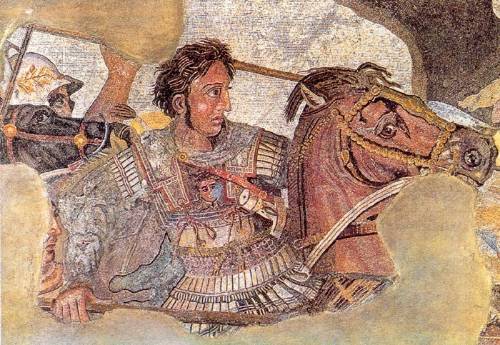
Mosaic of Alexander the Great discovered at the House of the Faun in Pompeii
In 323 BC when Alexander the Great died, (from what some believe to be poison, but a growing number of others think from ingesting bacteria filled water from the River Styx), his great empire was held together by his charisma and his force of will. The power vacuum left in his wake was too large for any man (he was a god after all, a very mortal god as it turned out) to fill. His soldiers were the best fighting men on the planet, but were weary of war, and ready to start enjoying the plunder they had accumulated from their victories. His generals were well trained and most would have made good governors of provinces. Everything was in place to begin to make the transition from war to governing during peace except that Alexander died before that transition could be accomplished.
There would be no rest for anyone.
There is something missing, a second in command, a person respected by all who could assume the mantle and continue Alexander’s plans. It goes back to the previous year, 324 BC, when Alexander’s lifelong friend Hephaestion died. Alexander looked on him as more than just a friend, some speculate they were lovers, but there is no documentation from the period to support that. Maybe that says something about us that we assume that people who are that close have to be sexually involved. Here is an example of how Alexander felt about Hephaestion.
”When Alexander and Hephaestion went together to visit the captured Persian royal family. Its senior member, the queen Sisygambis, knelt to Hephaestion to plead for their lives mistaking him for Alexander because he was the taller and both young men were wearing similar clothes. When she realized her mistake she was acutely embarrassed but Alexander reassured her with the words, "You were not mistaken, Mother; this man too is Alexander." Wikipedia quoting Diodorus, Arrian, and Curtius.
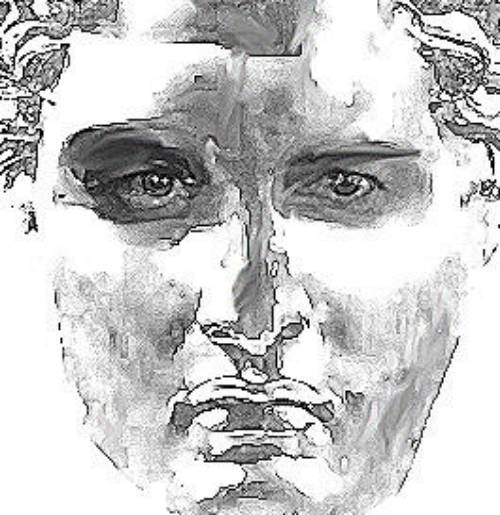
Hephaestion a Prado bronze sketch
Hephaestion was second-in-command and was well respected by the tight knit group of generals whom he would have been commanding if he had lived. Alexander had taken Stateira a daughter of Darius, as his wife, to ally himself more firmly with the Persian ruling class. He also had all of his generals take Persian wives with the idea that their offspring would be the perfect hybrids of East and West to continue to rule the world. This was extremely controversial. His Macedonian commanders still had difficulty accepting Greeks as officers in the army and they are basically cousins genetically. The idea is sound, a true attempt to create peace for generations if it could be accomplished. Creating blood alliance is not a new concept, but actually intentionally doing it with a race of people that don’t look like you and don’t even worship the same gods is truly radical for the time. With an eye to the future Alexander had Hephaestion marry Stateira’s sister Drypetis. The hope was those cousins from those unions would be able to rule Eurasia together.
When Hephaestion died Alexander mourned so deeply and so fervently that his loyal friends worried he would ever recover. It was impossible for Alexander to even think about naming Hephaestion’s successor. So maybe Hephaestion, who believed so zealously in Alexander’s plans for the future of the empire, could have held together those capable commanders that Alexander had so carefully nurtured into leaders. He certainly would have had a better chance than poor Perdiccas.
Alexander, unfortunately, was so sick that he was unable to speak from his death bed. He pressed his signet ring into the hands of Perdiccas, and by so doing elevated him from a distant third-in-command position to; ultimately, upon Alexander’s final rattling breath, control of the empire.
Alexander the Great’s death is a thunderbolt heard by the entire known world. Men who had accepted their fate to being ruled by Macedonians suddenly felt the stirring winds of opportunity. Athenians and tribes people all over Asia and Europe rose up in revolt. Perdiccas dispatched his armies to suppress these outbreaks, and by doing so gave the Generals, who commanded them, the means (an army) by which to challenge his authority.
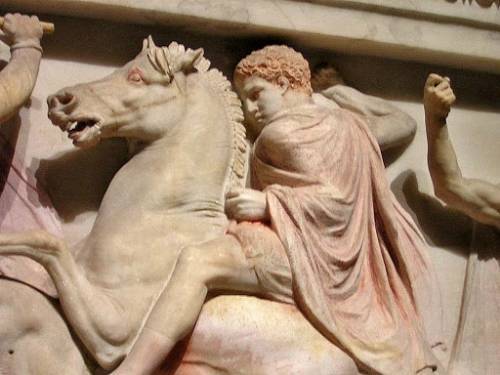
Perdiccas depicted on Alexander’s sarcophagus.
Alexander had trouble more than once with rebellion in his own ranks, and so it is no great surprise that these proud goat herders turned soldiers, these Macedonians, start to feel that they have as much right to rule as Perdiccas. Perdiccas does his best to reward these men with provinces rich with plunderable assets, but soon he finds himself killing men who were once his friends in a continuingly desperate attempt to keep control of the empire. One night he is set upon in his tent by his own knife wielding soldiers and his brief stint as ruler of the world ends.
Alexander’s older half brother, Arrhidaeus, later renamed Philip III after their father for political purposes, is proclaimed King of Macedonia, and becomes one of the many pawns passed around amongst the generals to legitimize their own ambitions. He is mentally handicapped, so severely, that he is barely functioning. Perfect candidate for some 300 BC era Karl Rove. Alexander also had three sisters. Cleopatra was a full sister. Cynnane and Thessalonice were half sisters. All attempted to find husbands amongst the leadership staff of the Macedonian army, but these men tended not to live long. As the civil war raged with changing alliances the sisters all eventually end up backing the wrong candidates and become casualties of their own bid for power. Adea, daughter of Cynnane, marries Philip III. Yes, that would be her uncle. When the royal couple are no longer useful they are both forced to take poison. The Argead line is disappearing quickly.
Alexander did have two sons. Heracles by a mistress is the oldest. Alexander IV is the son of his wife Roxana of Bactria. Once they reach their teens they become too dangerous and are strangled.
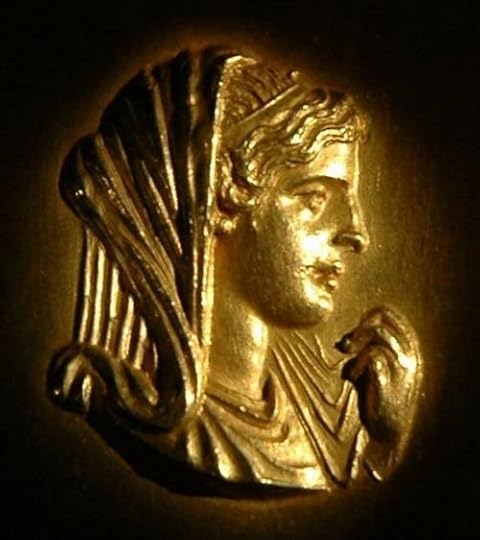
Depiction of Olympias on a gold medallion found at Abukir
Alexander’s mother Olympias staved off several attempts to kill her. She was so regal that Macedonian soldiers found it impossible to fight against her and wouldn’t even think about harming her. She took full advantage of the pageantry of her position.
”Olympias, on one side of the field, appeared in the fawn-skin wrap and ivy headdress of a bacchant, as though leading an ecstatic procession for the god Dionysus, and marched to the beat of drums.”
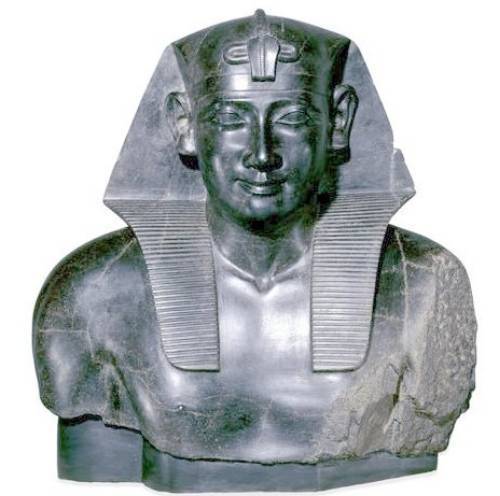
Ptolemy made the leap from Macedonian general to Pharaoh of Egypt
Ptolemy, yet another Macedonian general, takes his portion of the Alexander army to Egypt. When Alexander’s sarcophagus is travelling back to Macedon for burial Ptolemy intercepts, and steals it. He brings it back to Memphis.
Alexander's body was laid in a gold anthropoid sarcophagus that was filled with honey, which was in turn placed in a gold casket.According to Aelian, a seer called Aristander foretold that the land where Alexander was laid to rest "would be happy and unvanquishable forever".Perhaps more likely, the successors may have seen possession of the body as a symbol of legitimacy, since burying the prior king was a royal prerogative.
Absconding with Alexander’s body is a pretty good trick, but Ptolemy did something else that had an even more lasting impact on world history.
”Ptolemy rejoined his burgeoning household with its two trophy women. Thais, the beautiful Athenian courtesan who had already borne him three children, and now a new bride, Antipater’s youngest daugher, Eurydice. One brought him pleasure and the other power, but Ptolemy was still vulnerable to a third impulse, love. By this time he had taken notice of his bride’s young cousin and lady-in-waiting, a widow by the name of Berenice. Soon he made this woman his mistress, and ultimately his wife. She bore him his two heirs, Ptolemy II and Arisnoe, a brother and sister who following an old Persian royal custom, married each other. Through his children by Berenice Ptolemy founded a dynasty that ruled Egypt for almost three centuries, until their great-great-great-great-great-great-great-great granddaughter, Cleopatra VII, the lover of both Julius Caesar and Marc Anthony, killed herself by the bite of an asp.
Berenice was the original “it” girl and whatever she had, that mystical quality that made her irresistible, was also alive and well in her descendent Cleopatra VII.
There is one more general that I want to bring up. He started out life as a clerk for Alexander’s father. His name was Eumenes and he was a Greek. Alexander’s generals cared very much about the fact that Eumenes was of inferior origin, but Alexander recognized intelligence and natural talent. He promoted him from his clerk duties to leadership of a cavalry unit. After Alexander died Eumenes should have had the lifespan of a fruit fly, but the wily clerk came up with some unique ways of keeping himself alive. He won his battles, even as Perdiccas was losing his battles with Ptolemy. As his Macedonian troops began to grumble about being led by a Greek he had a shrine to Alexander built where he and the soldiers could worship.
It was bloody brilliant.
He was able, with this shrine, to give the impression that he was still being lead by Alexander and that he was not the man in charge making decisions. As long as his men felt that Alexander was still having influence over Eumenes they would follow him. He also discovered a plot by one of the other Macedonian commanders to have him killed by his own officers. Eumenes had each of his officers loan him a large sum of money. It diffused the plot because nobody wants to kill the guy that owes them money.
Eumenes was a well read, well educated individual, and obvious his intellect was far superior to even the better educated Macedonian commanders. He had observed and absorbed the very best of Alexander’s tactics and showed true brilliance on the battlefield. If Alexander had lived Eumenes would have achieved fame and would have proved to be a valuable asset not only to Alexander, but to his heir as well.
I’ve read several books on Alexander the Great, but it has been a long time since I’ve ventured back into 300 BC. This is the first book that I’ve read that covers the results of the aftermath of Alexander’s death. The commanders are brought vividly to life. James Romm also spends a significant amount of time covering the events in Athens as well. Unfortunately, due to space concerns in this review I did not discuss those wonderful segments.

It would have been curious to see if Alexander would have proved as adept at ruling a peaceful, but geographically large empire as he was conquering the world. He was very good at recognizing talent and developing men into very able commanders. He had progressive ideas about race and knew for the empire to survive that those they conquered would have to become followers and not just people to be subjugated.
It was often a point of frustration to his soldiers, and his officers that he never set up a hierarchy. Even with a solid chain of command in place the empire might have still crumbled into civil war, but without the certainty of knowing who was expected to be in charge, if the unexpected happened, there was simply no chance. All his commanders felt as equally qualified to rule as any other. Alexander trusted Hephaestion with his life, but he didn’t have that relationship with any of his other commanders and may have felt that keeping everyone else on a relatively equal footing might have kept someone from becoming too ambitious. The very type of ambition that might initiate a regime change. Without his presence the empire did not survive him.
This book is so well researched, so full of great information, so compellingly written that I would wake up in the middle of the night thinking about Craterus, Antipater, Eumenes, Olympias, Perdiccas, Antigonus One-Eye, Ptolemy, and wonder about the fate of the boy that was born to rule an empire. So let James Romm take you on a little tour of the 300 BC era. You might find yourself as enamored with these Macedonians as the kids touring Jurassic Park were with dinosaurs. Books may be theme parks for me, but with one advantage, when the electricity goes out you won’t be facing Macedonian warriors, but will be looking for a candle so you can keep reading.
If you wish to see more of my most recent book and movie reviews, visit http://www.jeffreykeeten.com
I also have a Facebook blogger page at:https://www.facebook.com/JeffreyKeeten
― Alexander the Great

Mosaic of Alexander the Great discovered at the House of the Faun in Pompeii
In 323 BC when Alexander the Great died, (from what some believe to be poison, but a growing number of others think from ingesting bacteria filled water from the River Styx), his great empire was held together by his charisma and his force of will. The power vacuum left in his wake was too large for any man (he was a god after all, a very mortal god as it turned out) to fill. His soldiers were the best fighting men on the planet, but were weary of war, and ready to start enjoying the plunder they had accumulated from their victories. His generals were well trained and most would have made good governors of provinces. Everything was in place to begin to make the transition from war to governing during peace except that Alexander died before that transition could be accomplished.
There would be no rest for anyone.
There is something missing, a second in command, a person respected by all who could assume the mantle and continue Alexander’s plans. It goes back to the previous year, 324 BC, when Alexander’s lifelong friend Hephaestion died. Alexander looked on him as more than just a friend, some speculate they were lovers, but there is no documentation from the period to support that. Maybe that says something about us that we assume that people who are that close have to be sexually involved. Here is an example of how Alexander felt about Hephaestion.
”When Alexander and Hephaestion went together to visit the captured Persian royal family. Its senior member, the queen Sisygambis, knelt to Hephaestion to plead for their lives mistaking him for Alexander because he was the taller and both young men were wearing similar clothes. When she realized her mistake she was acutely embarrassed but Alexander reassured her with the words, "You were not mistaken, Mother; this man too is Alexander." Wikipedia quoting Diodorus, Arrian, and Curtius.

Hephaestion a Prado bronze sketch
Hephaestion was second-in-command and was well respected by the tight knit group of generals whom he would have been commanding if he had lived. Alexander had taken Stateira a daughter of Darius, as his wife, to ally himself more firmly with the Persian ruling class. He also had all of his generals take Persian wives with the idea that their offspring would be the perfect hybrids of East and West to continue to rule the world. This was extremely controversial. His Macedonian commanders still had difficulty accepting Greeks as officers in the army and they are basically cousins genetically. The idea is sound, a true attempt to create peace for generations if it could be accomplished. Creating blood alliance is not a new concept, but actually intentionally doing it with a race of people that don’t look like you and don’t even worship the same gods is truly radical for the time. With an eye to the future Alexander had Hephaestion marry Stateira’s sister Drypetis. The hope was those cousins from those unions would be able to rule Eurasia together.
When Hephaestion died Alexander mourned so deeply and so fervently that his loyal friends worried he would ever recover. It was impossible for Alexander to even think about naming Hephaestion’s successor. So maybe Hephaestion, who believed so zealously in Alexander’s plans for the future of the empire, could have held together those capable commanders that Alexander had so carefully nurtured into leaders. He certainly would have had a better chance than poor Perdiccas.
Alexander, unfortunately, was so sick that he was unable to speak from his death bed. He pressed his signet ring into the hands of Perdiccas, and by so doing elevated him from a distant third-in-command position to; ultimately, upon Alexander’s final rattling breath, control of the empire.
Alexander the Great’s death is a thunderbolt heard by the entire known world. Men who had accepted their fate to being ruled by Macedonians suddenly felt the stirring winds of opportunity. Athenians and tribes people all over Asia and Europe rose up in revolt. Perdiccas dispatched his armies to suppress these outbreaks, and by doing so gave the Generals, who commanded them, the means (an army) by which to challenge his authority.

Perdiccas depicted on Alexander’s sarcophagus.
Alexander had trouble more than once with rebellion in his own ranks, and so it is no great surprise that these proud goat herders turned soldiers, these Macedonians, start to feel that they have as much right to rule as Perdiccas. Perdiccas does his best to reward these men with provinces rich with plunderable assets, but soon he finds himself killing men who were once his friends in a continuingly desperate attempt to keep control of the empire. One night he is set upon in his tent by his own knife wielding soldiers and his brief stint as ruler of the world ends.
Alexander’s older half brother, Arrhidaeus, later renamed Philip III after their father for political purposes, is proclaimed King of Macedonia, and becomes one of the many pawns passed around amongst the generals to legitimize their own ambitions. He is mentally handicapped, so severely, that he is barely functioning. Perfect candidate for some 300 BC era Karl Rove. Alexander also had three sisters. Cleopatra was a full sister. Cynnane and Thessalonice were half sisters. All attempted to find husbands amongst the leadership staff of the Macedonian army, but these men tended not to live long. As the civil war raged with changing alliances the sisters all eventually end up backing the wrong candidates and become casualties of their own bid for power. Adea, daughter of Cynnane, marries Philip III. Yes, that would be her uncle. When the royal couple are no longer useful they are both forced to take poison. The Argead line is disappearing quickly.
Alexander did have two sons. Heracles by a mistress is the oldest. Alexander IV is the son of his wife Roxana of Bactria. Once they reach their teens they become too dangerous and are strangled.

Depiction of Olympias on a gold medallion found at Abukir
Alexander’s mother Olympias staved off several attempts to kill her. She was so regal that Macedonian soldiers found it impossible to fight against her and wouldn’t even think about harming her. She took full advantage of the pageantry of her position.
”Olympias, on one side of the field, appeared in the fawn-skin wrap and ivy headdress of a bacchant, as though leading an ecstatic procession for the god Dionysus, and marched to the beat of drums.”

Ptolemy made the leap from Macedonian general to Pharaoh of Egypt
Ptolemy, yet another Macedonian general, takes his portion of the Alexander army to Egypt. When Alexander’s sarcophagus is travelling back to Macedon for burial Ptolemy intercepts, and steals it. He brings it back to Memphis.
Alexander's body was laid in a gold anthropoid sarcophagus that was filled with honey, which was in turn placed in a gold casket.According to Aelian, a seer called Aristander foretold that the land where Alexander was laid to rest "would be happy and unvanquishable forever".Perhaps more likely, the successors may have seen possession of the body as a symbol of legitimacy, since burying the prior king was a royal prerogative.
Absconding with Alexander’s body is a pretty good trick, but Ptolemy did something else that had an even more lasting impact on world history.
”Ptolemy rejoined his burgeoning household with its two trophy women. Thais, the beautiful Athenian courtesan who had already borne him three children, and now a new bride, Antipater’s youngest daugher, Eurydice. One brought him pleasure and the other power, but Ptolemy was still vulnerable to a third impulse, love. By this time he had taken notice of his bride’s young cousin and lady-in-waiting, a widow by the name of Berenice. Soon he made this woman his mistress, and ultimately his wife. She bore him his two heirs, Ptolemy II and Arisnoe, a brother and sister who following an old Persian royal custom, married each other. Through his children by Berenice Ptolemy founded a dynasty that ruled Egypt for almost three centuries, until their great-great-great-great-great-great-great-great granddaughter, Cleopatra VII, the lover of both Julius Caesar and Marc Anthony, killed herself by the bite of an asp.
Berenice was the original “it” girl and whatever she had, that mystical quality that made her irresistible, was also alive and well in her descendent Cleopatra VII.
There is one more general that I want to bring up. He started out life as a clerk for Alexander’s father. His name was Eumenes and he was a Greek. Alexander’s generals cared very much about the fact that Eumenes was of inferior origin, but Alexander recognized intelligence and natural talent. He promoted him from his clerk duties to leadership of a cavalry unit. After Alexander died Eumenes should have had the lifespan of a fruit fly, but the wily clerk came up with some unique ways of keeping himself alive. He won his battles, even as Perdiccas was losing his battles with Ptolemy. As his Macedonian troops began to grumble about being led by a Greek he had a shrine to Alexander built where he and the soldiers could worship.
It was bloody brilliant.
He was able, with this shrine, to give the impression that he was still being lead by Alexander and that he was not the man in charge making decisions. As long as his men felt that Alexander was still having influence over Eumenes they would follow him. He also discovered a plot by one of the other Macedonian commanders to have him killed by his own officers. Eumenes had each of his officers loan him a large sum of money. It diffused the plot because nobody wants to kill the guy that owes them money.
Eumenes was a well read, well educated individual, and obvious his intellect was far superior to even the better educated Macedonian commanders. He had observed and absorbed the very best of Alexander’s tactics and showed true brilliance on the battlefield. If Alexander had lived Eumenes would have achieved fame and would have proved to be a valuable asset not only to Alexander, but to his heir as well.
I’ve read several books on Alexander the Great, but it has been a long time since I’ve ventured back into 300 BC. This is the first book that I’ve read that covers the results of the aftermath of Alexander’s death. The commanders are brought vividly to life. James Romm also spends a significant amount of time covering the events in Athens as well. Unfortunately, due to space concerns in this review I did not discuss those wonderful segments.

It would have been curious to see if Alexander would have proved as adept at ruling a peaceful, but geographically large empire as he was conquering the world. He was very good at recognizing talent and developing men into very able commanders. He had progressive ideas about race and knew for the empire to survive that those they conquered would have to become followers and not just people to be subjugated.
It was often a point of frustration to his soldiers, and his officers that he never set up a hierarchy. Even with a solid chain of command in place the empire might have still crumbled into civil war, but without the certainty of knowing who was expected to be in charge, if the unexpected happened, there was simply no chance. All his commanders felt as equally qualified to rule as any other. Alexander trusted Hephaestion with his life, but he didn’t have that relationship with any of his other commanders and may have felt that keeping everyone else on a relatively equal footing might have kept someone from becoming too ambitious. The very type of ambition that might initiate a regime change. Without his presence the empire did not survive him.
This book is so well researched, so full of great information, so compellingly written that I would wake up in the middle of the night thinking about Craterus, Antipater, Eumenes, Olympias, Perdiccas, Antigonus One-Eye, Ptolemy, and wonder about the fate of the boy that was born to rule an empire. So let James Romm take you on a little tour of the 300 BC era. You might find yourself as enamored with these Macedonians as the kids touring Jurassic Park were with dinosaurs. Books may be theme parks for me, but with one advantage, when the electricity goes out you won’t be facing Macedonian warriors, but will be looking for a candle so you can keep reading.
If you wish to see more of my most recent book and movie reviews, visit http://www.jeffreykeeten.com
I also have a Facebook blogger page at:https://www.facebook.com/JeffreyKeeten

July 26, 2023
Felt in the mood for some non-fiction, so I decided to jump into this work about the death of Alexander the Great and the chaos that ensued. This was absolutely fascinating. A great choice for those who know very little about the time, but also for those who have a far deeper knowledge. James Romm is fantastic at keeping the reader in the loop as he explores the complex relationships and rivalries and conflicts that were present and emerging among the powerful figures of Alexander's empire.

May 26, 2023
Re-read May 2025: still fantastic
Just fantastic. Romm writes with the narrative style that I love reading in my nonfiction. It reads like a political thriller, though it cuts off after only the 2nd Diodachi War. Strongly recommend for anyone interested in the Alex and post-Alex time period. Romm is now up there with Everitt and Freeman as my go to historians with Goldsworthy if I want something slightly less narrative and slightly more dense.
Just fantastic. Romm writes with the narrative style that I love reading in my nonfiction. It reads like a political thriller, though it cuts off after only the 2nd Diodachi War. Strongly recommend for anyone interested in the Alex and post-Alex time period. Romm is now up there with Everitt and Freeman as my go to historians with Goldsworthy if I want something slightly less narrative and slightly more dense.

March 18, 2024
The disputes among Alexander’s contemporaries over the cause of his death make it hard to accept any evidence on its face. This is a hall-of-mirrors world where the more convincing an account seems, the more it might be suspected to be the work of clever assassins concealing their crimes. But historical research has to begin somewhere; if nothing can be trusted, nothing can be knownThe pitfalls of attempting to narrativize history are endless — facts and figures, however complete, don’t readily lend themselves to compelling three-act structures and dynamic characters — and yet, personally, its my favourite means of engaging with the subject. And a lot of the time, asking for a comprehensive history lesson and skillful storytelling is an impossible task.
Ghost on the Throne does the impossible with an almost impeccable ease, or at least, James Romm gives that appearance.
In just over three hundred pages, Romm sketches the vibrant political landscape of Alexander the Great’s empire in the third century B.C.E. With his death, the power vacuum had the remaining threads of the Argead dynasty become tangled in bitter rivalries and petty disputes until they frayed beyond utility for the major players spanning two continents.
Charting the six years after Alexander’s death, Romm ably tackles the stacked board of characters — Perdiccas, Ptolemy, Cassander, Antigonus, and especially Eumenes, whose rise and fall has a fascinatingly mythic quality in its own right — and tells the story of Alexander’s posthumously long-casting shadow with a historian’s insight but a storytellers eye.
The follies of monarchy have never felt so succinctly, entertainingly and educationally detailed. I loved it.

November 23, 2016
Ghost on the Throne: The Death of Alexander the Great and the War for Crown and Empire, by James Romm, is a quick study of the immediate aftermath of Alexander the Great's death in Persia in 322. His death was so sudden that many did not at first believe it, and many suspected foul play, with a main suspect being Antipater, the staunch Macedonian who had controlled the European homeland while Alexander was on campaign, and resented his attempts to mix Persian and Macedonian culture and royalty.
The book begins with an explanation of Alexander's empire, a massive amalgamation of conquered territories stretching from Egypt in the West, to Macedonia in the North, to modern Pakistan in the East, and through the steppes of northern Iran and Turkmenistan. His empire was massive, and controlled largely through his own personality. This was a man many whispered was a God, who had conquered all before him. His ambitions were reportedly massive. After his campaigns in India, he would tackle the Arabs across the Persian Gulf, and from their conquer Western Europe and Africa. He wished nothing more than total conquest of all lands if it was in his power. The problem with ruling by personality though, is that when the personality dies, so does the rule of law. When Alexander passed, his system of alliances, built through intermarriage with local elites, and a ruling structure of "Bodyguards" (men who had followed Alexander since the beginning and had commanded his armies) fell apart. The Bodyguards soon fell out with each other, and names like Ptolemy, Peithon, Eumenes, Antipater and Antigonus, each controlling provinces called satraps, came to blows through complex alliance systems, backstabbing, and intermarriage.
Ptolemy, probably the most famous, secured his rule in Egypt. He spurned most calls to enter the wider melee, defeated an army sent by Perdiccas, a Bodyguard, and regent to Philip III, Alexanders successor, who was mentally handicapped and thus pliant. Ptolemy went on to found a 300 year dynasty that was brought down only by the Romans. In Macedonia, Antipater struggled first with rebellion in Athens, then with a shifting alliance of Antigonus, who controlled much of Anatolia, Eumenes, a wily Greek who lacked legitimacy but was able to play general against general for a long time, Perdiccas, ruler in Persia, and Peithon, who was Satrap of Babylon.
These complex alliances saw many die, and the cast of tragedies that befell this cast of aristocrats is fascinating. Eventually, the embers of war would die down, but many of the players would be long dead, and the Empire Alexander sought to build was long dead as well. The eventual out come is as we know: Seleucid, Peithon's ally, took control of Persia and much of Syria, Palestine and Anatolia. Antipater's son, Cassander, ruled in Macedonia and Greece. Ptolemy in Egypt. The Maruya in India moved in to take back his Indian conquests. Born in the fires of war in a few decades, this Empire collapsed in war and in a similar period of time.
Romm writes a fascinating and fun narrative history of the brief period after Alexander's death. This chaotic period has a cast of characters straight out of a Game of Thrones book; alliance shift and break, marriages arranged and destroyed, people executed, money stolen and soldiers clashed. It makes for great drama. Romm admits that much of the knowledge we have of this period is filtered through what came after: Rome and what followed surely altered history to suit their purposes, and enjoyed the tale of the rise of an Empire, the tragic heroes and villains of this era, and the philosophic messages of the chaotic events. Even so, we work with what we have, and Romm has done a great job.
The book is interesting as it looks closely at the many characters in this period of history; their motivations, their maneuverings, and the potential thought process behind these moves if it is known, or if the historians of antiquity had mentioned it. Romm has done a good job keeping the speculative from the known as well, and will mention explicitly when something appears fishy or overly dramatic. Romm also lays the story out well, overlapping the narratives in chronological order, as battles take place across Europe and Asia, so that the characters can be followed from beginning to tragic end. The history and the narrative are solid here.
My one complaint with the book is the lack of a "conclusion." Although these are historical events that one can read about on a Wikipedia page or in another book, I still felt the book lacked a solid examination of the legacies of Ptolemy, the rule of Cassander and the rise of Seleucid. These Empires were massive, and had lasting impacts on the regions they controlled. Ptolemy began a 300 year dynasty in Egypt. The Seleucid Empire lasted in one form or another for centuries itself, and Macedonia was hegemonic in Greece in some form until its annexation by Rome.
Even with this lack of information to tie up the story of these interesting characters, Romm has written an interesting and accessible history of the brief period of civil war after the death of Alexander the Great. It is a quick read, and has done an excellent job balancing the many characters, their motivations, and their ultimate fate. This brief experiment in European-Asian Imperium was short lived, but its predecessors in Seleucid and Egypt would create interesting amalgamations themselves, and the story of Alexander's meteoric rise, and equally fast demise, continues to be fascinating history two thousand years later. Romm's book is a very good introductory look at the period, and is easily recommended to those who wish to read about ancient history or an engaging narrative history.
The book begins with an explanation of Alexander's empire, a massive amalgamation of conquered territories stretching from Egypt in the West, to Macedonia in the North, to modern Pakistan in the East, and through the steppes of northern Iran and Turkmenistan. His empire was massive, and controlled largely through his own personality. This was a man many whispered was a God, who had conquered all before him. His ambitions were reportedly massive. After his campaigns in India, he would tackle the Arabs across the Persian Gulf, and from their conquer Western Europe and Africa. He wished nothing more than total conquest of all lands if it was in his power. The problem with ruling by personality though, is that when the personality dies, so does the rule of law. When Alexander passed, his system of alliances, built through intermarriage with local elites, and a ruling structure of "Bodyguards" (men who had followed Alexander since the beginning and had commanded his armies) fell apart. The Bodyguards soon fell out with each other, and names like Ptolemy, Peithon, Eumenes, Antipater and Antigonus, each controlling provinces called satraps, came to blows through complex alliance systems, backstabbing, and intermarriage.
Ptolemy, probably the most famous, secured his rule in Egypt. He spurned most calls to enter the wider melee, defeated an army sent by Perdiccas, a Bodyguard, and regent to Philip III, Alexanders successor, who was mentally handicapped and thus pliant. Ptolemy went on to found a 300 year dynasty that was brought down only by the Romans. In Macedonia, Antipater struggled first with rebellion in Athens, then with a shifting alliance of Antigonus, who controlled much of Anatolia, Eumenes, a wily Greek who lacked legitimacy but was able to play general against general for a long time, Perdiccas, ruler in Persia, and Peithon, who was Satrap of Babylon.
These complex alliances saw many die, and the cast of tragedies that befell this cast of aristocrats is fascinating. Eventually, the embers of war would die down, but many of the players would be long dead, and the Empire Alexander sought to build was long dead as well. The eventual out come is as we know: Seleucid, Peithon's ally, took control of Persia and much of Syria, Palestine and Anatolia. Antipater's son, Cassander, ruled in Macedonia and Greece. Ptolemy in Egypt. The Maruya in India moved in to take back his Indian conquests. Born in the fires of war in a few decades, this Empire collapsed in war and in a similar period of time.
Romm writes a fascinating and fun narrative history of the brief period after Alexander's death. This chaotic period has a cast of characters straight out of a Game of Thrones book; alliance shift and break, marriages arranged and destroyed, people executed, money stolen and soldiers clashed. It makes for great drama. Romm admits that much of the knowledge we have of this period is filtered through what came after: Rome and what followed surely altered history to suit their purposes, and enjoyed the tale of the rise of an Empire, the tragic heroes and villains of this era, and the philosophic messages of the chaotic events. Even so, we work with what we have, and Romm has done a great job.
The book is interesting as it looks closely at the many characters in this period of history; their motivations, their maneuverings, and the potential thought process behind these moves if it is known, or if the historians of antiquity had mentioned it. Romm has done a good job keeping the speculative from the known as well, and will mention explicitly when something appears fishy or overly dramatic. Romm also lays the story out well, overlapping the narratives in chronological order, as battles take place across Europe and Asia, so that the characters can be followed from beginning to tragic end. The history and the narrative are solid here.
My one complaint with the book is the lack of a "conclusion." Although these are historical events that one can read about on a Wikipedia page or in another book, I still felt the book lacked a solid examination of the legacies of Ptolemy, the rule of Cassander and the rise of Seleucid. These Empires were massive, and had lasting impacts on the regions they controlled. Ptolemy began a 300 year dynasty in Egypt. The Seleucid Empire lasted in one form or another for centuries itself, and Macedonia was hegemonic in Greece in some form until its annexation by Rome.
Even with this lack of information to tie up the story of these interesting characters, Romm has written an interesting and accessible history of the brief period of civil war after the death of Alexander the Great. It is a quick read, and has done an excellent job balancing the many characters, their motivations, and their ultimate fate. This brief experiment in European-Asian Imperium was short lived, but its predecessors in Seleucid and Egypt would create interesting amalgamations themselves, and the story of Alexander's meteoric rise, and equally fast demise, continues to be fascinating history two thousand years later. Romm's book is a very good introductory look at the period, and is easily recommended to those who wish to read about ancient history or an engaging narrative history.
December 20, 2025
Ghost on the Throne is another fine ancient thriller from Professor James Romm, a historian who has a rare gift: he can take stories from way long ago and spin them into genuine page-turners.
This book dives into one of history’s great “what-ifs”—what happens when one of the greatest leaders of all time, Alexander the Great, dies suddenly with no clear succession plan. The answer, as Romm vividly shows, is chaos. Almost immediately, Alexander’s inner circle—his closest generals and companions—begin maneuvering for power, legitimacy, and survival. Loyalties fracture, alliances shift, and the empire Alexander carved out with astonishing speed begins to tear itself apart.
Romm excels at turning political intrigue into narrative drama. The rivalries among the Diadochi feel less like dusty textbook material and more like a high-stakes thriller filled with ambition, betrayal, and tragic miscalculation. You can practically feel the tension as these men—once united by loyalty to Alexander—start circling one another like predators. Romm makes clear that the real “ghost on the throne” is Alexander himself: even in death, his reputation, image, and supposed wishes are manipulated by those desperate to rule in his shadow.
If Plato and the Tyrant is a sharp, intimate study of ideas colliding with power, Ghost on the Throne is power unleashed—messy, violent, and uncontrollable. Same elegant storytelling, but on a much bigger, bloodier stage.
As a longtime reader of ancient history, I especially appreciated how Romm balances scholarly rigor with readability. The research is there, but it never bogs the story down. This is history that moves. That said, the sheer number of characters and shifting alliances can occasionally be hard to track—one of the reasons this lands at four stars instead of five for me. Still, that complexity also reflects the messy reality of the post-Alexander world.
One thing I’ve learned from reading Romm’s excellent ancient history books is that they really reward a bit of pre-reading. Doing some background research on the wider historical scope—key figures, timelines, and power dynamics—always helps me make deeper connections to the story Romm is telling. Because his narratives move quickly and involve complex political maneuvering, having that broader context in mind allows the drama, irony, and tragedy to land with even greater force. For me, that extra preparation turns a strong reading experience into a truly immersive one.
Overall, Ghost on the Throne is a gripping account of how quickly greatness can unravel—and how power, once unleashed, rarely passes peacefully. Another strong entry from James Romm and an easy recommendation for anyone who enjoys ancient history told with the pace and drama of a modern thriller. Sorry for my long blathering review. A lot of Romm books this year!
This book dives into one of history’s great “what-ifs”—what happens when one of the greatest leaders of all time, Alexander the Great, dies suddenly with no clear succession plan. The answer, as Romm vividly shows, is chaos. Almost immediately, Alexander’s inner circle—his closest generals and companions—begin maneuvering for power, legitimacy, and survival. Loyalties fracture, alliances shift, and the empire Alexander carved out with astonishing speed begins to tear itself apart.
Romm excels at turning political intrigue into narrative drama. The rivalries among the Diadochi feel less like dusty textbook material and more like a high-stakes thriller filled with ambition, betrayal, and tragic miscalculation. You can practically feel the tension as these men—once united by loyalty to Alexander—start circling one another like predators. Romm makes clear that the real “ghost on the throne” is Alexander himself: even in death, his reputation, image, and supposed wishes are manipulated by those desperate to rule in his shadow.
If Plato and the Tyrant is a sharp, intimate study of ideas colliding with power, Ghost on the Throne is power unleashed—messy, violent, and uncontrollable. Same elegant storytelling, but on a much bigger, bloodier stage.
As a longtime reader of ancient history, I especially appreciated how Romm balances scholarly rigor with readability. The research is there, but it never bogs the story down. This is history that moves. That said, the sheer number of characters and shifting alliances can occasionally be hard to track—one of the reasons this lands at four stars instead of five for me. Still, that complexity also reflects the messy reality of the post-Alexander world.
One thing I’ve learned from reading Romm’s excellent ancient history books is that they really reward a bit of pre-reading. Doing some background research on the wider historical scope—key figures, timelines, and power dynamics—always helps me make deeper connections to the story Romm is telling. Because his narratives move quickly and involve complex political maneuvering, having that broader context in mind allows the drama, irony, and tragedy to land with even greater force. For me, that extra preparation turns a strong reading experience into a truly immersive one.
Overall, Ghost on the Throne is a gripping account of how quickly greatness can unravel—and how power, once unleashed, rarely passes peacefully. Another strong entry from James Romm and an easy recommendation for anyone who enjoys ancient history told with the pace and drama of a modern thriller. Sorry for my long blathering review. A lot of Romm books this year!

January 28, 2022
Alexander III of Macedon, better known as Alexander the Great, was a great King, a brilliant tactical General, and a figure of awe and reverence to his men. Building on the fine Macedonian military hoplites formations used by his father, Phillip II, he added cavalry to the formation to create an unstoppable military force that conquered most the the known world.
But, Alexander was a once in a lifetime leader. The military force he created was generalled by powerful personalities who, in their own right, were also gifted generals. Once Alexander died, the remaining Generals fought for control over Alexander's Empire.
This book could have been called "The Wars of the Diadochi" (plural of Latin Diadochus, from Greek: Diádokhoi or "successors") . It follows the intense Game of Thrones that takes place between the generals of Alexander's army.
Very well written and quite interesting, this is a great book to read after reading about Alexander's life. While the Diadochi Wars were destructive to Alexander's empire, these wars helped to create the Hellenistic influence throughout the world. In fact, the best explanation is provided by the author:
"....In the years following the king's (Alexander) death, half a dozen generals would box with one another in wars fought across three continents, while half a dozen members of the royal family would wrestle for the throne. Generals and monarchs would team up for mutual expediency, then switch sides and combat each other when that was more advantageous. The contest would be a generational relay race, with military leaders handing off their standards to sons, queens passing scepters to daughters. It would be nearly a decade before winners began to emerge, and these would be a wholly different set of contestants from those who stood at the starting line, in Babylon, at the side of the dying king..."
There is an apocryphal story that Alexander, just before death, was asked to whom the empire should be passed to, answered: "To the strongest". This turned out to be true. While none would ever become a King of Kings, such as Alexander, in fact, the wars destroyed the Macedonian monarchy and their nascent empire. Instead, the "strongest" (those who had the military muscle and bravado to make themselves kings) ended up founding dynasties named after them-such as Antigonus, Ptolemy, Lysimachus, Seleucus, and Cassander.
An excellent book covering vital historical events. If you've been curious to see the whole story of the dissolution of Alexander's empire, this book is for you.
But, Alexander was a once in a lifetime leader. The military force he created was generalled by powerful personalities who, in their own right, were also gifted generals. Once Alexander died, the remaining Generals fought for control over Alexander's Empire.
This book could have been called "The Wars of the Diadochi" (plural of Latin Diadochus, from Greek: Diádokhoi or "successors") . It follows the intense Game of Thrones that takes place between the generals of Alexander's army.
Very well written and quite interesting, this is a great book to read after reading about Alexander's life. While the Diadochi Wars were destructive to Alexander's empire, these wars helped to create the Hellenistic influence throughout the world. In fact, the best explanation is provided by the author:
"....In the years following the king's (Alexander) death, half a dozen generals would box with one another in wars fought across three continents, while half a dozen members of the royal family would wrestle for the throne. Generals and monarchs would team up for mutual expediency, then switch sides and combat each other when that was more advantageous. The contest would be a generational relay race, with military leaders handing off their standards to sons, queens passing scepters to daughters. It would be nearly a decade before winners began to emerge, and these would be a wholly different set of contestants from those who stood at the starting line, in Babylon, at the side of the dying king..."
There is an apocryphal story that Alexander, just before death, was asked to whom the empire should be passed to, answered: "To the strongest". This turned out to be true. While none would ever become a King of Kings, such as Alexander, in fact, the wars destroyed the Macedonian monarchy and their nascent empire. Instead, the "strongest" (those who had the military muscle and bravado to make themselves kings) ended up founding dynasties named after them-such as Antigonus, Ptolemy, Lysimachus, Seleucus, and Cassander.
An excellent book covering vital historical events. If you've been curious to see the whole story of the dissolution of Alexander's empire, this book is for you.

December 26, 2015
Alexander the Great was the greatest general the world has ever known. He took on the superpower of his time and utterly destroyed it. He marched his troops to the ends of the earth, only turning back when they rebelled. And all of this by the age of 33.
But then Alexander dies.
The throne passes to Alexanders mentally impaired half brother (Alexander had eliminated other male rivals as was the custom in extremely violent Macedonian politics) and to the yet unborn Alexander IV. But the real power lies with Alexanders senior commanders.
This book charts the rise and fall of these generals as they tussle for supremacy, at first in the name of the Argead royal line, but increasingly as independent rulers of their own emerging states. The successor states endure until destroyed by the ravenous Roman empire some two to three centuries later.
Romm does a good job of tying together the strands of the fragmentary histories of the time, which are often received by us at second and third hand.
We see canny Ptolemy, who seizes the rich flank province of Egypt and hunkers down whilst others fight over Asia and the Macedonian homeland. We see Eumenes who rises from being a scribe to become perhaps the ablest general of them all, but who is hampered by his Greekness and despised by his Macedonian "betters". We see Olympias and Adea, fierce Macedonian queens. Most poignant of all we see Alexander IV, born to rule but doomed to be a pawn in the hands of the successor generals until he outlives his usefulness and is murdered by Cassander.
But then Alexander dies.
The throne passes to Alexanders mentally impaired half brother (Alexander had eliminated other male rivals as was the custom in extremely violent Macedonian politics) and to the yet unborn Alexander IV. But the real power lies with Alexanders senior commanders.
This book charts the rise and fall of these generals as they tussle for supremacy, at first in the name of the Argead royal line, but increasingly as independent rulers of their own emerging states. The successor states endure until destroyed by the ravenous Roman empire some two to three centuries later.
Romm does a good job of tying together the strands of the fragmentary histories of the time, which are often received by us at second and third hand.
We see canny Ptolemy, who seizes the rich flank province of Egypt and hunkers down whilst others fight over Asia and the Macedonian homeland. We see Eumenes who rises from being a scribe to become perhaps the ablest general of them all, but who is hampered by his Greekness and despised by his Macedonian "betters". We see Olympias and Adea, fierce Macedonian queens. Most poignant of all we see Alexander IV, born to rule but doomed to be a pawn in the hands of the successor generals until he outlives his usefulness and is murdered by Cassander.

January 24, 2013
Ghost on the Throne is a pretty in-depth analysis of the years after the death of Alexander the Great, and the struggles of those close to him to maintain the empire he built and become his successor. I studied Alexander himself at A Level, but we never went beyond his death, so this was mostly new to me -- some familiar names, but otherwise, a lot of new information. It's well presented and easy to follow, though, even if you don't know any familiar names: James Romm works hard to minimise any confusion, even when there are multiple people of the same name.
It's a relatively close look at the people who attempted to take Alexander's throne -- or at least, his power -- after him, and as such doesn't stray far from his inner circle and close relations. There's some sense of the serious ramifications of Alexander's death for the whole of the empire he conquered and ruled, but for the most part it focuses on Greece and Macedon, and those who knew Alexander in life and could claim a direct link to his power.
It's a relatively close look at the people who attempted to take Alexander's throne -- or at least, his power -- after him, and as such doesn't stray far from his inner circle and close relations. There's some sense of the serious ramifications of Alexander's death for the whole of the empire he conquered and ruled, but for the most part it focuses on Greece and Macedon, and those who knew Alexander in life and could claim a direct link to his power.

January 12, 2022
I was recommended the book as a way to make sense of the extremely complex and convoluted situation that followed the death of Alexander the Great and the struggle between his diadochoi. It didn't help that much; rather, it confirmed the idea that the situation was extremely complex. It does give you an idea of the time and forces that participated in the struggle; the variety of sources, which sometimes say nothing at all about important things, and sometimes offer contradictory accounts, is also staggering; it is explained, to a degree, in the notes.

March 25, 2023
What more's to say other than that this narrative, honest to a fault when it comes to the most unfortunate paucity of first- or even second-hand sources, documents the quite rapid descent into human darkness surrounding the death of Alexander III of Macedon, the sole unifying figure for a freshly and bloodily unified "World State". Highly recommended and sadly plausible.

Read
October 2, 2020A book about the events that followed Alexander the Great's death and led to the break up of his conquests and the establishment of the Hellenistic kingdoms of the Diadochi (Successors).
The book illuminates various aspects of these years of strife and highlights the personalities and stories of the most important people of the age.
It sadly ends a bit prematurely in my opinion, I think it should cover at least the first years of the kingdoms of the successors to be complete.
But it is unique in that it tells a story that seldom gets told and it is certainly well researched and written.
I found out about this book through The History Book Club here on goodreads which I totally recommend to every history lover out there. Many thanks to the club's members that organized the read and participated in the discussion.
You can watch my video review at Ex Libris 163.
The book illuminates various aspects of these years of strife and highlights the personalities and stories of the most important people of the age.
It sadly ends a bit prematurely in my opinion, I think it should cover at least the first years of the kingdoms of the successors to be complete.
But it is unique in that it tells a story that seldom gets told and it is certainly well researched and written.
I found out about this book through The History Book Club here on goodreads which I totally recommend to every history lover out there. Many thanks to the club's members that organized the read and participated in the discussion.
You can watch my video review at Ex Libris 163.
October 29, 2021
During his life, Alexander the Great’s presence and actions defined his era, and it was his death and his absence that defined the era that came afterwards. After conquering much of the known world, Alexander died at the age of 32 with no clear successor, leading to a great power struggle. His generals, bodyguards, family members, friends, veterans and even his secretary all participated in the epic conflict that immediately followed his death. With fighting already breaking out literally over his corpse mere days after his death. It soon became clear that the only thing holding the empire intact was Alexander himself, as many rivalries and enemies started to show themselves.
“It was as though the sun had disappeared from the solar system; planets and moons began spinning crazily in new directions, often crashing into each other with terrifying force.”
Alexander dies in the beginning of this book, yet his corpse and his ‘ghost’ still play a huge role throughout the book, his ‘ghost’ inspiring generals to work together or his corpse being used as a tool for legitimacy. The book is full of many strong and interesting characters, such as Antigonus the One-Eyed, Phocion, Perdiccas, Ptolemy, Alexander’s secretary Eumenes or Alexander’s mother Olympias. The battles and power struggles between all of these characters are even more exciting after reading a biography of Alexander, where many of these people are in the background.
This book is superbly well-written and James Romm does a great job at making this book both exciting and informative. I wish more history books were written like this one, as Romm makes these people that died 2300 years ago feel alive. The way he writes almost makes it feel like a fun fiction book or some epic tv series, Romm has a great way of writing, which sometimes almost feels poetic. Throughout the book I felt many different emotions, even when I knew how it would end I could still get excited, sad, angry and disgusted, sometimes I even laughed. He does a marvellous job at making this great time period, full of betrayals, miracles, backstabbings, battles, murders, tricks and surprises readable and very fun.
This is the first book that I’ve read twice so far and I can definitely say that it is my favourite book of all time. I would recommend this book to anyone, even to those who don’t like history, as the way this story is written is simply great and entertaining throughout the whole book. The only thing that I don’t like about this book, is that it isn’t longer! It would have been great if the rise of Seleucus and the other Wars of the Diadochi were included, but I understand that this would greatly increase the size of the book. I look forward to reading more by James Romm. Five stars!
“It was as though the sun had disappeared from the solar system; planets and moons began spinning crazily in new directions, often crashing into each other with terrifying force.”
Alexander dies in the beginning of this book, yet his corpse and his ‘ghost’ still play a huge role throughout the book, his ‘ghost’ inspiring generals to work together or his corpse being used as a tool for legitimacy. The book is full of many strong and interesting characters, such as Antigonus the One-Eyed, Phocion, Perdiccas, Ptolemy, Alexander’s secretary Eumenes or Alexander’s mother Olympias. The battles and power struggles between all of these characters are even more exciting after reading a biography of Alexander, where many of these people are in the background.
This book is superbly well-written and James Romm does a great job at making this book both exciting and informative. I wish more history books were written like this one, as Romm makes these people that died 2300 years ago feel alive. The way he writes almost makes it feel like a fun fiction book or some epic tv series, Romm has a great way of writing, which sometimes almost feels poetic. Throughout the book I felt many different emotions, even when I knew how it would end I could still get excited, sad, angry and disgusted, sometimes I even laughed. He does a marvellous job at making this great time period, full of betrayals, miracles, backstabbings, battles, murders, tricks and surprises readable and very fun.
This is the first book that I’ve read twice so far and I can definitely say that it is my favourite book of all time. I would recommend this book to anyone, even to those who don’t like history, as the way this story is written is simply great and entertaining throughout the whole book. The only thing that I don’t like about this book, is that it isn’t longer! It would have been great if the rise of Seleucus and the other Wars of the Diadochi were included, but I understand that this would greatly increase the size of the book. I look forward to reading more by James Romm. Five stars!

March 23, 2016
How good is this?
How good is cake?
I am always amazed that so many know so little about Alexander the Great or the Wars of the Successors. Probably Arrian's Anabasis is a good place to start - doesn't that filter through your heart and brain like beach sand through your fingers? Great stuff. Let me refocus on this utterly perfect (caveat coming) masterpiece of history-drama.
Alexander over runs a big chunk of the world, dies with a mentally disabled half brother of doubtful lineage, a pregnant foreign wife (all non-Greeks are to the Macedonians, mere barbarians), and a plethora of amazingly skilled and experienced generals.
Generals with battle hardened veterans.
They'll all get along great, right?
Nah.
And so the wars begin, and this book covers everything from Alexander's death to roughly the middle of the successor wars, which doesn't diminish it because it ends right around the "OVERTURE" pause, the way we might divide WWI & WII as if they are something other than one war with 2 parts. Read this, it is brilliantly researched and written like a Ken Follet page turner. 100 Stars.
How good is cake?
I am always amazed that so many know so little about Alexander the Great or the Wars of the Successors. Probably Arrian's Anabasis is a good place to start - doesn't that filter through your heart and brain like beach sand through your fingers? Great stuff. Let me refocus on this utterly perfect (caveat coming) masterpiece of history-drama.
Alexander over runs a big chunk of the world, dies with a mentally disabled half brother of doubtful lineage, a pregnant foreign wife (all non-Greeks are to the Macedonians, mere barbarians), and a plethora of amazingly skilled and experienced generals.
Generals with battle hardened veterans.
They'll all get along great, right?
Nah.
And so the wars begin, and this book covers everything from Alexander's death to roughly the middle of the successor wars, which doesn't diminish it because it ends right around the "OVERTURE" pause, the way we might divide WWI & WII as if they are something other than one war with 2 parts. Read this, it is brilliantly researched and written like a Ken Follet page turner. 100 Stars.

Read
November 24, 2014Well written, well researched, readable, and detailed, with a very human and political focus. That's not a flaw, and it's more what I want than a military focus, but there's absolutely nothing here on the wider issues. If you want to read one book on the immediate aftermath of Alexander, read this one, but be aware it may leave you wanting to read more than one book on the subject.
I want a really good book on the Hellenistic period. It could be a really long good book, that would be just fine, and if somebody wanted to look at art and tech and daily life that would be wonderful. It tends to fall between stools -- histories of classical Greece end with Alexander, and histories of the Romans start with the Romans.
I want a really good book on the Hellenistic period. It could be a really long good book, that would be just fine, and if somebody wanted to look at art and tech and daily life that would be wonderful. It tends to fall between stools -- histories of classical Greece end with Alexander, and histories of the Romans start with the Romans.

January 21, 2012
Good book. History books in general are not that well paced, but this one was written in a style that held my attention, plus the source material is full of plots and intrigue, which makes this a far better than normal history book. If this book was fiction, i'd complain that too many characters were introduced just to be killed off, but this isn't fiction and says something about the chaos of the period.

September 22, 2026
This work covers the contest for power among Alexander's generals in the aftermath of his death. Though this struggle for supremacy would later be passed on to their sons and grandsons, this account is restricted to those who, once as his subordinates, fought and marched behind the self-proclaimed son of Zeus.
Alexander led his army to innumerable victories, yet despite his vast conquests, his empire rested entirely on his personal authority. If anything, his leadership was based more on a sort of cult of personality for It lacked a sustainable central institution and (most critically) he left no legal framework for succession.
While alive, and through sheer charisma and great leadership skills, he kept his senior staff committed to him no matter how reluctantly and despite the intensity of their personality clashes. But once dead, his vision of a harmonious world empire quickly imploded into a Hobbesian factional struggle of all against all led by generals who lacked Alexander's combination of personal authority, megalomania, and luck, for none could hold the empire and the army together.
Or as the author aptly puts it:
“It was as though the sun had disappeared from the solar system; planets and moons began spinning crazily in new directions, often crashing into each other with terrifying force.”
We get to have a bird's-eye view of the struggle as the narrative rotates between different theaters (Europe, Asia, and Africa) and shifts focus between the various players as events gradually unfold in this contest for power.
Amongst other things, the account takes us through the changing fortunes of Eumenes (the Greek bookkeeper turned general turned outlaw) and Antigonus, the one-eyed general, in a roller coaster ride that eventually culminates in the final confrontation between their armies. The narrative then closes with the end of the Argead royal line and the systematic murder of Alexander's family, with his wife Roxane and the teenage Alexander IV receiving the 'Ipatiev House of Special Purpose' treatment (minus the Bolshevik firing squad).
I found this account to be a digestible introduction to the First and Second Wars of the Diadochi, even though its fragmented focus requires a further specialized treatment of each figure involved (On a side note, I really wanted to learn more about that greatest and probably most consequential baggage train hijacking of classical antiquity).
There is no need here to repeat the oft-reiterated cliché that there were many points and junctures at which history could have turned out differently. But being a cliché doesn't exclude its validity. If it wasn't for the jealousy, ambition, love of money, etc., of most of the figures involved, things could have happened differently, and Alexander's bloodline might have survived. And who knows? Probably the empire might have held together in one piece. Or maybe we must go back to the ultimate source from which everything branched out: the lack of a clear successor for Alexander in his lifetime. As Ian Worthington, who wrote a fine account of the achievements and legacy of both Alexander and his father, puts it:
"The ultimate reason for the collapse [of the Macedonian empire] had nothing to do with its size or the problems associated with a multicultural subject population, such as plagued the Romans; rather, Alexander did not have a successor in place."
One may be allowed to see in the clashes between Alexander's generals marks symptomatic of the stubbornness of the old pre-Achaemenid world order trying to reassert itself. Maybe it was Alexander's campaigning that had woken it from its long slumber. Maybe it was him laboriously weaving different lands and cultural centers into a single superstate that finally did it thus resurrecting something that for long had been the natural order of things. Perhaps it was unnatural for the fates, religions, cultures, and social customs of so many peoples to be bound together by the will of so few Macedonians. Maybe those ancient fault lines had always been there and only began to reappear and reassert themselves the moment he was out of the picture, as the world Alexander conquered began to knit itself into new configurations. The regional power blocks and the multipolar world before Cyrus the Great were reborn once more, only this time manifested in the Hellenistic kingdoms carved up by his successors.
Rating:4.5/5.
Alexander led his army to innumerable victories, yet despite his vast conquests, his empire rested entirely on his personal authority. If anything, his leadership was based more on a sort of cult of personality for It lacked a sustainable central institution and (most critically) he left no legal framework for succession.
While alive, and through sheer charisma and great leadership skills, he kept his senior staff committed to him no matter how reluctantly and despite the intensity of their personality clashes. But once dead, his vision of a harmonious world empire quickly imploded into a Hobbesian factional struggle of all against all led by generals who lacked Alexander's combination of personal authority, megalomania, and luck, for none could hold the empire and the army together.
Or as the author aptly puts it:
“It was as though the sun had disappeared from the solar system; planets and moons began spinning crazily in new directions, often crashing into each other with terrifying force.”
We get to have a bird's-eye view of the struggle as the narrative rotates between different theaters (Europe, Asia, and Africa) and shifts focus between the various players as events gradually unfold in this contest for power.
Amongst other things, the account takes us through the changing fortunes of Eumenes (the Greek bookkeeper turned general turned outlaw) and Antigonus, the one-eyed general, in a roller coaster ride that eventually culminates in the final confrontation between their armies. The narrative then closes with the end of the Argead royal line and the systematic murder of Alexander's family, with his wife Roxane and the teenage Alexander IV receiving the 'Ipatiev House of Special Purpose' treatment (minus the Bolshevik firing squad).
I found this account to be a digestible introduction to the First and Second Wars of the Diadochi, even though its fragmented focus requires a further specialized treatment of each figure involved (On a side note, I really wanted to learn more about that greatest and probably most consequential baggage train hijacking of classical antiquity).
There is no need here to repeat the oft-reiterated cliché that there were many points and junctures at which history could have turned out differently. But being a cliché doesn't exclude its validity. If it wasn't for the jealousy, ambition, love of money, etc., of most of the figures involved, things could have happened differently, and Alexander's bloodline might have survived. And who knows? Probably the empire might have held together in one piece. Or maybe we must go back to the ultimate source from which everything branched out: the lack of a clear successor for Alexander in his lifetime. As Ian Worthington, who wrote a fine account of the achievements and legacy of both Alexander and his father, puts it:
"The ultimate reason for the collapse [of the Macedonian empire] had nothing to do with its size or the problems associated with a multicultural subject population, such as plagued the Romans; rather, Alexander did not have a successor in place."
One may be allowed to see in the clashes between Alexander's generals marks symptomatic of the stubbornness of the old pre-Achaemenid world order trying to reassert itself. Maybe it was Alexander's campaigning that had woken it from its long slumber. Maybe it was him laboriously weaving different lands and cultural centers into a single superstate that finally did it thus resurrecting something that for long had been the natural order of things. Perhaps it was unnatural for the fates, religions, cultures, and social customs of so many peoples to be bound together by the will of so few Macedonians. Maybe those ancient fault lines had always been there and only began to reappear and reassert themselves the moment he was out of the picture, as the world Alexander conquered began to knit itself into new configurations. The regional power blocks and the multipolar world before Cyrus the Great were reborn once more, only this time manifested in the Hellenistic kingdoms carved up by his successors.
Rating:4.5/5.

March 28, 2015
Who knew how exciting the events of the fourth century BC could be? Most of us have a dim idea of Alexander the Great—conqueror of Greece and points East, all the way to India. But it’s a pretty dim idea. And most of us have very little idea of what happened in the classical world after Alexander and before Julius Caesar. Perhaps we’re vaguely aware that the Egyptian Ptolemaic dynasty was started by one of Alexander’s lieutenants, who took that part of Alexander’s empire, and that the famous Cleopatra wasn’t Egyptian in the least. But mostly our awareness is a blank page. This book fills in a small part of that page.
The basic frame of the book is the apocryphal story that Alexander, when dying and asked which of his lieutenants should succeed him, muttered “To the strongest.” Even though that’s almost certainly not true, his lieutenants certainly acted as if it was. This book chronicles that struggle, of the Diadochi, Alexander’s “successors,” and does an outstanding job. The author, James Romm, does an amazing job of sorting out conflicting and incomplete records (noting that many details are contradicted in the ancient sources), yet making the entire story, which sweeps across an enormous span of space and peoples, flow.
A wide range of indelible characters is here. First, the Greeks, such as Phocion, senior statesman and general of Athens, the eternal balancing moderate, overthrown in the end and executed by a fickle democratic electorate, as so often happened in the history of Athens. And Aristotle, tainted in Athenian eyes by his association with Macedon and similarly forced to flee by the Athenian democratic mob. Second, the Macedonian “successors,” all fighting each other, such as Ptolemy, who wisely holed up in Egypt, a defensible part of the fragmented empire, and lived to tell the tale, and Antigonus, known as One-Eye from the crossbow bolt he took in the face one morning and fought without removing the bolt all that day, who ultimately died in battle at the age of 81. Third, the family of Alexander, all women, ultimately exterminated but for a time extremely successful at using the legitimacy of their blood to manipulate pretenders to the throne: Olympias, Alexander’s mother; Cleopatra, his sister; and Adea Eurydice, his grand-niece. And, finally, wild cards like clever Eumenes, one of whose tricks give the book its name—he was continuously disrespected as a former clerk and not a Macedonian, but always outperformed, as they say, nearly winning control of the entire empire but falling short, which meant, of course, getting killed. (As to the Ghost on the throne: Eumenes got people to follow him by dressing up an empty throne with Alexander’s gear and armor and calling on his presence, which he convinced others favored his path.)
In addition to characters, the book is full of odd yet vibrant details, such as how the corpse of Alexander was not buried where he wished, at the obscure and distant Oracle of Amon in Egypt. Instead, it was put in a giant golden wagon and shuttled around, leading to its being seized by one pretender or another for use as a talisman. Probably not what Alexander imagined.
My only negative comment is not a criticism of the book. Despite the excellence of the writing, it’s very hard to remember the details, even a few weeks after reading. This is because I, like most people, have little existing knowledge and little frame of reference for the people covered by the book, and so almost all I know about the topics covered is this book. Without more, whether existing knowledge or reinforcement through casual reading about the topic (as happens with, say, Caesar), it’s hard to remember the details. But that’s just a function of one’s memory and knowledge, and hardly the author’s fault.
The basic frame of the book is the apocryphal story that Alexander, when dying and asked which of his lieutenants should succeed him, muttered “To the strongest.” Even though that’s almost certainly not true, his lieutenants certainly acted as if it was. This book chronicles that struggle, of the Diadochi, Alexander’s “successors,” and does an outstanding job. The author, James Romm, does an amazing job of sorting out conflicting and incomplete records (noting that many details are contradicted in the ancient sources), yet making the entire story, which sweeps across an enormous span of space and peoples, flow.
A wide range of indelible characters is here. First, the Greeks, such as Phocion, senior statesman and general of Athens, the eternal balancing moderate, overthrown in the end and executed by a fickle democratic electorate, as so often happened in the history of Athens. And Aristotle, tainted in Athenian eyes by his association with Macedon and similarly forced to flee by the Athenian democratic mob. Second, the Macedonian “successors,” all fighting each other, such as Ptolemy, who wisely holed up in Egypt, a defensible part of the fragmented empire, and lived to tell the tale, and Antigonus, known as One-Eye from the crossbow bolt he took in the face one morning and fought without removing the bolt all that day, who ultimately died in battle at the age of 81. Third, the family of Alexander, all women, ultimately exterminated but for a time extremely successful at using the legitimacy of their blood to manipulate pretenders to the throne: Olympias, Alexander’s mother; Cleopatra, his sister; and Adea Eurydice, his grand-niece. And, finally, wild cards like clever Eumenes, one of whose tricks give the book its name—he was continuously disrespected as a former clerk and not a Macedonian, but always outperformed, as they say, nearly winning control of the entire empire but falling short, which meant, of course, getting killed. (As to the Ghost on the throne: Eumenes got people to follow him by dressing up an empty throne with Alexander’s gear and armor and calling on his presence, which he convinced others favored his path.)
In addition to characters, the book is full of odd yet vibrant details, such as how the corpse of Alexander was not buried where he wished, at the obscure and distant Oracle of Amon in Egypt. Instead, it was put in a giant golden wagon and shuttled around, leading to its being seized by one pretender or another for use as a talisman. Probably not what Alexander imagined.
My only negative comment is not a criticism of the book. Despite the excellence of the writing, it’s very hard to remember the details, even a few weeks after reading. This is because I, like most people, have little existing knowledge and little frame of reference for the people covered by the book, and so almost all I know about the topics covered is this book. Without more, whether existing knowledge or reinforcement through casual reading about the topic (as happens with, say, Caesar), it’s hard to remember the details. But that’s just a function of one’s memory and knowledge, and hardly the author’s fault.

May 11, 2012
This is effectively the non-fiction version of Mary Renault's Funeral Games. It follows the collapse of Alexander the Great's empire following his unexpected death at the age of 32, the bitter factionalism and in-fighting between his loyal Companions, his regent, his sister and mother as they all sought to take up Alexander's mantle and control his empire.
Alexander was such a titanic figure, an inspirational leader and warrior, and his death left an immense vacuum. His empire was held together by little more than the force of his will: it was too new to have developed the kind of Greek-Asian fusion that he dreamed of, and his only heirs were an as-yet unborn son, born to a woman the majority of Macedonians considered little more than a barbarian concubine, and a 'mentally feeble' adult half-brother who suffered from epilepsy. Both heirs had their supporters, and it was often in the name of one or other that the Companions made their play for control of the empire.
This is an excellent book, engaging, well-written, managing to cover a vast panolopy of characters cogently, but it is marred by a few easily-solved editing issues. For example, if the author used the phrase 'old man Antipater' once he used it a thousand times. I get it. Antipater was old. There was only one Antipater; the author didn't need to use this qualifier as a means of distinguishing from another Antipater, as he occasionally needs to with the various Nicanors. And almost every time he mentions India he adds in the explanation that this is now modern Pakistan. I got it the first time. And the second. And the third.
Alexander was such a titanic figure, an inspirational leader and warrior, and his death left an immense vacuum. His empire was held together by little more than the force of his will: it was too new to have developed the kind of Greek-Asian fusion that he dreamed of, and his only heirs were an as-yet unborn son, born to a woman the majority of Macedonians considered little more than a barbarian concubine, and a 'mentally feeble' adult half-brother who suffered from epilepsy. Both heirs had their supporters, and it was often in the name of one or other that the Companions made their play for control of the empire.
This is an excellent book, engaging, well-written, managing to cover a vast panolopy of characters cogently, but it is marred by a few easily-solved editing issues. For example, if the author used the phrase 'old man Antipater' once he used it a thousand times. I get it. Antipater was old. There was only one Antipater; the author didn't need to use this qualifier as a means of distinguishing from another Antipater, as he occasionally needs to with the various Nicanors. And almost every time he mentions India he adds in the explanation that this is now modern Pakistan. I got it the first time. And the second. And the third.

July 26, 2020
This book was on the reading list for Goodread’s history reading group. I am not sure when it meets to discuss the book.
This book is about what happened after Alexander the Great died. The time span covers roughly between 323 BC to 308 BC. His empire spanned 3 continents from Greece, Egypt and land covering west to India.
Alexander’s death reached all parts of the empire within one week. Amazing, considering no internet. He never appointed a successor. Thus, confusion ensued amongst his bodyguards and generals on appointing the next leader of the empire.
Thus the civil wars begin. We read about alliances, broken alliances, murders, power grabs, greed and military victories/losses. This continues until the empire is broken into separate components with its own leaders. I can’t help
but believe this set a template for the Roman Empire’ gyrations.
The author, James Romm did a fantastic job in researching and writing this book. Can’t help but think that it is a novel rather than factual history.
This book is about what happened after Alexander the Great died. The time span covers roughly between 323 BC to 308 BC. His empire spanned 3 continents from Greece, Egypt and land covering west to India.
Alexander’s death reached all parts of the empire within one week. Amazing, considering no internet. He never appointed a successor. Thus, confusion ensued amongst his bodyguards and generals on appointing the next leader of the empire.
Thus the civil wars begin. We read about alliances, broken alliances, murders, power grabs, greed and military victories/losses. This continues until the empire is broken into separate components with its own leaders. I can’t help
but believe this set a template for the Roman Empire’ gyrations.
The author, James Romm did a fantastic job in researching and writing this book. Can’t help but think that it is a novel rather than factual history.

January 6, 2023
"They would at least know that somewhere at the heart of the mound, wrapped in purples and encased in gold and silver, the bones of the last Argeads lay at peace, in darkness and silence. Absent the corpse of Alexander himself, these were all that remained to them of the monarchy that had made them masters of the world."
This book is like Game of Thrones, but real life (and better than Game of Thrones because it actually has an ending).
If you want to read about warring generals, betrayals, conspiracies, murder, alliances, schemes, and battle upon battle, all playing out under the shadow of Alexander the Great, the ghostly king of the known world, this book is for you. There are plot twists upon plot twists, and this is history! There's even an Arya-like character in the mix - Adea, the teenage would-be queen who dared to stand up to seasoned soldiers and generals.
My favorite figure is Eumenes, the clever Greek who rose in status from a scribe in Alexander's army, to a skilled general, to a defender of the Argead royals. He is one of the few who never wavered from Alexander's cause, even when others pursued the diadem in their own interests.
An amazing, fascinating read.
This book is like Game of Thrones, but real life (and better than Game of Thrones because it actually has an ending).
If you want to read about warring generals, betrayals, conspiracies, murder, alliances, schemes, and battle upon battle, all playing out under the shadow of Alexander the Great, the ghostly king of the known world, this book is for you. There are plot twists upon plot twists, and this is history! There's even an Arya-like character in the mix - Adea, the teenage would-be queen who dared to stand up to seasoned soldiers and generals.
My favorite figure is Eumenes, the clever Greek who rose in status from a scribe in Alexander's army, to a skilled general, to a defender of the Argead royals. He is one of the few who never wavered from Alexander's cause, even when others pursued the diadem in their own interests.
An amazing, fascinating read.

April 15, 2016
If you want to read about Alexander the Great, the available scholarship is endless. You could spend the rest of your life doing nothing but reading, and you would never get through it all. Then, the guy dies, and all of sudden all the scholars go on vacation. There is next to nothing written about the civil wars and dynastic upheavals that rocked the known world until Rome finally showed up and put a stop to it at Pydna in 168 B.C.
And this is a damn shame, because that century and a half is fascinating. We're talking Game of Thrones/Sopranos levels of scheming, battles, marriage-alliances, crosses and double-crosses and political scheming. In the hands of an able narrator, one who gets their obligation to not just relay facts and analysis but to TELL A STORY, it's every bit as engrossing as prime time TV.
I'm thrilled to say that James Romm is such a narrator. Ghost on the Throne is underpinned by the best scholarship, and Romm's command of the sources (and of the language, as most of the translations are his own) is absolutely first rate. But Romm also understands his obligations as a narrator, and aims to make his work accessible to *all*, which is what the best history does.
Ghost on the Throne is the kind of book that a Ph.D. student can pick up and use as source material, and it is also the kind of book that a lay reader with absolutely no classics background can pick up and just read, engrossed by Romm's excellent prose style and instinctive use of story beats. Romm has a novelist's feel for drawing out the human drama in the history, and making it resonate for people living in a time so different from the one examined, that we might as well be a different species.
Such a great book, the kind that leaves you with a sad feeling, because you know it'll be a long, long time before you can find anything to rival it. Check it out immediately if not sooner.
And this is a damn shame, because that century and a half is fascinating. We're talking Game of Thrones/Sopranos levels of scheming, battles, marriage-alliances, crosses and double-crosses and political scheming. In the hands of an able narrator, one who gets their obligation to not just relay facts and analysis but to TELL A STORY, it's every bit as engrossing as prime time TV.
I'm thrilled to say that James Romm is such a narrator. Ghost on the Throne is underpinned by the best scholarship, and Romm's command of the sources (and of the language, as most of the translations are his own) is absolutely first rate. But Romm also understands his obligations as a narrator, and aims to make his work accessible to *all*, which is what the best history does.
Ghost on the Throne is the kind of book that a Ph.D. student can pick up and use as source material, and it is also the kind of book that a lay reader with absolutely no classics background can pick up and just read, engrossed by Romm's excellent prose style and instinctive use of story beats. Romm has a novelist's feel for drawing out the human drama in the history, and making it resonate for people living in a time so different from the one examined, that we might as well be a different species.
Such a great book, the kind that leaves you with a sad feeling, because you know it'll be a long, long time before you can find anything to rival it. Check it out immediately if not sooner.

August 16, 2023
Read this on a whim after hearing it mentioned in a podcast and man oh man I loved every bit of it.
Ghost on the Throne is a study by James Romm that covers the 6 years following the death of Alexander the Great. In the intervening years many players came forward to fill the void left by the Macedonian conqueror; among these are Perdicus, Eumenese and Antigonus.
The underlying theme, supported by history is that Alexander quite literally ran the Hellenik empire from the grave. Every one of the players believed they were the one favored by Alexander to take the throne. Many of them literally worshiping him as a God in order to hold their armies together. In the end, no single man was able to establish himself alone on the throne. The empire was divided into spheres of influence among famous names, Seleucus, Antigonus, Ptolemy, Casander and Lysimaghus. Like all Hellenik culture, these spheres would spend much of their time fighting each other, eventually toppled by a much more unified force in the Romans over the course of the last 2 centuries BCE.
I highly suggest you take a look at this study if the Hellenik world interests you. I find it one of the most fascinating times in history.
Ghost on the Throne is a study by James Romm that covers the 6 years following the death of Alexander the Great. In the intervening years many players came forward to fill the void left by the Macedonian conqueror; among these are Perdicus, Eumenese and Antigonus.
The underlying theme, supported by history is that Alexander quite literally ran the Hellenik empire from the grave. Every one of the players believed they were the one favored by Alexander to take the throne. Many of them literally worshiping him as a God in order to hold their armies together. In the end, no single man was able to establish himself alone on the throne. The empire was divided into spheres of influence among famous names, Seleucus, Antigonus, Ptolemy, Casander and Lysimaghus. Like all Hellenik culture, these spheres would spend much of their time fighting each other, eventually toppled by a much more unified force in the Romans over the course of the last 2 centuries BCE.
I highly suggest you take a look at this study if the Hellenik world interests you. I find it one of the most fascinating times in history.
This entire review has been hidden because of spoilers.

July 12, 2020
From 325BC when he invaded the Indus Valley up to his death in 323BC, Alexander the Great's conquests would encompass Europe, North Africa, and part of Asia. Such Empire was massive; its sheer size alone had never been seen before, and would never be seen again up until the modern era. Yet, under his command, it barely managed to last a couple of years only. Upon his death indeed, his successors would engage in such bitter in-fighting, that in a generation alone (a breath taking speed historically speaking) it will all collapse.
Now, how could they mess that up so badly? How come the men who had served and arisen under the command of one of the ablest military conqueror the world had ever seen, sabotage his heritage to such a baffling point?
James Romm, Professor of Classics at Bard College, offers here the story of Nemesis coming after Hubris. Yes, Alexander the Great had conquered the world! But, his were shaky conquests, achieved mostly thanks to an army of mercenaries, and, with no clear designated heir to succeed him in case he died (who could have foreseen his death at such a young age anyway?) it would not take long for the whole to crumble pretty quickly... And the demise of it all will not fail to strike the reader for its wasteful brutality!
Of course, Alexander's own family members would go at each other's throats in a dynastic struggle as expected as familiar (how many ruling families across history will go through the same pattern!) But, coupled with such royal interests, it was his own generals' greed and thirst for power that will be decisive in such fall. Ghost on the Throne is, in fact, full of appalling events where Greeks seemed to ignore and discard their own conquests so as to turn against each other. The repression of the Bactrian revolt, when mercenaries who weren't Macedonians (but Greek nevertheless) had had enough of serving in a barren land (what is now North Afghanistan) and just wanted to go back home, was one of such event:
'in a place too desolate to have a name -at least no name was recorded by Diodorus, our only complete source for these events... an army exceeding twenty thousand -much of the military manpower of Greece, siphoned off into Asia over thirteen years by Alexander's recruiting agents- was annihilated. So ended the Bactrian revolt.'
That's right: what was once an impressive army was nearly destroyed by men who should have been its commanders! But, were the seeds to the Empire's collapse within the Empire itself? Alexander the Great wanted to blend East and West, as if wanting to build a whole new civilisation that would embrace both cultures (personally, I have always pondered: what if he had succeed?...). Yet, then as now, such project seemed to have been doom to fail. It wasn't much of a failure back then, as the intestine wars from men scattered across three continents would, at times, make for bizarre incidents. Eumenes, a Greek commander having to lead Asian horsemen against a Macedonian Empire in order to defend a Macedonian royal house... Go figure! However, when the violence starting in Western Asia would come full circle and strike the homeland (Macedonian Greece) it would beg questions as to the nature of Alexander's dream itself:
'Was the new empire a European state, controlling Asian territory many times its own size? Or was it essentially Asian, a new incarnation of the Persian empire, with a small European appendage?'
One thing for sure: Alexander's commanders (and his own family members!) were all too busy murdering each others to carry upon his heritage, let alone ponder upon its importance! Ghost on the Throne is an absorbing read, at the image of the events it depicts: tumultuous, epic, vivid, fast-paced, and, above all, a sad display of human nature -after all, isn't absolute power corrupting absolutely? Superb scholarship!
Now, how could they mess that up so badly? How come the men who had served and arisen under the command of one of the ablest military conqueror the world had ever seen, sabotage his heritage to such a baffling point?
James Romm, Professor of Classics at Bard College, offers here the story of Nemesis coming after Hubris. Yes, Alexander the Great had conquered the world! But, his were shaky conquests, achieved mostly thanks to an army of mercenaries, and, with no clear designated heir to succeed him in case he died (who could have foreseen his death at such a young age anyway?) it would not take long for the whole to crumble pretty quickly... And the demise of it all will not fail to strike the reader for its wasteful brutality!
Of course, Alexander's own family members would go at each other's throats in a dynastic struggle as expected as familiar (how many ruling families across history will go through the same pattern!) But, coupled with such royal interests, it was his own generals' greed and thirst for power that will be decisive in such fall. Ghost on the Throne is, in fact, full of appalling events where Greeks seemed to ignore and discard their own conquests so as to turn against each other. The repression of the Bactrian revolt, when mercenaries who weren't Macedonians (but Greek nevertheless) had had enough of serving in a barren land (what is now North Afghanistan) and just wanted to go back home, was one of such event:
'in a place too desolate to have a name -at least no name was recorded by Diodorus, our only complete source for these events... an army exceeding twenty thousand -much of the military manpower of Greece, siphoned off into Asia over thirteen years by Alexander's recruiting agents- was annihilated. So ended the Bactrian revolt.'
That's right: what was once an impressive army was nearly destroyed by men who should have been its commanders! But, were the seeds to the Empire's collapse within the Empire itself? Alexander the Great wanted to blend East and West, as if wanting to build a whole new civilisation that would embrace both cultures (personally, I have always pondered: what if he had succeed?...). Yet, then as now, such project seemed to have been doom to fail. It wasn't much of a failure back then, as the intestine wars from men scattered across three continents would, at times, make for bizarre incidents. Eumenes, a Greek commander having to lead Asian horsemen against a Macedonian Empire in order to defend a Macedonian royal house... Go figure! However, when the violence starting in Western Asia would come full circle and strike the homeland (Macedonian Greece) it would beg questions as to the nature of Alexander's dream itself:
'Was the new empire a European state, controlling Asian territory many times its own size? Or was it essentially Asian, a new incarnation of the Persian empire, with a small European appendage?'
One thing for sure: Alexander's commanders (and his own family members!) were all too busy murdering each others to carry upon his heritage, let alone ponder upon its importance! Ghost on the Throne is an absorbing read, at the image of the events it depicts: tumultuous, epic, vivid, fast-paced, and, above all, a sad display of human nature -after all, isn't absolute power corrupting absolutely? Superb scholarship!

March 2, 2025
This book masterfully captures the chaos and intrigue that followed the death of a towering historical figure. As I delved into its pages, I found myself immersed in a world of ruthless ambition, fragile alliances, and the relentless struggle for power. The author doesn't merely recount events; he dissects them with a keen eye for political maneuvering and the psychological turmoil of the key players.
What struck me most was the narrative’s ability to transform historical figures from mere names in a textbook into deeply human characters, driven by fear, loyalty, and the hunger for dominance. The prose is elegant yet precise, weaving together complex events without ever feeling overwhelming. I appreciated how the author balanced scholarly rigor with storytelling, ensuring that even a reader unfamiliar with this turbulent period could grasp its significance.
At times, the sheer number of characters and shifting allegiances required careful attention, but rather than being a flaw, this complexity added to the book’s richness. It made me feel as though I were witnessing history unfold in real time, complete with all its uncertainty and brutality. This is not just a recounting of succession wars; it is a meditation on power itself—how it is seized, maintained, and inevitably lost.
What struck me most was the narrative’s ability to transform historical figures from mere names in a textbook into deeply human characters, driven by fear, loyalty, and the hunger for dominance. The prose is elegant yet precise, weaving together complex events without ever feeling overwhelming. I appreciated how the author balanced scholarly rigor with storytelling, ensuring that even a reader unfamiliar with this turbulent period could grasp its significance.
At times, the sheer number of characters and shifting allegiances required careful attention, but rather than being a flaw, this complexity added to the book’s richness. It made me feel as though I were witnessing history unfold in real time, complete with all its uncertainty and brutality. This is not just a recounting of succession wars; it is a meditation on power itself—how it is seized, maintained, and inevitably lost.

December 10, 2023
Astounding piece of historical non-fiction. It has a slow-ish start. Hard to get familiar with all the characters. But once you are there it is seriously gripping!!
How this story wasn’t fictionalised already?!
How this story wasn’t fictionalised already?!

June 16, 2012
I truly enjoyed reading this book! :)Ghost on the Throne is every bit as riveting and engaging as the fantasy work of G.R.R. Martin and Robert Jordan. Told in a tight concise manner that still manages to convey the passion and emotion of the aftermath of Alexander's death. This story is suspenseful and full of passionate details of the heir's of Alexander as they struggle to determine what the Empire will be. The divisions, political and military, are detailed in an enlightened and page turning fashion.
I enjoyed how Romm conveyed the personal relationships and decisions that determined the outcomes. I came to especially appreciate the plight of Eumenes and found myself fascinated by the brief rivalry of Olympias and Adea. A wonderful read!
I enjoyed how Romm conveyed the personal relationships and decisions that determined the outcomes. I came to especially appreciate the plight of Eumenes and found myself fascinated by the brief rivalry of Olympias and Adea. A wonderful read!

October 12, 2022
I think I would have enjoyed this more if I had more knowledge about Alexander The Great. Granted, I do have some context but the odd framing device of the book requires a pretty significant background to really understand/digest it successfully. It’s constantly jumping time & place which is very difficult to follow when everyone is naked the same 4 names lol! Plus I felt like the book just assumes a certain level of understanding of ancient Macedonia of its reader. Which is fine- but did not work for me.

September 21, 2020
When Alexander the Great died suddenly at age 32, there was no obvious successor to his vast empire. He had an infant son and a mentally-challenged half-brother, and his loyal Bodyguards declared them both to be kings, for whom they would be regents. Different men took charge of different parts of the empire and eventually fell out with each other, causing several wars. There was a lot going on in the book, and many different characters. I found it sort of hard to keep track of the various battles and generals. Many of the characters were very interesting. I particularly liked Eumenes, who started out as secretary to Alexander, but finally became a skilled general and perhaps might have taken over the empire, but he was Greek, and the Macedonians didn't trust the Greeks. There were also formidable women in the story - Olympias, Alexander's mother; Adea, his half-brother's wife; and Cynanne, Adea's mother. Each one worthy of her own book. The book felt unfinished, since it didn't go into the creation of the Selucid Empire.
ETA: Not enough maps.
ETA: Not enough maps.
Displaying 1 - 30 of 392 reviews