Cambridge, England: 1905. Jane Porter is hardly a typical woman of her time. The only female student in Cambridge University’s medical program, she is far more comfortable in a lab coat, dissecting corpses, than she is in a corset and gown, sipping afternoon tea. A budding paleoanthropologist, Jane dreams of travelling the globe in search of fossils that will prove the evolutionary theories of her scientific hero, Charles Darwin.
When dashing American explorer Ral Conrath invites Jane and her father on an expedition deep into West Africa, she can hardly believe her luck. Rising to the challenge, Jane finds an Africa that is every bit exotic and fascinating as she has always imagined. But she quickly learns that the lush jungle is full of secrets—and so is Ral Conrath. When danger strikes, Jane finds her hero, the key to humanity’s past, and an all-consuming love in one extraordinary man: Tarzan of the Apes.
Jane is the first version of the Tarzan story written by a woman and authorized by the Edgar Rice Burroughs estate. Its 2012 publication will mark the centennial of the publication of the original Tarzan of the Apes.
Robin Maxwell began writing novels about the historical figures she had been obsessing about since graduating from Tufts University with a degree in Occupational Therapy. Her first novel, "The Secret Diary of Anne Boleyn," now in its 24th printing, won two YA awards and has been translated into fourteen languages. "The Wild Irish" - an epic tale of Ireland's rebel queen, Grace O'Malley - closed out her Elizabethan Quartet, and is now in development for a television series. "Signora Da Vinci" and "Jane: The Woman Who loved Tarzan" are tales of the remarkable women behind two of the world's most beloved wildmen - Maestro Leonardo and Lord Greystoke. She has jumped genres again with "ATLANTOS," now a #1 Amazon Bestseller. Robin lives with her husband of thirty-five years, Max Thomas, at High Desert Eden, a wildlife sanctuary in the Mojave Desert.
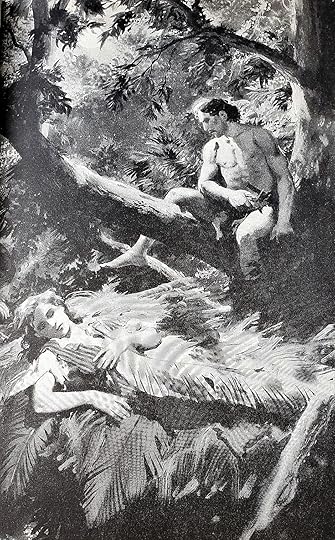
I honestly expected to love this book. I had read and loved ERB's Tarzan books, I had read and loved most of the pastiches, and the premise sounded absolutely brilliant: Tarzan's story from Jane's point of view. The cover illustration was magnificent! How could it possibly fail to be great? But as I read my way through it, my discomfort grew until it transformed itself into horror. Robin Maxwell hadn't gotten a few things wrong.
She'd gotten EVERYTHING wrong.
Let's start with the frame story, a perfectly acceptable storytelling device, often used by ERB himself, in order to increase the sense of realism. But it places limitations the author needs to be aware of. In this case as other reviewers have noted, the idea that a woman would confess a story containing intimate sexual details about herself to a male total stranger would be hard to believe in 2012. In 1912 the idea is laughable.
Second, while it was an intriguing idea to have Jane tell her story to ERB himself, why was it necessary to portray ERB as so utterly seduced by her beauty, to the point that he is making disparaging comparisons between Jane and his own real life wife, the mother of his children? Why did we have to know she was the sort of woman he frequently fantasized about but heretofore believed existed only in his imagination? Why did he have to be portrayed as inviting her back to an apartment that his wife and children are conveniently absent from? As behaving like the world's clumsiest philanderer? I assume it was intended to be funny, but it just made me uncomfortable.
Third, other than as the necessary gimmick to introduce Jane to ERB, why was Jane giving controversial presentations to skeptical audiences with most of her evidence tied behind her back? Readers are presumably supposed to blame the skepticism on sexism, but in truth it is Jane's fault for not presenting her strongest evidence. Of course one could make a very good argument for withholding said evidence: the personal privacy of the one who must give it, but if she has so decided, why endure the inevitable ridicule of someone merely going through the motions? I actually suspected it would turn out to be a deliberate attempt to further obscure the truth, but, no, it turned out to be a case of Jane (and the author) not bothering to think it through.
Fourth, though it represents a change from the original, there was a certain logic to portraying Jane and her father as atheists, given their professions in this version, but why was it necessary to portray them as such obnoxious atheists? There is one very ugly scene that doesn't advance the plot in any way in which Jane and father while away the voyage to Africa by cruelly baiting a missionary couple that has the misfortune of sharing the ship with them. Their only perceivable motives appear to be anti-Christian bigotry and perhaps embarrassed envy at the realization that these people are taking far greater risks for far less selfish reasons than our "heroes" are. To my mind it would have made a lot more sense to have the villain doing this with Jane and her father embarrassed and shamed by it, but perhaps the author was trying to convey her own views on the topic.
Fifth, while there was merit in trying to work the Congolese Holocaust into the plot, especially in light of how much it has been forgotten today (see King Leopold's Ghost: A Story of Greed, Terror and Heroism in Colonial Africa for the history), it would have been better if the author could have come up with an evil plot that made more sense. Essentially the villain's evil plot is to survey a railroad to the sea through French territory that will enable King Leopold's brutes to more efficiently loot the Congo Free State,...
a railroad that already existed on Congo Free State territory bypassing 300 miles of unnavigable river at the mouth of the Congo. Not that another railroad wouldn't have been profitable for trade purposes; the French eventually built one there precisely for that reason after the Congo Free State was taken away from Leopold and made into a "normal" European colony, but as the basis of an evil plot it is kind of pathetic. Nobody successfully gets away with "sneaking" a railroad through someone else's territory, at least not through the territory of someone who is able to defend it, which the French certainly were, against Leopold's mercenaries.
Sixth, for some reason Ms. Maxwell felt it necessary to fill Jane's head with all sorts of ideas that merely made her look silly as opposed to perfectly reasonable desires for women's equality and concerns for oppressed peoples, ideas like opposition to the rich having servants (We're not talking slaves here; we're talking people who might very well have starved if Jane had her way), almost proudly regarding cruelty to animals as worse than cruelty to humans (kind of diminishes that whole concern for oppressed peoples bit), and extreme guilt over her privileged and wealthy status (not enough guilt to give up the money of course but enough to provoke condemnation of those of her class less inclined to self-loathing.)
Seventh, one of the tropes of "raised by animals" "noble savage" fiction like Tarzan (and Mowgli for that matter) is that the result would be almost superhuman physical development, strength, and abilities, even in comparison to native human tribesmen growing up in the same place. This is debatable of course, but it it makes a lot more sense than having Jane develop similar physical abilities under Tarzan's tutelage in a matter of WEEKS. Among similar changes, while having Jane be the one to teach Tarzan to read makes MUCH more sense than ERB's Rube Goldberg version that had Tarzan all but inventing language itself, having Jane be the one to teach Tarzan archery because he was apparently too stupid to pick it up from observing the Waziri he'd taken the bow and arrows from in the first place was, again, laughable.
Eighth, though by now I saw it coming, nevertheless I was still reduced to gales of laughter by the Female Chauvinist Theory of Evolution on display in the Mangani/Missing Link tribe, where all evolutionary advances come from the females, except for the male discovery of tool use...
for the purpose of bashing in skulls and making it easier to rape the females, of course. Ironically, a certain amount of this could have been justified as a reaction to history; the early (almost exclusively male) evolutionists were some of the most virulent sexists (and racists) you'd never want to meet. Perfectly understandable if you think about it, European Man couldn't derive much support for assumptions of his superiority from that annoying old Bible, but Evolution offered him what looked like scientific proof, which was a long time dying out.
But finally, the worst thing Robin Maxwell did to our man's man of an old-fashioned hero was to turn him into a sensitive, vulnerable, delicate creature in need of a lot of hugs. Jane takes the death of her father ON THIS EXPEDITION as reported to her by Tarzan a lot more "like a man" than Tarzan takes the death of his parents SIXTEEN YEARS before as revealed by their diary Jane reads to him. A certain toning down of the "strong, silent type" was merely to be expected, but turning Tarzan into a whiny (if one can whine silently, and based on this, methinks one can) emotional basket case, no matter how justified by the modern wizards of our wounded psyches, just makes him into someone I don't really want to read about. Nor can you attribute this to my being a knuckle dragging male chauvinist pig; I review ROMANCE NOVELS for crying out loud! (I don't admit to READING them yet, but that's another issue.) This reaches its apotheosis at the end of Jane's narrative. Those familiar with ERB's books know that one of the somewhat overused plot devices is to separate Jane from Tarzan and see what happens. Though much more a woman of her time than Maxwell's Jane, ERB's Jane is no pathetic princess helplessly in need of rescuing, she does what she can in the given situation, and anyway she'd have to be remarkably tough just to survive what ERB throws at her with her sanity intact. ERB's Tarzan on the other hand is a force of nature that will allow NOTHING to separate him from her, except a misunderstanding about who she's really in love with. In short you did not want to be a member of the army, however large, standing between ERB's Tarzan and Jane. Ms. Maxwell's Tarzan, after getting some idea of the sort of life he might face in Jane's world,...
bails on her like a lazy boyfriend told to go out and get a job.
Of course the ending frame story clears a lot of this up and threatens us with a sequel ("The Horror! The Horror!") to explain how we got here, but I won't be reading it if it ever comes out.
Dreadful. Dull. Dreadfully dull. No matter how I say it, it remains the same. I read O, Juliet by this author and loved every single page of it, but this one, I mostly loathed it. This is one of those books that plods along and drags along with bits and pieces of action, but not enough to actually propel it forward. The story jumps around from Jane after she's returned to civilization to Jane of the jungle to Jane prior to leaving for the jungle and then there are jumps within the jumps while Jane reminisces about this or that and all of the past, how she got to be the intrepid explorer that she mostly isn't and how she ended up alone in the jungle with the super-sexy and super-sensitive Tarzan. The best parts of the book are, of course, the scenes involving Tarzan and her life with him. The rest and even parts of the jungle plot seems like much filler. And Jane. Insufferable, unlikeable Jane. This story only works if you find Jane to be so interesting that you can get past how incredibly self-centered she is. Examples: P. 217 Jane believes that her nemesis, Ral Conrath, deserves to die for his treachery, his treachery being that he is surverying for the Belgian king (ooh, so evil, right?), but Tarzan's nemesis, a creature who killed both his human parents and his ape mother, that creature needs to continue to live so that Jane can study this creature and his pack/tribe. She gives this about a half-second's pause to decide whether or not she is being fair, then goes right on believing she is correct. P. 253 Jane becomes a spoiled brat when she can no longer have what she wants, to observe the mangani tribe, through her own fault, but she takes this out on Tarzan because, as I've said, she is self-centered and insufferable.She is neither adorable nor admirable. I call 'em like I see 'em. Additionally, Jane appears to be monumentally mammary-obsessed. The first thing she notes about any female is the size and shape of their breasts. This ones pendulous breasts swinging near her waist, this one's fur-covered teats, these high young brown breasts, etc. And she is even more captivated by her own breasts. She enjoys the way the jungle plants slap against them as she moves about, how they bounce and jiggle when she runs, the way they stretch and pull as she brachiates (*snort*) through the trees, the sensual swirling of the salty sea water as she swims. Enough already. Cover those babies up so you can think of something else, something other than Tarzan's magnificent behind, too. The love story, such as it is as Jane dithers about whether she loves him or is merely using him for sex, doesn't involve the reader, that's the best way I can explain it. I liked Tarzan, but felt sorry that he was stuck with this cold-hearted human female, sadly the first one like himself that he has seen. I ended up wishing the poor guy would have waited for someone better to come along. Jane manages, within the span of a few weeks, to become almost as super-human as Tarzan, although a few pages before she becomes warrior woman she is hanging by her fingers with her arms burning and falling helplessly into Tarzan's life-saving arms. Yet, a few days later, she is Toughie McTougherbabe and I didn't believe in her transformation. Tarzan has had years, a decade and more to become strong and yet within weeks she is able to keep up with him. And what is with all the brachiating? How about just once mentioning that he is swinging through the trees. Brachiating. Sheesh! There is too much about the geo-political ambitions of various European nations, none of which in any way adds to the story. I can't understand how I could love this author's work so much and dislike this one almost as much. There are end bits that leave lots of open endings and questions and this book could have been more concise and answered many of those queries. Won't be reading the sequels. Sorry.
Released in the centennial year for the publication of Tarzan of the Apes original publication and endorsed by Edgar Rice Burroughs' estate, Jane is an involving, detailed, engrossing, and yet, original retelling of a well-loved and widely known story. Robin Maxwell is my first exposure to actually reading the mythos of the Tarzan world (watching the 1999 Disney animated movie clearly does not count), and her updated version, while clearly paying homage to the source material, is indelibly her own. Jane is a novel rife with adventure, credible characters, excitement, betrayals, and revelations. An engaging read from the get-go, the spotlight on protagonist and narrator Jane makes for a fast but highly enjoyable read for those all too-short 320 pages. I had planned to read Burroughs' original version, but now I wonder if that one will hold up as well in my opinion as what Maxwell has recreated here.
As the title character and first-person narrator for the eponymous novel, Jane will either make or break this novel for readers. I, for one, unabashedly loved her. Her voice is strong and clear; I identified with and rooted for this intelligent and unique woman as she grapples with society's unforgiving attitudes, as she grows and learns about herself, Africa, and what she wants from her life. I loved Jane's strident attitudes, her analytical approach to any and all situations, her unflinching convictions and stalwart self-esteem. She's an unconventional woman for her time but not so much as to be entirely anachronistic for the era and setting the novel takes place during. She may eventually want a man, but unlike her society peers, she definitely doesn't need one. While her views and opinions can approach the unrealistic, the sincere motivations at the heart of Jane's actions ring true and keep her character from sticking out as improbable. An aspiring paleoanthropologist, the beginning flashbacks illustrate clearly how committed and devoted Jane is to her field and establish a more than credible reason for her journey to Africa and the events that transpire there.
The growing dynamic between Tarzan and his more "civilized" mate evolves maturely and with aplomb under less than ideal circumstances. Tarzan himself is a bit romanticized (both by Burroughs and by Maxwell here) - and the romance between him and Jane does provide a lot of internal debate for the title character - but he is realistic and engaging in his distant role. His relationship with Jane is complicated and hard-won, but it is a real partnership of equals, unlike what she could have expected back in her "civilized" home country. Theirs is a true give and take - each teaches the other essential skills for living in their respective worlds. Their interactions are a bit simpler and overcome more easily than I had expected (the language barrier most noticeably) but it doesn't jar too much. Under Maxwell's able hand as storyteller, the bits and pieces of Tarzan's tragic history and life are teased out into the more action packed events evenly and keep the sentimentality on par with the action and excitement of life as The Wild Ape Man.
The vibrant setting of Africa is one of the very best aspects of the novel. The place-as-character is superb here. It's really topnotch - from the port town of Libreville to the boat trip down the Mbele Ogowe River to the Great Bower, every scene and setting pops from the page with a burst of color. As one character so aptly said to Jane early on: "You do not live in Africa, my dear. Africa lives in you." Under Robin Maxwell's pen and talent, I certainly felt like I was seeing the jungles, forests, villages myself. This is a creative author with an obvious ability to set and describe a scene; her talent for place as character is one of the more prominent things I will take away from reading Jane. I haven't read many other historical novels set on this particular continent, but upon, reluctantly, concluding this one, I can't imagine I will wait long to search out another. Maxwell touches upon so many issues of that plagued continent - colonization by European powers, the deforestation of jungles for trade routes, King Leopold of Belgium's genocide of 10 million natives - that some areas do feel slightly shortchanged, but all serve to create an even bigger, more authentic view of Africa and its problems.
This is a book that started out good, one that easily progressed past my initial lukewarm feelings due a bit of an infodump and into "great" territory, and one that ends with a bang (and a hint at a possibility for more down the line?!). A clear departure both from its source material and the sanitized Disney version, Jane is no wilting violet but a strong protagonist with great depth and characterization, more than able to carry the weight of the novel on her own. A great read and reinvention of one of the most beloved stories, Jane is a credit to both Edgar Rice Burroughs' original tale and to Robin Maxwell's immense individual talent. With characters crafted so well, with vibrant settings and a plot that moves at a brisk and involving pace, this is a novel retelling that will stand out and stand the test of time equally well. Highly recommended and highly enjoyable -- those on the lookout for a new era/setting in historical fiction need look no further than Jane.
I swaney. This isn't Jane, and this certainly isn't Tarzan. Just ask Erin. I stopped sighing and saying, "Taaarrrzaaann" pretty early into the book. Because I was still holding out hope that he'd come along. But no.
I digress. So much. I was so excited about this book. Just ask any of the people I sent pictures to. Though written by Robin Maxwell, this book is copyrighted by Edgar Rice Burroughs, Inc. It was written with permission from the Burroughs estate, dedicated to Burroughs, and his grandson (John R. Burroughs) wrote a thrilling review. Even JANE FREAKING GOODALL (who is a huge fan of the Tarzan series) praised it. So what gives?
This. Is. Not. Jane.
In her femicrazyness, Maxwell completely reinvented the character of Jane Porter. And in doing so, she robbed us all of one of Burroughs' most revolutionary characters. Regardless of my personal qualms with Jane in the original Tarzan of the Apes (I'm just so jealous because Tarzan loves her. It's a real problem.), she's pretty amazing. This young, innocent, English-American girl/woman/person is thrown into the middle of the savage jungle, and things are not going as planned. AND THAT IS WHEN WE SEE WHAT JANE IS MADE OF. As reluctant as I may be to admit it, she's made of pretty decent stuff. She was not reared by an alarmingly feminist father and a stern but indulgent mother. She was not a paleoanthropology student at Cambridge all rilled up because she wasn't allowed to graduate, being a woman and all. She was a regular girl whose got thrown in some sticky situations. Maxwell's Jane is presented to us as thus: strong, self-righteous, independent woman learns to be stronger, more self-righteous, and more independent. And to have sex, but she probably invented that or something. And of course, SHE must teach Tarzan to read, SHE insists that he cook his foods, SHE finds every trace of anything that might ever be important. Ever. Because, remember, this isn't really about Jane, Tarzan, or any of us. This is about how women are ignored and no one cares about female characters. So woman! RAWR!
kfjaskfjklsadjfsaklfjaslfj
I don't even.
Jane Porter worked BRILLIANTLY as a character, and the Tarzan still managed to spread ideas of strong females, anti-racism, and a host of other good things IN THE EARLY 1900s. Because the novels were first and foremost about telling a story about a fascinating character. AND BURROUGHS STILL MANAGED TO INCLUDE HIS BELIEFS. Gee, how did he do that Robin Maxwell? I have no idea, because WOMAN RAWRRRRRRR.
That's basically what reading this book this book was like. Equality between genders is great. Really, I mean it. But man-hating disguised as a implored female character is stupid. This was actually pretty painful at parts. But that doesn't matter. Remember, everyone, men are lusty, greedy, awful creatures. Except Tarzan, because he never had any men around to teach him how to hate women properly. BURN YOUR BRAS; HURRY.
What else is stupid? Killing off Paul D'Agnot, introducing Opar in the last two or so chapters, making Tarzan awful, and this book in general.
Never have I been so excited about a Tarzan-related novel, and never have I been so thoroughly disappointed. I was originally thrilled about the "cleverness" of the set-up, which was very Burroughsy. But even Edgar (who is a character!) is seduced and enthralled by the amazement that is This Jane. Of course. Because, of course. If she meant to make any disparities between this book and the original acceptable, because a man wrote Tarzan, and this is obviously true and faithful to what This Jane would have told him, well BLARG.
Never fear! Robin Maxwell is the author of several more novels about strong female characters from history and fiction who werer probably "ignored" and stuff. I'm super excited to read all about how Signora Di Vinci discovered a way for men to give birth, and Anne Boleyn invented the telephone so she could call all her friends and tell them how great it is to have boobs.
4.5 Stars. Jane is one of the titles I'd been most curious about this year: I thought the concept of telling Tarzan's story from Jane's point of view was fantastic, and that wonderful cover was calling to me, daring me to pick up the book and enter Jane's world. But I worried that it was the kind of story that could either be very good in the right writer's hands, or very bad in the hands of the wrong one. Well, I'm happy to say that Jane falls firmly in the camp of the former, and my worry was put to rest instantly. Robin Maxwell has crafted my kind of story--full of adventure, danger, history, betrayal, revenge, and of course, true love--and she has created a character in Jane that has earned a spot on my list of favorites. Jane is smart, determined, ambitious, and brave, but she's also kind, compassionate, and vulnerable, struggling to establish herself in a man's world. Her story captivated me from page one.
Chicago, 1912. A young writer named Ed Burroughs attends a lecture and is drawn to the speaker, a controversial paleoanthropologist who endures heckling from a disbelieving crowd with grace and poise, and who afterward holds his rapt attention and sparks his imagination as she tells the tale of how she came to be touring the scholarly world with her claims of finding the "Missing Link." Jane Porter's story moves back in forth in time a bit, from the jungle of Africa to Cambridge and back again, building suspense to that monumental moment when she comes face to face with the legendary "Wild Ape-Man of the Forest."
I loved watching Jane's journey unfold and witnessing her discovery of her true self in the uninhibited wilds of Africa, and I loved watching Tarzan awaken to the concept of a whole other world and piece together the mystery of his early years and how he came to be raised by apes. And speaking of Africa, Maxwell's descriptions--everything from the collision of European and native cultures in Libreville to the treacherous river journey into the interior to the jungle and all of the people and animals along the way--are so vivid and evocative, I was completely absorbed in and mesmerized by her story world.
As Jane and Tarzan forge a life together and face the wonders and terrors of the jungle and uncover secrets with far-ranging consequences should the outside world ever uncover them, the suspense and tension builds again, toward that other monumental moment, when Jane must decide where her future truly lies, and whether Tarzan will be a part of it. Maxwell leaves the reader in suspense until the very last, and throws in a nice little twist at the end. Though the ending did not leave me wholly satisfied, it did leave me with a smile on my face, and the small hope that Ms. Maxwell might consider writing another Jane and Tarzan adventure in the future.
There are a couple of niggling little things that keep me from rating Jane as perfect, but I enjoyed the story so much, and the wonderful characters of Jane and Tarzan continue to occupy space in my mind, days after finishing the book. Jane is sure to please fans of the original Tarzan books and historical fiction fans like myself, who have never read them. It's a breath of fresh air among the novels of kings and queens, something totally different and utterly entertaining, and one of my favorite reads of the year.
Und auch die Illustration auf Seite 9; wie sagte John R. Burroughs, Enkel von ERB: "There is no Tarzan without Jane"
Ein wenig schade finde ich, dass der Verlag die Umschlagillustration von Gregory Manchess letztlich nicht haben wollte. Mir gefällt das tatsächliche Cover gut, aber schade um diese Fassung:
Hier ist der Charme der Pulps lebendig.
- - - - - - - - - -
Im April 1912 begegnet der Pulp-Autor Edgar Rice Burroughs der Paläoanthropologin Jane Porter, die in der Chicago Public Library eine Vortrag über von ihr gemachte Knochenfunde und das "missing link" hält. Wie auch in Berlin, London, Paris und Moskau wird die junge Frau ausgebuht, aber Edgar interessiert sich für ihre Geschichte. Was nun geschieht, ist ein (fiktiver) Meilenstein in der Welt der Unterhaltungsliteratur und macht sogar Jane Goodall eifersüchtig: Jane Porter erzählt Edgar von ihren afrikanischen Abenteuern. Ein wunderbarer Beginn für einen Roman :) ---------------
Wirklich hervorragend die Beschreibung der burschikosen Jane, die als frühe Frauenrechtlerin nicht so recht in ihre Zeit passt und überall aneckt, ob in der Universität (wo sie als Frau zwar an Kursen teilnehmen, aber keinen Abschluss machen kann) oder zuhause, wo ihre Mutter sie - trotz ihrer 20 Jahre - schon als alte Jungfer enden sieht, die Leichen seziert und Männerkleidung trägt. Für die wissenschaftlichen Hintergründe hat sich Robin Maxwell offensichtlich einiges angelesen: Da geht es um Vivisektionen und den morphologischen Nachweis, aus dem sich ergibt, dass ein (fossiles) Exemplar die Fähigkeit zur Sprache besaß. Da der Pithecanthropus erectus (=Java-Mensch) als missing link noch nicht so ganz überzeugt, ist Janes Vater einer Expedition nach Westafrika nicht abgeneigt, wo sich möglicherweise bedeutsamere Funde zur Entstehung der Menschheit machen lassen. Und noch bevor es losgeht, taucht schon der zwielichtige Ral Conrath auf. Die kontroverse Diskussion zu Beginn des 20. Jahrhunderts liest sich ebenfalls unterhaltsam und hat ordentlich Zug im Kamin,.
The year is 1905, the place Cambridge University. Jane Porter, a headstrong and passionate young woman, is the first female student to be admitted to the university’s sole anatomy laboratory. While she cannot graduate with a degree, Jane’s ambition to become a recognized paleoanthropologist is high—after all, she has the unwavering support of Professor Archie Porter, a renowned scientist and Jane’s much beloved father. When the dashing American Ral Conrad proposes a paleoanthropological mission to West Africa to prove the theories of Charles Darwin and substantiate the findings of Eugene Dubois, Professor Porter and Jane are thrilled to lead the expedition. But, as their mission progresses, Conrad’s cruel and duplicitous nature becomes clear to father and daughter. Jane must devise a way to stop Conrad before he gets away with his dastardly schemes of murder, betrayal and pillage.
When all seems lost, and Jane left to die an unspeakable death, enter Tarzan: son of the marooned and deceased Lord and Lady Graystoke, raised by Apes in the wilds of western Africa. While Tarzan does save Jane’s life and earns her heart, this time around Jane holds her own as a modern woman that is every bit the heroine to Tarzan’s hero.
First published in 1912, Tarzan of the Apes marked the world’s introduction to Edgar Rice Burroughs’ iconic protagonist. Now, many novelizations and film adaptations later, we are finally given Jane’s side of the story—which, I am thrilled to say, is pretty freakin’ fantastic. Officially authorized by the Burroughs estate, Jane is the first retelling in the Tarzan canon to be penned by a woman, and author Robin Maxwell does a phenomenal job of preserving the wild magic of the original series while updating it with a more capable and empowered heroine.
And, fellow readers, let me tell you: I adored this iteration of Jane Porter.
Headstrong to a fault, Jane is ambitious and educated, but at the same time wholly naive— especially when it comes to what she truly wants. Make no mistake, Jane is a love story as much as it is an adventure. But more than giving life, vibrancy and passion to the relationship between Jane and her Tarzan, this is a tale of a young woman coming of age and embracing her desires and beliefs, inside and out.
Beyond the strength of its eponymous character, the re-imagining of key figures and themes in the Tarzan mythos is expertly handled and respectful of the source material. In particular, the tie between the Mangani (Tarzan’s surrogate family clan of highly evolved apes) and Jane’s search for proof of Darwin’s ape-man missing link, is ingenious. The only downsides to this novel? The device of having Jane narrate the story to Burroughs himself is slightly trite, and overall Jane is perhaps too modern for her time period. The finale of the book (in which a lost civilization is unearthed) is also perhaps a bit over the top.
Yet, in spite of these minor qualms, Jane is a resounding success and a book I loved from beginning to end.
In Book Smugglerish, an enthusiastic, chest-pounding 8 out of 10.
This is one book when it's perfectly fine to judge a book by its cover. The pages between take the reader on a trip back into time, with a portrayal of Jane that is fresh, captivating, and spirited. I realized about half way through that I've never read the original Tarzan book(s) and only know the story from comics, hearsay, and the movies. I'm curious now how close to the original this book flies, especially with the ending (which seemed like something out of an old Hollywood adventure.)
Robin MAxwell's Jane is intelligent and willful, determined to pursue her interests in anthropology, biology, and archaeology, even if such interests deny her a husband, and leave her tottering on the edge of spinsterhood at age 20. Yet despite all the objections of society (and her mother's despair), she leaves with her father to head into Africa in search of the bones of missing link between apes and humans. What she finds instead is treachery, adventure, some pretty cool learning curves to climb, and a glimpse of various societies that give her much to ponder. Oh, and she also find this perfect specimen of manhood that seems to fancy her, too. Not bad for the jungle.
Actually, the meeting occurs after Jane has been mauled by a panther, and is saved by Tarzan. As he nurses her back to health, the two begin to build a common language and understanding. Together they try and make sense of some mysteries in their world, and together, they must face not one, but two evils.
I was pretty captivated up until the very end, when the novel moved into some realms of big screen adventure film stuff. That's why I'm interested to know if that bit was in the original book, or movies (I can't remember. Indiana Jones has clouded my mind.) This particular novel was authorized by the Edgar Rice Burroughs Estate, so I guess the ending fits into something somewhere in the Tarzan lore. It wasn't bad, just not to my taste: a little too over the top/fantastic/tomb raider-ish. It by no means diluted my sheer enjoyment of the first 3/4 or more of the novel, and definitely lived up to the cover.
3.5 I enjoyed this, I was so worried at first that the bones she was reverently handling was Tarzans's until we met the missing link people.
I did knock off a half star because the ending rushed up too fast, all of a sudden we don't know why Tarzan left Jane, we're told all the missing links were killed off probably by disease and then bam a knock on the door. It was too soon and I found myself wanting to see more of Jane and Tarzan's life, what was it like meeting her parents so yea, it was a good book but the last chapter left much to be desired to me.
Okay, I'll admit it, I've never read the original Tarzan books by Edgar Rice Burroughs. I have seen the movies starring Johnny Weismulller and Maureen O'Sullivan. I know, not the best way to be introduced to the series considering how much the books were changed from page to screen, I'd imagine, but you've got to admit, Weismuller's Tarzan created quite an impression in the cultural consciousness. So, since I haven't read the books, I don't know how Burroughs portrayed Jane, but I would imagine in not the most flattering of ways--a lot of cowering, crying, and “Oh, Tarzan, help me!” So it was rather exciting to see a book about Jane which both told the Tarzan story from her perspective and was also written by a woman. Even better, the novel is authorized by the Edgar Rice Burroughs estate, meaning the author couldn't just slap something together and call it a story of Jane.
In 1905, intelligent, headstrong, adventurous Jane Porter is a fish out of water at the University of Cambridge, not to mention an unabashed 'old maid'. Happiest when she's at her father's side, studying anatomy and dissecting corpses, she's the only female student at Cambridge's medical program as well as a budding paleoanthropologist. She idolizes female explorers such as Mary Kingsley and yearns to one day prove Darwin's theory that the human race came out of Africa. So when an American adventurer named Ral Conrath invites her and her father to join his expedition to West Africa, she naturally jumps at the chance. When they reach that 'Dark Continent' and begin their trek into its interior, it's just as marvelous and exotic as Jane had imagined. Mother Africa's jungles also hide dark secrets... and so does Ral Conrath. When Jane and her father find themselves in peril, Jane discovers the one thing which will turn her entire world upside-down: Tarzan of the Apes.
This is not an adventure novel. This is a romance novel with some adventure sprinkled in and those adventures, except for the last act, come in between a lot of discourse: Jane reminiscing about her life in England, Jane narrating her travels in Africa, Jane and Tarzan discovering Tarzan's past. It's only in the last third of the book that we stop reflecting on the past and concentrate on "here and now" actions. The amount of reminiscent narration might be difficult for some, especially those who are anticipating a pure adventure novel mirroring the original Tarzan novels. However, I found the background stories just as interesting as the main one and didn't have a problem with the lack of “non-stop” action.
What I did have a problem with was the third act reveal, the big denouement that all the previous archaeological and anthropological discoveries had been leading up to. I'll be honest, when I saw a YouTube video of Maxwell speaking about this book and her inclusion of the “Missing Link”as a plot point, I rolled my eyes. Then, as I read, I discovered it actually worked; after all, it's not like the story of Tarzan is super-realistic, so why not included a living missing link? I eventually got on board with it. But I could not swallow the finale. It was just too ridiculous, too over-the-top. It was as if Maxwell suddenly channeled H. Rider Haggard for the last act, which would've been fine, actually, and quite in the spirit of Burrough's original novels. But it wasn't in the spirit or tone of the novel Maxwell had written up to that point. Up 'til then, Jane was quite grounded, relatively speaking, giving a nice reality to the story and character of Jane Porter. To me, the third act just felt like a huge stumble.
Until that stumble, I was quite impressed with Maxwell's writing. When I got the book, I opened it up to the first page, just to glance at it before putting the book down to be read at a later date. I never put it down; instead, I kept on reading... and reading. The writing caught my attention immediately. Jane Porter is a fun and interesting character; yes, she's a modern woman, which may ordinarily be out of place in an historical romance, but here it's just fine. The early 20th century was all about the modern woman, so Jane's ambitions and character traits aren't at all unusual. The prose is dynamic, with action and drama scenes both having a real sense of depth and emotion; the dialogue is compelling, though it does tend to get a bit overdone in Ral Conrath's case, as if to really point up the fact that, when he does show himself to be the villain of the novel, we know absolutely that he's “The Villain.” I think what Maxwell did best was show the evolution of Jane; even though she considered herself an independent woman, out in the jungle she realized just how sheltered she'd been. Watching her grow in both physical and mental strength, seeing her conquer her fears and doubts, not to mention those prejudices and assumptions which had been ingrained in her was, I think, the true force of the novel. Yeah, the romance which developed between her and Tarzan was compelling, but not as much as Jane's maturation as a person.
It may sound weird, but I really enjoyed the part of the story when Jane, who is injured when she first meets Tarzan and is rescued by him, questions how her bodily functions were taken care of during her unconsciousness, and recognizes how Tarzan took care of them while caring for her. It's kind of a gross subject, sure, but one that's nearly always glossed over in fiction, even though it's a normal human behavior. That Maxwell included it is rather brave of her, I thought.
The story is book-ended by the appearance of Edgar Rice Burroughs himself. When we first see Jane, it's through Edgar's eyes as he watches her give a lecture on the missing link she found during her African adventure. When he, rather fan-boy-like, introduces himself to her and asks to hear her story, Jane begins to tell it both to him and to us. At the end of the story, we come back to Edgar as he ponders what he heard. Jane gives him permission to tell her story in whatever way he sees fit, giving Maxwell the out she needed in order to have “her” Jane do things differently from “Edgar's” Jane. As the novel wraps up, Edgar is already reweaving Jane's tale into the Tarzan books with which history is familiar, which ties both versions together neatly.
In the end, up until the last act, I truly enjoyed the novel. I felt it kept the spirit of the original (as far as I could tell) while infusing it with a breath of fresh air. If that climax just hadn't been quite so eye-rolling....
Admittedly, I have never read any of the original Tarzan books by Edgar Rice Burroughs; however, I'm familiar with some of the movies. Tarzan and Jane are still very well known characters even today. The relationship between Tarzan and Jane is still interesting to many today. They are definitely a timeless pair. This book marks the first "spin-off" authorized by the author's estate, which is very cool! I really enjoyed this book. You definitely don't need to be familiar with the story to find some enjoyment in the book.
Jane Porter of the Tarzan stories is an awesome character. The story takes place during the early part of the 1900s when women adventurers and scientists were very few and far between. In her mid-twenties, Jane's unmarried status was already a little bit of an anomaly. She's tough, strong, and determined to do what she wants. Jane is the narrator of the book, which I thought really helped to pull you into the story. It takes awhile to get there but throughout the book, Jane really grows and becomes more comfortable with herself, which was cool to see.
Yes, this is an adventure book but there isn't a whole lot of action, especially not at the beginning. This book is definitely more of a sort of quiet adventure with a lot more focus on the characters and setting than an actual adventure. The real adventure only comes in the latter half of the book.
Some of the changes in time were a little bit confusing. At least in the ARC version (which is the version I read), there are very few indications of how much time had passed between each event. It confused the flow a little bit as the book jumps around a little bit.
Overall, I really liked this book. Jane is awesome. Tarzan is a fantastic character. It seems like there possibly could be a sequel to the book, which I would absolutely love.
Bottom line: A quiet story for both those new and not so new to the Tarzan stories.
I love Robin Maxwell’s historical fiction novels and so when I heard she wrote this one- historical or not- I jumped on for the ride. I’m so glad I did! Maxwell does not disappoint- what a story! Who would have thought that in today’s day and age a story about Tarzan and Jane could still captivate? And- it is historical after all!
Daughter of a scientist and a scientist herself, Jane along with her father and crew (with a certain dispicable Mr. Conrath; you ll have to read the book to find out just how horrible he was…)head for an excursion to Africa where she evidently meets the strong, smart and extremely gorgeous Tarzan. The story begins with Jane’s retelling of this fate to the writer, Ed Burroughs…
The novel is filled with incredible details of adaptation, tools, tricks and customs for daily endurance and living, along with descriptions of the wild, and its long lost tribes. Meshed with jungle fury and survival, there is an intriguing story behind it all. How did Tarzan get there? Who raised him? How did he survive? Who else inhabits this jungle? How did they all communicate?
The part I loved most was Jane’s gradual inhibition to learning how to survive and become one with her surroundings. How they learned eachother’s languages and communicated was also fascinating. And of course there is a love story…Robin Maxwell describes their love affair in exquisite taste- true to the naturalness of the environment itself, love is consumed as would be expected in the realm of the jungle. Passion with genuine love and nurturing, JANE the Woman Who Loved Tarzan is delectably romantic . A quick and most entertaining read ending with a spin that begs for a sequel.
I haven't read the original book, "Tarzan of the Apes" by Edgar Rice Burroughs, but since this book is authorized by the estate, I feel like it must be respectful to the original. I have seen one of the movie versions, and the story does follow the same basic path, but there is more background for Jane in the beginning. The book never feels like a boring retelling of all the info that you already know from the original. The bare bones of the story are the same, but everything feels new about this story because it is told from Jane's point of view.
My favorite aspect of the book is just how very strong and smart that Jane is. She is before her time in 1905, but she never apologizes for her strength and her character. I really admire her unapologetic feminist viewpoints. She might be slightly exaggerated, but this works here 100%. Jane is in a word: fierce.
I admit that I did want her to find Tarzan a little faster, but her academic world was interesting to read about as well. Her relationship with her father was played out a lot more in the beginning too, so we can see where the characters were coming from. As a whole, this added to the book being different from what you might expect it to be-just Tarzan and Jane.
Overall, a wonderful look at the Tarzan story from Jane's point of view. Since the book is authorized by the estate, it stays respectful to the original.
sent by publicist and publisher in exchange for honest review
As soon as I saw Jane Goodall’s enthusiastic recommendation for this retelling of Tarzan from Jane’s point of view I knew I had to read it. In this version set in the early 1900’s Jane is a lively, adventuresome young women determined to challenge the conventions of the day by becoming a scientist. Her heroes are women like Mary Kingsley, the Victorian era African explorer, and Jane and her father head to Africa seeking fossil evidence of Darwin’s missing link between ape and man. Unfortunately their African expedition is led by a man who turns out to be a ruthless treasure hunter, and when things go horribly wrong and Jane is attacked by a leopard she wakes up high in a jungle canopy nest under the care of Tarzan.
At first Jane is completely dependent on Tarzan, but when her wounds heal she learns to run along tree branches, swing from vines, hunt for food and wrestle. After figuring out how to communicate, Tarzan teaches Jane the ways of the jungle and she tells him about the wider world. For an adventure story this is not breathlessly paced, but it’s rich with setting details and character backstories. Both Jane and Tarzan have discoveries to make and family to avenge. In a funny, ingenious twist the novel is written as if Jane is recounting her story to Tarzan author Edgar Rice Burroughs, and he appears as a character at the beginning and end of the book. Loved it.
Utter and compete garbage of a book which runs roughshod over the source material, and eviscerates any enjoyment or connection you could possibly have with the characters. Quite frankly, Robin Maxwell should be ashamed of herself for writing such drivel.
WARNING: TV Tropes links ahead! You've been warned.
Jane travels with her Darwinist father to Africa in search of fossils to prove humanity’s evolution from apes. When betrayed by their guide, Jane is saved by a handsome jungle man, Tarzan. While her remarkable rescuer teaches Jane how to survive in the jungle, Jane realizes Tarzan himself may hold the key to the missing evolutionary link...
Jane is a reimagining of the Tarzan stories through Jane’s perspective. I was never a huge fan of Tarzan (not even the Disney movie that everyone loved), but I love classic retellings. Sadly, Jane did not convince me to love Tarzan.
My biggest problem was that this book felt too preachy. Jane felt more like a soapbox for the author than her own character. I hate it when books are holier-than-thou, even when extolling my own beliefs. Usually, in these types of books, the characters are very shallow and either good or evil – there is no grey. “Good” characters posses all the “good” traits and “bad” characters posses all the “bad” traits. And while this may work for some epic fantasy and simple stories like fairy tales, legends, etc., it doesn’t work in a book trying to be passed off as somewhat realistic and “literary” fiction.
Part of the problems stem from the problems inherent within the original Tarzan story. I haven’t read the original books, but from what I gather they are very much a product of their times. African characters are “savages” and “cannibals” and Tarzan constantly plays the role of conqueror. While maybe not blatantly racist, Jane hits other problematic stereotypes such as “Noble Savage,” “Going Native,” “Magical Negro,” and “Mighty Whitey.” I had hoped a retelling could maybe subvert these tropes and give a more modern politically correct take, but alas it was not to be.
The main problem is the character of Jane herself. She reads like a modern 21st century woman – feminist, atheist, and pro-science – with no trappings of the Victorian upbringing she would have had. I’m all for characters who buck tradition, but Jane reads more like an anachronism than a nonconformist. It doesn’t help that every other white female character (minus a Hooker with a Heart of Gold) is written as old-fashioned, frivolous, irrational, and not-as-awesome-and-amazing-as-Jane. The other girls attending university with Jane, girls who would be considered very progressive and improper in 1905, aren’t as “enlightened” and “admirable” as the anachronistic Jane. Jane is even dismissive of her own mother. Her mother is written as a buffoon, when she is a woman of her time. Any worthwhile mother-daughter conflict is ruined by the cartoonish nature of her characterization. It’s even more disturbing when, more often than not, male characters prefer Jane for her radicalism. Jane is more attractive and awesome to men than “those silly feminine girls.” The judges of female worthiness are men and, in the end, it’s all about male attention and male acceptance. Not very feminist, eh?
The one other positive white female character is a textbook “Hooker with a Heart of Gold” who awkwardly gives Jane all the sex knowledge she needs to fuck like a porn star. However, Jane still looks down upon her, stating *she* would never deign to sell her body to a man. Well, that’s great. It’s really nice being a member of the gentry, where you don’t have to worry about money and surviving on your own and have the money, time, and resources to skip around dissecting corpses and digging up fossils. Check your privilege and shut the fuck up Jane.
In fact, the politics in this whole book read as very elementary white, upper-middle class, Second Wave feminism. Before feminism realized there were other voices and problems not being addressed. White guilt shows up too because ALL the African characters are noble and accommodating and perfect, yet utterly helpless without Tarzan and Jane to save the day (well, mostly Tarzan. For all her I AM WOMAN HEAR ME ROAR!, Jane is incredibly useless in any climatic scene). None of the African characters are fleshed out beyond their inherent nobility to welcome and serve white people. Jane muses they probably have their own gender issues, but they get a pass unlike the Victorians because everything in Africa is SO AMAZING AND WONDERFUL AND SIMPLE as opposed to corrupt Western society. Not problematic at all.
The plot itself is a bit disjointed (but then again most adventure stories are). In the frame story, Jane relates her story to Edgar Rice Burrows, the author of the original Tarzan novels (of course, he is infatuated with Jane and scoffs at his own wife to prove Jane is the most special of all women). Jane, a Victorian lady, is really going to tell all the sexy bits to a male stranger she just met? From there the plot jumps back and forth between when Jane first meets Tarzan and the events leading up to the Porter expedition. At least a third of the story is spent before Jane even gets to Africa. The jungle parts of the story are full of episodic adventures that for the most part, do lead to one whole story. However, the main story is abruptly cut off on a cliff-hanger, and then related through the frame story in an extremely rushed second hand account. I had whiplash.
Tarzan himself was a very loveable character and I liked his interactions with Jane away from any sort of civilization. I thought it was clever how Maxwell tied the apes and Tarzan to the burgeoning evolutionary science that Jane and her father studied.
The Tarzan stories are fraught with problems many Victorian novels fall into – gender issues, racial issues, etc. I had hoped this book would try to tell a more modern tale, avoiding those pratfalls. Instead, it zoomed to the other side, getting a soapbox anachronistic heroine and perfect noble yet characterless African characters there to serve the white characters. Jane is an alright story, but too preachy to be enjoyable. I’ll stick to George of the Jungle reruns.
Jane has an ape skull and is being interviewed about a find. The story progresses into her adventures into Africa and her intelligence and perseverance, despite the time period of the 1910's.
Every few chapters you learn about her history before meeting Tarzan, and then if you snippets about him nursing her back to health after she was seemingly attacked by a jaguar.
After Jane and her father head into the jungle, their group gets separated by their scam artist jungle scout. Jane is saved by Tarzan but her father is rumored to be dead.
We soon learn more about Tarzan's history, how his parents died trying to protect him and his brother from “The Mangani”, a missing link type species with a fearsome leader.
The book hits a wall focusing on Mangani, rape, and killing Kerchak. The native human people, Waziri, were far more interesting. Ralph makes a return and we also have to deal with killing him. This book could have been its own tale but getting into the secret passage and everything was just…unimportant in the grand scheme, especially since the human/apes die mysteriously.
Jane and Tarzan reunite, it's revealed they marry and he is important in England, but the two leave England. Jane gives the man the Kerchak skull and the man thinks it must have all been a tall tale.
The writing is quite beautiful, I plan to read more from this author, but the flow of the story had a few issues. I enjoyed her antidote at the end describing her efforts to get the permission to even write it, and the amount of detail that went into researching the topic at all.
This entire review has been hidden because of spoilers.
I found this retelling of Tarzan from Jane’s POV to he really interesting and engaging. I wasn’t bored for a single minute and just when you think you know the story and what will happen the author throws in a detail or twist to keep you on your toes. Jane is a very independent and precocious 20 year old young lady, who attends her father’s anatomy lessons and other college courses. Encouraged by her doting father, both are taken in and deceived by a cruel man who nevertheless gets them to Africa and of course that is where all hell breaks loose and the romance begins. Lovers of romance novels may be disappointed in the lack of details of the intimate scenes but will surely enjoy the heat, love, and affinity that grows between Tarzan and Jane as they become each other’s teacher and protector in a very equal and egalitarian way. They will also not be disappointed by the HEA at the end though perhaps be as eager for more details as Edgar was at the end. Enjoy this fast paced and fun retelling, I sure did!
A very exciting novel about Tarzan but told from the point of view of Jane. I couldn't read this book fast enough, and I wanted Jane to be with Tarzan through the entire book. However, the background of the characters was well written and enjoyable to read. A great read!
Jane: The Woman Who Loved Tarzan by Robin Maxwell is a feminine take on the famous Burroughs novel. This book tells the famous story from the view point of Jane Porter, Tarzan's love interest.
Jane Porter is the first and only woman at the University of Cambridge to study medicine. She is a fish out of water and already an “old maid” being unmarried in her early twenties. An American explorer named Ral Conrath invites Jane and her father to join his West African expedition they both agree.
However, Ral Conrath has a secret, he couldn’t care less about their scientific pursuits in order to make himself rich with gold. Soon Jane finds herself in danger and discovers that she has a secret admirer, a white man living in the jungle who is thought to be a legend.
Jane: The Woman Who Loved Tarzan by Robin Maxwell is not a retelling of the origin story of Tarzan, but a reimagining of the mythology originally created by Edgar Rice Burroughs.
I was very excited about this novel, Tarzan has always been a favorite (who can forget those wonderful comics and Johnny Weissmuller films) and in preparation read the original Tarzan of the Apes by Edgar Rice Burroughs. To be honest, I was surprised at how much I enjoyed the book again (I read it as a kid), I can certainly see why it is considered a classic and captures the imagination of the young and young at heart.
Reading the first several pages of this novel I could tell that Jane would be different. The Jane Porter is this novel is a strong woman, a scientist and trail blazer. Jane tells her story, after a scientific presentation, to author Edgar Rice Burroughs. While this plot device might work, I thought it was a bit awkward especially when Jane, a scholar and an old fashioned woman (in today’s terms) describes intimate details about her relationship. I know very few, if any, women who even today would do so to a complete stranger.
This is by no means a criticism, in Tarzan of the Apes Burroughs skips over the long periods for which it took Tarzan to learn skills. Ms. Maxwell fills in those gaps with slower, more methodical narrative. Being the central character, Jane is certainly interesting throughout, even if a bit vain. I felt Jane’s character grew throughout the novel, from an uptight student to a more animalistic creature less dependent on her protectors (civilized or not) and more willing to take risks in the physical or psychological realms.
Edgar Rice Burroughs, Inc., the company which manages the rights to the author’s work, has approved this novel. According to the author’s note they were actually quite involved in the process. I believe they made the right choice, Ms. Maxwell created Jane a believable and more grounded character than any man could have (injured Jane’s concerns performing her bodily functions in front of Tarzan never would have entered my mind).
While the Burroughs books are pure adventure, this novel is more or a romance with adventure sprinkled here and there. I thought the background stories of the characters were interesting but the ending seemed a bit over the top for this novel. Ms. Maxwell set out to write a different Tarzan novel and she succeeded, taking a beloved character and reimagining her completely, but then she went and, in what I could only guess to be an homage to the Burroughs series, created an ending which simply doesn’t match the elegant tale she has weaved.
Despite the ending, I thought this was a well written book about an interesting character who is fun and out of place in her own time. The dialogue was well written, compelling and with depth.
First Line: Good Lord, she was magnificent! Edgar thought.
It's April, 1912 in Chicago, Illinois, and Ed Burroughs can't believe the strength of mind and purpose that Jane Porter possesses. In fact, he finds that almost more remarkable than the subject of her talk. Everyone else has spent the past hour shouting her down, refusing to believe anything she has to say about a race of beings that represent the missing link between apes and humans, but Miss Porter refuses to back down from what she knows to be the truth.
Afterwards, Burroughs follows this fascinating woman, and she agrees to talk with him, asserting that his pulp fiction readers might be more amenable to the truth than all the imminent scientists and doctors who refuse to believe the proof she puts right before their eyes.
Jane Porter's story begins in 1905. As the only female student in Cambridge University's medical program, she's much more comfortable in a lab coat than an evening gown. She longs to travel around the world searching for fossils that will prove the evolutionary theories of-- not only Charles Darwin-- but of her beloved father. When Ral Conrath, an American explorer, persuades Jane and her father to join him on an expedition into West Africa, father and daughter can't believe their luck.
Jane finds Africa and the jungle every bit as exotic and spellbinding as she'd imagined, but when disaster strikes the expedition, she finds the answers to her questions all wrapped up in one extraordinary man: Tarzan of the Apes.
I wanted to read this book because I've loved the story of Tarzan and Jane ever since the local television station showed old Tarzan movies starring Johnny Weissmuller and Maureen O'Sullivan on the weekends. Like Jane in Maxwell's novel, the usual feminine pursuits held no allure for this tomboy, and I was attracted to the idea of people living up in trees (since I spent so many hours climbing them) and having wild animals as friends. The local library also had all of Edgar Rice Burroughs' Tarzan novels, so I spent some of my arboreal free time reading of the ape man's adventures.
Maxwell's novel is the first version of the Tarzan story to be written by a woman and authorized by the Edgar Rice Burroughs estate. Its publication marks the 100th anniversary of the original Tarzan of the Apes. Maxwell knows her stuff, and the book contains everything old and new fans of the Tarzan story will want to read. Problem is, the older fans who know the tale by heart may find large portions of the story very slow going, as I did. I almost put the book down never to pick it up again because of the glacial pace.
It wasn't because the character of Jane isn't alluring; she is. But ask any fan who's been disappointed in the new remakes of Tarzan films, and you'll hear one familiar refrain: the story doesn't work until Tarzan and Jane are together. They are a team. The details of Jane without Tarzan may be interesting, but there's no real spark until Tarzan appears-- and the very same holds true of Tarzan. They are the perfect soulmates: willing to learn everything the other has to teach, and both containing the wildness the other craves.
Once Maxwell gets the two of them together, the book does pick up speed, but my interest didn't fully engage until the last fifth of the book when the author adds new grist to the mill. Once those new elements to the plot are included, I began reading with a smile on my face. This book may be slow going for those readers-- like me-- who are very familiar with the story, but what I'm hoping is that Maxwell's work will draw in many new fans because it's an irresistible story that's weathered an entire century very well indeed.
Jane Porter is a woman ahead of her time. Instead of being the consummate lady of the early post-Victorian era, she is brash and curious about everything life offers to men, but withholds from women. Jane is a student at Cambridge and the only female in the University's medical program. She participates in labs and corpse dissections, dreaming of the day that she go on expeditions like her Father who is a professor and palentologist looking for the missing link. There is a lot of tension between Jane and her Mother, because she sees her daughter as being an old maid and completely improper. Jane jumps at the chance to escape from the stifling conventions of her life when she and her Father, Archie, meet a dashing explorer at a scientist's convention who is heading an expedition to West Africa. Jane manages to convince her Father that she should be allowed to go and her Mother, being completely charmed by the explorer Ral Conrath, agrees to let her go along. Excited and disbelieveing, Jane is astonished by the beauty and native cultures of Africa. But the further into the jungle they go, the more apparent it becomes that Conrath has very different reasons for the expedition that the Porters. When she is attacked and nearly killed, Jane is rescued by Tarzan who heals her and shows her his world. Raised by the apes, Tarzan is different from anything Jane ever imagined. Determined to find her Father and expose Conrath for the monster that he really is, Jane learns to survive and fight for her life in the harshness of the jungle. All the while she is confused by the feelings she is developing for Tarzan, who goes against every rule of propriety she was ever taught. Can Jane rescue her Father, get rid of Conrath, come to terms with her emotions and find the missing link in the evolutionary chain? But will it be what she imagined when she finally gains her answers? This to my knowledge has never been done before: the story of Tarzan, from Jane's point of view. It was interesting to me that it started out with Jane's life in England, giving the backstory of her semi-radical behavior and very proper upbringing. I loved all the science speak. So much paleoanthropology and I loved that Mr. Porter was friends with Eugene Dubois, who was brilliant but much scorned during his lifetime. All of the anthro-speak might be a bit much if the reader isn't interested in it to begin with, but I enjoyed it. Jane is a strong, independent woman who knows what she wants - most of the time. She has conflicting emotions because of all the 'proper' things she should do, versus what she knows to be right for her heart. The whole Ral Conrath situation disgusted me. But I was able to really understand how Jane and Archie were fooled by his charming facade, only learning the truth AFTER it was too late to turn back. The interactions of Jane with Tarzan and his ape family really allowed me to see her grow as a character, not to mention it was fascinating to see the communication system that Maxwell devised. This book was one that I truly enjoyed. The idea that Jane is narrating the story, telling it to Edgar Rice Burroughs made me smile. It was fun, fresh and well-written. Major props to Robin Maxwell, my only real complaint being the way the plot dragged slightly at times. Highly recommended, even if you've never read any of the original Tarzan stories. You won't regret it! :)
VERDICT: 4.5/5 Stars
*I received an Advanced Reading E-book Copy from the publisher, via NetGalley. No money or favors were exchanged for this review. This book's expected publication date is September 18th, 2012.*
Jane Porter is studying to be a paleoanthropologist. It’s an unlikely profession for a woman, and even more unlikely for a woman of her station. Her father is encouraging, and obsessed with the same fever for scientific endeavors. Ral Conrath soon shows up in their lives and provides proof that fossils of the missing link might be found in Western Africa. Jane and her father are swayed and Conrath sets the travel arrangements. When events become disastrous in Africa, Jane finds herself waking up in the care of a wild man: Tarzan.
This is the Tarzan story told through the eyes of Jane. I have never read the classic Tarzan of the Apes by Edgar Rice Burroughs. That means I cannot say how close this version is to the original story. Jane starts the novel out by presenting a skeleton to an academic committee, and claiming that not only is it the missing link, but it is not that old. No one believes it, and the academic community doesn’t see her in a good light. Only one man stays behind, Edgar Rice Burroughs, who she tells of her adventures in the wild.
The story is told through first person, via Jane. Other than the opening with Burroughs, it has a slow start. At first Jane is studying at Cambridge. Her fellow male students have cutting remarks, and her mother finds all of it inappropriate. There is also a student that Jane points out by name more than a couple times, but never really says or does much. It isn’t until they are in Africa the story starts to speed up.
Africa through Jane’s eyes is rich and vivid in detail without being over bearing on the reader. I enjoyed most of the scenes where she is doing nothing but observing. The drama with Conrath starts to unfold until it erupts and Tarzan makes his appearance. I enjoyed the budding relationship between him and Jane. Tarzan introduces Jane to his world, but he also introduces Jane to what she has come to Africa to originally find. I won’t say anymore on this, I already feel like I am coming dangerously close to spoilers.
The scenery for a love story is fantastic, but the love story itself is frustrating. Jane and Tarzan constantly get close, but every time something stops them. Instead of building tension, it can build frustration. Of course this isn’t just a love story, it’s an adventure story. The adventuring wasn’t as action packed as it could have been. There are small bits of excitement throughout the novel leading up to a major climax. The climax, which is rich in detail, maybe too rich when it comes to Jane’s point of view; often times the scene pans away from her.
Then came a ‘WTF!?’ ending. I was excited to read how Tarzan and Jane were going to make it work in the modern world. I found this a more interesting concept than the jungle adventure. Burroughs sums up my feelings perfectly at the end of the novel. You left us hanging Jane! This novel is supposed to be a standalone, but then why the cliffhanger?
I did enjoy the novel. It has a few flaws towards the end, but for the most part it immerses itself in an exotic Africa that was a wonderful experience. It isn’t hard reading, but it is set in the early 1900’s and has all the trappings of the time period. Jane on the other hand is not a woman of her time, she wants more, and who can blame her. Her calling takes her to Africa, and in the arms of Tarzan.
Jane Porter is studying to be a paleoanthropologist. It’s an unlikely profession for a woman, and even more unlikely for a woman of her station. Her father is encouraging, and obsessed with the same fever for scientific endeavors. Ral Conrath soon shows up in their lives and provides proof that fossils of the missing link might be found in Western Africa. Jane and her father are swayed and Conrath sets the travel arrangements. When events become disastrous in Africa, Jane finds herself waking up in the care of a wild man: Tarzan.
This is the Tarzan story told through the eyes of Jane. I have never read the classic Tarzan of the Apes by Edgar Rice Burroughs. That means I cannot say how close this version is to the original story. Jane starts the novel out by presenting a skeleton to an academic committee, and claiming that not only is it the missing link, but it is not that old. No one believes it, and the academic community doesn’t see her in a good light. Only one man stays behind, Edgar Rice Burroughs, who she tells of her adventures in the wild.
The story is told through first person, via Jane. Other than the opening with Burroughs, it has a slow start. At first Jane is studying at Cambridge. Her fellow male students have cutting remarks, and her mother finds all of it inappropriate. There is also a student that Jane points out by name more than a couple times, but never really says or does much. It isn’t until they are in Africa the story starts to speed up.
Africa through Jane’s eyes is rich and vivid in detail without being over bearing on the reader. I enjoyed most of the scenes where she is doing nothing but observing. The drama with Conrath starts to unfold until it erupts and Tarzan makes his appearance. I enjoyed the budding relationship between him and Jane. Tarzan introduces Jane to his world, but he also introduces Jane to what she has come to Africa to originally find. I won’t say anymore on this, I already feel like I am coming dangerously close to spoilers.
The scenery for a love story is fantastic, but the love story itself is frustrating. Jane and Tarzan constantly get close, but every time something stops them. Instead of building tension, it can build frustration. Of course this isn’t just a love story, it’s an adventure story. The adventuring wasn’t as action packed as it could have been. There are small bits of excitement throughout the novel leading up to a major climax. The climax, which is rich in detail, maybe too rich when it comes to Jane’s point of view; often times the scene pans away from her.
Then came a ‘WTF!?’ ending. I was excited to read how Tarzan and Jane were going to make it work in the modern world. I found this a more interesting concept than the jungle adventure. Burroughs sums up my feelings perfectly at the end of the novel. You left us hanging Jane! This novel is supposed to be a standalone, but then why the cliffhanger?
I did enjoy the novel. It has a few flaws towards the end, but for the most part it immerses itself in an exotic Africa that was a wonderful experience. It isn’t hard reading, but it is set in the early 1900’s and has all the trappings of the time period. Jane on the other hand is not a woman of her time, she wants more, and who can blame her. Her calling takes her to Africa, and in the arms of Tarzan. - Beth
Maxwell takes generous liberties with Burroughs' versions of the characters, but there's an in-story explanation for the differences and they're mostly for the good. I'm not crazy about how Maxwell treats Paul D'Arnot (one of my favorite characters in the Burroughs novels), but her Tarzan is as awe-inspiring as he should be and her version of Jane is as improved as I hoped it would be.
I don't always like Jane in this book, but I do always relate to and empathize with her. And I despised the villain. So great characters all around; even Paul, whom I resented. He still adds an important element to the story. The novel is an exciting, fresh look at the Tarzan legend that updates the worldview and makes it more palatable for modern readers.
Like fans worldwide, I’ve always felt that the films never did Lord Greystoke justice. So, it was with a little trepidation that I tackled this book. What many film-makers neglected but this novel recognizes, ‘There is no Tarzan without Jane’, to quote John R Burroughs. As I became immersed in the tale, all fears for the treatment of the lord of the jungle evaporated. It was obvious that this was a work of love and respect for the original, a worthy homage. The book begins in 1912 Chicago where Jane Porter is giving a talk about the missing link she found in Africa. Her claims cause heated controversy among several academic and scientific attendees and, ultimately, a Mr E.R. Burroughs, a young author, takes her aside and expresses an interest in her tale about an ape man. Sequestered together, Jane tells all to Burroughs. This is Jane’s first person narrative we’re about to read, beginning in 1905. Maxwell cleverly weaves her tale, using the basic elements of the original but grafting on much that is new and intriguing. Seeing this tale from Jane’s perspective works exceedingly well for me. The period and character are beautifully captured – perhaps I should have expected nothing less from an accredited author of historical fiction. There is much that is familiar – the story of Tarzan’s origin, though shifted by date for purposes of realism, the Waziri, d’Arnot, Jane’s father, and the Mangani. The vain and dashing explorer Ral Conrath makes a suitable bad guy, but the real villain is Kerchak, the killer ape. Yet they’re given slight twists to fit this retelling; to stick to the original in every respect would have been a creative straitjacket and unworthy, and fortunately both Jim Sullos, custodian of the legend, and grandson John R Burroughs agreed. In his works, Burroughs did a lot of research for his books, and Maxwell has emulated him with a sure touch, delving into the paleo-anthropological details, the descriptions of the Dark Continent and even the history of Cambridge University, yet at no times imposing swathes of mind-numbing information on the reader. There are several poignant moments – not least the reading of Alice’s diary, the vaguely recalled past of young Tarzan and the erotic yet tasteful relationship between the ape man and his mate, Jane. You don’t have to have read any Tarzan book to appreciate this wonderful novel. If you have read some of the ape man’s adventures, then you’ll find much to please you in this retelling, bringing the lord of the jungle back to an adult readership, Burroughs’ intended audience.
This was a fun and enchanting novel that I found tough to put down! I admit that I am completely unfamiliar with the Tarzan story except for watching the Disney movie (I know, I know) which lead to me singing Phil Collins songs in my head through most of my reading. I've never read any other novels or comics. I've never watched any other movies or tv shows. The story has never been a particular romantic fantasy of mine. This retelling of the story focuses on Jane's point of view. It is a story in a story as Jane relates her experiences to Edgar Rice Burroughs himself. Told from Jane's point of view we know a lot about her background in studying in college and her relationship with her father as well as meeting Ral Conrath and the beginning of the journey to Africa. Jane obviously meets Tarzan and goes on an amazing and improbable series of adventures. My particular favorite was the close out at the end of the novel where not every part of the story is explained.
I cannot analyze this in reference to the original stories or what Tarzan should be like, and I don't think I really want to do it. It was much more fun to read it fresh without knowing exactly what would happen next. I loved Jane's character as a strong, compassionate woman who really gets a taste for the wild side of life. She goes through some interesting transformations and even shows some ugly sides which makes her seem quite human. Tarzan is protective yet sympathetic and not just a Hulk-like figure that is completely animal. He clearly has a range of emotions and connections that make his character more complex. Some other reviewers seems to prefer him as only the strong, manly protector, but I enjoyed him being a more well-rounded man.
I also don't want to analyze this in terms of believability. This is clearly fiction and not historical fiction, which is refreshing for me. If you're reading this you should be well prepared anyway for something that is not entirely plausible. It was something straight out of old Hollywood with treasure hunting, a fabulous temple, natives, and romance and danger in the forest. I love old archaeology stuff so I just went with it even though it was clearly fictional. All in all this was a really enjoyable read if you suspend your belief and are just ready for a good story. I'm not sure if more or less knowledge of Tarzan would improve your enjoyment of the story, but I certainly liked it.
Do not start this book right before bed. I did and found myself still reading at 2:30AM. The story of Tarzan's Jane told by Robin Maxwell was in its beginning chapters very enthralling. I love anthropology so the inclusion of the early studies of fossils and the debates on Darwin's theories were fascinating to me. Ms. Maxwell has that magic with words that draws you into time and place and time flies as you read Jane's tale of meeting Tarzan and her telling the story to a young Edgar Rice Burroughs - a delightful conceit to get the story rolling.
Jane Porter is a very self possessed woman, brought up by a liberal father in straight laced Victorian Times. He has encouraged her study of science despite her mother's objections. Upon meeting a slick explorer who knows exactly how to sell himself and how to appeal to the desires of Jane's father a trip is planned to find Darwin's missing link; but Ral Conrath has his own agenda and is not what he purports to be. Jane has her reservations but her father tells her to leave it to the men - a surprising response from such a forward thinking type.
As all who know the story realize, Jane finds herself in the jungle, rescued by an ape-man. But this Tarzan is not like any other. In fact he is a bit too much of a 90's man - 1990s. He is a bit in touch with his feelings for a soul raised by an ape like tribe in the jungle but the story rolls along. I found the second half to be not quite as compelling as the first - it seemed to drag a bit as Jane sorted through Tarzan's backstory and Tarzan taught Jane the ways of the Jungle. I got a bit bored but it picked right back up when Jane and Tarzan teamed up to defeat the evil Mr. Conrath.
The ending was an unexpected jolt and makes me wonder if there are going to be further adventures for Jane and Tarzan. There are questions left unanswered and I would love to know how Jane came to be telling her story as she was. This was, overall, an exciting and truly different book that I thoroughly enjoyed reading. Jane is certainly a character to be applauded and she deserved a book of her own. Ms. Maxwell had the vision and the talent to bring her to vivid life.
As a huge fan of the Tarzan novels, I was thrilled to see this title was approved by the family. However, I must rate it 3 stars because, while it is an interesting tale, the title character bears almost no resemblance to the Jane of the Tarzan novels. True, we know little of Jane and I certainly wanted to know more and to see her fleshed out into the woman she became in later books. And it is also true that thanks to early 1900's chauvinism, and limited views of the world, most of the ridiculous coincidence and cringe-worthy social blunders of Burroughs' work centers on her.
All of those less than PC annoyances like women prone to fainting are summarily dismissed by Maxwell's modernizing. But I am afraid in her hurry to toss out the bathwater of historical offenses, the author also chucked out Jane Porter.
Midway through the story, I put this book down and picked up my Tarzan of the Apes. After a quick reread, I decided I had no choice but to treat this book as a "re-imagining" of the Tarzan myth, rather than any sort of continuation. Sure, it makes sense that the "Great Apes" are a missing link species. I definitely agree that Jane's father shouldn't be as big a stooge as ERB makes him out to be. Certainly there were too many mutineers in the original text. I also feel that Jane was very intrepid for a woman of her time, especially in later stories, and could have had some interest in traveling to Africa. But, so many details are changed in this story that it becomes very hard to reconcile it with the stories I loved as a teenager. It made my head hurt. For heaven's sake...Jane was from Baltimore, why did that need to change?
I feel the author needed a touch more familiarity with the original texts. But the story is charming if you have no interest in the original books. I don't feel it can be reconciled.