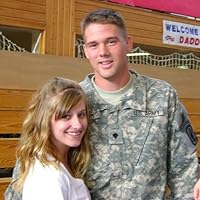
The bravery displayed by our soldiers at war is commonly recognized. However, often forgotten is the courage required by veterans when they return home and suddenly face reintegration into their families, workplaces, and communities. Authored by three mental health professionals with many years of experience counseling veterans, Courage After Fire provides strategies and techniques for this challenging journey home. Courage After Fire offers soldiers and their families a comprehensive guide to dealing with the all-too-common repercussions of combat duty, including posttraumatic stress symptoms, anxiety, depression, and substance abuse. It details state-of-the-art treatments for these difficulties and outlines specific ways to improve couple and family relationships. It also offers tips on areas such as rejoining the workforce and reconnecting with children.
“A crucial tool for the men and women who have been serving our country so VALIANTLY during these past years.” —Senator Bob Dole, from the foreword
“This extraordinary work will help the men and women returning from Iraq and Afghanistan find the COURAGE to rebuild their lives and be successful.” —Honorable Anthony J. Principi, Former Secretary of Veterans Affairs
The book told stories that will scare your loved ones about what can happen in the middle East but not necessarily what you went through. Then it gives you canned ideas for coping but keeps telling you to seek professional help. My experience with the VA is a 24 year old who never went to boot could not understand why the war is still in my head today and told me to just quit talking about it and it goes away. We all know that it not true. Just the paid professional does not want to do her job.
This book was a good read. I should have probably read it sooner but it's possible it was more useful once we hit rock bottom (6 months post deployment). Everyone prepares you, tells you it's going to be hard, tells you it won't be bad until you're through the honeymoon period, tells you have no idea what you're in for. They're all right. The pain before the deployment and during the deployment is nothing compared to post deployment. You're thrown back together and expected to be so happy, so thankful and when you're not you can't help but feel like you're failing.
Your solider is like a person on a sinking boat in the middle of the lake who doesn't know how to swim and you yourself can't swim and rescue them but you have to watch as they suffer. The good for me with this book was realizing while we're in this personal hell right now it could be a lot worse. Sometimes it is easy to lose that perspective when you're in the middle of the post deployment hell of trying to heal and readjust. What really breaks my heart is how many other families are out there in sinking boats just like us.
I read this book and took a lot of good from it. Keep yourself healthy, take care of your kids, support the solider, provide a peaceful supportive environment even when they're trying like crazy to thwart you and burn it down, exercise, eat right, see a therapist on your own to talk about the ridiculous amount of weight crushing you from housing a solider who has returned from a combat zone while trying to run your household and hide from the kids what is going on. My solider fell into the Anger category. The more you hold it together the more they will try to undermine it unknowingly while processing their feelings. Go into this knowing that is what is going on and it will aide you in keeping a level head and being able to carry on with your job as wife, mother, employee, person who keeps the world on it's axis while being the support they need.
I can't tell you enough how important it is to go to therapy yourself. You need to stay mentally healthy so you can be the rock while they get healthy. You need to keep everything together so they can carry on the important work they need to do mentally and physically. The better you do this the less likely they will be to break down at work, break down at home, go through the worst stages in the lowest places.
No one can tell you what it's going to be like afterward, it's something you have to go through. You don't want them to anyways, you might never make it through the deployment if you knew. Just know we're all out there doing the same thing. Most people probably won't get it. Cling to those who do and confide in them, lean on them, and thank them.
After you're done reading this book make your solider read it. If you think a time comes when they need to read it again make them read it again. If a time comes you need one of the resources in the back of the book use those resources, they're there for you to use, it's the purpose of their existence.
I received this book through the GoodReads First Reads program.
I really enjoyed reading this book. I have worked as a mental health professional in a VA in the past, and I hope to work in one again in the future. This book covers a lot of the struggles that a returning service member experiences and ways that a parent can help. I thought it was great that the authors include some stock sentences that parents can say to their children when they are struggling with coming up with the words themselves. There are also some great tools that the parents can use with their children (e.g., thought record and sleep hygiene recommendations). Another great thing about this book is that when research is discussed in the book, there is a citation on the page and the reference in the back of the book. I have read so many books that refer to research but never cite anything. If you feel the research is dubious in this book, you can look it up! For the researchers I recognized, however, the research was spot on. Finally, the real treasure in this book is all the resources that are listed in the back of the book. The military and other groups have tons of resources for veterans and service members, but sometimes it is hard to figure out where to go. This book gives you a fantastic starting off point.
My one critique of the book is that there is not a bigger push to seek professional mental health help for both the service member or the parent. I say this, because lots of the techniques described in the book (e.g., thought records) can be done alone, but this can be challenging. I would recommend doing many of these exercises with a professional. In other words, if you are a parent or service member and you feel that the tools in this book are helping but you are still struggling, please seek a professional for help.
This is not an academic work, or one full of pop psychology it is a very down to earth practical read for veterans and those they live with. It pinpoints accurately the impacts of combat on the thinking and behaviour of those who experience it and provides some very pragmatic ways of dealing with the difficulties that arise as a result. It is written from an American viewpoint with particular reference to Afghanistan and Iraq but it certainly has application for combat veterans coming home from any conflict.
The approaches outlined here make sense to me, some of them I worked out for myself (with variations) others I have come across in some form in other places. Hospitals (at least in Australia) dealing with returning combat veterans don't offer very much generally. Our veterans are pretty much left to their own devices to work it out. Books like this one are invaluable tools for those trying to find their way through the minefield of emotions, and adjustments that will always be part of "coming home". This is a book I can happily recommend as a starting point for any veteran having difficulties on their return. A good piece of useful work.
Courage After Fire provides a lot of useful information regarding what to expect after a loved one's deployment ends.
While the book is geared toward parents of service members, I think that other family members (siblings, significant others) can benefit from reading it as well.
Chapter topics include: Welcome Home! Reintegration Joys and Challenges; Professional, Vocational, and Financial Concerns; Deployment's Toll on the Mind and Spirit: Psychological Injuries and Spiritual Struggles; Deployment's Toll on the Body: Physical Injuries; How to Get Your Veteran the Health Care He or She Deserves; Strengthening and Maintaining Relationships within Your Family; and Caring Is Wearing: Taking Good Care of Yourself to Better Help Your Service Member.
The Resources appendix includes relevant books written by parents and spouces of military personnel, mental health and medical professionals; provides numbers of hotlines, crisis lines, and complaint lines; and links to relevant web sites. There is also information regarding financial assistance, health care, general benefits, different health issues, and higher education.
I wanted to read this book as a growing psychologist to hear what Armstrong had to say about coping when your children return from employment. I believe that Armstrong did a fine job of addressing both the parents' struggles and how their son or daughter must be feeling. I would definitely recommend this book as a starting point on how to deal; however if you're worried enough to be looking into this book, you may want to seek more outside help as well. Books work for the beginning steps though, and Armstrong did a fine job articulating on the subject.
4.5 stars actually. I think this is a solid primer for veterans, their families and friends, when someone is at the beginning stages of self-awareness and gravitating towards professional help. I imagine most vets won't simply seek this out. As I was reading it, I thought back to my first year back from Iraq in 2005, and I would not have been open to reading this, let alone following the knowledge and exercises prompted within it. I can only imagine what 18-21 year-olds would think. That said, family members could/ should embrace this book as a first step forward helping a veteran. The "Resources" section in the back is worth the read by itself.
Definitely a must read for veterans and their wives. Doesn't matter how long you've been in the military, if you come from a military family, if you're a vet yourself--nothing prepares you for the bottomless pit that is having a wounded warrior return from Iraq. You may have heard it all, but until you "walk in the shoes," you have no idea. This book is written in a manner that anyone can understand--practical and not over your head. Now, if it only helps.
I've always laughingly called this the "Why My Husband Sucks" book. It's concise and clear, and has helped me to understand why he acts the way he does. However, it doesn't do much good if I can't get him to read it. I appreciate the sections geared for those who were left behind, but I crave a section on how to get them to get help.
It's pretty helpful and telling you what it's going to be like when your husband comes home from combat. And little things not to do that the mass public ALWAYS does ie did you shoot anyone kinda questions...
I found this book to be helpful with understanding my husband after his deployment. There were many things that I hopefully will never have to worry about because of our faith.
Probably a lot more helpful for someone coming back from combat. I tried to pick out the sections for friends/family members which had lots of helpful info.