

What do you think?

Pauline Kael: A Life in the Dark
The first major biography of the most influential, powerful, and controversial film critic of the twentieth century
Pauline Kael was, in the words of Entertainment Weekly's movie reviewer Owen Gleiberman, "the Elvis or Beatles of film criticism." During her tenure at The New Yorker from 1968 to 1991, she was the most widely read and, often enough, the most provocative critic in America. In this first full-length biography of the legend who changed the face of film criticism, acclaimed author Brian Kellow gives readers a richly detailed view of Kael's remarkable life—from her youth in rural California to her early struggles to establish her writing career to her peak years at The New Yorker.
Pauline Kael was, in the words of Entertainment Weekly's movie reviewer Owen Gleiberman, "the Elvis or Beatles of film criticism." During her tenure at The New Yorker from 1968 to 1991, she was the most widely read and, often enough, the most provocative critic in America. In this first full-length biography of the legend who changed the face of film criticism, acclaimed author Brian Kellow gives readers a richly detailed view of Kael's remarkable life—from her youth in rural California to her early struggles to establish her writing career to her peak years at The New Yorker.
432 pages, Paperback
First published October 27, 2011
Ratings & Reviews
Friends & Following
Create a free account to discover what your friends think of this book!
Community Reviews
Displaying 1 - 30 of 89 reviews

May 30, 2015
According to Rex Reed, Pauline Kael was
always foaming at the mouth about something
According to Scott Eyman of the Wall Street Journal this book is
A convincing narrative of how a brazen woman with a basically unattractive but flagrantly domineering personality molded herself into a writer who could not be ignored… [it portrays] the woman in all her maddening overconfidence
Ouch, not a fan then, Rex and Scott? But yeah, you do not warm towards PK as you wend your way through the pages. In some ways it’s a cheerful tale – at 32 she was a single mother with a string of dead end jobs behind her and not much of an idea of how to make a living. Ten years later she was on her way to being “America’s most influential movie critic” or some such phrase. She was the embodiment of Nik Cohn’s formula for success : get obsessed and stay obsessed. She wrote about movies, that’s it. One after another, for 40 odd years. Then she stopped and died.
She got a big gig at The New Yorker at the same time that Donald Barthelme was publishing all his stories, but he doesn’t get a mention. Different worlds. PK’s gig was odd : 6 months on, 6 months off. They liked her but, you know, not enough to employ her for the whole year. And strangely nobody else wanted to hire her in the 6 months off per year.
Her private life was a bit of a sorry mess :
Again, Pauline was making a mistake that heterosexual women in the arts often made : they were surrounded by attractive, bright men unafraid to engage in emotional discourse, and they mistakenly thought that a passionate friendship could turn into an enduring romance. And the men, lacking strong gay role models, did their best to conform to what the women wanted them to be.
One time she got married to a guy called Edward Landberg.
She later told friends that she had cried all through the ceremony, knowing that the marriage was a mistake.
Edward agreed:
I soon found out that I couldn’t stand this woman.
Ouch, also not a fan.
She loudly broadcast opinions that were guaranteed to upset. She thought Last Tango in Paris broke through to some superior version of cinema (Bertolucci and Brando have altered the face of an art form. Who was prepared for that? ). She published a book on Citizen Kane which was then torn to shreds factually. She was very rude about Shoah. One could go on.
A lot of this book is about how she was unprofessional – picking favourite directors and schmoozing them, bigging up their pics and getting personally offended if they then didn’t do what she thought they should. (Robert Altman was the big one here). Or having numerous feuds with other critics. In these pages there’s always a teacup with a storm going off in it. Fellow crits come out with some great invective.
What she often practices now is an amalgam of idiosyncratic opinion, star gazing, myth-mongering, politics, sociological punditry and intervention
This stuff reached a peak in 1980 when Renata (Speedboat) Adler wrote a review/hatchet job of When the Lights Go Down, PK’s latest collection of reviews, which, she said, was
Jarringly, piece by piece, line by line, and without interruption, worthless… Mistaking lack of civility for vitality, she now substitutes for argument a protracted, obsessional invective… [she uses images of] sexual conduct, deviance, impotence, masturbation; also of indigestion, elimination, excrement. I do not mean to imply that these images are frequent, or that one has to look for them. They are relentless, inexorable. … [her reviews are] bullying, presuming, insulting, frightening, enlisting, intruding, dunning
Ouch, really not a fan.
And yet, PK regularly published collections of her reviews which always sold very well. What other movie critic did that? (I may add, what book reviewer has ever done that? ) So she sailed on, repelling all boarders, from the mid 60s all the way through the 70s and 80s. Up, in fact, to the point where the internet came along and cut the ground from under the big domineering cultural critics by allowing the hoi polloi to bray their jackass opinions all over the place.
CONTRARIANISM : A DIGRESSION
It can be an unsettling experience to leap into a movie or a novel with the fair wind of a thousand twangling five star reviews in your ears only to find that the bottom has fallen out of this particular carnival ride and you are falling falling, you hate this thing like poison….and… why are they saying these things? Can’t they see it’s meretricious, puerile, an insult to anyone’s intelligence? Am I alone here on Planet Earth?
I have had that experience with books and movies many times. To take a few well-loved novels which I hated and have issued acidulous one star reviews:
The Jewel in the Crown
White Noise
Possession
American Psycho
The Slap
Gone Girl
The Comfort of Strangers
Independence Day
Earthly Powers
Extinction
The Catcher in the Eye
White Teeth
The Wind-Up Bird Chronicle
Go, Piper Laurie, go!
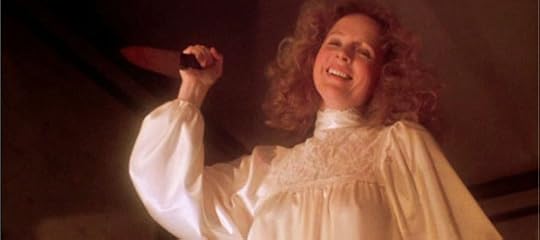
And a few critically bejizzed movies I likewise felt sullied by
Amadeus
Gandhi
I Heart Huckabees
In Bruges
Lust Caution
The Matrix
Moulin Rouge
Pretty Woman
The Squid and the Whale
Suspiria
The Consequences of Love
Lost in Translation
All the above get a lot of love from all and sundry, except me. As there is no Goodreads film equivalent that I’ve been able to find the above one star vituperations exist only in my mind.
Yes… do it, Piper! Ha haa!
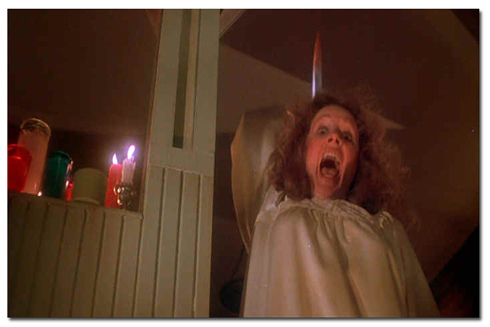
Take that, Lost in Translation!

April 18, 2012
I was lucky enough to know her pretty well, or at least I thought I did. No one knew the "real" her, but it didn't matter, as the TRUE real her was revealed in the reviews that would appear on alternate Wednesdays in the New Yorker. She was always an event, and remains so. I met her when I was sixteen, and had just taken a summer film making course which used I LOST IT AT THE MOVIES as a text. She taught me how to see, and look beyond received opinion, how to massage a work into submission, how to wrestle the various angels of cinema to the ground. She was tiny and profane and a treasure who discovered herself, with no help from anyone. The book takes her at her measure, whatever that means, but I hope it means something positive. Kellow has done a wonderful job of research into someone who tried to cover most of her tracks. I honored her even more after reading this, an experience all too rare after reading a bio of someone you thought was wonderful in those all too brief days before you knew better.

December 13, 2011
Smashing bio of a forceful critic born to chicken farmers
in Petaluma, Ca. (Her only rival in last 50 years is Andrew
Sarris). Like stars she admired - Stanwyck & Davis - she was
independent, fearless; she also played favorites. She had one child out of
wedlock, a brief marriage. After attending UCB, she dallied
at boring jobs and realized that Film was what aroused her
passion. To hell with sex, she lost it at the Movies.
PK honed her critical musings in literary-filmzines and w her
keen "Notes" for a Berkeley art house. After a long, tough life
(she cared little for money), she landed at the NYer as she
was nearing 50. Her vibrant, emotional "voice," coupled w
trenchant writing when Hollywood was having a '70s Renaissance, made her a surprise media Star.
She was a dominatrix. She bullied Wm Shawn who let her bring
a vernacular tone to his pages but refused to let her use
the phrase "pussy-whipped." PK adored courtship by filmmakers.
Some she'd support, others she'd verbally abuse -- loudly,
publicly. She had no qualms about filching Orson Welles
research from a young UCLA professor. She knew his boss,
didn't he want tenure? This is the most damning fact in
a balanced bio. Anyway, who cares about morality, eh??
Not Pauline of Petaluma.
How the dame could write! You might avoid her at a party
or screening, but you wouldn't miss her latest column. She
was able to convey visually what excited or vexed her onscreen.
This made her unique. Excerpting reviews, author Kellow -- a
marvelous writer himself -- brings to life film history and
US socio-cultch during the last 30 years of the 20thC.
PK's extra ingredient: sense of humor. When a friend called
to lament Nixon, Krushchev, Vietnam, she listened patiently,
then said: "And there's not even a decent movie to see."
in Petaluma, Ca. (Her only rival in last 50 years is Andrew
Sarris). Like stars she admired - Stanwyck & Davis - she was
independent, fearless; she also played favorites. She had one child out of
wedlock, a brief marriage. After attending UCB, she dallied
at boring jobs and realized that Film was what aroused her
passion. To hell with sex, she lost it at the Movies.
PK honed her critical musings in literary-filmzines and w her
keen "Notes" for a Berkeley art house. After a long, tough life
(she cared little for money), she landed at the NYer as she
was nearing 50. Her vibrant, emotional "voice," coupled w
trenchant writing when Hollywood was having a '70s Renaissance, made her a surprise media Star.
She was a dominatrix. She bullied Wm Shawn who let her bring
a vernacular tone to his pages but refused to let her use
the phrase "pussy-whipped." PK adored courtship by filmmakers.
Some she'd support, others she'd verbally abuse -- loudly,
publicly. She had no qualms about filching Orson Welles
research from a young UCLA professor. She knew his boss,
didn't he want tenure? This is the most damning fact in
a balanced bio. Anyway, who cares about morality, eh??
Not Pauline of Petaluma.
How the dame could write! You might avoid her at a party
or screening, but you wouldn't miss her latest column. She
was able to convey visually what excited or vexed her onscreen.
This made her unique. Excerpting reviews, author Kellow -- a
marvelous writer himself -- brings to life film history and
US socio-cultch during the last 30 years of the 20thC.
PK's extra ingredient: sense of humor. When a friend called
to lament Nixon, Krushchev, Vietnam, she listened patiently,
then said: "And there's not even a decent movie to see."

December 14, 2011
Dorothy Parker sans Liquor?
What a character Pauline Kael was! I know people say that about others all the time but Kael was certainly original both as a person and a film critic. Author Kellow has done a great job of highlighting some of her key reviews and the incidents that helped shape her views. The book reads almost like fiction at times…..all 400 plus pages. The subtitle: “A Life in the Dark” truly applies. Kael never gets out of her own way yet her outrageous style helps people connect with her; or loath her. She reviewed from the 60’s to the 80’s mostly for “The New Yorker”. She grew up during the depression on a small California farm and went to school at UC Berkeley where she met many intellectuals that shared her passion for movies and books and the world around them. Kael never felt accepted by the New York literary blue bloods. That chip went to the grave with her. I loved hearing her opinions on movies I’d hated or loved especially from the 70’s. Her visceral, in your face writing style is amazing. She had passion. I’m not so sure I’d have wanted to meet her in person though.
This review was based on an egalley supplied by the publisher.
What a character Pauline Kael was! I know people say that about others all the time but Kael was certainly original both as a person and a film critic. Author Kellow has done a great job of highlighting some of her key reviews and the incidents that helped shape her views. The book reads almost like fiction at times…..all 400 plus pages. The subtitle: “A Life in the Dark” truly applies. Kael never gets out of her own way yet her outrageous style helps people connect with her; or loath her. She reviewed from the 60’s to the 80’s mostly for “The New Yorker”. She grew up during the depression on a small California farm and went to school at UC Berkeley where she met many intellectuals that shared her passion for movies and books and the world around them. Kael never felt accepted by the New York literary blue bloods. That chip went to the grave with her. I loved hearing her opinions on movies I’d hated or loved especially from the 70’s. Her visceral, in your face writing style is amazing. She had passion. I’m not so sure I’d have wanted to meet her in person though.
This review was based on an egalley supplied by the publisher.

June 22, 2012
Brian's Review:
In 1993, when I was eight years old, two events shaped the way I would forever look at movies: seeing Steven Spielberg’s Jurassic Park opening weekend with my dad, and receiving a CD-ROM entitled Microsoft Cinemania ’94, a disc jam-packed with info, pictures, video, and reviews of every movie made from the dawn of cinema to the (at-that-time) present. I was a super geek at the time—well, you could argue I still am—and for years I spent my nights perusing my Cinemania. (I now have the ability to recite the release year of almost every movie ever made, and I think it stems from the time I spent with the CD-ROM program.) Cinemania was my introduction to two film critics I would follow my entire life—even today, even this morning—Leonard Maltin and Roger Ebert. On one magical day at the Sundance Film Festival 2005, I got to meet both critics and tell them how much their writing had meant to a film lover like myself. Maltin’s reviews were short and to the point, and Ebert’s reviews were more like long, thoughtful essays.
Microsoft Cinemania was a favorite tool from my childhood, but the one element of it I didn’t fully appreciate at the time was the reviews written by Pauline Kael, the third and final critic whose writing was featured on the software program. While there was a structure to Maltin and Ebert’s reviews, Kael’s was less so, more rambling and personal, with big block paragraphs and long-winded sentences. I remember at the time always skipping her review in favor of what Maltin or Ebert had to say about the movie in question. But her last name has always stuck out in my mind over the years, and when I saw that her very first biography had been penned, I knew I wanted to snatch up the first copy I could find. And I’m sure glad I did.
Pauline Kael: A Life in the Dark is a fascinating look at a female film critic who flourished in the late 60’s and early 70’s at The New Yorker, during a time of true artistry in the film industry, when directors were raw and ambitious and uncompromising in their visions, without much producer and studio interference. Just as Roger Ebert did, Kael got her start professionally reviewing films during this time and got to be at the forefront of a film revolution. I love to read about the history of films, especially in regards to awards and criticism, and Pauline Kael: A Life in the Dark gave me the same kind of joy that similarly-themed books like Easy Riders, Raging Bulls and Pictures at a Revolution gave me. While I wasn’t alive during that exciting, constantly changing shift in the culture, I love reading about it, and Kellow does a fantastic job in this biography interweaving Kael’s life in with the larger picture of what movies were becoming and where they were headed.
Kael’s life may not have been the most mesmerizing, but what interested me about her was that she was a woman growing up during the Great Depression and becoming an adult during the 40’s and 50’s, a time when so many women accepted a life at home with their children and their kitchens—but she refused to settle, and she instead focused on a writing career that didn’t fully take off until she was nearing age fifty. Kael is a fascinating subject because in a time of such politeness, of such political correctness, she broke out of the mold and patented an exciting, original voice in the film commentary scene. She didn’t just give the reader of her reviews the facts and her generic thoughts on a movie—she delivered her experience of watching the movie to her readers. It was often asked of her why she only watched movies once, and she said that the truest reaction one has to a movie comes during that first viewing, that to watch a movie again and again would deplete its freshness.
Kael’s takes on movies sometimes went against the universal opinion—movies she didn’t worship like everyone else included It’s a Wonderful Life, West Side Story, Lawrence of Arabia, A Clockwork Orange, and Network, to name a few. She hated Clint Eastwood, loathed most musicals, and abhorred the work of Alfred Hitchcock (!). She was a constant center of controversy, what with her arguing that Orson Welles wasn’t the true author of Citizen Kane, or her tendency to champion certain directors’ films more than others (ie, Robert Altman and Sam Peckinpah), and her decision in the late 70’s to embark on a producing career in Hollywood. She also disagreed with the great Village Voice film critic Andrew Sarris (who passed away this week) about the auteur theory—unlike Sarris, she believed that a director shouldn’t necessarily put his stamp on every motion picture he creates.
Reading about her life was an exhilarating experience, one that Brian Kellow has researched and put together in sublime fashion. It’s a fascinating read not just for those who knew about and wanted to read more about Kael, but also for those who have an appreciation for film history. It may not be the most exciting look at a life, but there’s still some meaty stuff in the pages. If there’s anything about Kael’s personal life that hangs over the entire book, it’s her relationship with her one and only child Geena, who Kael kept physically close but emotionally closed off from throughout the majority of her life. It’s a sad element in the book, one that’s not glossed over too much, but rightfully so; not dwelling on it time and time again actually makes the story of their unusual relationship more indelible to the reader.
If there’s any regret I have about Pauline Kael, is that, unlike Leonard Maltin and Roger Ebert, I never got to meet her. I wish I could have enjoyed a chat over coffee with her in the late 90’s when she was still alive (Kael died in 2001), talking about movies, directors, our passions for film reviewing and film going. Pauline Kael was a neat lady, absolutely worthy of a 350-plus page biography, and Brian Kellow has written a great one.
What I Liked: Pretty much everything. My biggest worry in starting this biography was that it might be dull, but it was anything but. I have an intense love of cinema, so I was hooked into this book from beginning to end, but even if movies aren’t your raison d’etre, you’ll find a lot to love. Pauline Kael wasn’t juch a fascinating film critic, she was a fascinating person, and this book brings out all of her talent, her tics, her interests, her flaws. I loved Pauline Kael: A Life in the Dark, and I know you will, too.
What I Didn’t Like: Kael’s personal life wasn’t exactly fascinating enough to fill an entire book—I understand that—but Kellow pads the book at times with too much filler about what she thought of certain movies. While I enjoyed the little anecdotes that accompanied a lot of her takes on films, at times the blocks of paragraphs about what she liked in 1977 and didn’t like in 1985 got a little repetitive. And Kellow inexplicably agrees with Kael’s dislike for Network, as if it’s some trash movie that has been unfairly lauded. Huh? Network is one of the best movies ever made!
GRADE: A-. If you’re a fan of Easy Riders, Raging Bulls or Pictures at a Revolution, or film criticism, or films in general, or just awesome, barrier-breaking gals of yesteryear, buy this book! You won’t regret it!
In 1993, when I was eight years old, two events shaped the way I would forever look at movies: seeing Steven Spielberg’s Jurassic Park opening weekend with my dad, and receiving a CD-ROM entitled Microsoft Cinemania ’94, a disc jam-packed with info, pictures, video, and reviews of every movie made from the dawn of cinema to the (at-that-time) present. I was a super geek at the time—well, you could argue I still am—and for years I spent my nights perusing my Cinemania. (I now have the ability to recite the release year of almost every movie ever made, and I think it stems from the time I spent with the CD-ROM program.) Cinemania was my introduction to two film critics I would follow my entire life—even today, even this morning—Leonard Maltin and Roger Ebert. On one magical day at the Sundance Film Festival 2005, I got to meet both critics and tell them how much their writing had meant to a film lover like myself. Maltin’s reviews were short and to the point, and Ebert’s reviews were more like long, thoughtful essays.
Microsoft Cinemania was a favorite tool from my childhood, but the one element of it I didn’t fully appreciate at the time was the reviews written by Pauline Kael, the third and final critic whose writing was featured on the software program. While there was a structure to Maltin and Ebert’s reviews, Kael’s was less so, more rambling and personal, with big block paragraphs and long-winded sentences. I remember at the time always skipping her review in favor of what Maltin or Ebert had to say about the movie in question. But her last name has always stuck out in my mind over the years, and when I saw that her very first biography had been penned, I knew I wanted to snatch up the first copy I could find. And I’m sure glad I did.
Pauline Kael: A Life in the Dark is a fascinating look at a female film critic who flourished in the late 60’s and early 70’s at The New Yorker, during a time of true artistry in the film industry, when directors were raw and ambitious and uncompromising in their visions, without much producer and studio interference. Just as Roger Ebert did, Kael got her start professionally reviewing films during this time and got to be at the forefront of a film revolution. I love to read about the history of films, especially in regards to awards and criticism, and Pauline Kael: A Life in the Dark gave me the same kind of joy that similarly-themed books like Easy Riders, Raging Bulls and Pictures at a Revolution gave me. While I wasn’t alive during that exciting, constantly changing shift in the culture, I love reading about it, and Kellow does a fantastic job in this biography interweaving Kael’s life in with the larger picture of what movies were becoming and where they were headed.
Kael’s life may not have been the most mesmerizing, but what interested me about her was that she was a woman growing up during the Great Depression and becoming an adult during the 40’s and 50’s, a time when so many women accepted a life at home with their children and their kitchens—but she refused to settle, and she instead focused on a writing career that didn’t fully take off until she was nearing age fifty. Kael is a fascinating subject because in a time of such politeness, of such political correctness, she broke out of the mold and patented an exciting, original voice in the film commentary scene. She didn’t just give the reader of her reviews the facts and her generic thoughts on a movie—she delivered her experience of watching the movie to her readers. It was often asked of her why she only watched movies once, and she said that the truest reaction one has to a movie comes during that first viewing, that to watch a movie again and again would deplete its freshness.
Kael’s takes on movies sometimes went against the universal opinion—movies she didn’t worship like everyone else included It’s a Wonderful Life, West Side Story, Lawrence of Arabia, A Clockwork Orange, and Network, to name a few. She hated Clint Eastwood, loathed most musicals, and abhorred the work of Alfred Hitchcock (!). She was a constant center of controversy, what with her arguing that Orson Welles wasn’t the true author of Citizen Kane, or her tendency to champion certain directors’ films more than others (ie, Robert Altman and Sam Peckinpah), and her decision in the late 70’s to embark on a producing career in Hollywood. She also disagreed with the great Village Voice film critic Andrew Sarris (who passed away this week) about the auteur theory—unlike Sarris, she believed that a director shouldn’t necessarily put his stamp on every motion picture he creates.
Reading about her life was an exhilarating experience, one that Brian Kellow has researched and put together in sublime fashion. It’s a fascinating read not just for those who knew about and wanted to read more about Kael, but also for those who have an appreciation for film history. It may not be the most exciting look at a life, but there’s still some meaty stuff in the pages. If there’s anything about Kael’s personal life that hangs over the entire book, it’s her relationship with her one and only child Geena, who Kael kept physically close but emotionally closed off from throughout the majority of her life. It’s a sad element in the book, one that’s not glossed over too much, but rightfully so; not dwelling on it time and time again actually makes the story of their unusual relationship more indelible to the reader.
If there’s any regret I have about Pauline Kael, is that, unlike Leonard Maltin and Roger Ebert, I never got to meet her. I wish I could have enjoyed a chat over coffee with her in the late 90’s when she was still alive (Kael died in 2001), talking about movies, directors, our passions for film reviewing and film going. Pauline Kael was a neat lady, absolutely worthy of a 350-plus page biography, and Brian Kellow has written a great one.
What I Liked: Pretty much everything. My biggest worry in starting this biography was that it might be dull, but it was anything but. I have an intense love of cinema, so I was hooked into this book from beginning to end, but even if movies aren’t your raison d’etre, you’ll find a lot to love. Pauline Kael wasn’t juch a fascinating film critic, she was a fascinating person, and this book brings out all of her talent, her tics, her interests, her flaws. I loved Pauline Kael: A Life in the Dark, and I know you will, too.
What I Didn’t Like: Kael’s personal life wasn’t exactly fascinating enough to fill an entire book—I understand that—but Kellow pads the book at times with too much filler about what she thought of certain movies. While I enjoyed the little anecdotes that accompanied a lot of her takes on films, at times the blocks of paragraphs about what she liked in 1977 and didn’t like in 1985 got a little repetitive. And Kellow inexplicably agrees with Kael’s dislike for Network, as if it’s some trash movie that has been unfairly lauded. Huh? Network is one of the best movies ever made!
GRADE: A-. If you’re a fan of Easy Riders, Raging Bulls or Pictures at a Revolution, or film criticism, or films in general, or just awesome, barrier-breaking gals of yesteryear, buy this book! You won’t regret it!

December 22, 2011
I was a mini-Paulette in my day. If you have to ask, this book is probably not for you. Each week, starting when I was in college and in the early stages of movie-bratdom, I would rush to the mailbox for my New Yorker, for my Kael fix. She was exhilarating and infuriating, informative and solipsistic. Everything I aspired to. I know my editorial voice was formed by her know-it-all stridency. I know my taste in movies was influenced by her passions. In this, of course, I am not alone. The whole culture was, and we're the better for it, as little memory bombs embedded in this well-wrought biography reminds the reader -- her obsession with Altman, her paean to LAST TANGO, her fights, her flights of linguistic acrobatics. Her slang. Her sheer energy. Except what she included in her columns, which periodically was a lot, I knew less about her off-stage life, especially in the later days when movies mattered less, and so did she. I was only vaguely aware of her seduction into the studio system at the hands of Warren Beatty, much less what happened. I did not follow the bitch-match that followed her apparently savage attack on Orson Welles's auteurship of Citizen Kane. Nor until recently had I grasped her uncanny ability to fall in love with gay men, including the father of her only child, a person she dominated in fairly unsavory ways, just as she did her acolytes. So my Kael love remained somewhat unsullied and pure, based upon the writing itself. Ah, another clay statue crumbles. This is a good read, well researched and almost as fearless as PK herself.

October 21, 2011
I can't remember what led me to Pauline Kael's books. I borrowed them one by one from my high school library, and devoured each one regardless of my interest in the individual movies to which she referred. I joined the school newspaper, and tried my best to imitate her strange approach to her subject matter.
This book didn't really do anything for me that Kael's own books didn't do better. It gave a little context for some of the reviews that I read out of time and out of place. It sketched out her biography, which didn't really add anything for me. The author is capable enough, but his writing doesn't have any sparkle compared to that of his subject matter. If you're interested in Pauline Kael, read Pauline Kael.
This book didn't really do anything for me that Kael's own books didn't do better. It gave a little context for some of the reviews that I read out of time and out of place. It sketched out her biography, which didn't really add anything for me. The author is capable enough, but his writing doesn't have any sparkle compared to that of his subject matter. If you're interested in Pauline Kael, read Pauline Kael.

June 9, 2019
Late in this biography of Pauline Kael (1919-2001), I came across this passage, which dealt with her life after she retired from regular reviewing for the New Yorker:
"An endless stream of writers still sought her out for interviews, demanding to know what she thought of the current stream of films and directors. There was still an army of readers who felt cut adrift without her to lean on as their guide to the world of moviemaking." (p. 355)
I know how they feel. When Roger Ebert died in 2013, I likewise felt "cut adrift" without his reviews to guide me through the movies that have come out since. At least with Kael, she could still give her opinions after that last review was printed. But, like Ebert, no one has been able to replace her, and with the current state of film criticism (and criticism in general), no one will ever be as influential.
I originally read this book because I was disappointed with the documentary I'd seen about Kael, titled What She Said: The Art of Pauline Kael. In covering its subject, it was what Kael never was: forgettable. it's not a bad documentary: it dotted it's 'i's and crossed its 't's, but it didn't feel cinematically alive -- something shocking in a movie about someone who breathed cinema like Kael did.
The book, on the other hand, goes deeper and broader than the movie, and so is a better place to start in understanding her impact on movies, movie criticism, writing, and culture. It also delves deeper into her character, though the research is medium-deep: this isn't a scholarly work, but a medium-brow biography, which I think Kael would approve of, since she hated high-brow pomposity.
Brian Kellow isn't afraid to offer his own views on the movies she critiques, mostly agreeing with her on all but the most controversial of her reviews (e.g. Shoah), and yet always trying to understand her reasoning behind those controversial reviews. Where he's occasionally found wanting is in his psychological probing of Kael's character. He does a better job than the movie in going into her background to describe how she could be cruel in her assessments of people without realizing how much she hurt them, but we never figure out the reasoning behind her theft of the research material for "Raising Kane." Likewise, her relationship with her daughter is scrutinized, but we only get glimmers of what Gina James felt about her mom (not surprising, since the acknowledgments note that she declined to participate in the writing of this book, though she did participate in the documentary). This might be unavoidable: Kael herself hardly mentioned her childhood and seemed to be pretty private when it came to family matters.
All-in-all, this is a satisfying biography of the controversial and beloved film critic, to be read as a companion piece to the many reviews she left us, for as she wrote in For Keeps, "I'm frequently asked why I don't write my memoirs. I think I have." (p. 347,361)
"An endless stream of writers still sought her out for interviews, demanding to know what she thought of the current stream of films and directors. There was still an army of readers who felt cut adrift without her to lean on as their guide to the world of moviemaking." (p. 355)
I know how they feel. When Roger Ebert died in 2013, I likewise felt "cut adrift" without his reviews to guide me through the movies that have come out since. At least with Kael, she could still give her opinions after that last review was printed. But, like Ebert, no one has been able to replace her, and with the current state of film criticism (and criticism in general), no one will ever be as influential.
I originally read this book because I was disappointed with the documentary I'd seen about Kael, titled What She Said: The Art of Pauline Kael. In covering its subject, it was what Kael never was: forgettable. it's not a bad documentary: it dotted it's 'i's and crossed its 't's, but it didn't feel cinematically alive -- something shocking in a movie about someone who breathed cinema like Kael did.
The book, on the other hand, goes deeper and broader than the movie, and so is a better place to start in understanding her impact on movies, movie criticism, writing, and culture. It also delves deeper into her character, though the research is medium-deep: this isn't a scholarly work, but a medium-brow biography, which I think Kael would approve of, since she hated high-brow pomposity.
Brian Kellow isn't afraid to offer his own views on the movies she critiques, mostly agreeing with her on all but the most controversial of her reviews (e.g. Shoah), and yet always trying to understand her reasoning behind those controversial reviews. Where he's occasionally found wanting is in his psychological probing of Kael's character. He does a better job than the movie in going into her background to describe how she could be cruel in her assessments of people without realizing how much she hurt them, but we never figure out the reasoning behind her theft of the research material for "Raising Kane." Likewise, her relationship with her daughter is scrutinized, but we only get glimmers of what Gina James felt about her mom (not surprising, since the acknowledgments note that she declined to participate in the writing of this book, though she did participate in the documentary). This might be unavoidable: Kael herself hardly mentioned her childhood and seemed to be pretty private when it came to family matters.
All-in-all, this is a satisfying biography of the controversial and beloved film critic, to be read as a companion piece to the many reviews she left us, for as she wrote in For Keeps, "I'm frequently asked why I don't write my memoirs. I think I have." (p. 347,361)

February 20, 2020
"I'm frequently asked why I don't write my memoirs. I think I have." Pauline Kael, one of the most recognizable film critics, lived her life with movies. Perhaps it's fitting, then, that Kellow's book remains shallow in its consideration of Kael's personal life. Her story is wrenched from her reviews, which frequently put her fiery personality on display.

July 11, 2014
Rarely have I read a biography where I felt so much antipathy toward the subject. I was hoping to learn something of the dynamics of movie development and criticism in this book, and the remarkable career of an influential movie critic, but the overwhelming reaction I felt was how much I really did not like this woman. She was driven, overbearing, and, worst of all, unkind.(OK, a critic shouldn't be concerned with kindness, but there were certain basic human qualities that Ms. Kael seemed to lack.) As the author described her rising influence, reaching a pinnacle as movie critic for The New Yorker, in the 60's through 90's, I couldn't wait for her to receive a comeuppance and to suffer a slow demise. The author doesn't do much to humanize her. It's basically a recitation of her reviews - what she liked and what she didn't. Her opinions were mostly hyperbole - stuff was either the best or the worst. If her opinions were nuanced, it doesn't come through at all. Also, the excerpts quoted here often just didn't make any sense to me. The metaphors in her reviews often left me thinking, "Whaaa??" She was full of herself, and was tone deaf to the sensibilities of others, including her repressed and virtually enslaved daughter. She considered herself as more than a critic, rather the person who could influence the development of the film industry in a manner which she felt (knew) was best. When Warren Beatty hired her to work in Hollywood to supply her advice directly to the studios, she was a resounding flop. As a critic, she was wordy, bitchy, profane, and a challenge to the long suffering New Yorker editor William Shawn. But she had an enthusiasm for film that wouldn't stop and she had a devoted following of readers and acolytes. But she also left a lengthy trail of wounded targets.

October 22, 2011
The last time I was this excited to read a newly published biography was back in 1988, when Private Demons, Judy Oppenheimer’s bio of Shirley Jackson, was published. I grew up on Pauline Kael’s movie reviews and I totally get what the biographer means when he states in the afterword that “she toughened me up intellectually.” Too many people I’ve encountered in life (and the microcosm of life known as the internets) have the misguided notion that a good critic is someone with whom you agree, which is not only narcissistic but a great way to close your mind to new ideas and other ways of thinking. And don't even get me started on those who dismiss all critics with blanket angry contempt - those people always strike me as being very insecure above all else. Kael was a wonderful, iconoclastic writer and I was happy to read this account of her life, warts and all – yes, sometimes the warts here are warty indeed, but they never superseded my ultimate admiration and affection for Kael and her body of work. In particular, the brief golden period in the early to mid-70's when American cinema had an unprecedented period of artistic growth is beautifully documented through the lens of Kael's reviews, to the point where the era and Kael seem inextricably entwined. I think Kellow did her proud.

June 4, 2013
Who the heck is Pauline Kael? I had no idea before I picked up this book. I’m not sure it’s a good idea to read a biography of someone you’ve never heard of. On the one hand, it’s all new information so you don’t experience the fatigue of hearing the same stories over again. On the other hand, you have no emotional investment in the subject. There is a reason that biography is generally kept in a separate section from other non-fiction in the library, it fills a different need. Most non-fiction books are meant to teach the uninitiated about a subject, whereas biographies are often preaching to the choir. They have a chummy tone that is a little grating if you’re not in club.
Pauline Kael is a fairly interesting person, though I’m not sure there was a need for this biography. Personally, I think I would have been better off just reading one of books she published. The best part of the biography is the excerpted movie reviews. Kellow offers some insight into those reviews, citing moments when he thinks she’s a bit off the mark. Mostly, though, he’s a cheerleader. I almost gave up on this book about halfway through, but I slogged my way through. I’m glad I know who Pauline Kael is now, but I’m not happy I read this book.
Pauline Kael is a fairly interesting person, though I’m not sure there was a need for this biography. Personally, I think I would have been better off just reading one of books she published. The best part of the biography is the excerpted movie reviews. Kellow offers some insight into those reviews, citing moments when he thinks she’s a bit off the mark. Mostly, though, he’s a cheerleader. I almost gave up on this book about halfway through, but I slogged my way through. I’m glad I know who Pauline Kael is now, but I’m not happy I read this book.

May 13, 2012
Pauline Kael, a longtime movie reviewer for the New Yorker had an acerbic tongue and a sharp wit. She pulled no punches with her reviews, skewering some of the most popular films of her time. She didn't limit her withering criticism to movies, she also targeted fellow film critics. She didn't accumulate only enemies though. A group of young, aspiring writers formed an informal fan club know as the Paulettes. These young hangers on were never allowed to overshadow their mentor. That was the kiss of death for the relationship.
I present this anecdote from the book which is profane and hilarious.
Pauline lived in a small town in New York State. One Mother's Day she went shopping at a hardware store in town. The proprietor offered her a small gift saying "You look like somebody's mother and grandmother." Pauline's reply - "Fuck you. I've written ten books you know". That remark speaks volumes about Ms Kael's personality.
I present this anecdote from the book which is profane and hilarious.
Pauline lived in a small town in New York State. One Mother's Day she went shopping at a hardware store in town. The proprietor offered her a small gift saying "You look like somebody's mother and grandmother." Pauline's reply - "Fuck you. I've written ten books you know". That remark speaks volumes about Ms Kael's personality.

April 9, 2012
This was WORSE than the lousy Wasserstein bio. It is in NO WAY a biography. The sniggering title tells it all. Mainly he just goes through her reviews, year by year, sometimes month by month, and excerpts them -- you could read For Keeps instead.

October 10, 2014
I think this book would only be intetesting to people who love movies( which I do). The problem is that I found her life way less interesting than her movie reviews. I think this book needed more teview snippets and less about Her life.

June 25, 2019
When my husband and I were college students in the seventies we went to the movies at least three or four times a week. His involvement in both the Rhode Island College Board of Governors, which booked campus entertainment including film, as well as his work with the Distinguished Film series, films for both our classes, and movies that we saw on our own added up to large scale movie-going. Throughout that decade and well beyond, we depended upon Pauline Kael’s reviews both to keep abreast of the quality of films and to revel in great writing. Over the years we amassed and read all of her books from cover to cover and later thumbing through them for sheer reading pleasure. Her keen perception, acerbic wit, and razor-sharp use of the vernacular always make for fascinating reading. I did not always see eye to eye with her, sometimes thinking, “Yes, she’s right but I like this movie anyway,” other times disagreeing vehemently, but I never fail to respect her passion and commitment to film.
I read recently a comment observing that Kael was not really a critic, rather she was a writer whose medium was film. It is a perfect assessment.
Acquiring Brian Kellow’s 2011 biography of Kael some time ago, I set it aside in one of my many TBR piles. I finally picked it up this week, not sure how interesting it could be.
It is, in a word, fabulous. Kellow achieves what every great biographer sets out, or should, to do: paint a portrait of a legend that is fair, thorough, and honest. This is no hagiography. Kellow obviously has deep affection for and respect for Kael, yet he composes a fair examination of her prodigious talent side by side with her idiosyncrasies and many imperfections. She was difficult. Kellow balances his study with a cogent analysis of her reviews and provides context for some of her hurtful insults and disparaging assessments, as well as the praise she heaped on her favorite movies and directors He is not afraid to note where she goes too far in either direction.
Admirers and detractors alike of Kael’s provocative writing will find an evenhanded account of one of the most influential writers of our age. Anyone who loves film and writing will find a treasure trove in these pages.
I think it’s time to revisit Kael’s books. Again.
Years ago Pauline Kael came to speak at my alma mater. It was an mid-week afternoon event and sparsely attended. I sat right up front near the stage. Glancing to my right I spotted sitting by herself in the front section a tiny, gray haired elderly woman in a polyester pant suit. After a few moments I thought Oh my goodness, it's her! It was. After being introduced, this frail peanut of a woman walked up the stairs and took center stage. As soon as she opened her mouth she was on fire. There was no doubt that this was Pauline Kael
I read recently a comment observing that Kael was not really a critic, rather she was a writer whose medium was film. It is a perfect assessment.
Acquiring Brian Kellow’s 2011 biography of Kael some time ago, I set it aside in one of my many TBR piles. I finally picked it up this week, not sure how interesting it could be.
It is, in a word, fabulous. Kellow achieves what every great biographer sets out, or should, to do: paint a portrait of a legend that is fair, thorough, and honest. This is no hagiography. Kellow obviously has deep affection for and respect for Kael, yet he composes a fair examination of her prodigious talent side by side with her idiosyncrasies and many imperfections. She was difficult. Kellow balances his study with a cogent analysis of her reviews and provides context for some of her hurtful insults and disparaging assessments, as well as the praise she heaped on her favorite movies and directors He is not afraid to note where she goes too far in either direction.
Admirers and detractors alike of Kael’s provocative writing will find an evenhanded account of one of the most influential writers of our age. Anyone who loves film and writing will find a treasure trove in these pages.
I think it’s time to revisit Kael’s books. Again.
Years ago Pauline Kael came to speak at my alma mater. It was an mid-week afternoon event and sparsely attended. I sat right up front near the stage. Glancing to my right I spotted sitting by herself in the front section a tiny, gray haired elderly woman in a polyester pant suit. After a few moments I thought Oh my goodness, it's her! It was. After being introduced, this frail peanut of a woman walked up the stairs and took center stage. As soon as she opened her mouth she was on fire. There was no doubt that this was Pauline Kael

January 13, 2020
Initially, I wanted to see the new documentary on Pauline Kael, but it had very poor reviews, so I turned to this 2011 biography.
The description of her long struggle to identify a possible career and find regular work is impressive and perhaps the most gripping part of the biography. She was 33 when her first movie review was published and she still lived on a pittance in her 40s.
The treatment of her life after she found a position at the New Yorker is less riveting. She didn’t travel much, had only one brief marriage, and had few interests outside movie reviewing. So the pleasure is largely from comparing her take on key movies of the 60s through the 80s, plus the gossipy pleasure of hearing about her feuds with academics, editors, and other movie reviewers.
Kael was often not a pleasant person, by all accounts. She was emotionally tone deaf and steamrolled directors, actors, and other reviewers in expressing her opinions, sometimes cruelly.
Her daughter, speaking at her funeral, summed it up well:
“In my youth, I watched what she left, unaware, in her wake: flickering glimpses of crushed illusions, mounting insecurities, desolation. ... This lack of introspection, self-awareness, restraint, or hesitation gave Pauline supreme freedom to speak up, to speak her mind, to find her honest voice. She turned her lack of self-awareness into a triumph.”
While I enjoyed the biography, I would have appreciated a more developed final chapter on her legacy. What movies did she support that otherwise would have been missed by the public? Which actors and directors did she help launch in their careers? Did she leave her mark on the industry or on reviewing practices in any way? There are brief references to her influence throughout the book, and an attempt at a stocktaking at the end of her career would have been welcome.
The description of her long struggle to identify a possible career and find regular work is impressive and perhaps the most gripping part of the biography. She was 33 when her first movie review was published and she still lived on a pittance in her 40s.
The treatment of her life after she found a position at the New Yorker is less riveting. She didn’t travel much, had only one brief marriage, and had few interests outside movie reviewing. So the pleasure is largely from comparing her take on key movies of the 60s through the 80s, plus the gossipy pleasure of hearing about her feuds with academics, editors, and other movie reviewers.
Kael was often not a pleasant person, by all accounts. She was emotionally tone deaf and steamrolled directors, actors, and other reviewers in expressing her opinions, sometimes cruelly.
Her daughter, speaking at her funeral, summed it up well:
“In my youth, I watched what she left, unaware, in her wake: flickering glimpses of crushed illusions, mounting insecurities, desolation. ... This lack of introspection, self-awareness, restraint, or hesitation gave Pauline supreme freedom to speak up, to speak her mind, to find her honest voice. She turned her lack of self-awareness into a triumph.”
While I enjoyed the biography, I would have appreciated a more developed final chapter on her legacy. What movies did she support that otherwise would have been missed by the public? Which actors and directors did she help launch in their careers? Did she leave her mark on the industry or on reviewing practices in any way? There are brief references to her influence throughout the book, and an attempt at a stocktaking at the end of her career would have been welcome.

April 28, 2018
Fascinating, beautifully paced biography of the critic-terror which was Kael does her justice in serving up her tough exterior and personality--but also her rampant cruelty. The paradoxes in the woman are manifold. Most interesting is her varied support for writers who formed her circle, followed by her complete abandonment of them once they found success. The definition of "peer" being a dirty word. As for dirty words and opinions, Kael's writing career is an incredible journey through (and mirror of) the Renaissance of the 60s/70s cinema. The anecdotes concerning this period of her life don't disappoint, with the author clearly defining just how blind Kael could be toward her heroes. The film-makers who could do no wrong were either reasonable icons (Altman, Peckinpah) or questionable (DePalma). All of them erratic. And then there's her blacklist (Friedkin, Don Siegel, Sidney Lumet, Kubrick, even Bob Fosse!). If this ability to divide film-lovers doesn't reflect her impact on criticism, there's the reviews themselves. Luckily, Kellow provides as many great samplings of her work here as he makes room for Kael's many rivals and enemies, arguing her merits. A riveting book from start to finish.

March 22, 2018
Kellow's book is both compelling and frustrating. He does a nice job on the biographical research. I enjoyed reading about her youth spent growing up in Petaluma, the college days in Berkeley, the early sojourn to New York and then her start in earnest as a film critic in San Francisco. I wish that Kael's daughter, Gina James, would have talked to Kellow. Mother/Daughter had an unusually close, co-dependent relationship. Hearing James' insight about her mother would have provided further shading on a woman who could be difficult to figure out. The weakest point of the book is in Kellow's assertions that Kael was unprofessional. He believes that her friendships and working relationships with the actors, directors and producers in Hollywood tainted her critical voice. Anyone who has read Kael in detail knows this isn't true. She routinely panned movies by directors she admired (Scorsesse, Altman) and would offer praise to directors she hated if they delivered a movie that she liked (Herbert Ross - 'Pennies from Heaven', Alan Parker - 'Shoot the Moon'). If mixing socially with the people she was reviewing presented a conflict of interest you'd never know it from her reviews.

April 25, 2020
I just walked out on a book.
No really. I've stopped reading books out of boredom or dislike, but this one finally pissed me off enough to allegorically demand a refund from the box office. How apt! Pauline Kael was really good at doing that to people.
I loved the idea that Kael didn't get her first real gig at film reviews until she was 48. There's hope for me! I also appreciate that she used her personal subjective voice more effectively than anyone before her, but she wasn't alone in that for long. I mostly enjoyed reading about her, but I was a bit dismayed at her inconsistency in taste, not to mention her pedestrian predilection for hyperbole. Frankly, the extended morsels from her reviews did not impress this reviewer. It was interesting to read about films she championed, which is a vital role a critic can play. But again, she wasn't unique in that regard either.
Brian Kellow made too many excuses for her coarseness, and then threw in a bit of his own. When he carelessly cites Monica Lewinsky as someone eager for cheap attention for the public, that's when I walked out. But I was almost done anyway. I got the point, and I got some ideas for films to watch.
No really. I've stopped reading books out of boredom or dislike, but this one finally pissed me off enough to allegorically demand a refund from the box office. How apt! Pauline Kael was really good at doing that to people.
I loved the idea that Kael didn't get her first real gig at film reviews until she was 48. There's hope for me! I also appreciate that she used her personal subjective voice more effectively than anyone before her, but she wasn't alone in that for long. I mostly enjoyed reading about her, but I was a bit dismayed at her inconsistency in taste, not to mention her pedestrian predilection for hyperbole. Frankly, the extended morsels from her reviews did not impress this reviewer. It was interesting to read about films she championed, which is a vital role a critic can play. But again, she wasn't unique in that regard either.
Brian Kellow made too many excuses for her coarseness, and then threw in a bit of his own. When he carelessly cites Monica Lewinsky as someone eager for cheap attention for the public, that's when I walked out. But I was almost done anyway. I got the point, and I got some ideas for films to watch.
September 30, 2020
As a newcomer to the writing of Pauline Kael I read this with no particularly strong feelings about the woman either way. This book paints a picture of her as a woman who was hard to know, sometimes overly opinionated, insecure in all areas but her intellectual life. It is honest, and very well researched. It is also written without the syrupy hero worship that often taints a biography. By the time I had reached the end of the book her character had inspired and infuriated me by turns. But by the time it reaches her death I was sufficiently charmed by her integrity and ambition that I felt that I would miss this person I had never met. A really good read, that moves along with ease. Beautifully written. A fantastic introduction to the work of Kael, or a source of great insight for those already familiar with it.

May 3, 2025
An in-depth, warts and all look at her life, which oddly enough wasn’t all that interesting. Her roots were, but once she became a critic she spent all her time watching and reviewing movies. Most of the anecdotes you get are excerpts from reviews and how they either offended people or propped up movies she believed in. Not being someone particularly struck with her work, I found the damning bits about her poor research for essays, treatment of people who crossed her, overlooking her favourites flaws, and general self importance to leave me as not wanting to reevaluate my notions.
This was a well written book, but when the vast majority of it is just recounting what she thought of movies, it’s a little thin.
This was a well written book, but when the vast majority of it is just recounting what she thought of movies, it’s a little thin.
October 31, 2017
Biography that reads like a history of mid-century movies. Incredibly well-researched with a chatty, vernacular delivery of erudite research. I lived in Manhattan through the '60's, and Kael was THE movie maven I consulted. This book is full of insights about the critic as a writer, analyzing her intellectual and emotional reactions to the movies of my youth, young adulthood and middle years. Kael's mammoth compendium of her critical essays "For Keeps" is a fabulous reference that I still rely on. It was a treat to read Kellow's insightful and entertaining tome. Long, but delightful.

December 4, 2018
Pauline Kael once wrote that when people asked her to write her memoirs, she simply mentioned that her decades of film reviews were her memoirs. So it makes sense that her biography focuses mainly on the films she reviewed during her time as America's most notorious film critic. This was her life's work, not her family life or any significant events that may have happened to her. This was a fitting tribute to Kael, an intelligent wit who also sounded like a pain in the ass most of the time. I wouldn't have her any other way.

February 16, 2025
3.5
As the author states, Kael's personal life wasn't one of great intrigue. However, what she did professionally, who she met, and what she wrote had a major impact on the cultural landscape of cinema.
The book feels a bit long as it is lacking in a personal feeling and Kael's brashness. Though this attitude and along with her wit and passion are what helped her achieve all that she did.
If you love movies, like really love movies, this is for you. If you love bios, there might not be enough to keep you hooked.
As the author states, Kael's personal life wasn't one of great intrigue. However, what she did professionally, who she met, and what she wrote had a major impact on the cultural landscape of cinema.
The book feels a bit long as it is lacking in a personal feeling and Kael's brashness. Though this attitude and along with her wit and passion are what helped her achieve all that she did.
If you love movies, like really love movies, this is for you. If you love bios, there might not be enough to keep you hooked.
January 19, 2019
"Pauline Kael: A Life in the Dark" is less a biography than a lengthy recapitulation of Kael’s reviews and other writings. Having read those works (many as they came out) I found Brian Kellow's book tedious and exceptionally unhelpful. As to insight into Kael’s work, Kellow offers far less in hundreds of pages than do Peter Bogdanovich and John Gregory Dunne respectively in the relatively short essays “The Kane Mutiny” and “Pauline.”

January 15, 2020
I read this excellent biography ahead of seeing ‘What She Said,’ the documentary on Pauline Kael, because I knew nothing about her except for having read some of her renowned film reviews. Brian Kellow does an excellent job of bringing Kael to life, with all her faults as well as her accomplishments. I’d heard the documentary was somewhat sycophantic, the same cannot be said of this biography — the fascinating woman that Kael was is there, warts and all.
March 6, 2018
“She lived her entire life the way so many of us do only for a brief time as college students, staying up all night in coffee shops with our ragged copies of Henry James and Vladimir Nabokov and Flannery O’Connor, reading and debating, unable, yet, to imagine that we could ever grow weary of the world of books and music and movies and ideas.”

January 6, 2023
A real trip down memory lane. While Kael's life was sparse in actual events--a brief marriage, a child out of wedlock (who offered no assistance to the author)--she did provide a running commentary on movies I saw in my own youth. Read this book and remember sadly what movies were like in another era, certainly a better one for going to the show now.

August 26, 2018
A fine, lively biography of the writer who fed my live of movies at just the right time. Kellow does argue for a consistent philosophy in Kael’s writing and goes into great detail about both Kael’s personality and the office politics of The New Yorker. Essential reading for movie lovers.
Displaying 1 - 30 of 89 reviews