RAW. 💔 BLAZING. 🔥 UNFORGETTABLE. 💭
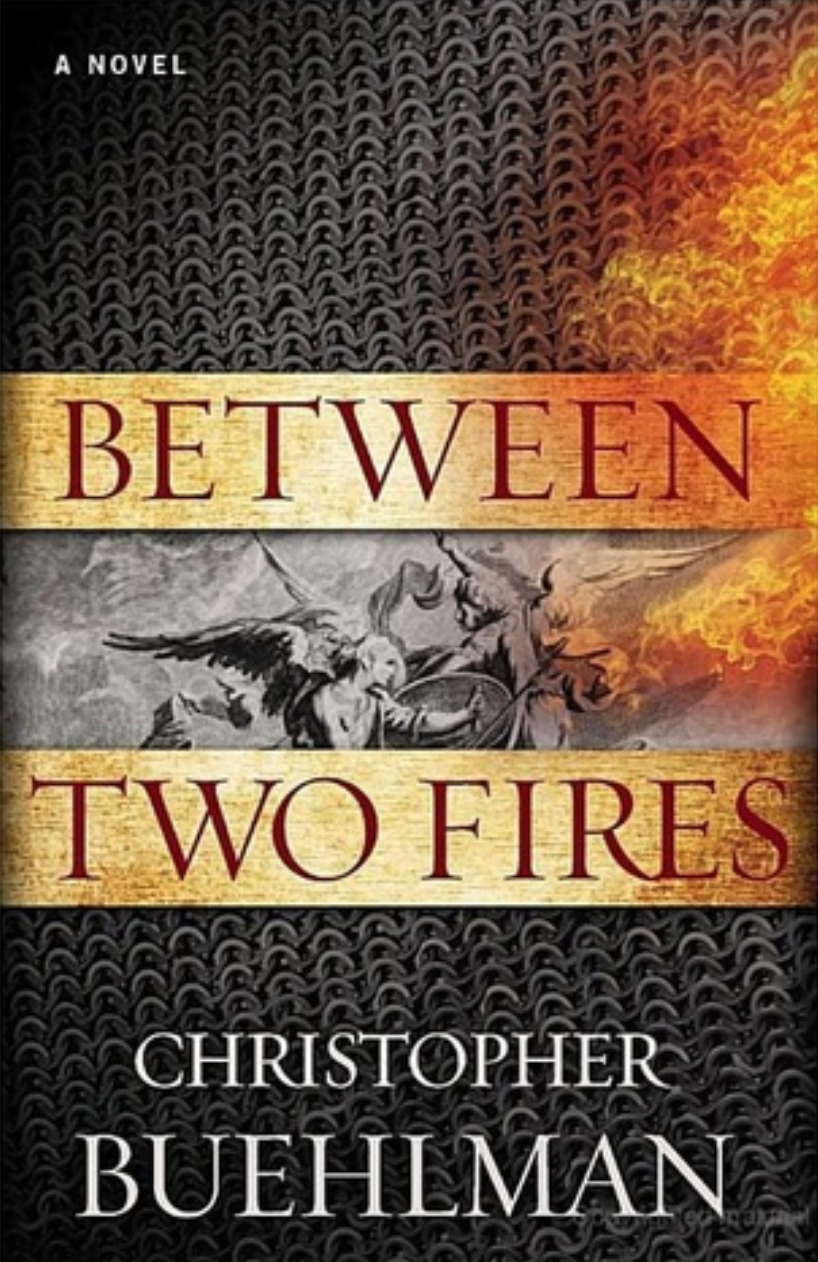
I plucked Between Two Fires off a dusty shelf at a used-book store a few months ago purely because the cover pulled me in (Bookstagram had been whispering good things too). I cracked it open right after finishing Joe Abercrombie’s The Devils (set in an alternate medieval Europe), and the transition felt weirdly seamless: two medieval road-trip stories, one about a priest escorting a poor soul through a broken kingdom, the other about a disgraced knight guarding a very peculiar girl (the bones of the plots rhyme, but the flesh is completely different... read them both.)
Which brings me to what Buehlman drops us into: Europe is choking on the Black Death. Thomas—once a knight, now a bitter, mud-smeared survivor—drifts from atrocity to atrocity with people he absolutely despises, doing whatever it takes to stay alive. While ransacking an abandoned hut, he and his scummy companions meet a small girl who calmly asks them to bury her father. In this world, a lone girl is meat for wolves, human or otherwise. Thomas’s split-second decision to protect this young girl yanks him onto a road littered with demons, monsters, angels, and the kind of human depravity that easily out-vile the fiends of hell.
"Let us wear their greatest men like skins, and when they speak, they will speak our words; they will speak of wars and purgings, and of dashing the babe's head. We will turn their understanding so they make their Christ a god of war, and we will cause them to set navies to the sea and armies under the moon with generals whose eyes glow like brands, and we will stir Turk and Christian alike to madness by our own deeds, and by our own hands we will hasten the death of men."
Before you charge in, content warnings first: Buehlman holds nothing back. Rape, child endangerment, torture, the religious violence of this era—it’s all here and is handled with brutal honesty. If any of that is too much, heed the warning. I found the darkness hard to swallow at times, but I respect that Buehlman never pretends history is cleaner than it is. He stares the rot dead in the eyes.
One facet of that darkness is Buehlman’s unflinching look at plague-era antisemitism: the novel confronts how 14th-century Europe scapegoated Jewish communities for the Black Death, weaving that hatred into the story through characters you’ll loathe (but need to hear) to grasp just how routine dehumanization became. It was intense to silently experience how accepted, how casually spoken, this kind of hatred was during such a chaotic time in the world (and I don’t say that out of naivety; I know this kind of rhetoric is still alive today, not just in antisemitism, but in the many forms hatred takes against other communities across the globe.)
Buehlman doesn’t dwell on this hatred or use it for shock; it just slips out of people’s mouths, unchallenged, like it’s normal. That’s what makes it hit so hard. He shows how deeply rooted the bigotry is, and how it can rival any demon walking the countryside. Readers who don’t usually venture into medieval horror—or who aren’t steeped in this slice of history (the Black Plague)—might be blindsided, so count it among the content warnings: the recurring slurs and persecutions, whether tossed off in passing or rendered in vivid detail, unsettle on purpose, illuminating the moral and spiritual rot coursing through a world on the brink. Buehlman’s use of historical realism, filtered through the lens of horror, offers a powerful commentary on the consequences of dehumanization and institutionalized hate.
"And now the rain fell, and fell, and fell.
On the third day of it, and their second day without food, the priest saw a stone barn and a cottage and hoped they would be deserted. What had things come to when a man of God wished misfortune on a family because he coveted their roof?"
Another part of what makes all of the darkness hit so hard is the book’s unapologetically biblical spine. I’m not a religious person, and when I realized how deeply biblical this book is, I worried it wouldn’t land... but I was wrong. Imagine a cosmic grudge match: fallen angels roaming plague-stricken France, whispering into minds, toying with mortals out of spite because “the Lord loves you more than us.” The lore will ring familiar if you grew up in church (names, hierarchies, snippets of scripture) yet Buehlman twists it into something wholly his own. I’ve personally never seen angels, demons, or hell painted like this. It felt, again, extremely honest.
"In the barley field, great beings, beings the sides of windmills, thrashed and rolled and gouged the earth. Two of them were as black as though holes had been cut into the fabric of the world; one shown like the full moon, just that heartbreaking in its beauty, casting mad shadows through the grain and the trees along the hills as it moved. Now it's light grew fainter as the six-winged one pinned it down and smothered it."
Of course, none of this lands without characters who feel like open wounds. Characters who bleed (and make you bleed). Thomas is all jagged edges, a man whose honor is in ruins but refuses to fully die. The girl—visionary, eerie, sometimes terrifying—digs under his armor and under ours. Side characters drift in and out, each leaving a scar. They’re all flawed, sometimes terrible, always human. You’ll love them, hate them, fear their choices. I cried more than once, felt genuine upset at their failures and trials, and rooted for a few of them through it all.
"The girl noticed her eyes. They seemed kind to her, despite the woman's rough look. Out of nowhere, she wanted the woman to hold her. It had been so long since she had smelled a woman's skin that even a dirty woman's embrace would have been welcome. She was still disturbed by the sight of the dead young nuns near the hospital and she wanted a woman to hold her and tell her that the whole world didn't yet belong to Death, masculine Death with his hourglass and his holes for eyes. Death with his bony arms that only embraced to take you away, like a lamb from market. Like the pig on La Butcherie. How did Heaven come into all of this? Heaven was life, not death. Heaven was a woman holding your head in the crook of her arm and looking down at you. Heaven was a warm hand on your cheek and the smell of soup with garlic on the fire.
How could people enjoy anything in Heaven with their noses rotted off and their ears full of mud and worms, and no cheeks, and no hands to lay on cheeks?"
Holding all that emotional shrapnel together is Buehlman’s language. The prose is lush without being purple, poetic without floating off the page. It’s visceral—you smell plague-swollen corpses and feel the stare of fallen angels. Moments of pure, sacred warmth sit shoulder-to-shoulder with abject horror, and the whiplash feels intentional: this is what a world on the brink between Heaven and Hell would feel like. For anyone intimidated by classics like The Divine Comedy, take heart: Buehlman’s language is lyrical and accessible.
"A great blackness against the sky.
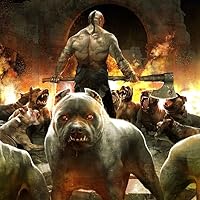
It circled twice, then stopped. How unlike a bird it was, though it had wings, or at least explained itself with them; no bird could just hang in the sky like a still image of itself. It peered down into the fields, its face almost feline, but wrong, its teeth black in a sickly glowing mouth. It roared, and its roar was familiar, that lions roar in grotesque.
An angel of wrath
A lion tearing down an old man in an arena
It saw something that interested it, a great black limb, now an arm, now a sort of paw, reached down impossibly far and picked something up.
A girl."
All those pieces fuse into something larger than the sum of its screams. This novel made me rethink how I picture fallen angels and spiritual warfare. It punched straight through my secular armor and tapped something tender and archetypal about good, evil, and the terrifying gray in between. It’s medieval horror at its finest, yes, but it’s also a meditation on power, morality, and why humans so often outdo demons at being monsters.
Between Two Fires ripped my heart out, then tucked it back in, crooked but still beating. It’s beautiful, bleak, sacred, obscene, and unforgettable; and is easily a top contender for my book of the year. Just brace yourself... the apocalypse smells like smoke, roses, and rot, and Buehlman never blinks. He’ll gut you, then whisper a hymn in your ear while you’re bleeding out.
(I also wanted to mention that this is a dialogue heavy book. I found that reading along with the audiobook is a fantastic experience.)
Lastly, I adore Thomas:
"He threw his dagger to the floor and wedged the spear into the sheath at the back of his belt. He smiled to think he had just shoved a relic worth the whole of Avignon into a piece of greasy leather near his ass."
🖤🩶🖤🩶🖤🩶🖤
My original review:
(This is just a mini review placeholder while I collect my thoughts.) This book made me cry—more than once. It’s deeply beautiful, grounded in belief and faith, yet saturated with depravity and pure evil. True demons walk these pages, and Buehlman never shies away from showing what our world looks like when it’s plagued by evil, especially the evil of men. The story feels terrifying and raw, like standing in the middle of the apocalypse, and though it explores the impact of fictitious demons, its parallels to real human cruelty make it even more horrible at times. Yet, Buehlman never blinks at the darkness; he stares it down. He confronts it. He's honest about depravity, superiority, power, control and abuse. I found some of the themes hard to swallow, but I appreciate that he never pretends these things have not already happened in history, or that they do not continue to happen. He does not use his characters as a moral compass. They’re flawed and human and susceptible to the war being waged around them.
This tale ripped my heart out, then somehow consoled me—warm and sacred in places, chilling and horrifying in others. I'd never read angels and demons, nor Hell, written like this. I don’t think I’ll ever forget it.
Full review to come, little moon. 🖤 🌙