Élevée par un grand-père braconnier, puis par des religieuses, Jeanne Chatel quitte la France pour faire partie du premier contingent de jeunes filles à marier qui font la traversée vers le Nouveau Monde. En échange d'un droit de passage et d'une dot, les «filles du Roy» ont une seule mission: peupler la Nouvelle-France. A Ville-Marie, Jeanne épouse, sans même avoir remarqué la couleur de ses yeux, le seigneur Simon de Rouville. C'est dans une cabane en bois rond, en pleine forêt, que Jeanne découvre, en même temps que l'amour, les rigueurs de l'hiver et les défis des grands espaces canadiens.
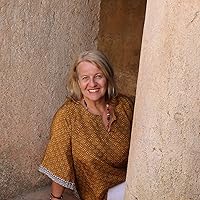
Suzanne Chouinard Martel (October 8, 1924 – July 29, 2012) was a French-Canadian author. She studied at Toronto University and worked as a reporter in Québec City during World War II.
Martel resided in Montreal, Canada. She was married to corporation lawyer Maurice Martel and together they had six sons and six grandchildren.
I read the original 1980 English language translation of Suzanne Martel's 1974 young adult and French Canadian themed Jeanne, fille du Roy in 1981 when I was going through a historical romance as a favourite genre phase as a teenager (a reading preference I fortunately outgrew decades ago). And thus, while I absolutely adored The King's Daughter as a fifteen year old, reading the novel in 2025 (and yes, the revised 1998 edition, but more on that later), this has actually been not really all that nostalgic and fun for me, but more like a bit of a reading chore, like a frustrating and sometimes even infuriating slog.
And well, there are two main reasons why The King's Daughter has rather majorly lost its textual shine for me in 2025. For one (and first and foremost), albeit that Suzanne Martel (who also seems to be the translator of her own work, of Jeanne, fille du Roy into English) certainly manages to textually capture an authentic and realistic feeling sense of geographical and physical time and place with The King's Daughter and provides an interesting and fascinating look at the daily life of French settlers in 17th century New France (in what is now the Canadian province of Quebec), main protagonist Jeanne's (the King's Daughter of the book title) unfolding relationship with her new husband, with Simon, it basically (and in my humble opinion) follows pretty much every lame romance novel cliché there is. For yes (and woefully predictably) Jeanne majorly despises Simon when she first agrees to marry him in place of her friend Marie, Simon is physically attractive but massively haughty, annoyingly distant and of course that even when Jeanne and Simon finally begin to fall in love, they are throughout much of The King's Daughter kept apart by various emotional obstacles and barriers, including Jeanne’s jealousy of Simon’s deceased wife Aimeé (all of which I admit to textually having devoured and loved at the age of fifteen, but which at the age almost fifty-nine and with me not having at all enjoyed historical romances since my early 20s now mostly making me groan and making me shake my head in and with annoyance and boredom). And for two, while for fifteen year old me, Jeanne was a totally wonderful and strong heroine in The King's Daughter, during my rereading, sorry, but I do now consider Jeanne as being depicted by Suzanne Martel as just too freakingly competent (and to the point of reading irritation), since she transforms herself at pretty much break-neck speed from a rather helpless and pathetic fille du Roy recently arrived in New France to being amazingly good at almost everything she, Jeanne, attempts to do, as Simon's wife, as mother to Simon's children, as a dedicated healer full of knowledge and of unlimited bravery (a heroine so perfect and so perfectly suited to and for Quebec frontier life that basically Jeanne equally cannot at all be a kindred spirit anymore, since she is basically above and beyond everything and everyone, leaving at least for me now, at this point in time, The King's Daughter as a tale that certainly has a huge caesura and dichotomy between how I would have rated Martel's presented narrative as a teenager and what I think of The King's Daughter and of main protagonist Jeanne now).
Finally, but for me of much significance and importance, the only reason for my rating for The King's Daughter being not two but three stars is that I do think it absolutely ridiculous how in 1993 the 1980 incarnation of The King's Daughter was pulled from the shelves of a Regina, Saskatchewan public school after questions were raised about the language used to describe the First Nations populations encountered in the novel and main protagonist Jeanne's reactions to and feelings about them (and that this in turn caused the publisher, caused Turtleback Books to censor and to change a rather goodly number of passengers, to publish a revised edition of The King's Daughter in 1998 and this all without even notifying and consulting with Suzanne Martel). But honestly and truly, that in Jeanne, fille du Roy and in the 1980 translation, the Huron and the Iroquois are called "savages" (les sauvages) and that the settlers newly arrived from France fear and often even actively despise and consider them less than human, while in the 20th century, this is of course unacceptable, inappropriate and majorly racially intolerant, for its 17th century New France setting, this is all historically accurate and authentic (and what really was actually mostly the case), and sadly, the 1998 revised and censored edition of The King's Daughter is thus very much less historically realistic (and that is truly a shame and something that Suzanne Martel certainly does not in any manner deserve).
Also, some reviews of The King's Daughter seem to consider fille du Roy Jeanne as a literary character Suzanne Martel's equivalent to Lucy Maud Montgomery's Anne Shirley (with Martel's The King's Daughter of course set in New France and Montgomery's Anne of Green Gables series in Prince Edward Island), an assessment with which I absolutely and strongly disagree. For Suzanne Martel's Jeanne is much too clichéd and too much without faults and foibles to be favourably compared to Montgomery's delightful, error prone and imaginative Anne Shirley, and Anne's slowly developing relationship with Gilbert Blythe is equally much more interesting and nuanced than Jeanne's full of romance novel stereotyping relationship with Simon.
So, this is an orphan girl sent to a Covand the nuns are shocked she can read, write, do math. Only one nun shows compassion for the orphan girl losing her family, the other nuns saying she needs to be trained immediately in how to act like a "proper" little girl should. Girls shouldn't be outdoors, running wild that's a man's right not a woman's. The best she can hope for is "a rich old man foregoing a dowry for the freshness of an eighteen year old girl". Ugh!
The nuns have done their level best to stomp on the girls spirit, make her "desirable" and she finds she's a king's daughter; why not just say princess, I don't know. She's happy to be leaving but I can guarantee her life is about to be even more suppressed than before with lots of new rules, politics, jealous women, and disapproving men over her "wild spirit".
Though this won the Ruth Schwartz award (no clue who that is) I dnf'd this book after the second chapter. This was meant to be an adventure story for girls but instead it just annoyed the f out of me.
5+ étoiles (6/10 cœurs). C’est l’un des rares classiques français que j’ai lu et aimé, et c’est probablement parce qu’il est en fait québécois. Suzanne Martel fait un travail épique en y intégrant toute l’histoire tout en gardant le livre un roman. Les descriptions de la vie et des épreuves des habitants de la Nouvelle-France, de la culture, des habitudes et de l’histoire québécoises, me remplissent de tant de patriotisme et d’inspiration.
J’adore Jeanne ! Elle est si aimante, intelligente, romantique, pratique, débrouillarde et forte – la femme québécoise typique et idéale. Simon prend plus de temps pour apprendre à aimer, mais il a souffert beaucoup, et il cache un cœur d’or sous toute cette dureté. Les enfants sont adorables, et les autres personnages secondaires – Mathurin, Rouquin, Thierry, etc. – sont tous si dynamiques ! Tous les personnages saisissent l’imagination ou le cœur à leur manière.
Le style d’écriture est clair et simple (…quelque chose que je trouve rarement dans les livres français...) et l’intrigue est incroyable. Du passé de Jeanne racontée à travers un conte de minuit à la traversée vers la Nouvelle-France, aux premières mésaventures, aux jours heureux et aux heures tendues et à la fin triomphale… c’est tellement bon. C’est parfait. Et j’adore les thèmes du courage, du dévouement, de la compréhension, de l’entraide et de la sensibilité.
Si vous voulez connaître le Québec et l’histoire du debut du Canada, lisez ce livre.
———————
5+ stars (6/10 hearts). This is one of the few classic french books I’ve read and loved—and it’s probably because it’s actually Québécois. Suzanne Martel does such an epic job putting in all the history and yet leaving it a story. The descriptions of the life and trials of New France habitants, of Québécois culture and habits and history, fill me with so much patriotism and inspiration.
I love Jeanne! She’s so loving and smart and romantic and practical and débrouillarde and strong—the typical, ideal Québécois woman. Simon takes more time to learn to love but he has been through a lot of pain, and he hides a heart of gold under all that harshness. The kids are adorable, and the other side characters—Mathurin, Rouquin, Thierry, etc—they’re all so vibrant! All the characters seize the imagination or heart in their own way.
The writing style is clean and simple (...something I rarely find in French from France books...) and the plot is amazing. From Jeanne’s crazy backstory told via a midnight tale to the crossing to New France, to the first few misadventures, to the happy days and tense hours and triumphant ending… it’s so good. It’s perfect. And I love the themes of courage, devotion, understanding, helpfulness, and sensitivity.
If you want to know Québec and the history of early Canada, read this book.
Quand je note une œuvre, c’est en la prenant dans son contexte, son genre et ce qu’elle a provoqué comme émotions chez moi. Je me souviens très bien comment je m’étais sentie à sa première lecture, adolescente, puis lors de ses relectures à l’âge adulte. C’est une œuvre pleine de clichés, de terrains battus… exactement comme j’aime. Elle répond à tous les codes de son genre et je me souviens de mes pieds battants dans le vide et mes joues rougissantes lors de certains passages. Même aujourd’hui, étant adulte, quand je repense à certaines scènes j’ai un petit rire timide et le cœur qui s’emballe. Que voulez-vous, je suis une romantique et ce genre de littérature a un effet sur mon petit cœur d’artichaut.
C’est un très bon roman jeunesse - souvent lu à l’école secondaire comme ce fut le cas pour ma cohorte - qui ravira une clientèle aimant le genre très codifié auquel appartient ce roman. Jeanne - le personnage principal - est à la fois innocente, pleine de bonnes intentions et animée par un désir de vivre qui inspire. L’adolescente que j’étais s’identifiait beaucoup à elle et l’adulte que je suis en garde un excellent souvenir.
Un roman de fiction historique qui permet de faire des liens avec l'histoire de la nouvelle France en plus d'avoir un personnage féminin fort. Un bijou qui ne fait que se faire rééditer depuis des décennies !
Review: This is the story of a king’s daughter sent to New France to marry. It is the beautiful story of an insecure young girl growing into a competent woman. Qualities that were frowned upon in Europe become virtues in her rough new life among the settlers, natives and coureur de bois. It is, of course, a typical sweeping love story. Jeanne is swept into a marriage which she didn’t choose to a complete stranger and they must overcome many obstacles to fall in love with each other.
Typically in this type of romance book everything can become secondary to the relationship between the two primary characters. The author has avoided this pitfall and created a strong female protagonist who is by no means a simpering princess. The love story is certainly a driving force of the book, tying things together. It however, comes secondary to the need to survive and thrive in a very hostile environment.
Subject matter covered includes the king’s daughters, coureur de bois and the fur trade, medical practices, pioneering, a little of the politics of New France, relations between settlers and first nations people.
The main problem with this story would be its approach to first nations peoples. Although there are native Canadians, they are all supporting characters who are painted in an underdeveloped 2-D kind of way. These characters say nothing and contribute little. The Algonquins/Hurons are treated as passive servants and messengers with no opinions or personalities. They come across in a childlike way, as if they need the “benevolent white men” as their masters and rescuers. The Iroquois appear inhuman, simply violent attackers to be feared. Because of this approach to first nations peoples this book needs to be tempered with discussion and another resource that tells the First Nation’s story, not just the French Canadians’.
Please be aware this is a revised edition of the book. I have not seen the unrevised edition. The original English translation included a number of offensive words used to describe First Nations people.
Teacher Application: This is a perfect book to learn about the King’s daughters. It is very important that the dismissive and fearful nature of the author’s approach to First Nation’s people be discussed.
The Difference Between the Voyageurs and the Coureur de Bois: Coureur de Bois: The coureur de bois, or runners of the woods were independent men, privately financed who traveled the rivers in pursuit of furs for trade. Often they travelled together in small groups, each man investing his share and each man receiving a cut of the profit. The licensing requirements imposed on the fur trade by King Louis XIV of France made it increasingly difficult for the coureur de bois, leading to the birth of the voyageurs.
Voyageurs: The voyageurs were under the employ of a larger company, not normally receiving a cut of the profit, but an agreed upon wage. They were outfitted by the company they worked for and often forced to sign agreements to work for no one else. The fur trade by this time was heavily regulated so several merchants would hold a monopoly in the fur trade in each city.
Character Traits Taught: Perseverance Friendship Bravery and courage Love Responsibility Strong Work Ethic
Parental Warning:
This book is told from a white european girl’s point of view. Her descriptions of First Canadians are less than ideal.
Iroquois are painted as purely terrifying attackers, with no discussion of who they were as a people. There is discussion of Iroquois attacks and scalping
Please ensure you have the revised edition from 1994 onward for more appropriate language.
I did enjoy aspects of it. Good pacing, interesting characters, decent writing. But there were significant issues. There were a few sloppy anachronisms which were a bit jarring ("automatons" as an adjective for a story in the 17th century? I bear in mind that this is a translation, but oi). It did also strain credulity a bit; her story was set up well, but I would have loved to have seen more struggle, more adversity in Jeanne coming to grips with a totally new environment and situation in life. There was a lot of it that was just a little too perfect. My biggest issue, though, was its portrayal of Indigenous people. I'm not forgetting the period (and place) in which this was written, and the period and place about which it was written, but there was so much opportunity created to explore relationships with Indigenous peoples and their ways of life that was just not taken advantage of. In that aspect, it was a stale, typical European tale, even more disappointing because it had the potential to be much more. It's a decent European story of early Canada - but its shortcomings do and will increasingly render it dated and incomplete.
Jeanne de Chatel, a young girl turned orphan by her grandfathers death when she was eight years old, lives at a convent. Just like all orphans at the convent, she is called a King’s Daughter, as she is under the care of the crown.
After her eighteenth birthday she learns that she will be sailing across the sea to New France as a bride. The King provides the dowry and the bride, the men serve the king. She crosses with her friend, Marie who has received a proposal from a distant cousin Simon de Rouville, who is recently widowed and in need of a mother for his two children. But when Marie falls in love with a sailor and marries him instead, Jeanne takes her place and marries Simon.
Thrown into motherhood and marriage to a stranger, Jeanne must learn to survive in the forest of Quebec, navigating the dangers of the Iroquois and the wild.
An adorable romance, this book has been a guilty pleasure for a long time. It’s sweet and a story of a young woman, having courage and falling in love.
This book was on the curriculum in Alberta for grade 8 French Language Arts. I've wanted to read it for at least 10 years. I am working on Ancestry.ca and I count 16 King's Daughters in my ancestry, this book was an informative and fun read.
The story is good and keeps the reader's attention. Many hardships of New France pioneers are not described but one gets a good idea of what it could have been like back then.
I must say the book was quite interesting however for me, the coincidences of Thierry coming to nouvelle-france annoyed me cause it was so unrealistic. I felt that the constant meeting of new boyfriends made me want to yell at her "RUN AWAY WITH PIERRE OR THIERRY, LEAVE THAT SELFISH ROUVILLE WITH HIS DEPRESSED CHILDREN" . However, the book was definitely better than anticipated ;D
Just finished rereading one of my favourite books as a child/ youth. In fact as an adult, not remembering the title or author searched for it and had to buy it. I reread if every now and then. I love stories with heroines with spirit and gumption. I read the English translation as by French is more than a little rustic.
reaaaaaallllllllllllllllllllllllllllllllllllllllllllyyyyyyyyyyyyyyyyyyyyyyyyyyyyyyyyyyyyyyy bbbbbbbbbbbbbbbbbbbbbbbbbbbbbbbbbbbbaaaaaaaaaaaaaaaaaaaaaaaaaaaaddddddddddddddddddddddddddddddddddddddd bbbbbbbbbbbbbbbbbboooooooooooooooooooooooooooook. I hate this book
You see the dates I put? I started and finished the same day because the minute I opened it I closed it. This book sucks, it’s so boring and hard to read. My teacher chose this book, that’s how bad it is. Ew this book is painfully boring.
C'est comme une comfort blanket. Petit roman lu pour la première fois en 2003, que je relis chaque année. Enlevant et émouvant. (Je suis peut être [clairement] biaisée par la nostalgie).
This is probably the worst book I’ve ever read. It’s so extremely boring too. I can’t imagine that anyone would rate this above one star or actually like it.
Remember the Revenant? With the brutally of the wild north and the trappers who lived and hunted in its forests? Remember Anne of Green Gables? With her dreamy hard-working attitude and loveable stubbornness? If you liked both of those stories- or aspects of both this is it, this is the perfect book for you.
Jeanne is a spirited French orphan girl raised in a convent, who is handed a chance at adventure when she is chosen to be a King's Daughter. The wild of New France needs brides and the King is willing to pay her passage and dowry (small as it is) for the sake of providing the brave people of his new territory with young women to wed the men who live there.
Jeanne is no would-be nun, however. Instead of terror as most young girls would have had in the face of an open wild, the First Nations people who have unstable relationships with the settlers and the monstrosity of travel through rivers and dense forests Jeanne is excited
And, unlike the more common contemporary trope of a badass mildly self-centered female lead, this story has a strong, spirited, capable young woman who is not only good but also selfless.
There are many adventures in store for Jeanne, from the husband she dreams of meeting, to the insanity of travel on canoe in wild rivers, the presence of First Nations people who are both kind and wise, or threatening and cunning. Will she prove herself strong enough to survive the brutal raw of New France?
Read to find out.
P.S This book was written before the proper use of First Nations was instilled into public psyche and has been changed in later versions.
Also, it was originally written in French. I read it in English as a young girl, and many times since and have never noticed any awkwardness in the translation.
J'ai lu cette livre au secondaire, mais je l'ai vu au libraire et voulu le relire.
Ouf. . . L'histoire été intéressante. J'ai beaucoup aimer l'idée de l'histoire. Une jeune fille de roi, le bois, une vie complétement nouvelle! Toutefois, une chose qui m'inquiète vraiment, c'est la façon dont l'auteur a dépeint les autochtones. C'est tellement raciste! Par exemple, les femmes "sauvage" qui reviens et prend la petite fille. Parce que, Jeanne a les données de la nourriture. Puis, Jeanne reprend sa fille simplement par parler? Jeanne est tellement capable qu’un nouveau pays, et une vie complètement nouvelle, mais ça ne la dérange pas. Pour une raison ou un autre, elle sait qu’une perdrix fait une parade de distraction au cours de laquelle il feint d'avoir une aile cassée ou d'être blessé pour protéger les petits, mais un coureur de bois ne le sait pas? Sure.
The story of the book is all bout the journey of Jeanne. She traveled from France to Canada for a better future. She met many hard times during the journey. Along the way, there was a good time and she has learned a lot from her journey. The book contains relationships with friends and family. That book has too many characters sometimes makes the reader kind of confused about the event that happened. I would recommend this book to young adults. Because it has helped them how to face challenges and hard things in life. That book has helped me how to be patient in life especially sometimes things not like what you expected and good things take time. What we can do to improve is patient and keep going. Overall this book is good that I can improve my relationship with family and friend. Sometimes in life we need to sacrifice and need to change, if we and a better results.
I really loved this book. I found it very interesting because it takes place in the past and shows what life was like for the Filles du Roy. The story felt realistic, and it was easy to understand the challenges Jeanne had to face when starting a new life.
I especially liked how the author described her journey and how she had to adapt to a completely different environment. It made me think about how difficult it must have been to leave everything behind and build a new future.
The characters felt real, and the story was both emotional and engaging. I also liked how it mixed history with a personal story, which made it more interesting to read.
Overall, I really enjoyed this book and learned a lot from it at the same time.
It may be an interesting reading if you live in Montreal, because it gives you a glimpse of what Quebec was originally like. Some of the Quebec cultural heritages were touched upon, blending ingeniously into the plot. After reading the novel, you can visit Maison St-Gabriel, to know more about the life of Nouvelle France. On the flip side, the story itself is weak, especially in the later half of the book, with Jeanne in each chapter saving the day by her heroic deeds. Quite predictable, like reading a conte de fées. Anyway, I recommend it to those intermediate-level learners of French language and history lovers.