twenty years in soviet secrets Gordon twenty years in soviet secrets Hawthorn FIRST First Edition, First Printing. Not price-clipped. Published by Hawthorn Books, 1965. Octavo. Hardcover. Book is very good with light toning and spotting on page ends. Dust jacket is very good with shelf wear. 100% positive feedback. 30 day money back guarantee. NEXT DAY SHIPPING! Excellent customer service. Please email with any questions. All books packed carefully and ship with free delivery confirmation/tracking. All books come with free bookmarks. Ships from Sag Harbor, New York.Seller 324064 Biography & Letters We Buy Books! Collections - Libraries - Estates - Individual Titles. Message us if you have books to sell!
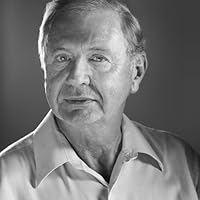
Konon Trofimovich Molody (Russian: Ко́нон Трофи́мович Моло́дый; 1922 - 1970) was a Soviet intelligence officer, known in the West as Gordon Arnold Lonsdale. Posing as a Canadian businessman during the Cold War, he was a non-official (illegal) KGB intelligence agent and the mastermind of the Portland spy ring, which operated in Britain from 1953 until 1961.
Despite what the (only) goodreads entry says, I think this is the first hardback edition and was published in 1965 by Neville Spearman. You'd think it would be quite difficult to make a book about spying boring and silly but Lonsdale manages it. His uncritical loyalty to the Soviet Union means that he doesn't narrate any mission that might still have been "live" at the time of publication or have had any wider intelligence ramifications in the future. The result is that most of his activities (actually not a large part of the book compared to his early life and time in prison) sound more like those of a low budget private detective than a spy. But the silliness is far more damaging. It is hard to know whether Lonsdale believes all the nonsense about the peace loving USSR surrounded by a warmongering US and NATO (mostly manipulated by ex Nazis apparently), whether he himself wants to trot out this palpable tosh for propaganda purposes or (ironically for such a peace loving nation) whether he was obliged to do so because his wife and children were still behind the Iron Curtain (and he had to have the book "approved" by the powers that be) but he must truly have believed his readers were idiots. The publisher's postscript explains how "the Krogers" (who Lonsdale swears blind were innocent despite his spying gear being found in their house) were well known spies in the US before moving to the UK. From my own reading I know that germ warfare was at least as much an active Soviet research programme in this era as it was an American or European one. When Lonsdale gets on his high horse about US/European lenience towards ex Nazis because of their use in rocketry and other war technologies I wonder if he knew that Russia did pretty much exactly the same thing (and was thus a shameless liar) or whether (irony of ironies) working for a state without a free press and democracy he thought the USSR was better when they were actually less accountable. This lack of awareness about what people would believe, coupled with glimpses of his unswerving belief that the end justifies any means do not endear him (or make him credible) to any moderately informed reader. This is not a two legs good four legs bad argument. I don't believe either that the Soviet Union was the source of all evil against a righteous West but that both sides behaved dangerously and foolishly on ideological grounds. Lonsdale nicely illustrates the maxim that each accusation is a confession, in a book that seems devoted to breaking the ironyometer as often as possible, when on page 188 he writes: "He [a UK civil servant] made pathetic attempts to convince me that if I went back home nothing but the salt mines awaited me. It was interesting to me to see that he really believed what he said. And what he said was an interesting reflection on an intelligent man's reaction to propaganda. It is obvious that danger sets in when you begin to believe your own propaganda." Et tu Gordon? More an inadvertent case history of swivel eyed zealotry than an informative book about spying unfortunately.
If you want to read a biography of which you can only believe what can be otherwise sourced, go right ahead. If the truth shall set you free, this one will put you in jail. Who wrote this thing? A committee of KGB hacks who congratulated themselves over a few vodkas how they stuck it to the Americans and the Brits? Lonsdale himself? And then, where is the charming individual he supposedly was? In this book Lonsdale comes across as a narcissistic arrogant UberSpy who can't do wrong, takes everything in stride and spits on his adversaries and their countries. His extreme contempt is reserved for the United States. Other than San Francisco, there is no city he likes. So which city does he compare Chicago or New York compare to? Moscow? Where have you been Gordon?
Anyway, somebody who lied as blatantly about a material fact, such as the role of the Cohens, cannot be trusted even when he speaks the truth.
Interestingly, when he rejected an extremely generous offer by the Brits for cooperation, including a life time pension, Lonsdale turned it down with extreme arrogance. One might understand his firm commitment to the "cause" (like the Cohens, Philby, and many others - btw. including myself), he did not know any better. But he was also looking forward to a glorious future in his beloved homeland. It did not turn out that way - he vanished in a land called Obscurity. An honest biography of this clearly fascinating man would be a great read. This one is nothing more than a textbook example of the Soviet propaganda machine doing its job, and not a good one for that matter.