Knowledge is a big subject, says Stuart Firestein, but ignorance is a bigger one. And it is ignorance--not knowledge--that is the true engine of science.
Most of us have a false impression of science as a surefire, deliberate, step-by-step method for finding things out and getting things done. In fact, says Firestein, more often than not, science is like looking for a black cat in a dark room, and there may not be a cat in the room. The process is more hit-or-miss than you might imagine, with much stumbling and groping after phantoms. But it is exactly this "not knowing," this puzzling over thorny questions or inexplicable data, that gets researchers into the lab early and keeps them there late, the thing that propels them, the very driving force of science. Firestein shows how scientists use ignorance to program their work, to identify what should be done, what the next steps are, and where they should concentrate their energies. And he includes a catalog of how scientists use ignorance, consciously or unconsciously--a remarkable range of approaches that includes looking for connections to other research, revisiting apparently settled questions, using small questions to get at big ones, and tackling a problem simply out of curiosity. The book concludes with four case histories--in cognitive psychology, theoretical physics, astronomy, and neuroscience--that provide a feel for the nuts and bolts of ignorance, the day-to-day battle that goes on in scientific laboratories and in scientific minds with questions that range from the quotidian to the profound.
Turning the conventional idea about science on its head, Ignorance opens a new window on the true nature of research. It is a must-read for anyone curious about science.
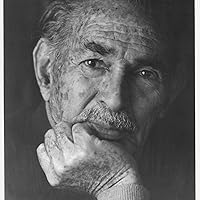
Stuart Firestein is an American neuroscientiest and biologist. After earning his Ph.D. in neurobiology, Firestein was a researcher at Yale Medical School, then joined Columbia University in 1993. At the Columbia University Department of Biological Sciences, Firestein is now studying the sense of smell.
Dedicated to promoting the accessibility of science to a public audience, Dr. Firestein seeks to reach broader audiences through nonscientific writing, public appearances, and his support of science in the arts.
The 19th century American philosopher C.S. Peirce was, I think, the first to point out that all inquiry is provoked by doubt.* Before there is a fact, there must be a concern. Concern implies doubt. And doubt implies ignorance. Firestein defines ignorance in a way that Peirce would certainly approve: “It is not an individual lack of information but a communal gap in knowledge. It is a case where data don’t exist, or more commonly, where the existing data don’t make sense, don’t add up to a coherent explanation, cannot be used to make a prediction or statement about some thing or event. This is knowledgeable ignorance, perceptive ignorance, insightful ignorance.”
That productive ignorance is a communal attribute is a great insight. None of us knows what all of us knows; but we each can have access to what another knows if required. We can ask for it, or more likely just do a Google search. But what none of us knows is beyond language. We cannot ask for it because it hasn’t yet been brought into the intelligible world of language. The process by which the unknown is brought into language is what is meant by scientific method. But as Firestein points out through his case studies and analysis, this process has no fixed rules. Just as language itself has no fixed rules of development, the way in which new knowledge is created, that is, brought into language, is equally amorphous... and even mysterious.
Firestein locates the precise origin of any inquiry in a question. So did Peirce. In science a question is typically stated as an hypothesis, for example: ‘The theory of relativity predicts that gravity will affect the transmission of light. Can this be measured?’ It is the formulation of such hypotheses that is the really intriguing (and unsystematic) part of scientific inquiry. It’s the bit that no one has been able to specify reliably as an algorithm in an ‘expert system.’ While such systems are capable of generating a virtual infinity of inferences, and therefore hypotheses, from existing models and factual knowledge, they are unable to determine which of these is most interesting as a target of inquiry.
The determination of interesting, that is to say important or valuable, questions in science or anywhere else, is a political issue. The community rules. Even if the community is ultimately shown to be in error, it is only the community that decides this. The community may not always be right but it is never wrong. The reason for this apparent contradiction is that it is the community which is the arbiter of standards of rightness and wrongness. And it is these standards that are changing more or less continuously in science, as they also do in all political systems. The criterion for what constitutes good science today is as different from that of the nineteenth century as are the criterion for democratic election in each period.
So science really can’t be a commitment to truth since truth only applies to that which is already formulated within language. Nor is it a commitment to some universal method or standards of research since these change continuously within the scientific community. Rather science is a commitment to the community of scientists; more precisely a commitment to the politics of that community at any given time. Rivalry rather than cooperation and personal disdain rather than admiration are often part of this politics. But scientists, in order to be scientists at all, submit to the ultimate judgements of this community.
Peirce’s friend and collaborator, the Harvard philosopher Josiah Royce generalised Peirce’s idea of the scientific community. Royce used the term ‘loyalty to loyalty’ to refer to the kind of communal relations which accommodates even the most contentious disagreements. But there are severe problems with this formulation, among others the implication that the object of loyalty is irrelevant. Loyalty itself thereby becomes an absolute and applies as much to a commitment, say, to a fascist dictator as to the profession of medicine.
Firestein solves this Pericean/Roycean problem by defining the commitment of authentic inquiry to ignorance. Such a commitment is the sign of membership in the community as well as an indication of the activity demanded of those included within it - to bring that which is yet beyond language into language. Such activity does not reduce ignorance. Productive inquiry is much more likely to create yet more uncertainty and doubt, paradoxically expanding the domain of ignorance. A commitment to ignorance is a stand against doctrine, and therefore a stand against those who believe they already know all that needs to be known. But it is also a stand for an inclusive community which admits anyone with doubts.
This is the real power of not knowing - it continuously relativises the very tool it uses, language, to remind both scientists and everyone else that reality always lies beyond what can be said about it.
* Firestein quotes Peirce’s contemporary, the physicist James Clerk Maxwell: “Thoroughly conscious ignorance is the prelude to every real advance in science.” But I am fairly certain Peirce made the point first.
This is a delightful little book that really gets you thinking. I stress the ‘little’ part not as a negative, but as a good thing. There is nothing worse than fat, bloated popular science books where the author feels they have to get 120,000 words to be taken seriously. This is the sort of book that can be read in a couple of hours – but you will get so much more out of it than one of those tedious doorstops.
The premise underlying the book is in once sense extremely simple, yet is fundamental to an understanding of what science is and what scientists do. And it is an understanding that is totally at odds with the typical way science is portrayed both in university lectures and popular science books. As Stuart Firestein points out, what is important is not the facts, but rather the area of ignorance. The interesting part and the fundamental heart of science is not about what we know, but about what we don’t know and where we want to look next.
Take this lovely quote: ‘Working scientists don’t get bogged down in the factual swamp because they don’t care all that much for facts. It’s not that they discount or ignore them, but rather that they don’t see them as an end in themselves. They don’t stop at the facts; they begin there, right beyond the facts, where the facts run out.’
When I give my talk based on my book Before the Big Bang, I end by talking about dark matter and dark energy, and how our lack of any real idea of what these are means we know very little about the majority of what makes up the universe. And, I stress, this isn’t a bad thing – this is what makes science interesting. Stuart Firestein takes this viewpoint and puts it at the heart of science.
If I have any moan, the introductory section is just a touch repetitive on the central role of ignorance in science, but I think it’s such an important aspect that so few people recognise that it’s well worth hammering home. I also, despite the case histories he gives, find it difficult to follow his explanation for the process of selecting the right bits of ignorance to work on. But overall this is a great book and recommended reading for both scientists and anyone with an interest in science.
I saw a review of this book in the journal "Science". The premise is that scientists publish facts and give presentations of what is known, however, when they sit down and talk over a meal or a beer... they talk about what they don't know. Its cute... science is really about ignorance, not facts. In my experience as a scientist, this is true. Once something has been discovered we quickly lose interest. We have a party then move on.
The author freely quotes a proverb that it is difficult to find a black cat in a black room... especially if there is no cat. Its an apt description.
The author discusses this aspect of science in many ways throughout the book and gives lots of examples. I enjoyed it. But after the first elaboration of the thought, not much was added. --- although I did find a description of the nature of the conflict between Galileo and the Catholic Church to be interesting and different from the usual perspective. If you want to know, you will have to read the book.
He teaches a semester course on the topic and his reading list looked interesting. This was a short book. But after wonderful elaboration in the first chapter... the rest of the book was too long for the one idea. --- I may be too critical. I lose interest in these types of books quickly, anyway. I did like it.
This Christmas, not unlike others, I struggled for gift ideas to give my parents. I tried exceptionally hard to not put clothing or gift cards on my list. Instead, I found thought-provoking books to challenge my ideas on education, how individuals learn, or how individuals cultivate one's creativity. As a teacher, I know I need to change how I teach so students have more control over their learning.
I turned to my PLN on Twitter for help. Maria Popova (@brainpicker) put together her year-end list of books. In particular I found the Best Science Books of 2012 very interesting. I vetted the list through Google and Amazon reviews, and I settled on Stuart Firestein’s Ignorance: How it Drives Science.
Firestein wrote a very brief book about why the questions in science, research, and education are more important than the answers. In his book, he explains his work as a neurobiologist and college professor has taught him that scientists and students need NOT to spend their time memorizing and studying large amounts of data. Volumes of new studies are published every day. The Internet has become a sufficient database of knowledge. Rather than focus on facts and what is known, scientists and students must focus on the unknown, the questions.
Firestein takes the reader through what types of questions are appropriate to ask; not all unanswered questions are appropriate for scientists or students. Using examples from his class and from his science, he supports what types of questions are useful to uncovering new knowledge, not simply testing what already exists.
The last few pages of the book are devoted directly to ignorance and education, from which the excerpt is taken.
“Perhaps the most important application of ignorance is in the sphere of education, particularly of scientists. Indeed I first saw the essential value of ignorance through teaching a course that failed to acknowledge it. The glazed-over eyes of students dutifully taking notes and highlighting line after line in a text of nearly 1,500 pages, the desperation to memorize facts for a test, the hand raised in the middle of a lecture to ask only, ‘Will that be on the exam?” These are all the symptoms of a failing educational strategy.
We must ask ourselves how we should educate scientists in the age of Google and whatever will supersede it. When all the facts are available with a few clicks, and probably in the not very distant future by simply asking the wall, or the television, or the cloud—wherever it is the computer is hidden—then teaching these facts will not be of much use…
Instead of a system where the collection of facts is an end, where knowledge is equated with accumulation, where ignorance is rarely discussed, we will have to provide the Wiki-raised student with a taste of and for the boundaries, the edge of the widening circle of ignorance, how the data, which are not unimportant, frames the unknown. We must teach students how to think in questions, how to manage ignorance.”
With unbelievable access to knowledge, students should not be learning facts. Students should learn to read and interpret facts and ask questions on the cusp of what is known and unknown. Firestein’s book explains why inquiry in education is so important and how science, among other fields, will suffer if education continues to emphasize memorization over inquiry.
Το βιβλίο αυτό υποστηρίζει ότι η άγνοια στην επιστήμη είναι εξίσου σημαντική με τη γνώση, καθώς η άγνοια - με την έννοια του να ξέρω τι είναι αυτό που δεν ξέρω και θέλω να το μάθω - είναι ουσιαστικά αυτή που καθοδηγεί τους επιστήμονες προς καινούριες ανακαλύψεις.
Η γνώση, δηλαδή όσα ξέρουμε για τον κόσμο μας, είναι σίγουρα σημαντική, αλλά αν τα ξέραμε όλα, τότε δεν θα χρειάζονταν καινούριοι επιστήμονες: στα σχολεία θα μαθαίναμε απλά απ' έξω όλη τη γνώση και στη ζωή μας θα την εφαρμόζαμε.
Η άγνοια, όμως, είναι αυτή που δίνει ζωή στα πράγματα. Γιατί, με κάθε άγνοια που μετατρέπεται σε γνώση, προκύπτουν νέες εφαρμογές αλλά και νέοι ορίζοντες άγνοιας.
Μέσα από περιστατικά άγνοιας που περιγράφονται μάλλον το συμπέρασμα είναι ότι έχουμε πολλά τελικά να μάθουμε ακόμα!!!
Ένα ιδιαίτερα μικρό και συνάμα περιεκτικό βιβλίο (που μεταφέρεται εύκολα ακόμα και στην παραλία) από τις εκδόσεις ΡΟΠΗ, τις οποίες νομίζω ότι θα αρχίσω να εμπιστεύομαι τυφλά πλέον!
A book about making science accessible to the public? Why yes, I'll have that with a side of snark.
Stuart Firestein is amazing at taking highly technical subjects of quantum mechanics, neuroscience, theoretical mathematics, etc, and breaking it down into amusing stories, peppered with humor and (relatively) easy language. While it's true you'd need to have some rudimentary knowledge in the hard sciences to fully appreciate the facts, it shouldn't deter you from trying this out. One of the case studies is Firestein, himself, and you find out he used to work in theater for fifteen years before starting undergrad at the age of thirty. He's not going to bullshit you: "There is no more sense in getting hung up with the details of experimental results... than there is with chord structures and harmonies in a musical composition."
As the title implies, the book dwells on ignorance, specifically the type of ignorance that comes from simply lacking information. We don't know how the brain works. We don't know what the universe is made of. We don't know so much, yet we find ourselves bombarded with thousands of scientific articles and facts, the numbers growing with each day. Classes are designed around textbooks that are built around the notion that we've discovered it all. Firestein urges scientists, and regular people alike, to stop focusing on what's been discovered and start asking more questions. It's the questions--the curiosity, the ignorance--that drives science. Or as the book puts it: people who know a lot are geeks, people who question a lot are scientists.
Don't expect to read this and gain some unknown insight or revelation. The book is riddled with questions it can't answer and it likes it that way. What you can look forward to is interesting case studies of different approaches to the same (or similar) questions. What you do with it is up to you.
[في الغالب سأنشر مراجعة وملخص بالعربية للكتاب فيما بعد] Ignorance: How it drives science, my start point for "How does science work?" question.
The main argument of the book is that science is usually represented as a textbook of accumulated facts, and that's not how science actually works. Science advances by "managing ignorance", neglecting the not unimportant facts -as Firestein puts it- and looking for new areas of ignorance, the "black cat in a black room, that may not even be there".
Firestein begins by defining ignorance and how we deal with it; in the age of Google and information booms, the amount of facts seems overwhelming. However, it's only a matter of perspective, as scientists don't stop at facts, but begin right beyond it. He then describes how doubt and uncertainty are critical to science and research (the Negative Capability), how scientists appreciate mystery and doubt; pinpointing it by saying: " there is no surer way to screw up an experiment than to be certain of its outcome." [Personally, I guess this applies to all fields of knowledge as well -Firestein doesn't claim that science is the only credible way of knowing things, so if I'm allowed to rephrase this quote, I shall say "there is no surer way to screw up a search than to be certain of its outcome", and that's why any intellectual, scientists, or authentic reader has to be brave enough to embrace this uncertainty.]
In the second chapter, Firestein explains how science works; not only by discoveries and getting to know how stuff works, but also by knowing what doesn't work, which tells us that there is no black cat in the dark room after all. He claims that "the more successful the fact the more worrisome it may be", because they tend to be impregnable to revision (i.e., how he himself unknowingly claimed the number of brain cells to be 10 times more than it is, because he read such a claim in a textbook, which, upon better scrutiny, turned to be wrong). [This strikes me, as I have recently been reading about evolution and how it is established as a fact. Not that I deny evolution now, but in that even our basic convictions upon which our belief systems are built shall be constantly revisited and reviewed in lights of new advancements.]
Firestein then moves to speak out limitations of science (or of our possible human knowledge in general). How some stuff seem inconceivable by our physical senses (like the 11 dimensions proposed by the string theory); "If there are sensory stimuli beyond our perception, why not ideas beyond our conception?" but he then proceeds to explain how the unknowable may itself be a fact, needless to say an obstacle to knowledge. In the next chapter Firestein elaborates about predicting , how dis-covering something doesn't need to be instantly and promptly applicable, as Faraday mentioned when asked of what use will electricity be: " of what use is a newborn baby? .
Lastly, how to manage ignorance. Firestein proposes different methods of thinking about ignorance: 1- Merely showing that something isn't impossible; 2- Advances in measurement 3- Looking into work 10 years old, this is work ready to be revisited. 4- using model systems; 5- Hypotheses non fingo - that is, don't put forward hypothesis and afterwards defend them. Never dismiss anomalous data, it is often the best stuff .
In the second part of the book the author mentions some case stories on how ignorance is applied to different scientific fields, like cosmology and cognitive science. The fourth case history is his own biography in which he mentions several lessons: 1- having an environment/condition where one has involvement and perspective, where one can be invested but not fully responsible, immersed without pressure, allows one to explore questions. 2- You don't often know what you bring to the table- so no problem taking risks a bit. 3- "Chance favors the prepared mind." - only in retrospect does it seem that the question and you were made for each other (the fallacy of design). 4- Predictions are useless, except for when they are helpful.
The last (mini)chapter of the book expresses how the author thinks ignorance should be implied to publicize science and educate students. He claims that aggregating facts is useless if you don't have a context to interpret them. [a theme I can deeply relate to in the arab world,which is devoid of knowledge of the scientific method and how it works]. Stuart ends his book by recommending to teach students "how the data, which are not unimportant, frames the unknown. We must teach students how to think in questions, how to manage ignorance."
This is one of my top books for this year, although I feel like it sunk into descriptiveness and lacked analyzing (or shall I say, showing us more mundane applications of ignorance instead?). However, it's a good book as a beginning to understand how science works, and how one deals with his own ignorance. Not only in science, but in all knowledge fields.
I first heard about this book in my car. Driving home from work, I heard a radio interview with the book's author. After hearing Dr. Firestein, I pretty much rushed home, picked up my iPad and immediately purchased the book.
Firestein's writings are full of extremely quotable quips and interest-piquing food for thought. Beyond that, however, this book threw me back into a number of poignant discussions which I was blessed to have had throughout my education.
The fact of the matter is this: I am a chiropractor and most of my colleagues are pseudoscientific quacks or wolves who found an effective way to scam the public. Now on the other side of this are the ineffective "top" guys in physical medicine and physical therapy who don't know anything about how to fix a knee because all of their RCT's tell them certain methods don't work or because we haven't found the mechanisms why other methods should work.
I am a healthcare provider, we live in the slippery world between caring for patients and scientific progress. I need to get rid of my patients pain TODAY I don't have time to wait for all of the data to come in. Here's some knee pain...figure it out.
Firestein, a neurobiologist (decidedly more on the skeptical, investigative, scientific side of things) has written a book to point out that science doesn't live in the answers, it lives in the ignorance. To quote Firestein, "I would say that ignorance follows knowledge, not the other way around" and again "Curiously, as our collective knowledge grows, our ignorance does not seem to shrink."
The point is that not knowing EVERYTHING about the human body should not be, for clinicians, a discouragement to implementing research. Quite conversely, it should be the very source of excitement from which to utilize, experiment with and engage this data in a safe, educated, appropriate and responsible manner.
Firestein calls upon the scientific community to welcome the public into a discussion which is informative, non-intimidating and engaging. And that is probably the most important call to arms in all of the book. If this seems like a daunting task, he spends the previous 7 chapters explaining how to do this. Additionally, he shares a brief anecdote about how scientific discussion and investigation actually held a place of intense entertainment during the Renaissance. I will not spin, out of control, into some kind of social commentary but I would like to invoke, in your mind, every joke you've ever heard about the low quality of reality television.
Ignorance is often (and widely) seen as a bad thing, and being called ignorant is a common pejorative. But, as pointed out in the introduction of this book, there are different kinds of ignorance. A willful ignorance, one that doesn’t question or challenge, is certainly a bad thing, evidencing a disturbing lack of curiosity or intellectual discipline. However, an informed ignorance, one that recognizes the boundaries of knowledge and uses that understanding to explore beyond the known, is certainly a powerful tool for motivating the intellect. It is this second view of ignorance that is the focus of this book, and the author does a very good job of showing just how it is, in fact, this ignorance that is the engine that drives progress in science.
Contrary to popular perception, the best science isn’t so much about generating knowledge, per se, as it is about expanding our ignorance. Certainly, science reveals knowledge, some of which provides powerful tools for understanding our universe and improving our lives. But the very best science reveals new areas of exploration, things we didn’t even know we didn’t know. The more we know because of science, the more we know we don’t know. It is this expansion of our ignorance that provides for new insights and new approaches to understanding.
As the author argues, this appreciation of the role of ignorance should not be limited to the scientists who use it in their work. In order for non-scientists to appreciate the efforts of science, to better evaluate the requests for funding by scientists, it is important for them to understand the importance of ignorance. The author argues that we need to explore ways of teaching ignorance, both because of the important role science has in our lives and so that we, as a society, are better equipped to discuss questions raised by science in ways that are valid and helpful.
While this book is about science, it is not written for an audience of scientists. It is remarkably free of heavy scientific jargon or terribly difficult scientific concepts. Instead, this book should be readily accessible to any lay person who wants to better appreciate what science is about, even if they don’t understand the actual science itself.
Let me start by saying I was not (apparently) the target audience for this book. It was a gift, and I didn't necessarily come to this book expecting to learn a lot, but maybe to get another perspective on things.
I was hooked in by the acknowledgements and introduction. The author shows some sarcastic humor, which drew me in enough to say "this is what I'm reading next". That humor, while vaguely present, felt like it barely came out to play for the entire rest of the text.
I agreed with most of the author's ideas about the role of ignorance and recognizing what we don't know and can't know. Many comments resonated with my personal experiences, interests, and beliefs with regards to research. And perhaps it does highlight some of the issues with how science is presented (as much as it is) to the general populace.
But-- I was having trouble staying awake as I read. The rambling style went around in circles and I reached the end of a chapter wondering what I was supposed to have considered within it. And even the "case histories" section, which was a nice idea to show what he had meant in contexts, I think he could have chosen better topics for the intended layperson audience.
Ultimately I think this material was probably better suited to a classroom/seminar context where the author states it had been previously represented, rather than this book where it was smushed into misshapen lumps of paragraphs and monotonicity.
Very enjoyably written. Despite the heavy-sounding subject, this is not a ponderous book or a book just for scientists or philosophers. Examples from lots of areas of science, as well as an interesting case history from the author's own early life. After all, how many people become neuroscientists after spending 15 years as a stage director? Rereading January 2022 for the Sunday Philosophers. Should provoke a goodndiscussion
Muito bom. Uma excelente perspectiva de como as perguntas dirigem a pesquisa e como a ignorância bem direcionada é fundamental. Ele explica como criou uma disciplina para discutir isso e experiências legais que foram compartilhadas. Acaba virando um livro interessante para cientistas de todas as áreas, que recomendo muito.
Although this book is not specifically aimed towards scientists themselves, I am glad to have read this at this early stage of my research career. Reading about scientific research in a way that's written for an outsider helps you step outside of your bubble and be reminded why your chose science and what it means to be a scientist.
I must say that I sometimes felt like I was reading unsolicited love letters to neuroscience, but I won't complain too much, as if I had written this book I would've dominated the themes with my passions in science too.
While it's true that I'm an engineer rather than a scientist, I feel like I can relate to what this author says in the book with about 87.34% accuracy. I really like how he spells out, though, that the best science leads to more questions, and how science does not happen the way the media likes to portray it. Science *is* a lot more like searching for a black cat in a dark room (a room that may, in fact, be empty) than it is a way of grinding out the answers to question after question. Scientists are not machines designed to solve problems... they are much more like the explorers setting out to see if there are new lands across the vast ocean and not knowing whether they'll find what they expect or hope.
The two best points he made (in my opinion) are (1) anyone can understand large swaths of current science if they make an effort, but too often science is portrayed as a magic that takes years of apprenticeship to understand (which is a lose-lose situation: science needs people to understand so they continue to invest and people need to understand that they can be part of the scientific dialogue) and (2) that the age of google is changing scientific facts and data from a limited resource to the cheapest commodity, so we need to reconsider how we teach it. We need to change the way we handle science, starting with how we think about it.
Let's say you teach a cleverly named college course called Ignorance and all the cool kids want to take it and in it you tell some cute anecdotes about scientists trying to learn new things and how the scientific method can actually be--gasp--a little bit messy! Great. Be proud of yourself for all the jokes you come up with that boil down to HEY GUYS ISN'T IT CRAZY THAT I'M TEACHING IGNORANCE I MEAN HOW CAN ONE EVEN DO THAT HA HA.
Now let's say someone at a dinner party is drunk or bored, so they stroke your ego and say, "You should write a book about Ignorance! It'll be easy, just cut and paste your lecture notes into a Word doc, put it in a big font so it fills 100 pages, and cash in. In fact, don't even worry about things like changing the order of information so it makes sense on the page, or using commas--your editor will fix all that!" (No they won't.) This is what's called a Bad Idea.
If you want to read a pop science book and are educated beyond fourth grade, pick something else. Anything else.
This is a thought-provoking little volume, and I'd recommend it to anyone even remotely interested in how science develops. Firestein's argument is simple: that we can glean more by focusing on what we don't know instead of what we do know; that there is more to be learned in questions than in hypotheses; and that by expanding the boundaries of our ignorance we can discover more than we even could imagine. While Firestein discusses ignorance and its implications for science, his arguments could (and should) be easily applied to other fields as well. All fields could benefit from this exploration of ignorance. One thing I wish Firestein had discussed more was how to combat the discomfort many feel with ignorance--how to continue to search for questions and black cats in dark rooms when so much of the world prefers finite answers and neat solutions.
Complete light annihilates itself. Humanity lived in complete darkness under their intersubjective belief that all the answers to everything is already available in the Vedas, the Koran, the Torah, the Bible. Only when we accepted our own ignorance, only when we deliberately went out to confront the unknowns, only when we rejected religions’ claim of complete knowledge, could we hold our torch in the depths of the workings of the universe. Ignorance is the white background that enables us to see our black imprint. Ignorance fuels science and the right kind of ignorance that lingers around the frontier of our current knowledge is where science grows!
Though Firestein comes at this topic from the perspective of a scientist, its message of exploration has a place in business as well. Great leaders in my life have always encouraged progress, not perfection. As this book illustrates repeatedly, few things are more boring than testing a hypothesis and getting the expected answer. Pursuing the "unknown unknowns" (apologies, Mr. Secretary) are what make all our endeavors interesting.
WOW! What a down to earth and refreshingly simple to read book about science. The size of a note book,and only 170 pages long, Stuart has summed up how all scientist should engage the public. Stuart has done a great job disguising the fact that he is a scientist. His book on ignorance is an honest look at how we all should/could approach any knowledge that we receive based upon the power of the question not the potential dogma of the answer. Thanks Stuart!
This book does a decent job explaining how scientific research differs completely from many people's conceptions. It is written towards a general, nonscientific audience and it's not too long. I think it's worth the read.
Nicely written, with humor and has a handful of interesting stories. Still, the autobiographical ending was completely irrelevant, in my opinion. But guess it's only because I'm not a scientist myself…
Esse livro é ok. A ideia central, de forma extremamente resumida, é que ciência é mais sobre não saber do que saber. De que focar na ignorância - de forma prática, no que não sabemos sobre um assunto - é muito mais produtivo e adequada para se fazer ciência do que focar no que sabemos. A metáfora mais usada ao longo do livro é de que fazer ciência é procurar um gato preto em um quarto escuro. Quando encontra-se o gato, ou aciona-se um interruptor para descobrir que não há gato nenhum, segue-se para outro quarto e reinicia-se o processo.
Eu gostei das ideias que o autor apresentou; acho que me fez repensar um pouco a maneira que eu olhava pras minhas leituras do mestrado e já que eu sei que eu sou alguém que tem uma tendência a acumular "conhecimento" inútil na forma de artigos da Wikipedia e outras coisas que eu leio na internet, acho que a chamada do autor de que a gente deve focar mais em perguntas do que respostas foi um bom aprendizado. Por mais simples que o tema pareça, acho que o livro apresenta e vende suas conclusões de uma forma bem convincente.
O problema do livro: ele é meio entendiante. Não sei se foi a tradução, ou o fato que eu demorei pra ler, mas nunca me senti muito vidrado na leitura. Não acho que é culpa do tópico/tema ou do livro ter um formato meio de "ensaio", dado que outros livros desse tipo já me prenderam. A parte mais interessante de se ler é no final, quando o autor faz uma mini autobiografia apresentando sua (muito interessante) história de trabalhar 10 anos no teatro antes de sequer começar a estudar biologia (e posteriormente virar um neurocientista). O resto do livro, ao meu ver, ficou uma tentativa um pouco falha de transformar um curso universitário (que envolve discussões, entrevistas, palestras, etc) em um livro.
Em termos de escrita, acho que é digno de 2 estrelas. Pelas ideias apresentadas e pelo fim do livro (que também levanta boas sugestões de como nós cidadãos e/ou cientistas devemos prosseguir na nossa relação com a ciência no mundo atual), vou marcar como 3 estrelas. Até recomendo caso alguém esteja muito a fim, mas acho que é melhor só pegar um resumo do livro mesmo.
A fascinating and accessible view of how scientists actually do science. While the scientific method is indeed a worthy technique for reliably negotiating the thorny world of figuring out how stuff works, Firestein correctly notes that it is not really a part of the everyday life of scientists. He did not make this comparison, but to me, the scientific method is to science what Robert's Rules of Order are to conversation - useful in the extreme, but not something you would - or would want to - use every day. Instead, a sense of genuine curiosity and discovery, which Firestein provocatively labels "ignorance" here, drives both interesting science and interesting conversation.
The book is broken down into two parts - one where the author describes different ways scientists test their world, seeking "ignorance," e.g. areas where questions remain unanswered. This was very interesting and engaging, but began to get a bit repetitive toward the end. The second part describes case histories where unanswered questions led to answers and even better - more unanswered questions. I almost skipped this part, but it was, in fact, even more enjoyable than the first part. The author took a convoluted path to his career in science, and his description of this was quite enjoyable.
He's married to the dolphin lady he talks about, by the way. Kinda cute. They seem like they would be a fun couple to have dinner with.
I was assigned this book in an undergrad class on the philosophy of science. Whether we were assigned excerpts or the entire text, I did not read all of it 10 years ago, though it is quite short.
I found the first few chapters to be a bit dull, with some good anecdotes, quotes, and primers, but lacking is substance. I think that Firestein's point is best supported by stories of scientists at the cutting edge of their field, whether it be scientists of antiquity or those of today. He, too, realized this to some extent, because the 2nd half of the book contains 4 case histories of scientists who work on fascinating questions, compelled to illuminate whatever regions of their own "dark rooms" they can, however small. These stories brought a human element to a book that would otherwise be merely a reflection on the public's misunderstanding of how science is done and what motivates scientists.
The scientists highlighted here are driven by the "rage to know". On the last page, Firestein compares doing research to solving a puzzle, and I think this is an excellent way to think about what scientists do. They solve puzzles. They study dynamic systems with complex rules and several moving parts, and must devise experiments intending to reveal whatever insights they can. He does a good job of communicating this, and communicating that scientists are people like everyone else, though perhaps just a bit more obsessive.
In a life focused on solutions and answers to problems, it was great to remember the importance of questions. Having questions not just in science but also in life is important. It makes you look into the things you know and the things you get used to.