

What do you think?

The Witches' Book of the Dead
Witches are creatures of magic. They cast spells, heal, and foretell the future. What you might not know is that Witches can also commune with the spirits of the dead.
In The Witches' Book of the Dead, modern-day Salem Warlock Christian Day shows how the spirits of our beloved dead can be summoned to perform such tasks as helping you to discover hidden opportunities, influence the minds of others, seduce the object of your affection, and even reach into the dreams of the unwary. According to legend, the Spirits of the dead can confer magical talents, fame, love, and wealth on those brave enough to summon them.
The Witches' Book of the Dead explores the enduring relationship between witches and the dead and teaches rituals and incantations to help readers open doorways to the spirit world.
Topics include:
•Legendary Witches who have raised the dead, including The Witch of Endor, Circe, and Erichtho
•Creating ancestral altars and building relationships with spirits
•The tools of Necromancy: the bronze dagger, yew wand, iron keys, graveyard dust, the offering cauldron, spirit powders, the human skull, and more.
•Methods of spirit contact, including automatic writing, scrying mirrors, spirit boards, pendulums, and spirit mediumship
•The ancient arts of necromancy as a method of conjuring the dead to assist in magic
•Ridding yourself of unwanted spirits using rituals of cleansing, banishing and exorcism
•Ghost hunting techniques that combine psychic wisdom with modern technology
•Communing with the dead in dreams
•Sacred holidays and powerful celebrations of the dead
•Resources on where to ethically obtain the tools of the trade
•An overview of the feared deities of the Underworld
•Rituals, recipes, exercises, and more!
Dare to walk between the worlds with Christian Day as he guides you across the River Styx into the shadowy realms where the dead long to connect with us once more!
In The Witches' Book of the Dead, modern-day Salem Warlock Christian Day shows how the spirits of our beloved dead can be summoned to perform such tasks as helping you to discover hidden opportunities, influence the minds of others, seduce the object of your affection, and even reach into the dreams of the unwary. According to legend, the Spirits of the dead can confer magical talents, fame, love, and wealth on those brave enough to summon them.
The Witches' Book of the Dead explores the enduring relationship between witches and the dead and teaches rituals and incantations to help readers open doorways to the spirit world.
Topics include:
•Legendary Witches who have raised the dead, including The Witch of Endor, Circe, and Erichtho
•Creating ancestral altars and building relationships with spirits
•The tools of Necromancy: the bronze dagger, yew wand, iron keys, graveyard dust, the offering cauldron, spirit powders, the human skull, and more.
•Methods of spirit contact, including automatic writing, scrying mirrors, spirit boards, pendulums, and spirit mediumship
•The ancient arts of necromancy as a method of conjuring the dead to assist in magic
•Ridding yourself of unwanted spirits using rituals of cleansing, banishing and exorcism
•Ghost hunting techniques that combine psychic wisdom with modern technology
•Communing with the dead in dreams
•Sacred holidays and powerful celebrations of the dead
•Resources on where to ethically obtain the tools of the trade
•An overview of the feared deities of the Underworld
•Rituals, recipes, exercises, and more!
Dare to walk between the worlds with Christian Day as he guides you across the River Styx into the shadowy realms where the dead long to connect with us once more!
290 pages, Kindle Edition
First published October 1, 2011
Ratings & Reviews
Friends & Following
Create a free account to discover what your friends think of this book!
Community Reviews
Displaying 1 - 30 of 30 reviews

January 30, 2012
I originally picked up Christian's book because of some bad and (in my opinion) ill-informed reviews. I wanted to see what all the fuss was about. As I read the book, I was floored. First, it was an easy read. Reading the book was like listening to Christian speak. His personality really came through. I didn't feel talked down to and I didn't get lost while reading. The history presented in the book was addressed in such a way that I felt I learned a lot but wasn't lectured. I also enjoyed the personal stories and experiences. I think this brought the topic into the real world and helped me understand it's application.
Necromancy is something that is severely stigmatized and through reading this book I have found that it is not nearly as scary (even if we should use a skull!) as I once thought. I am still a Novice and do not plan on practicing necromancy anytime soon because I am not as experienced as I feel I need to be. However, when the time comes, I plan on revisiting this book and following Christians advice. Unlike some reviews I read, I felt like Christian approaches necromancy from a very respectful stand point. He doesn't sugar coat what necromancy is and is not afraid to tell it like it is. Yes, as a necromancer you will ask spirits to do things for you but you're not shackling them into slavery. There is definitely a large element of respect when asking spirits to do things for you. A relationship must be developed and maintained. At no point did I get the impression that spirits are treated as beings without a face or story. I actually gathered the opposite. I felt as if Christian was saying you should work with familiar spirits you feel comfortable with.
As for Christian's "ego" (which has been addressed in other reviews), I feel like it comes through in this book but not in a stuck up way. The voice behind the book is that of confidence and experience. I felt like the "name dropping" he does solidify's his place in the community and (when it comes to spirits) shows his reverence for his beloved dead.
All in all this book is invaluable for someone that would like to practice necromancy now or in the future. I feel like I am not bias, seeing as I do not know Christian personally, and I am not involved in the greater witch community. Politics and personal practice aside, this book is a home-run.
Necromancy is something that is severely stigmatized and through reading this book I have found that it is not nearly as scary (even if we should use a skull!) as I once thought. I am still a Novice and do not plan on practicing necromancy anytime soon because I am not as experienced as I feel I need to be. However, when the time comes, I plan on revisiting this book and following Christians advice. Unlike some reviews I read, I felt like Christian approaches necromancy from a very respectful stand point. He doesn't sugar coat what necromancy is and is not afraid to tell it like it is. Yes, as a necromancer you will ask spirits to do things for you but you're not shackling them into slavery. There is definitely a large element of respect when asking spirits to do things for you. A relationship must be developed and maintained. At no point did I get the impression that spirits are treated as beings without a face or story. I actually gathered the opposite. I felt as if Christian was saying you should work with familiar spirits you feel comfortable with.
As for Christian's "ego" (which has been addressed in other reviews), I feel like it comes through in this book but not in a stuck up way. The voice behind the book is that of confidence and experience. I felt like the "name dropping" he does solidify's his place in the community and (when it comes to spirits) shows his reverence for his beloved dead.
All in all this book is invaluable for someone that would like to practice necromancy now or in the future. I feel like I am not bias, seeing as I do not know Christian personally, and I am not involved in the greater witch community. Politics and personal practice aside, this book is a home-run.
July 18, 2012
I have some problems with this book, overall, and will just use bullet points to discuss them.
•The Amazon Kindle sample is the foreword and first chapter. I purchased the book based on this sample. After reading the book in its entirety, I would not have purchased it if any of the other chapters (save chapter 13) had been chosen as the representative sample.
•Whilst there are some references and notes included in the text, most of them are given for topics that a well versed occultist should already be familiar with if they are reading a book discussing necromancy. Other ideas (for example, using only Kosher salt for some workings and not using salt for others) have no notes or references which leads me to think it is a case of doing things that way 'because I was taught that way'. Fair enough, but I want to know the why behind the reasoning, and it is not given.
•Name dropping. There is not a chapter in this book (save Chapter 13) that is spared heavy doses of name dropping and pedigree displays. That information is best put in end notes. I'd be happy to read "My friend and mentor (name)(note number)..." instead of "My friend and mentor (name) owner of (shop) founder of (tradition/coven) and organiser of (Salem, MA event)" every single time Day mentions them. I want to read a book on necromancy, not an advertisement for the Salem witches and their stores. The worst offender is Chapter Twelve which is dedicated to ghost hunting.
•Which feeds into the contradictions that run rife through this book. As an example, according to Day, altars for the dead should be discreet, tasteful, and inconspicuous whilst being the main focal point, prominent, and as interesting as you can make them. This contradictory vein runs throughout all topics he discusses, which may be his attempt at finding the middle ground between extremes. If so, he needs to work harder at presenting that middle path in a way that doesn't make the reader feel like a yo-yo being yanked from left to right with each turn of the page.
•The author photograph. I honestly laughed out loud and was in danger of choking on my tea. Back in the day when Aleister Crowley posed in his portraits, it was for shock value and it worked. A century later, it does not work so well. The pose and props just screamed out as clichéd reminding me more of a Scooby-Doo cartoon character than as an author presenting a serious work on necromancy.
Getting past those issues, however, there is some valuable material presented in the book, in particular, the last chapter entitled A Festival of the Dead. This is the best written chapter in the book and the one I enjoyed (almost) without reservation. The overviews of global celebrations of the dead was presented in a scholarly and entertaining manner that encourages further personal exploration of these customs if so desired. It also discusses events that occur in Salem, MA lightly enough to pique the reader's curiosity instead of clubbing it into their brain as in previous chapters. I also enjoyed the examples of group celebratory rites shared and came away with some exciting ideas to adapt for my own familial celebrations.
That said, I did have a quibble about the rites as written, but not specific to Day and instead aimed at Wicca-craft in general. Bad rhyming. It is a plague that makes all practitioners of the arcane arts sound like drop-outs from the Dr Seuss School of Spell Craft. I also have a problem with the insistence of using coloured candles, but those are subjects for another post.
Overall, would I call this a 'must have book' or 'one of the most in depth works on darker magic'1? No. Not as it stands. With some determined editing and revisions, it could be a book I would recommend. For now, it stands as a nice introduction to chthonic rites and as a book that can give you ideas on bringing these aspects into daily thought. For serious exploration of necromancy and working with other spirits, I would recommend Jake Stratton-Kent's works, specifically Geosophia - The Argo of Magic and The True Grimoire, both published by Scarlet Imprint.
1. Quotes from the advertising blurbs at the front of the book.
•The Amazon Kindle sample is the foreword and first chapter. I purchased the book based on this sample. After reading the book in its entirety, I would not have purchased it if any of the other chapters (save chapter 13) had been chosen as the representative sample.
•Whilst there are some references and notes included in the text, most of them are given for topics that a well versed occultist should already be familiar with if they are reading a book discussing necromancy. Other ideas (for example, using only Kosher salt for some workings and not using salt for others) have no notes or references which leads me to think it is a case of doing things that way 'because I was taught that way'. Fair enough, but I want to know the why behind the reasoning, and it is not given.
•Name dropping. There is not a chapter in this book (save Chapter 13) that is spared heavy doses of name dropping and pedigree displays. That information is best put in end notes. I'd be happy to read "My friend and mentor (name)(note number)..." instead of "My friend and mentor (name) owner of (shop) founder of (tradition/coven) and organiser of (Salem, MA event)" every single time Day mentions them. I want to read a book on necromancy, not an advertisement for the Salem witches and their stores. The worst offender is Chapter Twelve which is dedicated to ghost hunting.
•Which feeds into the contradictions that run rife through this book. As an example, according to Day, altars for the dead should be discreet, tasteful, and inconspicuous whilst being the main focal point, prominent, and as interesting as you can make them. This contradictory vein runs throughout all topics he discusses, which may be his attempt at finding the middle ground between extremes. If so, he needs to work harder at presenting that middle path in a way that doesn't make the reader feel like a yo-yo being yanked from left to right with each turn of the page.
•The author photograph. I honestly laughed out loud and was in danger of choking on my tea. Back in the day when Aleister Crowley posed in his portraits, it was for shock value and it worked. A century later, it does not work so well. The pose and props just screamed out as clichéd reminding me more of a Scooby-Doo cartoon character than as an author presenting a serious work on necromancy.
Getting past those issues, however, there is some valuable material presented in the book, in particular, the last chapter entitled A Festival of the Dead. This is the best written chapter in the book and the one I enjoyed (almost) without reservation. The overviews of global celebrations of the dead was presented in a scholarly and entertaining manner that encourages further personal exploration of these customs if so desired. It also discusses events that occur in Salem, MA lightly enough to pique the reader's curiosity instead of clubbing it into their brain as in previous chapters. I also enjoyed the examples of group celebratory rites shared and came away with some exciting ideas to adapt for my own familial celebrations.
That said, I did have a quibble about the rites as written, but not specific to Day and instead aimed at Wicca-craft in general. Bad rhyming. It is a plague that makes all practitioners of the arcane arts sound like drop-outs from the Dr Seuss School of Spell Craft. I also have a problem with the insistence of using coloured candles, but those are subjects for another post.
Overall, would I call this a 'must have book' or 'one of the most in depth works on darker magic'1? No. Not as it stands. With some determined editing and revisions, it could be a book I would recommend. For now, it stands as a nice introduction to chthonic rites and as a book that can give you ideas on bringing these aspects into daily thought. For serious exploration of necromancy and working with other spirits, I would recommend Jake Stratton-Kent's works, specifically Geosophia - The Argo of Magic and The True Grimoire, both published by Scarlet Imprint.
1. Quotes from the advertising blurbs at the front of the book.

November 9, 2011
From Lilac Wolf and Stuff
I started this book with all sorts of misconceptions. Christian Day - and this is no secret to him - is kind of out there on the fringe. He is testing limits, making people uncomfortable. Nothing he does would be considered "normal." There's a skull on the cover - and I learned this guy has a name, Robert. And in his author picture he is holding Robert and an Anubis rattle.
Once I got through the first chapter my mind was blown away. The forward was written by Raven Grimassi, another well known witch author. And the respect he has for Christian was impressive. As for the book, it is full to bursting with rituals, information and stories. There are 6 pages for the bibliography and a few more for notes. There's even an index and an appendix. Appendix A has recipes for Spirit Powder, Necromancy Incense, Anointing Oil, and Food for the Dead. Appendix B lists several "Deities of the Dead." And Appendix C lists several resources to find the needed items to perform any of the rituals in the book.
The writing itself was entertaining and insightful. Even if you have no hint of desire to explore necromancy, you could still enjoy this book. I was fascinated by the rituals and the anecdotal evidence throughout the book, but the myths he scattered through as background gripped me. Christian Day gets kudos for being a great author as well as informed. I swear I love this guy now!
This is a very serious book. It is light reading for some parts, but Christian doesn't hold back on the warnings. These rituals are serious and dealing with the dead is extremely serious. He tells you things you need, but follows them with fair warning. Like obtaining a skull, he gives you a website where you can obtain skulls legally and reminds readers that desecrating graves is illegal and will land you in jail. There is call for blood offerings (only ever a few drops), but over and over and over again he tells readers to use a clean lancet from the drugstore. And also when working in groups to avoid the blood all together. There is balance within these pages.
He takes the free-love hippie out of Wicca and brings back a bit of the witchcraft and necromancy (divination through communication with the dead) of old, along with a healthy dose of common sense. Next thing I am doing with this book is reading it again. Sorry you are going to have to get your own (it is available as an eBook).
I started this book with all sorts of misconceptions. Christian Day - and this is no secret to him - is kind of out there on the fringe. He is testing limits, making people uncomfortable. Nothing he does would be considered "normal." There's a skull on the cover - and I learned this guy has a name, Robert. And in his author picture he is holding Robert and an Anubis rattle.
Once I got through the first chapter my mind was blown away. The forward was written by Raven Grimassi, another well known witch author. And the respect he has for Christian was impressive. As for the book, it is full to bursting with rituals, information and stories. There are 6 pages for the bibliography and a few more for notes. There's even an index and an appendix. Appendix A has recipes for Spirit Powder, Necromancy Incense, Anointing Oil, and Food for the Dead. Appendix B lists several "Deities of the Dead." And Appendix C lists several resources to find the needed items to perform any of the rituals in the book.
The writing itself was entertaining and insightful. Even if you have no hint of desire to explore necromancy, you could still enjoy this book. I was fascinated by the rituals and the anecdotal evidence throughout the book, but the myths he scattered through as background gripped me. Christian Day gets kudos for being a great author as well as informed. I swear I love this guy now!
This is a very serious book. It is light reading for some parts, but Christian doesn't hold back on the warnings. These rituals are serious and dealing with the dead is extremely serious. He tells you things you need, but follows them with fair warning. Like obtaining a skull, he gives you a website where you can obtain skulls legally and reminds readers that desecrating graves is illegal and will land you in jail. There is call for blood offerings (only ever a few drops), but over and over and over again he tells readers to use a clean lancet from the drugstore. And also when working in groups to avoid the blood all together. There is balance within these pages.
He takes the free-love hippie out of Wicca and brings back a bit of the witchcraft and necromancy (divination through communication with the dead) of old, along with a healthy dose of common sense. Next thing I am doing with this book is reading it again. Sorry you are going to have to get your own (it is available as an eBook).

August 22, 2015
A good solid foundation for necromancy, but too many simple errors to ignore (like that Kosher salt is made from the earth where bodies are buried?? where would you even get an idea like that??), also a lot of the ableism and veiled neo-Wiccan notions that are common to a lot of witchcraft books. Also the name-dropping got to be a little tiresome after a point.
So, it's a nice introductory book, but definitely don't make it the ONLY book you read, and definitely take everything in with an extremely large block of salt (but maybe not Kosher salt.....)
So, it's a nice introductory book, but definitely don't make it the ONLY book you read, and definitely take everything in with an extremely large block of salt (but maybe not Kosher salt.....)
December 20, 2024
Let me start by saying that I wanted to love The Witches’ Book of the Dead. It has a fascinating premise and offers a lot of historical and ritualistic information about necromancy and working with spirits. Christian Day clearly has deep knowledge of the topic, but the book didn’t deliver in the way I’d hoped. While it’s an intriguing read for those passionate about witchcraft, it often felt bogged down by unnecessary tangents and repetitive points, making it hard to stay engaged.
🚨 Spoiler Alert 🚨
The book opens with a detailed explanation of witches' historical connections to the dead, which is actually quite captivating. Day weaves in the lore of figures like the Witch of Endor and Circe, grounding the text in myth and legend. One of the standout sections explains how ancient cultures revered skulls as tools for communication with the dead, which tied beautifully into Day’s instructions for crafting your own necromantic rituals.
However, things start to drag when the focus shifts to Day’s personal beliefs and practices. For example, the extensive detail about setting up an altar to the dead felt more like a drawn-out checklist than an inspiring guide. The chapter on tools, which includes items like skulls, spirit powder, and graveyard dirt, while informative, becomes repetitive and overly prescriptive.
One of the book’s strengths is its unapologetic approach to the darker aspects of witchcraft. Day’s ritual for “making a pact with the dead” is intense, involving blood offerings and burning parchment to seal your commitment. While some might find this thrilling and empowering, I found it overly theatrical and lacking nuance.
The writing style also detracts from the experience. It’s heavy on self-aggrandizing anecdotes and leans into a tone that feels more defensive than inviting. For instance, Day’s constant emphasis on his self-identification as a "Warlock" and his critiques of modern Wicca felt unnecessary and distracted from the main topic.
On the positive side, nuggets of practical advice are sprinkled throughout the book. The section on banishing unwanted spirits was particularly useful, offering clear, actionable steps for dealing with malevolent energies. Similarly, the appendix, which includes necromantic incense and spirit powder recipes, adds a nice touch of practicality.
Ultimately, while The Witches’ Book of the Dead has its moments, it wasn’t quite the spellbinding read I was hoping for. It’s a book for those deeply entrenched in the craft, but it might feel overwhelming or off-putting for casual readers or those looking for a more balanced exploration of necromancy.
#Witchcraft #Necromancy #ChristianDay #SpiritWork #OccultReads 🕯️💀
🚨 Spoiler Alert 🚨
The book opens with a detailed explanation of witches' historical connections to the dead, which is actually quite captivating. Day weaves in the lore of figures like the Witch of Endor and Circe, grounding the text in myth and legend. One of the standout sections explains how ancient cultures revered skulls as tools for communication with the dead, which tied beautifully into Day’s instructions for crafting your own necromantic rituals.
However, things start to drag when the focus shifts to Day’s personal beliefs and practices. For example, the extensive detail about setting up an altar to the dead felt more like a drawn-out checklist than an inspiring guide. The chapter on tools, which includes items like skulls, spirit powder, and graveyard dirt, while informative, becomes repetitive and overly prescriptive.
One of the book’s strengths is its unapologetic approach to the darker aspects of witchcraft. Day’s ritual for “making a pact with the dead” is intense, involving blood offerings and burning parchment to seal your commitment. While some might find this thrilling and empowering, I found it overly theatrical and lacking nuance.
The writing style also detracts from the experience. It’s heavy on self-aggrandizing anecdotes and leans into a tone that feels more defensive than inviting. For instance, Day’s constant emphasis on his self-identification as a "Warlock" and his critiques of modern Wicca felt unnecessary and distracted from the main topic.
On the positive side, nuggets of practical advice are sprinkled throughout the book. The section on banishing unwanted spirits was particularly useful, offering clear, actionable steps for dealing with malevolent energies. Similarly, the appendix, which includes necromantic incense and spirit powder recipes, adds a nice touch of practicality.
Ultimately, while The Witches’ Book of the Dead has its moments, it wasn’t quite the spellbinding read I was hoping for. It’s a book for those deeply entrenched in the craft, but it might feel overwhelming or off-putting for casual readers or those looking for a more balanced exploration of necromancy.
#Witchcraft #Necromancy #ChristianDay #SpiritWork #OccultReads 🕯️💀
This entire review has been hidden because of spoilers.
August 19, 2017
Okay for complete beginners but experienced practitioners will find little benefit.
The author did seem very keen on plugging his shop and businesses belonging to his social circle which I found a bit annoying.
If you are scared of ghosts or similar things our society calls 'spooky' then this book will probably help you to see the spirits of the dead in a more positive and friendly light, it is far better suited to that purpose than use as a ritual workbook.
Be warned that the mythology from various ancient cultures has been horribly mangled. The author has the all too common Neo-Wiccan tendency to conflate gods that are utterly disimilar to each other, as well as misrepresent the natures and characteristics of said gods and goddesses. I strongly advise anyone intrigued by ancient lore to read the work of a reliable historian to uncover the truth.
The author did seem very keen on plugging his shop and businesses belonging to his social circle which I found a bit annoying.
If you are scared of ghosts or similar things our society calls 'spooky' then this book will probably help you to see the spirits of the dead in a more positive and friendly light, it is far better suited to that purpose than use as a ritual workbook.
Be warned that the mythology from various ancient cultures has been horribly mangled. The author has the all too common Neo-Wiccan tendency to conflate gods that are utterly disimilar to each other, as well as misrepresent the natures and characteristics of said gods and goddesses. I strongly advise anyone intrigued by ancient lore to read the work of a reliable historian to uncover the truth.

September 1, 2014
I am so glad I read this book!
Christian intelligently shoots down the myths and stigma associated with necromancy, and introduces the reader to the path of working with the dead.
While I don't yet feel I am ready for this path yet, Book of the Dead has certainly stirred my interest, and this is something I will likely come back to in the future.
Even if necromancy doesn't really appeal, this is still an interesting read and a well written and researched study.
Christian intelligently shoots down the myths and stigma associated with necromancy, and introduces the reader to the path of working with the dead.
While I don't yet feel I am ready for this path yet, Book of the Dead has certainly stirred my interest, and this is something I will likely come back to in the future.
Even if necromancy doesn't really appeal, this is still an interesting read and a well written and researched study.
October 31, 2018
I have mixed feelings about this book, but I want to be clear first that I liked it and thought it had good worthwhile content in it.
First the bad.
1. There is a historical intro to this work that while interesting could have been better left out of the work. I think many novice writers make this mistake and it's not dire, but it can be tedious.
2. Day has some great content to his work but sometimes the writing meanders and is sometimes over precious. I would think that this book would have been better done with judicious editing and maybe a ghost writer. (This was not meant a slam but just my own opinion.)
3. There is a part where Day Mentions being on a TV show with Penn and Teller and was tested with an Ouija Board he helped create. The Ouija Board Reading was a failure on the show and in the book Day claims it was a success, this is disingenuous and false. Now, this does not slant my opinion against Ouija boards and I am fond of them, but the truth should be told.
4. I think at many times if the work would have gotten to the point of the topic of the book, the author would have improved the work.
The Good,
Days writing while not polished does contain good advice and information and the rituals are solid. I enjoy much of this despite having to skip ahead when it rambles unnecessarily.
I would purchase this book.
First the bad.
1. There is a historical intro to this work that while interesting could have been better left out of the work. I think many novice writers make this mistake and it's not dire, but it can be tedious.
2. Day has some great content to his work but sometimes the writing meanders and is sometimes over precious. I would think that this book would have been better done with judicious editing and maybe a ghost writer. (This was not meant a slam but just my own opinion.)
3. There is a part where Day Mentions being on a TV show with Penn and Teller and was tested with an Ouija Board he helped create. The Ouija Board Reading was a failure on the show and in the book Day claims it was a success, this is disingenuous and false. Now, this does not slant my opinion against Ouija boards and I am fond of them, but the truth should be told.
4. I think at many times if the work would have gotten to the point of the topic of the book, the author would have improved the work.
The Good,
Days writing while not polished does contain good advice and information and the rituals are solid. I enjoy much of this despite having to skip ahead when it rambles unnecessarily.
I would purchase this book.

October 7, 2013
I found this both an informative and entertaining book. I had heard and seen interviews of Christian Day before and had even been to his shop HEX in Salem, Mass. a couple years ago. I found the shop lovely and really had many of the things I needed, but had little time to explore.
This book on the dead from a witchcraft perspective was well put together and made me even more excited to return to Salem someday. I saw that it had great potential when it explained first how to banish and clear before calling in or invoking. What is the point in learning how to open the door if you don't know how to close it first. He doesn't try to scare people, but he does give fare warning that some devices or even this whole book might not be for everyone.
Even though this book did have beginner level information, which was to mainly help set the stage, this book felt more advance especially when dealing with the subject.
I would recommend this work for anyone interested in spirit communication to help find methods they haven't tried yet.

July 26, 2012
Absolutely brilliant! Christian Day is a foremost authority on witchcraft. This book is thoroughly researched, thoughtfully crafted and brimming with truly interesting insight into his own background and practices as a warlock.
March 4, 2012
absolutely positive. great information and insight. well written and understsndable.

March 5, 2012
third time reading and I learn more everytime. this a very informative book should have prerequisites
for thoose who seriously want to learn.
for thoose who seriously want to learn.

November 14, 2012
This was a pretty good book, not sure I'm ready for some of this yet but I will keep it in my library for when I am.

August 1, 2013
This is a good reference but not did not really explain itself well. It took me a long time to get through a lot of the listed information.
July 29, 2014
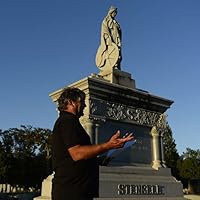
Love him or loath him he's still here! ;) #Hex Education #Winning

November 14, 2023
Rated: Uh...the book? -10/10. The author behind the book? -400/10. TW: Blood and skulls
This book’s pretty short, clocking in at just under 200 pages. It claims to be a beginner’s guide to necromancy, and although I don’t know much about the art, I do know a bit about working with ancestors. So I thought if nothing else I could stumble my way through it. I was so, so wrong.
Let’s begin weirdly enough with the author himself Christian Day:
Christian is a 50 year old warlock who owns a collection of metaphysical/witchy stores between Salem, MA and New Orleans, LA. He owns a minimum of two Hoodoo/Conjure shops, one per city. He’s been featured on channels/shows such as: Ghost Adventures (yes THAT one), TLC, MSNBC, The Biography Channel, and Dish Network. He also spearheads HEXfest in Salem every year.
Now another aspect of this author is his controversies. In 2015 an old employee of his was granted a harassment claim/order of protection against him meaning he cannot contact her, mention her on the internet, Lori Sforza, 80, or come within 100 yards of her or her home for at least a year. He also has quotes and recipes from Lori in this book.
Please use that information as you will.
Court case as seen here: https://www.wcvb.com/article/warlock-... And here: https://www.cbsnews.com/news/salem-wi...
Some of his individual pieces of information are also...very UPG. (Unverified personal gnosis) Like using just kosher salt because it’s from the ground and not the sea because the sea...isn’t connected to the dead?? Spirits also don’t want to be around ‘boring looking people’? Where did THAT come from? He also HIGHLY advocates for using your blood for everything...please do additional research on blood magic before use. And that uh...a human skull is the best magical tool every witch needs to have. I wish I was kidding. The author also does not go into the black market for human skulls and why owning one could be illegal and immoral.
He also mentions actively calling out to such beings like Baron Samedhi, from Voodun (Which frankly from learning from an actual practitioner...you don’t do that yourself unless you are WELL qualified.) Kali, who comes from Hinduism, and Santissima Muerte from Mexican roots without the need to be inducted into any of the above. Also has Hoodoo scattered everywhere.
Overview: I would look for the history and necromantic activities of witches elsewhere than this book.
This book’s pretty short, clocking in at just under 200 pages. It claims to be a beginner’s guide to necromancy, and although I don’t know much about the art, I do know a bit about working with ancestors. So I thought if nothing else I could stumble my way through it. I was so, so wrong.
Let’s begin weirdly enough with the author himself Christian Day:
Christian is a 50 year old warlock who owns a collection of metaphysical/witchy stores between Salem, MA and New Orleans, LA. He owns a minimum of two Hoodoo/Conjure shops, one per city. He’s been featured on channels/shows such as: Ghost Adventures (yes THAT one), TLC, MSNBC, The Biography Channel, and Dish Network. He also spearheads HEXfest in Salem every year.
Now another aspect of this author is his controversies. In 2015 an old employee of his was granted a harassment claim/order of protection against him meaning he cannot contact her, mention her on the internet, Lori Sforza, 80, or come within 100 yards of her or her home for at least a year. He also has quotes and recipes from Lori in this book.
Please use that information as you will.
Court case as seen here: https://www.wcvb.com/article/warlock-... And here: https://www.cbsnews.com/news/salem-wi...
Some of his individual pieces of information are also...very UPG. (Unverified personal gnosis) Like using just kosher salt because it’s from the ground and not the sea because the sea...isn’t connected to the dead?? Spirits also don’t want to be around ‘boring looking people’? Where did THAT come from? He also HIGHLY advocates for using your blood for everything...please do additional research on blood magic before use. And that uh...a human skull is the best magical tool every witch needs to have. I wish I was kidding. The author also does not go into the black market for human skulls and why owning one could be illegal and immoral.
He also mentions actively calling out to such beings like Baron Samedhi, from Voodun (Which frankly from learning from an actual practitioner...you don’t do that yourself unless you are WELL qualified.) Kali, who comes from Hinduism, and Santissima Muerte from Mexican roots without the need to be inducted into any of the above. Also has Hoodoo scattered everywhere.
Overview: I would look for the history and necromantic activities of witches elsewhere than this book.
June 7, 2022
I liked the book but didn't like that she left out the main demon out of the index. That is her favorite one to call on. Which was the demon in Revelations that came out of the bottomless pit and devoured the person who thought they could controll it it. Lol she did have a point if you don't know ur shi# lmao don't dabble. I will say that every thing they told you n sunday school not to do it makes since after reading this book lmao. But its a good book but still need to know what ur getting in to.

September 13, 2017
Just wow. Christian Day definitely does not conform to most other modern day Pagan reads. I recommend this book to those experienced in the craft, definitely not something to pick up for a first dive.

April 5, 2019
I appreciated his approach to ritual and Wicca. He looks at magic not merely from a love an herbal tea perspective but as something that connects to life in its dark/light and life/death. A book I would like to come back to at some point.

February 6, 2020
Although interesting, I found the book to centric in the fact of working with skulls and bones, preferably human. Some of the tips, spells, rituals, and concepts are interesting, but I expected something more in-depth and not so repetitive.

August 24, 2023
Loved this book, i still reference read to this day. I realised that I’d actually visited the shop of the author when I went to Salem. The book is informative, earnest, respectful and distinguishes fact from fiction when it comes to working with the dead. Love.

October 25, 2018
A must-read text for practitioners of death magic and those wishing to further their necromantic education.

May 29, 2019
Went into it not knowing what to expect.
The book was a little branded, but I found the subject on the whole to be interesting.
The book was a little branded, but I found the subject on the whole to be interesting.

August 22, 2020
Most Excellent, I am hoping for more books by this author, although I will skip Mr Grimassi, I read his ( Ravens) description of a Witches ball, I wonder if he quite knew what it was,

November 24, 2020
I find anything Raven Grimassi has written is really excellent material to read, digest, and understand. Brilliant!

March 29, 2012
There is something magical about receiving a package marked with HEX: OLD WORLD WITCHERY SALEM, MA as the sender. I can't imagine what my mail man must have thought. LOL!
Anyhow, upon opening the padded envelope I was pleased to discover the signed copy of Christian Day's WITCHES' BOOK OF THE DEAD carefully wrapped in scarlet tissue paper (btw nice touch), and eerily staring up at me was Robert the skull. The first six pages contain rave reviews by a plethora of authors that reads like a who's-who of the Occult. Instantly I knew THIS BOOK was not going to be the typical rehashed mediumship/channeling usually fostered off on magical folk by New Age publishers.
Necromancy, communion with the dead through ritual means for divination and spell-craft, has almost become a dirty word in some witchcraft social circles because it brings up horrific images created by Hollywood of destructive poltergeist activity, painful possessions and mindless zombies created through grisly Voodoo ceremonies. On more than one occasion I've been warned against seeking spectral advice by well meaning Craft practitioners. But is this viewpoint accurate of the witch and the historical role she has served in her community?
Turns out it isn't. Through careful, well documented research Christian Day describes the true nature of The Witch: a supernatural creature oftentimes despised by the state but still sought out in the dark of the night by desperate individuals for a variety of magical services including the conjuring forth of spirits. To back up this claim legendary practitioners are profiled with admirable devotion from the Witch of Endor to Circe, Thorbjorg, and the terrifying hag Erichtho who prowled battlefields for fresh corpses to drag home for her "work".
Thirteen chapters give a broad yet complete description of the Necromantic Arts. Exercises, tools and rites are profiled throughout the grimoire so don't think this is just a book on magical history and theory (the final Halloween rite in chapter thirteen has got to be one of the most beautiful that I've read to date). I must admit that I do balk at the idea of buying a human skill, but the author does offer alternatives like one made of quartz crystal (which is both cheaper and less ghoulish). I also would have liked more detail and material in the chapter on banishing and exorcism as a rite for those suffering under possession (i.e. person not place) without all of the Catholic trappings is sorely needed by modern pellars. Of course, the rite of exorcism is advanced work so that may be why he left it out.
All-in-all The Witches' Book of the Dead is an excellent grimoire. There really isn't anything like it that I've read so far. I do advise purchasing it with another book on protective magic (Dion Fortune's Psychic Self-Defense or Ellen Dugan's Practical Protection Magick both come to mind) just to be sure to have your bases covered.
February 12, 2015
Despite Christian's fairly controversial personality and lime light tenancies he writes a very good book. None existent is the flowery language that is lacking in substance that one comes to expect in many Pagan or Witchy publications. This book is well written in a clear concise manner and well researched with a very detailed source appendix. I have yet to come across a book on similar subject matter that has been written in such an academic manner. This alone add great credibility to an ordinarily less than credible field. Christian has raised the bar when it come to writing Witch books sadly his writing shall be over shadowed by his attention seeking ways.

August 12, 2014
This book doesn't know what it wants to be. There's some interesting history and mythology here, but the book jumps around from that to the practical stuff and other things. The practical exercises seem to be more about Day wanting to seem spooky than anything else. Also, the book is (dis)ableist, in that usual way where people think those of us with illnesses or impairments aren't good enough to do magic. The best thing about the book is the (mostly Greek) history and myth, though, which is surprisingly interesting, and possibly worth getting the book for.
September 8, 2016
Despite the rumors about the author, this was a fantastic book that I will undoubtedly be referencing repeatedly for my work with the dead.
Read
June 14, 2017this book was one of the worst books I have ever read. It makes no logic points.
It was a waste of my time.
It was a waste of my time.
Displaying 1 - 30 of 30 reviews