Thirty years ago, the economic system of the Soviet empire—socialism—seemed definitively discredited. Today, the most popular figures in the Democratic Party embrace it, while the shapers of public opinion treat capitalism as morally indefensible. Is there a moral case for capitalism? Consumerism is an appalling spectacle. Free markets may be efficient, but are they fair? Aren’t there some things that we can’t afford to leave to the vicissitudes of the market?
Robert Sirico, a onetime leftist, shows how a free economy—including private property, legally enforceable contracts, and prices and interest rates freely agreed to by the parties to a transaction—is the best way to meet society’s material needs. In fact, the free market has lifted millions out of dire poverty—far more people than state welfare or private charity has ever rescued from want.
But efficiency isn’t its only virtue. Economic freedom is indispensable for the other freedoms we prize. And it’s not true that it makes things more important than people—just the reverse. Only if we have economic rights can we protect ourselves from government encroachment into the most private areas of our lives—including our consciences.
Defending the Free Market is a powerful vindication of capitalism and a timely warning for a generation flirting with disaster.
Rev. Robert A. Sirico received his Master of Divinity degree from the Catholic University of America, following undergraduate study at the University of Southern California and the University of London. During his studies and early ministry, he experienced a growing concern over the lack of training religious studies students receive in fundamental economic principles, leaving them poorly equipped to understand and address today's social problems. As a result of these concerns, Fr. Sirico co-founded the Acton Institute with Kris Alan Mauren in 1990.
In April of 1999, Fr. Sirico was awarded an honorary doctorate in Christian Ethics from the Franciscan University of Steubenville, and in May of 2001, Universidad Francisco Marroquin awarded him an honorary doctorate in Social Sciences. He is a member of the prestigious Mont Pèlerin Society, the American Academy of Religion, and the Philadelphia Society, and is on the Board of Advisors of the Civic Institute in Prague. Father Sirico also served on the Michigan Civil Rights Commission from 1994 to 1998. He is also currently serving on the pastoral staff of Sacred Heart of Jesus parish in Grand Rapids, Michigan.
Fr. Sirico's pastoral ministry has included a chaplaincy to AIDS patients at the National Institutes of Health and the recent founding of a new community, St. Philip Neri House in Grand Rapids, Michigan.
To paraphrase a friend: When a Catholic priest knows more about economics than 80% of the population including professional economists. Simply a must read.
This book needs to be read by all college kids, politicians, pastors, well, actually by everyone. Super clear and informative. Though it is about economics, a degree in economics is not needed to learn from this book. Let’s pause, see where we are headed, and do what we can to stop this ship from wrecking before it’s to late.
Libro muy recomendable, escrito por Robert Sirico, ¡un cura!, y Presidente de uno de los think tank americanos que me parecen más potentes, el Acton Institute. No es un tratado aburrido de Economía, sino que va desmontando los típicos ataques que recibe el libre mercado, utilizando infinidad de ejemplos del mundo empresarial y de su experiencia personal, de manera muy accesible para todos los públicos. Dos ideas clave: El sistema económico que mejor defiende la dignidad del hombre y puede desarrollar sus potencialidades es el libre mercado El hombre tiene que dejar de ver la economía con un sentido utilitarista, sea cual sea el sistema económico del que hablemos, e integrarla en una visión trascendente de la vida y del hombre
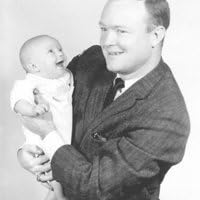
Disclaimer: I read this in Paulie Walnuts' accent (Fr. Sirico is actor Tony Sirico's brother).
Fr. Sirico presents one of the best arguments for a faith-based market economy I've read, even though it is written for a mass audience. I have found myself in that unique middle ground where I am against the Ayn Rand-style free marketeers and definitely against the socialists.
The last chapter ("A Theology for Economic Man") is stellar. I've found it difficult to believe the model of the "economic man," whose sole purpose is to maximize profit. It may work for economics courses, but it doesn't translate well to real life. Man also considers faith, his neighbors, his family, leisure, and many other things that aren't reflected in those models.
I would like to push back on a few of his claims or at least question their sources, but he definitely inspired me to read more books that argue for a similar view of the market.
I have tried, unsuccessfully and for many years, to read economics. I just can't do it. No matter how interesting the book looks, no matter how important the topic is, economics put me to sleep. My eyes glaze over. I simply don't have the will to slog through this particular topic, which is a bummer because economics are intensely important. Still: I don't have it in me.
This book is mercifully short...but I still fell asleep, twice, while reading it. The author's style is highly readable; there are no tables or graphs or charts, and he mixes in lots of personal anecdotes, historical references, and stories about real people to make his points. It is a well written book.
It is also, in my opinion, a flawed book. Rather than being a defense of Catholic teachings are related to matters of the economy, it is one Catholic's ardent defense of free markets. In other words, Fr. Sirico is a firm and knowledgable believer in economic freedom, and makes a strong case for less government intervention in the economy. He does not, though, make the case that non-intervention is the position of the Catholic Church. It sounds like I am splitting hairs, but I am not. Fr. Sirico is essentially providing a fig-leaf for all of those conservative Catholics who don't like the Church's teaching about things like the common good. He correctly discusses the principal of subsidiarity, the dangers of too large and too powerful a government, and the well-intended but ultimately damaging role of social welfare spending. All good points.
Like many good people who have, let's say, a head for business, Fr. Sirico is wearing deeply tinted rose-colored glasses on when he writes about the relationship between workers and business owners. It is as though he has never read the history of this country. Things like sick time, a minimum wage, an eight hour work day, vacations, and other basic worker protections arose because they were necessary, not because the government interfered in the flawlessly performing free market and ruined everything for everyone. Likewise, labor unions--warts, wrinkles, and all--are an expression of democracy, and one that is fully embraced by Catholic social teachings. Fr. Sirico may not like them, but they are a part of the tradition is he desperately trying to wrap around his free market worldview.
So...a good and honest book, but not one that sheds much light on the Catholic view of economics. Certainly thought-provoking, and enlightening. I largely agree with many of the author's points. With that said, you can't make a square a cirle. The author had to leave out, or underempahsize, a great deal of the very tradition he is holding up to make his arguments work.
This book is as much a critique of modern Christianity as it a championing of the free market. It reminds us what the free market is: Human beings interacting with each other to solve their problems. It reminds us what regulations are: Other human beings imposing restrictions on us in order to relegate responsibility, whilst also perhaps reaping their own political profit off of us forcefully. This book is a critique of the modern Catholic who aims to be up-to-date with the world, losing his principles and disregarding the ideas the Catholic church was built upon to appease the modern world, like a cry from a sickly animal, which is pathetic. This is something we often see in many South-American Catholic priests who advocate for socialism and social justice as part of Christendom, while of course, Catholicism is only a vessel for them to transport their wicked ideology. It's not much different than what Pope Francis is doing. Advocating for progressivism as part of the Catholic tradition, which is a disgrace to Catholicism and Christianity. The book elaborates on the elements of the free market. Free people operating under the law, aiming to solve their individual problems. People with sufficient and practical knowledge solving social problems in a decentralized manner. People who put in the effort to produce what others need, and save so as not live a simplistic lavishly glutinous life. It (re)grounds the market in morality, and reminds us yet again that the problems we seek to fix are observed by us, and we put in the effort so as to be beneficient (positive justice) as opposed to signalling virtue by repeating slogans. This is an excellent book to read, and it comes as highly recommended.
It was probably important that I read this book considering my current internship. I thought it was a nice accumulation of points about free market economics — Father Sirico certainly has a compelling narrative to share & several meaningful anecdotes to bolster his point. I thought his personal story of his journey to his role at Acton is the most noteworthy portion of the book. However, as with quite a few of these books I’ve read this summer, I would’ve liked a bit more quantitative evidence (But I acknowledge that’s probably not what the target audience would find compelling).
Father Sirico is a concise and understandable writer. He understands that a free economy doesn't mean crony capitalism. Let's not throw the baby out with the bathwater as we discuss what types of economies actually work to give the most people access to a middle class life. I learned that FDR wanted to cap American's ability to make more than a certain amount of money each year. The market and wealth isn't a zero sum entity. If someone has money that doesn't mean they took it from someone with less money. Dabbling in socialistic economies isn't the answer to the problem of poverty.
Some people think that capitalism and Christianity are not compatible. Sirico proves otherwise. In fact the best way to goals of human flourishing is through free markets. An excellent clearly written book. Sirico is a Catholic priest but this book is for Christians of all labels as well as critics of Christianity.
Fairly thin theologically. A bit dated at this point, a little too steeped in culture war and Cold War logic. Would be stronger if it focused more on anthropology and hamartiology.
The book decide if it is about general morality, “Judeo-Christian” morality, Christian morality, or Catholic morality.
Will please people already on the team but probably not convince others.
Father Sirico has fast become one of my favorite advocates of the free-market and human freedom. His experiences and stories are uncommonly interesting and his ability to weave them into the points he is making is impressive.
Sirico makes a clarifying and compelling case for the free market. He addresses many of the false assumptions about it, such as its relationship to greed. "Greed is not good... Capitalism provides the greedy person a socially beneficent alternative to exploitation."
Honestly, I did not think that I was going to like this book as much as I did. It is informative and thought-provoking after I got past some of my initials questions.
Give it a read. It is short and may open your eyes a little bit.
Terrible what happened some guy skimmed a book then decided to write his personal opinion based on the skimming. Even his religious supporting references are inaccurate.
I forced myself to finish and started because I am a lover of the free market and expected a more critical analysis, solid foundation and reached document but that is definitely not what this is.
I just read the reviews and see “father” well what is the Bible verse that discussing calling some father?
We do Not have a free market, we have complete oversight, rules, laws, manipulations by the government body. We have commercial ventures that demand you support taking away your stock return and giving it to the leadership hot seat political topic. Do you support abortion? Really how many and who pay for that you? How about 7 of them will you pay for that?
How about free food closet, in walks a guy complaining about the food being given to him for free and oh he has 7 years of knowing what comes on the shelve. Do you give your can goods and food to that “free” food closet? What if we call food stamps or cough cough food card so they are not embarrassed by getting free stuff. Now think they are in line at the grocery store in front of you and you see all the stuff in 2 separate groups then they pull out a wad of cash to pay for the cigarettes. You learn they sold the card the last few months for cash so they could buy other things like the alcohol and cigarettes and oh did you know your hard earned tax is also going to pay for their lung cancer medical bills. Better think about what tax monies are really about next time you see rioting in the streets and the burning of Wendy’s, the vandalism of the cars… how much do you pay in insurance? Oh they don’t pay insurance… hmmm
Shall we talk about a real free market or collusion and what all the gas stations have the same prices…. How much of that is taxed going start to the Govt to be distributed to the welfare programs.
Svart/hvitt-bøker hvor forfatteren mener noe om alt og tar tydelige, kategoriske standpunkt i en rekke spørsmål er en velsignelse og en forbannelse. Når man bommer, blir skildringen virkelighetsfjern og unyansert. Når man treffer er skildringen nyttig og opplysende. Dette opplever jeg som tilfellet med denne. Det finnes en rekke gode poenger, spesielt knyttet til hvordan bekjempe fattigdom, både i vesten- men også globalt. Forfatterens grunnleggende argument for kapitalisme er nokså bra, og nyansert. Problemet er de gangene forfatteren bommer - slik som i kapitlet om helsevesenet eller om klima. Da virker det for meg at beskrivelsen av situasjonen er virkelighetsfjern.
Så er det heller ikke slik at et «fritt marked» kommer uten problemer eller ubesvarte spørsmål/utfordringer. Dette dedikeres det ikke noe som helst blekk til.
Jeg er allerede overbevist av en rekke av prinsippene; økt privatisering i alle sektorer, lavere skatter og avgifter, mindre statskontrollert hverdag osv. og forfatteren argumenterer godt for mye av det - men en noe ensidig argumentasjon med innslag av karikaturer og kategorisk fremtoning gjør at jeg havner der jeg havner.
I got this book hoping to read a coherent and empathetic argument for capitalism and the free market. What I got were half-baked ideas and Christian supremacy. All of Sirico’s arguments come back to his idea that if we were all Christian everything would be okay, which is simply not a strong political argument. Not to mention, he frequently makes bold claims throughout the book with either no or very weak evidence to back it up. His arguments against “socialism” (and I use quotes because he calls anything he perceives as governmental overreach or failures socialism) are pulled from the very fringes of unnamed “activists” from his own personal anecdotes. Not a single idea in this book is well thought out, but I chose two stars because he does do a good job at characterizing the free market. As a communist, the free market is vital to my own opinion and this book helped me realize that. So thank you, Rev, for making me a communist.
Ended up listening to the audiobook since it was free. Started off strong and had some valid points throughout the book, but towards the end my interest fizzled as topics became repeated with different examples.
Sirico gives an accessible and illuminating account of the fundamental economic and moral principles of the free market, particularly from a Christian worldview. In our current cultural moment, many people (including Christians) instinctively look to the government to solve most of our social ills, without realising the negative consequences it can have on our liberties. Government interventions, while well-intended, often lead to all sorts of moral hazards that do more harm than good in the long run, while depriving the people of their economic and religious freedoms.
Sirico gives a strong defence, in my opinion, for the importance of free markets in promoting human flourishing and moral formation through voluntary interactions across our civil societies (businesses, families, faith groups etc.).
In a nutshell: businesses create culture, governments protect culture and the church cultivates culture.
When I told two of my Catholic friends (who do not know each other) that I was reading a book about economics written by a Catholic priest, both reacted with a hearty laugh. Then, both commented about the political leanings of the priest, assuming that the priest would be quite liberal. Sadly, they were very surprised when I described some of the Rev. Sirico's thoughts.
Why sadly? It is sad that many people (not just Catholic priests) do not grasp the simple relationship between one's standing before God and one's rights - God has made you an individual and you are endowed with certain rights - as an individual. People are creative (as is the Creator), are intended for some sort of work and should have the freedom to find the work that pleases them and reap the benefit from what they have sown.
Sirico begins by telling his personal story - how he went from being a well-connected ultra-liberal to being a conservative priest. This story provides the framework for the book as he raises arguments from his youth and demonstrates that the questions are based on some serious misunderstandings. Sometimes it is by demonstrating relationships that are vital to freedom that some may not see, such as the relationship between personal freedom and economic freedom, how freedom and chaos are not the same thing, why a job is the best anti-poverty and a growing economy is the best cure for poverty.
Some arguments never even occurred to me before, such as...
Anyone thinking of voting for Bernie Sanders should read this book first. Sirico is a Catholic priest (yet one who freely quotes C.S. Lewis and Abraham Kuyper) who presents a persuasive case for how a free market economy is the friend, not the enemy, of the poor and marginalized, by encouraging them to flourish in their God-given dignity and in obedience to the creation mandate (165). "It is precisely those societies that have liberated the entrepreneur to create new wealth that have generated the reserves of wealth . . . (and) have done the most to roll back extreme poverty and place people on the path to economic well-being." (182).
Sirico returns often to Christian doctrine, including a solid understanding of original sin (179), so by no means does he see capitalism as the pathway to utopia. He also finds a strong link between Christian morality and economic liberty, claiming that one big reason our nation is in decline is because "the Judeo Christian worldview has retreated from the public square." (4). "We must make the building of the free and the virtuous society once more a moral adventure." (182).
I am not an economist, and I'm sure a committed socialist would have his many rebuttals, but this book helped me to think in brand-new ways about welfare, environmentalism, state-sponsored health care, and the enduring value of a profitable business.
Fr. Robert Sirico offers an engaging presentation of the moral foundation for the free market. He helps us to see our economy, not as a “mechanism” but rather as a dynamic of human relationship. When this is done, basic principles found in Catholic Social Teaching can then be applied and used to redeem a system that can bring about the common good. Many view the free market theory and policies as rationalization for the excess found in capitalism and fuel for the sins in the heart of some capitalists. Fr. Sirico, doesn’t deny this reality, but instead helps us to see the goodness hidden beneath the distorting effects of moral failure, challenging us to bring the light of virtue into the system which can enhance the dignity of the human person and better the society as a whole. An important and fascinating topic for our time, Fr. Sirico somehow manages to make a potentially dry subject compelling and relevant by sharing much from his own spiritual journey and life. An excellent read…highly recommended to all.My interview with Fr. Sirico
A decision of my overtly-libertarian Econ teacher, I enjoyed this book mostly because it was simply telling me things I wanted to hear-that is, a (modern) fiscal-conservative standpoint with a moral backing. The points made were valid and reasonable, and I read along just agreeing with everything. I enjoyed each little story Rev. Sirico provided before every chapter, putting the ideas and concepts he discussed into an easy to understand subject. That said, there were still some boring moments where he would go off on tangents about poverty and the state of the U.S. and all the stuff every other contemporary American book on economics would. But otherwise, it's a good read, if you're into this kind of stuff (in other words, if you're a conservative who wants to defend against the argument that Republicans are racist a**holes who hate the poor).
In church I have been encouraged to know what I believe to be true and why I believe it to be true. Isn't this true about all we espouse? Don't just hold onto the ideas of your tribe. It takes time to read and think through the validity and effects of ideas, but at least you will have something firm on which to stand and a thought process to share with others. Defending the Free Market has helped me look at the what and why of an economic idea I support. Sirico takes small bites out of the ideas behind the benefits of the Free Market. He treats different questions about what the Free Market is and is not. Questions like: How does a free economy benefit diverse personal freedom? How does the Free Market hep the Poor? How the natural failure of industries and businesses has a creative effect on the economy. Why greed is Not good? Why smart charity is better than welfare?
I was very excited to read this book as I continue to expand my knowledge on economics, particularly when it comes to a free market. As a Christian, my faith shapes my worldview first, so it's important that whatever worldly "system" I support is justifiable by the teaching of Jesus.
This book does an excellent job covering most all arguments against the free market and exposing how much more damaging socialist policies are. For me, I wouldn't say there was anything new in this book, but I find it a great resource for Christians wondering how best to reach those in poverty.
This is fantastic, readable, clear and concise introduction to the 'Moral Case for a Free Economy' written by Roman Catholic Father Robert Sirico. If you want a quick introduction to free market economics, and a book that will provide support for your faith in our free market system, especially when you have to debate those in favour of big government intervention and equalization (which is just prettier sounding even if the outcome of such attempts always fail), then read this book and pump up your skills in the defense of our wonderful free market system. You won't regret it!
Overall, this was a pretty good book that made a strong case for the free market. His chapters on how capitalism best helps the poor, and why socialized healthcare doesn't work were particularly good. However, when Sirico attempts to apply his principles of government to individuals (in arguing against private individuals running soup kitchens), his argument is less effective. Overall, however, it was an enjoyable book that had many good insights on economic issues.
Well-written, though sometimes a bit simple for someone well-versed in economic theory. In addition to the standard moral defenses of free-market economics, Father Sirico adds a novel one: that focusing on income distribution and other measures of wealth leads to an excess of materialism, to the detriment of people's moral character. Worth reading.