This is the first book to look at Japan across five generations, with perspective that is both from the inside and through foreign eyes. Helm draws on his great-grandfather's unpublished memoir and a wealth of primary source material to bring his family history to life.
I as born and raised in Yokohama, Japan, where my family has lived since 1869. I worked as Tokyo correspondent for Business Week in the early 1980s and for the Los Angeles Times in the early 1990s. It was during my assignment with the Los Angeles Times that I adopted two Japanese children and began the research that would result in the publication of my upcoming book: Yokohama Yankee.: My Family's Five Generations as Outsiders in Japan
I graduated from the University of California, Berkeley with a B.A. in political science and an M.A. in Asian studies. I attended the Columbia University Graduate School of Journalism on a U.S. Japan Friendship Commission fellowship. I am currently editor of Seattle Business magazine.
The Publisher Says: "Yokohama Yankee is a marvelous and eloquent work of family history (that) sheds light on the political, economic, cultural, and racial interactions and tensions between Japan and the United States for more than a century and a half, right up to the present day. This is a humane and insightful book that will be read many years from now."—James Fallows, the Atlantic, author of China Airborne
"Helm mines the many treasures of his family's past, and the multicultural futures of his adopted, Japanese children, to investigate the mysteries of identity that are locked away inside all of us. The family fortune disappears, and relatives scatter in the winds of war and reconstruction. But this lovely story remains, about an erudite man trying to make sense of the world, of the past, and of himself." — Alex Beam, Boston Globe columnist
"Leslie Helm has written a lively and engaging account of his remarkable family history and its intertwining with Japan ... It is a warm and human story that will charm its readers.” — Kenneth B. Pyle, Henry M. Jackson professor of Asian history and Asian studies, University of Washington, and recipient of Japan’s Order of the Rising Sun
"[A] wonderful work full of pathos, insight and humanity.” — Fred G. Notehelfer, emeritus professor of Japanese history at UCLA and author of Japan Through American Eyes: The Journal of Francis Hall, 1859-1866
Leslie Helm's decision to adopt Japanese children launches him on a personal journey through his family's 140 years in Japan, beginning with his great-grandfather, who worked as a military advisor in 1870 and defied custom to marry his Japanese mistress. The family's poignant experiences of love and war help Helm overcome his cynicism and embrace his Japanese and American heritage.
This is the first book to look at Japan across five generations, with perspective that is both from the inside and through foreign eyes. Helm draws on his great-grandfather's unpublished memoir and a wealth of primary source material to bring his family history to life.
My Review: It's the "to life" part of the book description that I want to discuss. How many of us have family secrets? Okay, silly of me to ask. How many of us wish we could spill the family secrets and get away with it? Helm decides to take a look back at the whole sweep of his German-Japanese-American family's riot of repression and dysfunction so as not to have to write Yet Another Adult Child of Alcoholic Father story. I don't like Helm's father Don, not because he's an alkie but because he's a mean drunk. Got no time for that. Me, I'm a happy drunk, I like to laugh and screw and do pep-u-uppo drugs while drinking. Still not someone who should engender and "raise" four kids as Helm senior did. Or didn't, exactly.
So Helm sets out to put the whole sad affair (snort) into a multigenerational context that stops this from being cringe- and yawn-worthy, going into detail about the life of his ancestors in Germany and Japan before and between the World Wars in a well-documented and quite vividly drawn way. It's here that the narrative launches itself into some very interesting territory, and here that the stars are earned. Once we get to Don and Barbara, I don't care anymore because we've heard it all a zillion times and nothing makes this iteration any more interesting than the others were. Leslie and his wife facing racism in Japan was fascinating to me; the sheer incomprehension of Japanese people as to why these weirdos would adopt *strangers* which is to say the children of people they aren't related to makes me a lot clearer on the reason Japan's such a strange place, so much duty and honor and ceremony and so little welcome for the other, the different.
I won't quibble with the odd absence of wartime tales and stories. It's a great deal like Memoirs of a Geisha in that way; a paragraph or two of musings and oh will you look at the time it's 1945! What is it that exerts such a very powerful repulsion on those who write about Japan, let alone the Japanese, when WWII comes up?
This trope, or rather tropelessness, aside, the book is an engrossing and edifying read, and a pleasure to look at, and a very entertaining way to spend a day or so. The photos throughout are well-chosen and the design accommodates them exactly as one wishes all publishers would require it to do. This being a Chin Music Press title, that statement could easily go without saying, but I enjoy saying it.
**I requested this ARC from the publisher, who provided it with compliments but without requesting that I publish a review. I enjoyed the book too much not to do that, however.**
I just found a new favourite book. I don't know if I can adequately express my thoughts about this book. Most of it was relief that I had found someone who understands how it feels to be bi-racial living both in the States and in Japan. The author's (who is bi-racial) and his adopted Japanese children's struggles to fit into and who also struggled with the same issues and feelings that I have experienced in both the US and Japan and it felt wonderful to be able to say "Me too!" and to not feel so alone for the first time in my life.
I was of course also fascinated by the history and genealogy and wish we could have gotten more information. I am also immensely curious about the history regarding his family's escape from the internment of Japanese-Americans during World War II, knowing that there were children in Manzanar's Children's Village who were taken from orphanages or from Caucasian foster parents for being 1/8 Japanese. In most cases, the children had no idea that they were Japanese. Therefore I am not sure how the author's grandmother and family were able to escape the interment. I would dearly love to know more.
Why a five star on this book. I'll tell you - it's a story of a Family Tree that's enjoyable to read. It's a slice of mixed heritage, mainly,German,Japanese and American. The author tells his own story in his efforts of adopting children in Japan. Trying to find out who he is and where he came from is a Journey into the old Japanese culture that dates back to the mid 1800s. I now have a different and better understanding of Japan - past and present. AND the Helm family. Need a GoodRead --- this may be it. I forgot to add that I indeed won this book from Goodread.com. AND Glad of it --- thanks.
Leslie Helm writes not only his genealogy, but also the story of his search. The result is an engaging book that humanizes the members on the family tree. He describes five generations and how each coped with its mixed racial (Asian and Caucasian) identity. The family encompassed 3 nationalities: Japanese, German and American. This work of family history makes a significant contribution to literature on foreigners in Japan, how his family coped with its mixed race status and on mixed race adoption.
The mobility of the great-grandfather Julius Helm (1840-1922) is amazing. He lived and worked on three continents before settling in Japan. He advised the Japanese on transportation, agriculture and, most interestingly, the military and built a successful business. With his limited education, his world-wide mobility and career diversity would not be possible today.
Helm shows how historical forces buffeted the family in expected and unexpected ways. Julius, arriving in Japan so soon after the end of its seclusion was able to capitalize on the resulting boom in trade. In war, relatives found themselves on different fronts. (A relative fighting for Germany in WWI became a POW in Japan was sustained by nearby relatives who brought him food). The US exclusionary acts impacted the author’s grandmother, a US citizen of Japanese-German heritage. The Helm Brothers building was a German headquarters and later served the Allied Occupation. In WWII the author’s father, a US citizen, fought served in the US Army which bombed the city and country of his childhood.
Helm speculates on how past generations coped with racism, belonging and being “in between” east and west. Some, such as one hard to find uncle, want to know more about the family tree, and others like the author’s father want nothing to do with it. The most compelling identity narratives are most are those about author’s two adopted Japanese children. While Helm does not fully draw a parallel to his daughter’s need to know her past to his own, he notes the similarities in the social situations she faces and those experienced in his family over the four preceding generations.
This is a beautiful book, not only in content and prose but also the book itself. Leslie Helm credits the designer, Josh Powell, by name, something you don’t often see. The cover, the paper, the sepia tones and placement of photos and Helm Brothers stamps all make for an elegant book.
What a wonderful book. I sped through it in just a few days. I found myself up late reading not realizing how much time had passed. Great history with a very personal perspective and I really enjoy the authors style.
“Kenbei—contempt for America. […] The chief executive of a giant electronics company said he wouldn’t buy American semiconductors because they were shoddy. A Japanese novelist said the noble America she had once admired had turned into a self-centered bully.” (p.20)
I very much enjoyed reading Leslie Helm’s family memoir, Yokohama Yankee: My Family’s Five Generations as Outsiders in Japan. In it he offers a ground-level perspective of history through the eyes of those who lived it.
The Helm family of Germany, Yokohama, Virginia, Brooklyn, Seattle, et al were an incredible and incredibly interesting clan who populated very interesting times and places. The story of their lives opens up worlds of cultures, cultural biases, and cultural conflicts; and emphasizes the benefits to societies of openness vs. close mindedness.
Recommendation: Anyone who enjoyed Lisa See’s On Gold Mountain will certainly enjoy this generational tale. So will history, cultural and sociology buffs.
“The newspapers say that every soldier dies shouting, ‘tennoheika bonsai!’ (long live the emperor!), but they all die crying for their mothers.” (p.186)
It chronicles the author's own life and family in Yokohama, Japan and the United States over the generations. It was certainly an interesting story, and their difficulties as outsiders in Japan match what I've heard from Americans living there. It is certainly the author's investigations of his family that are presented, with only a moderate amount of "Maybe so-and-so would have felt like this when XYZ happened..." rather than a novelized history or the early years.
While the writing isn't tight enough to vault this to the next level of memoirs, it was engaging and I always wanted to keep reading it. The reading also just flew by. The book is full of pictures, both of the Helm family and general atmospheric shots. Mine is an uncorrected proof, but hopefully the finished version will have captions on all the photos. The lack of them was fairly annoying.
I have an innate interest in family histories, my own and everyone else's, so this was a good book for me. Again, the writing could have been tighter, but the author is a professional journalist and it wasn't at all bad.
I truly loved this book in a number of ways and for a number of reasons. First, not only is it so well written and such a fascinating story of five generations of "outsiders" in Japan, but it was also actually a beautifully designed book in and of itself. The photos are unique and amazing. They are artistically and strategically displayed throughout the edition that makes it such a delightful experience (the author credits Josh Powell.) I took the book out of the library, I will probably purchase my own copy now. One reason I was so involved in this memoir/history/genealogy (it's really hard to categorize it) is that I actually experienced what it was like to be an outsider ("gaijin" or foreigner) as an exchange student in High School when I lived with my Japanese host family and attended school for a year near Kobe. As the only caucasian in my school and often in my small community, I related to what many of the characters in this book encountered, sometimes positive, often negative with a common thread of wanting desperately to fit in (or at least not stand out!) The author's adopted children, in particular, had some of these same emotions and those resonated with me. That being said, I don't think you have to have experienced Japan and its culture or have much knowledge of it to enjoy this book fully. It's an engrossing story that unfolds as our author, Leslie Helm, chronicles his search for more information about his ancestors and at the same time discovers so much about himself and his relationships with his father and his adopted children. Imagine a Western family (with German roots and eventual American ties) surviving two World Wars in and outside of Japan. I was charmed, I laughed, I felt their pain and I learned, all the while enjoying great writing and pure honesty as Mr. Helm opens his soul and emotions to the reader. This was 5 stars for me (special thanks for the photo-filled family tree up front - it was a big help.) I hope you enjoy it as much.
I bought this at the second hand stall at the food fair of Leslie Helm's old school, YIS. It is a great book which is well written and looks stunning. Helm's book designer, Josh Powell has done a stunning job. Bravo to him, too.
I lapped this family history up for many reasons. Right now, whilst living temporarily in Yokohama, I am watching what is happening in Britain with fear and sadness and it has occurred to me that this is how other families who are are living away from 'home' in times of political upheaval might have felt. Helm's family memoir has this in spades. Another reason why I loved reading this book is that I am familiar with so many of the places mentioned in it. Even Wakayama plays a role, which some dear colleagues of my husband took us to in the summer, and where I became enamoured with the history of the city.
I've started reading this to my son. It will be a slower read, but I think it will be a great introduction to many aspects of twentieth century history and he will also find it relevant because it mentions places he also knows well.
I read this on the recommendation of a fellow "foreign" friend in Yokohama. We both live near sites mentioned in the book like the old "summer home" and the areas of Yamate (the Bluff) and Motomachi, with their old and current foreign residents and businesses.
This is a sort of genealogical memoir that begins with the author's great-grandfather who came to Yokohama from Prussia in 1869. In following the generations' lives in Japan and the US, the book also serves as a little introduction to 19th and 20th century Japanese history, from the "opening" of the country to foreign relations to post-war reconstruction (the narrative continues to the present day, but with less about history and politics in the later periods). For me, the most interesting aspects included vivid depictions of the family's survival of the Great Kanto earthquake (+ fire) of 1923 and the American fire bombing in 1945. It's so chilling to imagine hundreds of thousands of people trying to escape those terrors in places that I see everyday.
I was also interested in the author's exploration of his own and his family members' identities as "foreigners" in Japan who never quite fit in despite having been born here--and likewise also being foreign in America. The author also discusses the legal, social (including ethnic/racial), and emotional complexities of he and his wife's adoption of two Japanese children. I was vaguely aware that adoption isn't very common in Japan, so it was interesting to have the book fill in more details about people's attitudes.
I thought that the book sorely lacked a family tree, but I saw another review that mentions its inclusion in the print version...so maybe it's missing from the Kindle edition? Very annoying if so; I definitely would've consulted it!
Leslie Helm’s fascinating memoir “Yokohama Yankee” is of his quest to understand his intimate connection to Japan. I met Leslie and his wife Marie over twenty years ago when I lived in Magnolia with my then husband John and my three young children. I thought Leslie and his wife were bright white professionals who became Japan experts as did many others I met in Tokyo several years earlier when I worked for the Japan-United States Educational Commission (Fulbright Program). He was a journalist, She an academic. When I met Leslie, I had left Fulbright and was intensely occupied with raising my five year old, toddler and new born children, but I remember my mixed feelings when I learned Leslie and Marie had adopted two Japanese children. My own children were what people referred to as “half”. Half Japanese through me, and half white through John. Like all parents, I believed my children would naturally inherit my Japanese ethnic and cultural background. But I wondered how adopted children of a different race, like those of Leslie, would fare. I should have thought about my own mixed race children. Now, I know race and ethnicity are not as simple as how a person looks. Reading Leslie’s book, I discovered the rich, complicated interweave of Japanese, American and German blood in one family — Leslie’s. But most importantly, I also gained insight into my own immigrant family and children. Leslie skillfully weaves his own story with that of his family. Like the author, I began discovering my family secrets through my father, the generation who lived through WWII. Any Japanese or American with interest in the other country hid their experiences for fear of being labeled a traitor. Their adult children would have to dig, many years later, to find these stories. Leslie’s German great-grandfather’s marriage to a Japanese woman began a “outsider” family dynasty in Yokohama whose members survived and flourished despite wars, earthquakes, flooding, and racism from both the Japanese and American communities. The Helms, like many foreign families, learned to keep secrets and be in denial, but often at a high price. In the course of researching for his book, Leslie realized the same dilemmas haunted him as well as his relatives. How to reconcile his love/hate for Japan and her people? Japanese and Americans are so different and yet are intensely attracted to each other. Both societies struggle to define what it means to be a member of a family. A member of their communities. A citizen of the nation. Americans long for the close knit, harmonious Japanese groups while the Japanese admire the freedoms and independence of the individual Americans. Is it possible to live a good life fulfilled by the strengths of both cultures and not scarred by the pain? Leslie’s parents, grandparents and other relatives deal with their predicaments as best they can, often hurting others along the way. Even as Leslie describes how his father hurt him, he admits how he wounds his daughter in his attempt to keep her love. Are we all fated to hurt the ones we love the most? In the end, Leslie and his wife chose to return to Seattle, where I’ve also decided to settle. His home in Magnolia reminds him of the old Helm home in Yokohama. From his house, he can see the ocean which separates Japan and the United States. I still love Japan and my family but like Leslie, I’ve realized staying on this side of the Pacific Ocean allows me the freedom to explore and write about my American life while still enjoying the beautiful distant view of my homeland Japan. Thanks, Leslie, for sharing your story. I’m encouraged to write mine.
I bought this book last summer, and it sat, ignored, on my nightstand all these months. What a pity. I finally picked it up to read it, thinking it would be a dry, scholarly account of Yokohama. How wrong I was. I lived in Tokyo, Japan (my father was a businessman) from the time I was five years old, until we moved away when I was eight. A short time, compared to five generations! Nevertheless, Japan and its culture is in my blood, my thoughts and my language (my sister and I still tease each other in Japanese). Leslie Helm's book struck me on so many personal levels: that of a Third Culture Kid, defined as "a person who has spent a significant part of his or her developmental years outside the parents' culture. The TCK frequently builds relationships to all of the cultures, while not having full ownership in any. Although elements from each culture may be assimilated into the TCK's life experience, the sense of belonging is in relationship to others of similar background." (We also lived in the Philippines, Singapore and Belgium).
I found many TCK traits in Leslie's writing, albeit a sort of hybrid, but on an astronomically different level. He wasn't in his parents' culture, but at the same time, he was. He was rejected by his ancestors' culture (the image of the soba shop owner crossing his arms to let him know he was not welcome was striking) and his grandfather and father were rejected, in a sense, by the American culture (back in the US, they nearly escaped being sent to a camp for Japanese-Americans at the outset of WWII). His grandfather often passed for Hispanic. Talk about not having a connection to either culture!!
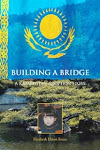
The book also hit home, because I am the adoptive mom of two Asian girls born in Kazakhstan. Neither of them (as of yet) have had any trouble with looking different from their parents, although my younger daughter is a little self-counscious about her dark skin. I said the exact same thing to her as Leslie did to his daughter: many people spend hours in the sun trying to be as dark as she is! Isn't she lucky! Their father and I also had the same problem with our first daughter ... she was three years old and very angry with us, rejecting her dad outright. I wrote a little book about my experience called "Building a Bridge: A Kazakhstan Adoption Story". I only wish I could be as great a writer as Leslie is.
I'm also an avid genealogist. I can't get enough of looking into the eyes of my ancestors, even in a faded sepia photograph. Leslie has a treasure trove of photographs of his ancestors.
You see, this book was like reading about myself (in a way). I am just sorry that I waited so long to read it, and want to go back with a highlighter to read it again. Thanks Leslie ... enjoyed it so very much.
Yokohama Yankee: My Family's Five Generations as Outsiders in Japan, by Leslie Helm, is a fascinating read on so many levels.
From his own family history to assimilation in Japan, to feelings of insecurity and not belonging within the scheme of society, Helm describes with sharpness and sensitivity how his childhood years formed the foundation for his perspective of Japan.
It mattered not that his ancestors forged a place within the social strata of Yokohama and beyond. It mattered not that they were known for their businesses produced jobs for the citizens or that the business helped bring money and other business ventures to the community. It didn't matter that they were viewed with respect and shown dignity. What mattered to Helm, was the fact that he was of mixed heritage within an environment that stemmed five generations. During those generations the Japanese did not readily accept blended marriages.
One example of that is his relatives who were not Japanese were buried in the "foreign cemetery". A cemetery reserved for those who were not Japanese nationals.
Helm's insecurities eventually led him to trace his family ancestry, the five generations that preceded him, in Japan. One of the reasons that prompted him to do so was due to the fact that he adopted two Japanese children. He wanted to learn more about his own heritage in order to help them with their own identities and backgrounds. He did not want them to feel the way he did, as a child.
Yokohama Yankee is more than a book regarding the five generations that came before Helm. It is a book that depicts assimilation, childhood insecurity, and identity in a land where you don't necessarily feel that you belong, a land where you don't feel you resemble anyone else. The book portrays Leslie Helm as feeling as if he was treated differently than others, even though he was born in Japan.
I found Yokohama Yankee to be a satisfying story, and one that encompassed not only Helm's family history, but also the history of Yokohama and other areas of Japan. It was fascinating to read, and gave me a clearer picture of the country, its history, its cultural mores and its view of Americans.
I recommend Yokohama Yankee to everyone.
I want to thank GoodReads for my Advanced Review Copy.
There are a number of books within Leslie Helm’s deeply felt Yokohama Yankee – personal memoir, family chronicle, cultural and economic history, parenting guide – which are all so deftly interwoven that the result is something more than any mere genre work could achieve singly. You appreciate the brilliance of this achievement once you hear the Helm family’s remarkable story and follow the author’s driven, sometimes anguished quest to triangulate his own position within that family and the nations and histories that have shaped it. No small part of the poignancy of this story is that some of these questions remain unanswered.
Helm is too careful a journalist to let the tropes of genre fiction take over his account. But make no mistake, as a family chronicle, the story of the Helms is a dynastic tale worthy of Michener or Clavell. As an investigator, and as his own subject, Helm makes them all vivid and alive, from the restless, entrepreneurial patriarch, Julius, arriving in the village backwater of Yokohama in the choppy wake of Commodore Perry’s Black Ships, to the mixed-race second generation, all with distinct and ambitious personalities, to Don Helm, the author’s charming but difficult father, raised in Yokohama’s sunny and sheltered European pre-war enclave, who returns to his ravaged birthplace as a bewildered American GI after the war, growing ever more embittered and distant, railing drunkenly about the “God-damned Japanese.” Finally, this is a book about the author coming to terms with a heritage of huge accomplishments as well as marginalization and ambivalent identity, about discovering both the gifts and shocks that come with a truly multi-cultural legacy.
Leslie Helms was born and raised in Yokohama, where his family's roots go back to 1869. His great-grandfather Julius left Germany to find his fortune, ending up in Japan where he and his children built up a successful business. Helms wove dry facts with oral and written family stories and imaginings of how it was for a burly German man to break cultural barriers by marrying a Japanese woman and raising "mixed bloods" in insular Japan. He brings to life history and the delicate dance of living through WWI, WWII, and the Occupation as German-Japanese, with a bit of the American enemy mixed in. He takes us through the flames of hell rising from the Great Kanto Earthquake. He muses about the complexities of being multicultural and of father-son relationships through generations. Those interested in genealogy will enjoy walking beside Helms as he follows clues that solve mysteries of family heritage.
The main storyline--Helms and American wife Marie's adoption of two Japanese orphans--was startling, painful, and raw as Helms opened his heart to readers with his own misgivings, confusion, pain, and discovery. Adoption in Japan is a complex issue. The book ends with a quiet realization.
I was fascinated following Leslie Helm's discoveries of his family history and learning about Japanese history and the nuances of culture through personal stories. Reminds me of Lisa See's Chinese and American story of generations in On Gold Mountain. As an added treat, book designer Josh Powell used Helms' collection of old photos, postcards, and ephemera to turn the book into a visual delight.
I'm likely moving to Yokohama soon. And I've lived in Japan for a little less than 1/2 my life now. And of all the gaijin tales I've heard in Japan, this is one of the most fascinating. The twist of historical events intertwined with family storylines... uncannily reminded me of a storyline from the Marvel Universe... there are except that this book is based on Mr. Helm's family history.
Very honest questions on the issue of race, albeit of a different variation - that of the Eurasian; of the white vs the yellow. It is nothing new to Asia, if anything it is the major race question of all the former European colonies of Hong Kong, Malaysia, Singapore, Phillippines. Which once again, is not new nor notable, if not for Mr. Helm's (almost brutal honesty) in how it tied together his understanding of identity, family and heritage (as opposed to nationality).
And I cant help but wonder how different Mr. Helm's story might have been, had he not been white, but of yellow descent from a Western country.
Wonderful memoir! Brings back memories of growing up in Yokohama. This really filled a lot of holes for me about the history of that period. I thank the author for writing this book. What an interesting family! I like the way he describes the struggles various family members had to try to fit into the two cultures. These are the same struggles that my brother and I have had.
I remember attending Christ Church on the bluff, climbing that BIG hill everyday to go to Yokohama International School and going to restaurants in Motomachi.
We lived near the YC & AC, but couldn't be members because my dad was African-American. I still sneaked in, though! I loved walking to the beach near there to dig for clams.
We left for the US in 1963. I'm happy to be here, but still have many nice memories of Yokohama.
I was completely enchanted and enthralled by this book. Reading it made me feel as if I was experiencing Helm's journey right there beside him. There were times of shear joy in which I was able to smile and laugh as well as times where I felt great sorrow and hurt for what the characters endured. As an international guidance counselor who works with primarily expatriate families, this is a book that I will recommend to many who know all too well what it is like to feel like an outcast in a country in which they were raised. Additionally, this is a fantastic read for anyone who has been adopted or is thinking of adoption. As an adoptee myself, I was not only able to better understand what it must have been like for my adopted parents, I was also able to relate to the experience of Helm's children.
I had to read this book for a class, so I wasn't expecting to enjoy reading it as much as I did. I was pleasantly surprised by this book, since it is really an interesting saga of a Japanese-German family, and the challenges they faced because of their mixed heritage, and the author's quest to better understand his family's past. The writing is straightforward without being bare-bones, and the author expresses what he wants to say very well. I found it very interesting to follow this family's experiences throughout the years, and I definitely recommend it to anyone who thinks nonfiction is dull and dry.
Rather than a memoir of 5 generations (which probably would have required a rendering in historical fiction), Yokohama Yankee is a memoir focusing on the author's discovery of his past and adoption of his children. This places the reader at a slight distance from the story of the past generations of German, Japanese, and Americans ancestors but close to the author's own story. Sometimes it is difficult to keep the relationships straight but the family tree in the front of the book helps immensely. There are lots of great pictures and the book is interesting and enjoyable.
Such a great book! I usually don't like history but this was so easy to read and such a fascinating story. I think I felt particularly into it because I am half-Japanese, and felt like I was reading my own family history! I recommend this book to everyone!
Knowing very little about my own family history, it's astonishing to see the amount of detail that Mr. Helm is able to put together on his own family's story and the lengths he goes to in order to gather the information. What a gift this will be to future generations of his family.
This was an interesting story. Not something I'd have picked up on my own but it held my attention. I was fascinated w/ the views on adoption in Japan.
Fascinating account of several generations of the Helms family in Yokohama, Europe, and America. Great read for foreigners raised in Japan and Japan lovers alike.
If you wanted to do genealogy, this might inspire you. Leslie grew up in Japan in the 1960's, returning there to work in the 1990's. After his father's funeral, he became curious. Great-grandfather Julius Helm came to Japan from Germany in the 1870's and married a Japanese woman; they had 7 children. Julius founded Helms Brothers: Stevedore, Landing, and Shipping Agents, among other enterprises. Leslie's research helped resolve some of his negative feelings toward his mixed heritage of not being a part of Japan, but not quite belonging elsewhere. The large family and financial ups and downs made for some meticulous searching. This gives insight into life as an expatriate and changes in Japanese culture, taking us through 2 would wars and a family with roots in Japan, Germany, and the United States. Leslie and his wife adopted two Japanese children, which adds further emotional responses. Interesting. Small print, yet very readable.
4.5 tähteä. Aikamoinen sukusaaga mahtui näihin kansiin. Japanilais-amerikkalaisen Leslie Helmin isoisän isä, saksalainen Julius Helm seilasi vuonna 1869 Yokohamaan ja sai japanilaisen Hiro-vaimonsa kanssa 7 lasta. Tästä alkaa tarina japanilaisuudesta, eurooppalaisuudesta ja amerikkalaisuudesta. Teoksessa seurataan Leslien matkaa suvun salaisuuksien etsimisessä ja rinnalla kulkee tarina hänen ja hänen vaimonsa toiveesta saada adoptiolapsia. Kaikista kiinnostavinta oli lukea esimerkiksi maailmansotien vaikutuksesta perheen sisäisiin asioihin - kun yksi Helmin veljeksistä haluaa korostaa saksalaisuuttaan, toinen vaihtaa saksalaisen nimensä englantilaiseksi. Teos on myös kertomus Helm Brothers -nimisestä yrityksestä sekä sen noususta ja tuhosta. Upeita valokuvia oli ilo katsoa ja ne toivat keveyttä hetkittäin raskaaseen tekstiin. Jos kulttuureiden yhteentörmäykset, suvun historian ymmärtäminen ja Japani kiinnostavat, niin tämä teos on luettava.
Felt the author started out a little whiny & wished that he included everyone he mentioned in the family tree, not just those who came to Japan (or else had said that somewhere), but as he went along the book became more interesting & less whiny, perhaps because the parts I felt where he was whiny were about his father & when there were other characters he wasn't so defensive. Would have been interesting to know more about his siblings (other than his brother adopting Japanese children) & whether they felt the same disconnect he did & whether they lived in America or Japan or elsewhere, but overall it was a good book & I enjoyed the inclusion of the photos of old Yokohama, his family photos, & the Japanese map
A very interesting memoir about growing up in Japan, developing an interest in family history, and searching for the author's ancestors and their stories. I wish I had read in an afterword that the author had helped his own (adopted) children discover their biological ancestors and their stories, especially when he wrote that his daughter had expressed an interest (that he rebuffed), but there was no mention made of such help. I hope he did or will do that. He obviously knows from his own experience how important that journey of discovery and those stories are.
I found this book fascinating as it shed light on an interesting time and place in Japan's history. It traces Leslie Helm's family in Yokohama over five generations. Helm's great grandfather, Julius Helm, came from Germany to Japan and built a successful business in Yokohama and raised a family with his Japanese wife. Eventually, the family became quite successful but the businesses rose and fell with the changing times. Especially fascinating were the "hapa" or mixed race children and how they fared, and also how they perceived themselves. Some unique insights into this time and place.