

What do you think?
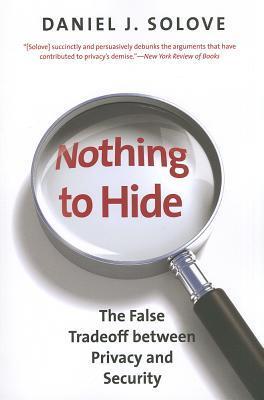
Nothing to Hide: The False Tradeoff between Privacy and Security
"If you've got nothing to hide," many people say, "you shouldn't worry about government surveillance." Others argue that we must sacrifice privacy for security. But as Daniel J. Solove argues in this important book, these arguments and many others are flawed. They are based on mistaken views about what it means to protect privacy and the costs and benefits of doing so. The debate between privacy and security has been framed incorrectly as a zero-sum game in which we are forced to choose between one value and the other. Why can't we have both?
In this concise and accessible book, Solove exposes the fallacies of many pro-security arguments that have skewed law and policy to favor security at the expense of privacy. Protecting privacy isn't fatal to security measures; it merely involves adequate oversight and regulation. Solove traces the history of the privacy-security debate from the Revolution to the present day. He explains how the law protects privacy and examines concerns with new technologies. He then points out the failings of our current system and offers specific remedies. Nothing to Hide makes a powerful and compelling case for reaching a better balance between privacy and security and reveals why doing so is essential to protect our freedom and democracy.
In this concise and accessible book, Solove exposes the fallacies of many pro-security arguments that have skewed law and policy to favor security at the expense of privacy. Protecting privacy isn't fatal to security measures; it merely involves adequate oversight and regulation. Solove traces the history of the privacy-security debate from the Revolution to the present day. He explains how the law protects privacy and examines concerns with new technologies. He then points out the failings of our current system and offers specific remedies. Nothing to Hide makes a powerful and compelling case for reaching a better balance between privacy and security and reveals why doing so is essential to protect our freedom and democracy.
246 pages, Paperback
First published May 31, 2011
About the author
Daniel J. Solove
18 books42 followersDaniel J. Solove is the Bernard Professor of IP and Technology Law at the George Washington University Law School. One of the world’s leading experts in privacy law, Solove is the author of 10+ books and textbooks and 100+ articles. His articles have appeared in the Harvard Law Review, Yale Law Journal, Stanford Law Review, and Columbia Law Review, among others. He has written for many newspapers and magazines including Wired, Scientific American, Slate, the Wall St. Journal, and others. He has more than 1 million followers. You can follow him on Substack: https://danielsolove.substack.com/
Ratings & Reviews
Friends & Following
Create a free account to discover what your friends think of this book!
Community Reviews
Displaying 1 - 22 of 22 reviews

February 25, 2015
This book easy to read and understand, it was written for the general audiences enjoyment. Nonfiction and done well. It’s based a lot on the laws in the 1st and 4th amendments that protect, or should protect our rights to privacy and security of those rights. The misconceptions that most people including law enforcement and Government tend to have about those laws. He gives details to all the different forms of communication to include regular mail in an envelope to the newest technological electronic versions and how it all can be intercepted and used against us or without us even knowing, by way of hackers or even our very own Government and not have any protection for the private citizen under the law. His intent is to enlighten us to the fact that we don’t have to sacrifice privacy for the added security. Many think that we do and we all know that we definitely have already.
In the Preface, professor Solove said that he wrote this book, “to focus on general arguments and principals rather than typical minutiae, of course the details are important, but even more important are the concepts related and themes of the debate. I hope this book will put to rest certain arguments so that the debate can move ahead in more fruitful ways. Although I have primarily focused on American Law the arguments and ideas in the debates are universal”.
His book it’s very compelling and eye-opening it’s also little frightening, based on all the information he gives you, there are so many areas of the law that are not covered by the 1st and or 4th amendments when it comes to protection of privacy and security of that information. He explains just how our lack of knowledge of what and how we are giving away protection of our personal privacy for the sake of increasing security. It should balance like a scale, but we have been allowing it to tip more so towards the security side, because we as a nation have been allowing local law enforcement and legislators throughout the years to bend and or break the laws so as to pick and choose their own interpretations of what the 1st, and or 4th amendments support.
He gives the reader a multitude of information to look at in terms of the advances in the private uses in technology and also the ways of snooping and gathering information legally and or illegally on anyone and how things have changed dramatically, since the drafting of the Constitution and unfortunately the 1st and 4th amendments haven’t adapted to accommodate all the new technologies and all the protections needed with these new technologies with all our personal privacy all over out there in cyberspace on electronic clouds, smart phones, portable laptops and tablets. We need protections put in place more so than ever before in our history.
There is a lot to ponder in this book, from his writing about the creation of and growth of the FBI, CIA, NSA, DHS (Department of Homeland Security), ECPA (Electronic Communications Privacy Act), FISA (Foreign Intelligences Securities Act), Patriot Act 2001 and the newest one SCA (Stored Communications Act) and how they all work, but not together as a team. Our Government has grown to be so powerful, that a person needs to be very careful in what they want to just look at or research via the internet and web, or better yet, even what you say on the phone, chances are someone’s watching or listening.
I would venture to say that the majority of us would say that we have nothing to hide, as the book title indicates, yet we all want to our privacy and security protected from prying eyes including our own government. After all, that was the premise behind our forefathers drafting the U.S. Constitution, and the Bill of Rights, to guarantee citizens privacy, security and protection from each other, local law enforcement and even our National Government, as sort of a checks and balance system. To ensure that due processes are followed correctly through proper warrants, subpoenas etc. Unfortunately though over the years the Constitution has been and continues to be picked apart in attempts to render it useless and making the Government untouchable, this is occurring almost on a daily basis with the 1st, 2nd and 4th Amendment’s, all in the name Security by local law enforcement, National Security Agency, Central Intelligence, FBI and Foreign Intelligence to name just a few among the numerous guises used.
I enjoyed this book and recommend it as a very good read and give it 4 stars. When I first started reading it, it was fairly dry to boring and seemed to be tailored a little more for the law student, but as I progressed through it, I could tell that he was trying to keep it in layman’s terms and have a little levity to keep you interested, I recommend it, especially if anyone having thoughts or doubts about the government and its ever and many times overreaching power.
In the Preface, professor Solove said that he wrote this book, “to focus on general arguments and principals rather than typical minutiae, of course the details are important, but even more important are the concepts related and themes of the debate. I hope this book will put to rest certain arguments so that the debate can move ahead in more fruitful ways. Although I have primarily focused on American Law the arguments and ideas in the debates are universal”.
His book it’s very compelling and eye-opening it’s also little frightening, based on all the information he gives you, there are so many areas of the law that are not covered by the 1st and or 4th amendments when it comes to protection of privacy and security of that information. He explains just how our lack of knowledge of what and how we are giving away protection of our personal privacy for the sake of increasing security. It should balance like a scale, but we have been allowing it to tip more so towards the security side, because we as a nation have been allowing local law enforcement and legislators throughout the years to bend and or break the laws so as to pick and choose their own interpretations of what the 1st, and or 4th amendments support.
He gives the reader a multitude of information to look at in terms of the advances in the private uses in technology and also the ways of snooping and gathering information legally and or illegally on anyone and how things have changed dramatically, since the drafting of the Constitution and unfortunately the 1st and 4th amendments haven’t adapted to accommodate all the new technologies and all the protections needed with these new technologies with all our personal privacy all over out there in cyberspace on electronic clouds, smart phones, portable laptops and tablets. We need protections put in place more so than ever before in our history.
There is a lot to ponder in this book, from his writing about the creation of and growth of the FBI, CIA, NSA, DHS (Department of Homeland Security), ECPA (Electronic Communications Privacy Act), FISA (Foreign Intelligences Securities Act), Patriot Act 2001 and the newest one SCA (Stored Communications Act) and how they all work, but not together as a team. Our Government has grown to be so powerful, that a person needs to be very careful in what they want to just look at or research via the internet and web, or better yet, even what you say on the phone, chances are someone’s watching or listening.
I would venture to say that the majority of us would say that we have nothing to hide, as the book title indicates, yet we all want to our privacy and security protected from prying eyes including our own government. After all, that was the premise behind our forefathers drafting the U.S. Constitution, and the Bill of Rights, to guarantee citizens privacy, security and protection from each other, local law enforcement and even our National Government, as sort of a checks and balance system. To ensure that due processes are followed correctly through proper warrants, subpoenas etc. Unfortunately though over the years the Constitution has been and continues to be picked apart in attempts to render it useless and making the Government untouchable, this is occurring almost on a daily basis with the 1st, 2nd and 4th Amendment’s, all in the name Security by local law enforcement, National Security Agency, Central Intelligence, FBI and Foreign Intelligence to name just a few among the numerous guises used.
I enjoyed this book and recommend it as a very good read and give it 4 stars. When I first started reading it, it was fairly dry to boring and seemed to be tailored a little more for the law student, but as I progressed through it, I could tell that he was trying to keep it in layman’s terms and have a little levity to keep you interested, I recommend it, especially if anyone having thoughts or doubts about the government and its ever and many times overreaching power.

February 2, 2012
Solove offers a balanced discussion of the supposed conflicts between security and privacy. A theme running throughout is a dismantling of the notions that privacy = secrecy and that privacy is of only personal and not societal interest. The latter argument has been used by the government, and often affirmed by the courts, as a means of denying standing to those who would sue to force changes in government surveillance of citizens.
Though Solove mentions some of the abuses of the state secrets claims that are being used more and more often by the federal government, I think he could have highlighted those abuses more prominently. We have good evidence that when state secrets are used as a means of preventing judicial review of government actions, the claim probably has more to do with covering up illegal acts than it has with security. Solove alludes to this, and in fact spends several pages discussing it, but I think it would have been worthwhile making this a more pervasive theme.
In any case, this is a book that might be persuasive to some of the 'security is everything' crowd, so Solove has done a great service with this book.
Though Solove mentions some of the abuses of the state secrets claims that are being used more and more often by the federal government, I think he could have highlighted those abuses more prominently. We have good evidence that when state secrets are used as a means of preventing judicial review of government actions, the claim probably has more to do with covering up illegal acts than it has with security. Solove alludes to this, and in fact spends several pages discussing it, but I think it would have been worthwhile making this a more pervasive theme.
In any case, this is a book that might be persuasive to some of the 'security is everything' crowd, so Solove has done a great service with this book.

August 20, 2026
I was interested in this book because the modern surveillance state is a huge concern of mine, and this was written even before flock and AI. However, I can't take non-leftist arguments on behalf of leftist topics seriously because they always boil down to more regulation even though Solove literally uses several examples that demonstrate the inadequacy of law enforcement and politicians to do that regulation. the neoliberal idea that the US was founded as a democracy and we've strayed along the way is just so deeply unserious when the founding fathers were capitalist misogynist slaveowners. also, there was too much emphasis on privacy violations of US citizens being wrong instead of the general idea that no one's privacy should be violated, regardless of where they come from. still, I came away with a few good insights.

Read
February 23, 2021In short, we should all go live in the woods if we want privacy. So glad my class is done with this unit.

April 24, 2013
Solove is one of the best scholars of American privacy law, and does a great public service in writing for a broad range of audiences, from practitioner to scholar to citizen.
Nothing To Hide is a good overview of arguments for privacy protections against the national security state, and for some audiences it's probably a wonderful book.
It reads like it's written at the 5th grade level, however, and the very simple sentences grate horribly after a while. I found the book generally too basic to be useful to me and the writing level painful.
Nothing To Hide is a good overview of arguments for privacy protections against the national security state, and for some audiences it's probably a wonderful book.
It reads like it's written at the 5th grade level, however, and the very simple sentences grate horribly after a while. I found the book generally too basic to be useful to me and the writing level painful.

February 25, 2014
This book clearly and concisely describes the arguments surrounding privacy versus security, and effectively makes the case that the United States should not, nor does it need to, abandon its values to be secure. His arguments are the perfect shield against the onslaught of all-or-nothing thinking about security or privacy. I highly recommend this book.
October 7, 2016
A Review of Solove’s Book on Privacy & Security
This book focuses on the argument that privacy does not have to be a direct tradeoff for security. Solove discusses the misconceptions that are present among the masses in our U.S society regarding privacy and security. He presents his views in contrast to other views, and argues for his points using the constitutional amendments, facts, and statistics. The book is really easy to read. It does not overwhelm the reader with political and legislative jargon. It uses language that is very understandable for the general adult population. The book has dual purpose. On one side, the author informs the reader of the current status of U.S citizen privacy and security rights, and what could be done to improve the current situation. On the other side, the purpose is to persuade the reader that the current way the privacy of citizens is being handled is unacceptable, and regulation needs to be turned up.
The book is broken down into 4 main sections or points that Solove presents and defends. Part one “How We Should Asses and Balance the Values of Privacy and Security” focuses on defining what security and privacy is (Solove 19). Here he argues that privacy is not just an individual right and that deference due to desperation or incompetence is dangerous. Part two focuses on how current laws regarding privacy should be handled or changed during times of crisis, such as matters related to national security. Here Solove showcases his knowledge regarding the topic of focus, from all sides. He shows that he is aware and not ignorant of other views by presenting arguments that are against his such as the pendulum, national security, and war-power arguments. He evaluates what they realistically accomplish to understand if they provide a valid basis for comprising privacy in the name of security.
Part three focuses on the constitutional rights that we have as citizens and how the constitution should be used to protect privacy. Solove talks about the current applications of the 4th amendment for evaluating privacy claims and whether certain things should be changed. For example, he calls for the analysis of the first amendment and the exclusionary rule. Should the exclusionary rule be kept and is the first amendment more applicable to analyzing privacy and security matters? The last and final main point Solove makes, is regarding new technologies, and how the current laws need to be changed to accommodate changing technology. Solove calls for laws that are more flexible and updated to match evolving technology “We need surveillance law that is flexible enough to respond to emerging technologies” (Solove 171). He argues that the 4th amendment is not suitable for analyzing privacy and security because technology has grown outside the domains of the home (Solove 171).
Solove did a great job structuring his arguments. He presented his views supported by quotes from politicians, government workers such as FBI and CIA agents, and excerpts from the constitution. All these sources are applicable, credible, and valuable to the subject of privacy and security rights and laws. The plethora of sources and quotations shows the real complexity of the arguments related to the 4 points he discussed. By having such a degree of access to cited information in the context of the reading, the reader is introduced to the subject with inspired confidence, knowing that what he or she is reading is trustworthy information. This allows the reader to understand the current situation regarding the subject of focus. It allows one to see what we have to work with currently in our legal system and allows us to develop our own opinions about the subject, by analyzing the information.
The information is well researched. For each quote the name of the speaker is present, their title or affiliation, and dates. All the references are cited and present in the last pages of the book, for a critical reader to verify if need be. Solove is very knowledgeable in the subject of focus. He provides a lot of information, from credible governmental sources regarding different acts and their background information, such as dates employed, reasons for developing, and surrounding issues. He succeeds in tackling many points of views that may be presented against his, by providing enough credible qualitative and quantitative data to make his case. The book is goal orientated because it clearly focuses on discussing the 4 main points, separately in each section, without deviation from the topic. It evades presenting unnecessary information that is not relative. It keeps the train of thought continuously flowing by focusing on one topic at a time with supporting arguments, to the next.
In our class “Searching for Information”, we learned about the different methods to gather information, both general and credible. With that said, this book is of great relevance to us because it talks about various methods that can be used to find information about people. However, the focus is within the context of resources available to the government, in accessing information on people that they deem suspicious. Also, in the class we talked about advanced search options with Google and the use/meaning of URL’s, which are also discussed in the book. In fact, they are used by the government to find information about people. The difference is the government can use the same resources, but it has a greater arm to extend into those resources to get exactly what it wants to know. In class we talked about the importance of libraries and learned about how they are here to stay. Solove backs this up by using the example of the Patriot Act in his book. It turns out the Patriot Act cannot be used to obtain library records for books, thanks to a extensive campaign mounted by The American Library Association (Solove 163). This proves that the library has strong influence in today’s society and despite new technologies, is a valuable avenue of accessing information.
Overall, the book proved to be a very enjoyable read. It informed me about lot of things that I was unaware of. I learned about the access that the government has to our personal information and the current laws that regulate that access, as well as the justification for them. I was surprised to find out some of these justifications. The strengths of the book were the the extended use of credible sources with direct quotations, arguments with multiple perspectives presented, and a focus on the main points without deviation. As an honest reviewer of this book, I cannot say that I found anything that I disliked about it. However, I imagine that for some people the referenced information from governmental sources might have been hard to understand, but Solove balances this out by explaining what they mean. In conclusion, I highly recommend this book to anyone who wishes to learn about the privacy that you have today, living in the U.S.
This book focuses on the argument that privacy does not have to be a direct tradeoff for security. Solove discusses the misconceptions that are present among the masses in our U.S society regarding privacy and security. He presents his views in contrast to other views, and argues for his points using the constitutional amendments, facts, and statistics. The book is really easy to read. It does not overwhelm the reader with political and legislative jargon. It uses language that is very understandable for the general adult population. The book has dual purpose. On one side, the author informs the reader of the current status of U.S citizen privacy and security rights, and what could be done to improve the current situation. On the other side, the purpose is to persuade the reader that the current way the privacy of citizens is being handled is unacceptable, and regulation needs to be turned up.
The book is broken down into 4 main sections or points that Solove presents and defends. Part one “How We Should Asses and Balance the Values of Privacy and Security” focuses on defining what security and privacy is (Solove 19). Here he argues that privacy is not just an individual right and that deference due to desperation or incompetence is dangerous. Part two focuses on how current laws regarding privacy should be handled or changed during times of crisis, such as matters related to national security. Here Solove showcases his knowledge regarding the topic of focus, from all sides. He shows that he is aware and not ignorant of other views by presenting arguments that are against his such as the pendulum, national security, and war-power arguments. He evaluates what they realistically accomplish to understand if they provide a valid basis for comprising privacy in the name of security.
Part three focuses on the constitutional rights that we have as citizens and how the constitution should be used to protect privacy. Solove talks about the current applications of the 4th amendment for evaluating privacy claims and whether certain things should be changed. For example, he calls for the analysis of the first amendment and the exclusionary rule. Should the exclusionary rule be kept and is the first amendment more applicable to analyzing privacy and security matters? The last and final main point Solove makes, is regarding new technologies, and how the current laws need to be changed to accommodate changing technology. Solove calls for laws that are more flexible and updated to match evolving technology “We need surveillance law that is flexible enough to respond to emerging technologies” (Solove 171). He argues that the 4th amendment is not suitable for analyzing privacy and security because technology has grown outside the domains of the home (Solove 171).
Solove did a great job structuring his arguments. He presented his views supported by quotes from politicians, government workers such as FBI and CIA agents, and excerpts from the constitution. All these sources are applicable, credible, and valuable to the subject of privacy and security rights and laws. The plethora of sources and quotations shows the real complexity of the arguments related to the 4 points he discussed. By having such a degree of access to cited information in the context of the reading, the reader is introduced to the subject with inspired confidence, knowing that what he or she is reading is trustworthy information. This allows the reader to understand the current situation regarding the subject of focus. It allows one to see what we have to work with currently in our legal system and allows us to develop our own opinions about the subject, by analyzing the information.
The information is well researched. For each quote the name of the speaker is present, their title or affiliation, and dates. All the references are cited and present in the last pages of the book, for a critical reader to verify if need be. Solove is very knowledgeable in the subject of focus. He provides a lot of information, from credible governmental sources regarding different acts and their background information, such as dates employed, reasons for developing, and surrounding issues. He succeeds in tackling many points of views that may be presented against his, by providing enough credible qualitative and quantitative data to make his case. The book is goal orientated because it clearly focuses on discussing the 4 main points, separately in each section, without deviation from the topic. It evades presenting unnecessary information that is not relative. It keeps the train of thought continuously flowing by focusing on one topic at a time with supporting arguments, to the next.
In our class “Searching for Information”, we learned about the different methods to gather information, both general and credible. With that said, this book is of great relevance to us because it talks about various methods that can be used to find information about people. However, the focus is within the context of resources available to the government, in accessing information on people that they deem suspicious. Also, in the class we talked about advanced search options with Google and the use/meaning of URL’s, which are also discussed in the book. In fact, they are used by the government to find information about people. The difference is the government can use the same resources, but it has a greater arm to extend into those resources to get exactly what it wants to know. In class we talked about the importance of libraries and learned about how they are here to stay. Solove backs this up by using the example of the Patriot Act in his book. It turns out the Patriot Act cannot be used to obtain library records for books, thanks to a extensive campaign mounted by The American Library Association (Solove 163). This proves that the library has strong influence in today’s society and despite new technologies, is a valuable avenue of accessing information.
Overall, the book proved to be a very enjoyable read. It informed me about lot of things that I was unaware of. I learned about the access that the government has to our personal information and the current laws that regulate that access, as well as the justification for them. I was surprised to find out some of these justifications. The strengths of the book were the the extended use of credible sources with direct quotations, arguments with multiple perspectives presented, and a focus on the main points without deviation. As an honest reviewer of this book, I cannot say that I found anything that I disliked about it. However, I imagine that for some people the referenced information from governmental sources might have been hard to understand, but Solove balances this out by explaining what they mean. In conclusion, I highly recommend this book to anyone who wishes to learn about the privacy that you have today, living in the U.S.
October 11, 2018
Nothing to Hide is a super fantastic, easy to read book about the argument between whether safety/security or privacy should be held in higher regard within society. The book examines the laws, government agencies and social concerns of the argument and how the argument plays out in each context. Solove’s approach in this book was perfect for someone like me who is not very well versed in the realm of the laws surrounding this issue.
If you’re interested in learning more about the history of the argument confronted in Solove’s book, then this one is for you. The book is broken up into chunks and includes real life stories covering the various aspects of why being secure in public or in our homes doesn’t mean one must sacrifice privacy.
One example in the book involves a story of police conducting a warrantless search of a woman’s home in pursuit of a car bombing suspect (p.135-136). The police broke into her house and arrested her on trumped up charges unrelated to the car bombing. The story here is an example of how government protections have been put in place to prevent encroachment of privacy and is covered in detail in a large portion of the later chapters.
Solove also discusses how privacy is under constant threat from rapidly changing technologies and that laws and regulations of government agencies are not able to keep up with the pervasive implementation of new technology. Again, Solove makes the argument on behalf of privacy easier to understand by relating the issues to real world examples making things easier to grasp for the common reader.
I did become somewhat lost in the middle of the book with the discussion of how laws are implemented. From what I gather, laws are implemented to enforce measures of security as well as safety and there are times when the two interests compete in the court system in the United States.
All in all, the book was a good read that gave me some better tools to tackle the debate between privacy and security. I think most people interested in defending privacy rights would do well to give this book a read as it is concise in its delivery and relatively up to date with today’s social issues.
If you’re interested in learning more about the history of the argument confronted in Solove’s book, then this one is for you. The book is broken up into chunks and includes real life stories covering the various aspects of why being secure in public or in our homes doesn’t mean one must sacrifice privacy.
One example in the book involves a story of police conducting a warrantless search of a woman’s home in pursuit of a car bombing suspect (p.135-136). The police broke into her house and arrested her on trumped up charges unrelated to the car bombing. The story here is an example of how government protections have been put in place to prevent encroachment of privacy and is covered in detail in a large portion of the later chapters.
Solove also discusses how privacy is under constant threat from rapidly changing technologies and that laws and regulations of government agencies are not able to keep up with the pervasive implementation of new technology. Again, Solove makes the argument on behalf of privacy easier to understand by relating the issues to real world examples making things easier to grasp for the common reader.
I did become somewhat lost in the middle of the book with the discussion of how laws are implemented. From what I gather, laws are implemented to enforce measures of security as well as safety and there are times when the two interests compete in the court system in the United States.
All in all, the book was a good read that gave me some better tools to tackle the debate between privacy and security. I think most people interested in defending privacy rights would do well to give this book a read as it is concise in its delivery and relatively up to date with today’s social issues.

April 26, 2020
Sin duda la vigilancia y la privacidad en estos tiempos digitales ponen en un estado de indefensión a los usuarios del internet que no toman medidas de protección y sin embargo todos de alguna manera debemos interactuar con las tecnologías y es ahí donde vamos proporcionando datos y la privacidad y nuestros datos se quedan en manos de terceros y como dice el autor si no queremos ser vigilados deberíamos completamente está aislados para lograr esto.
El autor en este libro hace un análisis de las leyes y enmiendas norteamericanas en razón de la privacidad y como la información almacenada o procesada es utilizada no solo para prevenir ataques terroristas sino proporciona lo elementos para vigilar a cualquier ciudadano de EU y de muchos países del mundo.
Este libro es un buen complemento de información para otros autores que han tratado el tema muy a fondo, casos como Edward Snowden y los libros escritos por Bruce scheneir
El autor en este libro hace un análisis de las leyes y enmiendas norteamericanas en razón de la privacidad y como la información almacenada o procesada es utilizada no solo para prevenir ataques terroristas sino proporciona lo elementos para vigilar a cualquier ciudadano de EU y de muchos países del mundo.
Este libro es un buen complemento de información para otros autores que han tratado el tema muy a fondo, casos como Edward Snowden y los libros escritos por Bruce scheneir

May 22, 2020
A book with arguments against the whole "tranquility over privacy" position taht are superb in nature. I can't say I could have thought of even half of these on my own.
I mean the idea that we can actually enact most of the security measures while maintaining our privacy. And the idea that the right to privacy...and other amendments are meant to protect us during times of national emergencies...like war...so to neglect them during these times doesn't make sense...is eye opening.
But with that being said the book was very repetitive, and despite being a layman's book on this subject very boring. Usually the legal books are the most informative but more boring/tedious reads...but this one (although not tedious) was more on the boring side.
Lastly, the chapters weren't...idk the book was kinda all over the place topic wise...like each chapter could have been it's own subject sometimes.
I mean the idea that we can actually enact most of the security measures while maintaining our privacy. And the idea that the right to privacy...and other amendments are meant to protect us during times of national emergencies...like war...so to neglect them during these times doesn't make sense...is eye opening.
But with that being said the book was very repetitive, and despite being a layman's book on this subject very boring. Usually the legal books are the most informative but more boring/tedious reads...but this one (although not tedious) was more on the boring side.
Lastly, the chapters weren't...idk the book was kinda all over the place topic wise...like each chapter could have been it's own subject sometimes.
December 1, 2021
I thought that it was a pretty good read because Solove highlights ideas that I personally haven't thought of before. I also appreciated how he provided historical context and explained concepts in layman's terms because it made it easier to digest. I just found some points repetitive at times.
August 10, 2018
An eye-opening review of 4th Amendment protections for privacy in the internet age. And readable.

October 16, 2018
Easy read on hard topics.

January 11, 2020
Technology is moving forward at a lightning pace and policy is not keeping up.

Read
October 20, 2021Read for class. Very approachable arguments, but gets repetitive by the end.

February 2, 2024
solove is one of my favorite scholars on this issue, his taxonomy of privacy is also a must for anyone who wants to intelligently discuss this issue

October 6, 2016
To give my background first, I am a Computer Science major and just recently finished a Computer Security course. There was a large topic of Privacy versus Security and what the difference was. The entire topic was a gray area which is why I pursued to read a book like this. The author stated in the very beginning that he wanted to be informative since there wasn't many good resources to explain the difference between privacy and security. He did a great job on providing strong arguments and counter-arguments for a case, since he did a great job of providing examples of both sides, it made me raise my own questions to each argument. At first I'm already on one side of the argument when I read the topic, but as I dive deeper into the topic, I begin to get ready to jump on the other side of the fence almost. Even though this isn't some sort of thriller or action book, it has kept me on my heels for almost the entire read. It is probably because I am very interested in the general security topic.
"According to the U.S. Supreme Court, people lack a reasonable expectation of privacy in anything they abandon." (113)
This is one of the arguments that had me on my heels the most. This quote refers to the fourth amendment and the protection it offers for unreasonable searches and seizures. In the book, the DNA of a suspect was not in the database of the state and the suspect moved to another state. The police officers posed as attorneys and wrote something in which the suspect who have to reply in order to receive compensation. When the police received the suspect's reply, they used the DNA on the envelope he licked to convict him of murder since the DNA was a match. Since the suspect sent this letter out, this was considered abandoned. I pondered a lot about this case because it made me wonder about the mail we rip up and throw in the trash. A lot of the junk mail we receive can be used to steal our identities when throw out and not shredded. The fourth amendment does not protect us for articles we abandon, yet as soon as we receive some damage, we can then submit of file something in which to protect us. Is it not better to be proactive instead of passive?
"The supreme court has held that when you can be overheard in public, you can't expect privacy." (177)
This again refers to the fourth amendment. The government is allowed to gather any information on us if we're in public. I am curious as to whether or not this applies to non-government officials. For example, shoulder surfing at restaurants or department stores. People expect privacy when punching in their pin number for their credit card, but they're in public..would that imply that they're not legally receiving privacy?
The author provides many examples in the book which are strong debates for the issue between privacy and security. Within every argument, he provides the solid choice the Supreme Court has chosen, and where there should be adjustments. In nearly every example, the government seems to run around the law in which they have created just to convict people of crimes they have committed. Some argue that the ends justify the means, however that defeats the purpose of law and democracy. If the government passes a law, yet finds a loophole, then why was that law created to begin with? The only place that people seem to find a reasonable sense of privacy is at home.
Anyone would enjoy reading this book if they have a strong interest in criminology or computer security. The amount of examples is so abundant in this book that it shows just how committed the author is to providing an informative approach to the topic without taking a side.
"According to the U.S. Supreme Court, people lack a reasonable expectation of privacy in anything they abandon." (113)
This is one of the arguments that had me on my heels the most. This quote refers to the fourth amendment and the protection it offers for unreasonable searches and seizures. In the book, the DNA of a suspect was not in the database of the state and the suspect moved to another state. The police officers posed as attorneys and wrote something in which the suspect who have to reply in order to receive compensation. When the police received the suspect's reply, they used the DNA on the envelope he licked to convict him of murder since the DNA was a match. Since the suspect sent this letter out, this was considered abandoned. I pondered a lot about this case because it made me wonder about the mail we rip up and throw in the trash. A lot of the junk mail we receive can be used to steal our identities when throw out and not shredded. The fourth amendment does not protect us for articles we abandon, yet as soon as we receive some damage, we can then submit of file something in which to protect us. Is it not better to be proactive instead of passive?
"The supreme court has held that when you can be overheard in public, you can't expect privacy." (177)
This again refers to the fourth amendment. The government is allowed to gather any information on us if we're in public. I am curious as to whether or not this applies to non-government officials. For example, shoulder surfing at restaurants or department stores. People expect privacy when punching in their pin number for their credit card, but they're in public..would that imply that they're not legally receiving privacy?
The author provides many examples in the book which are strong debates for the issue between privacy and security. Within every argument, he provides the solid choice the Supreme Court has chosen, and where there should be adjustments. In nearly every example, the government seems to run around the law in which they have created just to convict people of crimes they have committed. Some argue that the ends justify the means, however that defeats the purpose of law and democracy. If the government passes a law, yet finds a loophole, then why was that law created to begin with? The only place that people seem to find a reasonable sense of privacy is at home.
Anyone would enjoy reading this book if they have a strong interest in criminology or computer security. The amount of examples is so abundant in this book that it shows just how committed the author is to providing an informative approach to the topic without taking a side.

October 7, 2023
If I have to read book for class, they are going towards my reading goal

Read
December 21, 2013It was immensely refreshing to read an argumentative non-fiction book. I don't remember the last time I did that--or did I ever? Anyway, I read picked this up because it was a winter reading requirement for one of my courses, and I'm surprised how interesting it was. Normally I'm not very keen on the whole privacy and security debate, but Solove's writing was so concise, engaging, and full of insight that I didn't find this book much of a chore. Since the course that I'll be taking will revolve around this security vs privacy issue, *Nothing to Hide* has definitely made me more interested in being part of the class. It even encouraged me to do more research on privacy and security. Plus, I definitely enjoyed the bits of humor sprinkled throughout. This is one well-researched paper written by one very decent writer.
June 7, 2013
Solove raises many interesting points about privacy and the need for oversight of government surveillance and subpoena powers, but fails to discuss the issues in any great depth. Opposing views are given a paragraph or two of explanation and then rebutted with one or two more, rather than being analyzed in any detail.
It seems like Solove intended for this book to be read by a much wider audience than his usual writings (such as law review articles) and hence simplified the writing and omitted detail -- but aimed too low, giving us an interesting book which is nevertheless not very useful in debating or discussing issues of privacy.
It seems like Solove intended for this book to be read by a much wider audience than his usual writings (such as law review articles) and hence simplified the writing and omitted detail -- but aimed too low, giving us an interesting book which is nevertheless not very useful in debating or discussing issues of privacy.
October 17, 2013
Solove provides an engaging, superficial overview of some of the main arguments in the contemporary privacy vs. security debate. He shows how the 4th Amendment provides scant privacy protection, and argues that the 1st Amendment should become part of criminal procedure to help restore a healthier balance between privacy and security.
The initial chapters highlight what Solove sees as the flawed primary arguments in the privacy vs. security debate. This section is somewhat unsatisfying, all the more since Solove does not convincingly dismantle the "nothing to hide" argument for which he titled his book.
The initial chapters highlight what Solove sees as the flawed primary arguments in the privacy vs. security debate. This section is somewhat unsatisfying, all the more since Solove does not convincingly dismantle the "nothing to hide" argument for which he titled his book.
July 29, 2013
Very topical book in light of recent headlines. Solove is technically excellent but slightly awkward in writing style. I highly recommend this book to anyone who is frustrated by recent events, but not sure about the context of possible alternatives.
Displaying 1 - 22 of 22 reviews