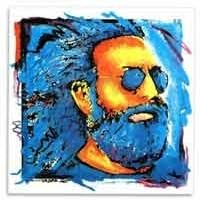
A L.A. Times Non-Fiction Hardcover Best Seller Hendrix on Hendrix includes the most important interviews from the peak of Jimi Hendrix’s career, 1966 to 1970, carefully selected by one of the world’s leading Jimi Hendrix historians. In this book Hendrix recalls for reporters his heartbreaking childhood and his grueling nights on the Chitlin’ Circuit. He jokes with the judge and the jury on the witness stand, telling them that the incense in his bag was for hiding bad kitchen odors. He explains to an American TV audience that his concept of “Electric Church Music” is intended to wash their souls and give them a new direction. And in his final interview, just days before his death, he discloses that he wants to be remembered as not just another guitar player. In addition to interviews from major mainstream publications, Hendrix on Hendrix includes new transcriptions from European papers, the African-American press, and counterculture newspapers; radio and television interviews; and previously unpublished court transcripts—including one of the drug bust that nearly sent him to prison.Though many respected books have been written about Hendrix, none have completely focused on his own words. This book is as close to a Hendrix autobiography as we will ever see.
STEVEN ROBY is a respected Jimi Hendrix historian/archivist and author of the bestseller Black Gold: The Lost Archives of Jimi Hendrix. It was selected as the Best Rock Book for 2002 by the Minnesota Spokesman Recorder.
Just getting around to writing about this now -- the saddest book in the world about an innocent genius transformed into a superstar, misunderstood as a sexualized gimmick master, contractually naive, not in it for anything other than his love of music, everyone pulling at him -- fans, Black Panthers, music mogels, musicians, hanger-ons. Only three years between Monterey Pop Festival and Isle of Wight Festival before his death -- more suspicious than I thought. Looking forward to a novel like DeLillo's Libra about the assassination of Jimi Hendrix -- everyone's to blame including his innocence/genius. A few times he says that if a UFO came to earth first thing people would do is try to shoot it down -- and that's more or less what happened to him. Too many obligations, worn thin, weakened, run down, right before he was about to disappear into the studio forever and work on a sort of music that took the best of the past 30 years (jazz, rock) and mixed it with Stauss and Wagner into something totally new, or maybe something a little like prog rock with way more soul and Roland Kirk on simultaneously played horns. A total tragedy music will never recover from. Again, Hendrix was a known living presence for only three years -- all that music, all that influence. Even if he'd lived another three years, it's heartbreaking to think about what he would've done -- I don't feel that way about Jim Morrison, Janis Joplin, Mama Cass, Cobain, Ian Curtis. Hendrix would have blown things open even more if given just a year of studio time. Also, something that should be noted is that when you see a live interview with him, he accentuates what he says with his eyes and changes his tone a lot to add emphasis or mock what he's saying. In this, only occasionally does an interview include descriptions of the way he says things. Also, it seemed like toward the end his responses were getting progressively hard to follow like either he was on serious drugs or had just let himself say whatever in response. For example, this interview with Dick Cavett where Hendrix is wearing the blue kimono and looks like he weighs 90 lbs. They should've had a sit com.
This is an amazing book. Presenting Jimi Hendrix through a single lens, that of his interviews with various rock magazines and radio and TV programs, has the feel of art. The interviews mirror his career chronologically. They can get repetitive, as Jimi discusses again and again where he is creatively and the various obstacles involved in trying to be understood as a musician and artist. As an observer, though, you start to see what it must have been like to be constantly hounded and sought after, and most of the time it wasn't adoring fans and available women.
Journalists repeatedly intrude on the band's downtime, demanding answers to what are often the same silly questions, even right before a show or when everyone is exhausted from non-stop traveling and lack of sleep. Business types never cease trying to ride Jimi's coattails, releasing bootlegs without his permission, rushing out inferior recordings without his approval to make a quick buck, outright stealing from him and the Experience.
In the early interviews he is charitable to everyone, tolerant and soft spoken. By the end he seems easily irritated, paranoid, strung out.
You begin to feel the inside of the fishbowl and understand why he wanted a break from it, by hiding out from the press and friends for six months, by getting higher and drunker as time went on. You can feel the ongoing sleep disruptions and the frayed nerves that make it increasingly harder to relax when the human body needs it the most.
What the book leaves you with is a deep impression, a focused perspective on yes, the lifestyle of a rock and roll superstar, but also the restrictions, compromises, breakdowns and genuine fear and confusion a creative artist like Hendrix navigates in sharing his vision with the world. Jimi never feels sorry for himself, but you do, despite all of the luxury hotels and the celebrity. "Nobody cages me," he said, but after a certain point that just wasn't true anymore.
There are some who think he set himself free; others say he was poised to invent a new form of fusion music or a new jazz and his death was a pointless accident. Whatever the truth is he was like a bright flame the world was happy to warm itself by until too many people crowded around. The brilliant fire of Jimi Hendrix, prematurely smothered, lives on in the music he left behind and in his own words across the pages of this deeply affecting book.
Jimi Hendrix's music is not new, not having been born in the last bit of the 1970s with a huge penchant for classic rock. But I had always assumed, based on his onstage flamboyance, that he was the same way off stage. And that is not the case in any way.
This biography is fascinating, having been taken from interviews done with Hendrix throughout his career, and it is pretty literally Hendrix in his own words. The journalists that open the pieces give their impressions of him at the time, which just adds even more realness to the biography, even forty-two years after his death.
The thing that strikes me the most about Hendrix is his downright humility. I'd seen the interview with Dick Cavett on YouTube before I read about it in this book, where Cavett mentions that he's the greatest guitar player in the world, and Jimi looks down, abashed, and says, "Aw, no. How about the greatest guitar player sitting in this chair?" How many other megastars would have said such a thing, been so paradoxically self-effacing?
I was also impressed with Hendrix's refusal to be shoe-horned into one musical genre or another. He didn't want to be called blues, or rock, or pop, or jazz. He did it all, a veritable mish-mash of it that worked perfectly. I only wish I could have heard him play live, gimmicks or no, and followed along with the ways in which he tried to grow and mature and break out of the mold his fans and the industry had tried to keep him in.
Excellent read. Highly recommend, especially while listening to LPs by Hendrix and the Jimi Hendrix Experience, as I did.
there's quite a bit of useful info in here on hendrix's guitar and arranging techniques. and it was great to read so many interviews with hendrix. the bob garcia interview has some great stuff in it about the cool unexpected things that can happen when using his preferred technique of improvising his songs out and, in the experience's case, when each member in fact likes a different kind of music.
inside this book:
it took hendrix seven years to develop his style - the latter part during which he had to be good or the patrons would show him no mercy. he said you have to listen to everything on your own then get your own ideas. he'd jam with everyone (like steve stills and buddy miles) when he lived in LA. and simply preferred creating as he was going along.
"Now is the time to do your own thing. You know man, sometimes I can't stand to hear myself because i sound like everyone else." what an amazing quote!
or this killer one - "My own thing is in my head, I hear sounds and if I don't get them together nobody else will".
i think a lot of us reading this book are trying to find their own inner "hendrix" by gleaning from his own words insights into his musical mental filtration system and this book gets four stars for succeeding in giving us a way to see the framework.
These interviews are carefully compiled and date from the time of his ascendancy up till the time of his death. Hendrix comes across as likeable, somewhat naïve and more than a bit muddled: surprisingly unarticulate, probably because of drugs. I don't think this does much for his legacy, but since it's Hendrix in his own words it's clearly accurate, and an enjoyable if minor romp through the late 60s.
This is a great book for any Hendrix fan or anyone interested or curious about James Marshall Hendrix, the legendary guitar god of the 1960s. This collection of interviews, magazine articles and other brief testimonies gives the reader a look behind the machinery of the Hendrix legend. Unfortunately, some of the interviews seem to repeat and overlap, but by and large, this is a great book worthy of reading by anyone and a definite MUST-HAVE for the Hendrix fan, disciple or acolyte.
This book is based on interviews with Jimi Hendrix himself. He had a poor start money wise and he took years perfecting his guitar style. He was not in the music business to make money, he was in it to make music. I saw in the late 1960's, the best concert I ever went to.