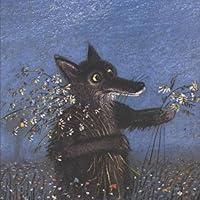
Divanul sau gâlceava înțeleptului cu lumea, scrisă în română și tipărită la Iași în 1698 este una din lucrările fundamentale ale lui Dimitrie Cantemir. Această operă este prima lucrare filozofică românească. În această lucrare întâlnim disputele medievale despre timp, suflet, natură sau conștiință. Dimitrie Cantemir sugerează superioritatea omului asupra celorlalte viețuitoare, face din om un stapân al lumii, susține superioritatea vieții spirituale asupra condiției biologice a omului, încearcă să definească concepte filozofice și să alcătuiască o terminologie filozofică.
Dimitrie or Demetrius Cantemir (Romanian pronunciation: [diˈmitri.e kanteˈmir], also known by other spellings, was a Moldavian soldier, statesman, and man of letters. He was twice voivode of Moldavia (March–April 1693 and 1710–1711). During his second term, he allied his state with Russia in their war against Moldavia's Ottoman overlords; Russia's defeat forced Cantemir's family into exile and the replacement of the native voivodes by the Greek phanariots. Cantemir was also a prolific writer, variously a philosopher, historian, composer, musicologist, linguist, ethnographer, and geographer. His son Antioch, Russia's ambassador to Great Britain and France and a friend of Montesquieu and Voltaire, would go on to be known as "the father of Russian poetry". Dimitrie was born in Silişteni, Moldavia (now Vaslui County, Romania) on 26 October 1673 to Constantin Cantemir and Ana Bantăș. His elderly father was from a noble family of Crimean Tatar extraction, which came to Moldavia in the mid-17th century. One of the explanations for the name "Cantemir" is that it's derived from "Can Temur", meaning "the blood of Timur", marking a direct descent from the conqueror Tamerlane. His mother was a learned daughter of a local noble family.[citation needed] In 1685, Constantin was named voivode of Moldavia by its Turkish overlords. Although Constantin himself was illiterate, he educated his sons Dimitrie and Antioh thoroughly. Dimitrie learned Greek and Latin to read the classics as a child. One of his tutors was the scholar John Komnenos Molyvdos. Between 1687 and 1710, Dimitrie spent most of his time as a hostage or envoy in Constantinople, living in the palace he owned, where he learned Turkish and studied Ottoman history at the Patriarchate's Greek Academy.[citation needed] While there, he also composed Turkish music. Upon Constantin's death in 1693, Dimitrie briefly succeeded him to the voivodeship but was passed over within three weeks in favor of Constantin Duca, whose candidacy was supported by his father-in-law, the Wallachian voivode Constantin Brâncoveanu.[6] When his brother Antioh eventually succeeded to the control of Moldavia, Dimitrie served as his envoy to the Porte.[citation needed] During these years, he also served with distinction in the Turkish army on its campaigns. In 1710, Dimitrie was appointed voivode in his own right. Believing Ottoman Turkey to be collapsing,[2] he placed Moldavia under Russian control through a secret agreement signed at Lutsk.[citation needed] He then joined Peter the Great in his war against the Turks. This ended in failure at Stănilești (18–22 July 1711) and the Cantemirs were forced into Russian exile. Turkey then replaced the voivodeship with the rule of Greek phanariots. In Russia, Dimitrie was created both a Russian prince (knyaz) by Peter and a prince of the Holy Roman Empire by Charles VI. He lived on an estate at Dmitrovka near Oryol, with a sizable boyar retinue (including the chronicler Ion Neculce). There he died on 21 August 1723, on the very day he was awarded his German title. In 1935, his remains were returned to Iași. Cantemir was a polyglot known as one of the greatest linguists of his time, speaking and writing eleven languages. Well versed in Oriental scholarship, his oeuvre is voluminous, diverse, and original, although some of his scientific writings contain unconfirmed theories or simple inaccuracies. Between 1711 and 1719 he wrote his most important creations. In 1714, he was named a member of the Royal Academy of Berlin. Cantemir's best-known history work was his History of the Growth and Decay of the Ottoman Empire (the original title was in Latin, Historia incrementorum atque decrementorum Aulae Othomanicae). This volume circulated throughout Europe in manuscript for a number of years. It was finally printed in 1734 in London and was later translated and printed in Germany and France. It remained the seminal work on the Ottoman Empire up to the middle of the 19th.
Cred că cea mai mare realizare literară din a doua parte a anului e faptul că am terminat Divanul. Nu se pune problema de- mi-a plăcut, nu mi-a plăcut, ci mai mult de faptul că am tot evitat să trec de prima parte a cărții(sau să o dau pe paratextualitate și să îi spun prima ,,mescioară", prima ,,neprăfuită oglindă"?) . Îmi lipsesc multe informații-bază din textele religioase, dar tot am putut să îi apreciez, la cel mai înalt nivel, geniul lui Cantemir și cultura vastă. Da, acum am 90% din temele pentru examen, dar tot o pot numi o carte care ar trebuie ,,cercată" și ,,ispitită" măcar o dată în viață de orice bibliofil.
„Văd frumuseţile şi podoaba ta ca iarba şi ca floarea ierbei, bunurile tale – pulbere şi fum, carile cu mare grosime în aer se înalţă şi, îndată răschirându-se, ca când n-ar fi fost, se fac”
„Eu poftesc avuţiă… O, lume! Eu poftesc mai mult: ca vestit şi cu nume mare să mă fac… O, lume! Eu poftesc târguri şi cetăţi… O, lume! Eu, după acestea după toate, şi cinste politicească cer şi poftesc… O, lume! Eu decât aceasta şi mai mare cinste îmi poftesc: şi între stăpâniri să mă învrednicesc.”
„Să ştii, că numai cu o feleagă de pânze învăliţi, ca cum ar fi în cămeaşa cea de mătasă învăscuţi; şi într-un sicriu aşezaţi, ca în haina cea de purpură mohorâtă îmbrăcaţi; şi în gropniţă aruncaţi, ca în saraiurile şi palaturile cele mari şi desfătate aşezaţi, s-au dusu-se; iară altă nemică nici în sin, nici în spate n-au rădicat, cu sine să ducă”.